Gold Creek, Montana packs two landmark moments into one overlooked roadside stop. You’ll stand where Montana’s first gold was discovered in 1852 and where the Northern Pacific Railway’s last spike was driven in 1883. It’s just off I-90, about 12 miles southeast of Drummond, making it an easy detour. Pack supplies, bring binoculars, and plan 30 to 45 minutes to explore. The full story behind this forgotten frontier landmark runs deeper than you’d expect.
Key Takeaways
- Gold Creek, Montana, sits just off I-90, roughly 12 miles southeast of Drummond and 68 miles east of Missoula, making it an easy road trip detour.
- Visit between June and September for stable roads, mild weather, and longer daylight hours ideal for exploration.
- Expect a 30–45 minute visit with no on-site services; pack food, water, and binoculars for wildlife viewing.
- Scattered remnants, historical markers, and the Gold Creek–Clark Fork River confluence offer tangible connections to Montana’s gold rush and railroad history.
- Extend your trip by visiting nearby ghost towns: Garnet, Granite, and Bearmouth, each offering deeper frontier history.
Why Gold Creek Deserves a Stop on Every Montana Road Trip
When you pull off I-90 near Drummond and follow the road toward the junction of Gold Creek and the Clark Fork River, you’re standing on ground that quietly launched Montana’s entire gold rush era.
Back in 1852, Francois “Benetsee” Finlay pulled gold from this creek before most prospectors even knew the territory existed. Local legends grew fast, drawing the Stuart brothers and other fortune-seekers who confirmed the placer potential and spread word across the West.
Francois Finlay struck gold at this creek in 1852, igniting legends that drew fortune-seekers across the entire West.
Early mining technology was primitive — simple sluice operations carving wealth from streambed gravel — yet what happened here set the entire region in motion.
Add the 1883 Northern Pacific Railway last-spike ceremony nearby, and Gold Creek becomes more than a detour. It’s a legitimate launchpad for understanding Montana’s frontier identity.
The 1852 Gold Discovery That Launched Montana’s Mining Era
When you stop at Gold Creek, you’re standing where it all began—Francois “Benetsee” Finlay panned gold from this creek in 1852, striking the find that would reshape Montana’s future.
A few years later, the Stuart brothers and their fellow prospectors confirmed the creek’s placer potential, erasing any doubt that serious gold lay beneath Montana’s soil.
That discovery didn’t just fill a few miners’ pockets; it lit the fuse on a region-wide rush that sent prospectors scrambling across western Montana’s valleys and mountains.
Finlay’s Historic Creek Discovery
Long before Montana was Montana, a French mixed-blood trapper named Francois “Benetsee” Finlay crouched along a cold creek in 1852 and pulled something glittering from the gravel that would change the region forever. That single act set three powerful forces in motion:
- Early prospectors flooded the region, hungry to replicate Finlay’s find.
- Primitive mining techniques like placer panning and sluicing took root along the creek.
- The creek itself transformed from Benetsee Creek into Gold Creek, carrying a new identity west.
You’re standing at the origin point of Montana’s entire placer-mining era when you visit. Finlay didn’t build an empire here — he just bent down, looked closer, and found what others had walked past. That’s the spirit worth chasing.
Confirming Montana’s Gold Potential
Six years after Finlay’s discovery, James and Granville Stuart, Reece Anderson, and Thomas Adams arrived at Gold Creek in 1858 and did what Finlay’s lone find couldn’t do alone — they confirmed it.
Their gold prospecting wasn’t casual panning; it was methodical, purposeful, and decisive. They worked the creek with enough skill and mining technology to prove what the land had been quietly holding: real placer potential worth chasing.
That confirmation changed everything. Word spread, and Montana’s frontier identity began shifting toward something bigger.
Prospectors who craved open land and unwritten futures started moving. Gold Creek didn’t just validate one creek — it cracked open an entire region.
You’re now standing at the point where Montana’s mining era stopped being rumor and became reality.
Triggering The Mining Era
How does one gold discovery in a remote Montana creek become the spark that ignites an entire mining era? Finlay’s 1852 find didn’t just excite one man — it set three powerful forces in motion:
- Prospectors packed their prospecting tools and flooded western Montana’s waterways.
- Mining technology evolved rapidly, replacing simple pans with full sluice operations.
- Wider territorial exploration exploded, pushing fortune-seekers deeper into uncharted terrain.
How the 1862 Camp Turned Gold Creek Into a Frontier Settlement
By 1862, Gold Creek had grown from a promising placer site into something resembling an actual frontier settlement. The gold rush had pulled men westward, and a raw camp took shape along the creek banks — log cabins, stores, saloons, and a blacksmith shop rising from the wilderness.
About 45 residents called it home that summer, carving out lives in territory most Americans had never seen.
This wasn’t permanence, though. It was momentum. Gold Creek became proof that Montana’s mountains held real wealth, and that knowledge sent prospectors fanning out across the region.
When richer strikes emerged elsewhere, the settlement thinned quickly. What you visit today is quiet land that once buzzed with ambition — a reminder that frontier history moves fast and leaves little behind.
The Last Spike: Gold Creek’s Forgotten Railroad Milestone
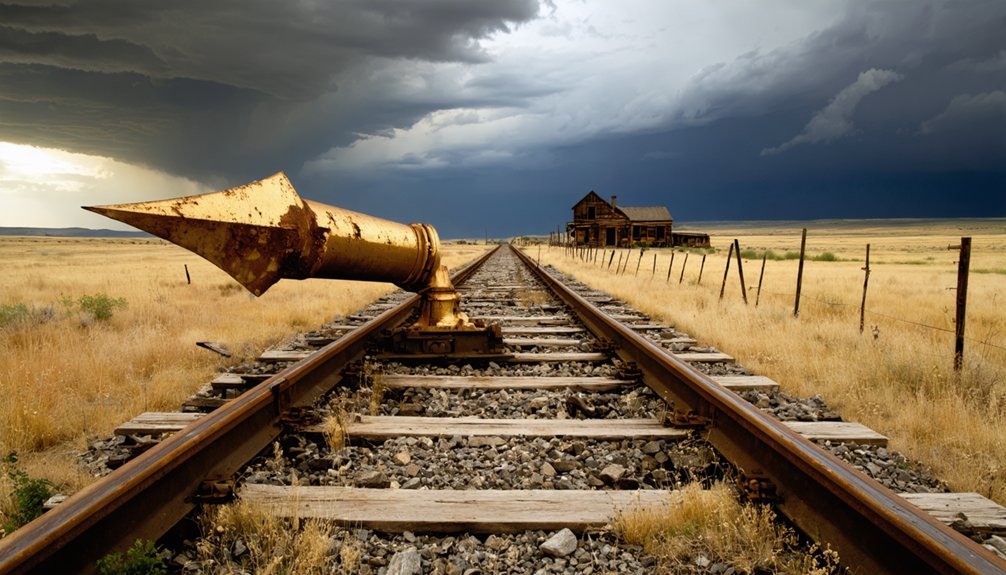
Few travelers driving past Gold Creek today realize they’re passing through the site of one of America’s great railroad moments. On September 8, 1883, Northern Pacific Railway president Henry Villard drove the last spike here, completing the transcontinental line linking two coasts. This railroad engineering achievement cracked open the entire American Northwest.
Three reasons this historic landmark deserves your attention:
- It connected the continent, giving ordinary people unprecedented freedom to move west.
- It layered Gold Creek with two distinct pioneer stories — gold and iron.
- It remains largely forgotten, making your discovery feel genuinely earned.
You’re not just stopping at a quiet Montana roadside. You’re standing where the nation’s rails finally met, permanently changing how Americans experienced their own wild, open country.
What Still Exists at Gold Creek Today
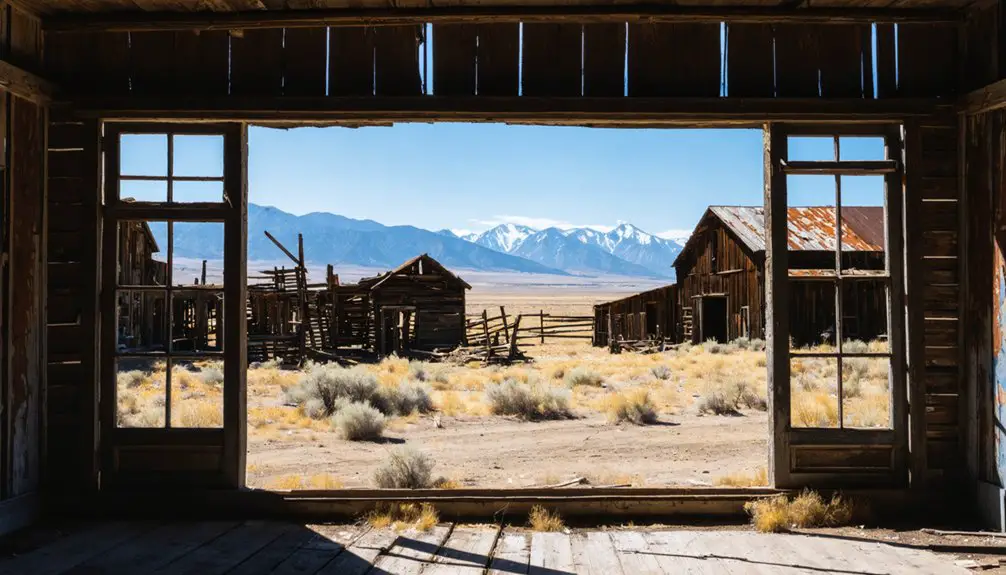
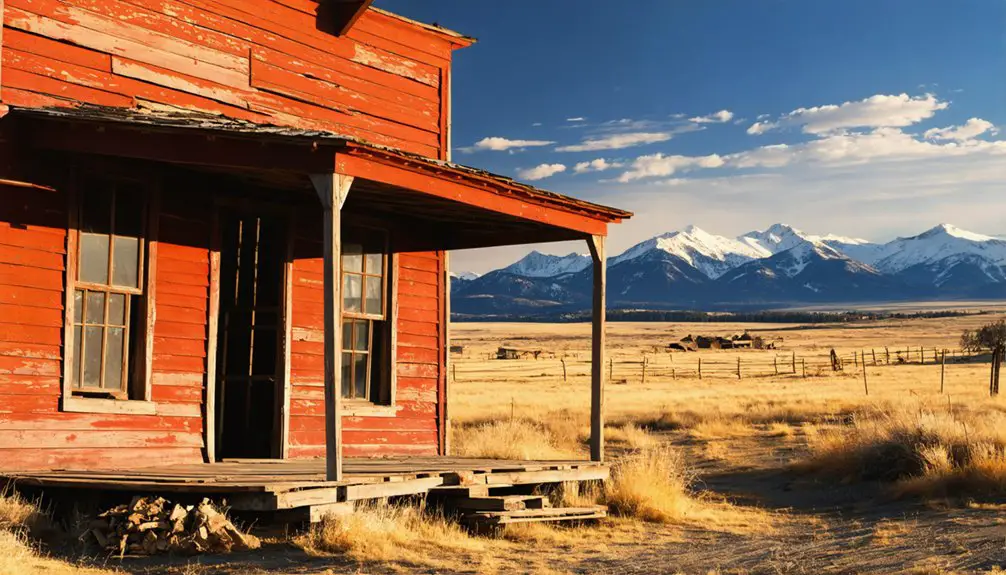
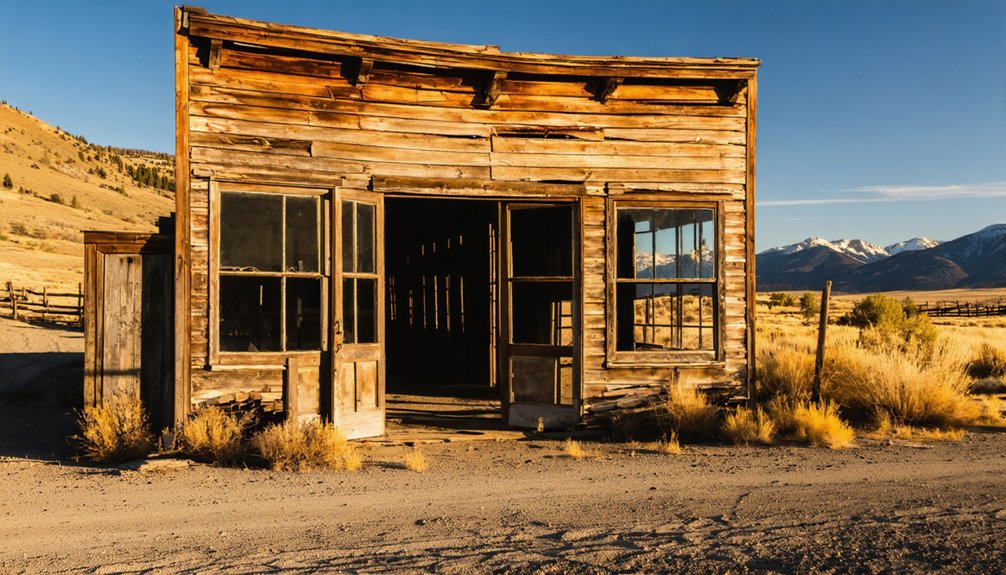
When you pull off at Gold Creek today, you won’t find a preserved frontier town waiting for you — instead, you’ll spot scattered remnants and weathered buildings southwest of the tiny community that hint at the bustling camp that once housed 45 residents.
Stand at the river junction where Gold Creek meets the Clark Fork, and you’ll understand why early prospectors chose this spot. The landscape itself carries more weight than any standing structure.
Keep your eyes open for railroad historical markers near the last-spike site, because that second layer of history is often the most tangible connection you’ll find to Gold Creek’s outsized past.
Scattered Buildings And Remnants
Although Gold Creek’s gold-rush legacy looms large in Montana history, the physical evidence you’ll find on the ground today is sparse. Southwest of the tiny settlement, scattered remnants hint at lives once lived on this frontier:
- Weathered old buildings stand as quiet witnesses to the 1862 mining camp’s brief intensity.
- Occasional mining equipment surfaces near the creek, connecting you tangibly to early placer operations.
- Historic photographs sourced from regional archives remain your strongest window into the log cabins, saloons, and blacksmith shops that once defined this place.
Don’t expect a preserved ghost town with dramatic ruins. Instead, embrace the raw, open landscape for what it’s — a freedom-seeker’s reminder that Montana’s boldest chapter started right here, quietly and without ceremony.
River Junction Scenery
Where the sparse remnants leave off, the land itself takes over. Gold Creek meets the Clark Fork River here, and that junction delivers something no preserved building can — raw, working Montana landscape.
You’re standing where early prospectors read the water, studying currents and gravel bars for color. River wildlife moves through constantly; watch the banks for osprey, heron, and whitetail pushing through the cottonwoods.
The Clark Fork itself once shaped water navigation routes for trappers and miners moving supplies into the interior. That same river still runs wide and deliberate, indifferent to history.
You’ll feel the openness pressing in from every direction — mountains, sky, current. It’s the kind of place that reminds you why people pushed this far west in the first place.
Railroad Historical Markers
One date anchors Gold Creek to something larger than gold — September 8, 1883, when Northern Pacific Railway president Henry Villard drove the last spike near here, completing the transcontinental line linking the East and West coasts. That single act stitched a nation together, and you’re standing close to where it happened.
When you visit, keep three things in mind:
- Signage is minimal, so research the exact marker location before arriving
- Local flora frames the railroad corridor beautifully, especially in summer
- Wildlife sightings — deer, hawks, occasional elk — reward patient observers along the tracks
The railroad layer deepens Gold Creek’s story beyond mining folklore. You’re not just chasing ghost-town ruins here; you’re touching two defining moments of Montana’s frontier identity simultaneously.
Where Gold Creek Sits on the I-90 Corridor
Tucked just off I-90, Gold Creek sits roughly 12 miles southeast of Drummond and about 68 miles east of Missoula, placing it squarely in the corridor between those two towns and the Helena area. That geography makes it an effortless detour rather than a demanding side quest.
You’re traveling a stretch of Montana where mining legends and railroad milestones collide with open sky and river bottomland. The Clark Fork River junction anchors the landscape, giving the site a raw, frontier feel that no museum replica can manufacture.
Whether you’re heading east toward Helena or looping back west toward Missoula, Gold Creek slots naturally into your route. Pull off, breathe it in, and let the land remind you that history doesn’t always need a sign to speak loudly.
The Best Season to Visit Gold Creek
Summer’s your best bet for a visit to Gold Creek, where dirt roads and Montana weather can turn an easy detour into a muddy obstacle.
You’ll find the creek-side landscape at its most open and accessible between June and September, giving you clear sightlines across the same terrain that lured Francois Finlay and the Stuart brothers toward their historic discoveries.
Come in shoulder seasons or winter, and you’re gambling against conditions that add frustration to what’s already a lean, history-first stop.
Summer Offers Easiest Access
While Gold Creek rewards visitors in any season, summer gives you the clearest shot at the site without wrestling with icy mountain roads or unpredictable weather rolling off the Clark Fork Valley.
Longer days and dry roads let you move freely, dig into local legends, and scout the remnants southwest of town without rushing. Plan around three summer advantages:
- Stable roads along I-90 and surrounding access points keep your route predictable.
- Extended daylight gives you time to examine historical artifacts and read the landscape at your own pace.
- Mild weather means you can linger at the river junction and absorb the country that launched Montana’s gold rush.
Summer hands you the freedom to explore on your terms.
Weather Impacts Your Visit
Season shapes everything about your Gold Creek experience, from road conditions on I-90 to how long you’ll comfortably linger at the river junction where Montana’s gold rush began. Seasonal variations here aren’t subtle — winters bring snow, ice, and bitter cold that make even a brief roadside stop miserable.
Spring thaw softens the ground and raises river levels, adding raw beauty but complicating access. Summer delivers the clearest skies, warmest temperatures, and the most rewarding conditions for exploring the surrounding landscape.
Fall offers crisp air and stunning color, though early snowfall is always possible. Whatever season you choose, take weather precautions seriously — Montana’s conditions shift fast. Pack layers, check forecasts before leaving, and treat this remote stop with the same respect the early prospectors gave the frontier itself.
The Best Montana Ghost Towns to Pair With Gold Creek
Gold Creek rewards the historically curious, but pairing it with nearby ghost towns transforms a quick detour into a full-blown Montana time-travel experience. Montana’s frontier past runs deep, and these three stops complement Gold Creek‘s gold-rush origins perfectly:
- Garnet Ghost Town – Montana’s best-preserved mining camp sits east of Missoula, offering standing structures that Gold Creek can’t match.
- Granite Ghost Town – This silver-boom ruin crowns a mountain above Philipsburg, delivering dramatic scenery alongside raw frontier history.
- Bearmouth – A quiet river stop along I-90 that echoes early settlement culture and local cuisine traditions tied to roadhouse heritage.
String these destinations together, and you’ll chase cultural festivals, forgotten economies, and vanished communities across Montana’s most historically charged corridor.
How Long Does a Gold Creek Visit Actually Take?
Most travelers spend no more than 30 to 45 minutes at Gold Creek, and that’s honestly enough to absorb what the site offers. You’re not walking through a preserved museum — you’re standing where Montana’s gold story began, reading the landscape like a map of ambition and grit.
After you’ve soaked in the river junction scenery and traced the history in your mind, you’re free to push onward. Look for local dining in Drummond, just 12 miles northwest, before tackling your next stretch of road.
If the Clark Fork’s open water calls you, linger a bit longer for outdoor activities like fishing or riverside hiking.
Gold Creek rewards curiosity, not crowds. Come with context, stay as long as it moves you, then ride.
What to Bring for a Remote Montana Heritage Stop
Because Gold Creek offers little in the way of services or infrastructure, you’ll want to arrive self-sufficient and ready to work with what the land gives you. Pack smart, move freely, and let Montana’s raw frontier character do the rest.
Gold Creek asks nothing of you except that you show up ready — self-sufficient, unhurried, and open to what the land offers.
- Food and water — Skip hunting for local cuisine nearby; carry your own provisions since services along this stretch are sparse.
- Binoculars — Wildlife viewing opportunities emerge naturally along the Clark Fork River junction, where birds and deer move through open terrain.
- A journal or camera — Gold Creek’s history lives in imagination more than ruins, so document what the landscape tells you.
Summer access is easiest, but whenever you arrive, self-reliance honors the same pioneering spirit that first drew prospectors to Benetsee Creek in 1852.
Frequently Asked Questions
Is There an Entrance Fee to Visit the Gold Creek Historic Site?
Freely flock to Gold Creek without paying a penny! There’s no entrance fee, though you’ll want to respect historical artifacts and check local gold panning regulations before you venture into Montana’s legendary, adventurous frontier grounds.
Are Pets Allowed When Exploring the Gold Creek Area?
No specific pet restrictions exist, but you’ll want to prioritize pet safety as you roam Gold Creek’s untamed frontier landscapes. Watch for wildlife encounters that could startle your companion along these historically rich, open Montana trails.
Is the Gold Creek Site Accessible for Visitors With Mobility Limitations?
The site doesn’t offer formal accessible pathways or mobility assistance infrastructure, but you’ll find the surrounding flat agricultural landscape reasonably navigable. Embrace Gold Creek’s rugged, open frontier spirit as you explore this historically significant, wide-open Montana treasure.
Can Visitors Legally Pan for Gold at Gold Creek Today?
The knowledge doesn’t confirm you can legally pan here. Check gold panning regulations before you wade in — historic site preservation rules vary. Respect the land that sparked Montana’s frontier fire, and you’ll honor those bold 1852 prospectors.
Is There Overnight Camping Available Near the Gold Creek Site?
Like Lewis and Clark before you, you’ll need to plan ahead — no formal camping exists at Gold Creek itself. Check nearby camping regulations, stay alert for wildlife encounters, and embrace the untamed Montana wilderness surrounding this legendary site.
References
- https://www.legendsofamerica.com/gold-creek-montana/
- https://www.umt.edu/this-is-montana/short-notes/stories/gold-creek.php
- https://www.umt.edu/this-is-montana/columns/stories/goldcreek.php
- https://vp-mi.com/news/2023/jan/25/montana-memories-visiting-gold-creek/
- https://montanahistoriclandscape.com/2017/08/04/gold-creek-and-pioneer-bypassed-landmarks/
- https://www.ghosttowns.com/states/mt/goldcreek.html
- https://en.wikipedia.org/wiki/Gold_Creek_(Montana)
- https://data.visitmt.com/data/cities/MT/GOLD CREEK
- https://southwestmt.com/specialfeatures/this-is-montana/historical-geologic-highway-signage/first-discovery-of-gold-in-montana/
- https://visitmt.com/cities-towns/gold-creek