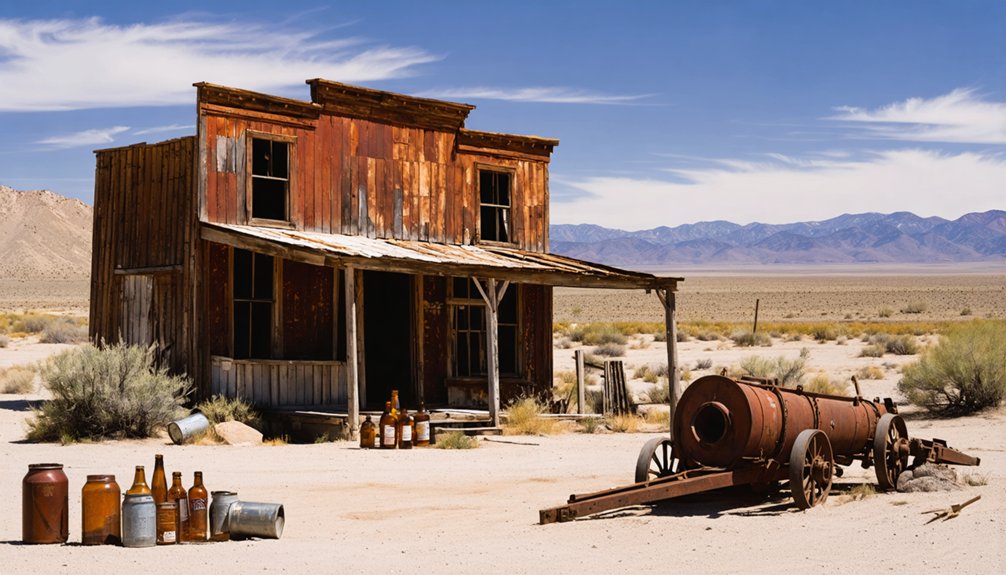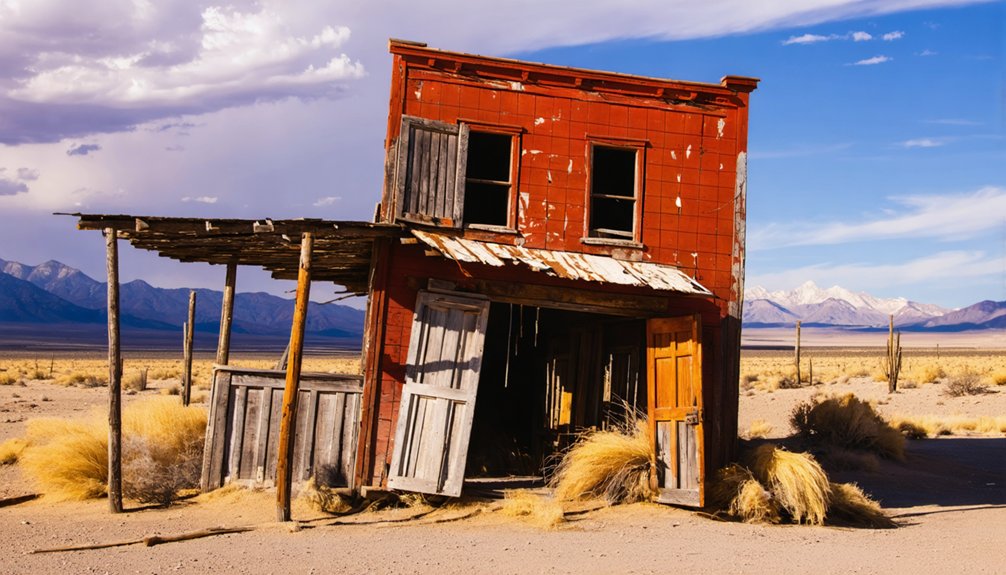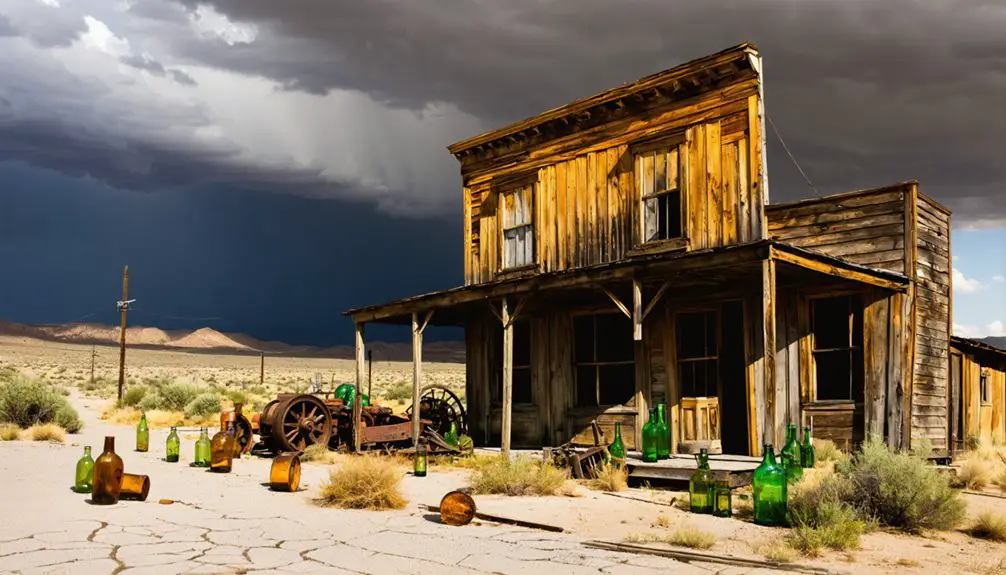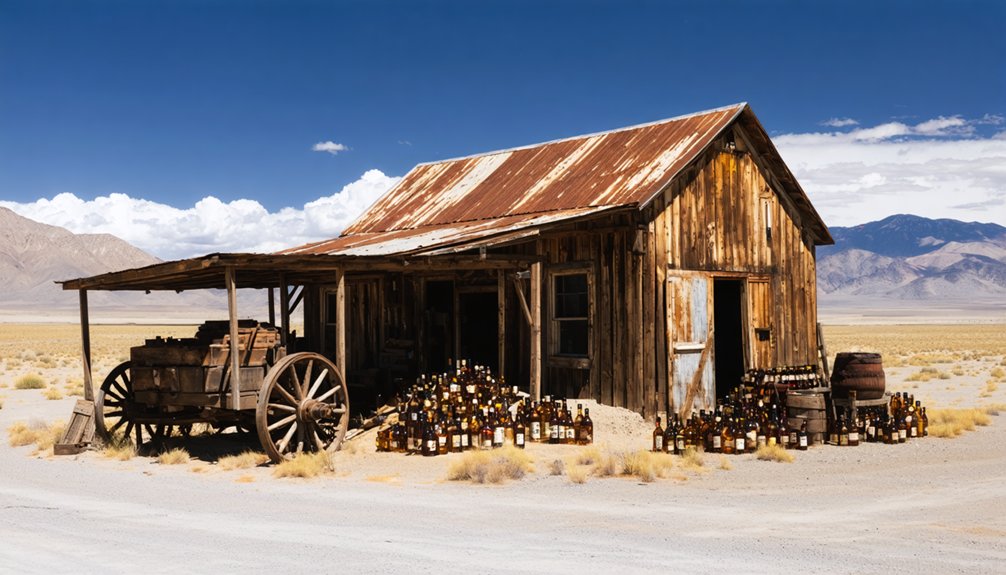
Planning a ghost town road trip to Gold Point, Nevada means stepping into a Depression-era silver and gold mining settlement where nearly 1,000 residents once lived and roughly 50 original buildings still stand frozen in desert silence. Head out in spring or fall, stock up in Goldfield, and drive 8 miles off US 95 onto State Route 266. Respect the private structures, bring plenty of water, and prepare for a place where history breathes—there’s far more to uncover ahead.
Key Takeaways
- Gold Point, Nevada, is a preserved 1880s mining town located about 175 miles from Las Vegas via US 95 and State Route 266.
- Visit during spring (April–June) or fall (September–October) for comfortable temperatures, clear skies, and an authentic, uncrowded experience.
- Bring at least one gallon of water per person, offline maps, sun protection, and emergency supplies due to remote desert conditions.
- Overnight stays in restored miner’s cabins are available, while Goldfield and Tonopah offer additional lodging options nearby.
- Combine your visit with nearby ghost towns like Rhyolite and Goldfield to experience Nevada’s full boom-and-bust mining history.
What Is Gold Point and Why Does It Still Exist?
Tucked into the high desert of Esmeralda County, Nevada, Gold Point is one of the American West’s most compelling ghost towns — except it isn’t entirely a ghost town. A handful of residents still call it home, keeping its streets from falling completely silent.
Gold Point history stretches back to the 1880s, moving through silver booms, a transformative 1927 gold discovery, and a wartime shutdown that nearly erased the town for good.
From silver strikes in the 1880s to a gold rush, wartime closure nearly ended Gold Point’s story entirely.
What saved it wasn’t government intervention or tourism dollars — it was private preservation efforts, led largely by Herb Robbins, who started buying and restoring crumbling structures in the 1970s.
When you roll into Gold Point today, you’re entering a place that refused to disappear quietly.
Best Time of Year for a Gold Point Road Trip
Planning when to make the drive matters as much as planning the route itself. Gold Point sits at 5,400 feet, so spring and fall deliver the clearest skies and the most comfortable temperatures for walking the townsite and examining historical artifacts up close.
Summer heat can be brutal across the Nevada desert, and winter roads occasionally become treacherous. April through early June and September through October offer that sweet spot where the light hits the old structures beautifully and you can take your time studying the remnants of early mining techniques without rushing back to your vehicle.
Avoid holiday weekends if you want the place mostly to yourself. Midweek visits in shoulder season let you absorb the silence that a boomtown of 1,000 people once shattered.
How to Get to Gold Point, Nevada
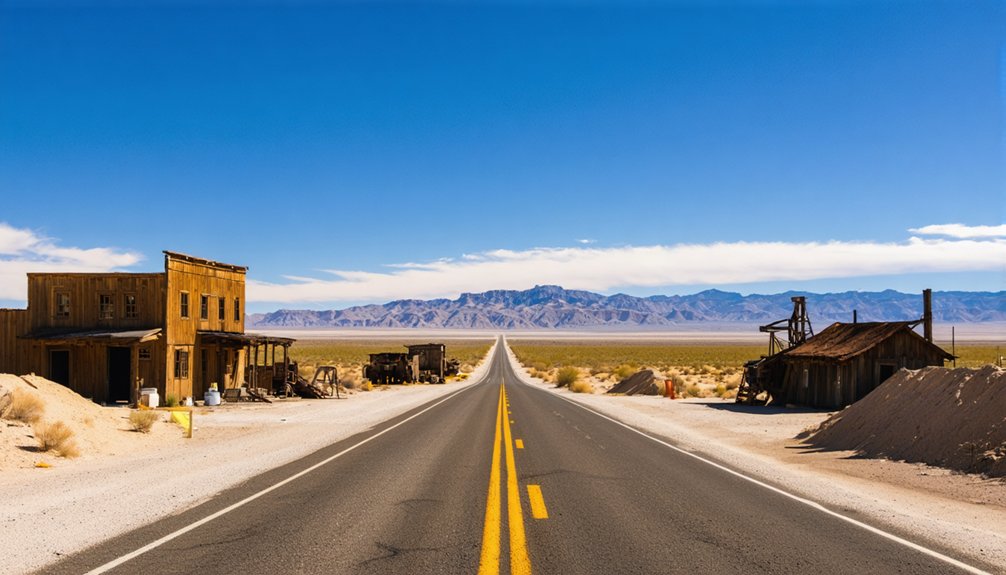
Getting to Gold Point means committing to the remoteness that defines it. Head north on US 95 from Las Vegas — roughly 175 miles — then turn onto State Route 266. You’ll travel about 8 miles off that highway before the desert opens up and the old townsite appears.
The elevation climbs to around 5,400 feet, so your surroundings shift noticeably as you approach.
No paved shortcuts exist here. That isolation is exactly what preserved the historical artifacts and local legends still breathing inside those 50 standing structures.
Goldfield sits about 30 miles northeast if you need fuel or supplies beforehand — and you should stop there first. Gold Point doesn’t cater to the unprepared. It rewards the traveler willing to earn the view.
What to Bring for Your Gold Point Desert Visit
Gold Point sits at 5,400 feet in one of Nevada’s most remote desert stretches, so you’ll want to pack more water and snacks than you think you’ll need before you leave the pavement. The desert sun and relentless wind can wear you down fast, making a wide-brimmed hat, sunscreen, and a windbreaker essential companions for your walk through the old townsite.
Cell service won’t save you out here, so bring a paper map or downloaded offline route along with a basic emergency kit before you head those 8 miles off State Route 266.
Essential Water And Snacks
Packing the right supplies can make or break your visit to this remote desert outpost, sitting at 5,400 feet elevation and roughly 8 miles off the nearest state route. Gold Point’s isolation is part of its freedom, but that freedom demands preparation.
Water is your non-negotiable packing essential — bring more than you think you’ll need, since desert heat and altitude accelerate dehydration faster than most travelers expect. At least one gallon per person covers a comfortable visit.
For road trip snacks, choose high-protein, heat-stable options like nuts, jerky, and dried fruit rather than chocolate or anything that melts or spoils quickly.
Goldfield, roughly 30 miles northeast, offers your last reliable resupply stop before heading southwest toward Gold Point’s weathered, sun-bleached streets.
Sun And Wind Protection
Water and snacks will keep you moving, but the desert sun at 5,400 feet will wear you down in ways that have nothing to do with thirst.
Gold Point sits exposed on open high desert, where UV intensity climbs hard and wind cuts across the flats without mercy. You’ll want reliable solar shading — a wide-brimmed hat, UV-blocking sunglasses, and long sleeves you can layer.
Don’t underestimate the wind; those same wooden buildings that survived a century out here did so partly because their builders understood wind barriers. A light windbreaker earns its weight.
Sunscreen rated SPF 50 or higher belongs in your pack. The same rugged landscape that drew miners here in 1927 will test you too — come prepared to meet it honestly.
Navigation And Emergency Gear
Because Gold Point sits roughly 8 miles off State Route 266 in one of Nevada’s most remote stretches of high desert, your phone’s GPS signal is unreliable at best and absent at worst. Download offline maps before you leave pavement behind. True freedom out here means self-sufficiency.
Pack these essentials:
- Paper maps or a dedicated GPS device — don’t trust cell coverage near the Nevada-California border
- First-aid kit — wildlife encounters with desert rattlesnakes demand immediate response capability
- Emergency water supply — at least one gallon per person beyond your drinking supply
- Portable charger and spare batteries — photography tips mean nothing if your camera dies documenting 100-year-old buildings
Esmeralda County won’t send help quickly. Prepare accordingly, and the desert rewards you.
What’s Left Standing in Gold Point Today
Although time and the desert have claimed many of Nevada’s old mining camps, Gold Point has held on remarkably well. Around 50 buildings still stand across the old townsite, giving you a rare, unfiltered look at Nevada’s mining past.
You’ll find the original post office, the old Hornsilver Telephone Office now serving as a private saloon, and miner’s cabins that have weathered over a century of desert heat. Historical artifacts are woven throughout — including a remarkable 1909 Brunswick pool table and a private collection of more than 8,000 Nevada mining camp photographs.
Preservation efforts led largely by Herb Robbins since the 1970s saved these structures from collapse. Walking Gold Point’s main street, you’re not viewing a recreation — you’re standing inside living history.
The Mining History That Built Gold Point
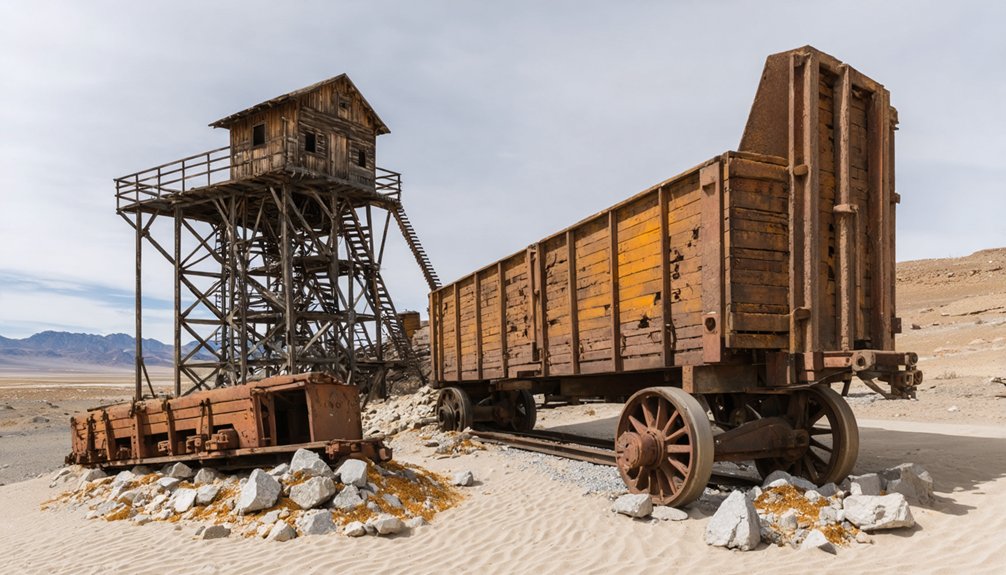
Gold Point didn’t start as a gold town at all. Its identity shifted with each discovery beneath the desert floor:
- 1880s – Ranchers and miners settled Lime Point, drawn by limestone outcroppings.
- 1902 – A silver strike renamed the camp Hornsilver, pulling prospectors back in.
- 1905 – The Great Western Mine Company hit major silver, triggering another boom.
- 1927 – Gold replaced silver as the driving force, and the town earned its final name.
Each strike rewrote the story.
During the Depression-era gold boom, nearly 1,000 people lived here.
Then World War II shut the mines down permanently as nonessential.
A 1960s cave-in sealed the last operation.
Today, mining relics scatter the townsite, preserved through deliberate preservation efforts that let you read that layered history firsthand.
Who Saved Gold Point From Disappearing?
Most ghost towns don’t get a second chance — they just fade, timber by timber, until the desert reclaims them. Gold Point nearly followed that path. Then Herb Robbins arrived in the 1970s, recognized the cultural significance of what he was seeing, and started buying up deteriorating buildings one by one.
Most ghost towns don’t get a second chance. Gold Point nearly didn’t — until Herb Robbins showed up and refused to let it disappear.
His preservation efforts weren’t institutional or government-funded — they were personal, stubborn, and freedom-driven. Robbins and his friends repaired interiors, restored facades, and kept history breathing inside walls that had nearly given up.
Today, roughly 50 buildings still stand because of that commitment.
When you walk Gold Point’s main street, you’re walking through someone’s life work. That’s a rare thing, and it’s exactly why this place deserves your attention.
Where to Stay Near Gold Point, Nevada
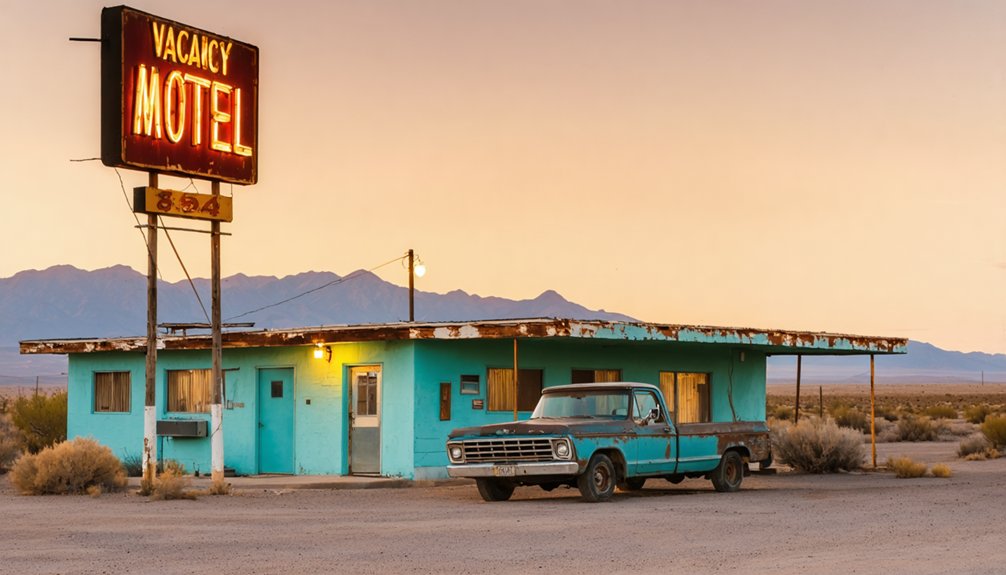
Staying the night in Gold Point itself isn’t just possible — it’s the whole experience. The town offers local lodging inside an original miner’s cabin, putting you directly inside living history. These historic accommodations aren’t polished resorts; they’re raw, atmospheric, and deeply authentic.
Consider these options when planning your stay:
- Gold Point’s miner’s cabin — sleep where prospectors once bunked after long shifts underground
- The on-site bed-and-breakfast — rustic comfort within the preserved townsite
- Goldfield, Nevada — a nearby alternative roughly 30 miles northeast with additional lodging choices
- Tonopah, Nevada — a larger hub about 50 miles north, offering motels and the famous haunted Mizpah Hotel
Wake up surrounded by century-old buildings, desert silence, and unfiltered frontier atmosphere.
Ghost Towns Near Gold Point to Combine Into One Trip
Nevada’s Mojave-edge desert is littered with the bones of boom-and-bust mining camps, and since you’re already making the trek out to Gold Point, it makes sense to chain several ghost towns into a single unforgettable road trip.
Nearby Goldfield, just 30 miles northeast, still carries ghost town legends of its own — a once-roaring city that pioneering mining techniques built practically overnight.
Rhyolite, closer to the California border, offers skeletal bank ruins and eerie bottle houses frozen in time.
Tonopah sits within easy driving distance and preserves rich mining heritage alongside accessible history.
Each stop adds a distinct layer to Nevada’s fractured past, letting you piece together the full, unfiltered story of what ambition, silver, and gold once carved out of this brutal, beautiful landscape.
What You Can and Cannot Do as a Visitor in Gold Point
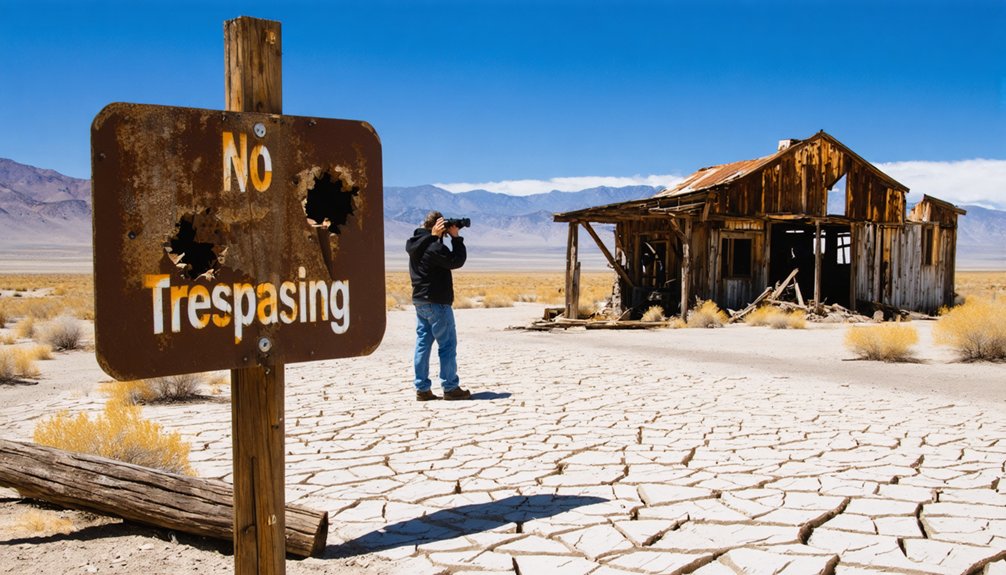
When you visit Gold Point, you can walk the main street, explore original 100-year-old buildings, and step inside the historic saloon for a drink beneath preserved relics of the mining era.
You’re a guest in a living town, though, not a roped-off museum, so respecting private property and the residents who still call it home is non-negotiable.
What you can experience is remarkable; what you can’t do is treat the place like an open playground.
Permitted Visitor Activities
Though Gold Point isn’t a museum with velvet ropes and guided tours, it’s also not a free-for-all. Private preservation efforts have kept these historical landmarks standing for decades, so respect that work. Here’s what you can do:
- Walk the main street and soak in over a century of Nevada mining history.
- Visit the saloon, housed in the original Hornsilver Telephone Office building.
- Stay overnight at the bed-and-breakfast inside a restored miner’s cabin.
- Photograph the buildings, from the original post office to sun-bleached storefronts.
What you shouldn’t do is touch, enter uninvited, or disturb anything. These aren’t props — they’re someone’s home, someone’s labor. You’re a guest walking through living history, so act like it.
Restricted Actions Onsite
Don’t remove artifacts, tamper with structures, or wander into buildings uninvited. These aren’t museum replicas — they’re original century-old materials that decades of private effort kept standing. Touch nothing you weren’t offered permission to touch.
Stay on accessible paths. Photograph freely, but don’t trespass beyond marked or obvious boundaries. Some residents still live here, and their privacy isn’t negotiable.
Gold Point survived because people cared enough to protect it. You’re a guest in that story — act like one.
Frequently Asked Questions
Is There Cell Phone Service or Wi-Fi Available at Gold Point?
Like stepping back in time, you’ll find cell coverage and Wi-Fi availability nearly nonexistent at Gold Point. Embrace the freedom of true disconnection — this remote, 5,400-foot ghost town strips away modern distractions, reconnecting you with raw Nevada history.
Are Pets Allowed When Visiting Gold Point’s Historic Buildings and Grounds?
The knowledge doesn’t specify pet policies or pet accommodations for Gold Point. You’ll want to contact Herb Robbins or current residents directly before bringing your furry trail companion to explore these legendary, sun-baked historic grounds.
How Long Does a Typical Visit to Gold Point Usually Take?
With 50 standing buildings to explore, you’ll typically spend 2–3 hours wandering Gold Point history’s sun-bleached streets. Local attractions like the 1909 Brunswick pool table and preserved miners’ cabins reward every freedom-seeking soul who lingers.
Is Gold Point Accessible for Visitors With Mobility Limitations or Disabilities?
Gold Point doesn’t offer fully accessible pathways or wheelchair rentals, but you’ll find history breathing through its dusty streets. Navigate carefully — this raw, untamed living ghost town rewards your spirited determination to explore Nevada’s rugged, preserved past.
Are Photography or Filming Permits Required for Commercial Shoots at Gold Point?
Ah, bureaucracy in the Wild West! You’ll need to contact Gold Point’s private owners directly about commercial shoot permits. Historical preservation matters here, so don’t skip your permit application—respect the freedom these weathered, storied walls silently demand.
References
- https://en.wikipedia.org/wiki/Gold_Point
- https://www.goldpointghosttown.com/
- https://www.tripadvisor.com/Attraction_Review-g45949-d1064077-Reviews-Gold_Point_Ghost_Town-Goldfield_Nevada.html
- https://www.accessesmeralda.com/communities/gold_point.php
- https://www.facebook.com/groups/americansouthwest/posts/1429547104341426/
- https://travelnevada.com/ghost-town/gold-point-ghost-town/
- https://www.goldpointghosttown.com/HTML_Pages/History.htm
- https://www.youtube.com/watch?v=Qp2-PViqbD4
- https://www.latimes.com/travel/la-tr-vegas4may04-story.html
- https://www.youtube.com/watch?v=3g3_Fx9UKdU