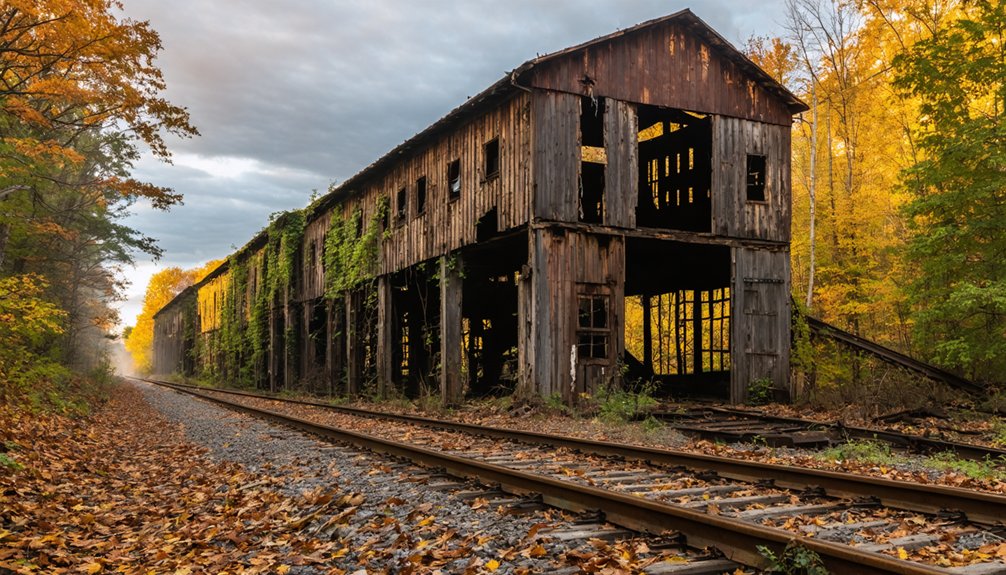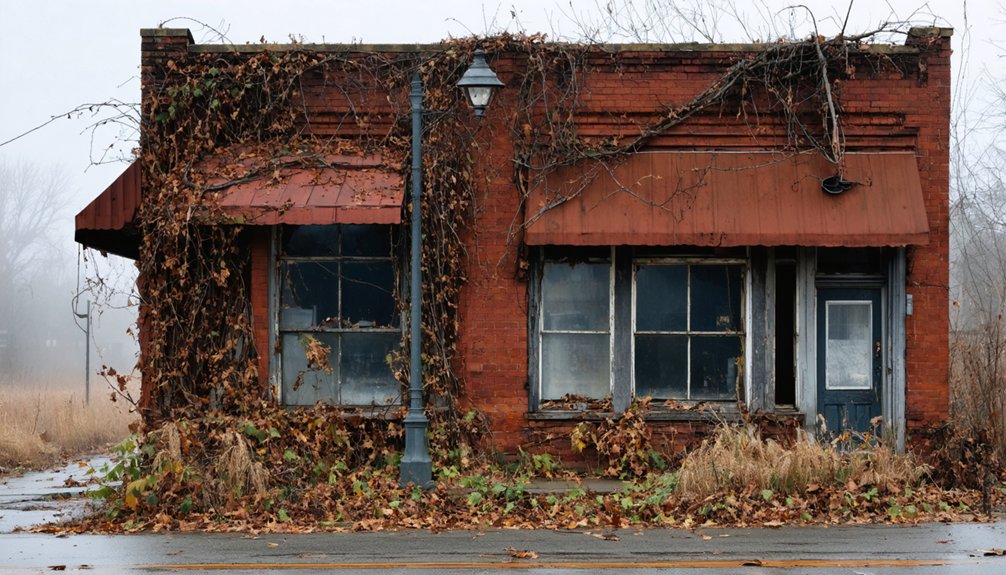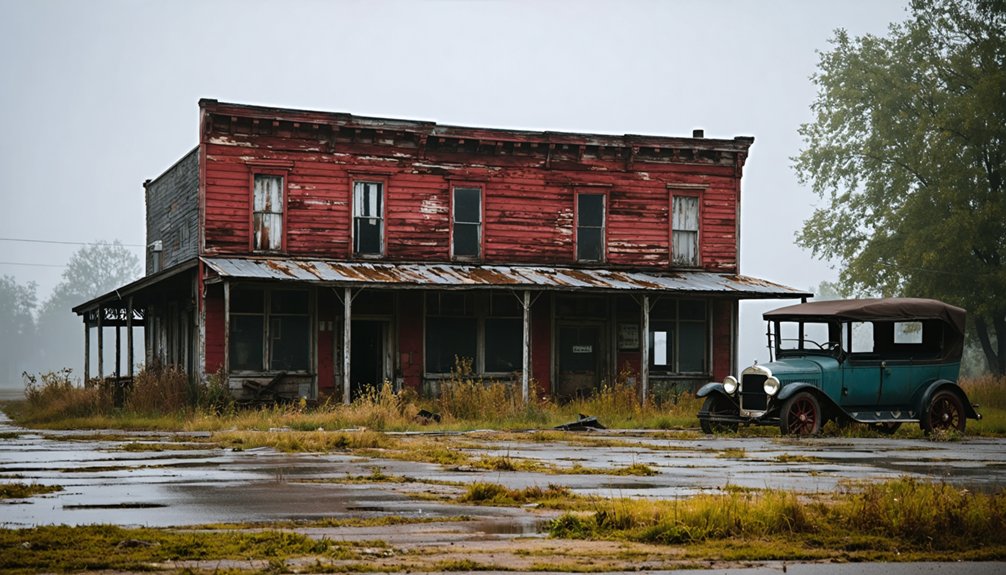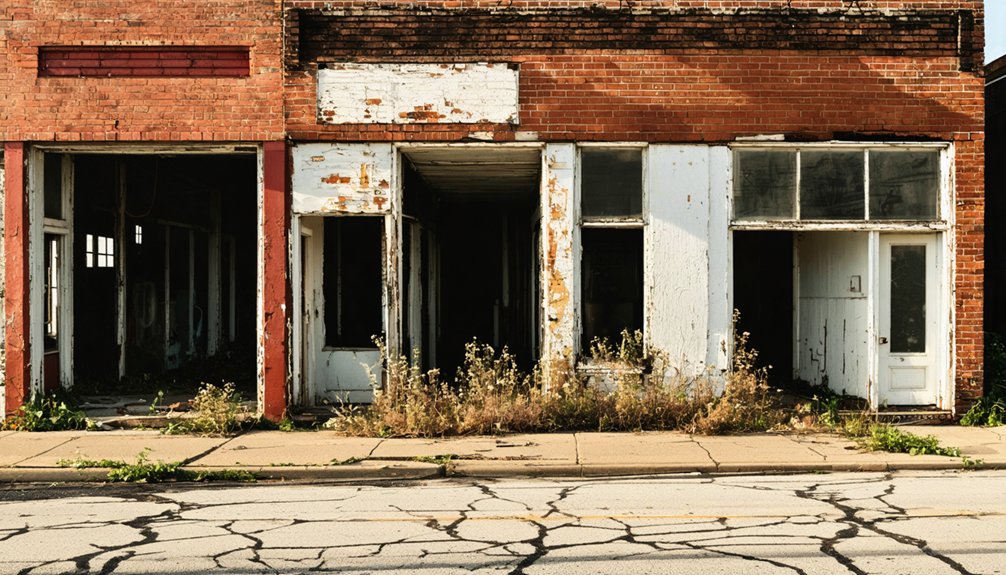
Planning a ghost town road trip to Sloan, Indiana means tracking down a nearly invisible speck on the Warren County map where the Chicago and Eastern Illinois Railroad once kept a small community alive. Today, you’ll find crumbling grain elevator foundations and the skeleton of a general store frozen in quiet decay. Bring sturdy boots, printed maps, and a camera. Pair Sloan with nearby ghost towns like Corwin and Hindostan Falls, and there’s a full weekend adventure waiting to unfold.
Key Takeaways
- Sloan is located in northwest Warren County at the intersection of county roads 100 S and 825 W, near Hedrick, Indiana.
- The town declined after the Chicago and Eastern Illinois Railroad’s fall in the 1990s, leaving crumbling foundations as primary remnants.
- Visit in spring or early fall, preferably weekday mornings, for ideal weather, visibility, and atmospheric photography opportunities.
- Bring sturdy boots, printed maps, water, and a flashlight; never explore alone and avoid unstable foundations.
- Pair Sloan with nearby ghost towns like Corwin, Hindostan Falls, and Elkinsville for a comprehensive weekend road trip itinerary.
What Makes Sloan, Indiana Worth a Ghost Town Road Trip?
Although it may seem like just a quiet stretch of Indiana farmland, Sloan holds the kind of haunting history that makes ghost town hunters take notice. Once a functioning railroad stop in Warren County, this extinct town built its identity around the Chicago and Eastern Illinois Railroad.
Sloan may look like empty farmland, but its railroad past makes ghost town hunters stop in their tracks.
When the trains stopped running in the 1990s, Sloan disappeared with them.
Today, you’ll find only crumbling foundations and dilapidated structures standing as silent evidence of urban decay. It’s a raw, unfiltered snapshot of what happens when industry vanishes.
Unlike polished museums, Sloan offers something more honest — a real place frozen in time.
For anyone passionate about historical preservation and exploring forgotten corners of America, Sloan delivers exactly the kind of freedom and authenticity that no curated attraction ever could.
Where Is Sloan Located in Warren County?
Tucked into the northwest corner of Warren County, Sloan sits right on the border of Jordan and Steuben Townships, less than a mile east of Hedrick, Indiana. You’ll find the exact site at the intersection of county roads 100 S and 825 W, a quiet crossroads that barely hints at its historical significance.
The Chicago and Eastern Illinois Railroad once ran through here, giving Sloan its reason to exist. A grain elevator and general store served the community that grew around that rail stop. But railroad decline hit hard, and when trains stopped running through in the 1990s, Sloan fundamentally vanished.
Today, modern digital maps often omit it entirely. If you’re driving through Warren County, you’ll need old records or a sharp eye to even find it.
How Did Sloan Go From Railroad Town to Ghost Town?
Knowing where Sloan sits is one thing, but understanding why it disappeared tells a far more revealing story. Sloan built its identity around the Chicago and Eastern Illinois Railroad, and that dependence became its downfall.
A grain elevator and general store once served as the town’s historical landmarks, drawing farmers and travelers into a modest but functional community.
When the railroad stopped running through Sloan in the 1990s, economic life vanished almost overnight. Local legends suggest residents held on longer than the infrastructure did, watching the town hollow out around them.
Without rail traffic, no new commerce arrived. Buildings fell into disrepair, foundations crumbled, and people moved on.
What you’ll find today is the quiet aftermath of a town that simply ran out of reasons to survive.
How to Find Sloan Without Getting Lost in Rural Indiana
Finding Sloan means accepting that modern technology won’t do much of the heavy lifting. Most digital maps omit it entirely, so you’ll need to navigate the old-fashioned way.
Head to Warren County and target the intersection of county roads 100 S and 825 W. That crossroads puts you right at the heart of what was once a functioning railroad community.
You’ll know you’re close when you spot Hedrick less than a mile to your west. From there, scan the landscape for dilapidated structures and crumbling foundations — those are your historical landmarks now.
Don’t expect signage. Locals carry the town’s story through local folklore rather than official markers. Come prepared with a printed county map, sturdy shoes, and genuine curiosity about places history quietly swallowed whole.
What’s Still Standing at the Sloan Ghost Town Site?
When you arrive at the Sloan site, don’t expect much — but what’s left still tells a story. You’ll find a few crumbling foundations poking through the overgrowth, along with dilapidated structures that hint at the town’s former economic life.
These skeletal remains are all that stand between Sloan’s past and total erasure from the landscape.
Remaining Foundations And Structures
Although little remains of Sloan today, what you’ll find at the site still tells a haunting story. A few crumbling foundations break through the overgrowth, marking where the grain elevator and general store once stood.
Dilapidated structures lean against time, offering raw material for urban exploration and a glimpse into a community that railroad commerce once sustained.
No residents walk these grounds anymore, and modern maps won’t guide you here. That’s part of the appeal. You’re charting forgotten geography on your own terms.
Historical preservation efforts haven’t reached Sloan, which means what you see is unfiltered — weathered, honest, and quietly powerful.
Bring a camera, wear sturdy shoes, and move carefully through the debris. The site rewards curious visitors who respect what little survives.
Dilapidated Buildings Still Visible
What still stands at Sloan barely qualifies as standing at all, but that’s exactly what makes it worth seeing. A handful of dilapidated buildings cling to the landscape, warped and weathered by decades of neglect. You won’t find historical preservation efforts here — no plaques, no restorations, no guided tours.
What you’ll find instead is raw, unfiltered decay telling its own story.
Walk the grounds and you’ll sense why local legends keep this place alive in regional memory. Former structures sag under collapsed rooflines, their interiors swallowed by overgrowth. Walls lean at angles that defy logic.
For travelers chasing genuine forgotten history, these crumbling remnants hit differently than any museum exhibit. Sloan doesn’t dress itself up — it simply stands there, broken and honest, waiting for you to pay attention.
When Is the Best Time to Visit Sloan?
Spring and fall offer the best windows for exploring Sloan, when mild temperatures make it comfortable to walk the site and fading or emerging foliage keeps sightlines open across the old foundations.
You’ll capture stronger photography opportunities when leaves aren’t blocking the remnants of what once stood here. Early morning light in October hits the crumbling structures beautifully, giving your shots real depth and atmosphere.
Avoid midsummer visits — dense vegetation swallows the foundations, and heat makes the exposed terrain miserable.
Winter works if you’re committed to historical preservation research, since snow outlines structural remains clearly, but access roads can become difficult.
Weekday visits beat weekends if you want the site to yourself. You’ll move freely, think clearly, and absorb the silence that defines Sloan’s haunting, forgotten character.
What to Bring When You Explore Sloan and Indiana Ghost Towns

Packing right makes the difference between a frustrating scramble and a smooth, rewarding exploration. You’ll want sturdy boots since Sloan’s remaining foundations and uneven terrain aren’t forgiving on casual footwear.
Bring a camera to capture dilapidated structures before they disappear entirely. A printed map helps since digital maps often omit Sloan completely.
Pack water, snacks, and a first aid kit — nobody’s running a general store out there anymore. A notebook lets you document historical artifacts you encounter and jot down local legends tied to the area’s railroad past.
Wear layered clothing since Warren County weather shifts quickly.
Carry a flashlight if you’re pushing toward dusk. Respect the site — don’t remove anything. You’re there to witness history, not erase what little remains.
How to Stay Safe at Abandoned Sites Like Sloan
Abandoned sites like Sloan look peaceful from a distance, but you’re stepping into genuinely hazardous territory the moment you leave the road. Dilapidated foundations can collapse without warning, and rotting floorboards hide dangerous drops beneath them. Wear sturdy boots, watch every step, and never explore alone.
Resist the urge to pocket historical artifacts you discover. Removing them strips away irreplaceable context and may carry legal consequences. Photograph everything instead.
Local legends surrounding ghost towns can pull you deeper into unfamiliar territory after dark. Don’t let curiosity override common sense. Bring a flashlight, charge your phone, and tell someone your exact route before departing.
Respect posted property signs — many sites sit on private land. Freedom to explore means accepting responsibility for your own safety first.
Which Ghost Towns Near Sloan Are Worth Adding to Your Route?
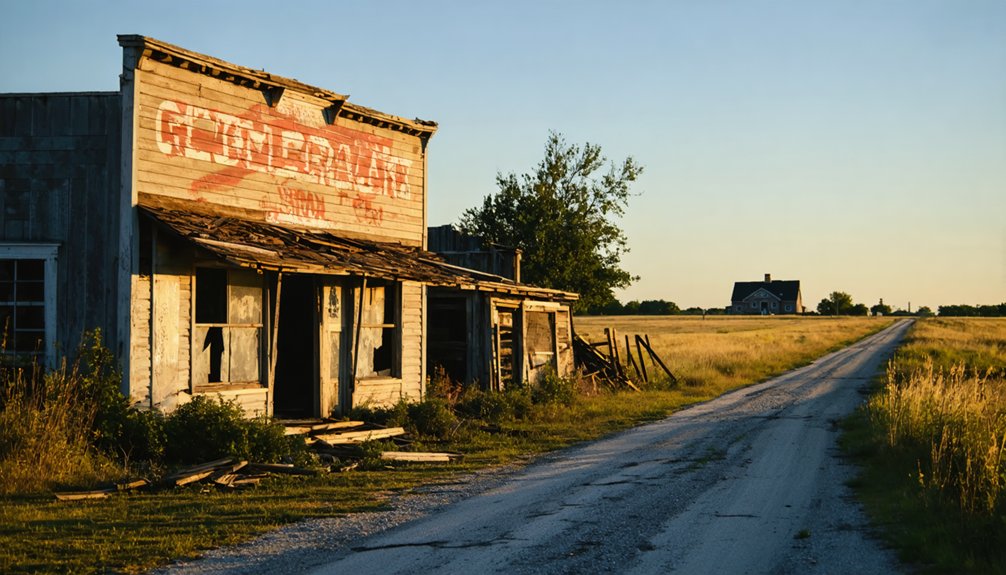
If you’re already making the trek to Sloan, you’ll want to stretch your route to include nearby ghost towns like Corwin, Baltimore, Brisco, and Conrad, all of which share Sloan’s railroad-era roots and quiet, eerie atmosphere.
Fort Ritner, Tunnelton, Hindostan Falls, and Elkinsville round out a rich regional circuit that rewards curious explorers with haunting remnants of Indiana’s forgotten past.
Plotting these stops together on a single itinerary lets you cover Warren County and beyond efficiently, turning a quick visit into a full-day journey through the state’s vanished communities.
Nearby Ghost Towns Worth Visiting
Once you’ve explored the crumbling foundations of Sloan, you’ll find that Warren County and the surrounding region offer a surprisingly rich trail of ghost towns worth tracking down. Corwin and Baltimore sit nearby, each carrying their own local legends and quiet, unsettling atmosphere.
Brisco and Conrad offer additional stops for those hungry to piece together the region’s forgotten railroad past. Further out, Fort Ritner and Tunnelton reward curious travelers with deeper historical layers.
While Hindostan Falls and Elkinsville draw visitors interested in preservation efforts that keep these vanished communities from fading entirely from memory. Each town tells a version of the same story — industry arrived, thrived briefly, then disappeared.
String these stops together and you’ve built yourself a genuinely compelling route through Indiana’s abandoned history.
Planning Your Regional Route
Building a solid route around Sloan means thinking strategically about which ghost towns justify the detour and which ones you can cluster together naturally. Start with Corwin and Baltimore since they sit closest geographically and share Sloan’s railroad-dependent history. Both reward visitors interested in historical preservation, offering tangible reminders of how quickly industry can reshape a landscape.
From there, push outward toward Brisco and Conrad, then consider looping south toward Hindostan Falls and Elkinsville, where local legends add a richer storytelling layer to your exploration.
Fort Ritner and Tunnelton round out a longer itinerary beautifully.
Plan your driving segments during daylight hours, keep a physical map as backup since digital maps frequently omit these sites, and give yourself flexibility to linger where the history feels most alive.
How to Build a Full Weekend Road Trip Around Sloan, Indiana
Planning a full weekend road trip around Sloan, Indiana is easier than you’d think, since the region is packed with ghost towns that pair naturally into a single route. Combine historical preservation stops with open-road freedom by hitting multiple abandoned settlements across Warren County and beyond.
Structure your two days like this:
- Day 1: Explore Sloan and nearby Corwin, focusing on photography tips like shooting foundations during golden hour for dramatic shadows.
- Day 2: Push south toward Hindostan Falls and Elkinsville, where overgrown landscapes reward patient photographers.
- Both days: Keep county road maps downloaded offline since digital maps often omit these locations entirely.
You’ll cover forgotten railroad towns, crumbling infrastructure, and raw Indiana countryside without ever feeling rushed. This region rewards curiosity, not itineraries.
Frequently Asked Questions
Is There an Admission Fee to Visit the Sloan Ghost Town Site?
You don’t pay any admission fee to explore Sloan’s haunting remains! There’s no historical preservation organization charging entry, and visitor amenities are nonexistent — just open roads, crumbling foundations, and pure, unfiltered freedom awaiting your arrival.
Are Pets Allowed When Exploring Abandoned Ghost Towns Like Sloan?
Like a wild card in your adventure, pet safety’s your responsibility! You can typically bring pets, but watch for wildlife encounters at abandoned sites like Sloan—keep them leashed and protected from hidden hazards.
Can Drone Photography Be Used Legally at the Sloan Site?
You can likely use drone photography at Sloan, but you’ll need to check aerial regulations first. Drone permits may be required depending on airspace rules, so research FAA guidelines before capturing those hauntingly beautiful abandoned landscapes.
Is the Sloan Site Accessible to Visitors With Mobility Limitations?
The site lacks accessibility features and mobility assistance. You’ll find rough terrain and crumbling foundations where smooth paths once existed. Freedom calls, but uneven ground challenges mobility-limited visitors, making Sloan difficult yet not impossible to partially explore.
Are Guided Tours of Sloan Offered by Any Local Organizations?
You won’t find official guided tours of Sloan, but you’re free to explore independently. Seek out local historical preservation groups and uncover local legends yourself, making your ghost town adventure uniquely yours to discover.
References
- https://www.youtube.com/watch?v=-5FLi2nYcz8
- https://en.wikipedia.org/wiki/Sloan
- https://raregoldnuggets.com/?p=3933
- https://www.youtube.com/watch?v=484KsCOx0E4
- https://www.youtube.com/watch?v=YENGw3D73t4
- https://www.onlyinyourstate.com/experiences/indiana/ghost-towns-in
- https://www.youtube.com/watch?v=ATlJaxEMRhA
- https://33travels.com/ghost-towns-in-indiana/
- https://103gbfrocks.com/where-nobody-lives-ghost-towns-in-indiana/
- https://en.wikipedia.org/wiki/Category:Ghost_towns_in_Indiana