Fish Lake Valley sits roughly 250 miles from Las Vegas and 215 from Reno, both routes funneling onto U.S. Route 95 through Nevada’s raw, unfiltered high desert. You’ll cross four mountain passes, ghost through abandoned silver towns like Dyer and Oasis, and soak in a 105°F thermal spring surrounded by desert silence. It’s a landscape shaped by boom-and-bust cycles, lithium-scarred and historically rich—and there’s far more to uncover once you start planning your route.
Key Takeaways
- Fish Lake Valley sits in Esmeralda County, Nevada, accessible from Las Vegas (~250 miles) and Reno (~215 miles) via U.S. Route 95.
- Key stops include Dyer, a resilient small town, and Oasis, an abandoned mining settlement near the California border.
- Cross four mountain passes with caution, checking seasonal snow conditions and watching for wildlife along ridgelines.
- Pack water, fuel, sun protection, layered clothing, and recovery gear for remote high desert travel on challenging dirt roads.
- Enhance your trip by soaking in Fish Lake Valley Hot Spring at 105°F, surrounded by wildflowers and desert wildlife.
Why Fish Lake Valley Is Worth the Ghost Town Drive?
While most Nevada ghost town drives fade into monotony, Fish Lake Valley rewards you with a living relic — Dyer, a tiny Esmeralda County farming town that never fully surrendered to abandonment after its precious metals ran out around 1917. Tucked between the Silver Peak Range and White Mountains, this 25-mile endorheic valley delivers something rare: cultural heritage you can actually touch, not just read about on a historical marker.
You’ll move through protected wildlife habitats stretched across high desert terrain, tracing routes where miners, ranchers, and prospectors carved their ambitions into the landscape. With a natural hot spring, vanished mining settlements, and Nevada’s highest summit looming nearby, this valley hands you genuine freedom — raw, unfiltered, and completely off the tourist circuit.
How to Get to Fish Lake Valley From Las Vegas or Reno
Whether you’re heading out from Las Vegas or Reno, the drive to Fish Lake Valley follows the same historical artery — U.S. Route 95. From Las Vegas, expect 250 miles and roughly 3 hours and 45 minutes northward through open desert. From Reno, it’s approximately 215 miles south through sagebrush and silence.
Both routes converge on U.S. Route 95 — Nevada’s historical artery cutting through raw, unfiltered desert silence.
Three checkpoints mark your journey:
- Beatty — your gateway north, where the Mojave surrenders to high desert
- Dyer — a living monument to cultural preservation, still breathing after 1917
- Fish Lake Valley — where wildlife conservation meets geothermal wonder
Both routes cut through landscapes demanding respect — raw, unfiltered Nevada. You’re not just driving; you’re tracing a corridor shaped by miners, ranchers, and wanderers who refused to quit.
What the Four Mountain Passes Actually Demand From Your Drive
Leaving U.S. 95 means surrendering to four genuine mountain passes — Temblor Range summit, Walker Pass, Towne Pass, and Daylight Pass — each one extracting patience and attention from your drive. You’ll climb through terrain where historical preservation feels written into the rock itself, crossing divides that once separated prospectors from their fortunes.
Snow loads the high peaks seasonally, so check conditions before committing. These passes aren’t brutal, but they’re unforgiving if you’re distracted or underprepared. Slow down on the descents, keep your eyes scanning the ridgelines for wildlife observation opportunities — pronghorn and raptors work these slopes constantly.
The Silver Peak Range and White Mountains aren’t just scenery; they’re the gatekeepers demanding you earn Fish Lake Valley‘s solitude before you arrive.
The Ghost Towns of Dyer and Oasis: What Survived the Bust
When you roll into Dyer, you’re looking at one of Nevada’s rare ghost towns that never fully gave up the ghost — its roughly 300 residents kept the lights on long after the precious metals ran out around 1917.
Down the road, Oasis didn’t survive as well, leaving nothing behind but the Oasis Ranch where a mining town once stood.
Today, though, a surging lithium market is breathing new economic life into the valley, giving this forgotten stretch of Esmeralda County an unexpected second act.
Dyer’s Enduring Legacy
Though most mining towns in the American West vanished the moment the ore dried up, Dyer refused to follow the script. With roughly 300 visitors passing through and a small resident base holding steady, this Esmeralda County outpost keeps its identity alive through historical preservation and local legends passed down through generations.
What keeps Dyer breathing:
- A resilient farming community that never surrendered its roots after 1917
- Local legends tied to silver rush era prospectors who shaped the valley’s identity
- A lithium market revival injecting new economic energy into old desert bones
You’ll feel it the moment you arrive — Dyer isn’t performing nostalgia. It’s genuinely living it, standing quietly between the Silver Peak Range and the White Mountains, unapologetically free.
Oasis Ranch Replacement
Unlike Dyer, Oasis didn’t survive the bust — it simply ceased to exist. Where miners once chased silver dreams, the Oasis Ranch quietly replaced the ghost town, erasing nearly every trace of its former identity. You won’t find crumbling saloons or rusted machinery here — just open range stretching toward the California border.
Yet the land itself tells a story worth chasing. Drive State Route 264‘s 10-mile stretch and you’ll reach the ranch boundary, where historical preservation gives way to raw, unfiltered desert. The surrounding terrain rewards wildlife observation — scan the high desert scrub for raptors, pronghorn, and migratory birds passing through Fish Lake Valley.
Oasis may have vanished, but its replacement offers something miners never appreciated: untamed silence and absolute freedom.
Economic Revival Today
Both ghost towns nearly faded into complete obscurity after precious metals ran out around 1917, but Fish Lake Valley’s story didn’t end there. Today, three forces are breathing new life into this remote high desert:
- Lithium mining is reviving Esmeralda County’s economy, answering surging industrial demand.
- Cultural preservation efforts protect the valley’s layered mining heritage for curious wanderers like you.
- Wildlife habitats across the endorheic basin attract naturalists drawn to its untouched Great Basin ecosystem.
You’ll find that Fish Lake Valley isn’t surrendering to history — it’s rewriting it. The same rugged independence that kept Dyer alive through every bust cycle now fuels a community refusing to disappear.
Come witness a landscape that’s simultaneously ancient and urgently alive.
What the Mining Boom Left Behind for Today’s Visitors
When you explore Fish Lake Valley’s backcountry, you’ll find the skeletal remnants of abandoned mines and forgotten infrastructure that once fueled a precious metals rush lasting until 1917.
Ghost towns like Dyer and Oasis stand as quiet monuments to that boom-and-bust cycle, each telling a different story of survival and disappearance.
Today, a surging lithium market is breathing new economic life into this high desert landscape, proving that the valley’s mineral wealth hasn’t told its final chapter.
Abandoned Mines and Remnants
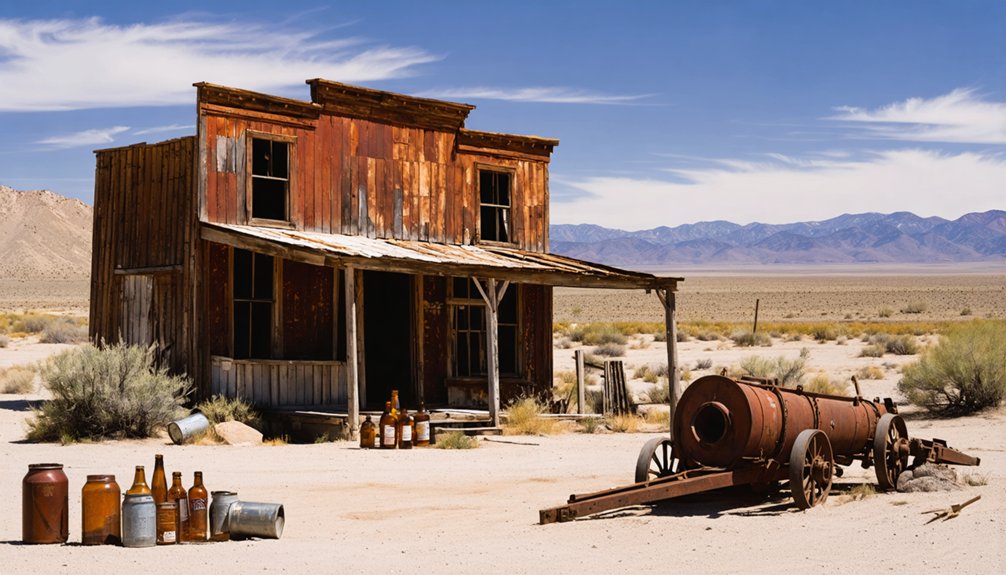
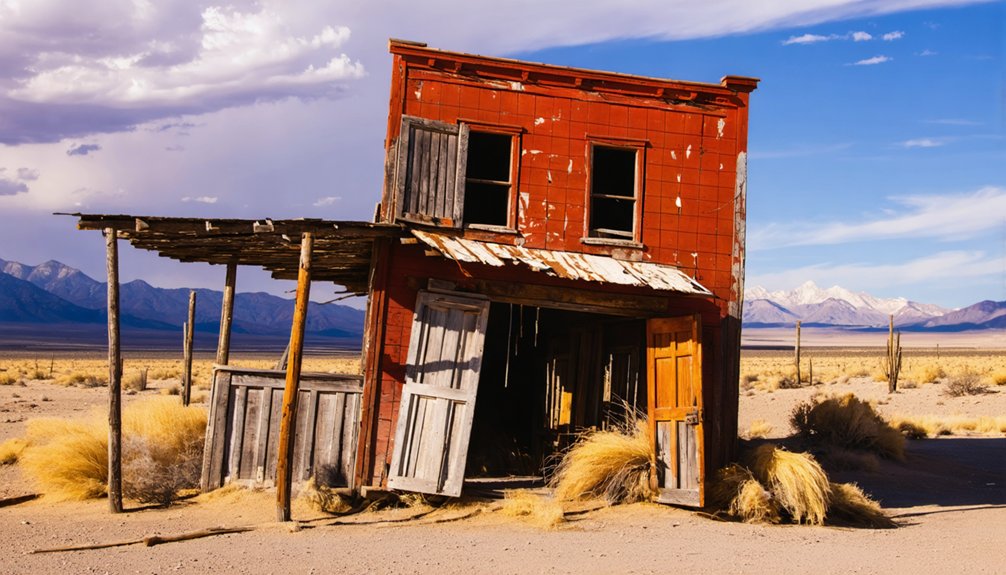
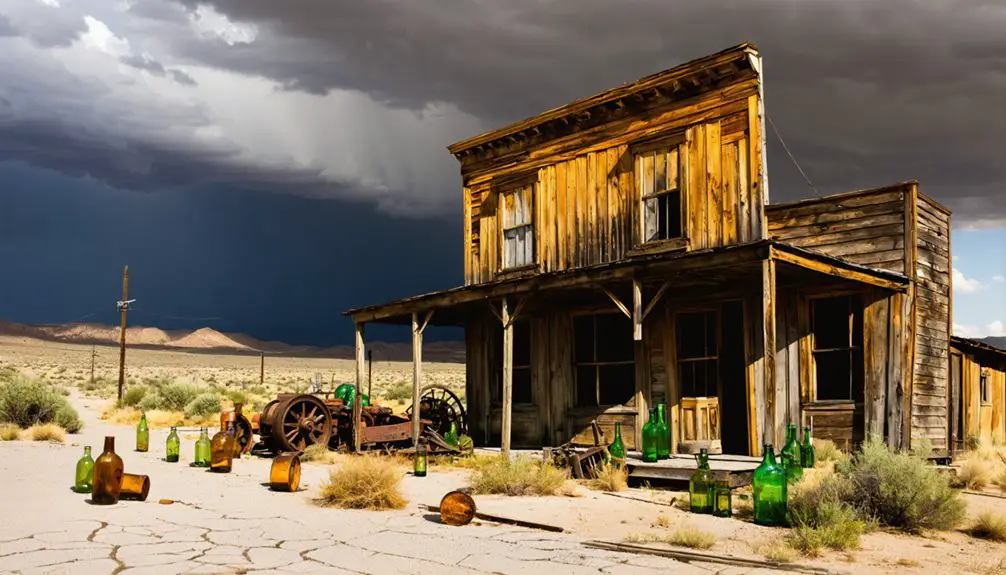
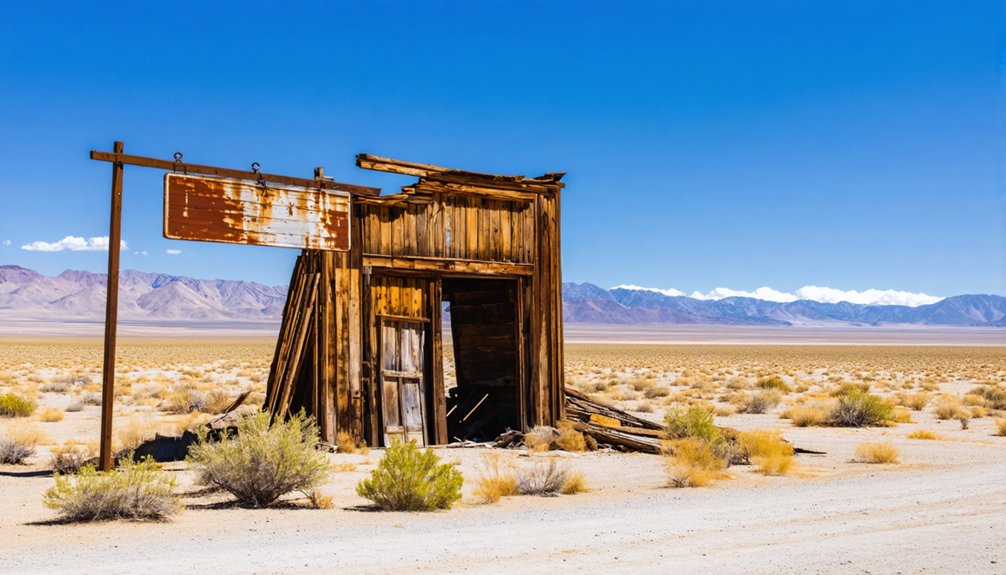
Though the precious metals ran out around 1917, the mining boom left behind a haunting landscape of abandoned shafts, crumbling structures, and rusted equipment scattered across Fish Lake Valley’s high desert terrain. You’ll find yourself stepping through frozen moments of Nevada’s industrial past.
Cultural preservation efforts remind you to observe without disturbing these fragile remnants. Wildlife conservation also matters here, as desert species now inhabit these forgotten structures.
When exploring, remember:
- Never enter abandoned mine shafts — unstable timbers make them deadly
- Photograph equipment and structures without removing artifacts
- Respect posted boundaries protecting both historical sites and nesting wildlife
These ruins aren’t just debris — they’re open-air museums telling stories of boom, bust, and resilience. Explore them responsibly and carry those stories forward.
Ghost Towns Worth Exploring
Beyond the rusted relics and abandoned shafts, two ghost towns anchor Fish Lake Valley’s mining legacy and give today’s road-trippers something worth steering toward.
Dyer never fully died. When the precious metals ran out around 1917, roughly 300 hardy souls stayed behind, keeping this Esmeralda County farming town alive at the foot of the White Mountains. Desert flora still frames its weathered structures, and local wildlife moves freely through the surrounding high desert.
Oasis tells a starker story. Head down State Route 264 for 10 miles and you’ll find nothing but the Oasis Ranch where a mining town once stood near the California border.
Together, these two stops deliver exactly what ghost town hunters crave — tangible proof that boom-and-bust cycles leave permanent marks on the land.
Lithium’s Economic Revival
Those ghost towns didn’t just leave behind rusted shafts and faded storefronts — they left a lithium-rich landscape that’s pulling serious industrial money back into Fish Lake Valley. The same geology that once yielded silver and gold now fuels a modern energy economy.
You’ll notice the tension between progress and place here. Three things hang in the balance:
- Wildlife habitats supporting fragile desert ecosystems
- Cultural preservation of historic mining infrastructure
- Economic independence for a county that refused to die
Esmeralda County never fully surrendered after 1917, and today’s lithium boom proves it right. That stubborn resilience is exactly what drew you here.
The valley’s past and future exist simultaneously — one foot in abandoned ore shafts, the other stepping toward tomorrow’s battery-powered frontier.
Soak in the Fish Lake Valley Hot Springs After the Drive
After crossing four mountain passes and miles of high desert, you’ll want nothing more than to sink into the Fish Lake Valley Hot Spring — a natural oasis tucked between the Silver Peak and White Mountains. Esmeralda County maintains this gem, keeping it open 24/7 for wanderers like you.
The water holds steady at 105°F, sourced from a nearby thermal spring, and a concrete soaking tub sits within a fenced area ready for use. You’ll reach it via a 20-minute drive on a county dirt road from Dyer.
Spring visits reward you with wildflower blooms carpeting the surrounding desert floor, while desert wildlife moves freely through the valley. It’s a raw, unhurried reward after a hard day’s drive through Nevada’s forgotten frontier.
What to Pack for Fish Lake Valley’s Dirt Roads and Desert Heat
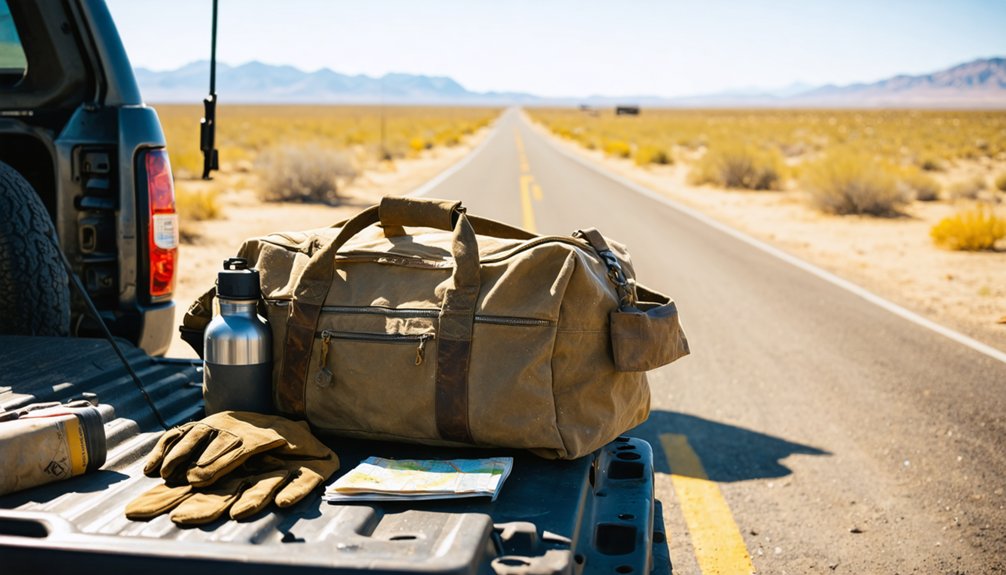
Dirt roads and desert heat demand respect, so pack accordingly before you roll into Fish Lake Valley’s forgotten frontier. You’re heading into Esmeralda County’s raw high desert, where wildflower blooms and desert wildlife share the land with ghost town silence.
Essentials you can’t skip:
- Water and fuel — the nearest services are miles away, and the county-maintained dirt road to the hot springs runs 20 minutes from Dyer.
- Sun protection and layers — desert temperatures swing hard between scorching days and cold nights at elevation.
- Recovery gear — a spare tire, tow strap, and basic tools handle what rough dirt roads deliver.
Pack light but smart. This valley rewards the prepared traveler and punishes the careless one fast.
Frequently Asked Questions
Is the Fish Lake Valley Hot Spring Open During Winter Months?
Like a warm ember in a cold night, the spring’s open 24/7 year-round! You’ll love its constant 105°F waters. Practice hot spring etiquette and heed winter safety on that snowy dirt road from Dyer.
Does Esmeralda County Charge an Entry Fee for the Hot Spring?
You won’t pay an entry fee — Esmeralda County keeps this natural treasure free for all. Respect hot spring etiquette and local regulations, soak freely, and honor the wild, untamed spirit these historic desert waters have always offered wanderers.
Are There Any Overnight Camping Spots Near the Fish Lake Valley Hot Spring?
Why settle for a day trip? You can camp near the hot spring amenities, but check Esmeralda County’s camping regulations first — they manage the area and’ll have the latest rules for your free-spirited overnight adventure.
What Is the Elevation of Fish Lake Valley Itself?
The knowledge base doesn’t specify Fish Lake Valley’s exact elevation, but you’re exploring a high desert basin shaped by remarkable geological features and historical significance — a free-spirited landscape where ancient forces carved your next great adventure.
Is State Route 168 Passable for Standard Vehicles Year-Round?
State Route 168’s road conditions can challenge you seasonally — snow closes it in winter. You’ll want to check conditions before heading out, as vehicle requirements suggest a sturdy, reliable car to conquer Gilbert Summit’s adventurous, historically-traveled pass.
References
- https://travelnevada.com/cities/dyer/
- https://en.wikipedia.org/wiki/Fish_Lake_Valley
- https://ridermagazine.com/2018/08/06/visiting-ghostly-towns-in-nevadas-esmeralda-county/
- https://travelnevada.com/nevada-magazine/fish-lake-valley/
- https://nvtami.com/2021/08/11/pigeon-spring-pigeon-spring-mill-nevada/
- https://www.bemytravelmuse.com/highway-95-road-trip-reno-to-las-vegas/
- https://www.islands.com/1859628/fish-lake-valley-hot-springs-nevada-secluded-mountain-view/