Planning a ghost town road trip to Lindsey, Kansas means heading less than a mile southeast of Minneapolis in Ottawa County, where only six residences and a weathered grain elevator survive from a community that once flourished around Fort Solomon after 1864. You’ll want to arrive during daylight hours, since there’s no street lighting and no amenities waiting for you. Stick to North 135th Road, respect private property, and keep exploring to uncover everything this haunting Ottawa County landscape has to offer.
Key Takeaways
- Lindsey, Kansas, is located less than 1 mile southeast of Minneapolis in Ottawa County, accessible via the paved North 135th Road.
- The town’s most photogenic landmark is a weathered grain elevator near the railroad tracks, ideal for historical photography.
- Visit during daylight hours, arriving midmorning or early afternoon, as Lindsey has no street lighting or public amenities.
- Enhance your road trip by exploring nearby ghost towns like Culver, Bennington, and Delphos within an Ottawa County loop.
- Always respect private property boundaries, come prepared with supplies, and depart before dusk for a safe visit.
What Is Lindsey, Kansas and Is It Worth the Drive?
Where exactly do you go when you want to step back in time without the crowds, the admission fees, or the curated museum experience? Lindsey, Kansas answers that question. Tucked less than a mile southeast of Minneapolis in Ottawa County, this unincorporated community carries genuine historical significance dating back to 1864, when settlers arrived shortly after Fort Solomon’s construction nearby.
Community development here never gained lasting momentum. Originally called Ayersburgh, Lindsey eventually lost its post office in 1942, sealing its fate as an extinct town. Today, roughly six residences and a weathered grain elevator near the railroad tracks are all that remain.
Is it worth the drive? If raw, unfiltered Kansas history speaks to you, absolutely. You’ll find honesty in its stillness that no museum replicates.
How Lindsey Grew Up Around Fort Solomon and Then Disappeared
Fort Solomon started everything. Built in 1864, the fort sat just half a mile west of what would become Lindsey, pulling settlers toward its protective presence. The community first carried the name Ayersburgh before adopting Lindsey, quietly establishing itself in Concord Township within central Ottawa County.
Its historical significance lies in how quickly frontier necessity shaped a real town — homes, commerce, a post office, and railroad proximity all pointed toward permanence. But permanence never arrived.
Community decline crept in gradually, driven by economic shifts and dwindling need. No new businesses replaced the old ones. Population thinned. When the post office closed permanently on June 30, 1942, Lindsey’s fate was sealed.
Today, roughly six residences and one old grain elevator are all that remain of that hopeful beginning.
What’s Still Standing in Lindsey Today
When you roll into Lindsey today, you’ll find just enough left to spark your imagination: a handful of roughly six residences scattered quietly across the landscape.
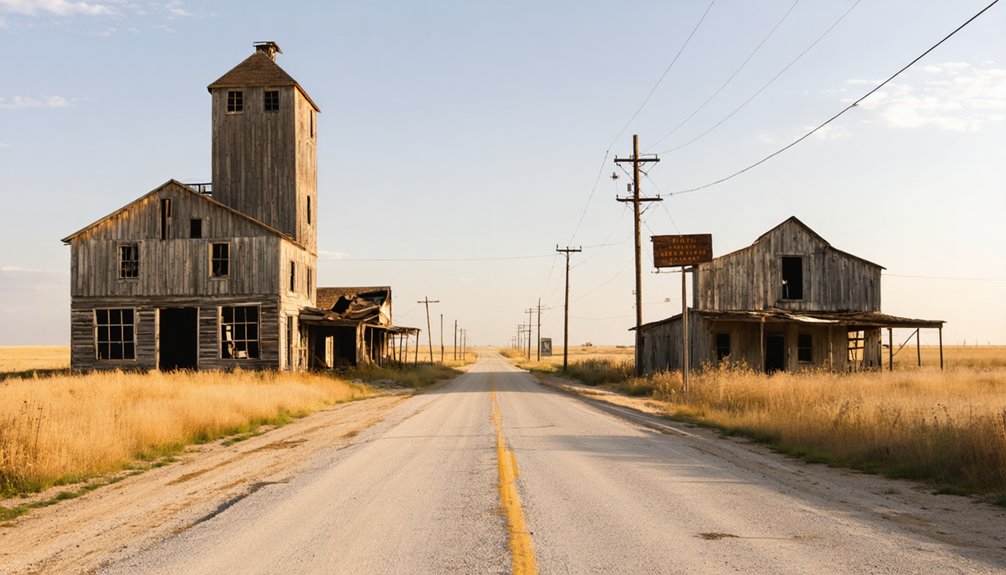
The old grain elevator near the railroad tracks stands as the town’s most striking physical remnant, offering your best photographic opportunity.
North 135th Road, the sole paved road cutting through the community, is fundamentally your entire tour route.
The Old Grain Elevator
Standing quietly near the railroad tracks, the old grain elevator is the sole surviving structure that’ll remind you Lindsey was once a functioning community. It’s a weathered monument to both community history and economic decline, standing where commerce once moved grain from local farms into the broader market.
You won’t find interpretive signs or fenced-off preservation zones here. It’s just the elevator, the tracks, and open Kansas sky. That raw, unfiltered quality makes it worth photographing.
Bring a good camera and arrive during daylight hours since there’s no lighting anywhere nearby.
The elevator doesn’t shout its significance — it simply endures. For anyone road-tripping through central Ottawa County, it delivers exactly what ghost town explorers want: authentic remnants of a forgotten world left largely untouched.
Six Remaining Residences
Beyond the grain elevator, Lindsey hasn’t completely vanished — roughly six residences still stand scattered across the community. These quiet homes carry the weight of community history, serving as silent reminders of what once thrived here before population decline reshaped everything.
You won’t find bustling neighborhoods or growing subdivisions. Instead, you’ll encounter a handful of structures holding their ground along North 135th Road, surrounded by open Kansas landscape. No businesses operate nearby, no services exist, and no crowds gather.
What remains feels honest — a raw snapshot of a place that economics and time gradually hollowed out. For road trippers chasing authentic ghost town experiences, these six residences deliver exactly that. You’re seeing Lindsey’s final chapter written not by disaster, but by slow, inevitable change.
North 135th Road
North 135th Road cuts straight through what remains of Lindsey, serving as the community’s sole artery and your clearest guide through its remnants. This paved asphalt road gives you unfiltered access to a place frozen in time, connecting you directly to its quiet atmosphere of community nostalgia.
As you drive through, keep these three stops in mind:
- Scan the six remaining residences — they’re your living proof of historical preservation in action.
- Locate the old grain elevator near the railroad tracks, the town’s most photogenic landmark.
- Pause at the roadside and absorb the silence that defines Lindsey today.
You won’t find street lighting or signage here, so arrive during daylight and let North 135th Road orienteering you.
Why the Grain Elevator Is the Only Real Photo Stop Left
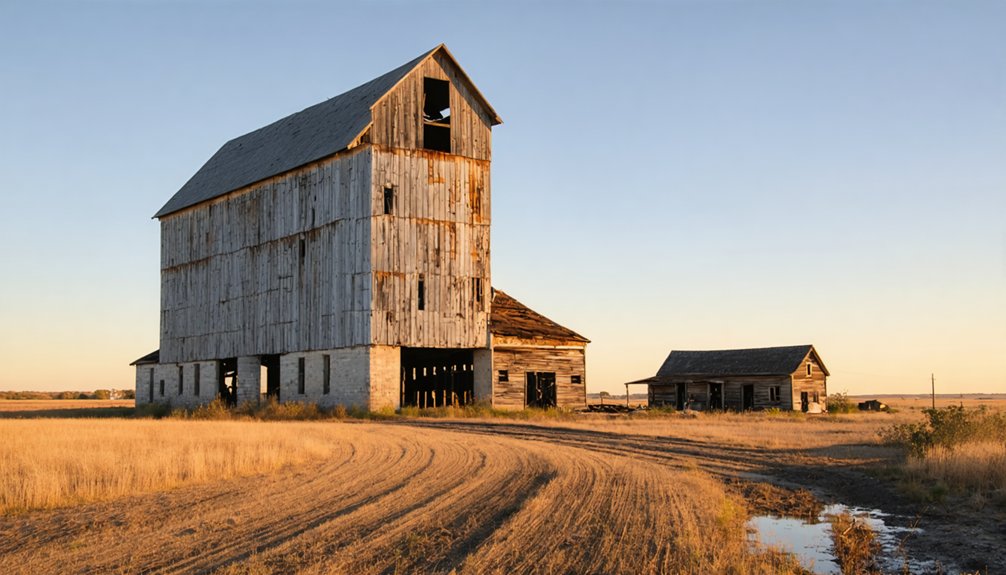
When you roll through Lindsey today, the old grain elevator near the railroad tracks is the one structure that still gives your camera something worth pointing at. Everything else has quietly surrendered to time.
The six or so remaining residences blend into the landscape, and no storefronts, signs, or public buildings break up the scenery.
The elevator stands as a weathered monument to community decline, telling the story of what Lindsey once needed to function as a living place. It connects you visually to the local history of agricultural trade that briefly sustained towns like this across central Kansas.
Frame your shot from North 135th Road and let the grain elevator speak for itself. It’s doing all the storytelling that remains.
How to Reach Lindsey via North 135th Road
Once you’ve lined up your shot of the grain elevator, getting to Lindsey is straightforward. North 135th Road is your sole access point into this quiet slice of historical preservation, cutting directly through what remains of the community. The paved asphalt makes the drive easy regardless of season.
Follow these three steps to reach Lindsey:
- Navigate to Minneapolis, Kansas, your closest landmark reference point.
- Head southeast less than 1 mile until North 135th Road appears.
- Follow North 135th Road directly into Lindsey’s community nostalgia-soaked landscape.
You’ll encounter no traffic signals, no businesses, and no crowds — just open Kansas sky and six quiet residences. Pack everything you need before arriving, because nothing’s waiting for you here except history.
Why You Should Only Visit Lindsey During Daylight Hours
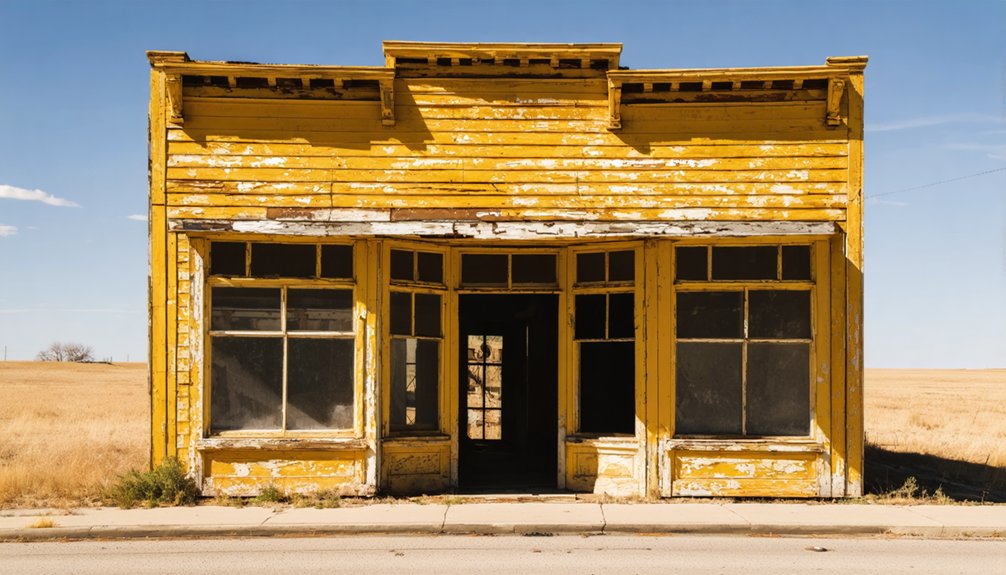
When you visit Lindsey, you’ll find absolutely no street lighting anywhere in the community, making nighttime navigation genuinely dangerous on unfamiliar rural roads.
The absence of businesses, residents who might assist you, and any infrastructure means you’re entirely on your own if something goes wrong after dark.
Plan your visit during daylight hours so you can safely explore the grain elevator and surrounding area while actually seeing what you’ve come to photograph.
No Street Lighting Exists
Since Lindsey has no street lighting whatsoever, you’ll want to plan your visit strictly during daylight hours. This forgotten community offers real historical significance, but darkness renders exploration unsafe and unproductive. Preservation efforts mean little if you can’t safely document what remains.
Visiting during daylight hours lets you:
- Photograph the grain elevator clearly against natural light near the railroad tracks, capturing authentic details worth preserving.
- Navigate North 135th Road confidently, since no illuminated signage or infrastructure guides nighttime travelers through this unincorporated community.
- Explore the six remaining residences respectfully, maintaining awareness of private property boundaries that darkness easily obscures.
Arrive midmorning, explore freely, and depart before dusk. Lindsey rewards the prepared traveler who respects both the community’s remnants and their own safety.
Safety In Daylight
Why risk your safety exploring a forgotten Kansas ghost town in the dark? Lindsey offers no street lighting, no active businesses, and no infrastructure to guide you after sunset. You’ll want full daylight to safely navigate North 135th Road and explore what little remains of this extinct community.
Daylight lets you appreciate the historical preservation value of the old grain elevator standing near the railroad tracks — Lindsey’s most photogenic surviving remnant.
You’ll also absorb the community nostalgia embedded in those six quiet residences, imagining the settlement that once thrived here after 1864.
Visit during morning or early afternoon hours for the best natural light and clearest visibility.
Combine your stop with other Ottawa County ghost towns and maximize your central Kansas road trip while staying completely safe.
Other Extinct Ottawa County Towns to Add to Your Route
While Lindsey makes for a fascinating stop, Ottawa County‘s got plenty of other extinct towns worth adding to your route. Historical preservation efforts across the county reveal stories of community resilience that shaped central Kansas.
- Culver – Once a thriving railroad hub, Culver offers remnants of its past glory and sits within easy driving distance.
- Bennington – Though partially surviving, its extinct sections showcase the economic shifts that swallowed countless Kansas communities.
- Delphos – A quiet, fading settlement where scattered structures tell the story of agricultural decline firsthand.
Chaining these stops together creates a fuller picture of Ottawa County’s forgotten history. Bring a map, fuel up beforehand, and give yourself freedom to explore roads less traveled throughout the county.
How to Build a Full Lindsey-Anchored Ottawa County Ghost Town Loop
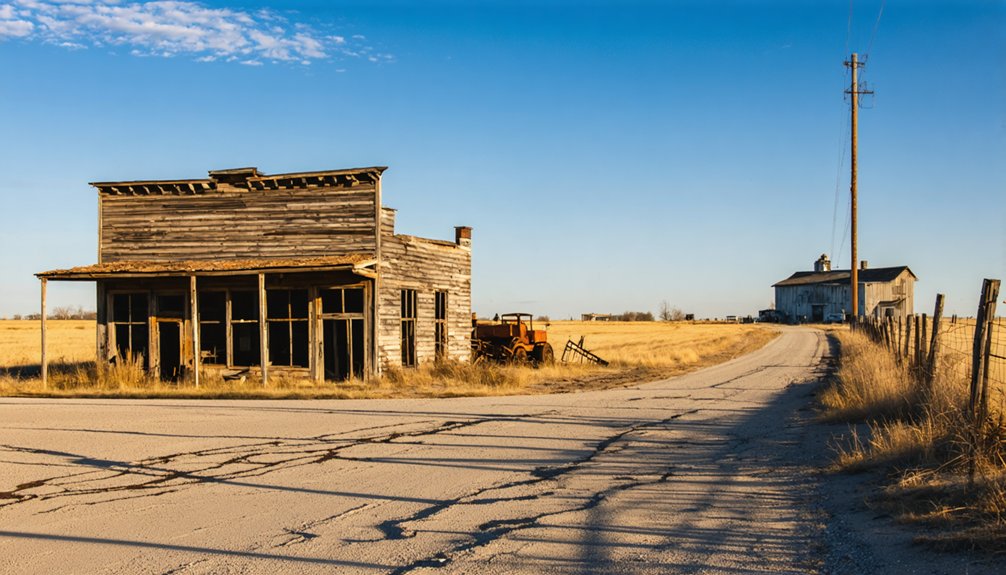
Building a loop around Lindsey pulls all those scattered Ottawa County stops into one cohesive drive. Start on North 135th Road, spend a few quiet moments absorbing the grain elevator’s weathered silhouette, then push outward toward neighboring extinct communities.
You’re chasing historical artifacts and community nostalgia across open Kansas terrain, so map your route before leaving Minneapolis. Move counterclockwise or clockwise depending on which sites interest you most.
Keep fuel topped off since no services exist along these stretches. Photograph everything, note road conditions, and respect private property boundaries.
The freedom of this kind of road trip comes from its flexibility, so don’t over-schedule stops. Let each forgotten townsite breathe, absorb the silence, then roll on toward the next vanished chapter of Ottawa County history.
Frequently Asked Questions
What Was Lindsey Originally Named Before It Became Lindsey?
You’d never believe it, but Lindsey’s historical name origins trace back to the wildly grand “Ayersburgh!” Town naming customs were fluid back then, and this tiny Kansas community boldly reinvented itself, eventually adopting the simpler, timeless name: Lindsey.
When Did Lindsey’s Post Office Permanently Close Down?
You’ll find that Lindsey’s post office permanently closed on June 30, 1942, marking a pivotal moment in historical postal closures. This defining event shaped ghost town preservation efforts, cementing Lindsey’s fate as an extinct community forever frozen in time.
How Many Residences Currently Remain in Lindsey Today?
Like a fading heartbeat, only six residences remain in Lindsey today. You’ll find no abandoned buildings bustling with life here—ghost town tourism reveals a quiet shell where roughly six homes still stand amid the silence.
Which Township Within Ottawa County Is Lindsey Located In?
You’ll find Lindsey nestled in Concord Township, where historic landmarks echo forgotten stories. There’s no local dining here, but you’re free to explore this hauntingly beautiful corner of Ottawa County, Kansas, on your own terms.
How Far West of Lindsey Was Fort Solomon Originally Constructed?
You’ll find Fort Solomon’s abandoned landmark sitting approximately 0.5 miles west of Lindsey’s townsite, where haunted legends still echo across the Kansas plains, drawing free-spirited explorers enthusiastic to uncover the region’s rich, forgotten history.
References
- https://legendsofkansas.com/lindsey-kansas/
- https://www.youtube.com/watch?v=8dtIPX7pIqI
- https://www.youtube.com/watch?v=dy7nLwjHkbY
- https://en.wikipedia.org/wiki/Lindsey
- https://www.youtube.com/watch?v=KBXINX0xqnU
- https://legendsofkansas.com/kansas-ghost-town-list/
- https://kids.kiddle.co/List_of_ghost_towns_in_Kansas