Planning a ghost town road trip to Tuscumbia, Illinois means heading nine miles west of Lewistown on County Road 14 in Fulton County. Platted in 1837 with 54 lots, Tuscumbia thrived briefly on river trade before railroads bypassed it entirely, leaving nothing but farmland and brush by 1855. Today, a single historical marker is all that remains. Visit in spring or fall for the best experience—and there’s much more to uncover about this fascinating forgotten town.
Key Takeaways
- Tuscumbia is located nine miles west of Lewistown, Illinois in Fulton County, accessible via County Road 14 (Bernadotte blacktop).
- The only remaining landmark is a single historical marker; no structures, foundations, or roads exist at the site.
- Visit in spring or fall for better visibility, as summer overgrowth can obstruct exploration of the area.
- Combine the trip with nearby ghost towns like Bernadotte and historical archives in Canton or Lewistown for context.
- Bring detailed county maps and navigation tools, as rural road conditions and shifts can make the site difficult to locate.
How Tuscumbia, Illinois Went From Boom Town to Ghost Town
When Wade Hampton platted Tuscumbia on March 2, 1837, the town looked like a genuine success story in the making. Hampton designed 54 lots for a thriving stagecoach stop and river commerce hub along the Illinois River. Early settlers built a schoolhouse, established a post office, and embraced genuine community nostalgia for a prosperous future.
Tuscumbia began with 54 lots, a schoolhouse, and the bold promise of frontier prosperity.
Then the railroads arrived — and bypassed Tuscumbia completely.
Without rail access, businesses collapsed, residents packed their belongings, and the town emptied by 1855. What once buzzed with frontier ambition surrendered entirely to brush and farmland. Today, historical preservation efforts amount to a single roadside marker on County Road 14. No structures, no roads, no infrastructure remain.
Tuscumbia’s rise and fall happened within one generation — a raw reminder of how quickly frontier dreams could vanish.
What’s Left of Tuscumbia, Illinois Today?
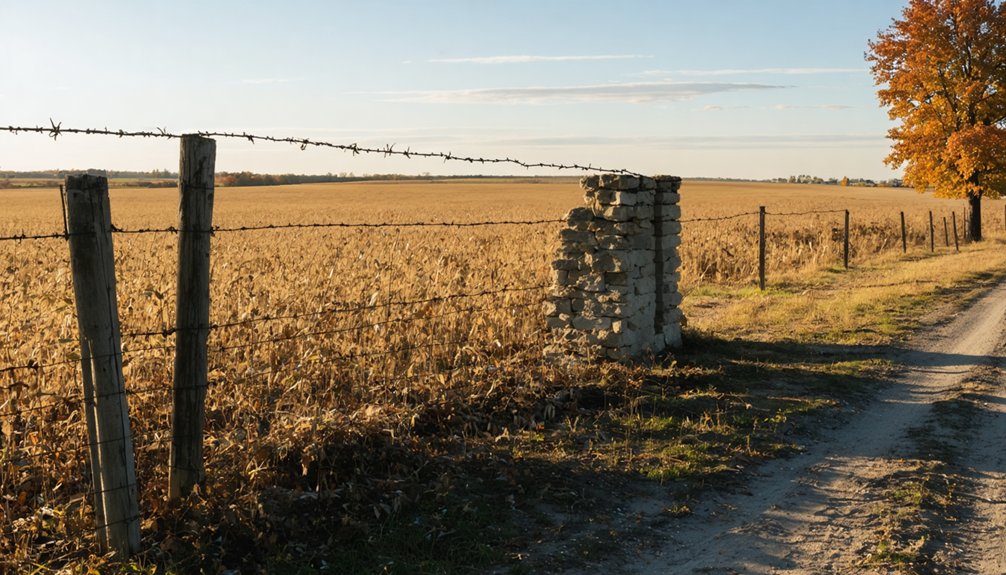
When you arrive at Tuscumbia today, a single historical marker on County Road 14 is all that greets you. The 54 lots Wade Hampton once platted have long surrendered to brush and open farmland, erasing every street, structure, and foundation the town ever had.
You won’t find a cemetery, a crumbling wall, or any trace of the schoolhouse where Isaac Howard once taught — just quiet Illinois countryside stretching in every direction.
The Historical Marker Stands
Today, almost nothing remains of Tuscumbia — no crumbling foundations, no overgrown cemetery, no ghost of a main street hiding beneath the brush. What you’ll find instead is a single historical marker standing along County Road 14, also known as the Bernadotte blacktop, quietly acknowledging the town’s historical significance.
That lone sign is it. The 54 lots Wade Hampton platted in 1837 have long surrendered to farmland and dense brush along the Illinois River. No preservation efforts saved a schoolhouse, a storefront, or even a worn pathway.
But don’t let that discourage you. There’s something powerful about standing where a whole community once built dreams and then walked away. Pull over, read the marker, and let the silence tell the rest of Tuscumbia’s story.
Farmland Replaced the Town
Beyond the historical marker, there’s nothing left to see — and that absence tells its own story. Where local legends once circulated through a lively stagecoach town, open farmland now stretches in every direction.
The historic architecture that once defined Tuscumbia’s 54 platted lots — the log schoolhouse with its greased paper windows, the post office, the commercial buildings — surrendered completely to time, neglect, and nature.
You won’t find foundations, cellar holes, or even a trace of the original road grid. Dense brush along the Illinois River has swallowed whatever the farmers didn’t plow under.
When you stand there, you’re looking at land that simply moved on. Tuscumbia didn’t crumble dramatically; it quietly dissolved, leaving only soil where an entire community once had ambitions.
No Structures Remain
If you’re expecting ruins, foundations, or even a cellar hole, Tuscumbia will disappoint you in the best possible way. There’s no urban decay here — no crumbling walls, no rusted remnants, nothing dramatically frozen in time. Nature reclaimed everything completely.
What you’ll find instead is open farmland and dense brush creeping toward the Illinois River, covering the ground where 54 platted lots once held real ambitions. The historical significance of this site rests entirely in what you *can’t* see.
A solitary marker on County Road 14 does all the storytelling now.
That absence is surprisingly powerful. Standing there, you’re free to imagine the schoolhouse, the post office, the stagecoach pulling through — before railroads bypassed Tuscumbia and erased it from the map entirely.
How to Find the Tuscumbia Ghost Town Site?
To reach Tuscumbia’s ghost town site, you’ll head to Bernadotte Township in Fulton County and take County Road 14, locally known as the Bernadotte blacktop, about nine miles west of Lewistown.
Once you’re driving along that rural stretch, keep your eyes open for a solitary historical marker on the roadside — it’s the only visible evidence that 54 platted lots and a bustling river town ever existed here.
Don’t expect dramatic ruins or crumbling structures; just a sign standing quietly amid open farmland, marking ground that was once alive with settlers and stagecoaches.
Getting To The Site
Finding the Tuscumbia ghost town site takes you nine miles west of Lewistown, Illinois, deep into the rural heart of Fulton County. You’ll navigate County Road 14, locally known as the Bernadotte blacktop, to reach what remains of this forgotten settlement.
Don’t expect dramatic ruins or crumbling buildings — the historical context here is subtle. A solitary sign along County Road 14 marks the only visible remnant of the 54 lots Wade Hampton platted back in 1837.
Dense brush and open farmland have completely reclaimed the rest.
The cultural significance of stopping here lies in that quiet tension between erasure and memory. You’re standing where an entire community once dreamed, built, and ultimately abandoned everything when the railroads passed them by.
Recognizing The Marker
Once you’re cruising along County Road 14, you’ll want to watch carefully — the historical marker for Tuscumbia is easy to miss against the flat, open farmland surrounding it. The sign stands as the sole surviving record of historical preservation efforts for this forgotten settlement, marking where 54 platted lots once held real promise.
Pull over when you spot it and take a moment to absorb what you’re seeing. Beyond the marker, dense brush creeps toward the Illinois River — nature quietly reclaiming what ambition once built.
Local legends surrounding Tuscumbia’s rapid rise and railroad-driven collapse make standing here feel genuinely significant. Snap your photographs, read every word on that marker, and let yourself imagine the stagecoaches, the schoolhouse, and the lives that briefly thrived on this now-silent ground.
What You’ll Actually See When You Arrive at Tuscumbia?
Arriving at Tuscumbia, you’ll find almost nothing — and that’s precisely the point. The open farmland stretches quietly around you, offering no urban decay to photograph, no crumbling walls hinting at historical preservation efforts. What remains is raw, unfiltered erasure.
There is nothing left to see here. That is exactly what makes it worth visiting.
You’ll spot the historical marker standing alone along County Road 14, a modest sign planted where 54 platted lots once promised a thriving river town.
Beyond that marker, dense brush crowds the Illinois River’s edge, swallowing whatever ground Wade Hampton surveyed back in 1837.
No buildings. No roads. No cemetery. Just wind moving across flat agricultural land and the quiet knowledge that an entire community once stood exactly where you’re standing.
That absence speaks louder than any restored structure ever could.
The Best Season to Visit Tuscumbia and Why It Matters
Timing your visit to Tuscumbia shapes the entire experience. Spring and fall offer the clearest access to this cultural heritage site, letting you move freely through the rural landscape without summer’s dense overgrowth blocking your exploration.
- Spring (April–May): Brush stays low, exposing the former lot boundaries near the Illinois River.
- Fall (September–October): Crisp air and thinning vegetation improve wildlife observation along the riverbank.
- Summer: Heavy brush obscures the site and makes navigation uncomfortable.
- Winter: Frozen ground firms up muddy County Road 14 access but limits visibility of natural features.
- Weekdays: You’ll likely have the historical marker completely to yourself.
Choose spring if you want the fullest picture of what Tuscumbia once was before nature reclaims your view entirely.
More Fulton County Ghost Towns to Add to Your Route
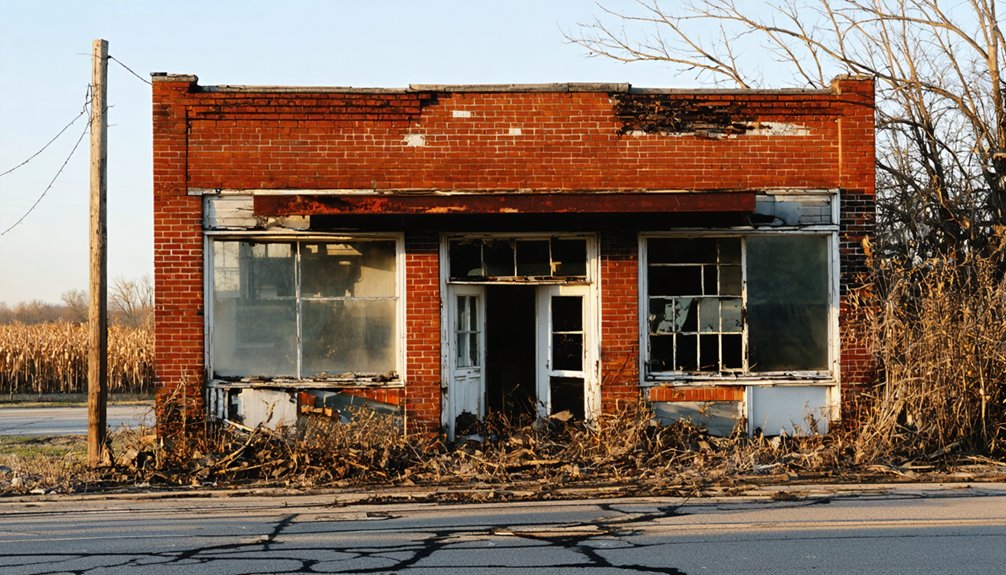
Tuscumbia doesn’t have to be your only stop in Fulton County. The region holds remarkable historical context as a place where ambitious 1830s settlements repeatedly failed when railroads bypassed them, leaving ghost towns scattered across west-central Illinois.
Bernadotte, just miles from Tuscumbia along County Road 14, offers another glimpse into that same pattern of rise and abandonment. Canton and Lewistown provide supporting stops with museums and archives that deepen your understanding of why these towns vanished.
Visitor tips: plan your route along the Illinois River corridor, where most failed settlements clustered near hoped-for commerce that never materialized. Carry a detailed county map, since rural roads shift unexpectedly.
Combining multiple sites turns a single marker visit into a full-day journey through forgotten Illinois history.
Frequently Asked Questions
Is There an Admission Fee or Permit Required to Visit Tuscumbia?
You don’t need an admission fee or permit to visit Tuscumbia! Simply drive County Road 14, respect history preservation efforts, follow basic visitor guidelines, and you’ll freely explore this fascinating Illinois ghost town marker.
Can You Metal Detect or Artifact Hunt at the Tuscumbia Ghost Town Site?
Want to uncover hidden history? You’ll need to research local metal detecting regulations before hunting here. Follow artifact hunting tips: get landowner permission, respect the site, and never disturb protected historical remnants you might discover.
Are There Any Nearby Restrooms or Facilities Close to the Tuscumbia Marker?
You won’t find any local amenities or restrooms near this remote historical landmark. Plan ahead by stopping in Lewistown, just nine miles east, before you head out to explore Tuscumbia’s fascinating, isolated ghost town marker.
Is the Tuscumbia Site on Private Land or Publicly Accessible Property?
Standing at the edge of vanished history, you’ll find the Tuscumbia marker offers public access from County Road 14, but the surrounding farmland and brush-covered lots are private land, so you’ll want to stay roadside.
How Long Does a Typical Visit to the Tuscumbia Ghost Town Take?
You’ll spend about 15–20 minutes here since there aren’t any visitor amenities beyond the historical preservation marker. Snap your photos, soak in the rural atmosphere, and you’re free to continue your ghost town adventure.
References
- https://en.wikipedia.org/wiki/Tuscumbia
- https://kids.kiddle.co/Tuscumbia
- http://cantontornado36.blogspot.com/2017/04/ghost-towns-of-fulton-county-illinois.html
- https://everafterinthewoods.com/8-forgotten-ghost-towns-in-illinois-that-are-quietly-fascinating/
- http://cantontornado36.blogspot.com/2017/05/waterford-tuscumbia-civer-three.html
- https://drloihjournal.blogspot.com/2022/09/lost-towns-of-illinois-tuscumbia.html