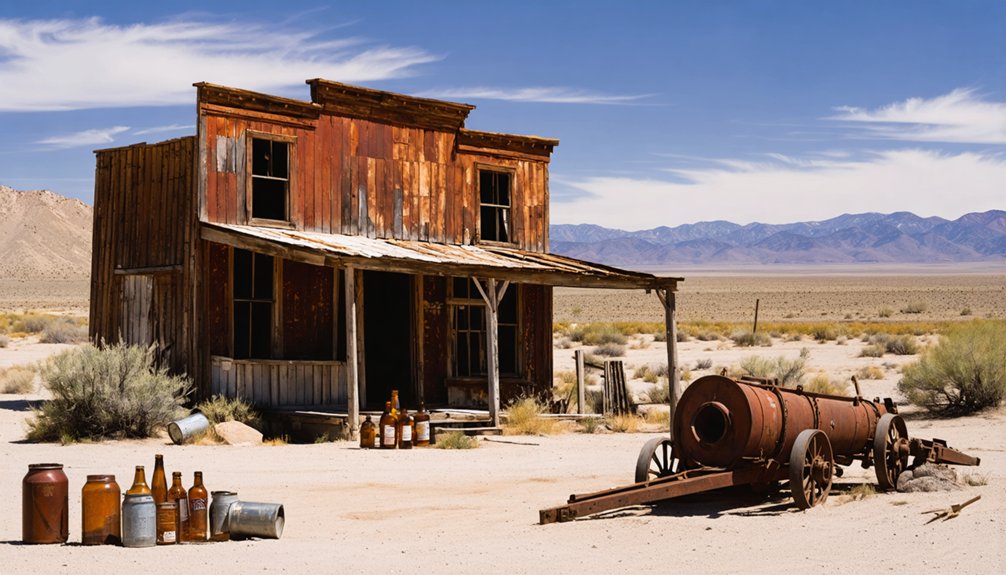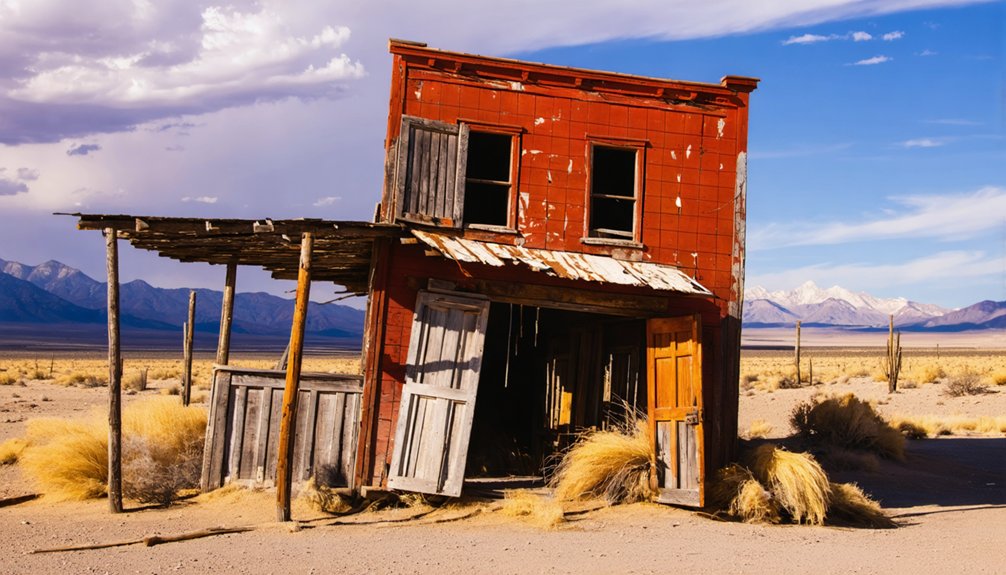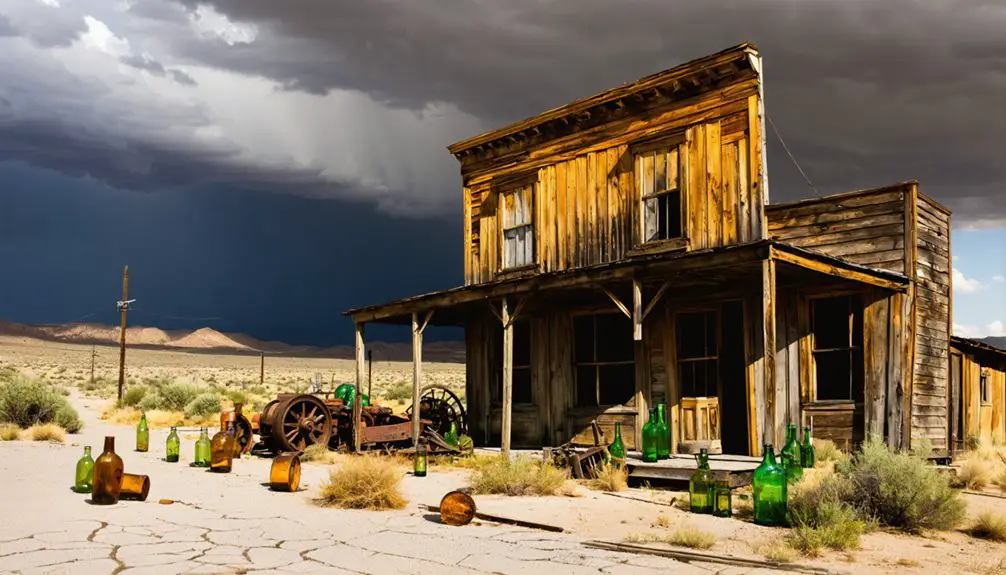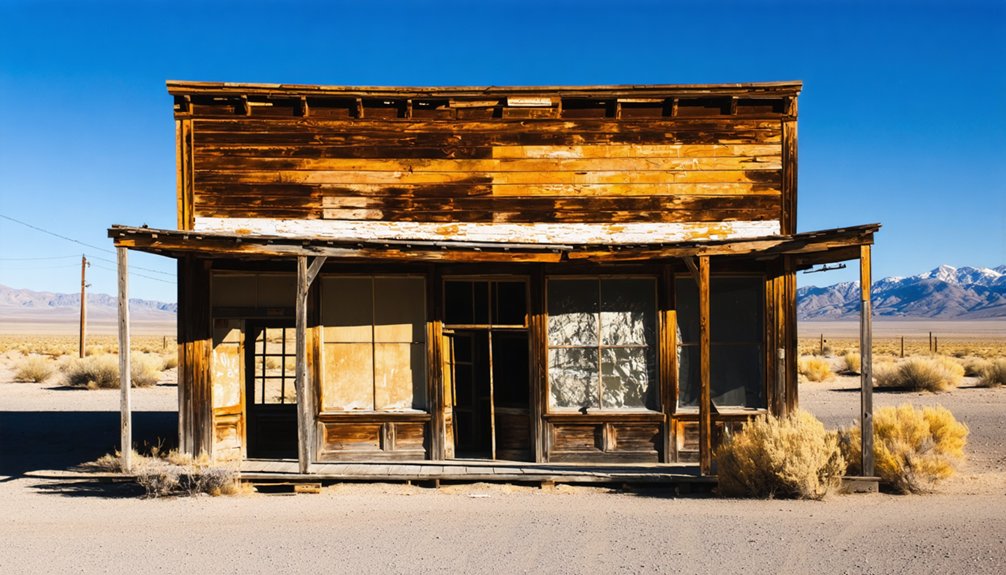
Tacoma, Nevada is a forgotten rail hub sitting roughly 15 miles from Montello in the remote northeastern high desert. You’ll find concrete foundations, scattered glass, and a small cemetery where a bustling town once stood. Bring a high-clearance vehicle, extra water, and fuel before leaving Montello — cell service is unreliable out here. Summer offers the best conditions for safe exploration. Keep scrolling to uncover everything you need to plan your trip.
Key Takeaways
- Tacoma, a ghost town 15 miles from Montello, Nevada, features concrete foundations, scattered glass artifacts, and a small cemetery from its railroad era.
- A high-clearance vehicle is essential for navigating rough, washboard roads and loose gravel terrain crossing the remote high desert.
- Stock up on fuel, water, and supplies in Montello before departing, as cell service is unreliable and the area is extremely remote.
- Summer is the ideal visiting season, offering dry conditions, longer daylight, and safer navigation of uneven foundations and debris-covered terrain.
- Wear closed-toe boots, pack a first aid kit, and avoid disturbing artifacts or the cemetery during exploration.
What’s Left to See at the Tacoma, Nevada Ghost Town Site
Although Tacoma’s buildings are mostly gone, you’ll still find concrete foundations scattered across the site, with the old depot foundation standing out as the most notable remnant.
These abandoned structures paint a quiet picture of a once-active rail hub that served miners and ranchers throughout northeastern Nevada.
As you explore, watch your step — the ground is littered with bottles and glass chips, common historical artifacts left behind when residents moved on decades ago.
A small cemetery also marks part of the former town area, adding a somber but meaningful layer to your visit.
Most buildings were moved or dismantled long ago, so don’t expect standing walls or intact ruins.
What you get instead is raw, unfiltered evidence of a boomtown that time and the railroad ultimately left behind.
How to Reach the Tacoma, Nevada Ghost Town
You’ll find Tacoma’s ghost town site in northeastern Nevada, roughly 15 miles from Montello, which serves as your closest point for fuel and basic supplies.
The roads leading to the site cross open high-desert terrain, so you’ll want a vehicle with decent clearance and reliable tires before heading out.
Check conditions in advance, since remote Nevada roads can shift quickly depending on weather and seasonal maintenance.
Getting To Tacoma
Getting to Tacoma, Nevada is straightforward once you know where you’re headed. The ghost town sits in northeastern Nevada, roughly 15 miles from Montello, which serves as your closest modern reference point.
You’ll travel through open high-desert terrain, so watch for local wildlife crossing unpaved stretches, particularly at dawn and dusk. Weather patterns in this region shift quickly, with summer offering the clearest conditions for exploring foundations and reading the landscape.
Spring and fall can bring unexpected storms, so check forecasts before heading out. A high-clearance vehicle handles the terrain more reliably than a standard car.
Carry extra water, fuel, and a paper map since cell service is unreliable. The drive itself sets the tone for the isolated, raw history waiting at the site.
Nearest Towns And Services
Montello, sitting roughly 15 miles from the Tacoma site, is your closest hub for fuel, basic supplies, and a chance to regroup before heading into the high desert. Stock up there, because once you leave, you’re on your own.
The surrounding terrain rewards the self-sufficient traveler — local flora like sagebrush and desert grasses stretch across open flats, framing the ghost town in raw, unfiltered Nevada landscape.
Wildlife encounters are real out here; mule deer, jackrabbits, and hawks are common, so stay alert while exploring foundations and walking the site.
Elko, roughly 70 miles west, offers full services if you need lodging, repairs, or gear. Plan your resupply before you roll out, and you’ll move through this corridor with complete freedom and confidence.
Road And Terrain Conditions
Once you’ve restocked in Montello, the road out to Tacoma demands your attention. The roughly 15-mile stretch covers open high-desert terrain, so prepare before you leave pavement behind.
Watch for these terrain challenges:
- Loose gravel and washboard surfaces can rattle low-clearance vehicles, so a truck or SUV works best.
- Soft shoulders and uneven ground make pulling off unpredictable, especially after recent rain.
- Scattered debris near the town site includes broken glass and sharp fragments surrounding historical artifacts, so solid footwear is essential.
The landscape stays flat but exposed, offering little shade and strong winds at times. You’re traveling through genuine open country here, and that freedom comes with responsibility. Stay alert, move carefully, and you’ll reach the site ready to explore.
What You’ll Find When You Arrive at Tacoma
Arriving at Tacoma, you’ll notice right away that nature and time have done their work—there’s not much left standing. Concrete foundations scatter across the site, half-hidden beneath local flora that’s slowly reclaiming the land.
The depot foundation stands as the most recognizable remnant, giving you a clear sense of where railroad operations once centered.
Geological features in the surrounding terrain frame the site with a raw, open Nevada landscape that feels both remote and freeing.
Watch your footing carefully—broken bottles and glass chips cover much of the ground.
A small cemetery sits nearby, quietly marking where residents once lived and died.
Most buildings were moved or dismantled long ago, so what remains tells the story through absence as much as through what you can still see.
How Copper Mining and the Central Pacific Built Tacoma’s Economy
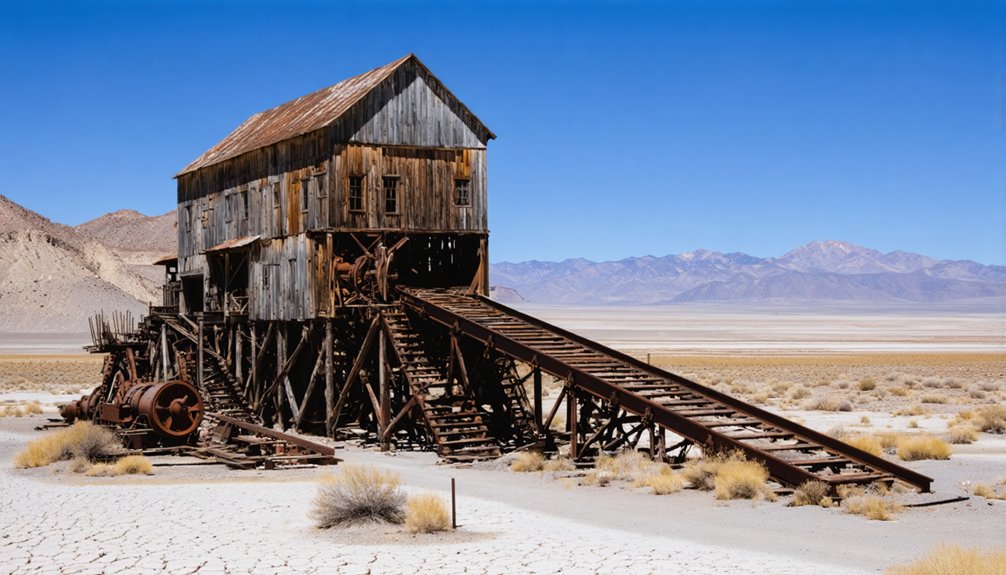
When you look at Tacoma’s origins, you’ll find the Central Pacific Railroad planted the town’s roots in 1869, creating a depot that gave the region its first real economic anchor.
Copper mining quickly followed, with nearby mines generating over $40,000 worth of ore in just five years, turning Tacoma into a critical shipping point for extracted materials.
You can trace the town’s entire purpose back to this partnership between rail infrastructure and mining output, a combination that kept roughly 100 residents employed and supplied at its peak.
Central Pacific Establishes Tacoma
The Central Pacific Railroad planted the seeds of Tacoma’s economy in 1869, transforming a stretch of northeastern Nevada desert into a functioning rail town almost overnight. By 1873, you’d have found a surprisingly complete community shaped by historical architecture and local legends tied to the rail era.
Three core developments defined this rapid growth:
- A post office, hotel, and restaurant gave residents essential services
- Two saloons became social hubs where mining and rail workers gathered
- A functioning depot anchored shipping for nearby copper mines and ranchers
The railroad didn’t just move freight — it built identity. Tacoma’s population reached roughly 100 residents at its peak, making it a genuine community rather than a temporary camp.
The Central Pacific’s decision to stop here changed everything.
Copper Mining Drives Growth
Copper pulled Tacoma’s economy forward just as steadily as the locomotives rolling through its depot. Nearby mines produced over $40,000 worth of copper within just five years of the town’s early growth, cementing Tacoma’s place in Nevada’s mining history. That wealth didn’t exist in isolation — it depended entirely on railroad heritage to move raw materials out and supplies in.
As you explore the site today, picture ranchers and mine operators converging on Tacoma’s depot, loading freight bound for distant markets. The Central Pacific made that commerce possible, transforming a dusty stop into a working economic hub.
Tacoma wasn’t built on dreams alone — it ran on copper ore and rail schedules, two forces that briefly made this remote Nevada corner genuinely matter.
Rail Shipping Supports Economy
Rail schedules and copper ore locked together to keep Tacoma’s economy moving through its peak years. The Central Pacific Railroad gave ranchers and miners direct access to distant markets, turning this remote Nevada stop into a genuine logistical hub.
You’ll appreciate how three economic pillars kept Tacoma functioning:
- Copper ore shipments generated over $40,000 in regional revenue within five years
- Ranchers relied on rail facilities to move livestock and supplies efficiently
- Rail maintenance crews sustained steady local employment and spending
While exploring, watch for historical artifacts scattered among the foundations — broken tools, glass fragments, and structural remnants tell the real story. You may also spot local wildlife moving through the quiet, open terrain.
When rail importance faded after 1925, Tacoma’s economy collapsed almost immediately.
How Tacoma Went From Rail Hub to Ghost Town
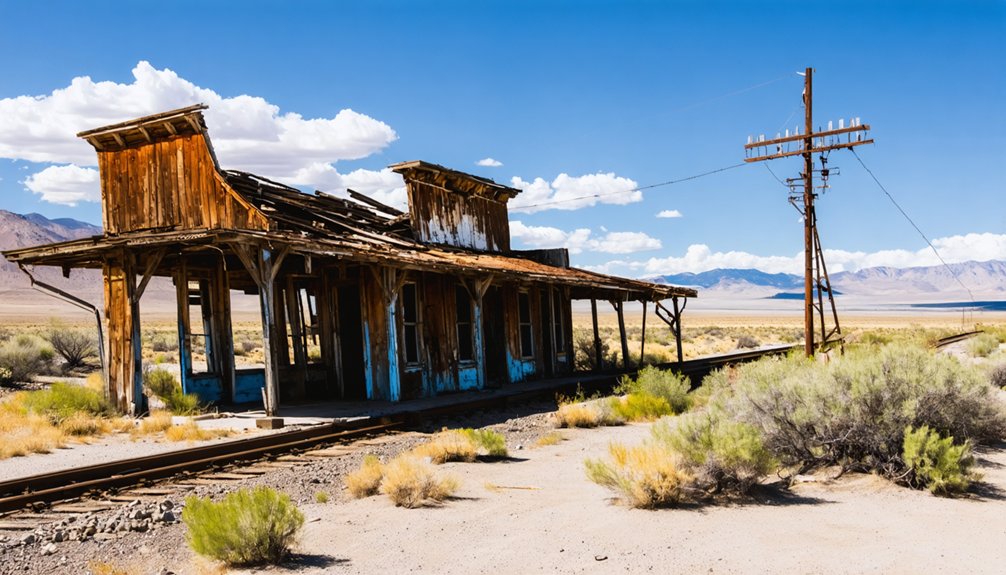
Once a bustling rail hub in northeastern Nevada, Tacoma’s decline unfolded gradually as mining slowed and competing rail lines chipped away at its importance. When the Oregon Short Line completed its route in 1925, Tacoma lost its edge as a regional railhead.
The hotel had already burned in 1918 and was never rebuilt, leaving residents with fewer reasons to stay. By the late 1920s, Montello replaced Tacoma as the primary rail stop, sitting just 15 miles away.
Most residents packed up and left, and stores closed one by one. If you search historic photographs, you’ll see how dramatically the town transformed.
Today, local wildlife roams freely across concrete foundations that once anchored a thriving community, reminding you just how completely the railroad era shaped and then abandoned this place.
Watch Your Step: Safety Tips for the Tacoma Ghost Town Site
Walking through the Tacoma ghost town site rewards curiosity but demands caution. Broken glass, bottle shards, and scattered debris cover much of the ground, so every step requires attention. The foundations sit unevenly, creating trip hazards that surprise even experienced explorers.
Every step through Tacoma’s ghost town demands attention — broken glass, uneven foundations, and scattered debris wait around every corner.
Before you arrive, prepare with the right safety gear:
- Wear closed-toe boots with thick soles to protect against sharp glass chips.
- Bring gloves if you plan to examine foundation edges or move surface debris.
- Pack a first aid kit, since the remote location means help isn’t nearby.
Visitor etiquette matters here, too. Don’t disturb the small cemetery or remove artifacts. You’re walking through history, not a playground. Respect the site, stay alert, and you’ll leave with great memories instead of injuries.
Best Time of Year to Visit Tacoma
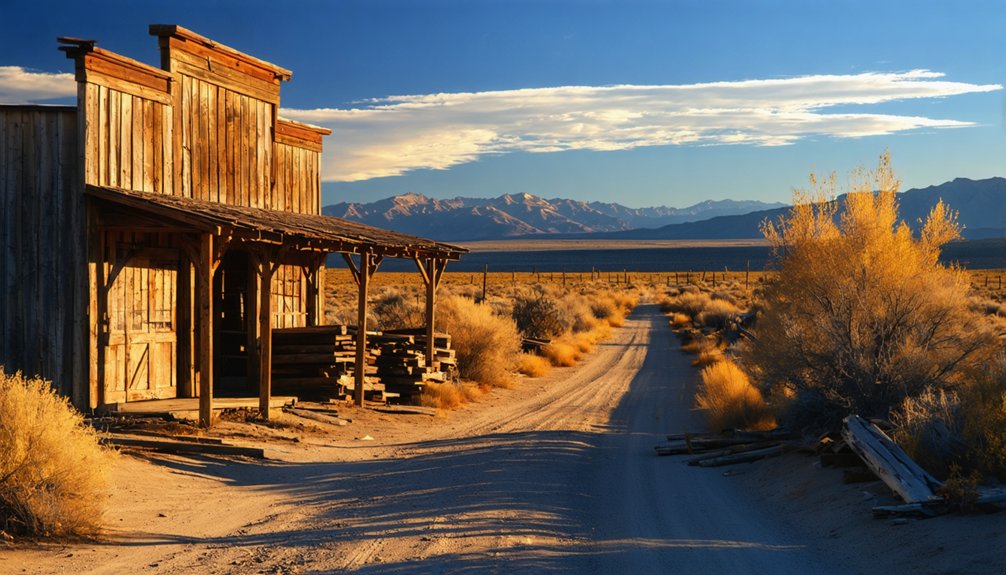
Summer gives you the clearest view of Tacoma’s surviving foundations, making it the ideal season to plan your visit. Dry conditions reduce overgrowth, letting you navigate the scattered concrete remnants and spot historical artifacts without fighting through dense brush. The longer daylight hours also give you more time to explore the depot foundation and the small cemetery at your own pace.
Avoid visiting after heavy spring rains, when soft ground and thick vegetation create preservation challenges by concealing surface details and making careful footing even harder. Winter brings harsh northeastern Nevada cold that limits access and obscures what little remains.
Summer keeps the site open, visible, and manageable, giving you the freedom to move through Tacoma’s history on your own terms without seasonal obstacles slowing you down.
Pairing Tacoma With a Nevada Ghost Town Road Trip
Tacoma fits naturally into a broader Nevada ghost town road trip, giving you a railroad history anchor that pairs well with nearby mining ruins and abandoned depots scattered across the northeastern corner of the state.
Build your route around three stops that complement Tacoma‘s railroad narrative:
- Montello – the town that replaced Tacoma as the regional rail hub, just 15 miles away.
- Tobar – another northeastern Nevada ghost town with comparable foundation remnants and sparse local flora typical of high desert terrain.
- Wells – a functional base offering visitor amenities like fuel, lodging, and meals before heading into remote sites.
Connecting these stops creates a cohesive story about how Nevada’s rail and mining economies rose, shifted, and ultimately collapsed across a single generation.
Frequently Asked Questions
Was Tacoma, Nevada Ever Officially Called Tecoma at the Same Time?
Yes, you’ll find that both names coexisted historically! Tacoma and Tecoma weren’t separate eras — they ran together, enriching local legends and complicating historical preservation efforts as settlers, railroaders, and records freely used both names interchangeably.
How Many People Are Buried in the Tacoma Ghost Town Cemetery?
You won’t find exact cemetery records for Tacoma’s small burial ground, so the precise count remains unknown. Haunting legends surround the site, but you’ll discover only a modest, unmarked frontier cemetery when you visit.
Are There Any Guided Tours Available at the Tacoma Ghost Town Site?
You’re blazing through endless desert alone! No guided tours exist for historical preservation here. Your guided exploration is entirely self-directed, so you’ll roam Tacoma’s concrete foundations and scattered ruins completely on your own wild terms.
Is the Tacoma Ghost Town Site on Public or Private Land?
The knowledge doesn’t confirm whether it’s public or private land, so you’ll want to verify access restrictions before visiting. Don’t let private land ownership catch you off guard—always research current access rules to roam freely and legally.
Has Any Filming or Photography Work Been Done at Tacoma?
Like an unsung trail waiting to be mapped, Tacoma’s filming history and photography spots aren’t well-documented. You’ll likely find it undiscovered, giving you the freedom to capture its raw, forgotten foundations yourself.
References
- https://www.ghosttowns.com/states/nv/tacoma.html
- https://www.youtube.com/watch?v=x_u0KjfaEh8
- https://savingplaces.org/stories/explore-wild-west-mining-history-in-nevada-ghost-towns
- https://findingnevadawild.com/goldfield-the-old-west-lives-in-nevadas-best-ghost-town/
- https://www.facebook.com/groups/nevadaghosttowns/posts/2493024377802759/
- https://en.wikipedia.org/wiki/List_of_ghost_towns_in_Nevada
- https://www.nps.gov/deva/learn/historyculture/rhyolite-ghost-town.htm
- https://cowboycountry.com/ghost-towns/
- https://forgottennevada.org/sites/seven.html
- https://travelnevada.com/nevada-magazine/odyssey-of-a-ghost-town-explorer-part-3/