Planning a ghost town road trip to Mettzendorf, South Carolina means stepping into a story that most travelers never find. You’ll want to verify land ownership before you go, pack sturdy footwear, and connect with local historical societies for access details. Mettzendorf’s remnants, from crumbling foundations to overgrown lots, paint a raw picture of a community that simply faded away. Stick around, and you’ll uncover everything you need to explore this forgotten piece of South Carolina’s fractured past.
Key Takeaways
- Mettzendorf is a raw, undocumented South Carolina ghost town ideal for independent explorers seeking authentic, unpolished historical remnants.
- Before visiting, confirm land ownership and access permissions with local county offices or historical societies to avoid trespassing.
- Prepare with sturdy footwear, wildlife awareness, and prior research, as the site lacks guided tours or polished signage.
- Combine your visit with nearby ghost towns like Dorchester, Hamburg, and Ellenton for a broader South Carolina historical road trip.
- Engage local residents for oral histories and current access conditions, filling gaps left by Mettzendorf’s limited formal documentation.
What Is Mettzendorf, South Carolina?
Though its name may not ring a bell, Mettzendorf is one of South Carolina’s recognized ghost towns — a once-inhabited settlement that’s since faded from active use after losing whatever economic foundation kept it alive.
You’ll find it listed alongside other forgotten places like Dorchester, Hamburg, and Ellenton on statewide ghost-town compilations, which tells you it carries real historical weight even if the details are scarce.
Local legends likely linger around places like this, passed down through families whose roots stretch back to when the town still functioned.
Preservation efforts remain limited compared to better-documented sites, so what you’re stepping into is raw and largely uninterpreted history.
That’s exactly what makes it worth seeking out if you value genuine discovery over polished tourism.
What Turned Mettzendorf Into a Ghost Town?
Like most ghost towns scattered across South Carolina, Mettzendorf almost certainly lost its footing when its core economic engine sputtered out and died. Whether a mill closed, crops failed, or a rail line shifted, the result was the same — people left, and the settlement faded into memory.
When the last industry died, so did Mettzendorf — and the people simply walked away.
Local legends likely filled the silence that followed, shaping how nearby communities remember the place today.
Here’s what probably shaped Mettzendorf’s decline:
- Economic collapse — a lost industry or agricultural shift drove residents away
- Abandoned ruins — structures left behind mark where daily life once thrived
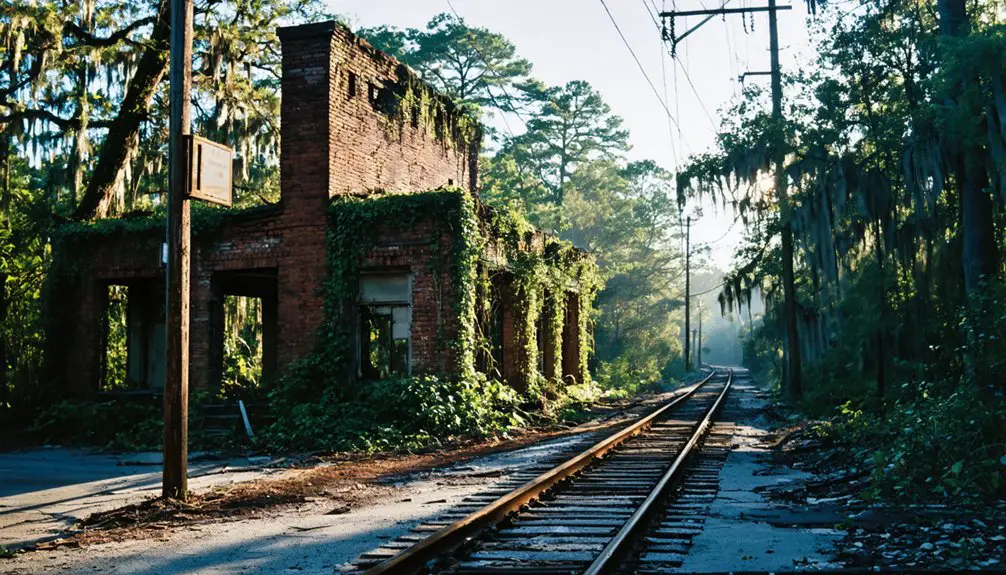
- Shifting infrastructure — roads or rail changes often redirected growth elsewhere
You’re fundamentally walking into a place history quietly closed the door on.
How Mettzendorf Fits South Carolina’s Ghost Town Story
South Carolina’s ghost towns don’t exist in isolation — they belong to a larger, quieter story of settlements that rose and fell on the back of a single industry or a single decision. Mettzendorf shares that arc with Dorchester, Ellenton, Hamburg, and Great Falls — each a place where ambition eventually yielded to silence.
What connects them isn’t just geography; it’s the pattern. The economy shifts, the people follow, and what remains feeds local legends for generations. Some sites have benefited from preservation efforts, like Dorchester, which now draws history-focused visitors with visible ruins and interpretation.
Mettzendorf sits further from that spotlight, which is exactly what makes it compelling for you — a traveler drawn to roads that most people simply pass without stopping.
What’s Left to See in Mettzendorf Today?
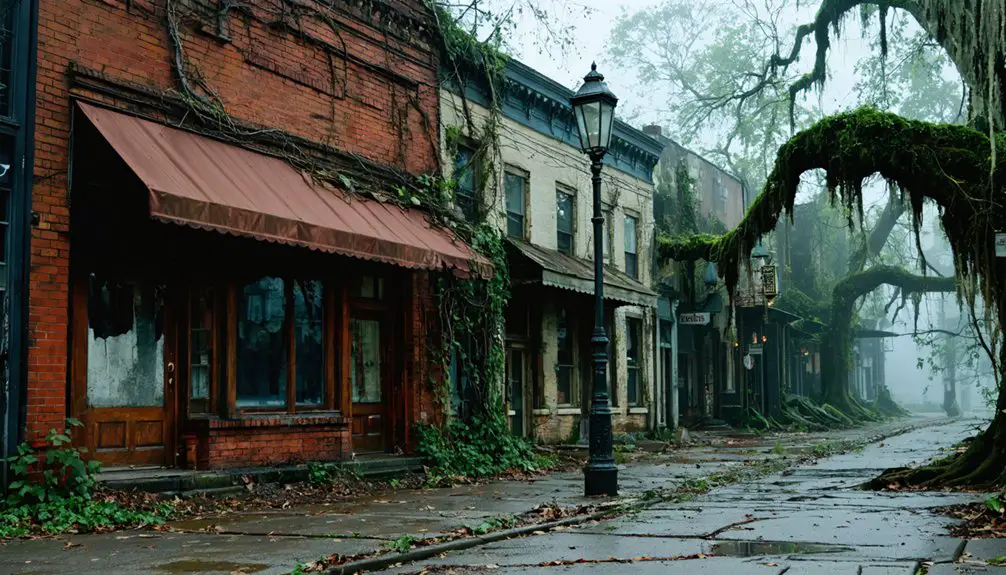
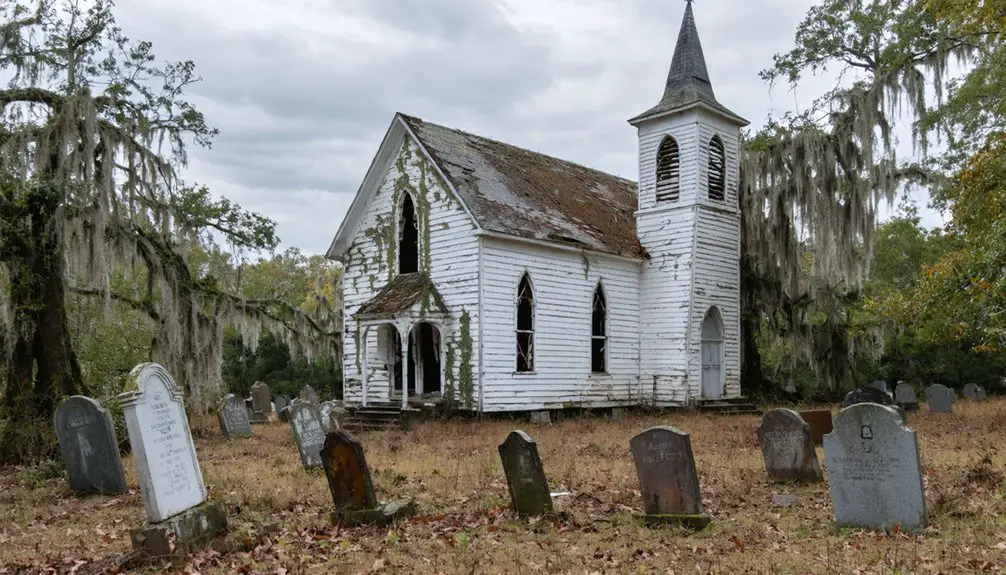
What remains in Mettzendorf today is, honestly, difficult to pin down with certainty — and that ambiguity is part of what makes it such a genuine ghost-town experience. You won’t find polished signage or guided tours here. Instead, you’ll encounter a place shaped by local legends, quiet decay, and whatever preservation efforts may exist at the community level.
Before you head out, keep these practical expectations in mind:
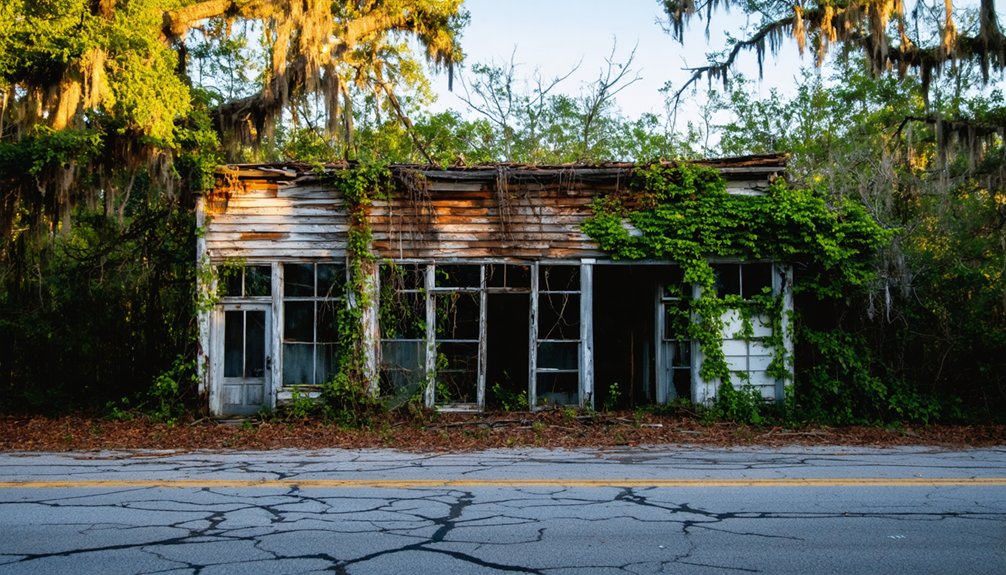
- Visible remnants may include structural foundations, overgrown lots, or faded road markers
- Local legends tied to the settlement can add depth if you research regional history beforehand
- Preservation efforts remain largely undocumented, so treat everything you encounter with care
Come prepared to observe, photograph thoughtfully, and piece together Mettzendorf’s story yourself.
How Mettzendorf Compares to Dorchester and Great Falls
When you stack Mettzendorf against Dorchester and Great Falls, you’re really comparing three different stages of abandonment and preservation. Dorchester offers you a well-interpreted historic site with visible remnants and public access.
While Great Falls gives you a living example of industrial collapse still unfolding in real time after its cotton mill closed. Mettzendorf, by contrast, sits at the quieter, lesser-documented end of the spectrum, where the experience depends more on your own research than on any established visitor infrastructure.
Comparing Three Abandoned Towns
Though all three towns share the same quiet fate of abandonment, they each tell a different story about how South Carolina’s past unravels before your eyes. Dorchester benefits from active preservation efforts and structured public interpretation. Great Falls carries its industrial grief openly, where local folklore still echoes the cotton mill’s collapse. Mettzendorf sits quieter, less documented, and more raw.
Here’s how they compare for your road trip planning:
- Dorchester – preserved historic site with visible ruins and public access
- Great Falls – industrial ghost town shaped by textile decline and community memory
- Mettzendorf – lesser-known, research-driven stop best suited for independent explorers
You’re not just visiting abandoned places. You’re reading three different chapters of the same forgotten Southern story.
Access And Visitor Experience
Each of these three towns greets you differently the moment you start planning your visit. Dorchester offers structured access, visible ruins, and active preservation efforts that make it the easiest entry point for first-time ghost-town explorers.
Great Falls hands you industrial history and local lore still circulating among longtime residents who remember the mill’s final days.
Mettzendorf demands more from you. No visitor center waits at the end of your drive, no signage confirms you’ve arrived, and documentation remains thin. You’ll need to verify land access before you go, since private property restrictions can cut your exploration short.
That uncertainty is part of its appeal if you value unfiltered discovery over curated experience. Pack patience alongside your map.
Why Mettzendorf Belongs on a SC Ghost Town Road Trip
South Carolina’s ghost towns tell a story of boom-and-bust cycles that reshaped entire communities, and Mettzendorf is one of the quieter chapters in that narrative. Economic decline stripped away its foundation, leaving behind the kind of urban decay that draws history-minded travelers searching for honest, unfiltered places.
Adding Mettzendorf to your road trip makes sense because it connects to a broader statewide pattern worth exploring on your own terms:
- It appears on recognized South Carolina ghost-town lists alongside Dorchester, Hamburg, and Ellenton.
- It reflects how quickly settlements vanished once their economic purpose disappeared.
- It rewards travelers who prefer research-driven detours over curated tourist stops.
Pair it with better-documented sites like Dorchester for a fuller picture of South Carolina’s forgotten places.
How to Locate Mettzendorf Before You Leave Home

Finding Mettzendorf on a map takes some digging, because it doesn’t appear on most modern navigation apps or roadside signage the way an active town would. Start with historical county maps, USGS topographic records, and South Carolina ghost-town lists that researchers have compiled over the years.
Cross-reference those sources against satellite imagery to identify any remaining structures or road patterns. Local folklore often survives in county historical societies, library archives, and genealogy forums where former residents or descendants share place memories that official records miss.
Preservation efforts, though limited for smaller ghost towns, sometimes produce digitized documents or photographs worth tracking down before you go. Once you’ve triangulated a general location, confirm access rules and road conditions so your detour stays on the right side of both the law and the land.
Can You Actually Access Mettzendorf Safely?
Once you’ve pinpointed Mettzendorf’s approximate location, the next honest question is whether you can actually get there without trespassing, stumbling into unstable ground, or finding a locked gate where you expected a road. Many South Carolina ghost towns sit on private land, and Mettzendorf’s limited documentation makes advance verification essential.
- Contact local county offices or historical societies to confirm land ownership and any preservation efforts protecting the site.
- Ask area residents about current access conditions, since local legends often carry practical details that no map reveals.
- Pack sturdy footwear and check for wildlife advisories before stepping off any maintained path.
You’re chasing history, not a curated attraction. That freedom comes with responsibility — verify access, respect boundaries, and you’ll walk away with something genuinely earned.
The Best South Carolina Ghost Towns to Pair With Mettzendorf

Pairing Mettzendorf with other ghost towns turns a single detour into a full narrative arc across South Carolina’s forgotten landscape. Dorchester offers the strongest contrast — preservation efforts there have kept visible ruins intact, giving you tangible history rather than guesswork. Walk those weathered foundations and you’ll feel the weight of what disappears when economies shift.
Great Falls tells a grittier industrial story, where local legends still circle the cotton mill’s collapse and the hollow storefronts left behind. Hamburg and Ellenton add political and displacement layers worth understanding before you go.
Together, these stops build a route that honors South Carolina’s fractured past rather than cherry-picking its prettiest ruins. You’re not just driving between coordinates — you’re tracing the real human cost of abandonment across an entire state.
Which Travelers Get the Most From This Stop?
If you’re drawn to forgotten histories, faded landmarks, and the quiet stories left behind when a town loses its reason to exist, you’ll find Mettzendorf genuinely rewarding.
Photographers and curious explorers also pull real value from a stop like this, where the absence of tourist polish lets the raw atmosphere speak for itself.
You won’t leave with a gift-shop receipt, but you might leave with a sharper sense of how South Carolina’s smaller settlements rose, struggled, and quietly disappeared.
History-Focused Travelers Benefit Most
Travelers who carry a genuine curiosity about forgotten places will get the most out of a stop like Mettzendorf. You’ll connect with local legends that never made it into mainstream history books, and you’ll appreciate the quiet preservation efforts keeping these names alive on ghost-town lists. This stop rewards those who research before they roam.
- Dig into county records or regional ghost-town guides before arriving to build context around what you’re seeing.
- Look for physical remnants that hint at the original settlement’s economic purpose and daily life.
- Talk to locals when possible, since oral history often fills gaps that written sources can’t.
You’re not chasing landmarks here. You’re chasing memory, and that distinction makes all the difference.
Photographers And Curious Explorers
Photographers and curious explorers find a different kind of reward at a stop like Mettzendorf — you’re not hunting for manicured attractions, but rather the quiet, unscripted details that forgotten places leave behind. Weathered textures, overgrown lots, and faded structural remnants offer compelling visual stories that staged destinations simply can’t replicate.
Local legends tied to a place’s collapse add narrative depth, giving your images context beyond surface aesthetics. Where preservation efforts exist, you’ll often spot the tension between decay and memory — a genuinely striking subject.
Come prepared with research, a flexible schedule, and respect for property boundaries. Mettzendorf rewards the traveler who treats exploration as discovery rather than consumption, making it a natural fit for anyone chasing South Carolina’s lesser-known, authentically raw history.
Frequently Asked Questions
Sure, expect flawless cell service—said no ghost town ever! You’ll want downloaded offline maps since cell service is unreliable here. Don’t trust navigation apps to work; embrace the freedom of old-school paper maps instead.
What Time of Year Is Best for Visiting Mettzendorf?
Spring or fall offers you the best experience, when mild weather fuels your wanderlust. You’ll uncover historical preservation remnants and absorb local folklore more comfortably, free from summer’s harsh heat or winter’s unpredictable conditions.
Are Guided Ghost Town Tours Available Anywhere Near Mettzendorf?
No formal guided tours exist near Mettzendorf, but you’ll find self-guided exploration rewarding. Dorchester’s historical landmarks and local legends offer richer interpretation nearby, letting you roam freely and uncover South Carolina’s forgotten stories on your own terms.
How Long Should You Budget for a Mettzendorf Visit?
Budget about 30–60 minutes, fellow time-traveler! You’ll soak in Mettzendorf’s historical significance and snag photography opportunities without rushing. Since documentation’s sparse, you’re free to explore organically and move on whenever your wandering spirit calls.
Are Pets Allowed When Exploring Ghost Town Sites in South Carolina?
Pet policies vary by site, so you’ll want to verify animal restrictions before bringing your furry companion. Many open-air ghost towns welcome leashed pets, but private land may enforce stricter rules.
References
- https://www.youtube.com/watch?v=EX9Jx6GStJY
- https://podcasts.apple.com/us/podcast/carolina-ghost-towns/id968365267
- https://sctravelguide.com/2018/06/11/south-carolina-ghost-towns/
- https://en.wikipedia.org/wiki/List_of_ghost_towns_in_South_Carolina
- https://carolinaghosttowns.podbean.com/
- https://kids.kiddle.co/List_of_ghost_towns_in_South_Carolina
- https://www.iheart.com/content/2023-10-11-abandoned-south-carolina-town-named-the-creepiest-ghost-town-in-the-state/
- https://ghost-towns.close-to-me.com/states/south-carolina/
- https://www.youtube.com/watch?v=BYhS5h_QUkc
- https://www.onlyinyourstate.com/experiences/south-carolina/5-creepy-sc-ghost-towns