Planning a ghost town road trip to Toyah, Texas is easier than you’d think. You can reach it from Pecos in just 15 miles heading west on Interstate 20, or from Balmorhea via FM 2903 in about 23 miles. Once there, you’ll find crumbling banks, an abandoned high school, and weathered storefronts frozen in time. Visit during golden hour for the best photography. There’s far more to this forgotten railroad boomtown than first meets the eye.
Key Takeaways
- Toyah is easily reached from Pecos (15 miles west on I-20) or Balmorhea (23 miles north on FM 2903).
- Key landmarks include an abandoned high school, crumbling brick bank, boarded-up storefronts, and vintage signage perfect for photography.
- Visit during golden hour — shortly after sunrise or before sunset — to capture the best light on ruins.
- Spring and fall offer mild weather and dramatic skies, while winter brings cooler temperatures and earlier sunsets.
- Combine Toyah with Pecos and Balmorhea for a scenic ghost-town loop covering under 100 miles total.
Toyah, Texas: A West Texas Ghost Town Worth the Detour
Tucked along Interstate 20 in Reeves County, Toyah is one of West Texas’s most compelling ghost towns — a place where crumbling brick banks, a hollow high school, and boarded-up storefronts tell the story of a town that once held over a thousand residents and now claims fewer than a hundred.
You’ll find no crowds here, no tourist traps — just open sky, silence, and raw historic architecture frozen in slow decay.
Local legends tie the town’s name to a Native American word meaning “flowing water,” connecting its origins to artesian springs and cattle-country trade.
If you crave the kind of freedom that comes with wide roads and forgotten places, Toyah delivers.
It’s a genuine off-the-interstate discovery that rewards curious travelers willing to turn off the highway.
How to Reach Toyah From Pecos or Balmorhea
Getting to Toyah is invigoratingly straightforward, and the drive itself is part of the appeal. From Pecos, you’ll head west on Interstate 20 or U.S. 80 for roughly 15 miles — a quick, flat stretch through classic West Texas scrubland.
From Balmorhea, FM 2903 carries you north about 23 miles through open ranchland, offering some of the better scenic routes in the region. That FM road delivers the kind of wide-sky, unhurried driving that feels genuinely freeing.
Check local road conditions before heading out, particularly on FM 2903, since rural West Texas highways can shift after weather. Either way, plan your arrival during daylight — Toyah’s abandoned structures reward good light, and the town offers no services once you’re there.
From Railroad Boomtown to Ghost Town: Toyah’s Rise and Fall
When you pull into Toyah today, it’s hard to imagine that the Texas and Pacific Railroad once turned this desert outpost into a thriving boomtown after the first train rolled through in 1881.
At its peak, the town supported banks, hotels, churches, and cattle-shipping operations, pushing its population past 1,000.
Railroad shifts, economic decline, and the Great Depression hit hard, and by 2020 only about 61 residents remained, leaving behind the crumbling ruins you’ll find scattered across the landscape.
Railroad Boom Years
Once the Texas and Pacific Railroad arrived in 1881, Toyah transformed almost overnight from a quiet ranch trading post into one of West Texas’s busiest cattle-shipping hubs.
Industrial expansion reshaped the town fast — stores, banks, churches, hotels, and lumberyards filled what had recently been open range. Toyah became a division point on the line, pulling ranchers, workers, and entrepreneurs from across the region.
Economic shifts drove population upward, pushing the town toward a peak of roughly 1,000 residents by 1910.
When you walk the empty streets today, it’s hard to imagine four stores, two banks, four churches, and two rival hotels once competing for business here.
The railroad didn’t just connect Toyah to Texas — it briefly made Toyah the center of its own world.
Decline And Abandonment
What the railroad built, it eventually took away. When rail priorities shifted and the cattle trade slowed, Toyah’s economy collapsed beneath the weight of urban decay and economic decline.
The Great Depression accelerated the fall, stripping away businesses, residents, and purpose in quick succession.
By the 1940s, fewer than 500 people remained. That number kept shrinking — 142 by 1990, roughly 61 by 2020.
The banks closed. The hotels emptied. The high school that once educated a thriving community now stands as a crumbling shell.
What you’ll find today is a quiet, haunting landscape of boarded storefronts and overgrown lots. It’s not a place that apologizes for what it’s become — it simply stands as honest proof that boom towns don’t last forever.
Toyah’s Ruins, Landmarks, and Best Photo Stops
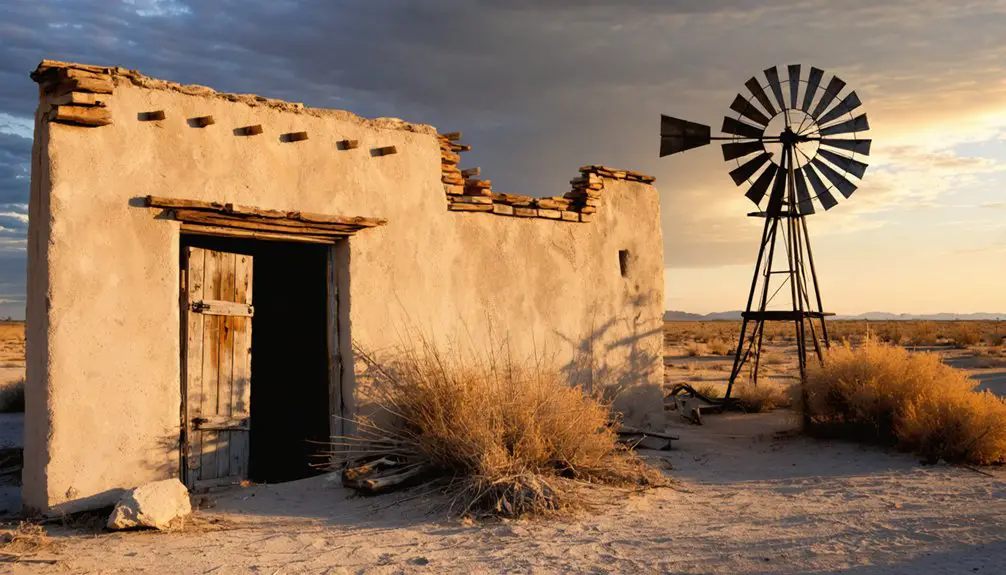
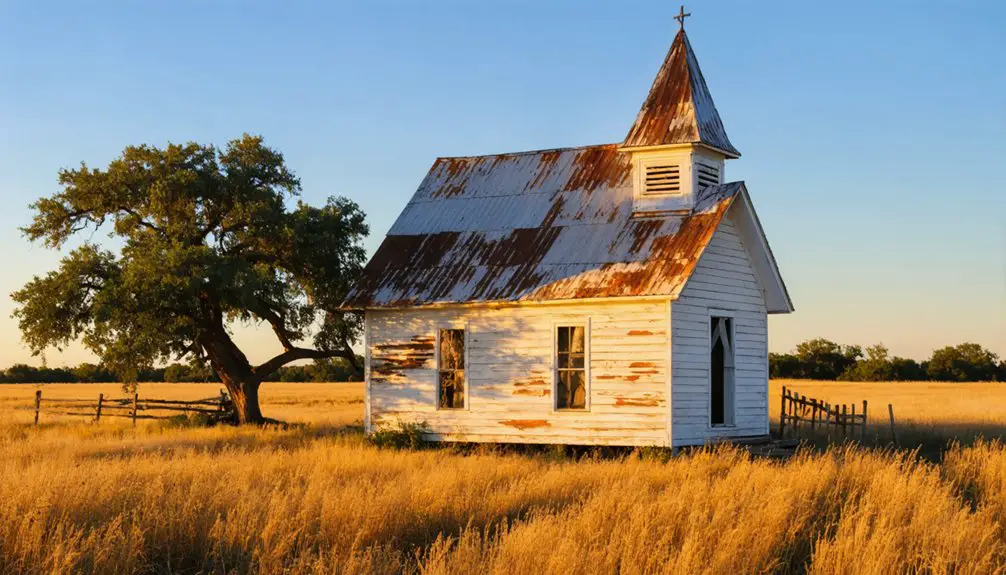
Though Toyah’s population has dwindled to a few dozen souls, the town’s bones tell a vivid story. You’ll find the abandoned high school standing as one of the most striking relics, its weathered walls holding decades of forgotten ambition.
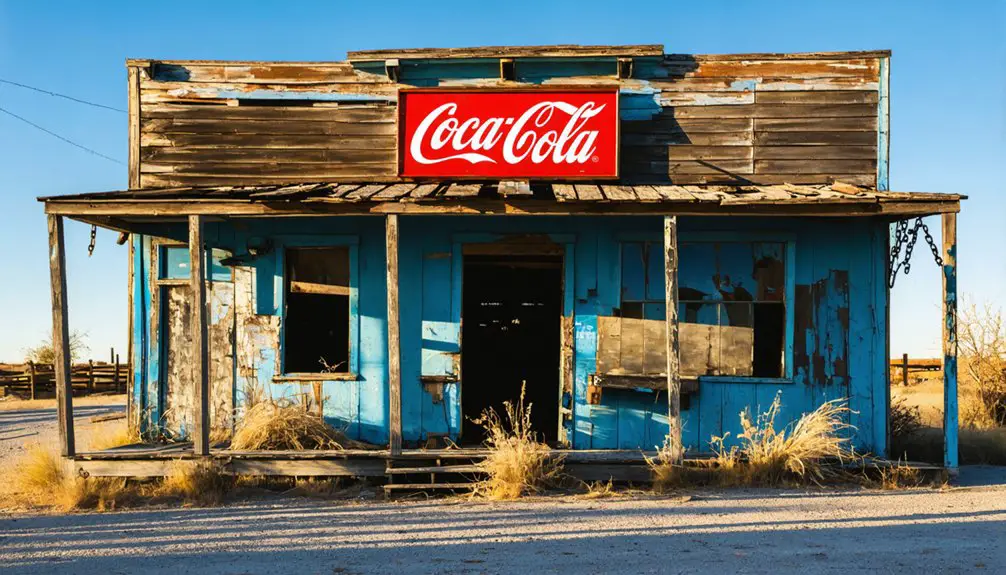
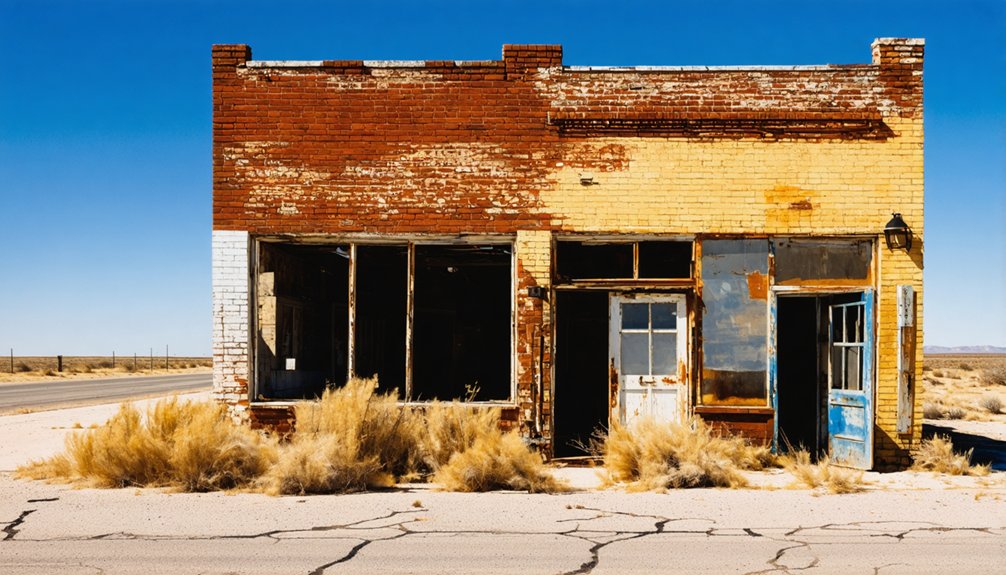
A crumbling brick building marks where a bank once anchored the town’s commercial life. Wander the quiet streets and you’ll spot boarded-up storefronts, empty lots, and vintage signage clinging stubbornly to abandoned structures.
These remnants paint a clear picture of Toyah’s boom-and-bust arc. Bring your camera and plan your visit during daylight hours when the light cuts across decaying facades for the strongest shots.
Every cracked wall and rusted detail rewards the explorer willing to look closely.
When to Visit Toyah for the Best Photography Light
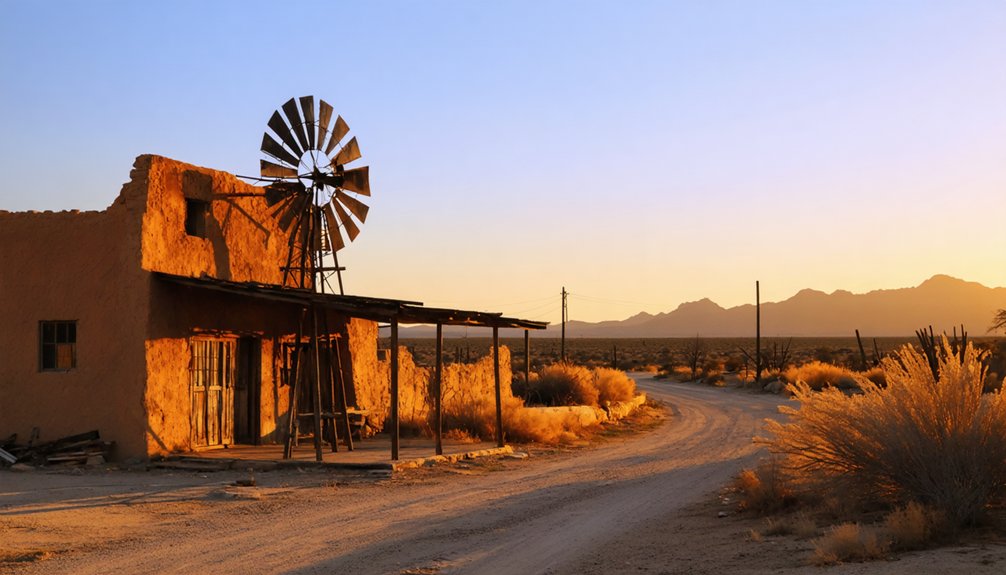
Timing your visit right can make the difference between a forgettable snapshot and a compelling photograph. Toyah’s crumbling brick buildings and abandoned storefronts respond beautifully to golden hour photography, when low-angled light deepens shadows and warms every weathered surface.
You’ll find the best lighting conditions in the hour after sunrise or the hour before sunset, when the West Texas sky turns amber and rust against the deteriorating structures.
Avoid midday visits when harsh overhead light flattens texture and detail.
Since Toyah offers no services or sheltered spaces, arriving prepared with water and a charged camera matters.
Winter months deliver earlier sunsets and cooler temperatures, making exploration more comfortable.
Spring and fall offer mild weather with dramatic skies, giving your photographs that open, wide-horizon feeling this landscape demands.
Pair Toyah With Pecos and Balmorhea on a Ghost Town Loop
Toyah sits at the natural center of a West Texas ghost-town loop that pairs effortlessly with Pecos, about 15 miles to the east, and Balmorhea, roughly 23 miles to the south.
Start in Pecos, where you’ll find museums anchoring the region’s cultural heritage and local legends of frontier lawlessness.
Then head west on I-20 to walk Toyah’s crumbling streets, photograph the abandoned high school, and absorb the railroad boom-and-bust story firsthand.
Finish south on FM 2903 toward Balmorhea, where clear spring-fed waters offer a striking contrast to the desert ruins you’ve just left behind.
The entire loop covers well under 100 miles, fits comfortably into a single day, and rewards anyone chasing raw, unfiltered West Texas history.
Frequently Asked Questions
Is There Cell Phone Service Available in Toyah, Texas?
Cell service in Toyah isn’t guaranteed—you’re deep in West Texas’s remote terrain, where signal strength can drop considerably. Don’t rely on connectivity; embrace the freedom of unplugging as you explore this hauntingly beautiful ghost town.
Are There Any Restrooms or Facilities Accessible in Toyah?
Don’t count on restroom availability or facility accessibility in Toyah — it’s a true ghost town. You’ll want to fuel up and stop in Pecos before exploring these hauntingly beautiful, abandoned streets on your own terms.
Can Visitors Legally Enter Toyah’s Abandoned Buildings and Structures?
You shouldn’t enter Toyah’s abandoned buildings, as trespassing laws still apply even to forgotten structures. Respect property boundaries, admire the crumbling exteriors, and capture stunning photos from public areas while honoring both history and legal boundaries.
Is Overnight Camping Permitted Anywhere Near Toyah?
You won’t find a single campsite for a million miles around Toyah! Camping regulations remain unclear locally, so you’ll want to explore nearby Balmorhea State Park, where local wildlife roams freely and you can pitch your tent legally.
What Is the Current Population Count Living in Toyah Today?
You’ll find only about 61 residents calling Toyah home today. It’s a hauntingly quiet place where historical landmarks outnumber locals, and you won’t discover local cuisine — just freedom, open skies, and beautiful decay.
References
- https://www.youtube.com/watch?v=2lpZOI62WOw
- https://theforgottensouth.com/toyah-texas-ghost-town/
- https://www.youtube.com/watch?v=MMmDa0Gm3sI
- https://www.texasescapes.com/TOWNS/Toyah_Texas/Toyah_Texas.htm
- https://discovertexasphotos.com/small-town/toyah-texas-ghost-town/
- https://www.youtube.com/watch?v=K2Cz8xmo26U
- https://www.facebook.com/thcfriends/posts/once-a-bustling-hub-along-the-texas-pacific-railroad-toyah-is-now-a-quiet-ghost-/1219322853562018/
- https://www.legendsofamerica.com/toyah-texas/
- https://www.facebook.com/TexasInspiration/posts/toyah-texas-is-a-desolate-ghost-town-in-reeves-county-a-northwest-texas-outpost-/965406312464708/
- https://www.click2houston.com/news/texas/2020/06/18/the-ghost-towns-of-texas-5-abandoned-texas-towns-to-check-out-on-your-next-road-trip/