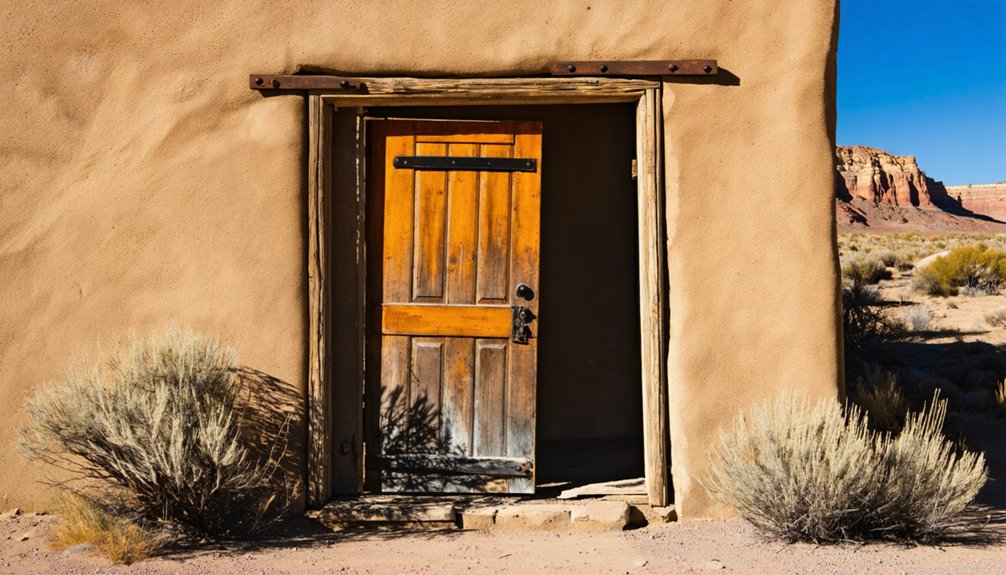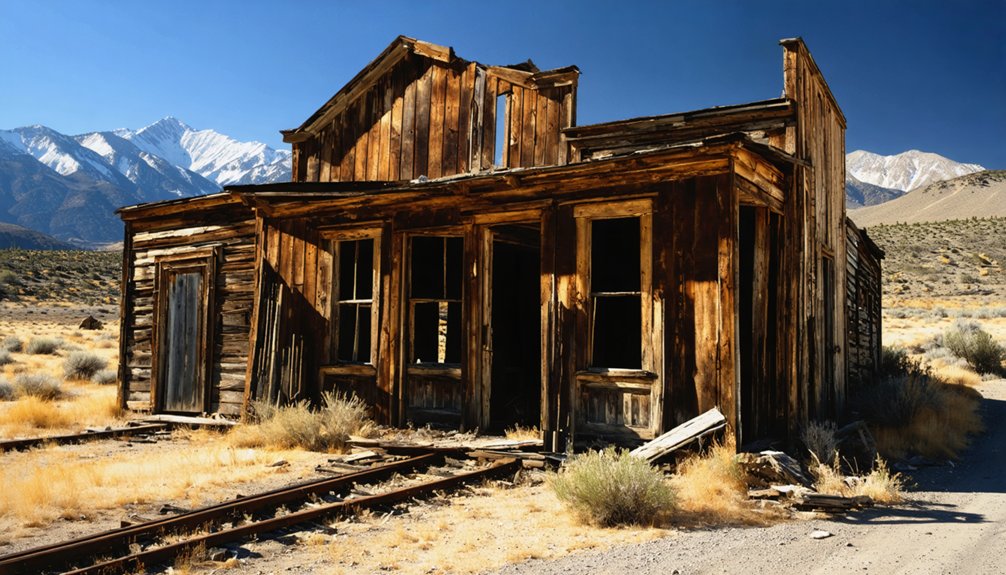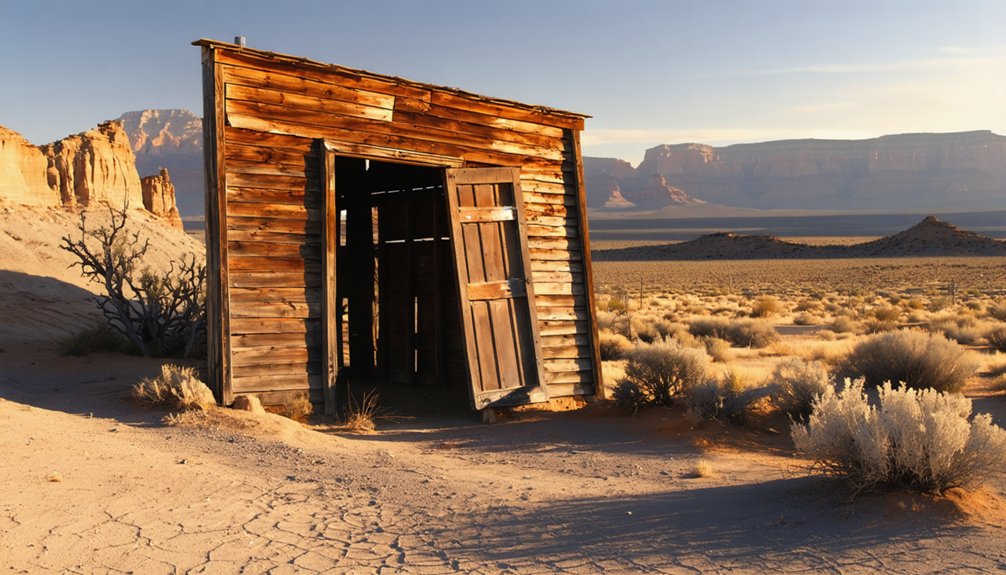
Planning a ghost town road trip to Watson, Utah means heading to Uintah County’s eastern edge, where Evacuation Wash cuts through dramatic canyon cliffs. You’ll follow U-45 south about eight miles from White River Crossing on a road any 2WD vehicle can handle. Watson peaked at 750 residents before the Uintah Railway moved on and left it behind. Pair it with Dragon, Rainbow, and Bonanza for a full canyon corridor experience — and there’s far more to uncover about this forgotten railhead.
Key Takeaways
- Watson sits along U-45 in Uintah County, about 8 miles south of White River Crossing, accessible via 2WD roads.
- Founded in 1911 as a Uintah Railway terminus, Watson served gilsonite mining and once housed around 750 residents.
- Explore scattered foundations, stock pens, mining relics, and crumbling walls across open, fee-free terrain.
- Visit in winter for cooler temperatures and better lighting; pack water, boots, and a paper map.
- Pair Watson with nearby ghost towns Dragon, Rainbow, and Bonanza for a full-day canyon road trip.
What Was Watson, Utah: and Why Visit?
Tucked into the canyon country of Uintah County at Utah’s far eastern edge, Watson is a ghost town that once buzzed with railroad activity, gilsonite mining, and the daily lives of around 750 residents. Founded in 1911 as the Uintah Railway’s new terminus, it replaced Dragon as the region’s main railhead and quickly grew into a hub for ore, wool, and supplies.
Today, you’ll find foundations, stock pens, and mining relics scattered across a broad canyon floor framed by dramatic cliffs. If local history pulls you toward places where ambition once carved towns out of raw desert, Watson delivers.
It’s open, accessible, and honest about what remains — a rare stretch of Utah’s past that you can explore on your own terms.
How to Reach Watson: Road Conditions, Access, and Directions
Watson sits along U-45 and Evacuation Wash, about eight miles south of the White River Crossing in Uintah County’s eastern corner. You’ll find the access road is 2WD friendly, so you don’t need a specialized vehicle to reach the site. Winter is your best bet for visiting since summer heat can make the canyon floor brutal.
As you drive in, towering cliffs frame the broad canyon floor, offering scenic viewpoints before you even reach the townsite. Once there, you’ll walk among ruins, foundations, and stock pens holding historical artifacts from Watson‘s railroad era.
Plan your route through nearby Dragon to the north and Rainbow to the southwest, and you’ve got yourself a full ghost town corridor worth exploring on your own schedule.
Ruins, Rail Remnants, and What Survives at Watson Today
What remains at Watson today tells a quiet story of rapid rise and gradual abandonment. You’ll find foundations, rubble, crumbling walls, and scattered stock pens where a bustling railhead once stood. The rail infrastructure is largely gone, but the landscape itself carries weight — broad canyon floors framed by towering cliffs give you a strong sense of what drew settlers here in the first place.
Walk carefully and you’ll spot historical artifacts embedded in the debris, remnants of everyday life that survived decades of exposure. Photography opportunities are genuinely impressive here — weathered structures against dramatic Utah geology create powerful, frame-worthy compositions.
Watson rewards explorers who move slowly and pay attention. There’s no gate, no fee, just open terrain and a forgotten town waiting to be read.
Best Time to Visit Watson and What to Bring
Once you’ve taken in the ruins and framed your last shot against those canyon cliffs, the practical side of the trip matters just as much as the destination itself. Winter is your best window — temperatures stay manageable, and the low-angle light creates ideal conditions for photography tips worth using: shoot historical artifacts like foundations and stock pens during golden hour for dramatic contrast.
Summer heat makes the canyon floor brutal, so avoid it. Pack water, snacks, a paper map, and sturdy boots since the terrain is uneven. Cell service is unreliable this far east in Uintah County. Your vehicle handles the 2WD road fine, but check conditions after rain.
Give yourself at least two hours to explore without rushing.
Dragon, Rainbow, and Bonanza: Ghost Towns Worth Pairing With Watson
If you’re already making the drive out to Watson, adding Dragon, Rainbow, and Bonanza to your route turns a single stop into a full ghost town corridor worth the mileage.
Dragon sits to the north, once a key node in the region’s mining history before Watson took over as the primary railhead.
Rainbow lies to the southwest, another quiet remnant of the gilsonite boom.
Bonanza came later, absorbing the major mining operations after Watson declined.
Together, these towns trace the full arc of the Uintah Railway’s reach across eastern Utah.
You’ll move through a landscape still marked by railroad remnants, abandoned foundations, and canyon terrain that shaped how this region was built and eventually left behind.
Plan a full day, and you’ll cover ground few travelers bother to find.
Frequently Asked Questions
Who Was Wallace G. Watson, and Why Was the Town Named After Him?
One engineer, one legacy. Wallace G. Watson designed the Uintah Railroad extension, and ghost town legends honor his contribution — the town bears his name as part of historic preservation efforts you’ll appreciate exploring today.
How Many Residents Lived in Watson During Its Peak Population Years?
At its peak, you’d have found around 750 residents calling Watson home! Today, ghost town tourism lets you walk those same grounds, connecting with historic preservation efforts that keep this remarkable community’s memory alive.
What Specific Role Did Gilsonite Mining Play in Watson’s Economic Rise?
Like a heartbeat powering a body, gilsonite mining fueled Watson’s entire economic impact. You’ll find the mining industry drove railroad expansion, attracted 750 residents, and transformed Watson into a thriving regional freight and shipping hub.
Did Watson Have a School and Post Office During Its Active Years?
Yes, Watson had both a school and post office during its active years! You’ll find these details enrich your ghost town tourism experience, connecting you to historic preservation efforts that honor Watson’s once-thriving, freedom-filled community life.
When Exactly Did the Uintah Railway Officially Extend Its Terminus to Watson?
Because bureaucrats love a good ribbon-cutting, the Uintah Railway officially extended its terminus to Watson on November 19, 1911. You’ll love exploring this railroad history milestone while chasing ghost town tourism adventures through Utah’s untamed, freewheeling eastern frontier.
References
- https://en.wikipedia.org/wiki/Watson
- https://jacobbarlow.com/2020/02/13/watson-utah/
- http://www.expeditionutah.com/forum/index.php?threads/ghost-town-watson.5608/
- http://poorlygradedgravel.blogspot.com/2010/06/ghost-town-tuesday-watson-dragon-and.html
- https://www.ghosttowns.com/states/ut/watson.html
- https://en.wikipedia.org/wiki/List_of_ghost_towns_in_Utah
- https://onlineutah.us/watsonhistory.shtml
- https://exhibits.lib.utah.edu/s/mining-the-west/page/boom-and-bust