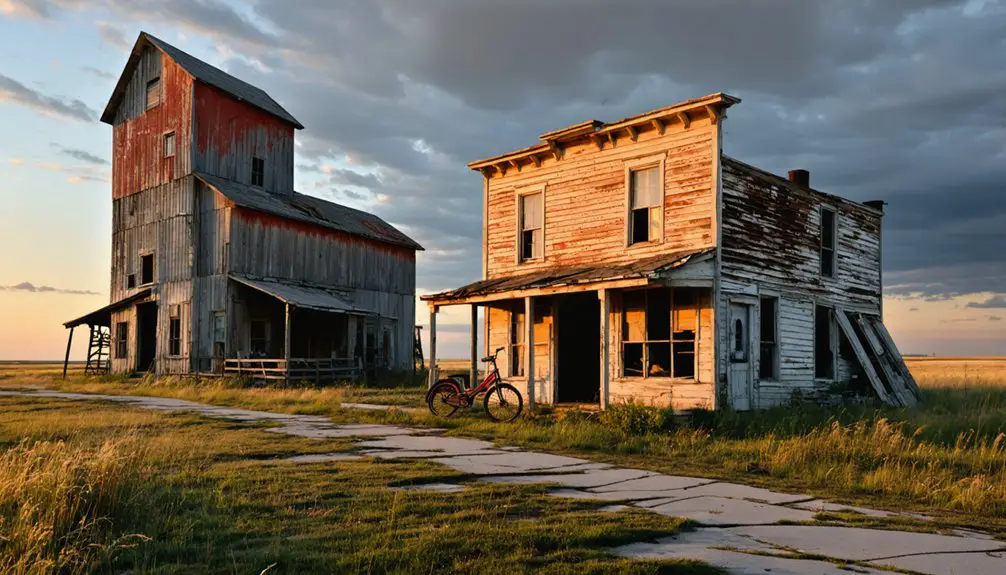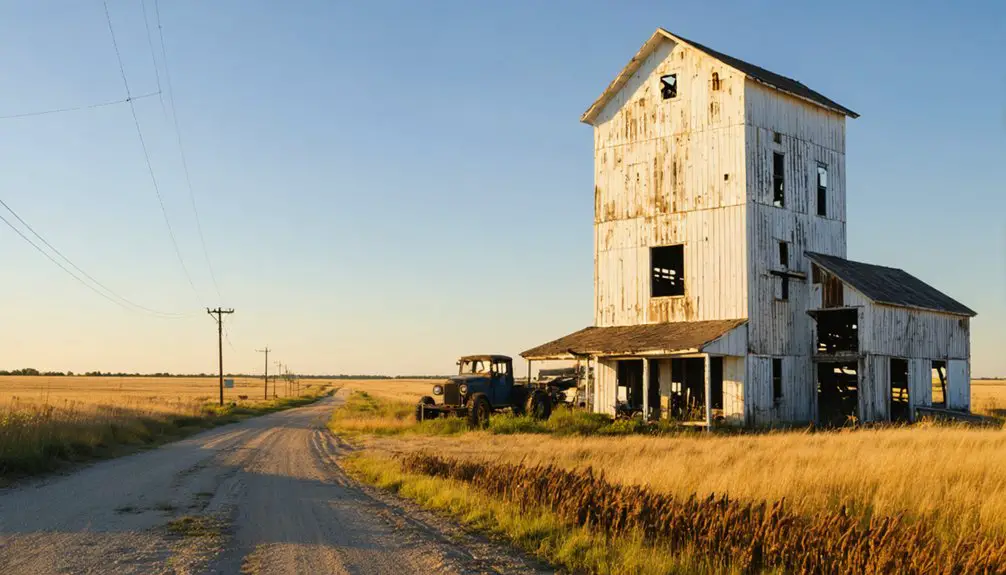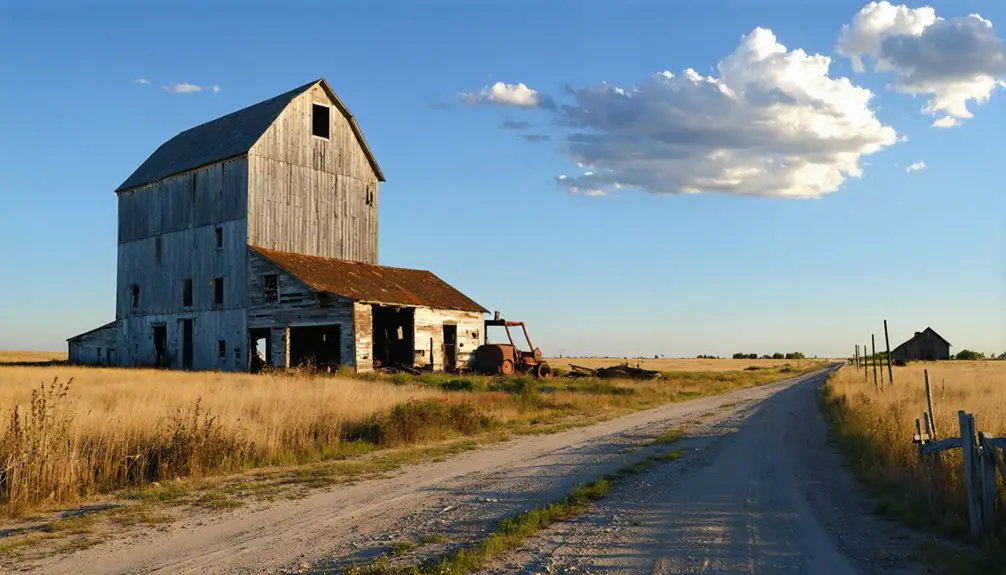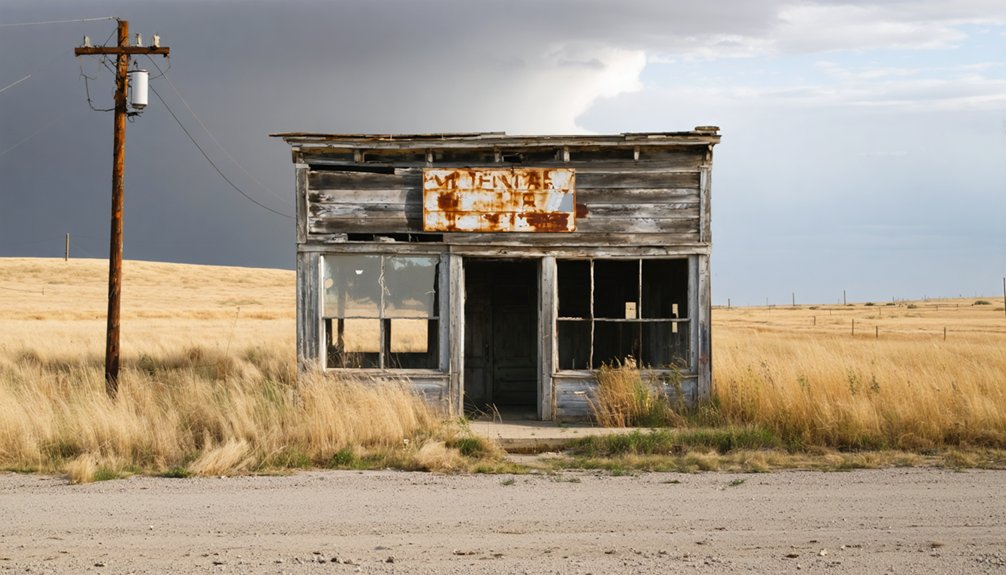
Planning a ghost town road trip to Van Hook, North Dakota means chasing a town that’s literally underwater. In the 1950s, Garrison Dam’s construction flooded Van Hook beneath Lake Sakakawea, displacing residents and submerging an entire community. You’ll want to visit during drought years, especially late summer, when dropping water levels expose old foundations and remnants. Travel ND Highway 8 through Stanley and New Town to reach the site. There’s much more to this haunting story than you’d expect.
Key Takeaways
- Van Hook, founded in 1914, was submerged under Lake Sakakawea after Garrison Dam’s construction in the 1950s, displacing residents to New Town.
- Drought years, especially late summer, offer the best chance of seeing submerged foundations briefly emerging from Lake Sakakawea’s lowered waters.
- Access Van Hook via North Dakota Highway 8, passing through Stanley, Belden, New Town, and Sanish for historical context.
- Check North Dakota water level reports before visiting to determine whether drought conditions will reveal the submerged ruins.
- Expect no standing structures; the experience focuses on history, legends, and displacement rather than visible ghost town remains.
What Made Van Hook a Ghost Town?
When the U.S. government completed Garrison Dam in the 1950s, it permanently erased Van Hook from the map. Rising waters from the newly formed Lake Sakakawea swallowed the original townsite whole, taking with it historical artifacts, memories, and a community that had thrived since 1914.
Residents had no choice but to pack up and relocate to New Town, leaving behind everything they’d built over four decades.
Families uprooted overnight, carrying what little they could while four decades of roots sank beneath rising water.
What once stood as a railroad hub with nearly 380 residents simply disappeared beneath the surface.
Local legends say that during drought years in the 1970s, old foundations briefly emerged as lake levels dropped, offering rare glimpses into a buried past.
Today, Van Hook serves as a powerful reminder of what dam-era government decisions cost real communities.
The Town That Existed Before the Lake
Before the lake swallowed it whole, Van Hook was a functioning small town with real roots. You can trace its founding to 1914, when it emerged as a Soo Line Railroad station, and by 1915 it had incorporated and begun drawing settlers into Mountrail County.
Original Founding And Settlement
Long before Lake Sakakawea swallowed the landscape, Van Hook was a living, breathing railroad town that took root in 1914 as a Soo Line Railroad station. It incorporated just a year later in 1915, named after Fred van Hook, a surveyor who mapped the area back in 1911.
The town grew steadily, reaching 372 residents by 1930 and 380 by 1950. Historical artifacts and local legends tie this community to a confident, independent era when North Dakota’s northern plains were still wide open territory.
You’re looking at a place that functioned as a genuine trade hub before the federal government changed everything. That self-sufficient spirit defined Van Hook long before displacement became its defining story.
Life Before The Lake
Van Hook wasn’t just a dot on a railroad map — it was a functioning community with real economic and social roots. By 1930, it reported a population of 372, climbing to 380 by 1950. Residents built lives here, supported local trade, and formed the kind of close-knit identity that gives a place its cultural significance.
You can trace its growth back to the Soo Line Railroad, which made Van Hook a legitimate regional hub rather than a forgotten outpost. Farms, businesses, and families anchored the town for decades.
Understanding what existed here matters for historical preservation — it reminds you that what now sits beneath Lake Sakakawea wasn’t empty land. It was someone’s home, someone’s livelihood, and a community that deserved better than a forced farewell.
What Survives at Van Hook When Lake Levels Drop
When Lake Sakakawea’s water levels drop during drought years, the original Van Hook townsite briefly resurfaces from beneath the lake. You won’t find standing walls or preserved storefronts, but the exposure reveals something rawer — old foundations and underground structures emerge from the lakebed, offering a rare glimpse into a community forcibly erased by federal dam construction.
Drought years in the 1970s famously uncovered these remnants, drawing visitors who came to witness history literally rising from the water. Think of it less like stumbling onto ancient artifacts and more like reading scars left in the earth.
The experience rewards patient, curious travelers who understand that Van Hook’s ghost-town story lives in absence, not architecture.
Sanish and New Town: The Full Displacement Story
Van Hook didn’t disappear alone. Sanish, another thriving community, faced the same fate when Garrison Dam flooded the region in the 1950s. Both towns were erased, their historical artifacts swallowed by Lake Sakakawea‘s rising waters.
Residents from both communities were relocated to a newly created town — New Town — built specifically to house the displaced families.
When you visit this area, you’re standing at the intersection of loss and community resilience. New Town didn’t just absorb the displaced; it forged something new from two broken communities.
The Three Affiliated Tribes lost significant reservation land in this process, adding a deeper, more painful layer to the story. Understanding Sanish and New Town transforms your Van Hook road trip from a simple ghost-town visit into something far more meaningful.
How to Get to Van Hook, North Dakota
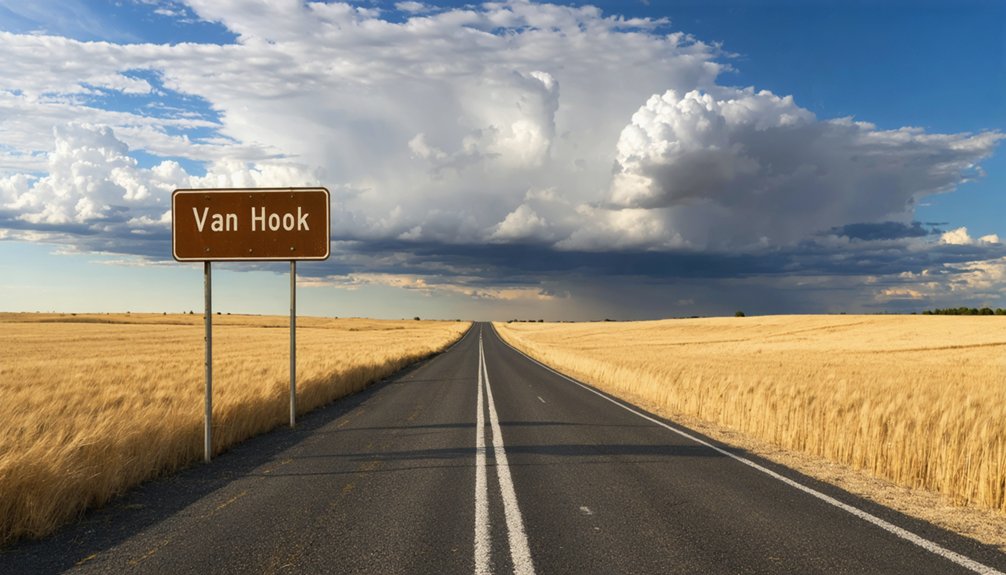
Van Hook sits in north-central North Dakota along the Lake Sakakawea shoreline in Mountrail County, making it a straightforward drive from several regional hubs.
You’ll want to pick up North Dakota Highway 8, which runs through the area near Belden and connects Stanley to the former townsite, giving you a scenic corridor through the region’s oil-patch and lake country.
Townes like Stanley and New Town serve as natural stopping points along the way, and pairing them with your Van Hook visit adds essential context to the broader displacement story you’ve already been tracing.
Van Hook’s North Dakota Location
Tucked into north-central North Dakota, Van Hook sits along the shores of Lake Sakakawea in Mountrail County, making it most accessible via North Dakota Highway 8. You’ll pass through Stanley and Belden before reaching the former townsite, now transformed into a lakefront resort community.
The drive itself rewards curiosity — wide open plains give way to dramatic reservoir views that hold both historical artifacts and local legends beneath their surface. What was once a thriving railroad stop founded in 1914 now rests largely underwater, reclaimed by Lake Sakakawea after Garrison Dam’s construction in the 1950s.
If you’re mapping your road trip, aim for the Van Hook resort area, where you can explore the landscape, absorb the history, and begin understanding what this ghost town really means.
Key Routes And Highways
Getting to Van Hook means committing to North Dakota’s open highway system, where North Dakota Highway 8 serves as your primary corridor. Running through Belden and Stanley, ND 8 cuts through wide-open north-central North Dakota, connecting you to the Lake Sakakawea shoreline where Van Hook once stood.
You’ll pass through small towns carrying their own local legends, places where residents still trade stories about the dam era and the communities swallowed by rising water. Urban legends about exposed foundations emerging during drought years have drawn curious travelers down these same roads for decades.
Keep your map handy, your tank full, and your expectations flexible. Van Hook doesn’t announce itself with roadside markers. The highway simply delivers you to the edge of a lake hiding a town underneath.
Nearby Towns En Route
Before you reach Van Hook, the highway hands you a string of small towns worth slowing down for. Each one carries its own historical artifacts and local legends that deepen the road trip’s meaning.
- Stanley offers a solid fuel and food stop with prairie-rooted character.
- Belden sits quietly along ND 8, connecting you directly toward the former Van Hook townsite.
- New Town tells the powerful relocation story of displaced Van Hook and Sanish residents.
- Sanish shares the same dam-era ghost-town fate as Van Hook, making it a natural companion stop.
Hitting these towns in sequence builds real context before you arrive. You’re not just chasing a submerged ghost town — you’re tracing an entire displaced community’s story across the landscape.
When to Visit Van Hook for Ghost Town Views
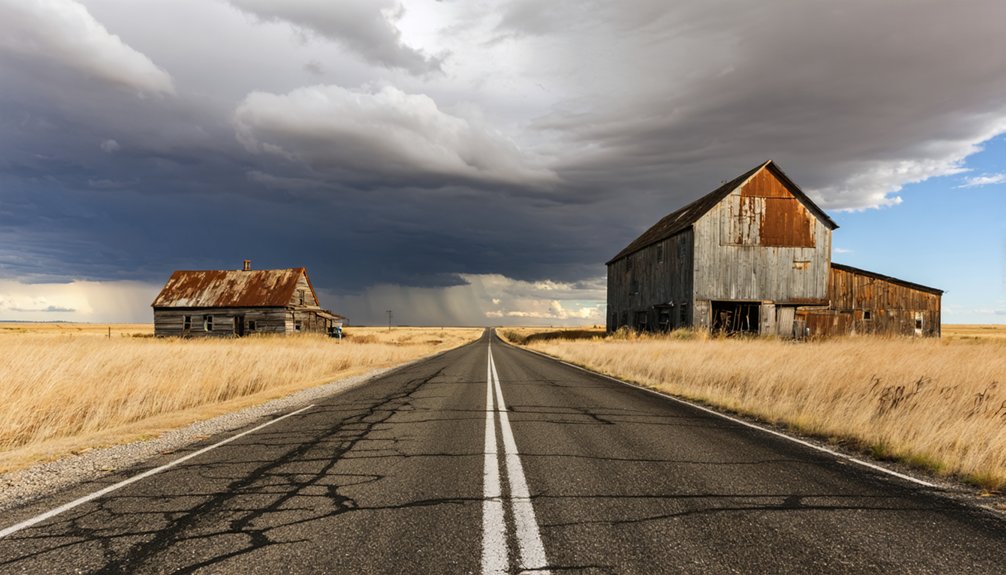
Timing your visit to Van Hook can make the difference between seeing open water and catching a rare glimpse of history beneath it. Drought years offer your best opportunity, particularly late summer when Lake Sakakawea levels drop markedly. During the 1970s droughts, underwater visibility improved enough to expose old foundations and historical artifacts that typically rest beneath the surface.
If you’re visiting during average water years, don’t expect walkable ruins — you’ll encounter a scenic lakefront resort instead. Early morning visits reduce glare on the water, giving you a better chance of spotting submerged remnants from the shoreline.
Check North Dakota water level reports before heading out so you can plan around conditions that genuinely reveal Van Hook’s ghost-town character.
Where to Stay While Exploring Van Hook and the Lake
Since Van Hook is a resort community rather than a traditional ghost-town destination, you’ll find lodging options that lean toward lakefront recreation. Staying nearby keeps you close to the water, the historic artifacts embedded in the landscape, and the cultural heritage this flooded town carries.
Consider these practical options:
- Van Hook resort cabins offer direct lake access and proximity to the former townsite area.
- Stanley, North Dakota provides motel accommodations roughly 20 miles away with easy highway access.
- New Town lodging connects you to the broader displacement story and Three Affiliated Tribes history.
- Campgrounds along Lake Sakakawea let you sleep near the submerged ruins beneath the water.
Each option positions you well for early-morning exploration when the lake sits quiet and the history feels closest.
Recreation and History Sites Near Van Hook Resort
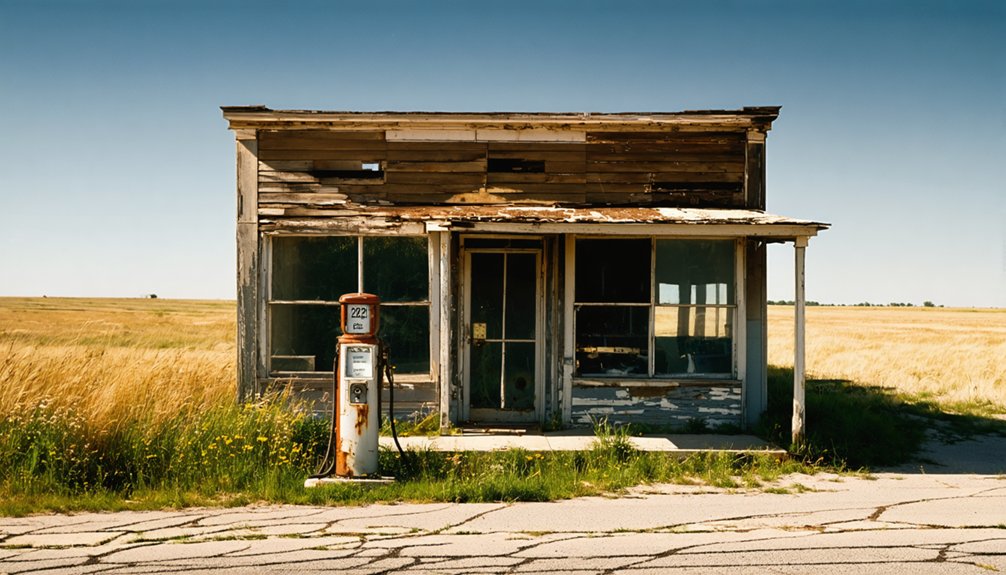
The lake around Van Hook doesn’t just hold water — it holds an entire town. Beneath Lake Sakakawea’s surface lies the original Van Hook townsite, fueling urban legends about submerged streets and forgotten foundations. During drought years in the 1970s, dropping water levels briefly exposed those old foundations, giving explorers a rare glimpse into the past.
Today, Van Hook Park — formerly Traynor Park, dedicated in 1976 — anchors the area’s historic landmarks and offers shoreline access, picnic areas, and open skies.
Pair your visit with a drive toward New Town, where displaced Van Hook and Sanish residents rebuilt their lives after the Garrison Dam project. The region rewards curious travelers who want history, recreation, and wide-open North Dakota freedom all in one stretch of road.
Planning a Van Hook Ghost Town Road Trip
Planning a Van Hook ghost town road trip means adjusting your expectations before you hit the highway — there are no crumbling storefronts or weathered saloons waiting at the end of the drive. The underwater ruins sit silently beneath Lake Sakakawea, and historical artifacts surface only during rare drought-year low-water exposures.
No crumbling storefronts await — Van Hook’s ruins rest silently beneath Lake Sakakawea, surfacing only in drought.
Still, the journey rewards curious travelers who appreciate layered history over Instagram ruins.
Pack your trip around these essentials:
- Route via ND 8 through Stanley and Belden for historic context
- Van Hook Resort area as your base camp for lake access
- New Town stops to understand the full relocation story
- Drought-year timing if you’re hoping to glimpse exposed foundations
This road trip isn’t about what stands — it’s about what disappeared.
Frequently Asked Questions
Who Was Fred Van Hook, and Why Was the Town Named After Him?
You’ll find that Fred Van Hook was an early area surveyor who mapped the land in 1911. His pioneering work left behind local legends tied to historic architecture, earning him the town’s namesake honor in 1914.
What Was the Peak Population of Van Hook Before It Was Abandoned?
You’ll find Van Hook’s peak population reached 380 residents in 1950, just before its abandonment. This abandoned town’s history adds a fascinating layer to ghost town tourism, reminding you how thriving communities can vanish beneath rising waters.
Was Van Hook Ever Officially Listed on a National Ghost Town Registry?
No official national ghost town registry has Van Hook listed. But don’t let that stop your ghost town tourism adventure — this sunken, abandoned site still captivates free spirits craving forgotten history beneath Lake Sakakawea’s modern waves.
Did Any Van Hook Residents Resist or Protest the Government Relocation Order?
The records don’t detail specific resident protests, but you can imagine the heartbreak. Many fought the government relocation emotionally and culturally, refusing to quietly surrender their homes, land, and community identity to rising waters.
Are Any Historical Photographs of the Original Van Hook Townsite Publicly Available?
Like buried treasure waiting to be unearthed, historical photograph archives holding Van Hook town history exist — you’ll find them through North Dakota State Historical Society collections, local county museums, and online digital repositories worth exploring.
References
- https://en.wikipedia.org/wiki/Van_Hook
- https://www.ghosttowns.com/states/nd/vanhook.html
- https://www.onlyinyourstate.com/state-pride/north-dakota/underwater-ghost-towns-nd
- https://en.wikipedia.org/wiki/List_of_ghost_towns_in_North_Dakota
- https://news.prairiepublic.org/show/dakota-datebook-archive/2022-05-18/build-it-and-they-will-come
- https://mapcarta.com/23731152
- https://www.gutenberg.org/files/46661/46661-h/46661-h.htm
- https://en.wikipedia.org/wiki/Belden
- https://fargofilmmaking.fandom.com/wiki/Van_Hook
- https://www.minotdailynews.com/news/local-news/2014/04/new-birth-for-van-hook/