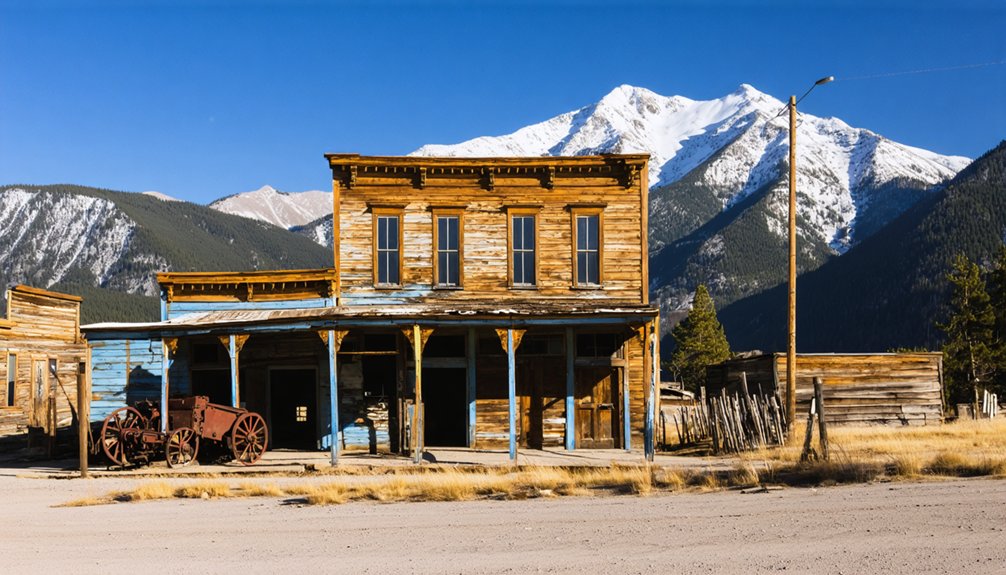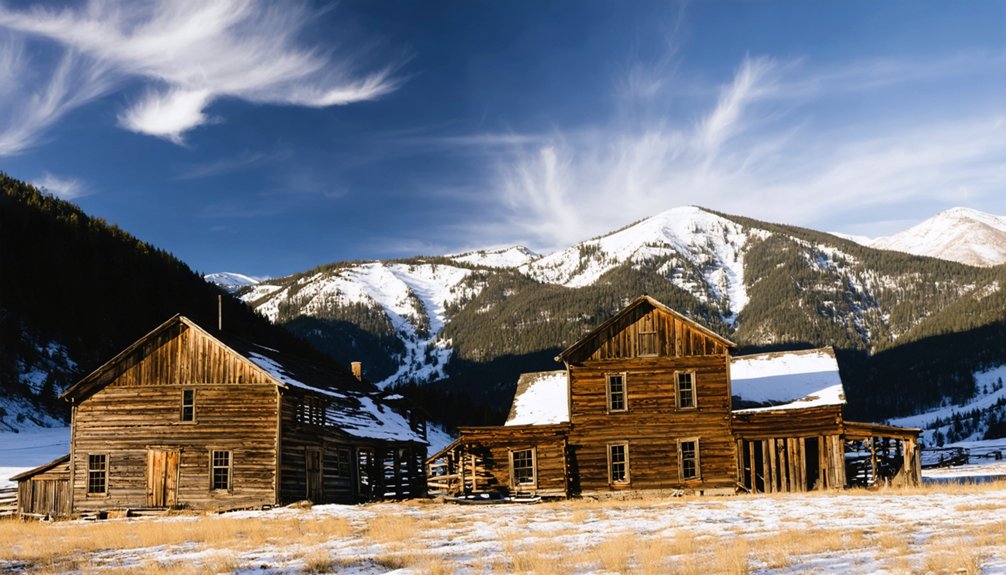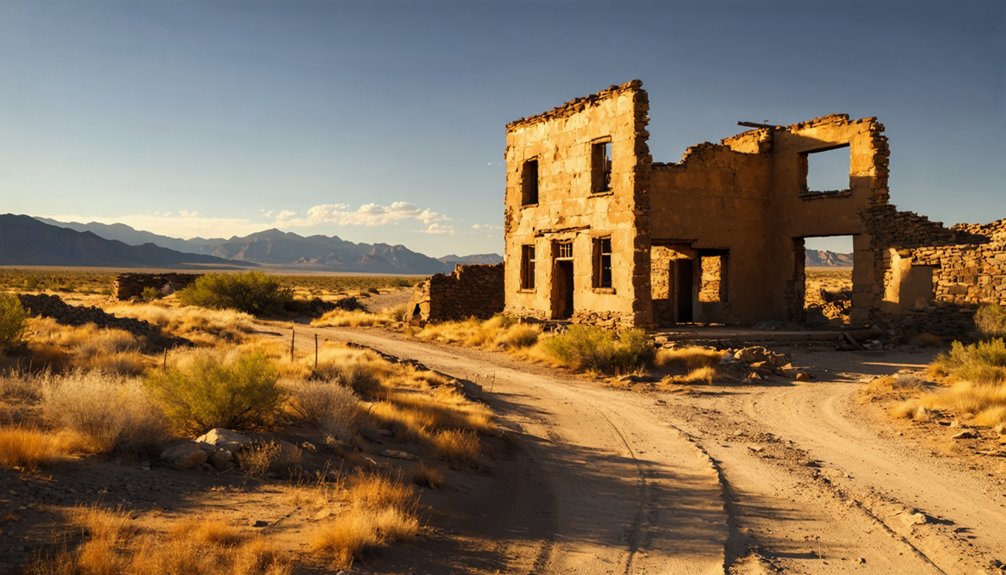
Planning a ghost town road trip to Autobees, Colorado means heading southeast of Pueblo to one of the state’s most forgotten historical sites. Founded in 1853 as Colorado’s first farming settlement, Autobees once served as Huerfano County’s original county seat. Today, little remains above ground, but the land carries deep frontier history tied to Kit Carson, Buffalo Bill, and Mexican land grants. There’s far more to this hidden treasure than first meets the eye.
Key Takeaways
- Autobees, Colorado’s first farming settlement founded in 1853, served as Huerfano County’s original county seat, making it a historically rich ghost town destination.
- Located in Pueblo County at 4,494 ft elevation, use detailed offline maps and a high-clearance vehicle for rural roads with few landmarks.
- No standing structures remain, but the site’s archaeological and frontier significance, tied to Kit Carson and Buffalo Bill, rewards historically curious visitors.
- Pack water, sunscreen, sturdy footwear, and paper maps; inform someone of your itinerary and avoid exploring the remote site alone.
- Start your road trip from Pueblo, heading southeast, and plan travel during daylight hours for safe navigation through unmarked rural terrain.
The History of Autobees, Colorado’s Forgotten Farming Settlement
When most people picture Colorado’s ghost towns, they imagine abandoned mine shafts and silver-rush boomtowns — but Autobees tells a quieter, older story. Founded in 1853 as a farming village, it became the first settlement in southern Colorado and served as the original county seat of Huerfano County from 1861 to 1868.
The Autobees family, connected to Mexican land grant history, put down roots before the region’s territorial boundaries even solidified. Charles Autobee was among the first non-native settlers in what’s now Pueblo County, and his name still appears on local markers and street signs today.
When the county seat shifted to Badito, Autobees faded. You won’t find much standing at the site now — but the history beneath your feet runs deep.
How to Get to Autobees
Autobees sits at roughly 38.2100°N, 104.2872°W in Pueblo County, southeastern Colorado, at an elevation of 4,494 feet. You’ll want to base yourself in Pueblo, then head southeast using detailed maps or offline navigation, since cell service gets unreliable fast out here.
Autobees waits at 38.2100°N, 104.2872°W — download offline maps before leaving Pueblo; cell service vanishes fast.
The roads leading toward the site reflect the same quiet, open country that once supported Autobees’ farming history, so expect rural stretches with little traffic and fewer landmarks. Don’t rely solely on standard GPS apps; download offline maps before you leave.
Bring a high-clearance vehicle if you’re venturing off paved routes. The landscape itself hints at the local legends surrounding this forgotten settlement, rewarding travelers who arrive prepared.
Pack water, fuel up in Pueblo, and plan your departure with daylight hours in mind.
What Remains at the Autobees Site Today
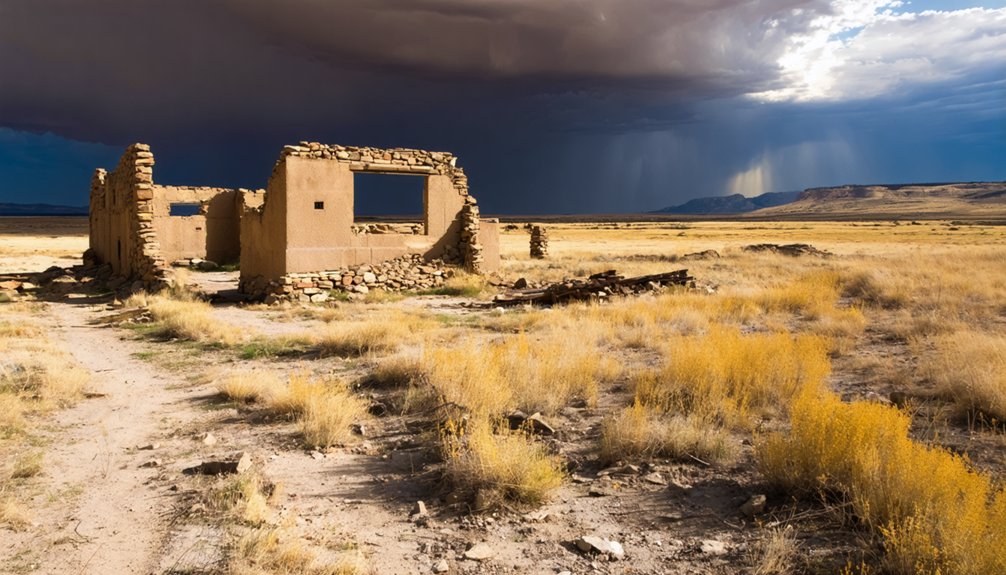
Once you arrive at the site, you’ll find that little survives of what Charles Autobee and his family built here in 1853. Time, weather, and shifting county boundaries have erased most physical traces of Colorado’s first southern settlement. You won’t discover standing structures or preserved buildings — just open land carrying quiet historical weight.
That absence doesn’t diminish the site’s archaeological significance. Beneath the surface, evidence of frontier farming life and Mexican land grant history may still exist. Preservation challenges have kept formal excavation limited, leaving much undocumented and unprotected.
What you’ll find is perspective. Standing at roughly 4,494 feet in Pueblo County, you’re occupying ground where Kit Carson and Buffalo Bill once crossed paths with the Autobee family. That connection to raw American frontier history is worth the drive alone.
Why Autobees Is Worth a Ghost Town Road Trip?
Few ghost towns in Colorado carry the layered history that Autobees does — a farming settlement, a former county seat, and the earliest known non-indigenous homestead in southern Colorado, all compressed into one quiet stretch of Pueblo County land.
Autobees isn’t just a ghost town — it’s a farming settlement, a former county seat, and southern Colorado’s earliest known non-indigenous homestead.
You’re not just visiting an abandoned site; you’re standing where historical legends like Kit Carson and Buffalo Bill once moved through the frontier.
Family descendants of Charles Autobee kept this story alive, connecting Mexican land grant heritage to the broader sweep of Colorado’s territorial era.
The site itself may have little remaining, but that absence sharpens your focus on what once stood here.
If you value raw, unpolished history over reconstructed attractions, Autobees delivers exactly that kind of honest, open-road discovery.
Ghost Towns and Heritage Sites Near Autobees
Southeastern Colorado packs enough ghost town history into a single road trip to fill an entire week of exploration. Once you’ve walked the Autobees site and absorbed its settlement origins as a farming village on Mexican land grant territory, you can push deeper into the region’s layered past.
Badito, the town that replaced Autobees as Huerfano County seat in 1868, sits nearby and carries its own quiet story. Pueblo’s heritage markers keep the Autobee name alive across street signs and memorials.
Colorado’s mining history shaped over 1,500 ghost towns across the state, with roughly 640 still holding visible remains. You’re perfectly positioned here to connect frontier agricultural roots with the silver-boom collapse that emptied so many mountain communities just decades later.
What to Bring for a Remote Ghost Town Visit
Before you head out to Autobees, pack water, sunscreen, a hat, and sturdy footwear to handle the exposed terrain and uneven ground.
Download offline maps or bring a paper version, because cell service won’t be reliable this far into southeastern Colorado’s remote stretches.
Once you’re on site, watch for unstable structures, hidden sharp debris, and wildlife that’s claimed these quiet ruins long before your visit.
Essential Gear To Pack
Visiting a remote ghost town like Autobees means stepping into rugged, exposed terrain where cell service is unreliable and the nearest help may be miles away. So packing smart isn’t optional—it’s essential.
You’re walking ground tied to local legends and historical artifacts, and you owe it to yourself to arrive prepared.
Pack these three non-negotiables:
- Water and sun protection – High-altitude southeastern Colorado sun hits hard; bring more water than you think you’ll need, plus sunscreen and a hat.
- Offline maps – Download your route before leaving; don’t rely on live GPS.
- Sturdy footwear – Uneven, rocky ground demands boots with solid ankle support.
Treat preparation like respect—for the land, the history, and your own freedom to explore it safely.
Navigation Without Cell Service
Cell service drops fast once you leave Pueblo behind, and by the time you’re steering the back roads toward Autobees, you’re on your own. Download offline maps before you go, and don’t rely solely on your phone — batteries die and screens crack.
Print a physical copy of your route and mark key landmarks. Brush up on basic map reading so you can orient yourself when road signs disappear. A compass belongs in your pack too; compass skills aren’t outdated — they’re essential when you’re orienteering southeastern Colorado’s open terrain with no signal and no backup.
Note your mileage at key turns. Tell someone your itinerary before you leave. Freedom on the road means being prepared enough that no dropped signal can stop you.
Safety Hazards To Anticipate
Ghost towns don’t forgive careless visitors, and Autobees — sitting quiet under a wide southeastern Colorado sky — is no exception. The freedom to explore comes with real responsibility. Before you step onto the site, anticipate what’s waiting:
- Unstable structures — Deteriorating walls and floors can collapse without warning. Stay back from anything that looks compromised.
- Wildlife encounters — Rattlesnakes, scorpions, and other desert creatures claim abandoned spaces. Watch every step and check before reaching into dark corners.
- Sharp debris — Rusted metal and broken materials hide in overgrown ground, making sturdy footwear non-negotiable.
Wear long pants, carry water, and never explore alone. Autobees rewards the prepared traveler — the one who respects both the landscape and its hazards.
Frequently Asked Questions
Was Charles Autobee Connected to Any Famous Frontier Figures?
Yes, you’ll find that Charles Autobee’s frontier settlement stories connect him to Kit Carson, Buffalo Bill, and Wild Bill Hickok — bold names woven into Autobee family genealogy and the untamed spirit of early Colorado.
What Mexican Land Grant History Is Linked to the Autobee Family?
You’ll find the Autobee family’s roots tangled in Mexican land grant disputes that shaped southern Colorado’s frontier identity. Exploring their family genealogy reveals bold settlers who claimed territory before Colorado’s boundaries ever existed.
How Many Colorado Ghost Towns Still Have Visible Remains Today?
Of Colorado’s 1,500+ ghost towns, you’ll find visible remains in only about 640 — a sobering proof to mining history’s fleeting nature. Historic preservation efforts guarantee these surviving sites still spark your sense of freedom and adventure.
Where Can Autobee Family Historical Markers Be Found in Pueblo?
You’ll find Autobee family heritage woven throughout Pueblo historical sites via street signs, historical markers, memorials, and cemetery references. These tributes honor Charles Autobee’s pioneering legacy, connecting you directly to southeastern Colorado’s rich, untamed frontier history.
Why Did Huerfano County’s Seat Move From Autobees to Badito?
Badito’s position on a main foothills trail made it a stronger hub, so you’ll find Autobees faded into a ghost town with little restoration, while Badito became the county’s more practical tourist attraction and administrative center.
References
- https://en.wikipedia.org/wiki/Autobees
- https://en.wikipedia.org/wiki/List_of_ghost_towns_in_Colorado
- https://www.colorado.com/articles/colorado-ghost-towns
- https://www.cbsnews.com/colorado/news/colorado-autobees-helped-shape-pueblos-rich-mexican-heritage/
- https://www.denverpost.com/2023/06/21/colorado-ghost-towns-abandoned-to-visit/
- https://aspenhistory.org/independence-ghost-town/
- https://en.wikipedia.org/wiki/Category:Ghost_towns_in_Colorado
- https://www.uncovercolorado.com/ghost-towns/
- https://en.wikipedia.org/wiki/Independence
- https://www.uncovercolorado.com/ghost-towns-near-denver-co/