West Derby sits in Vermont’s Orleans County along Little River, and while it’s not officially a ghost town, the Northeast Kingdom pulls you in with cursed stones, vanished travelers, and border-straddling buildings at nearby Derby Line. You’ll pass cellar holes, dense woods, and roadside diners serving maple everything on the 3-hour drive from Burlington. Pack topo maps, layer up, and keep your cell charged while you still can—there’s far more haunting this region than any list lets on.
Key Takeaways
- West Derby is not a ghost town; it’s an active municipality in Orleans County, but nearby abandoned sites make it a worthy road trip base.
- From Burlington, reach West Derby in approximately 3 hours via Route 7 and Route 105, passing scenic countryside and small towns.
- Explore nearby ghost towns like Glastenbury and Somerset, featuring abandoned ruins, cellar holes, and dense wilderness along Class D forest roads.
- Pack topo maps, headlamps, layered clothing, water filters, and first aid kits, as cell service and gas stations become sparse near remote areas.
- The region’s folklore, including cursed stones and mysterious disappearances, adds paranormal intrigue to your ghost town exploration experience.
Is West Derby, Vermont Actually a Ghost Town?
While the idea of a ghost town road trip to West Derby, Vermont sounds thrilling, you’ll quickly discover there’s a catch: West Derby isn’t actually a ghost town. It remains a populated municipality in Orleans County, quietly alive along the Little River.
No official record lists it among Vermont’s abandoned settlements. Wikipedia’s ghost town roster names Glastenbury, Lewiston, and Smithfield — not West Derby. Dedicated sources like Obscure Vermont and New England With Love skip it entirely.
That said, don’t abandon your adventure. The region carries its own local legends and whispers of historical ruins worth chasing.
Nearby Derby Line alone offers bizarre border anomalies that’ll satisfy any freedom-seeking explorer. Sometimes the most compelling road trips begin exactly where the map stops making sense.
The Derby Line Border Oddities That Justify the Drive
Even if West Derby doesn’t quite deliver the ghost town atmosphere you’d hoped for, the nearby town of Derby Line makes the drive entirely worth it.
You’ll find a library and opera house that literally straddle the U.S.-Canada border, where the checkout desk sits in one country and the bookshelves in another.
Some residents there have backyards in Canada while their front doors open onto American soil, a zoning reality so strange it puts any ghost town legend to shame.
Library Straddling Two Nations
Just a short drive from West Derby, Derby Line holds one of the strangest architectural curiosities in North America: a library and opera house that literally straddles the U.S.-Canada border. You can check out a book in Vermont and return it in Quebec.
The building’s front door opens in the United States while portions of the reading room sit firmly in Canada. These border anomalies create zoning quirks that challenge every conventional assumption about jurisdiction, property rights, and national identity.
Some residents have backyards in one country and kitchens in another. For anyone craving freedom from ordinary boundaries, Derby Line delivers something genuinely rare — a place where the lines governments draw mean almost nothing against the stubborn reality of how people actually built their lives.
Backyard Border Zoning Anomalies
The zoning anomalies here go deeper than the library’s famous border-straddling walls — some Derby Line residents wake up every morning in the United States, walk through their kitchen, and step into Canada before they’ve finished their coffee.
These border anomalies aren’t legal loopholes; they’re documented zoning quirks baked into property lines drawn centuries ago. You’ll find houses where the front door opens onto American soil but the backyard belongs entirely to Quebec.
Nobody relocated — the border simply landed there. For anyone chasing genuine freedom and geographic strangeness, Derby Line delivers something no theme park can replicate. It’s authentic, unscripted, and quietly defiant of conventional jurisdiction.
Add it to your West Derby itinerary, and you’ll leave questioning everything you assumed about where one country ends and another begins.
How to Get to West Derby From Burlington
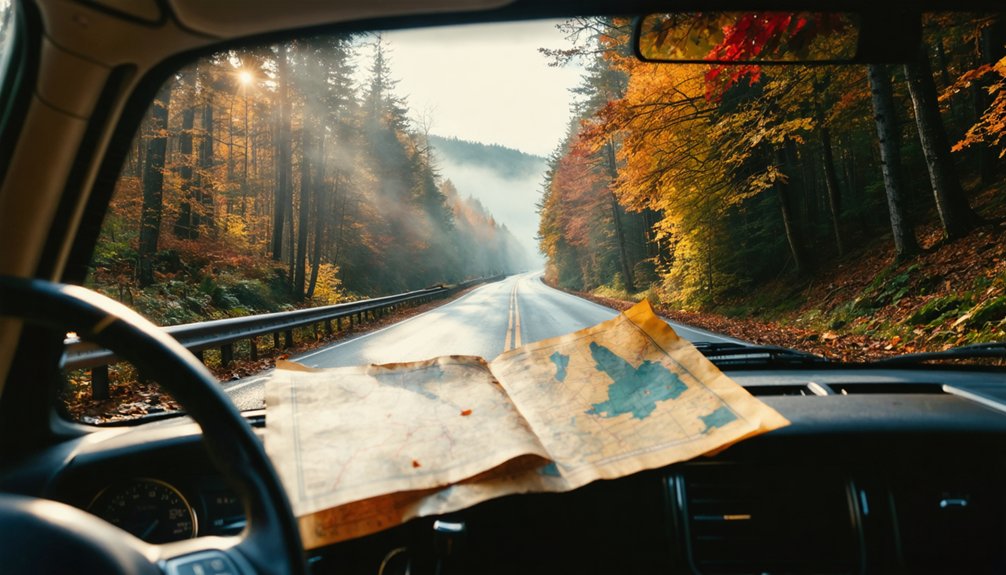
Heading northeast from Burlington, you’ll wind your way through roughly 3 hours of classic Vermont countryside via Route 7 and Route 105. The drive feels like flipping through an old postcard collection.
Small towns dot the route, each hiding historical artifacts worth a detour — a weathered mill foundation here, a forgotten cemetery marker there.
Stop somewhere along Route 105 for local cuisine; roadside diners in this corridor still serve maple-glazed everything, and you’ll want that energy before reaching West Derby.
Orleans County’s landscape opens up near the Little River, giving you a genuine sense of arrival.
Keep your tank full leaving Burlington — gas stations thin out as the highway network narrows into quieter, more personal Vermont roads.
The Strange Lore Surrounding Vermont’s Northeast Kingdom
As you wind through the Northeast Kingdom toward West Derby, you’ll feel the weight of old stories pressing in from the tree line—legends of cursed stones, inexplicable disappearances, and lights drifting through the dark that locals still won’t quite explain.
The nearby Bennington Triangle, named in 1992, absorbed five mysterious disappearances between 1945 and 1950, and the folklore of big hairy creatures and swallowing stones has never fully loosened its grip on the region’s identity.
You don’t have to believe any of it, but when the road narrows and the pines close in, you’ll find yourself listening a little more carefully than you expected.
Northeast Kingdom Mysterious Legends
Vermont’s Northeast Kingdom has long whispered strange stories to anyone willing to listen. Local folklore here runs deep, tied to mysterious disappearances, unexplained lights, and encounters that defy easy explanation. You’ll feel it driving these backroads alone.
Four legends define the region’s eerie reputation:
- Cursed stones allegedly swallow travelers whole near isolated trail heads
- Unexplained lights float across ridgelines on moonless nights
- Big hairy creatures reported by credible witnesses throughout dense woodland corridors
- Hikers vanishing without trace between 1945 and 1950, mirroring Bennington Triangle accounts
These aren’t campfire fabrications — they’re stitched into community memory. Residents speak quietly about what they’ve witnessed.
You’re free to dismiss it, but the Northeast Kingdom doesn’t care whether you believe.
Local Lore And Folklore
Strange lore doesn’t stay contained to legends and lists — it bleeds into the fabric of daily life up here, and locals will tell you so if you earn their trust. Native legends tied to the land predate every settler story you’ve heard, and they carry weight that doesn’t dissolve with time.
Attend one of the regional folklore festivals scattered across the Northeast Kingdom and you’ll pick up fragments — whispered accounts of lights moving through tree lines, stones that seem misplaced by intention rather than nature.
Older residents remember specific nights, specific sounds. They don’t dramatize it. That restraint makes it stranger. You won’t find these stories indexed anywhere.
You collect them yourself, mile by mile, conversation by conversation.
Paranormal Activity Reported Nearby
The Northeast Kingdom doesn’t advertise its strangeness — you stumble into it. Haunted legends cling to the back roads here, and paranormal sightings get passed around like family stories nobody quite questions.
Before you roll through, know what locals already do:
- Derby Line’s split buildings create an eerie jurisdictional limbo that feels genuinely unnatural.
- The Bennington Triangle, linked to disappearances between 1945–1950, shadows Vermont’s reputation statewide.
- Mysterious lights and unidentified sounds were documented by early settlers throughout the region.
- A cursed stone allegedly swallows trespassers whole, per deep-rooted Abenaki-influenced lore.
You won’t find official warning signs. That’s exactly the point. The Kingdom keeps its secrets quietly, waiting for the curious traveler willing to look closer.
Greenbank’s Hollow: The Forgotten Mill Town Near Your Route
Tucked away in Caledonia County, Greenbank’s Hollow once hummed with the rhythm of a working mill town, its covered bridge standing as a quiet witness to a community that time slowly swallowed.
As you route toward West Derby, you’ll want to carve out time for this detour — it rewards the curious traveler.
The hollow’s historic covered bridge remains a symbol of historical preservation, connecting you physically and emotionally to a vanished way of life.
Local legends whisper about the families who built their livelihoods here before industry moved on and the forest reclaimed what it lost.
You can still walk the grounds, read the silence, and feel the weight of absence.
It’s exactly the kind of stop that makes a road trip mean something.
Real Vermont Ghost Towns Within a Day of West Derby
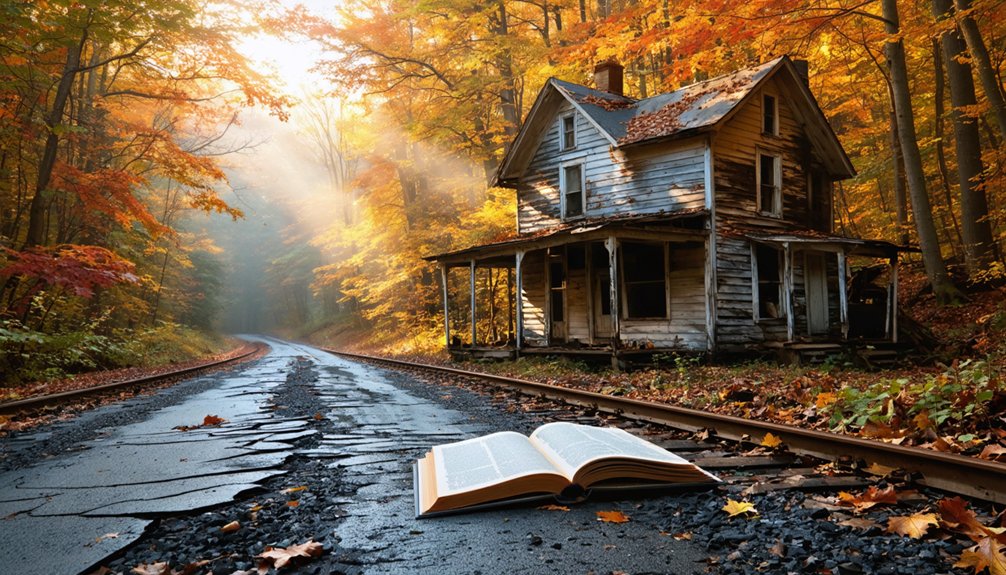
While West Derby itself isn’t a ghost town, you’ll find the real thing within a day’s drive — Glastenbury, once a thriving logging community in Bennington County, burned out and emptied by the 1890s, leaving only a rail bed that disappears into wilderness.
Greenbank’s Hollow, a former mill town in Caledonia County, still whispers of its industrial past through a surviving covered bridge.
If you’re craving scenery to match the solitude, Somerset’s Class D forest roads to Kelly Stand Road rank among Southern Vermont’s most hauntingly beautiful drives.
Glastenbury’s Abandoned History
Glastenbury, nestled in Bennington County, was once a booming logging town that burned and collapsed into obscurity by the 1890s — and it’s worth every mile of the detour from West Derby. You’ll find no restored historic architecture here, just wild reclamation by forest and time. Wildlife conservation efforts now protect this wilderness, keeping it beautifully untamed.
Here’s what makes Glastenbury unforgettable:
- The steepest railroad in America once hauled lumber straight out of these hills.
- An electric trolley line later carried charcoal and curious tourists.
- The old rail bed still exists, cutting through dense wilderness.
- The Bennington Triangle surrounds the area, layering local lore about disappearances and cursed stones onto every shadowed trail.
Go explore it yourself — nobody’s stopping you.
Greenbank’s Hollow Mills
Swap the wilderness of Bennington County for Caledonia County, and you’ll find Greenbank’s Hollow — a former mill town that traded industrial noise for quiet decay long before most Vermonters noticed it was gone.
You’re walking into historical architecture that still whispers of a working past: a preserved covered bridge stands as the hollow’s most tangible relic, connecting you physically to an era when mills dictated daily life here.
Local legends cling to the surrounding landscape the way moss clings to forgotten stone. Nobody left a dramatic fire or headline behind — the place simply emptied out.
That quiet erasure makes Greenbank’s Hollow feel more haunting than Glastenbury’s documented collapse. It’s the kind of stop that rewards curious travelers who’d rather discover than be directed.
Somerset’s Scenic Roads
How far would you drive for a road that feels like it’s unraveling time? Somerset’s Class D forest roads deliver exactly that.
Local legends cling to these woods, and historical ruins peek through the tree line like forgotten memories.
Pack your sense of adventure and follow this route:
- Start at Somerset Reservoir — a quiet launch point into deep wilderness
- Take Class D roads south toward Kelly Stand Road for maximum solitude
- Watch for cellar holes — historical ruins of homes abandoned generations ago
- Listen for local legends tied to the Bennington Triangle nearby
You’re not just driving pavement here — you’re threading through Vermont’s bones. Few roads reward curiosity this honestly.
Somerset to Kelly Stand Road: Vermont’s Best Back Road Route
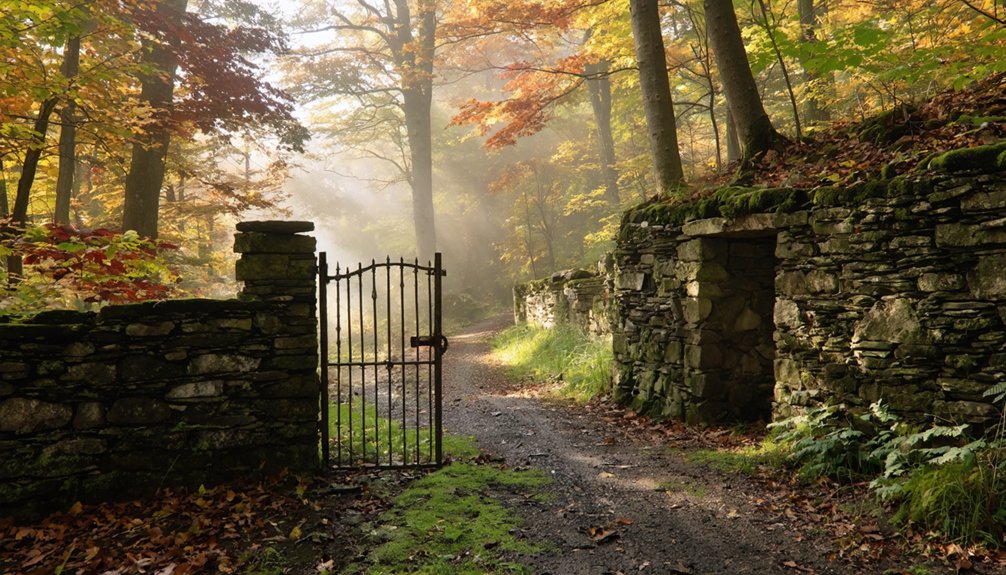
If you’re chasing Southern Vermont’s most scenic back road, the Class D forest roads running from Somerset to Kelly Stand Road are worth every mile of gravel. You’ll wind through dense hardwood canopies where folk tales about Bennington Triangle disappearances still circulate among locals who’ve walked these woods for generations.
The Class D forest roads from Somerset to Kelly Stand Road are worth every mile of gravel.
The isolation feels earned, not manufactured.
Pull over where the tree line breaks and you’ll understand why early settlers treated this corridor with reverence — and suspicion. Haunted sites aren’t marked on any map here, but locals know exactly which hollows carry strange histories.
This route rewards drivers who move slowly, notice details, and appreciate roads that haven’t been smoothed into convenience. Freedom tastes different on gravel. Trust that feeling and keep driving.
Gear, Maps, and Permits for Exploring Vermont’s Abandoned Towns
Before you head out to explore Vermont’s abandoned towns, pack like someone who’s done this before and learned the hard way. Class D roads and overgrown trails don’t forgive the unprepared.
- Topo maps – Download offline versions; cell service vanishes fast in Orleans and Bennington counties.
- Camping essentials – Layers, a headlamp, water filtration, and a compact first-aid kit belong in every pack.
- Wildlife sightings log – Black bears and coyotes frequent these corridors; document encounters for your safety and others’.
- Green Mountain National Forest permit – Required for certain backcountry zones; grab one free at fs.usda.gov.
Vermont rewards the self-sufficient traveler. Respect the land, carry what you need, and leave nothing behind but footprints.
Your Full West Derby Weekend, Planned Out
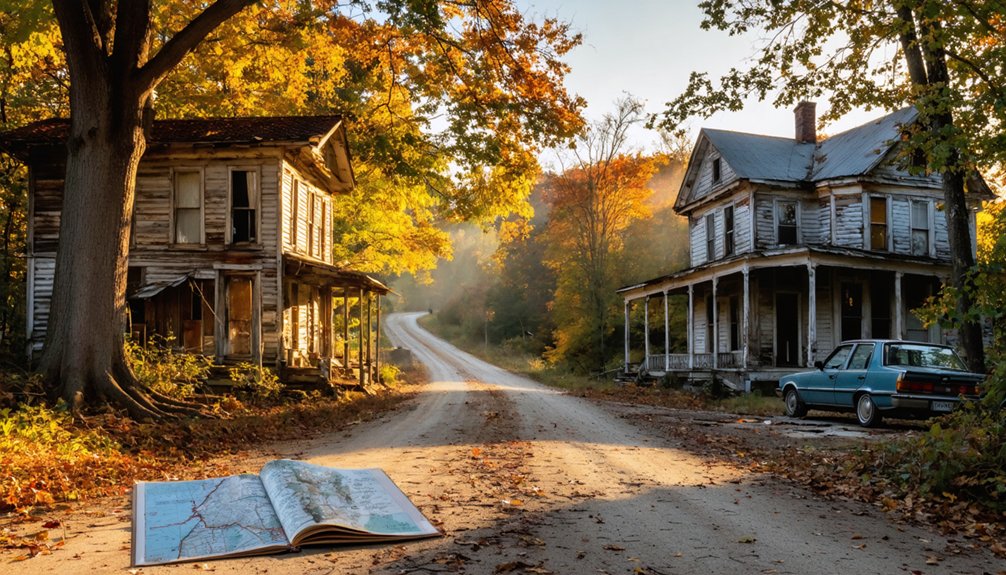
Once you’ve got your gear sorted and your permits printed, the real planning begins—and a West Derby weekend moves fast if you let it. Arrive Friday evening, grab a site near the Little River, and let the quiet settle in.
Saturday’s your big day—trace Route 105 early, stop at Derby Line’s border-straddling library for a genuinely strange historical preservation moment, then push toward the backcountry trails before crowds form. If timing aligns, local festivals occasionally root themselves in Orleans County’s small towns, offering handmade food, honest conversation, and stories you won’t find online.
Sunday, drive slow. Take notes. Photograph the details others walk past. A West Derby weekend rewards the curious and punishes the rushed—so don’t rush.
Why the Northeast Kingdom Rewards the Long Drive
The drive itself is part of the reward. You’re not just logging miles — you’re crossing into a quieter America, where the Northeast Kingdom still holds its secrets close.
The miles dissolve here. You’re not just driving — you’re arriving somewhere America kept quiet on purpose.
Historical artifacts and local legends aren’t behind glass here; they’re woven into the landscape itself.
Four reasons the long drive pays off:
- Derby Line’s border anomalies — a library straddling two nations defies every conventional boundary you know
- Route 105’s rural corridor — unfiltered Vermont, no tourist polish
- Living local legends — the Bennington Triangle’s lore echoes even this far north
- Historical artifacts hiding in plain sight — covered bridges, mill ruins, forgotten foundations
You’ll arrive understanding why people once built entire lives in these hills — and why some never left.
Frequently Asked Questions
What Is the Best Time of Year to Visit West Derby?
Fall’s your golden ticket — like a traveler chasing the horizon, you’ll find West Derby’s foliage viewing and seasonal wildlife peak in September and October, painting the landscape with nature’s finest, most liberating farewell.
Are There Any Entrance Fees for Vermont’s Ghost Town Sites?
You won’t pay an entrance fee at Vermont’s ghost town sites — they’re free to roam! Site admission is as open as the wild trails themselves, letting you wander Glastenbury’s forgotten rail beds without spending a dime.
Is West Derby Safe for Solo Travelers Exploring Remote Areas?
You’ll find West Derby safe, but stay alert for wildlife encounters on remote trails. Embrace historical preservation sites with a free spirit, pack essentials, share your itinerary, and you’re ready for an unforgettable solo adventure.
Can Children Participate in Vermont Ghost Town Road Trips Safely?
Like a treasure map unfolding, Vermont’s ghost town roads welcome young explorers! With careful child safety and smart adventure planning, you’ll weave unforgettable family memories through history’s whispered trails together.
Are Pets Allowed on the Forest Roads Near Somerset and Kelly Stand?
Yes, you can bring your pets on the forest roads near Somerset and Kelly Stand! Prioritize pet safety and enjoy free forest access, but keep them leashed — those winding, wild roads hold memories best explored together carefully.
References
- https://usghostadventures.com/americas-most-haunted-trending/ghost-towns-to-visit-on-your-summer-road-trip-along-route-66/
- https://www.reddit.com/r/roadtrip/comments/1fblvhm/ghost_towns_or_weird_stops/
- https://obscurevermont.com/tag/ghost-town/
- https://en.wikipedia.org/wiki/List_of_ghost_towns_in_Vermont
- https://newenglandwithlove.com/ghost-towns-in-vermont/
- https://www.youtube.com/watch?v=oDBGuTua6RI