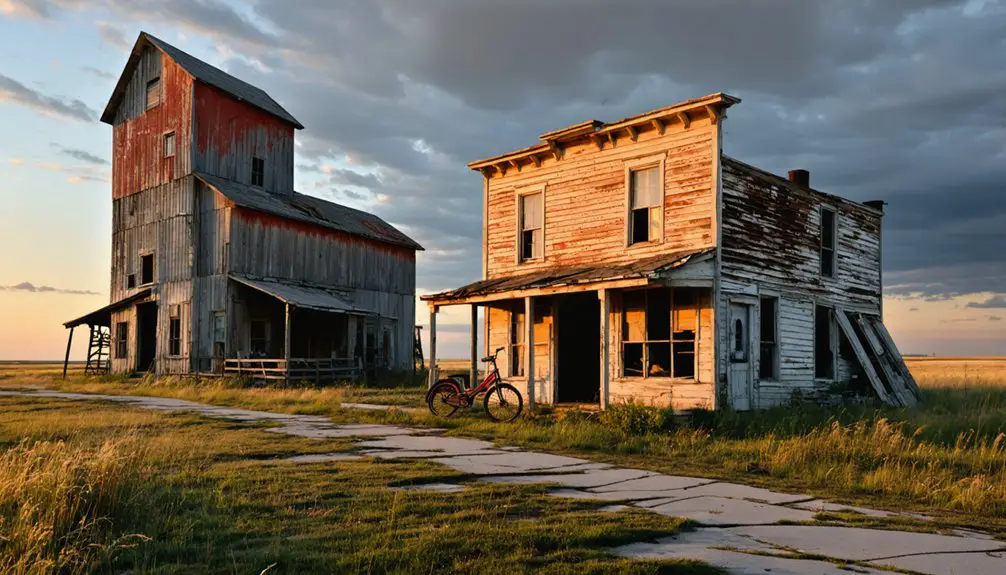
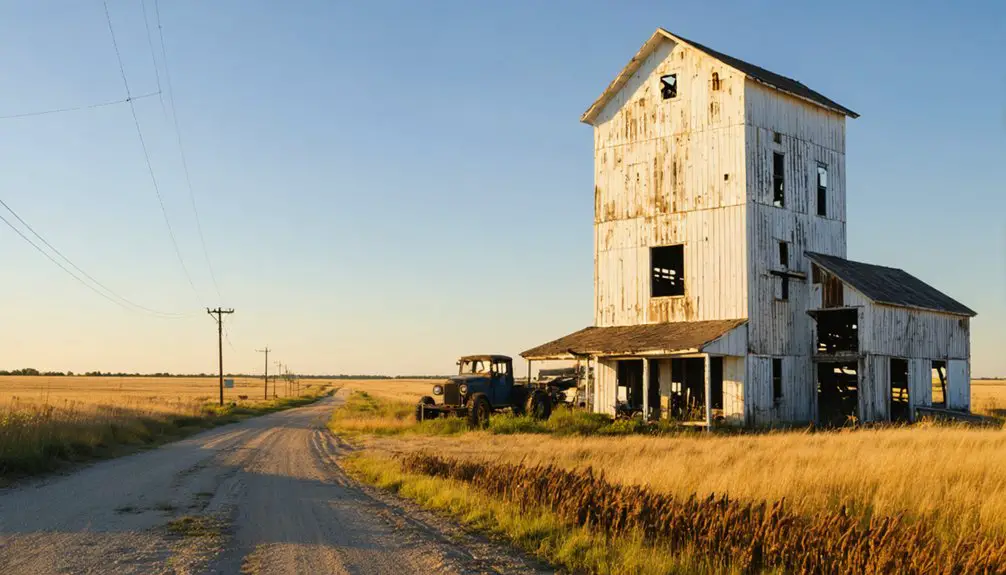
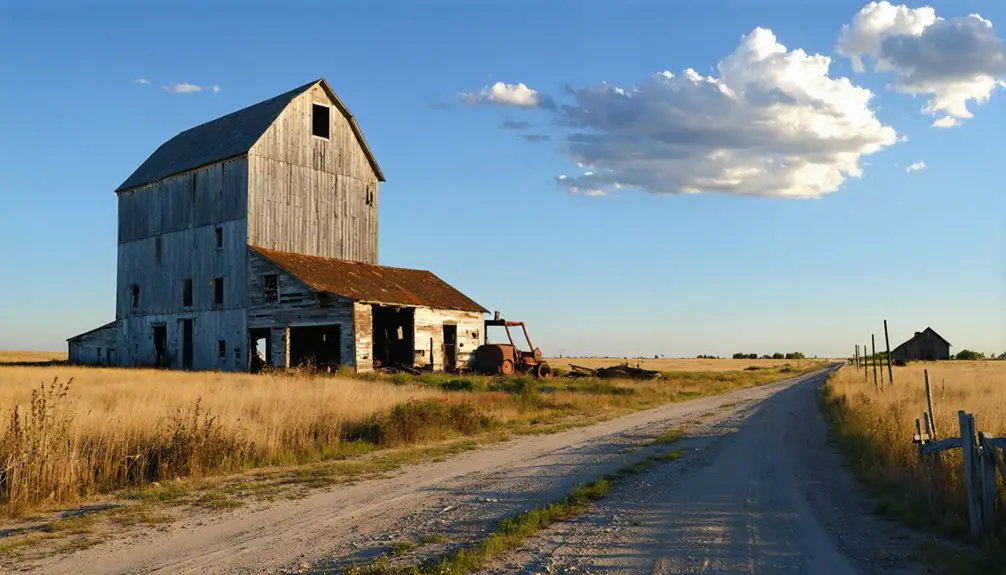
You’ll find North Dakota’s ghost towns scattered across remote prairie landscapes where ATVs become your key to revealing forgotten settlements like Tagus, Ruso, and dozens of other abandoned communities that once thrived during the early homesteading era. These weathered remnants sit connected by gravel roads and ATV trails, offering adventurous riders access to crumbling grain elevators, deserted homesteads, and mysterious structures that tell stories of boom and bust cycles across the Great Plains frontier.
Key Takeaways
- Tagus sits 40 miles west of Minot off Highway 2, accessible via ATV trails near old railroad tracks.
- Ruso, Bergen, Balfour, and Kief offer four ghost towns within an hour of Minot via gravel roads.
- Hurricane Lake area features a 12-mile ATV loop connecting ghost town remnants through public easements.
- Marmarth provides urban exploration opportunities with crumbling facades, historic jail cells, and weathered structures.
- Alcabo and Burt connect via Highway 21, offering roadside access to grain elevators and early 1900s architecture.
ATV Riding Areas and Regulations in North Dakota
When you’re ready to explore North Dakota’s rugged terrain on your ATV, you’ll discover a network of designated trails that’ll satisfy any off-road enthusiast’s appetite for adventure.
Pembina Gorge State Recreation Area offers over 15 miles of motorized trails for vehicles up to 60 inches wide, while the Roughrider OHV Trail stretches from Fort Abraham Lincoln State Park to Fort Rice Campground.
Understanding ATV regulations guarantees your freedom to ride legally. You’ll need proper registration and liability insurance for public land access.
Riding permits through safety courses are mandatory for riders aged 12-17. Riders aged 12-16 must complete an approved OHV Safety Course before operating ATVs. You can explore private lands with landowner permission, gravel roadways, and frozen waters with legal access.
However, avoid controlled highways, posted properties, and most state parks unless specifically designated for OHV use. Your ATV must have one headlamp, one horn, and one taillamp in working order to operate on roadways.
Essential Gear and Safety Preparation for Ghost Town Exploration
Pack these essential items for ghost town adventures:
- Navigation tools – GPS devices with downloaded offline maps and backup paper charts
- Communication equipment – Satellite communicators and two-way radios for isolated areas
- Emergency supplies – First-aid kits, extra water, and overnight survival gear
- Vehicle preparation – Spare fuel, tire repair kits, and complete tool sets
Remember that some locations may show little to no visible evidence of former settlements, so thorough research beforehand helps set realistic expectations for your exploration.
Don’t forget bug spray to protect against ticks when traversing tall grass and country paths around these abandoned sites.
You’ll discover freedom knowing you’re prepared for whatever these forgotten places throw at you.
Tagus: Vehicle-Accessible Ghost Town Near Minot
You’ll find Tagus just 40 miles west of Minot off U.S. Highway 2, where an old rail car marks this once-thriving railroad settlement that’s now accessible by vehicle or ATV.
The rolling prairie location makes it easy to reach, but you’ll want to approach respectfully since a handful of residents still call this place home. The town peaked at 140 residents in 1940 but has since dwindled to just a few remaining inhabitants.
Before exploring the abandoned structures and eerie atmosphere of this 1900-founded town, prepare for potential encounters with protective locals who’ve grown tired of curiosity seekers drawn by the area’s dark legends. Visitors have reported seeing a translucent ghost train traveling along the old railroad tracks that once brought life to this prairie settlement.
Location and Accessibility
Forty miles west of Minot, the ghost town of Tagus sits on rolling prairie just off Highway 2, making it one of the most accessible abandoned settlements in North Dakota.
This 1900s railroad settlement’s ghost town history spawned urban legends that drew hundreds of thrill-seekers in the 1980s.
You’ll find multiple access routes to explore this haunting destination:
- Highway approach – Drive directly from Minot in 30-60 minutes via Highway 2
- ATV trails – Navigate gravel and dirt roads with proper North Dakota Trail Access Permits
- Scenic routes – Take rolling prairie backroads for atmospheric approaches
- Railroad proximity – Park near old tracks (but stay off railroad right-of-ways)
You can reach Tagus by car or properly equipped off-highway vehicles, though you’ll want to respect private property boundaries and local ordinances while exploring. The area benefits from North Dakota’s year-round access to various trail systems, making it explorable in different seasons. Before heading out, check trail status updates on the OuterSpatial app for current conditions and any temporary closures in the area.
Exploration Safety Tips
Before heading out to explore Tagus’s weathered buildings and crumbling foundations, prepare your vehicle for North Dakota’s unpredictable prairie conditions.
Check your oil, fluids, and tire pressure, then verify your spare’s ready for action. Drop your tire PSI to 12-15 for better traction on loose prairie soil and pack a plug kit for punctures.
Essential safety equipment includes a helmet, goggles, sturdy gloves, and first aid supplies. Download offline maps before departure since cell service vanishes quickly in remote areas. Consider carrying a Garmin InReach Plus or similar satellite communicator for emergency contact when venturing into areas without cell coverage.
Maintain constant trail awareness for hidden obstacles like prairie dog holes, loose rocks, or washouts that appear suddenly. Travel with backup vehicles when possible—mutual recovery support proves invaluable when you’re stuck miles from civilization. Remember that uphill traffic has right-of-way when encountering other vehicles on narrow prairie trails.
Stay alert, respect the terrain, and you’ll uncover Tagus’s secrets safely.
Ruso, Bergen, Balfour, and Kief: Day Trip Destinations From Minot
When you’re craving an authentic ghost town adventure without venturing far from civilization, four abandoned settlements within an hour’s drive of Minot offer the perfect blend of historical intrigue and prairie solitude.
Ruso, Bergen, Balfour, and Kief each tell unique stories of North Dakota’s ghost town history while providing scenic routes through endless plains.
Four forgotten settlements showcase North Dakota’s frontier legacy through crumbling homesteads and grain elevators scattered across windswept prairie landscapes.
You’ll navigate gravel and dirt roads perfect for ATV exploration, discovering weathered structures that whisper tales of frontier life.
Essential preparation for your freedom-seeking journey:
- Fuel up in Minot – sparse services await on backcountry routes
- Pack sturdy footwear – overgrown terrain demands proper protection
- Bring bug spray – tall grass harbors ticks and insects
- Carry camera and phone charger – capture memories in low-signal zones
These day trips deliver authentic exploration while respecting private property and remaining residents.
Marmath’s Abandoned Structures and Exploration Opportunities
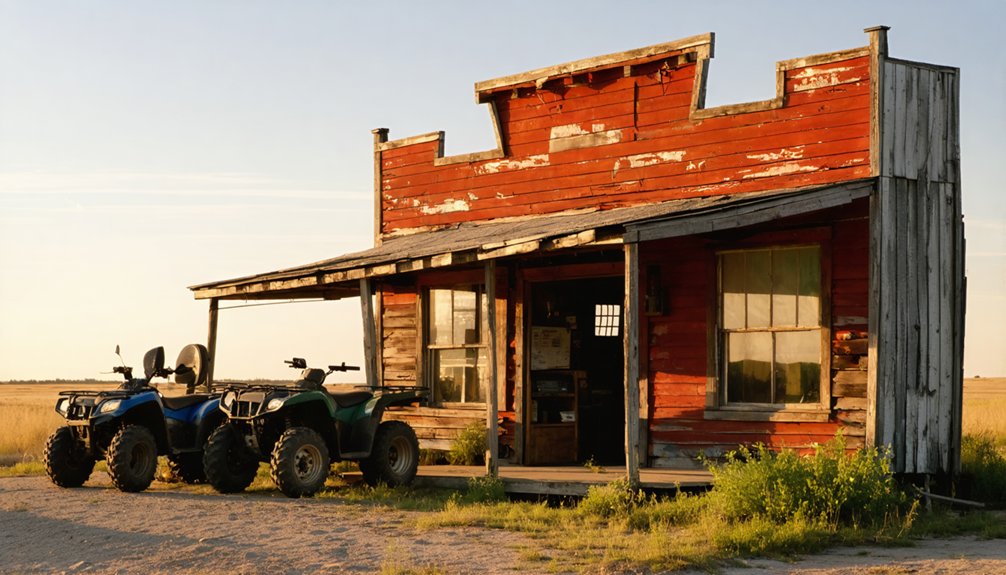
You’ll find Marmarth’s abandoned structures scattered throughout this Badlands town like weathered monuments to its railroad past.
The boarded-up Barber Auditorium and former storefronts create compelling photography subjects, but you’ll need to exercise caution around deteriorating buildings and respect private property boundaries.
Pack your camera gear and sturdy boots—these crumbling facades tell stories best captured through your lens while maintaining safe distances from unstable structures.
Abandoned Building Exploration
Marmarth’s crumbling facades and weathered structures create an explorer’s playground where history whispers through broken windows and sagging doorframes.
These abandoned structures offer unparalleled urban exploration opportunities for adventurers seeking authentic encounters with North Dakota’s forgotten past.
Your exploration journey reveals layers of abandonment throughout downtown:
- Barber Auditorium’s mysterious basement – Red velvet theater seats emerge from murky shadows, while the preserved main floor staircase stands as evidence of 1918 craftsmanship.
- Relocated train depot – Cut in half and moved to highway’s edge, now resting on blocks like a mechanical giant’s discarded toy.
- Mystic Theatre and boarded storefronts – Former commercial heart transformed into storage spaces and memories.
- Historic jail cells and filling stations – Original infrastructure frozen in time, waiting for discovery.
Each structure tells stories of boom, bust, and resilience.
Photography and Safety
As you approach Marmath with camera in hand, the town’s skeletal remains offer compelling photographic subjects that demand both artistic vision and cautious exploration.
You’ll find grain elevators with unique architectural details visible from roadside positions, eliminating trespassing concerns while capturing ghost town aesthetics effectively.
Pack your camera charger and wear sturdy closed-toe shoes for traversing uneven terrain safely. The remaining two or three photographable structures provide excellent opportunities to practice photography techniques that emphasize decay and abandonment.
Respect no trespassing signs on houses while focusing on accessible subjects like schools and churches.
Active train tracks near elevators add industrial context to your shots. Use roadside vantage points to frame compositions that showcase Marmath’s eerie beauty without crossing property boundaries, ensuring both legal compliance and personal safety.
Alcabo and Bert: Roadside Ghost Town Photography Spots
Highway 21 cuts through southwestern North Dakota’s rolling prairie, connecting two compelling ghost town photography destinations within miles of each other.
You’ll discover Alcabo’s weathered tower structure and abandoned buildings east of Main Street, while Burt’s green-trimmed tavern and relocated post office offer distinct architectural contrasts.
Both locations provide excellent roadside access for respectful exploration:
- Alcabo architecture showcases early 1900s rural settlement remnants
- Burt history reveals tavern culture through preserved building facades
- Grain elevators and scattered foundations create atmospheric compositions
- Strategic highway positioning allows efficient dual-location shoots
You can capture haunting rural decay without trespassing, photographing from public roadways.
These southwestern Hettinger County gems deliver authentic prairie ghost town experiences, perfect for documenting North Dakota’s abandoned agricultural heritage while maintaining complete access freedom.
St. Olaf Lutheran Church and Hurricane Lake Area Sites
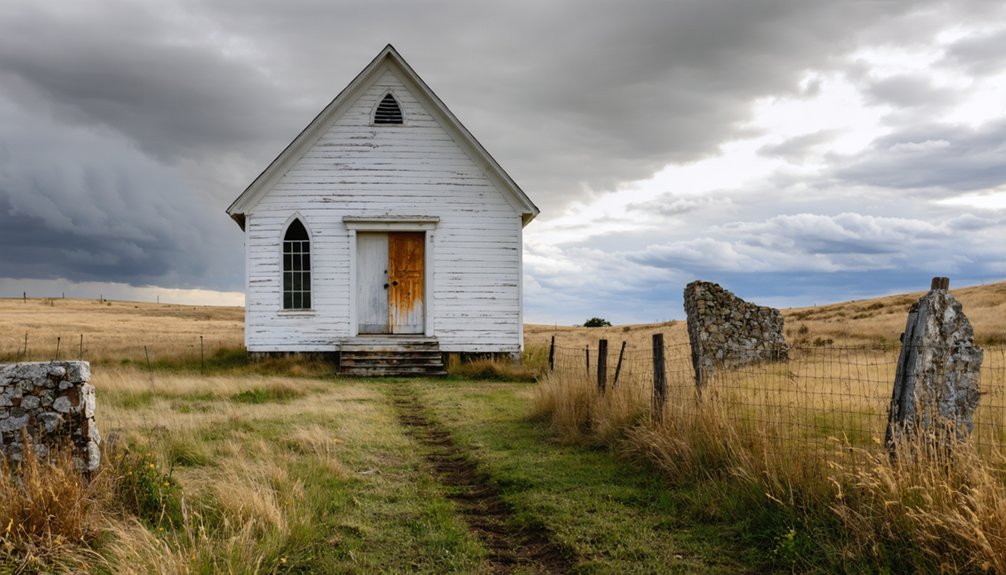
You’ll discover multiple St. Olaf Lutheran churches scattered across North Dakota’s prairie landscape, each telling stories of Norwegian settlers who built these architectural gems in the late 1800s.
The Hurricane Lake area offers backcountry routes that wind past weathered foundations and abandoned farmsteads, where you can photograph remnants of communities that once thrived along forgotten township roads.
Pack your camera and GPS device—these remote sites require careful navigation through gravel paths and overgrown trails that lead to some of the state’s most photogenic ecclesiastical ruins.
Historic Church Architecture Details
The Late Gothic Revival architecture of St. Olaf Lutheran Church showcases the enduring spirit of Norwegian immigrants who carved their legacy from Dakota Territory’s untamed landscape.
Architect Joseph A. Shannon’s 1930 design emphasizes vertical lines and pointed arches that pierce the prairie sky, creating a striking landmark for ATV explorers traversing these historic grounds.
Key architectural elements you’ll discover:
- Gothic Architecture featuring traditional pointed arches and soaring vertical emphasis
- Norwegian Heritage reflected in Lutheran design principles and craftsmanship
- Traditional interior pew arrangements maintaining original worship configuration
- Resilient reconstruction following the devastating 1916 tornado destruction
This National Register-listed structure stands as proof of frontier determination.
You’re witnessing authentic pioneer architecture that survived territorial challenges, congregational splits, and natural disasters while preserving cultural identity.
Hurricane Lake Access Routes
Beyond admiring St. Olaf’s weathered foundations, you’ll discover Hurricane Lake serves as your gateway to North Dakota’s forgotten settlements.
The main trailhead at Hurricane Lake Campground launches you onto a 12-mile loop circling the 640-acre lake through rolling grasslands. You’ll navigate sandy shoreline sections requiring low-pressure tires while spotting rusted farm equipment from 1920s homesteads scattered across the landscape.
Multiple ATV routes branch from the lake’s perimeter, connecting you to ghost town remnants via gravel roads rated easy to moderate.
The 2.5-mile spur trail from the north shore leads directly to St. Olaf’s site. Public easements guarantee legal passage across private pasturelands, while “ORV Allowed” signage guides your exploration through ten square miles of abandoned prairie settlements.
Nearby Abandoned Structure Locations
While Hurricane Lake’s shores hide weathered farm foundations, five distinct St. Olaf Lutheran churches mark your trail through North Dakota’s forgotten settlements.
These abandoned structures tell stories of hardy pioneers who carved communities from prairie grass, only to watch tornadoes claim their work.
You’ll discover these nearby ghost towns offer prime exploration opportunities:
- Hillsboro’s 1901 church – survived when the 1892 building didn’t
- Walum’s rebuilt sanctuary – rose from 1916 tornado destruction
- Deering’s merged congregation site – Spring Coulee cemetery remains
- Devils Lake’s wood-frame landmark – standing since 1888
Your ATV can access most locations via section roads.
Pack water and respect cemetery boundaries.
These weathered sentinels represent Norwegian Lutheran determination against Dakota’s unforgiving elements.
Property Rights and Trespassing Guidelines for Explorers
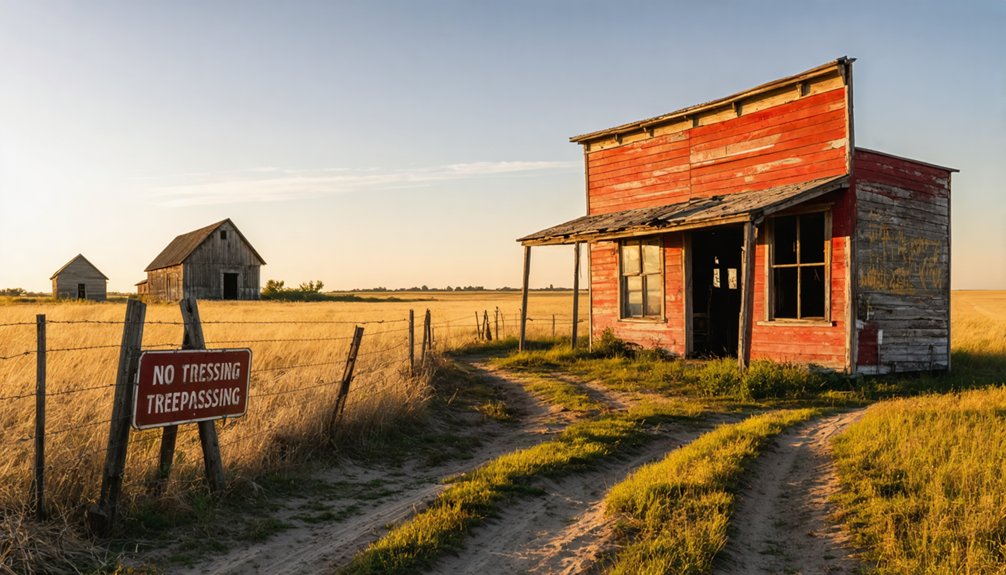
Before you venture into North Dakota’s abandoned settlements, you’ll need to navigate the state’s strict property posting and trespassing laws that protect landowners’ rights.
These trespassing guidelines are crystal clear: posted signs must display the landowner’s name, address, and posting date in legible characters. You’ll spot these warnings every 880 yards along property boundaries, and any land enclosed by fencing requires signs only at gates.
Don’t risk your freedom for exploration. First-time trespass carries class B misdemeanor charges, escalating to class A for repeat offenses within two years.
Your ATV operation requires explicit landowner permission on private property. Always respect posted boundaries and seek permission before crossing onto private land.
When in doubt, stick to designated public trails and avoid potentially costly legal consequences.
Vast stretches of North Dakota’s ghost town territory will cut you off from the digital world entirely, transforming your smartphone into dead weight when you need navigation most.
Remote areas like Little Missouri National Grassland’s North Trail Map region offer zero cell service, demanding old-school wilderness skills for safe exploration.
Master remote navigation with these essential strategies:
- Download offline GPS maps using onX Offroad before departing civilization
- Carry physical topographic maps and compass as primary navigation tools
- Pack satellite communicators for emergency contact when cellular networks fail
- Share detailed itineraries with trusted contacts, including expected return times
The Denbigh Experimental Forest and Dakota Prairie Grasslands’ Souris Unit exemplify cellular dead zones where digital dependency becomes dangerous.
Embrace analog backup systems—your freedom to explore these forgotten settlements depends on preparation, not prayer for signal bars.
Comparing North Dakota to Black Hills ATV Ghost Town Access
Two distinct ATV ghost town hunting experiences await adventurous riders: North Dakota’s sprawling prairie settlements versus South Dakota‘s Black Hills mining camps.
You’ll find North Dakota offers scattered towns like Arena and Lark accessible through Little Missouri National Grasslands, requiring 30-60 minute rides from hubs like Minot or Bismarck. The terrain emphasizes rugged farm roads and gravel trails, with property respect essential.
The Black Hills contrast sharply, featuring concentrated ghost towns connected by designated National Forest trail systems. While North Dakota spreads your adventure across vast grasslands with towns like Griffin and Blue Grass, the Black Hills pack denser exploration into mountainous terrain.
Both regions deliver zero-population settlements and historic landmarks, but North Dakota’s freedom-focused exploration suits riders seeking wide-open spaces over structured trail networks.
Frequently Asked Questions
Are There Any Ghost Towns in North Dakota Specifically Designated for ATV Access?
Ready for off-road ghost town history adventures? Unfortunately, North Dakota doesn’t have ghost towns specifically designated for ATV trails. You’ll need to explore these abandoned sites by car or hiking from public roads instead.
If you’re looking for a more varied experience, consider venturing to the abandoned locations in Tennessee. These sites offer a glimpse into the past, with intriguing stories waiting to be uncovered. From crumbling structures to remnants of old towns, each destination provides a unique adventure for history enthusiasts and thrill-seekers alike.
What Permits or Licenses Are Required for ATV Riding to Ghost Towns?
You’ll need current OHV registration, non-resident permit if from out-of-state ($10 annually), and safety certificates for younger riders. ATV regulations guarantee riding safety while you explore abandoned settlements across North Dakota’s rugged backcountry.
Which Ghost Towns Have Nearby Camping Facilities for Overnight ATV Trips?
Ironically, these “dead” towns offer vibrant camping options! You’ll find dispersed camping near Griffin’s Badlands trails, primitive sites in Arena’s river bottoms, and grassland boondocking around Sims and Charbonneau’s local attractions.
Can ATVS Be Rented Near North Dakota Ghost Town Locations?
You won’t find local rental companies near North Dakota’s ghost towns. Your best ATV rental options lie in South Dakota’s Black Hills, where outfitters provide direct trail access to historic mining settlements.
What Are the Best Months for ATV Ghost Town Exploration in North Dakota?
Late summer through early fall offers the best weather for your ghost town adventures. You’ll experience ideal temperatures, extended daylight, dry trails, and autumn’s seasonal attractions like colorful foliage creating perfect spooky atmospheres.
References
- https://blackhillsatvdestinations.com/ghost-towns/
- https://mad-peak.com/f/black-hills-ghost-towns-are-real—and-you-can-ride-through-them
- https://www.amyallender.com/north-dakota-ghost-towns/
- https://www.onxmaps.com/offroad/blog/ghost-towns-off-roading
- https://www.youtube.com/watch?v=8GO57Im_dss
- https://www.ndtourism.com/articles/find-atv-and-road-adventures-north-dakota
- https://www.tripadvisor.com/Attractions-g28955-Activities-c47-t14-North_Dakota.html
- https://en.wikipedia.org/wiki/List_of_ghost_towns_in_North_Dakota
- https://www.parkrec.nd.gov/business/recreation-programs/highway-vehicles-ohv/ohv-trails
- https://mckenziebay.org/wp-content/uploads/2015/11/Rules_ND-Off-Highway-Vehicle.pdf