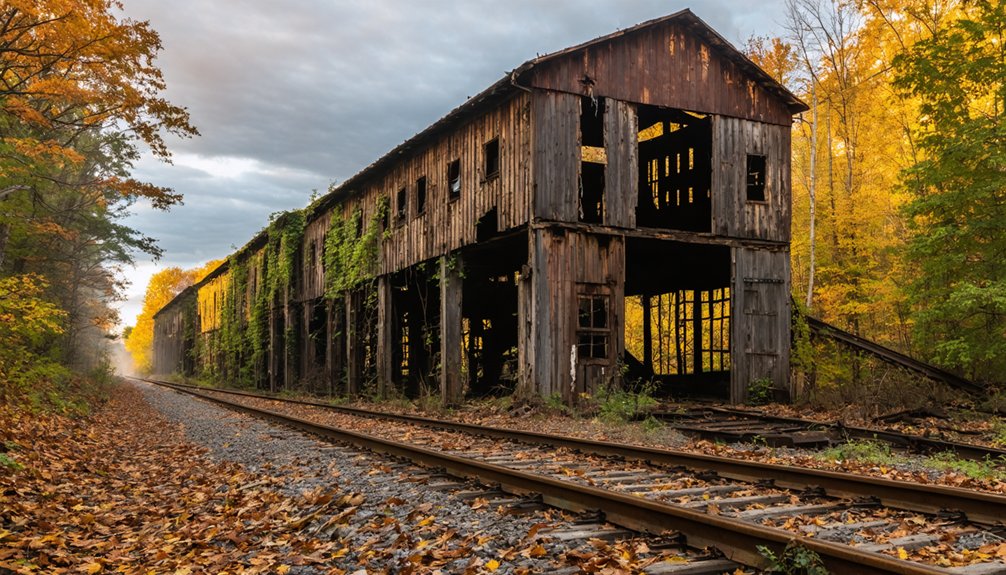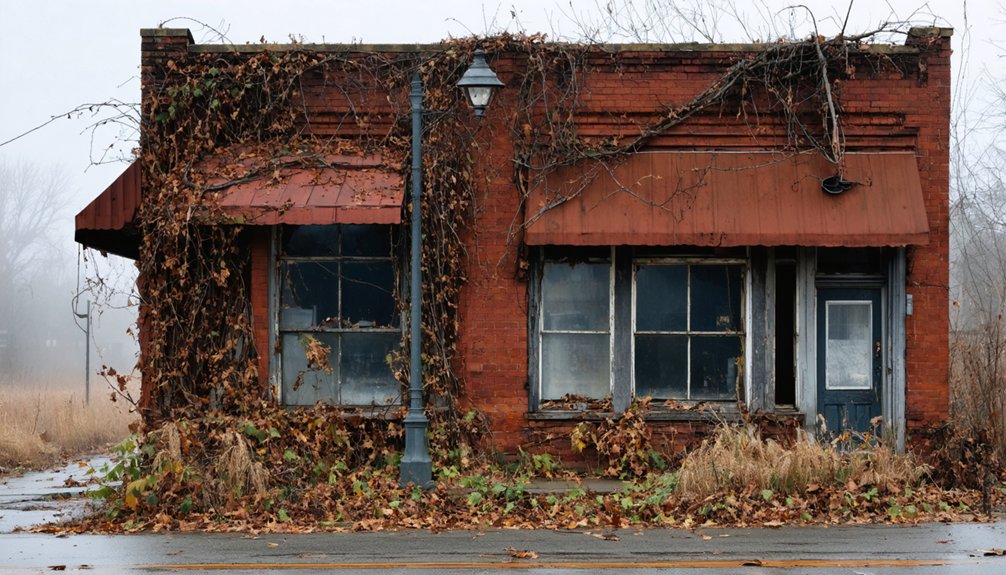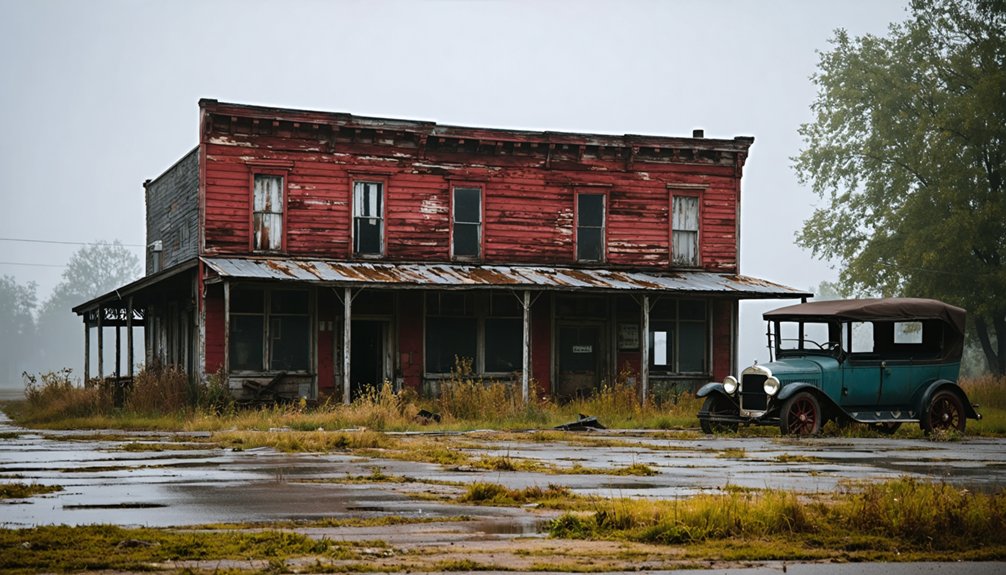
You’ll discover Indiana’s most accessible ghost towns when summer trails open paths to buried histories. At Indiana Dunes State Park, City West lies beneath shifting sands—founded in 1836, abandoned by 1839, with only its shelter marking where 40 homes once stood. Rose Island‘s crumbling amusement park ruins hide within Charlestown State Park, while Hindostan Falls’ 134-acre wildlife sanctuary preserves a town devastated by cholera epidemics in the 1820s. Each site offers guided tours, hiking trails, and haunted legends that become fully explorable once you understand their complete stories.
Key Takeaways
- City West in Indiana Dunes State Park offers archaeological significance beneath shifting dunes, with a maintained shelter marking the 1836 settlement site.
- Rose Island at Charlestown State Park features crumbling amusement park ruins accessible via Trail 3, including swimming pool supports and roller coaster remnants.
- Hindostan Falls preserves a 134-acre wildlife sanctuary with pioneer headstones and mill remnants from the 1816 settlement devastated by epidemics.
- Summer ghost walks operate year-round in New Harmony, while daytime exploration includes self-guided visits and trails through overgrown historical sites.
- Access these sites via state park trails, with options for hiking, boat trips along the Ohio River, and seasonal guided tours.
City West: A Settlement Buried by Sand at Indiana Dunes State Park
Where swimmers now splash in Lake Michigan’s waves and sunbathers spread their towels across warm sand, an entire town lies buried beneath your feet.
City West, established in 1836 as a Chicago rival, once boasted 40 homes, a sawmill, and ambitious dreams before the Panic of 1837 crushed it. By 1839, every resident had fled.
Today, you’ll find this ghost town within Indiana Dunes State Park, ten miles west of Michigan City off Highway 12. The archaeological significance remains hidden under shifting dunes—no visible structures survive, though historical preservation efforts maintain the City West Shelter. The town’s cemetery, once marking settlers’ final resting places, was swallowed by shifting dunes.
Access Waverly Beach entrance during summer to walk where speculators once plotted fortunes. Early visitors to nearby Waverly Beach stayed in simple wooden cottages, one-story structures built on piles with pitched roofs that served as inexpensive summer accommodations. You’re literally standing atop Indiana’s most buried secret, where nature reclaimed what economic collapse abandoned.
Rose Island: Exploring the Remnants of a Beloved Amusement Park
Deep in the woods of southern Indiana, crumbling concrete and rusted metal mark where thousands once screamed with delight on the Devil’s Backbone roller coaster.
You’ll discover Rose Island’s abandoned architecture hidden within Charlestown State Park, where nature’s reclaimed what the 1937 flood destroyed.
Trek Trail 3’s rugged path to the peninsula, where brick foundations and swimming pool supports emerge from decades of undergrowth.
The overgrown dance hall and carousel grounds whisper stories of 100,000 annual visitors who once escaped here.
Though haunted legends swirl around these ruins, you’re free to explore this ghost town without restriction.
Boat along the Ohio River’s north bank or hike the state-built bridge spanning Fourteen Mile Creek.
Original footbridge pilings still stand as silent witnesses to Rose Island’s vanished glory.
The park once featured exotic animals including wolves, monkeys, and a black bear named Teddy Roosevelt.
Before businessman David Rose transformed the property in 1923, the site was known as Fern Grove, serving as a peaceful picnic and religious gathering spot.
Hindostan Falls: Yellow Fever Town Turned Wildlife Sanctuary
Along the East Fork White River in 1816, Captain Caleb Fellows established what would become Daviess County’s largest settlement—a thriving waystation he named Hindostan Falls after his service in India.
Captain Caleb Fellows carved civilization from wilderness along the White River, naming his 1816 settlement after distant service in India.
By 1820, you’d find 1,200 residents bustling through this stagecoach hub between New Albany and Vincennes.
Then historical epidemics changed everything. Over three months in the early 1820s, 138 people died—likely from cholera or yellow fever.
You’ll discover mass graves where entire families rest, their homes burned to prevent contagion’s spread.
Economic depression accelerated town abandonment. The town’s post office closed in 1830, marking the settlement’s irreversible decline. By 1853, Hindostan Falls stood empty.
Today you’ll explore a 134-acre natural area owned by the state of Indiana, acquired in the late 1950s and transformed into a fishing and wildlife sanctuary where pioneer headstones emerge from wilderness.
Look for 128 drill holes in flat rock—remnants of former mills.
No cell service exists here, just legends of buried gold and restless spirits.
Summer Activities and Trails at Indiana’s Ghost Town Locations
While Hindostan Falls’ abandoned streets speak to tragedy, Indiana’s other ghost town sites invite you to lace up your hiking boots and explore their stories through summer trails.
The Ghost Town Trail stretches 36 miles through Blacklick Creek Valley, where wildflower blooms punctuate hemlock forests and abandoned 1930s coal-mining settlements. Wildlife spotting reaches its peak here—white-tailed deer tracks mark the path while chickadees and cedar waxwings flit through rhododendron shrubs. The trail winds through gamelands including Blacklick Valley Natural Area, offering pristine forest immersion. Historic iron furnaces and slag heaps dot the landscape, providing tangible connections to the region’s industrial past.
Rose Island’s ruins offer spine-tingling exploration through a 100-year-old amusement park reclaimed by dense southern Indiana woods.
Near Brown County, T.C. Steele’s trails weave through 211 acres of history and nature.
For backcountry challenges, Spurgeon Hollow Lake‘s 8-mile loop demands sturdy boots and five hours of your time, rewarding persistence with immersive solitude.
Best Times to Visit and Annual Events at Historic Sites
When autumn darkness descends on Indiana’s historic sites, ghost walks transform abandoned spaces into theatrical stages where history bleeds into legend. You’ll find historical ghost tours operating year-round at New Harmony, where 90-minute walks reveal haunted ghost stories when night falls.
October delivers peak experiences: Irvington Ghost Tours run October 3rd, 4th, 10th, and 11th, while Chatham Arch Lockerbie walks haunt specific October evenings at 7 p.m. The Wicked Wraiths of White River operates nightly with multiple showtimes. The Old Northside Spooky Tour on October 18th includes interior access to Morris-Butler House alongside tales of true crime and hauntings.
Summer brings different opportunities—Vulture City extends hours from 9 a.m. to 3 p.m. in-season, with weekend guided tours at 10 a.m. Many restored ghost towns now focus on historical preservation efforts rather than manufactured attractions, maintaining authentic structures and mining heritage.
For daytime exploration, The Sanatorium welcomes self-guided roaming from 10 a.m. to 5 p.m. daily, letting you investigate without theatrical embellishments.
Frequently Asked Questions
Are the Ghost Town Sites Accessible for Visitors With Mobility Limitations?
Most ghost town sites lack accessible pathways and mobility accommodations since they’re on private property or unmarked rural locations. You’ll find limited infrastructure—mainly roadside markers and cemeteries—making independent exploration challenging without significant adaptations.
Beyond these challenges, abandoned sites in Indiana’s countryside often hold intriguing stories waiting to be uncovered. The remnants of old buildings and faded signs tell tales of a once-thriving community, inviting explorers to imagine life in those quieter times. However, the journey to these forgotten places is often fraught with obstacles, requiring a blend of intrigue and caution.
Among the notable ghost towns to explore in Indiana, you might stumble upon remnants of settlements that once buzzed with life. Each location offers a glimpse into the state’s rich history, revealing insights into the lives of those who called these places home. As you navigate through these eerie landscapes, you’ll find yourself captivated by the stories etched into the very fabric of these abandoned sites.
Can I Camp Overnight Near These Ghost Town Locations?
Under starlit skies, you’ll find overnight camping at Charlestown and O’Bannon Woods State Parks near ghost town ruins, perfect for night photography adventures. Indiana Dunes offers day-use only, while Tunnelton’s eerie tunnel remains accessible but lacks official campgrounds nearby.
Are Pets Allowed at Indiana’s Ghost Town Sites?
Pet policies vary by ghost town location. If you’re visiting sites within state or county parks, you’ll follow standard pet restrictions: 6-foot leashes required, cleanup mandatory, and pets banned from historic buildings like Pioneer Village at Spring Mill.
Do I Need Permits to Photograph the Abandoned Structures?
Yes, you’ll need permits. Photography regulations require commercial permits through Indiana DNR ($50-100) for professional work. Permitting requirements vary by location—abandoned structures often sit on private or state land. Always verify ownership and secure permission before exploring.
Are Guided Tours Available at These Historic Ghost Town Sites?
Guided tours aren’t typically offered at abandoned ghost towns due to historic preservation concerns and liability issues. However, you’ll find excellent guided tour costs ranging $18-$29 at Indiana’s haunted historic sites like New Harmony and Madison instead.
References
- https://www.islands.com/1754423/city-west-ghost-town-abandoned-buildings-once-dreamy-town-indiana-coastal-eerie-dune-beach/
- https://visitindiana.in.gov/blog/post/rose-island-abandoned-theme-park/
- https://www.discoversouthernindiana.com/blog/post/the-ghost-town-of-hindostan-falls-indianas-lost-jewel/
- https://www.youtube.com/watch?v=45D4dbASJyE
- https://wkdq.com/southern-indiana-ghost-towns/
- https://www.youtube.com/watch?v=ma3ELBZUfdQ
- https://www.youtube.com/watch?v=o4LuROIULvY
- https://www.onlyinyourstate.com/trip-ideas/indiana/ghost-town-road-trip-indiana
- https://stephenjessetaylor.wordpress.com/2013/07/27/city-west-lost-metropolis-of-the-indiana-dunes/
- http://www.gribblenation.org/2019/05/ghost-town-tuesday-ghost-towns-of.html