You’ll find Grass Pond Colony five miles south of Sutherland Springs at coordinates 29°15’05″N 98°07’46″W, where spring-fed ponds still flow through the remnants of this post-Civil War African-American settlement. Before visiting, you’ll need landowner permission, sturdy navigation tools, and a capable vehicle for remote terrain. Pack emergency supplies, offline maps, and layers for temperature swings. The site connects beautifully with nearby ghost towns like Graytown and Saspamco, creating a compelling freedom-trail journey through Wilson County’s historical landscape that reveals deeper stories with proper preparation.
Key Takeaways
- Grass Pond Colony lies 5 miles south of Sutherland Springs at coordinates 29°15’05″N 98°07’46″W in Wilson County.
- Obtain private landowner permission before visiting, as minimal structures remain and the area lacks modern facilities.
- Bring reliable navigation tools, first aid kit, emergency supplies, and sturdy vehicle for remote terrain exploration.
- Spring-fed ponds still flow at the former African-American settlement established by freed slaves after the Civil War.
- Combine with nearby ghost towns like Graytown, Caddo, and Saspamco for a comprehensive Wilson County road trip.
Discovering the History of Grass Pond Colony in Wilson County
The natural springs of Grass Pond Colony have bubbled up from the Texas earth for countless generations, creating year-round ponds that first drew Paleo-Indians, then Spanish missionaries, and eventually freed slaves seeking a new beginning. Located five miles south of Sutherland Springs at coordinates 29°15′05″N 98°07′46″W, this northern Wilson County settlement thrived as an African-American community after the Civil War.
Families like the Castros and Robles built lives around these waters, documented through former residents’ oral histories preserved by the Sutherland Springs Historical Museum. Though malaria outbreaks and failed drainage attempts eventually forced abandonment, you’ll find traces of their resilience here. Archeological excavations of the site continue revealing stories of freedom-seekers who transformed spring-fed ponds into home.
Mapping Your Route Using Historic Trail Resources
Before modern highways carved through South Texas, the San Patricio Trail served as the region’s lifeline, connecting Irish settlers near Corpus Christi to San Antonio‘s bustling markets from 1830 until railroads rendered it obsolete in the 1880s. You’ll find this historic route passed directly through Wilson County, entering at Graytown and exiting near the Tordilla Hills—the same territory where Grass Pond Colony once thrived.
Trail documentation resources make planning your journey straightforward. Wilson County maintains records of 19 trails and footways, offering visibility and access insights essential for exploration. Historic mapping research becomes invaluable through GLO County Maps spanning the 19th-20th centuries, revealing original surveys and settlements. Interactive topographic maps detail terrain around historical markers, letting you trace routes those early settlers traveled while discovering forgotten communities along abandoned pathways.
What to Expect When Visiting This Abandoned Settlement
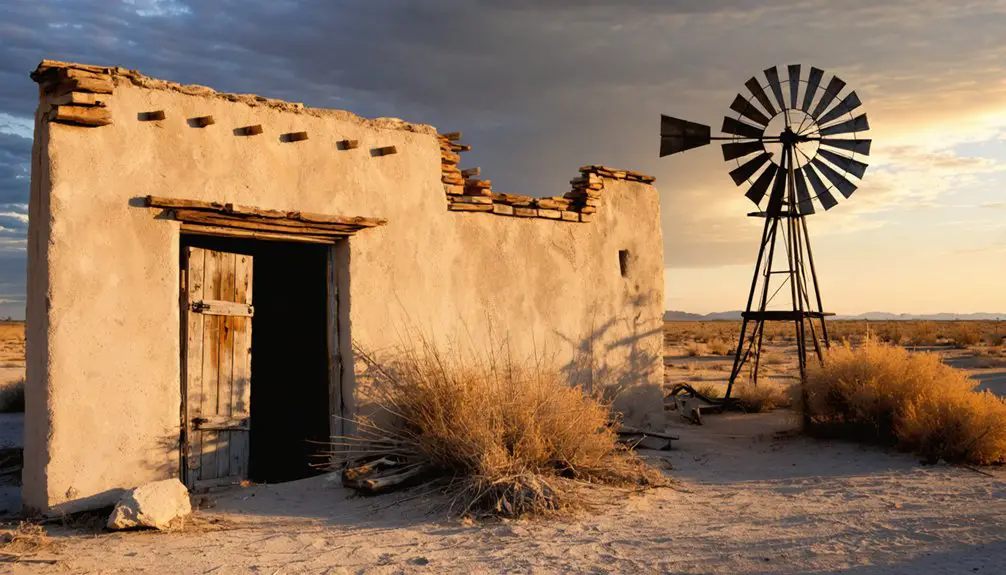
When you arrive at Grass Pond Colony‘s coordinates in northern Wilson County, you’ll encounter a landscape where nature has reclaimed what settlers once tamed. The settlement’s most notable natural landmarks—those spring-fed ponds that drew pioneers here—still shimmer beneath Texas skies, their waters flowing as persistently as when the colony thrived.
Before exploring, secure private landowner permissions, as most ghost town sites rest on working ranches. You’ll find:
- Year-round spring-fed ponds maintaining constant water levels
- Minimal structural remnants from the original settlement
- Remote terrain requiring sturdy vehicles and navigation skills
- No modern amenities or facilities
- Unobstructed views of untamed Central Texas landscape
The barren grounds offer pure solitude—just you, the springs, and echoes of a vanished community.
Exploring Nearby Ghost Towns in the Region
Beyond Grass Pond Colony’s silent springs, Wilson County harbors four additional ghost towns within striking distance of your road trip route. You’ll discover Graytown’s dispersed rural landscape remnants scattered across windswept fields, while Caddo and Plummer Crossing offer haunting glimpses of abandoned structures reclaimed by mesquite and prairie grass. Saspamco rounds out this quintet of forgotten settlements.
Venture beyond county lines to uncover Belle Plain’s 1878 college ruins in Callahan County, or chase silver-mining history at Shafter’s skeletal church in Presidio County. Medicine Mound’s dolomite hills rise dramatically from Hardeman County plains, where 500 souls once thrived. Each site beckons with untold stories and photographic opportunities. You’re free to chart your own course through Texas’s vanished frontier, where civilization’s footprints slowly fade into dust.
Essential Gear and Preparation for Your Adventure
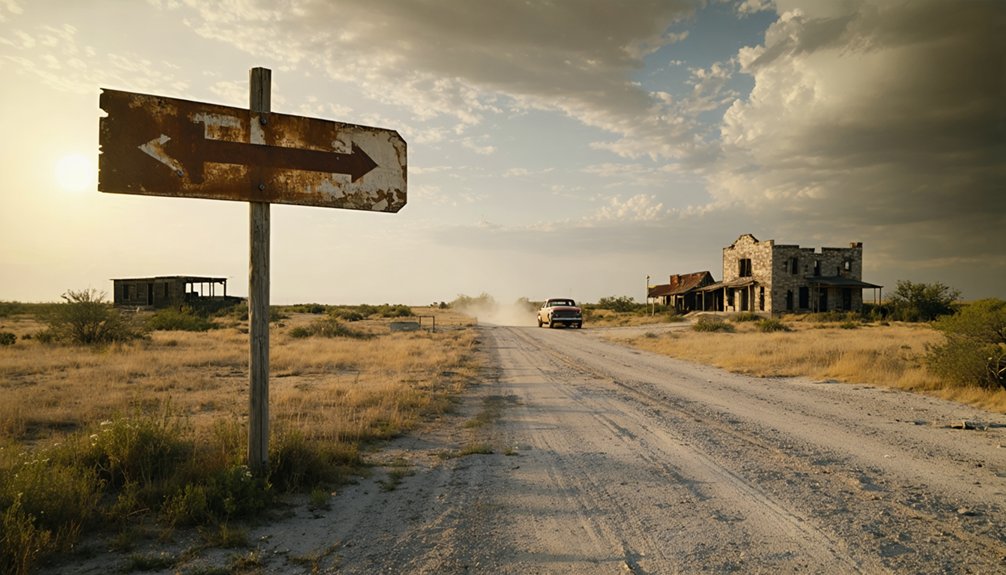
Before you venture into the remote expanse surrounding Grass Pond Colony, you’ll need reliable navigation tools—pack both paper maps and downloaded offline GPS data, as cell signals vanish quickly in West Texas’s desert terrain.
Your safety equipment should include a well-stocked first aid kit, roadside assistance gear, and emergency supplies like flares and a flashlight with backup batteries.
Layer your clothing strategically for the region’s dramatic temperature swings, bringing long-sleeve shirts for daytime sun protection, a lightweight jacket for cool evenings, and sturdy boots that can handle rocky ghost town exploration.
Since Grass Pond Colony sits tucked away in the brush country where cell signals fade and rural roads blur together, you’ll need reliable navigation tools before you venture into this remote corner of Wilson County. Download the USGS La Vernia SW quadrangle showing precise coordinates at 29.2513518°N, -98.1294523°W, and layer historic cartography sources from PastMaps to reveal old trails and Spanish Colonial rancho boundaries.
Essential navigation resources include:
- TopoZone for elevation data and terrain analysis at 581 feet
- YellowMaps interactive topo with clickable geographic details
- Wilson County Historical Society maps documenting 1860-1960 settlement patterns
- Wikimapia satellite imagery pinpointing spring-fed pond locations
- GIS mapping tools from USGS Geographic Names Information System
These resources guarantee you’ll navigate confidently through unmarked roads where modern conveniences disappear.
Safety Equipment Essentials
When your vehicle kicks up dust along the abandoned roads leading to Grass Pond Colony, you’re miles from the nearest tow truck or emergency services—making a thorough, detailed, or extensive safety kit your most critical traveling companion.
Pack jumper cables, spare tire essentials, and a tire repair kit for vehicle maintenance preparedness. Texas heat demands extra water—one gallon per person minimum—while seasonal temperature considerations require emergency blankets for unexpected cold snaps.
Your flashlight, road flares, and high-visibility vest guarantee you’ll be seen after sunset. Include a first aid kit, multipurpose tool, and duct tape for improvised repairs. A portable jump starter, tow strap, and fuel can provide self-reliance.
This ghost town won’t rescue you—your preparation will.
Weather-Appropriate Clothing Layers
Your safety kit keeps you prepared for mechanical disasters, but Texas weather delivers challenges that no toolbox can fix. March temperatures swing wildly across the state’s diverse terrain, demanding strategic layering that adapts as conditions shift throughout your exploration.
Pack these essential clothing layers:
- Temperature regulating base layers that wick moisture during midday heat
- Insulating mid-layers for unexpected cold snaps and evening temperatures
- Waterproof outer layers to shield against sudden storms
- Wide-brimmed hat for relentless sun exposure
- Sturdy boots with ankle support for rocky ghost town terrain
You’ll navigate abandoned structures where shade disappears and wind whips through broken windows. Start cool mornings bundled, then strip layers as afternoon sun blazes.
Desert regions demand sun protection while eastern areas bring humidity. Your adaptable wardrobe grants freedom to explore without weather dictating your adventure’s limits.
Combining Genealogy Research With Your Ghost Town Visit
While most ghost town enthusiasts chase atmospheric ruins and weathered foundations, Grass Pond Colony offers something rarer: a genealogy researcher’s blank canvas where family history detective work becomes part of the adventure itself.
You’ll find no established historical timeline here—just spring-fed ponds and Wilson County silence waiting for your discoveries. Start by documenting the site’s coordinates and terrain features, then head five miles north to Sutherland Springs where the Wilson County Historical Society maintains local archival sources.
Cross-reference census records from nearby Sweet Home with land grant documentation, particularly the Treviño grant on Cibolo Creek.
The absence of formal abandonment records transforms your visit into active research rather than passive tourism, letting you piece together settler migrations and community dispersal patterns that traditional ghost towns have already codified.
Frequently Asked Questions
Are There Any Legends or Paranormal Stories Associated With Grass Pond Colony?
No documented legends haunt Grass Pond Colony—no unexplained disappearances or haunting apparitions stalk its abandoned grounds. You’ll find only historical echoes of malaria’s devastation and a community’s exodus, not supernatural mysteries beckoning paranormal seekers to explore.
What Caused the Abandonment of Grass Pond Colony Specifically?
Malaria outbreaks from stagnant pond water drove you away first, claiming lives and hope. Failed drainage efforts, drought conditions worsening the stagnant pools, and lack of economic opportunities sealed Grass Pond Colony’s fate as a ghost town.
Is Camping Permitted Near the Grass Pond Colony Ghost Town Site?
You’ll find camping isn’t permitted at the ghost town itself, but nearby Caddo National Grasslands WMA offers designated camping areas where you’re free to explore. Remember, primitive campsites require staying within marked boundaries to preserve the landscape.
What Is the Best Season to Visit Ghost Towns in Wilson County?
You’ll find fall and winter ideal for exploring Wilson County’s ghost towns. Mild autumns offer perfect temperatures and golden prairie vistas, while mild winters provide comfortable conditions and solitude. Both seasons let you roam freely without summer’s oppressive heat.
Do I Need Permission to Access the Grass Pond Colony Location?
Yes, you’ll need private property access permission since Grass Pond Colony sits on private land. Contact local historical society contacts beforehand to arrange entry and discover the site’s fascinating stories while respecting landowners’ rights and boundaries.