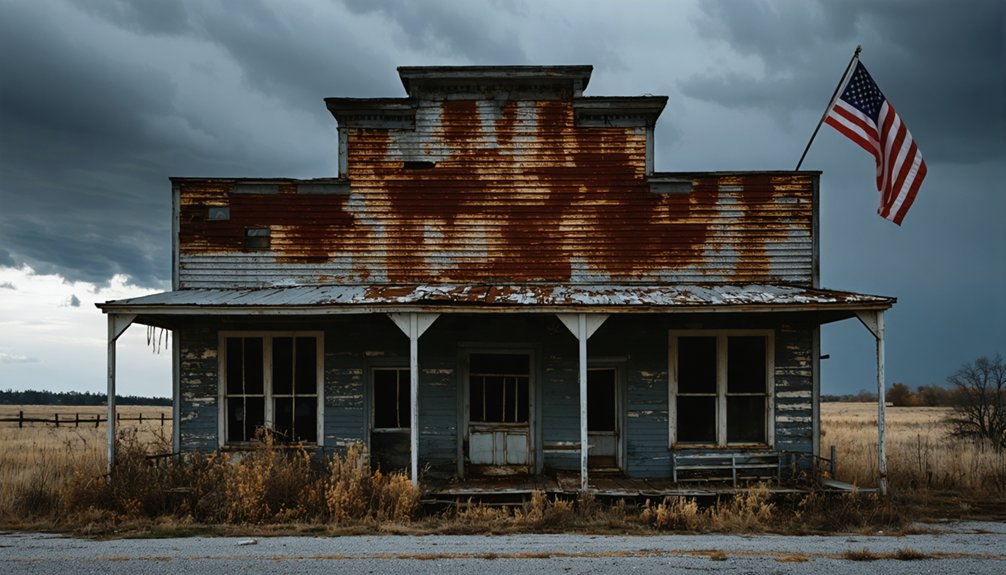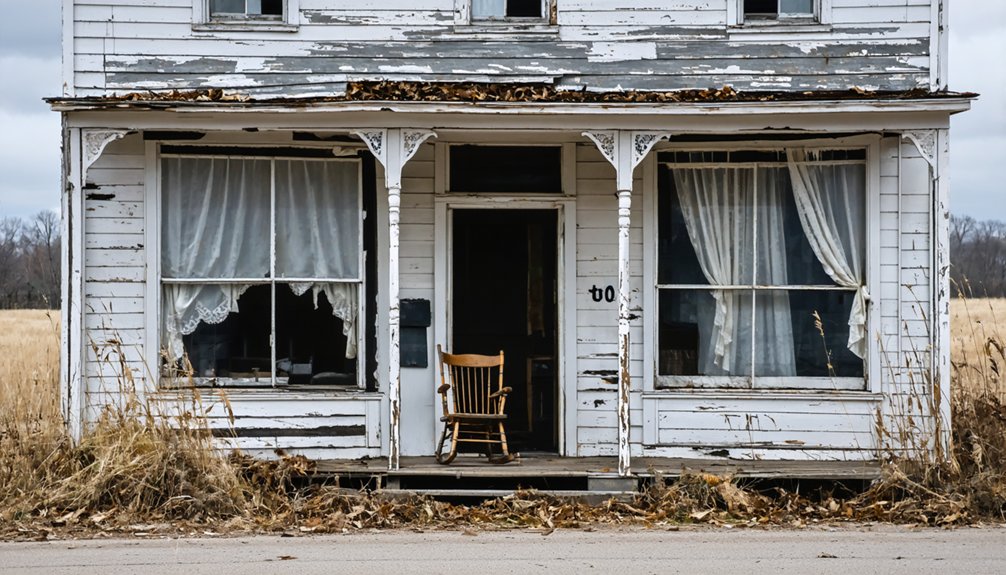
You’ll discover haunting remnants of history across the Midwest’s forgotten settlements, from St. Deroin’s flood-ravaged trading post to Michigan’s copper mining communities. Visit these atmospheric sites in late fall when tourism thins and decaying structures cast longer shadows. Explore historic schoolhouses, abandoned mines, and crumbling foundations that whisper tales of boom-and-bust cycles. The region’s ghost towns await your footsteps through their silent streets and weathered doorways.
Key Takeaways
- St. Deroin in Nebraska offers a haunting glimpse into a once-thriving trading post established in 1842.
- Michigan’s Keweenaw Peninsula ghost towns showcase the rise and fall of the copper mining industry.
- Ghost towns are classified from Class A (only foundations remain) to Class D (skeleton populations).
- Fall and winter months provide optimal atmospheric conditions for exploring abandoned Midwest settlements.
- Paranormal hotspots like Squirrel Cage Jail and Villisca Axe Murder House attract ghost hunters year-round.
The Rise and Fall of St. Deroin: Nebraska’s Forgotten Trading Post
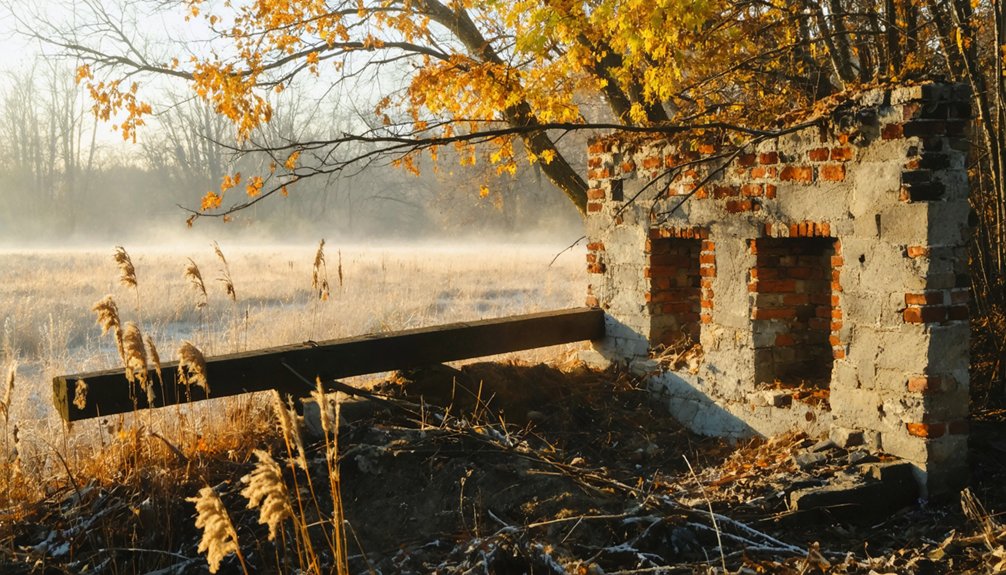
Nestled along the ever-shifting banks of the Missouri River, St. Deroin emerged in 1842 when Joseph Deroin, son of a French trapper and an Otoe woman, claimed 320 acres within the Nemaha Half-Breed Reservation.
You’ll find the ghost of a vibrant trading post that once served as a lifeline for 230 mixed heritage residents caught between two worlds.
After Deroin’s murder in 1858 over a $6 hog dispute, the settlement persisted, developing a school and post office.
But the Missouri had other plans. The river’s relentless assault culminated in the devastating 1911 flood, stranding the essential ferry landing by 1915. The settlement reached its peak with a population of approximately 300 in 1870s before the Missouri River began claiming the town.
Today, visitors can explore the remnants of this once-thriving community, including the St. Deroin Cemetery and schoolhouse that stand as silent witnesses to the town’s rich history.
Copper Dreams: Exploring Central and Delaware, Michigan
As you wander through Michigan’s Keweenaw Peninsula, the skeletal remains of Central and Delaware’s copper mining operations stand as silent witnesses to America’s 19th-century mineral rush.
The crumbling foundations and preserved 155-year-old church at Central tell the story of Cornish immigrants who extracted 52 million pounds of copper before abandonment in 1898 transformed bustling communities into ghost towns. The discovery of a rich fissure in 1855 yielded over 40 tons of pure native copper in the first year alone. Each year, descendants gather for the annual reunion service that has continued uninterrupted since 1907, keeping the memory of this once-thriving mining town alive.
Your footsteps echo across these 38-acre historical sites where mining cables once snapped, men toiled beneath the earth, and copper dreams rose and fell with the market’s cruel tides.
Mining Booms, Ghostly Ruins
Deep within Michigan’s Keweenaw Peninsula, the ghostly ruins of Central Mine stand as monuments to copper dreams that once transformed this wilderness into a bustling frontier town.
As you wander among crumbling foundations, imagine the 1,200 souls who built their lives here—Cornish immigrants who descended 3,000 feet daily into the earth’s depths.
For 44 years, Central Mine flourished, yielding 52 million pounds of copper and $2.1 million in dividends from a mere $100,000 investment.
The mine impressively became the first in the region to generate profit in its first year, establishing a precedent for copper mining ventures.
The restored Methodist Episcopal Church stands as a testament to the diverse cultural influences that shaped the community’s development and religious life.
Yet this prosperity came at a cost—the tragic 1872 accident where a snapped cable claimed ten miners reminds us of the human price paid for this copper heritage.
Today, these silent structures whisper stories of boom and bust, of a community that vanished when the copper veins ran dry.
Preserving Copper Heritage
Walking the weathered grounds of the Delaware Mine today, you’ll find yourself transported to 1849, when the North West Mining Company first chartered this ambitious venture amid the Keweenaw wilderness.
Thanks to Tom Poynter’s vision and his family’s ongoing stewardship, this once-forgotten industrial site now thrives as a living museum where you can descend into actual mining tunnels.
Unlike Central Mine, which faded into a true ghost town after its 1894 closure, Delaware has been carefully preserved.
While wandering among antique machinery and original structures, you’ll connect with the copper culture that drew 33 nationalities to this remote region.
Visitors can observe the remnants of the mine’s extensive five-shaft complex that operated until operations ceased in 1887 due to insufficient ore profitability.
Self-guided tours allow visitors to explore 1,700 feet of original mine workings that showcase the incredible engineering of the era.
Both sites honor a mining legacy that once supplied 16% of the world’s copper, transforming wilderness into bustling communities before economic forces swept it all away.
What Makes a Ghost Town: Classification and Preservation Efforts
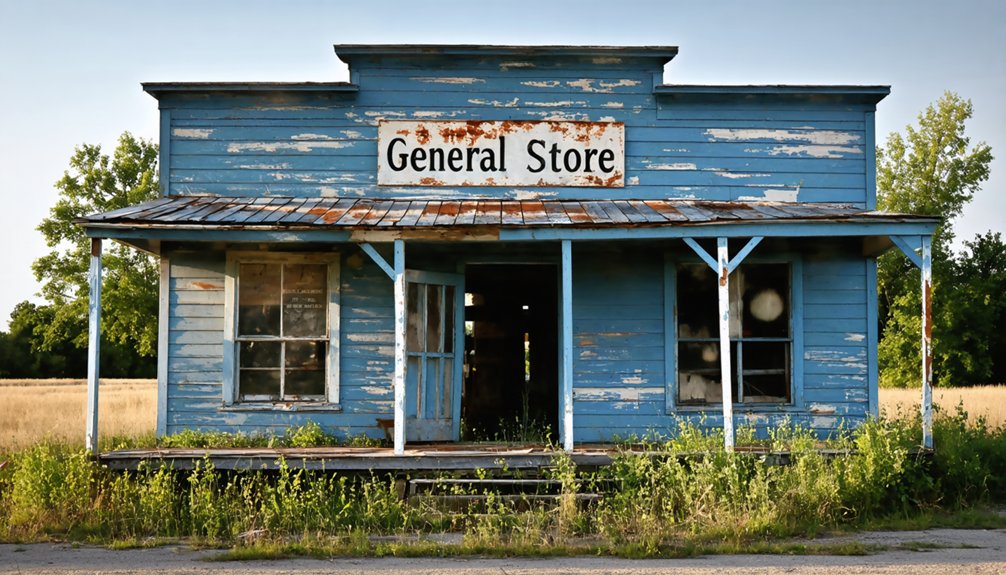
While many travelers might imagine ghost towns as simply abandoned settlements, the reality encompasses a rich spectrum of historical remnants and classifications.
The ghost town classification system ranges from barren sites with mere foundations to bustling historic communities that retain their architectural character despite diminished populations.
When you explore these forgotten places, you’ll encounter:
- Class A sites – whispers of the past where only foundations remain
- Class B ruins – crumbling walls that stand defiant against time
- Class C structures – intact but abandoned buildings frozen in their final moments
- Class D communities – skeleton populations maintaining the last threads of once-vibrant towns
The recently added Class H designation accounts for towns that still exist today but have minimal modern buildings despite their historical significance.
Many ghost towns can also be classified by their original purpose, such as mining or agriculture sites that reveal the economic foundations of these once-thriving communities.
Preservation strategies vary widely, from simple stabilization of existing ruins to complete restoration projects that transform these time capsules into living museums of American perseverance.
Paranormal Hotspots: Most Haunted Abandoned Midwestern Sites
Beyond the decaying storefronts and crumbling foundations of the Midwest’s forgotten towns lies something far more unsettling—an invisible layer of history where tragedy and mystery converge.
You’ll find haunted legends at every turn, from Council Bluffs’ three-story Squirrel Cage Jail where inmates still rattle their cells to the Villisca Axe Murder House where eight souls were violently taken in 1912.
At Edinburgh Manor, the whispers of the “incurably insane” echo through abandoned corridors, while Owatonna’s West Hills Orphanage harbors the spirits of 198 buried children.
Venture into Michigan’s Quincy Mine, and you might encounter ghostly miners still working the copper veins.
These sites don’t just preserve history—they invite ghostly encounters that blur the boundary between past and present.
Seasonal Ghost Town Tourism: When to Visit for Optimal Experiences

You’ll discover ghost towns reveal their secrets most willingly during late fall, when stripped vegetation exposes weathered structures and forgotten artifacts to your searching eyes.
Winter explorers often stumble upon atmospheric treasures hidden from summer crowds, with snow-draped ruins creating hauntingly beautiful tableaus rarely captured in tourism photographs.
For the truly adventurous, scheduling your visit around Fayette’s mid-September paranormal events transforms an ordinary historical excursion into a spine-tingling encounter with the past.
Weather-Based Tour Planning
Planning your ghost town expedition in the Midwest requires careful attention to seasonal weather patterns that can change your experience from treacherous to transcendent.
Summer offers extended daylight for thorough exploration, while autumn’s atmospheric fog creates hauntingly perfect backdrops—though potentially obscuring hazards.
Your ideal tour strategies should include:
- Schedule weekday visits between May and September for perfect accessibility without crowds
- Arrive early during October festivals to capture both atmospheric conditions and special events
- Pack layers for sudden temperature shifts, especially during spring and fall changes
- Plan photography sessions during “golden hour” just before sunset for dramatic lighting
The freedom of ghost town exploration comes with nature’s constraints—embrace the dance between weather’s challenges and the raw authenticity they bring to your haunting adventure.
Off-Season Hidden Treasures
While summer crowds disperse and winter’s chill settles across the Midwest, a secret world of ghost towns emerges for the intrepid explorer willing to venture during off-season months.
You’ll discover unparalleled off-season solitude, allowing genuine connections with these abandoned places and their stories.
The dramatic seasonal lighting creates perfect conditions for haunting photography—fog-shrouded buildings at dawn or golden hour shadows stretching across weathered doorways tell stories no summer snapshot can capture.
Many sites offer limited-access guided tours during these quieter periods, providing deeper historical context without the crush of tourists.
Pack accordingly for changing conditions, but know the reward is worth it: you’ll experience these forgotten places as they’re meant to be—silent, contemplative, and mysteriously preserved in time’s amber.
Mining the Past: How Resource Depletion Shaped the Midwest Landscape
The scattered foundations and crumbling mine shafts that punctuate the Midwest’s landscape today tell a compelling story of boom and bust that forever altered the region.
You’ll discover towns like Delaware and Edgewater where thousands once thrived on copper and lumber before vanishing when resources disappeared—stark reminders of failed resource management and economic resilience.
As you explore these forgotten places, you’ll understand how:
- Mining companies built entire communities that collapsed within years of resources running out
- Railroad closures severed lifelines to remote towns like Steins
- The physical scars—from abandoned mine pits to altered waterways—remain visible a century later
- These ghost towns now serve as powerful warnings about the temporary nature of extractive prosperity
Photographing Abandonment: Tips for Ghost Town Documentation
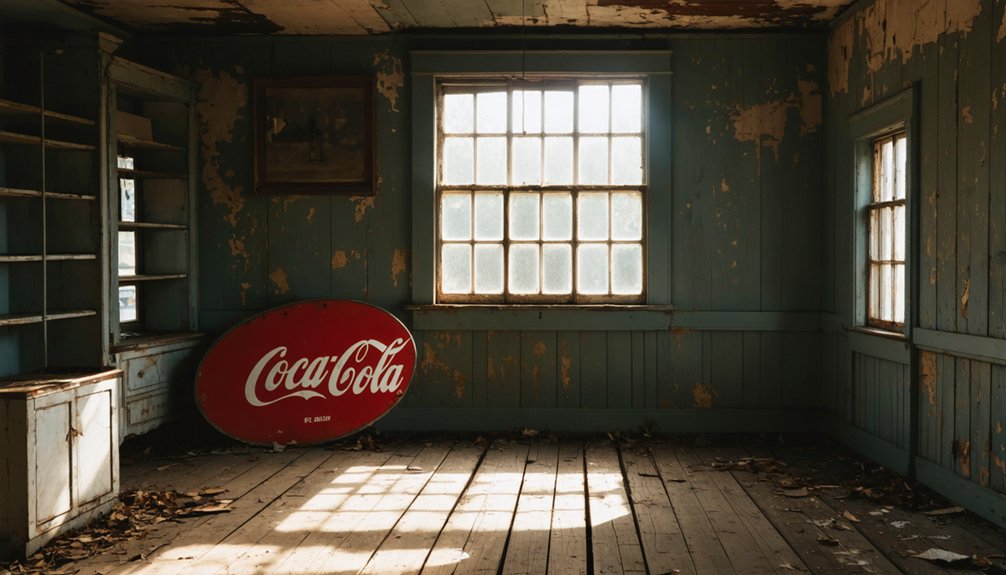
When documenting ghost towns, you’ll want to capture authentic decay by focusing your lens on peeling paint, rusted machinery, and collapsed timbers that tell stories of bygone prosperity.
The quality of light—whether golden hour’s warm glow or dramatic storm clouds—reveals historical layers as shadows create depth across abandoned Main Streets and forgotten homesteads.
Always respect site ethics by leaving artifacts undisturbed, obtaining proper permissions, and preserving these fragile windows into Midwest history through your photographs rather than souvenirs.
Capture Authentic Decay
Discovering beauty in deterioration requires specific techniques that transform crumbling structures into compelling visual narratives.
When documenting decay dynamics, switch between wide shots of main streets and close-ups of forgotten details like rusted doorknobs and peeling wallpaper. The texture tales of abandonment speak louder in black and white, where shadows deepen and weathered surfaces gain drama without color’s distraction.
- Shoot in manual mode with long exposures (15-30 seconds) to capture authentic light without the harsh reality of flash.
- Use a tripod and light painting to highlight specific elements while maintaining the moody atmosphere.
- Frame compositions that include both architectural context and intimate details of human absence.
- Look for reflections in broken windows and patterns in deteriorating structures to add layers of visual storytelling.
Light Reveals History
Light streaming through broken windows transforms abandoned Midwest ghost towns into time capsules of American history.
You’ll discover how shadows storytelling emerges when golden hour sunlight rakes across weathered wood and rusted metal, revealing textures invisible at midday.
Position yourself to capture light shafts piercing dusty interiors, where dancing particles create ethereal columns of light symbolism.
For dramatic effect, shoot during dawn or dusk when long shadows stretch across forgotten streets, emphasizing the passage of time.
Try light painting at night with a flashlight to highlight specific details—a faded storefront sign or abandoned machinery—while leaving surroundings in mysterious darkness.
For authenticity, adjust your white balance to preserve the cool tones of moonlight when shooting after dark, allowing the ghost town to tell its own haunting tale through contrasting illumination.
Respect Site Ethics
Ethical exploration demands your commitment to preserving these fragile time capsules for future generations.
As you wander among weathered clapboards and rusted machinery, remember that each footprint impacts site preservation. These forgotten settlements deserve reverence—not exploitation.
Before initiating your Midwest ghost town adventure, embrace these principles of ethical exploration:
- Seek permission before entering properties—many seemingly abandoned towns remain privately owned.
- Leave artifacts untouched where you find them—resist the urge to pocket that century-old bottle.
- Stay on established paths to prevent structural damage to crumbling foundations.
- Share responsibly online—consider removing geotags from haunting images to protect vulnerable locations.
Your respect guarantees these silent witnesses to history continue telling their stories long after your tire tracks fade from the dusty road.
Beyond the Ruins: Stories From Former Residents and Their Descendants
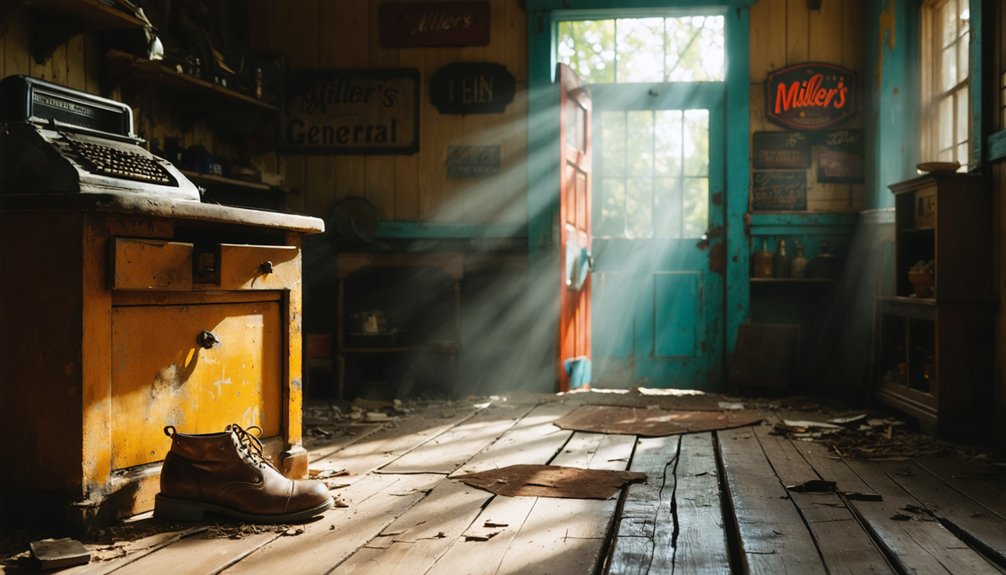
While ruins of abandoned Midwestern towns silently dot the landscape, the voices of those who once called these places home echo through time with remarkable clarity.
You’ll discover descendants who maintain summer homes in Michigan’s Central Mine, preserving family legacies decades after the town’s commercial death. Community nostalgia drives annual homecoming events where former residents gather to keep memories alive despite crumbling structures around them.
Oral histories reveal surprising tales of tight-knit communities that transcended ethnic and racial divides, like in Cheyenne Valley, Wisconsin. Former residents recall both the profound silence of near-empty towns and the vibrant social bonds that once existed.
These stories transform ghost towns from mere abandoned places into repositories of human experience—each fallen building holding generations of hopes, disappointments, and unexpected resilience.
the haunted mill towns of New England serve as a fascinating backdrop for those seeking to uncover the mysteries of the past. Each crumbling factory and empty street tells a story of industrious spirits and the trials faced by their communities. As visitors wander through these echoing halls of history, they may even sense the lingering presence of those who once toiled there, their dreams woven into the very fabric of the landscape.
The Great Lakes “Shipwreck Coast”: Maritime Ghost Stories and Lore
Thousands of vessels lie beneath the churning waters of the Great Lakes, silent testimonies to nature’s fury and human ambition.
Beneath these inland seas, shipwrecks whisper tales of daring, disaster and the unforgiving power of nature.
These hidden graveyards along the “Shipwreck Coast” have spawned maritime legends that still haunt regional folklore. You can almost hear the ghostly echoes of the Cyprus’s crew, who perished in Lake Superior’s icy embrace in 1907, or imagine the final moments aboard the Washington as it succumbed to Lake Ontario’s depths in 1803.
Maritime tales worth exploring:
- The Griffon’s mysterious 1679 disappearance – the first documented Great Lakes shipwreck
- Lake Serpent’s discovery in 2018, revealing secrets hidden since 1829
- The treacherous Whitefish Point waters, where 240 vessels met their fate
- The Cedarville’s tragic 1965 collision, where modern technology couldn’t overcome ancient dangers
Preservation Challenges: Balancing Access With Historical Protection
Beyond the ghostly whispers of shipwrecks, a more tangible battle rages across the Midwest’s forgotten landscapes.
You’ll find yourself caught between preservation policies that protect these crumbling monuments and your desire to explore them freely. Historic commissions regulate structural changes while access restrictions limit your footsteps across weathered floorboards.
When you venture into these abandoned domains, you’re witnessing a delicate balance. Each visitor brings both economic opportunity and potential harm.
Deteriorating buildings, contaminated soils, and unstable structures require careful management.
Your presence matters—guided tours and volunteer programs allow you to experience these sites while becoming their protector.
As climate threats accelerate decay and funding remains scarce, the future of these ghost towns depends on finding that sweet spot between protection and exploration, ensuring these haunting places survive for future wanderers.
Frequently Asked Questions
Can Children Safely Explore Midwest Ghost Towns?
No, you shouldn’t explore ghost towns without strict safety guidelines and parental supervision. Crumbling buildings, environmental hazards, and high injury rates make these haunting landscapes particularly treacherous for young adventurers.
Are Metal Detectors Allowed at Abandoned Midwest Sites?
Like a miner sifting for gold, you’ll need permits on most public lands. Metal detector regulations vary widely—check local DNR rules and treasure hunting ethics demand respecting archaeological sites and obtaining proper permission.
Which Ghost Towns Are Wheelchair Accessible?
You’ll find wheelchair-accessible ghost towns at Old Cahawha with its smooth mile-long nature trail, Ashcroft’s basic boardwalk, and Downtown Grand Rapids’ haunted wheelchair tours. The Whitney Mansion offers accessible haunted site exploration.
Do Any Midwest Ghost Towns Offer Overnight Camping?
Grab your smartphone and trek to Fayette Historic State Park, where you’ll find regulated camping under starlit skies. The ghostly townsite offers basic amenities while granting you boundless freedom to explore.
How Do Locals Feel About Tourism to Their Abandoned Communities?
You’ll find mixed local perspectives on ghost town tourism. While many welcome the economic boost, others feel uneasy about strangers trampling through their heritage. Tourism impact varies dramatically depending on community involvement and respect shown.
References
- https://www.splashtravels.com/destinations/midwest-ghost-towns-and-ruins-welcome-curious-visitors
- https://thetravelingwildflower.com/hauntedplacestovisit/
- https://www.frrandp.com/p/ghost-towns-map.html
- https://www.geotab.com/ghost-towns/
- https://www.youtube.com/watch?v=lfj6aeZEVJY
- https://en.wikipedia.org/wiki/Lists_of_ghost_towns_in_the_United_States
- https://www.atlasobscura.com/lists/abandoned-places-midwest
- https://www.youtube.com/watch?v=15KsasKUnQ8
- https://battlegroundhistory.com/american-midwest/
- https://www.nebraskalife.com/blog/post/saint-deroin-ghost-town