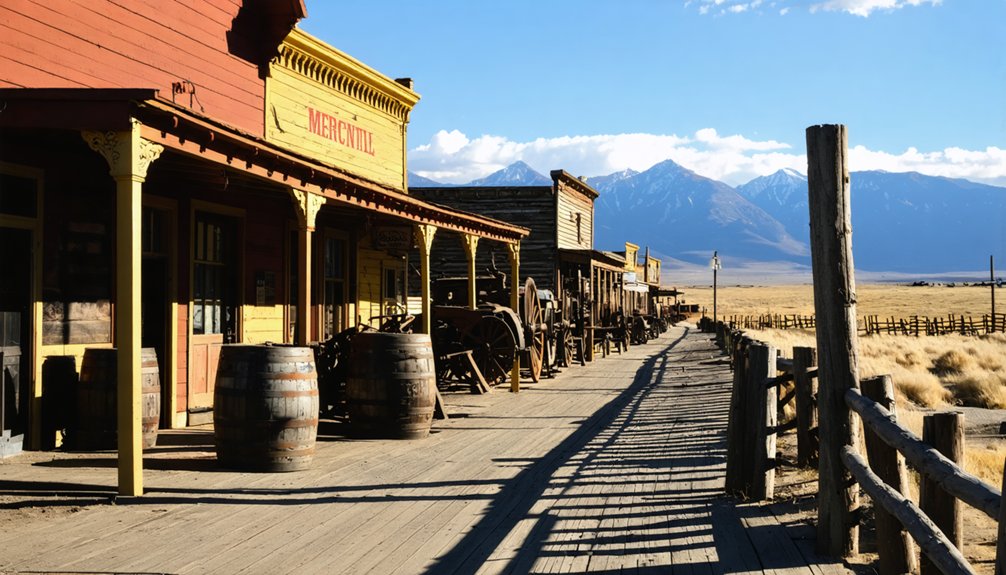
Millwood, California is a ghost town nestled in Sequoia National Forest near Converse Basin Grove. The Kings River Lumber Company established it in 1891, and it once supported over 2,000 residents with hotels, saloons, and a fully operational sawmill. By 1909–1910, the mill had closed, and today you won’t find a single standing structure on the site. If you want to understand how Millwood rose and collapsed so quickly, there’s much more to uncover.
Key Takeaways
- Millwood was a logging settlement established in 1891 in Sequoia National Forest by the Kings River Lumber Company.
- At its peak, Millwood supported over 2,000 residents with hotels, saloons, a post office, and other essential businesses.
- The town declined after 1905 when operations shifted to Hume-Bennett Lumber Company, and the mill closed around 1909–1910.
- No structures remain at the Millwood site today; it is now designated as an off-highway vehicle (OHV) area.
- The surrounding Converse Basin Grove was largely cleared of giant sequoias, with the Boole Tree among the few survivors.
What Was Millwood, California?
Nestled in what’s now Sequoia National Forest near Converse Basin Grove, Millwood was a lumber boomtown established in 1891 by the Kings River Lumber Company. You can think of it as a self-contained industrial settlement built entirely around extracting timber from the southern Sierra Nevada.
Millwood was a self-contained lumber boomtown carved into the southern Sierra Nevada by the Kings River Lumber Company in 1891.
Before logging operations displaced the land’s prior uses, the region held deep Indigenous history, with native communities practicing sustainable agricultural practices and land stewardship for generations.
The Kings River Lumber Company replaced that legacy with a high-output mill town connected to Sanger via a 54-mile log flume.
At its peak, Millwood supported over 2,000 residents, a post office, hotels, and essential trade shops. Once the timber ran out, the town vanished, earning its designation as a ghost town.
The Railroad, Flume, and Sawmill That Made Millwood Possible
Because the terrain of the southern Sierra Nevada made conventional transport nearly impossible, the Kings River Lumber Company built an interconnected system of rail, flume, and sawmill infrastructure to make Millwood commercially viable.
The Sequoia Railroad moved logs from the cutting sites directly to the mill. Once the sawmill processed the timber, a 54-mile log flume carried the rough lumber down to Sanger in the San Joaquin Valley.
Sequoia Lake was constructed specifically to supply the water that kept that flume running. This timber transport network wasn’t incidental — it was the foundation everything else depended on.
Without it, the community infrastructure of hotels, schools, and shops couldn’t have existed.
The system operated seasonally, roughly April through November, dictated entirely by elevation and weather.
2,000 Residents, Hotels, and Saloons: Millwood at Its Height
That infrastructure didn’t exist in isolation — it sustained a surprisingly dense community. At its peak, Millwood’s population exceeded 2,000 residents, making it a legitimate town by any measure.
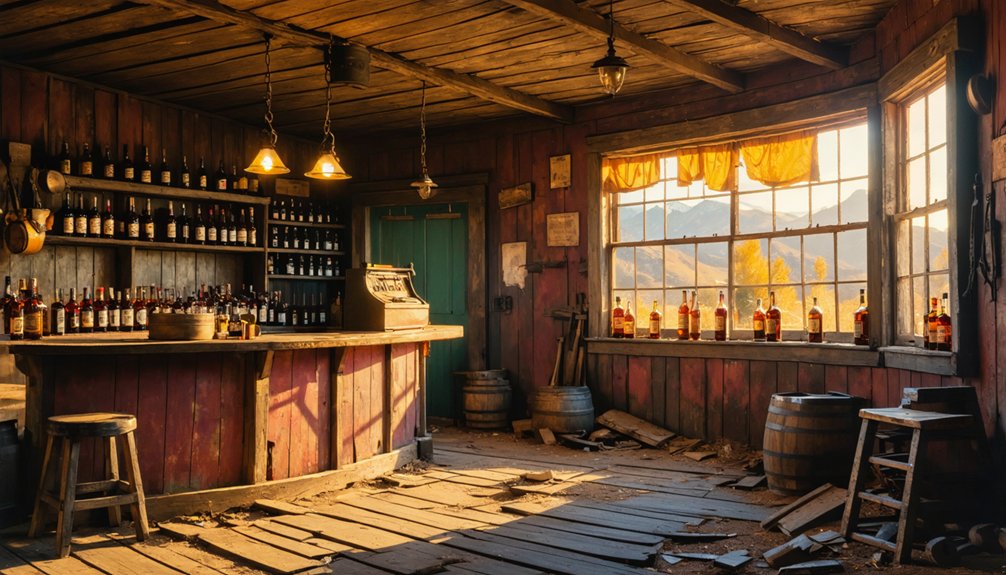
The town infrastructure included a post office, general store, blacksmith shop, butcher shop, livery stable, and a summer school. You’d also find two hotels, multiple saloons, and brothels operating alongside the mill’s seasonal workforce.
Community lifestyle here wasn’t genteel. Workers lived in rough dormitories, ate in a common cookhouse, and rotated through a compressed April-to-November season.
One historical marker documents a thirty-room hotel serving a seasonal population surpassing 1,000. Despite its remoteness, Millwood functioned as a self-contained economic unit — every service existed to keep laborers productive and on-site, not to build something permanent.
How the Kings River Lumber Company’s Exit Ended Millwood After 1905
When the Hume-Bennett Lumber Company shifted operations to a new site in 1905, Millwood’s collapse became a matter of timing rather than possibility.
The economic decline followed a predictable sequence:
- The White House Hotel burned in 1908, stripping the town of its last social anchor.
- By November 1908, local reporting confirmed Millwood was approaching dissolution.
- By 1909–1910, the mill closed and machinery moved to Hume permanently.
You can trace the environmental impact directly through what’s missing. The intensive redwood logging left few giant trees standing, and when the timber ran out, the company left. No structures survived.
The Forest Service now designates the site as an OHV area — a quiet, telling marker of what resource extraction without permanence actually produces.
What You’ll Actually Find at the Millwood Ghost Town Site Today
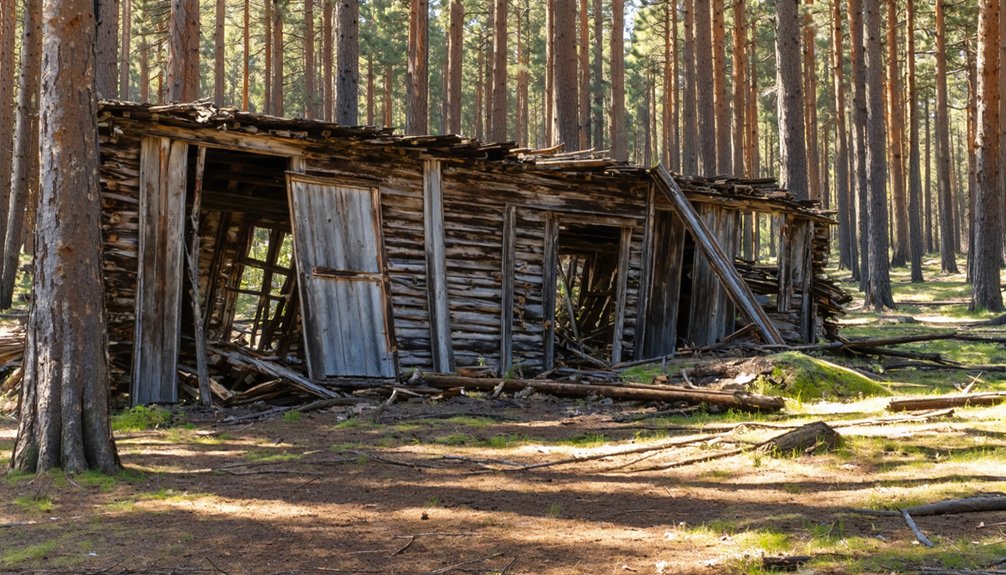
If you visit the Millwood site today, you won’t find a single standing structure. The U.S. Forest Service now designates the former town as an OHV area, which tells you something about how completely the community disappeared.
Economic decline stripped the site down to nothing after the mill closed around 1909–1910 and machinery moved to Hume. The environmental impact of intensive logging left the surrounding Converse Basin Grove largely cleared of its giant sequoias, making the absence feel even more stark.
You’ll find forest roads leading to the area near Hume in Fresno County, and scattered remnants exist in the broader region.
The Boole Tree stands nearby as one of the few giants that survived. Millwood itself offers no buildings, no foundations, and no restored infrastructure.
Frequently Asked Questions
Was Millwood Ever Known by a Different Name?
Yes, you’ll find historical name changes documented — Millwood was also known as Sequoia Mills. Local legends surrounding this lumber boomtown’s identity reflect its rich, analytically fascinating past tied to Kings River Lumber Company operations.
What Was the Seasonal Work Schedule for Millwood’s Lumber Workers?
You’d have worked Millwood’s lumber operation from April through November, following labor conditions tied strictly to seasonal access. Workday routines dominated those months, then you’d find yourself released as winter shut everything down completely.
Where Exactly Did Workers Sleep and Eat in Millwood?
Like cogs in a machine, you’d have bunked in rough dormitories or small cabins—classic worker accommodations and abandoned housing today—while you ate communally in a shared cookhouse during Millwood’s peak logging seasons.
What Happened to the White House Hotel in Millwood?
You’d find no preservation efforts saved the White House Hotel’s historical architecture — it burned down in 1908. This documented loss accelerated Millwood’s decline, and by 1909, you’d see the mill itself completely shut down.
Is Millwood Considered an Official Ghost Town Today?
Yes, you’ll find Millwood’s considered a ghost town today, though it lacks official historical preservation status. No tourist attractions remain—the USFS designates it an OHV area, as logging’s boom-and-bust cycle left no surviving structures behind.
References
- https://en.wikipedia.org/wiki/Millwood
- https://parks.sbcounty.gov/opinion-beyers-byways-a-brief-history-of-calico-ghost-town/
- https://www.thegoodlifesv.com/story/2022/07/01/history/millwood-and-stagecoaching-to-the-timber/721.html
- https://www.ghosttowns.com/states/ca/millwood.html
- https://www.linkedin.com/posts/chriscorbet_an-abandoned-gold-mine-knysna-south-africa-activity-6977124692990021632-LoTm
- https://www.hmdb.org/m.asp?m=2979
- https://en.wikipedia.org/wiki/List_of_ghost_towns_in_California
- http://www.millwoodhistory.com/history.html