Tamberlane Canyon’s silver rush burned fast — first strike to ghost town in just eight years, between 1881 and 1889. At its peak, nearly 400 prospectors, outlaws, and settlers carved a defiant little civilization from Nevada’s high desert. Today, you’ll still find weathered timber, collapsed mine shafts, and rusted ore carts scattered across the canyon floor. It’s a place where history didn’t just fade — it froze. Stick around, and you’ll uncover every layer of its remarkable story.
Key Takeaways
- Tamberlane Canyon was a short-lived Nevada silver mining settlement, booming from 1881 to 1889 before being completely abandoned.
- At its peak, the canyon supported nearly 400 residents, including prospectors, outlaws, and settlers staking mineral claims.
- The lawless settlement attracted criminals fleeing warrants, featuring makeshift saloons and a fierce, unregulated frontier culture.
- Visible ruins today include crumbling adobe, timber structures, rusted ore carts, stamp mill components, and partially buried track lines.
- Visitors access the site via Route 40 east of Elko, requiring high-clearance four-wheel-drive vehicles, best visited in spring or fall.
How Tamberlane Canyon Rose and Fell in Less Than a Decade
Tamberlane Canyon’s story unfolded fast and burned out faster — a fever-dream of pick axes, canvas tents, and desperate optimism that lasted barely eight years from first strike to final abandonment. You’d have arrived in 1881 to find a roaring camp of nearly 400 souls, carved straight from Nevada’s unforgiving high desert.
Historical weather patterns hammered the settlement hard — brutal winters followed by scorching, waterless summers that cracked timber frames and broke men’s will equally.
Local wildlife interactions added another layer of hardship; rattlesnakes claimed two miners in the canyon’s third year alone, and mule teams spooked regularly by coyote packs disrupted critical ore supply lines.
The Miners, Outlaws, and Settlers Who Built Tamberlane Canyon
When you walk through what remains of Tamberlane Canyon, you’re tracing the footsteps of prospectors, drifters, and desperate dreamers who carved a community from raw Nevada wilderness in the 1870s.
The early settlers weren’t just miners swinging pickaxes — they included outlaws running from eastern warrants, merchants chasing profit, and families betting everything on silver-streaked rock.
You’ll find that the canyon’s short, turbulent life reflects the people who built it: ambitious, reckless, and ultimately unable to hold what they’d made.
Early Settlers and Miners
Although little about Tamberlane Canyon’s origins ever made it into formal records, the men and women who first carved a life from its rugged terrain left behind a legacy etched in weathered timber, collapsed shafts, and faded oral histories.
You’ll find that mining legends surrounding the canyon’s earliest strikes speak of independent prospectors who answered to no authority but the land itself.
Settler stories passed down through generations describe families who built crude cabins, traded supplies, and staked claims with nothing but determination and a hand-drawn map.
These weren’t company men — they were free agents chasing silver and survival simultaneously.
Their labor shaped every trail, every tunnel, and every forgotten foundation you still stumble across when you walk Tamberlane Canyon’s fractured, wind-scoured ground today.
Outlaws Who Shaped Tamberlane
Beyond the sunbaked claims and hand-dug shafts, Tamberlane Canyon‘s most defining characters weren’t always the ones working honest stakes. Tamberlane carried a lawless reputation that drew men running from something — warrants, debts, or worse. The canyon’s fractured terrain made it ideal for outlaw hideouts, where narrow passages swallowed fugitives whole and strangers asked few questions.
You’d have recognized the tension walking into any of Tamberlane’s makeshift saloons. Armed men sat with their backs to walls. Deals happened in whispers. Justice wasn’t imported — it was improvised, often violently.
Yet these outlaws weren’t just trouble; they shaped Tamberlane’s ruthless culture, enforcing an unspoken code that kept competing factions from burning everything down. Their presence made the canyon dangerous, yes — but also fiercely, defiantly free.
Ruins Still Standing: What Survives in Tamberlane Canyon Today
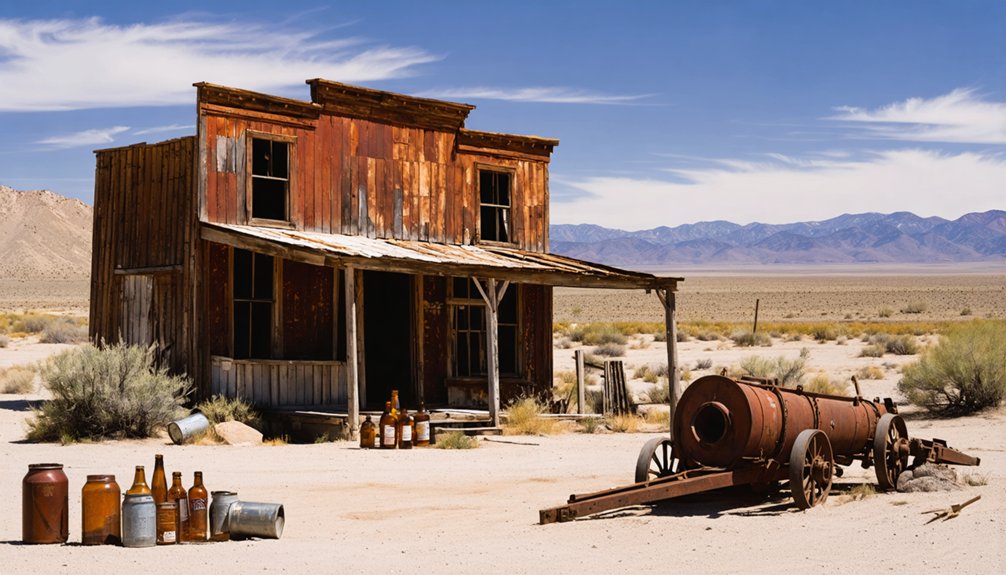
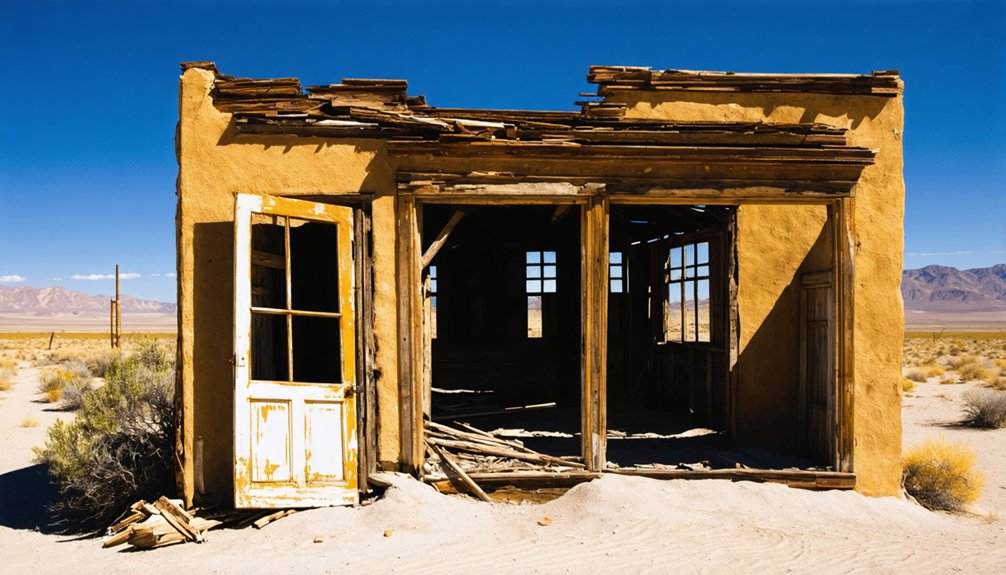
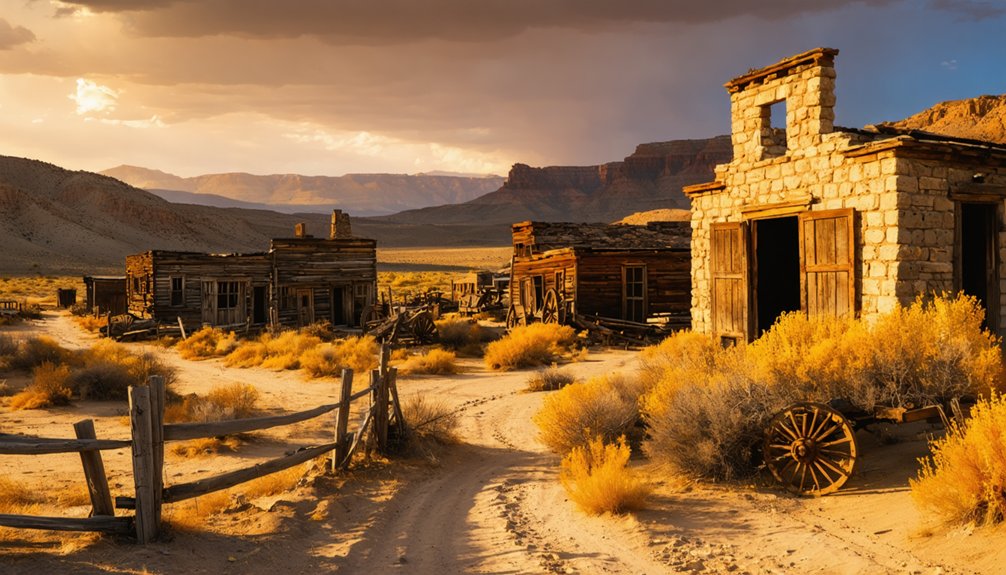
When you walk through Tamberlane Canyon today, you’ll find crumbling adobe and timber structures still stubbornly clinging to the canyon walls. Their weathered bones tell a story no history book fully captures.
You can trace your hand along preserved stamp mill components and rusted ore carts that remain surprisingly intact, protected by the canyon’s natural windbreaks.
What survives here isn’t just debris — it’s a meticulous record of the ambition and grit that once defined this forgotten Nevada settlement.
Crumbling Structures Still Visible
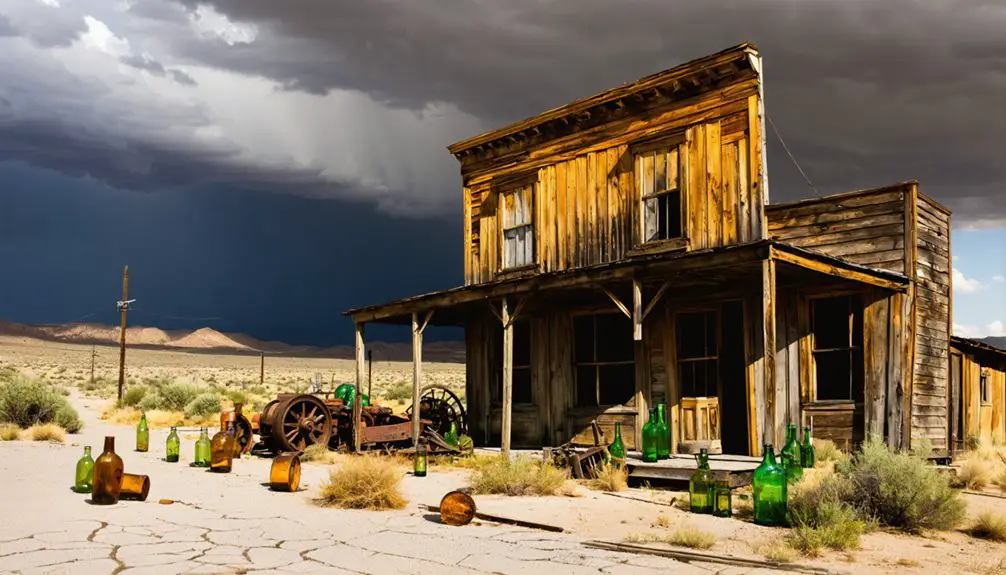
Scattered across Tamberlane Canyon’s dusty floor, the remnants of what was once a thriving mining settlement still cling stubbornly to existence. You’ll spot collapsed timber frames, crumbling stone foundations, and rusted machinery that speaks directly to the mining technology settlers once depended upon.
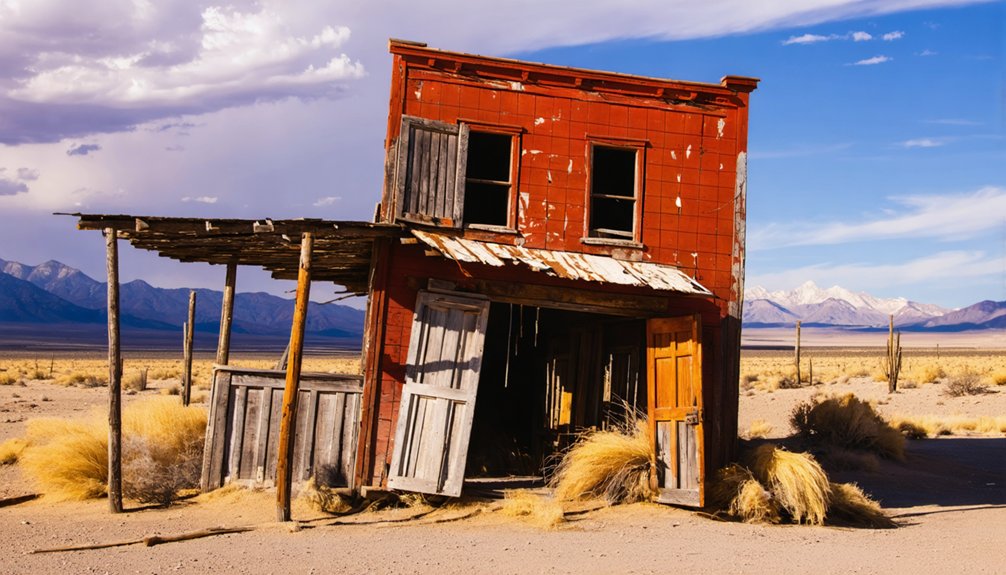
These aren’t just ruins — they’re physical chapters of settler stories, preserved imperfectly but honestly by the canyon’s dry desert air. Walk carefully between the structures; several walls lean at precarious angles, held upright seemingly by stubbornness alone.
Ore cart tracks disappear beneath decades of windblown sediment, yet remain traceable if you look closely. The canyon demands your attention and rewards your patience.
What survives here isn’t glamorous — it’s raw, weathered truth standing defiantly against time’s relentless erosion.
Preserved Mining Equipment Remnants
Among the most striking survivals in Tamberlane Canyon are the preserved fragments of industrial mining equipment that once drove the settlement’s economic heartbeat. You’ll find rusted ore carts frozen mid-journey, their iron frames defying decades of desert exposure. Stamp mill components rest exactly where workers abandoned them, still carrying traces of the mineral deposits they once processed.
Artifacts preservation here isn’t accidental — the canyon’s sheltered walls deflect harsh winds, slowing deterioration considerably. You can run your hand along a corroded drill shaft and feel history resisting erasure.
Boiler plates, cable spools, and sorting screens remain identifiable despite oxidation.
These remnants aren’t merely curiosities; they’re tangible evidence of autonomous men who carved independent livelihoods from raw earth, answering to no one but the canyon itself.
How to Get to Tamberlane Canyon
Reaching Tamberlane Canyon requires traversing Nevada’s rugged high desert terrain, so you’ll want to plan your route carefully before heading out. Head east from Elko on Route 40, then navigate unmarked dirt roads cutting through ancient historical trade routes once walked by Shoshone and Paiute peoples whose Native American legends still echo across these windswept valleys.
You’ll need a high-clearance four-wheel-drive vehicle — no exceptions. Carry extra fuel, water, and printed topographic maps since cell service disappears fast.
The final stretch demands careful attention to eroded switchbacks descending toward the canyon floor. Start early, respect the land’s raw independence, and tell someone your exact itinerary before departing.
This territory rewards prepared, self-reliant travelers who understand that freedom carries genuine responsibility.
Best Time to Visit Tamberlane Canyon
When you visit Tamberlane Canyon matters as much as how you get there. Spring and fall offer the clearest skies and coolest temperatures, letting you explore the ruins without brutal desert heat slowing you down.
You’ll also find wildlife habitats more active during these shoulder seasons — hawks circling overhead, lizards darting between crumbling foundations, the canyon breathing with life that early miners never quite appreciated.
Avoid summer months; scorching heat makes the terrain genuinely dangerous.
Winter brings occasional flash flooding through the canyon floor.
Keep mining regulations in mind regardless of season — certain areas restrict artifact collection year-round, and those rules don’t bend for curious visitors.
Respect the boundaries, carry sufficient water, and you’ll experience Tamberlane Canyon exactly as it deserves to be experienced: honestly and freely.
Ghost Towns Near Tamberlane Canyon Worth Combining Into One Trip
Tamberlane Canyon rewards patient explorers, but the surrounding region holds enough layered history to justify stretching a single-day visit into a longer desert circuit.
Head toward Eldorado Canyon first — its Techatticup Mine preserves raw evidence of historical conflicts between miners, outlaws, and competing claim holders.
Techatticup Mine doesn’t sanitize its past — the evidence of conflict, crime, and competing claims still speaks for itself.
Nelson Ghost Town anchors that same canyon with guided access and tangible ruins.
Push further toward Jarbidge in the north, where environmental impacts from decades of hydraulic mining reshaped entire creek beds you can still read today.
Crescent City’s preserved smokestack stands as quiet proof that desert conditions protect what abandonment leaves behind.
Each site compounds the last, building a coherent picture of Nevada’s boom-and-collapse cycles.
You’re not collecting stops — you’re assembling a complete story.
Frequently Asked Questions
Is Tamberlane Canyon on Any Official Nevada State Historical Registry?
You won’t find it on any official Nevada state historical registry. It lacks documented historical preservation status or geological significance, so you’re free to explore verified alternatives like Eldorado Canyon instead.
Were Any Famous Legends or Myths Associated With Tamberlane Canyon?
You won’t find verified local ghost stories or hidden treasure legends tied to Tamberlane Canyon, because it doesn’t exist in official Nevada records. You’d want to explore Eldorado Canyon instead, where authentic, freedom-stirring myths genuinely flourished.
Did Tamberlane Canyon Ever Have Its Own Post Office?
No records confirm it ever did. Over 600 Nevada ghost towns once boasted post offices tied to historical mining booms, yet Tamberlane Canyon’s abandoned structures leave no postal trail you’d find documented anywhere.
Are Metal Detecting or Artifact Collection Activities Permitted at Tamberlane Canyon?
Since Tamberlane Canyon’s existence isn’t verified, you can’t navigate its metal detecting regulations or artifact collection laws. Always consult Nevada’s historic preservation authorities before you pursue freedom-loving treasure hunting at any unconfirmed site.
Has Tamberlane Canyon Ever Appeared in Films or Television Productions?
Like a ghost fading into desert sand, you won’t find Tamberlane Canyon in any film or television production — it doesn’t exist in verified records connecting desert wildlife, mining history, or documented Nevada locations.
References
- https://travelnevada.com/ghost-town/exploring-eldorado-canyon/
- https://www.youtube.com/watch?v=sNBbAWEfooE
- https://en.wikipedia.org/wiki/List_of_ghost_towns_in_Nevada
- https://www.youtube.com/watch?v=4OohdB6Hv98
- https://forgottennevada.org/sites/tunnel.html