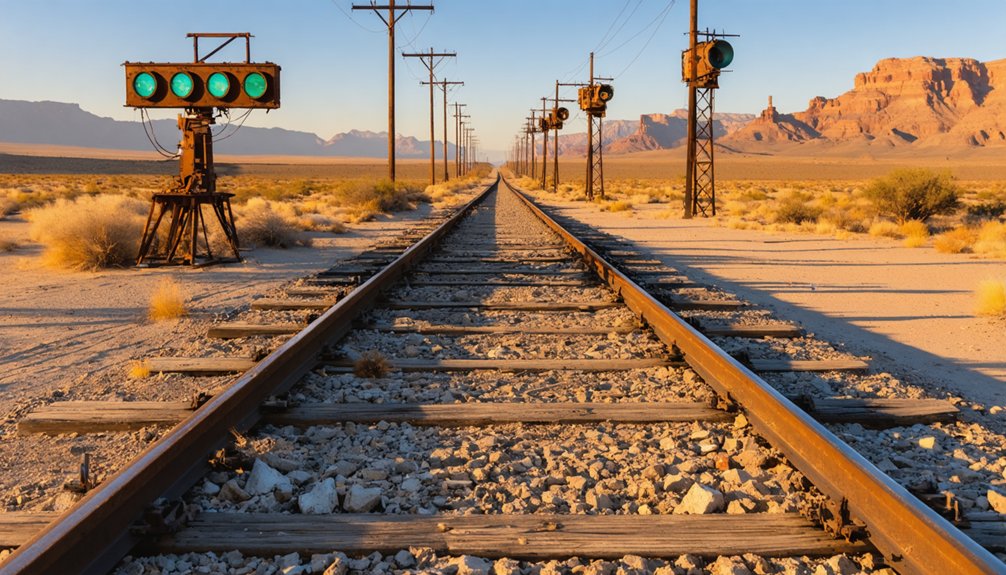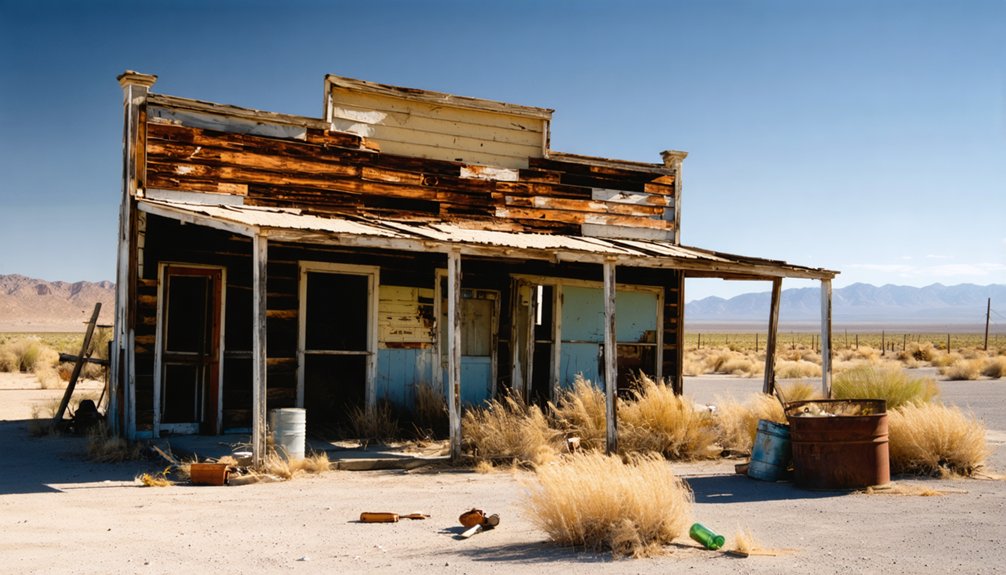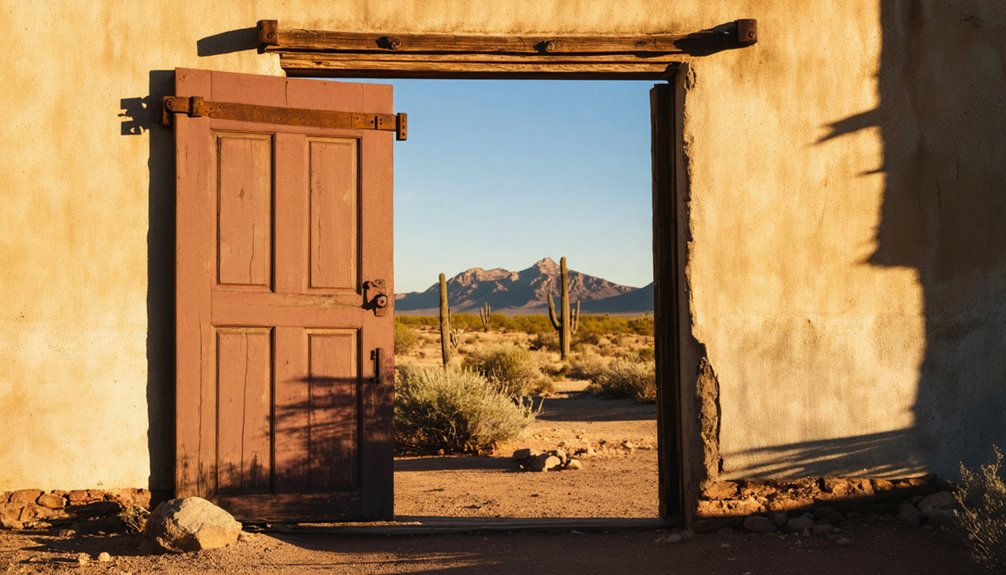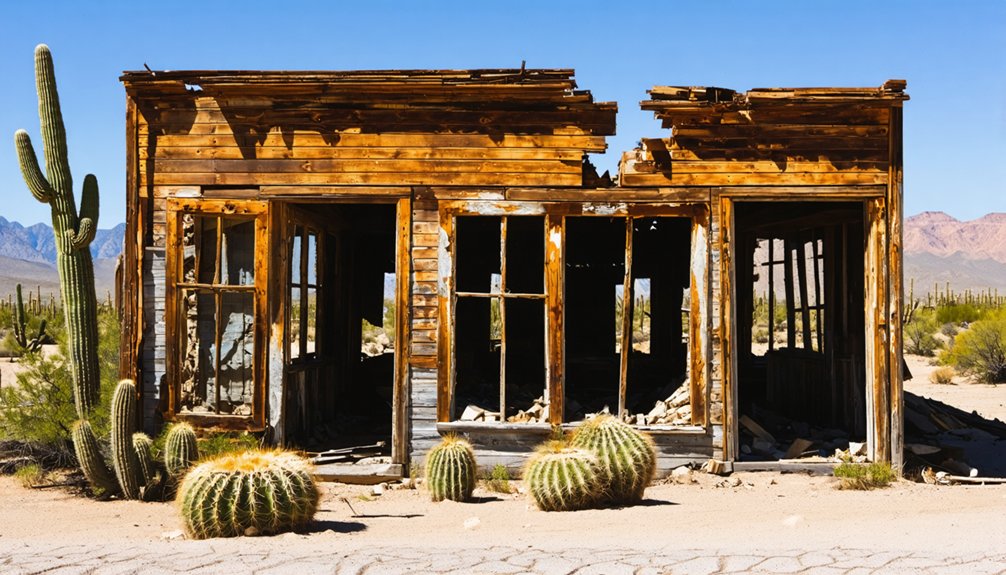
Arizona’s mining ghost towns—Swansea, Ruby, Courtland, and others—reveal the volatile cycle of copper, gold, and silver booms that shaped the territory’s economy before exhausted ore veins and collapsing commodity prices triggered mass abandonment. You’ll find preserved smelters, concrete jails, adobe walls, and rusted machinery scattered across remote desert landscapes. Each site documents industrial ambition and its inevitable limitations. If you’re planning a visit or want to understand what these ruins truly represent, there’s far more to uncover ahead.
Key Takeaways
- Swansea, Ruby, Goldfield, Courtland, and Gold King Mine are among Arizona’s most notable mining ghost towns worth visiting.
- Copper, gold, and silver strikes created boomtowns that were later abandoned when ore veins depleted and metal prices collapsed.
- Ruby retains 25 preserved buildings, while Swansea’s 700-ton smelter and Courtland’s concrete jail remain significant structural landmarks.
- Gold King Mine near Jerome offers open public access, while Swansea requires high-clearance vehicles, extra water, and fuel.
- Morning visits are ideal for photography, as low-angle light enhances weathered adobe walls, rusted equipment, and decaying structures.
The Copper, Gold, and Silver Strikes That Built Arizona’s Ghost Towns
Arizona’s mineral wealth didn’t reveal itself quietly—copper, gold, and silver strikes ignited a succession of boomtowns across the territory, each built on the promise of fortune and abandoned when that promise ran dry.
Copper mining drove Swansea’s rise in 1909, while gold discovery transformed the Gold King Mine into a thriving camp by 1901. Ruby’s silver rush positioned it among Arizona’s most productive operations through the 1930s.
Each strike carried profound historical significance, shaping ghost town culture through rapid settlement and equally rapid collapse. The economic impact extended beyond individual mines—towns built schools, hospitals, and commerce around extraction.
Understanding this mining legacy means recognizing that you’re walking through evidence of a volatile, freedom-chasing civilization that staked everything on what lay beneath the earth.
Best-Preserved Arizona Ghost Towns Worth Visiting Today
If you’re ready to walk through Arizona’s most intact mining relics, several ghost towns stand out for their remarkable preservation and accessibility.
Swansea, recognized as one of Arizona’s best-preserved ghost towns, owes its structural integrity to its remote location, while Ruby retains 25 buildings on private property.
Gold King Mine offers open public access near Jerome State Park.
Whether you’re drawn to Goldfield’s active historical exhibits or Courtland’s concrete jail and stone foundations, each site delivers a direct, unmediated encounter with Arizona’s industrial mining past.
Top Preserved Ghost Towns
From the remote desert terrain of Swansea to the historic Apache Trail corridor of Goldfield, Arizona’s ghost towns offer a remarkably varied record of the state’s mining heritage—each preserved to different degrees and accessible under different conditions.
You’ll find ghost town legends embedded in structures like Ruby’s 25 surviving buildings and Goldfield’s operational mine tours, where mining folklore remains actively interpreted for visitors.
Courtland’s concrete jail and Harshaw’s adobe ruins invite independent exploration, while Gold King Mine near Jerome presents equipment and architecture in credible historical context.
Swansea’s isolation has paradoxically guaranteed its integrity.
Whether privately held or publicly managed, these sites reward analytical engagement—each ruin, foundation, and shaft representing deliberate economic ambition that ultimately collapsed under geological, financial, or market pressures you can still trace today.
Must-Visit Mining Sites
Knowing which sites to prioritize sharpens the difference between a cursory visit and a genuinely instructive one.
Swansea history reveals industrial ambition through its preserved smelter infrastructure, while Ruby heritage documents a full community cycle — from discovery through organized corporate mining to abandonment.
Harshaw mining remnants, particularly the Finley House adobe, anchor you in the economic volatility of silver-era Arizona.
Gold King offers accessible structural evidence of early shaft mining near Jerome, and Courtland remnants present concrete and stone fragments that document a town’s quiet dissolution.
Goldfield attractions provide the most visitor-ready experience, combining authentic mine tours with interpretive programming.
Each site you choose demands different preparation — remote terrain, private land protocols, or scheduled access — so research before you travel.
Ruins, Relics, and Structures Still Standing at Each Site
When you explore Arizona’s mining ghost towns, you’ll encounter a striking array of preserved structures, rusting equipment, and crumbling ruins that collectively document the region’s industrial past.
At sites like Ruby, 25 buildings remain intact on private property, while Courtland retains its concrete jail and stone foundations. Swansea’s remoteness has shielded its remnants from vandalism and salvage.
Each location offers you a distinct material record — from Gold King Mine’s preserved shafts and machinery to Harshaw’s adobe walls and cemetery — forming an archival landscape that articulates the lifecycle of extraction-era settlement.
Preserved Structures Still Standing
Across Arizona’s six featured ghost towns, more than two dozen structures survive in varying states of preservation, offering tangible evidence of the industrial and domestic life that once animated these communities.
Ruby’s 25 preserved buildings represent the region’s most concentrated collection of abandoned architecture, while Harshaw retains adobe walls of the James Finley House alongside a weathered cemetery.
Courtland’s concrete jail and stone foundations carry considerable historical significance, documenting corporate mining infrastructure.
Swansea’s smelter remnants and Goldfield’s mine tour facilities present distinct industrial footprints.
Gold King Mine preserves authentic equipment and machinery near Jerome State Park, accessible for direct examination.
Each site lets you engage with material culture that formal archives can’t replicate, connecting you to labor, commerce, and community patterns that defined Arizona’s frontier economy.
Mining Equipment And Relics
Beyond the walls and foundations that define these ghost towns visually, the mining equipment and relics scattered across each site tell a more direct story of industrial extraction.
You’ll encounter historical artifacts and mining machinery that document each operation’s scale and ambition:
- Gold King Mine preserves original shafts, structural frameworks, and vehicles from its 1890s operation.
- Goldfield maintains accessible Mammoth Gold Mine equipment through guided underground tours.
- Ruby’s Montana Mine retains industrial remnants reflecting its lead-zinc dominance through the 1930s.
- Swansea’s 700-ton smelter remains a centerpiece artifact demonstrating copper processing capacity.
These relics aren’t decorative—they’re documentary.
Each piece of mining machinery anchors an economic history that shaped Arizona’s territorial development, offering you unmediated access to that industrial record.
Abandoned Buildings And Ruins
While mining equipment anchors the industrial record, the abandoned buildings and ruins at each site form an equally essential architectural archive.
You’ll encounter Ruby’s 25 preserved structures, remnants of a self-sufficient community that once led Arizona in lead-zinc production.
Harshaw’s adobe walls and cemetery document a boom-and-bust cycle compressed into decades.
Courtland’s concrete jail and stone foundations retain their historical significance despite decades of exposure.
Swansea’s remoteness has shielded its abandoned architecture from significant vandalism, preserving its integrity better than more accessible sites.
Gold King Mine’s structures near Jerome offer interpretive context through proximity to Jerome State Park.
Each ruin functions as a primary document — you’re reading architectural evidence that no written record fully replicates.
Which Arizona Ghost Towns Are Open to Visitors?
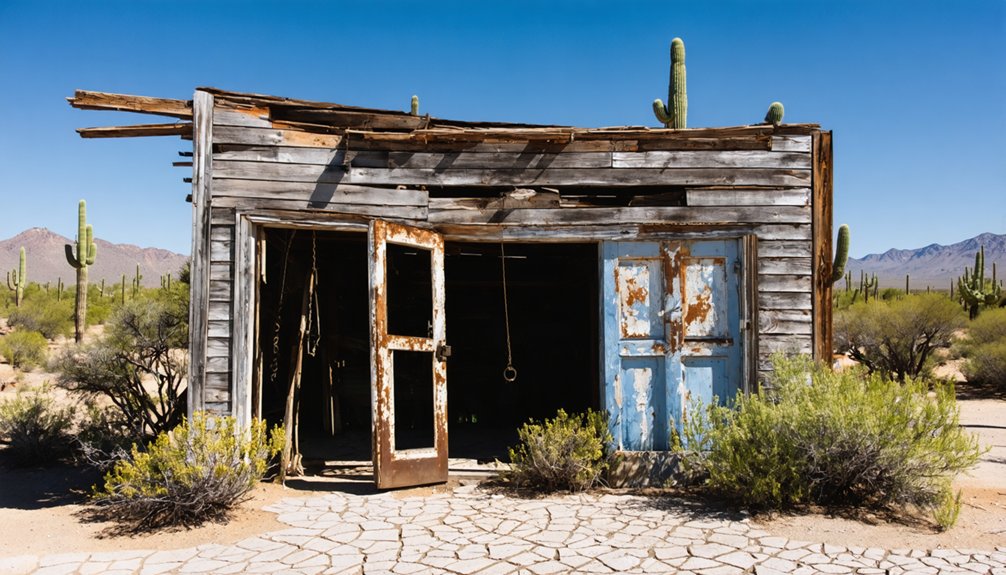
Several of Arizona’s ghost towns welcome visitors, each offering a distinct window into the state’s mining heritage.
You’ll find rich visitor experiences across multiple sites, each carrying deep historical significance.
Notable accessible locations include:
- Goldfield Ghost Town – Free entry with paid exhibits including mine tours and gold panning.
- Gold King Mine Ghost Town – Open near Jerome State Park, showcasing original mining equipment.
- Ruby Ghost Town – Private property tours preserve 25 original structures.
- Courtland Ghost Town – Structures currently planned for preservation and public tours.
Whether you’re exploring independently or joining guided tours, these sites let you directly engage with Arizona’s industrial past.
Each town represents distinct eras of copper, gold, and silver extraction that shaped the region’s development.
How to Plan Your Arizona Ghost Town Road Trip
With so many accessible sites documented above, organizing your route strategically will determine how much ground you can cover and how meaningfully you’ll engage with each location.
Cluster your visits geographically: Goldfield and Gold King Mine suit northern routes, while Ruby, Harshaw, and Courtland anchor southern excursions.
Swansea’s remote desert position demands dedicated road trip essentials—extra water, fuel, and high-clearance vehicles.
Allocate morning hours for ghost town photography, as low-angle light renders decaying adobe walls, rusted equipment, and preserved structures with superior tonal contrast.
Morning light transforms ghost town ruins into dramatic photographic subjects, casting shadows that reveal every weathered texture and rusted detail.
Courtland and Ruby particularly reward early arrivals.
Verify access conditions beforehand, since Ruby remains private property requiring advance arrangements.
Cross-reference Arizona State Parks resources for updated trail conditions, seasonal closures, and interpretive programming to maximize your historical engagement at each destination.
Why Arizona’s Ghost Towns Were Abandoned: and What Was Left Behind
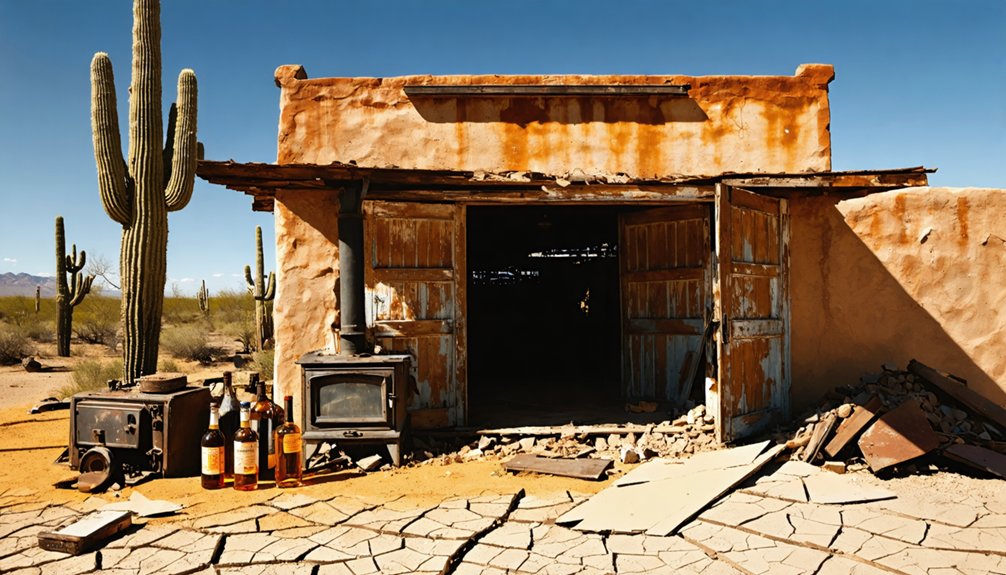
Each of Arizona’s ghost towns carries a distinct abandonment story, yet the underlying forces—ore depletion, collapsing commodity prices, and corporate withdrawal—repeat with striking consistency.
Economic decline didn’t strike randomly; it followed predictable patterns you can trace across every site:
- Ore veins exhausted beyond profitable extraction
- Silver and copper prices collapsed, erasing margins
- Advances in mining technology rendered small operations obsolete
- Corporate owners liquidated assets and withdrew entirely
What they left behind tells its own story. Ruby preserved 25 structures. Swansea’s 700-ton smelter still stands. Courtland’s concrete jail remains intact.
These weren’t accidents—remoteness and private ownership shielded them from demolition. You’re fundamentally walking through frozen economic autopsies, where infrastructure outlasted the capital that built it, offering unfiltered evidence of industrial ambition and its limits.
Frequently Asked Questions
Are There Guided Tours Available at Arizona’s Remote Ghost Towns?
You’ll find guided ghost tours at Goldfield Ghost Town, where you can explore its historical significance firsthand. Courtland’s structures are planned for public tours, while Gold King Mine’s mining heritage remains openly accessible near Jerome State Park.
What Safety Precautions Should Visitors Take When Exploring Ghost Town Ruins?
When exploring ghost town ruins, you’ll need proper exploration gear like sturdy boots and helmets. Stay vigilant with wildlife awareness, avoiding unstable structures, carrying water, and respecting posted boundaries to guarantee your adventurous freedom remains safe.
Can You Legally Take Artifacts or Souvenirs From Arizona Ghost Towns?
You shouldn’t remove artifacts from Arizona ghost towns. Doing so violates federal and state laws protecting artifact preservation and historical significance. Whether on private or public land, you’re legally obligated to leave all remnants undisturbed for future generations.
Are Arizona Ghost Towns Accessible by Standard Vehicles or Require 4WD?
Like a fork in the desert road, accessibility varies. Goldfield’s paved Apache Trail welcomes standard vehicles, but Ruby’s and Harshaw’s rugged road conditions demand 4WD. You’ll want to research vehicle recommendations before chasing your freedom through Arizona’s remote ghost towns.
What Is the Best Time of Year to Visit Arizona Ghost Towns?
Spring and fall offer the best months to explore Arizona’s ghost towns, as you’ll encounter mild weather conditions that make trekking through remote sites like Swansea or Ruby both comfortable and historically immersive.
References
- https://www.youtube.com/watch?v=_OusTvk8NxQ
- https://goldkingmineghosttown.com
- https://www.visittucson.org/blog/post/8-ghost-towns-of-southern-arizona/
- https://www.arizonahighways.com/article/arizona-ghost-towns
- https://www.atlasobscura.com/itineraries/these-8-arizona-ghost-towns-will-transport-you-to-the-wild-west
- https://en.wikipedia.org/wiki/List_of_ghost_towns_in_Arizona
- https://goldfieldghosttown.com
- https://www.tripadvisor.com/Attractions-g28924-Activities-c47-t14-Arizona.html
- https://azoffroad.net/ghost-towns