
If you’re planning a ghost town road trip, Ellendale, Oregon is worth tracking down. Founded in 1845 as a flour mill community near Dallas, it briefly thrived before a devastating 1871 fire and failing water supply left it abandoned. Today, nature has reclaimed nearly everything, making it a hauntingly quiet stop in Polk County. Pair it with nearby ghost towns like Eola, and you’ve got a fascinating day trip — and there’s much more to uncover ahead.
Key Takeaways
- Ellendale, Oregon, is located approximately 2.5 miles outside Dallas, making it an easy day trip with Dallas serving as a convenient base camp.
- Almost no visible structures remain, so visitors should set realistic expectations and prepare for open terrain exploration across a reclaimed landscape.
- Spring and early fall offer the best conditions, with mild temperatures, manageable roads, and softer natural light ideal for photography.
- Pack essentials including a charged phone, map, and camera, as the area lacks formal parking or preserved infrastructure for visitors.
- Pair Ellendale with nearby ghost towns like Eola and Dallas attractions to create a fuller, more rewarding Polk County road trip experience.
What Made Ellendale, Oregon a Ghost Town?

Once a thriving mill community, Ellendale, Oregon lost its footing when two devastating forces converged: a catastrophic mill fire in 1871 and the failure of its water supply.
Founded in 1845 by James O’Neal, Ellendale history stretches back to ambitious beginnings — a flour mill, then a woolen mill employing 20 skilled workers from England and Scotland.
Ellendale’s roots run deep — a flour mill, a woolen mill, and 20 skilled hands shaping Oregon’s frontier from 1845.
When the fire struck, nobody rebuilt. Without water powering its economy, settlers saw no reason to stay.
Roads shifted, opportunities vanished, and people followed both elsewhere. That departure sealed Ellendale’s ghost town significance — it’s a raw snapshot of how quickly frontier communities could rise and collapse.
You’re not just visiting an abandoned place; you’re standing inside a story about resilience, risk, and the unforgiving nature of 19th-century Oregon life.
How Ellendale Went From Flour Mill Town to Forgotten
When James O’Neal founded Ellendale in 1845, he built the town’s identity around a flour mill powered by a reliable water source, drawing settlers and workers to Polk County’s promising frontier.
By 1864, the community had grown ambitious enough to incorporate the Ellendale Mill Co. and construct a woolen mill staffed by 20 skilled workers, mostly from England and Scotland.
You can trace the town’s unraveling to a single catastrophic mill fire in 1871, which, combined with failing water supplies and shifting roads, stripped Ellendale of its economic backbone and pushed its residents to seek opportunities elsewhere.
Mill Town Origins
Tucked along a reliable water source in Polk County, Ellendale didn’t start as a ghost town — it started as a working flour mill settlement founded by James O’Neal in 1845. The water source wasn’t accidental; O’Neal specifically chose this location because it could power a flour mill, giving the settlement immediate economic purpose.
The town even earned its name from Ellen Lyon, wife of Judge R. Lyon, grounding it in real community identity. By 1864, the mill industry expanded when investors incorporated the Ellendale Mill Co. to operate a woolen mill, staffed by roughly 20 skilled workers from England and Scotland.
That growth carried genuine historical significance — Ellendale briefly thrived as a self-sustaining frontier community before circumstances beyond its control began pulling it apart.
Decline And Abandonment
What looked like a thriving frontier community began unraveling in 1871, when a mill fire gutted the heart of Ellendale’s economy and left little reason to rebuild.
Economic shifts had already weakened the town’s foundation — roads changed, water sources failed, and the reliable current that once powered Ellendale’s flour and woolen mills simply couldn’t sustain operations.
Without those mills, workers packed up and moved toward better opportunities elsewhere.
Thomas Kay, once a worker here, eventually founded a successful woolen mill in Salem, taking Ellendale’s legacy with him.
The settlers who’d built this community followed survival instincts and scattered.
Today, you won’t find bustling historical landmarks marking Ellendale’s streets.
Instead, you’ll encounter quiet land holding the memory of a town that thriving conditions once created — and changing conditions erased.
How to Get to Ellendale From Dallas, Oregon
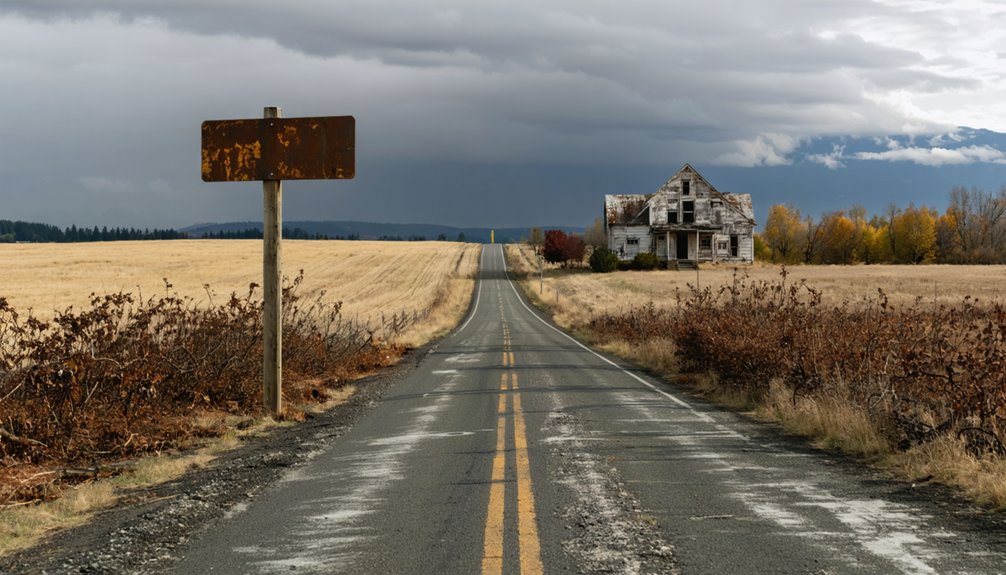
Reaching Ellendale from Dallas, Oregon takes just a few minutes — the ghost town sits roughly 2.5 miles to the west.
Head west out of Dallas along the county routes, and you’ll quickly find yourself tracing the same paths that 19th-century settlers once traveled. The drive is short, but the Ellendale history you’re stepping into carries real weight.
This was once a working community built around flour and woolen mills, alive with purpose before fire and failed water sources ended it all. Understanding that ghost town significance makes the journey feel less like a casual detour and more like a meaningful encounter with Oregon’s frontier past.
Pair your visit with a broader exploration of Dallas for a fuller picture of Polk County’s early roots.
Why Ellendale Leaves Almost No Visible Trace Today
When you search for Ellendale today, you’ll find almost nothing standing — and three forces erased it.
A devastating mill fire in 1871 destroyed the community’s economic heart, and without the mill, the water source that once made the location valuable ultimately failed, stripping away any reason to rebuild.
As roads shifted and redirected settlers toward more promising destinations, Ellendale quietly emptied, leaving behind little more than a name on Oregon’s ghost town list.
Mill Fire Erased History
The mill fire of 1871 didn’t just burn down a building — it erased the economic heart of Ellendale. When the flames consumed the woolen mill, they took with it the town’s primary reason for existing. Nobody rebuilt it. That decision sealed Ellendale’s fate faster than any gradual decline ever could.
The mill fire’s historical significance becomes clear when you consider what the structure represented — jobs, commerce, and community identity. Without it, settlers had no anchor keeping them there. They packed up and moved toward better opportunities, leaving behind land that nature quietly reclaimed over the following decades.
When you visit today, you’re standing in a place where one night of fire reshaped an entire community’s destiny. That’s a powerful thing to contemplate.
Water Failure Killed Growth
Even before the 1871 fire dealt its final blow, Ellendale’s water supply had already begun failing — and without water, a mill town simply can’t survive.
Water shortages strangled operations long before flames consumed the woolen mill, leaving settlers with shrinking options and fading reasons to stay.
Economic shifts compounded the damage. Roads changed, trade routes bypassed Ellendale, and neighboring Dallas absorbed whatever commerce remained.
Workers scattered. Families relocated. The community that James O’Neal had carefully built around a reliable water source simply unraveled once that foundation disappeared.
You’ll find almost nothing standing today because Ellendale never recovered enough to rebuild.
Nature reclaimed what industry abandoned. When you visit, you’re fundamentally reading a landscape that records what happens when both resources and opportunity vanish simultaneously.
Roads Redirected Settlers Away
Roads didn’t just redirect travelers — they redirected destiny. When new routes bypassed Ellendale, settler motivations shifted fast.
Why stay where the roads don’t go? Opportunity followed infrastructure, and Ellendale simply wasn’t on the path anymore.
Road impacts reshaped the entire region’s growth patterns. Towns that earned a spot on major routes thrived. Those that didn’t, faded.
Ellendale fell into that second category, and settlers who’d once built lives there packed up and followed the trails that promised something better.
That’s why you’ll find almost no visible trace today. No preserved storefronts, no restored mills — just land that once hummed with purpose.
When you visit, you’re standing in a place that roads literally erased from the map.
Which Oregon Ghost Towns Are Closest to Ellendale?
Polk County alone holds two ghost towns worth noting on your Oregon road trip map — Ellendale and Eola, both listed among the state’s 256 documented ghost towns counted by historian Stephen Arndt.
Their ghost town geography places them within the same county, making them natural companions for a single day’s exploration. Oregon’s broader collection of over 200 abandoned settlements spans mining camps, lumber towns, and mill communities — each carrying its own historical significance rooted in 19th-century frontier life.
Ellendale fits that pattern precisely, rising and falling within decades. If you’re already driving west of Dallas to find Ellendale’s remnants, swinging through Eola adds depth to your trip without adding much distance.
Two ghost towns, one county, one road trip.
Best Time to Visit Polk County Ghost Towns
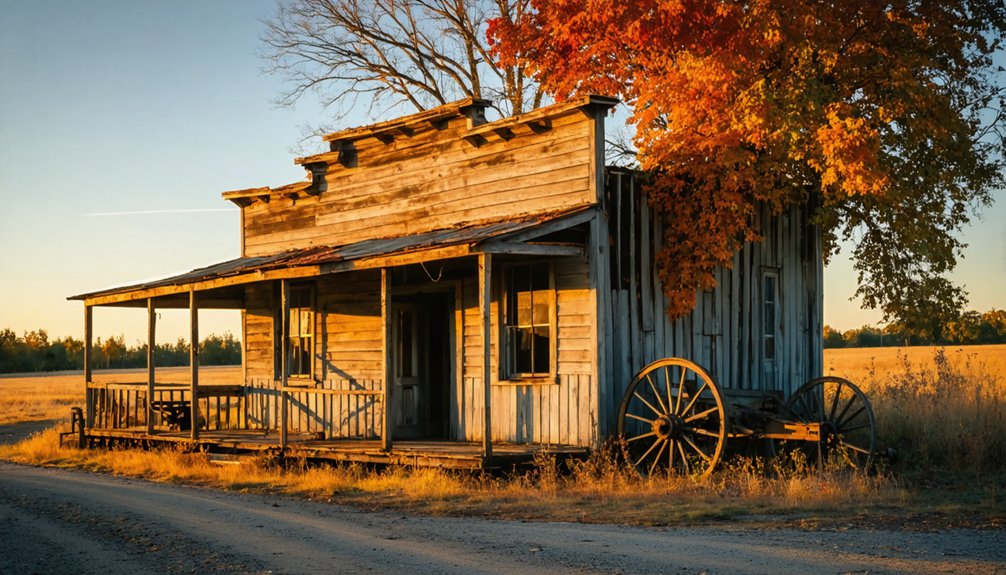
Once you’ve mapped out which ghost towns to visit, timing your trip makes all the difference.
Spring and early fall offer the best visiting season for exploring Polk County’s forgotten places. You’ll enjoy mild temperatures, manageable roads, and softer natural light that’s ideal for ghost town photography.
Spring and early fall bring mild temps, open roads, and soft golden light—perfect for capturing Polk County’s forgotten places.
Summer visits work too, but afternoon heat can make outdoor exploration less comfortable.
Winter rains turn rural county routes muddy and difficult to navigate, so you’ll want to avoid those months if possible.
Morning light hits remnants and landscapes beautifully, giving your photos depth and atmosphere.
Pack your camera, arrive early, and give yourself plenty of daylight hours to explore.
Ellendale rewards patient, unhurried visitors who take time to absorb its quiet, layered history.
What to Know Before You Drive Out to Ellendale
Before you load up the car and head west from Dallas, there are a few practical things worth knowing about Ellendale. This ghost town sits roughly two and a half miles outside Dallas in Polk County, but don’t expect signage guiding you there.
No preserved structures or formal parking areas exist, so you’re fundamentally exploring open terrain.
Ellendale’s historical significance lies in its story rather than its scenery. Founded in 1845, it thrived briefly around a flour mill and woolen operation before fire and failing water sources ended it.
Come prepared with a map, charged phone, and realistic expectations. Ghost towns like Ellendale reward curious, self-directed travelers who appreciate history without hand-holding.
Pair your visit with nearby Dallas for a fuller, more satisfying day trip.
Why Dallas, Oregon Makes the Perfect Ghost Town Base Camp
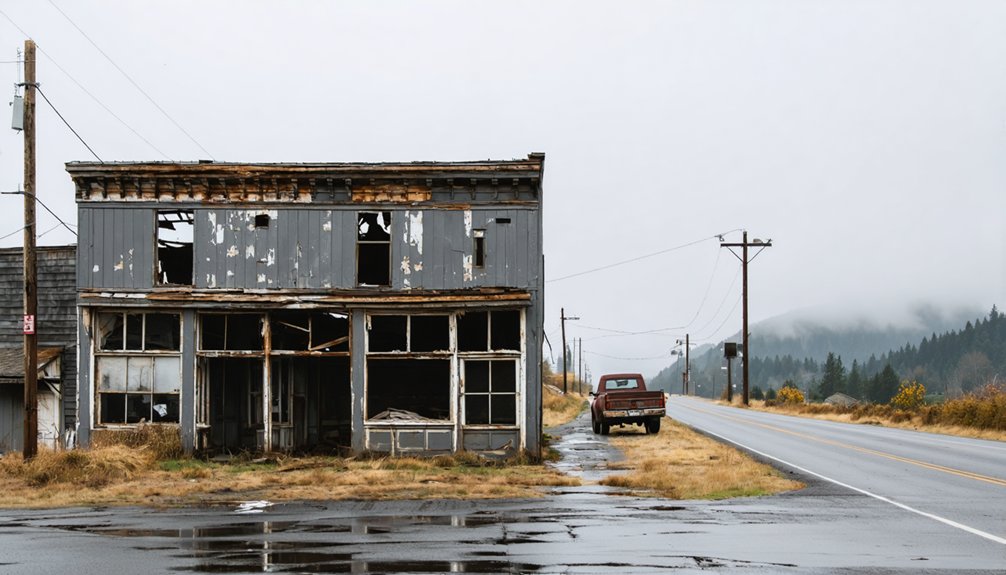
After you’ve squared away your expectations for Ellendale, Dallas, Oregon becomes your natural launching pad for the whole excursion. You’re only 2.5 miles away, which means you can explore the ghost town and still return to town for a decent meal and a comfortable bed.
Dallas Attractions give you solid reasons to linger beyond the ghost town itself. Local shops, restaurants, and Polk County’s scenic countryside reward travelers who slow down and look around.
You’re not locked into a rigid itinerary here — that freedom is exactly the point.
Ghost Towns like Ellendale rarely offer amenities, so having Dallas nearby removes the logistical headaches. Use the town as your base, fuel up, gather supplies, and head west whenever you’re ready to chase history.
Frequently Asked Questions
Who Was Ellen Lyon, and Why Was the Town Named After Her?
Ellen Lyon’s legacy lives on in Ellendale’s town naming origins — she married Judge R. Lyon, and you’ll find her story fascinating, as founders honored her by naming this once-thriving Oregon community after her.
How Many Workers Originally Staffed the Ellendale Woolen Mill?
Ready to explore mill history? The Ellendale woolen mill originally staffed 20 workers, mostly from England and Scotland, driving wool production forward. You’d be amazed how such a small, dedicated crew built this remarkable pioneer operation!
Did Thomas Kay Become Famous After Leaving Ellendale’s Woolen Mill?
Yes, Thomas Kay’s fame trajectory soared after Ellendale! His mill contributions there shaped his skills, and he later founded Salem’s renowned woolen mill, proving you can turn humble beginnings into lasting, inspiring legacy.
Is Ellendale Officially Listed Among Oregon’s 200-Plus Ghost Towns?
Yes, you’ll find Ellendale officially listed among Oregon’s 200-plus ghost towns, solidifying its ghost town significance. Historian Stephen Arndt counted 256 total, and Ellendale stands proudly among Polk County’s recognized historical landmarks, awaiting your adventurous exploration.
What Caused the Devastating Ellendale Mill Fire of 1871?
While records don’t pinpoint an exact cause, the 1871 mill fire’s historical impact was devastating — you’d watch flames swallow Ellendale’s heartbeat, and without rebuilding, the town’s freedom to thrive vanished forever into Oregon’s ghost town history.
References
- https://offbeatoregon.com/s1304x-wpa-gibbs-mcdaniel-ellensburg.html
- https://en.wikipedia.org/wiki/List_of_ghost_towns_in_Oregon
- https://oregonoutdoorfamily.com/golden-oregon-a-ghost-town/
- https://www.pdxmonthly.com/travel-and-outdoors/2025/10/oregon-ghost-towns-history
- https://www.armuseum.com/articles/road-trip
- https://kids.kiddle.co/Ellendale
- https://www.youtube.com/watch?v=i48EmIvqH3c