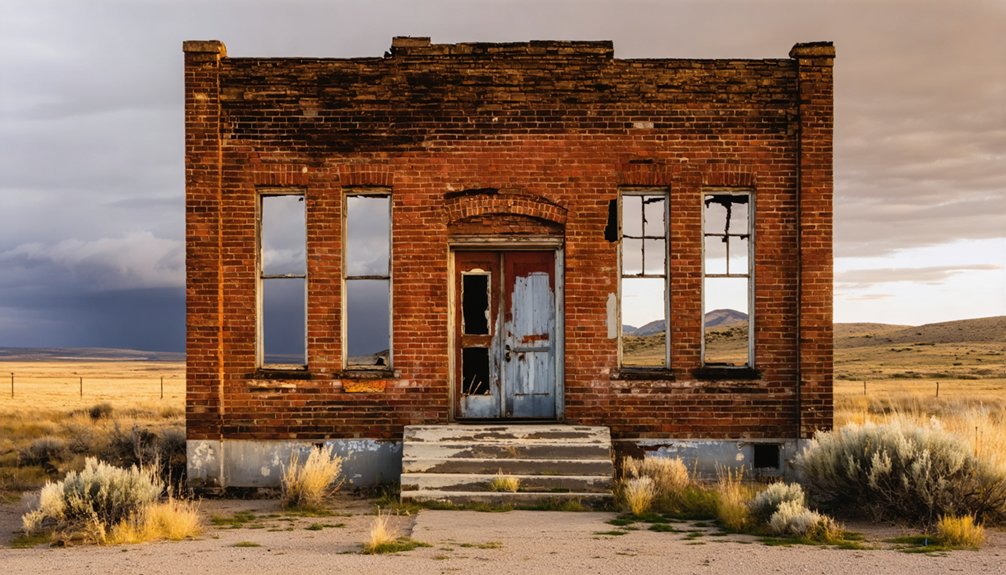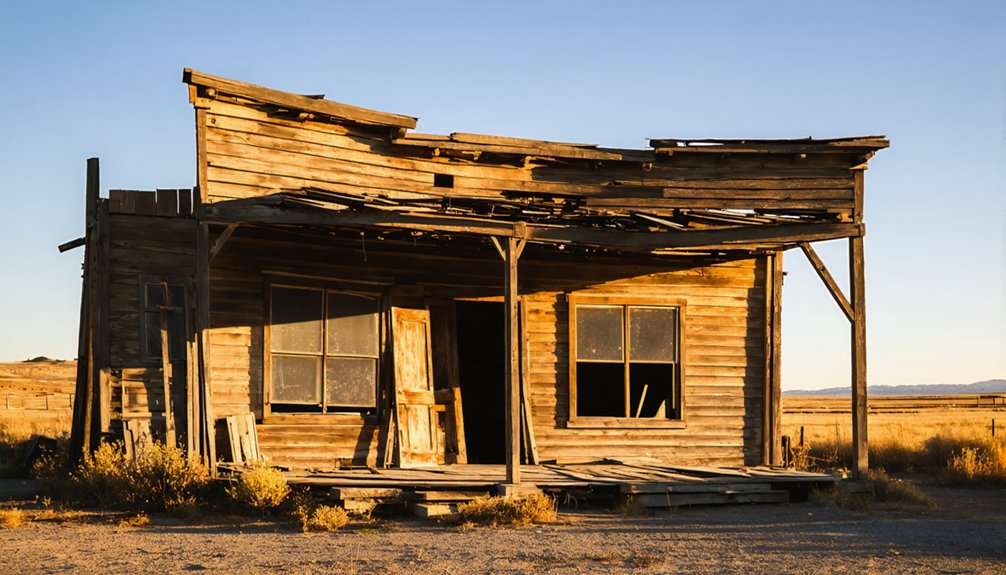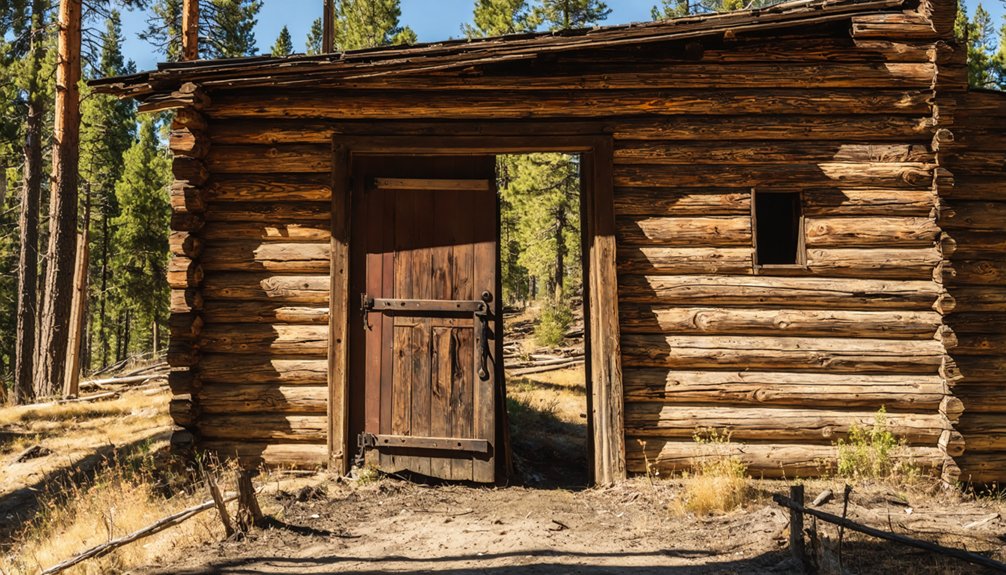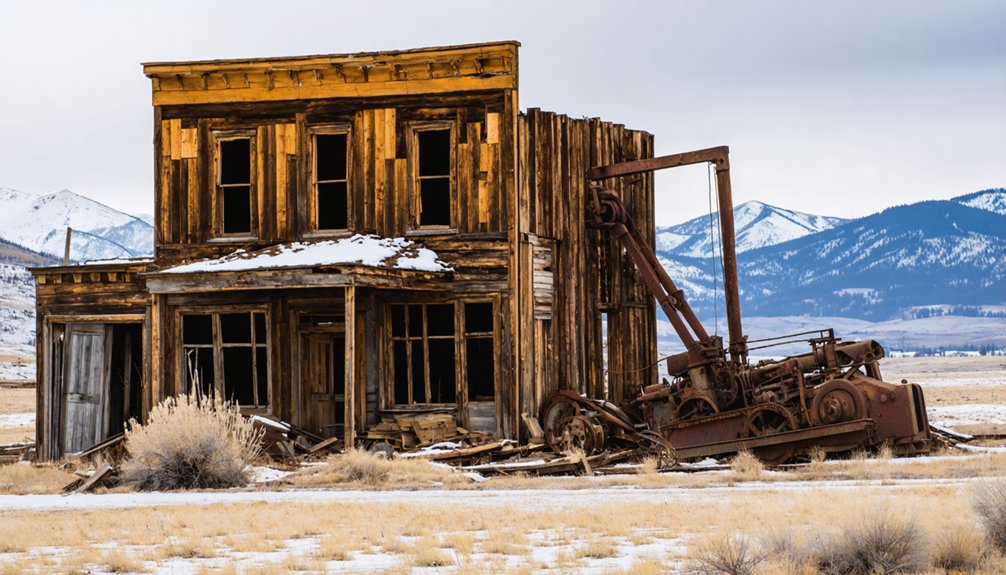
Idaho’s mining ghost towns are physical records of a gold and silver rush that exploded across remote mountain terrain starting in 1862, then collapsed just as fast once the ore ran out. You’ll find dozens of abandoned settlements scattered across the state, from Silver City’s 75 preserved structures to Central Idaho’s Custer, Bonanza, and Bayhorse ruins. Each site tells a different story about boom, bust, and survival—and there’s far more to uncover.
Key Takeaways
- Idaho’s mining ghost towns originated from gold and silver strikes beginning in 1862, attracting prospectors to remote regions.
- Silver City once had 2,500 residents and 75 businesses, with approximately 75 original structures still standing today.
- Central Idaho towns like Custer, Bonanza, and Bayhorse preserve original buildings and mining equipment from the 1870s silver rush.
- Northern Idaho towns including Pierce, Murray, Eagle City, and Pritchard are linked to early gold rushes with varying preservation.
- Visitors should carry supplies, verify access routes, avoid unstable structures, and respect legally protected relics when exploring these sites.
Why Idaho’s Mining Boom Left So Many Ghost Towns Behind
Idaho’s mining boom was as explosive as it was temporary. When gold and silver strikes pulled thousands into remote valleys during the 1860s and 1870s, entire towns materialized almost overnight.
You’ll find that most mining legends weren’t built on sustainable economies — they were built on extraction. Once the ore thinned, capital evaporated, and populations collapsed just as fast as they’d formed.
What remained became ghost town legends, frozen evidence of ambition outpacing infrastructure. Without diversified industry, these settlements couldn’t survive the bust cycle that followed every boom.
Rail access was limited, winters were brutal, and markets were volatile.
Idaho’s geography compounded the problem. Remote mountain terrain that once promised mineral wealth later guaranteed isolation.
When the mines closed, there was simply no reason to stay.
How Idaho’s Ghost Towns Came to Be
Understanding why these towns collapsed clarifies the conditions that created them in the first place. Idaho’s ghost towns didn’t appear randomly — they followed a predictable pattern driven by resource discovery, rapid settlement, and eventual depletion.
Here’s what shaped their origins:
- Gold and silver strikes pulled prospectors into remote terrain starting in 1862, establishing the Boise Basin towns almost overnight.
- Mining equipment determined settlement scale — heavier machinery meant longer-term operations and larger populations.
- Boom cycles drove town legends of overnight wealth, attracting merchants, saloons, and permanent structures within months.
- Geographic isolation meant towns rose and fell entirely on ore value, with no secondary economy to sustain them.
You’re fundamentally reading the footprint of pure economic urgency frozen in time.
The Most Iconic Idaho Mining Ghost Towns
A handful of Idaho’s ghost towns stand apart from the rest — not simply because they survived, but because they preserved enough structural and historical evidence to tell a complete story. Silver City leads that list. At its peak, it held 2,500 residents, 75 businesses, and town architecture that still stands largely intact today — nearly 75 structures remain accessible.
Burke tells a different story through its lead, silver, and zinc operations, with mining equipment marking decades of industrial output until 1991.
Custer and Bonanza, nestled in central Idaho’s Salmon River mountains, offer relics from the 1870s silver rush. Each of these towns lets you read history directly from the landscape — no interpretation required, just evidence left in timber, stone, and rusted metal.
Silver City: Idaho’s Best-Preserved Ghost Town
Silver City doesn’t just survive as a ghost town — it functions as a working archive of Idaho’s gold and silver mining era. At its peak, it held 2,500 residents and 75 businesses.
At its peak, Silver City wasn’t a town — it was a working economy of 2,500 people and 75 businesses.
Today, nearly 75 structures remain standing, giving you direct access to authentic town architecture and mining equipment left behind after the boom collapsed.
Here’s what makes Silver City worth your time:
- Scale — 75 intact structures document an entire frontier economy
- Authenticity — original mining equipment remains on-site, unrestored
- Architecture — buildings reflect 1880s commercial and residential construction
- Accessibility — the site stays open to independent visitors
You’re not viewing a reconstruction here. You’re reading primary evidence of how Idaho’s mining economy built and abandoned itself.
Custer, Bonanza, and Bayhorse: Central Idaho’s Mining Ruins
Move further into central Idaho and the ghost town record shifts from silver and gold to a tighter cluster of Salmon River mountain settlements — Custer, Bonanza, and Bayhorse — each representing a distinct phase of the region’s late 1870s mining expansion.
You’ll find old buildings, mining equipment, and town legends embedded in landscapes that haven’t changed dramatically since abandonment. Custer and Bonanza emerged nearly simultaneously, their fates intertwined through shared geography and overlapping boom cycles.
Bayhorse, now recognized as a state historic site, preserves structural evidence that most comparable towns lost decades ago. These aren’t reconstructed destinations — they’re authentic remnants.
If you’re pursuing unfiltered frontier history rather than curated experience, central Idaho’s Salmon River ghost towns deliver exactly that kind of direct, unmediated connection to the past.
Pierce, Murray, and Burke: Northern Idaho’s Mining Towns
When you shift your attention to northern Idaho, you’ll find that Pierce, Murray, and Burke each represent distinct chapters in the region’s mining narrative.
Pierce stands as one of Idaho’s earliest gold discovery sites, while Murray and Eagle City emerged from the gold rush activity that swept through Shoshone County in the 1880s.
Burke, perhaps the most industrially significant of the three, operated as a major lead, silver, and zinc producer until 1991, leaving behind a concentrated record of hard-rock mining infrastructure you can still trace today.
Northern Idaho Mining History
Northern Idaho’s mining towns of Pierce, Murray, and Burke each carved out distinct identities during the region’s gold and silver rushes, yet they share a common arc of rapid growth and gradual decline. Advances in mining technology shaped extraction methods across all three sites, while ghost town legends have kept their histories alive for modern explorers.
Here’s what defines northern Idaho’s mining legacy:
- Pierce launched Idaho’s gold rush in 1860, attracting thousands almost immediately.
- Murray thrived briefly during the 1880s Coeur d’Alene gold excitement.
- Burke sustained lead, silver, and zinc production until 1991 through industrial-scale mining technology.
- Ghost town legends from these camps still draw visitors seeking unfiltered frontier history.
You’ll find these towns reveal Idaho’s raw, independent mining spirit.
Surviving Structures And Sites
Though time and nature have claimed much of what once stood in northern Idaho’s mining camps, Pierce, Murray, and Burke each retain physical evidence that anchors their histories to specific eras of extraction and settlement.
You’ll find that ghost town architecture here isn’t decorative—it’s documentary. Pierce holds Idaho’s oldest courthouse, a structure that predates statehood and connects you directly to the 1860 gold rush.
Murray preserves buildings tied to mining legends like Noah Kellogg, whose silver discovery reshaped the region.
Burke’s canyon setting once housed a town so compressed that the railroad ran through its hotel.
Each site lets you read the landscape as a primary source, tracing how geography, capital, and extraction shaped communities that’ve since emptied but haven’t entirely disappeared.
Which Idaho Ghost Towns Still Have Standing Buildings?
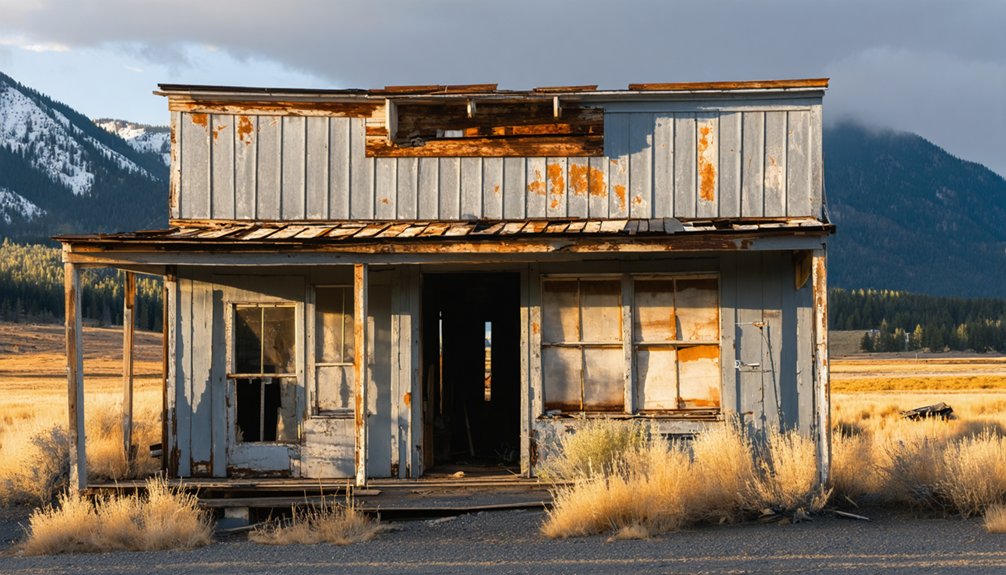
If you’re looking for Idaho ghost towns that still offer tangible evidence of their mining past, a few key sites stand out for their surviving structures. Silver City leads the list, retaining nearly 75 intact buildings from its peak as a gold and silver hub in the 1880s.
Central Idaho towns like Custer, Bonanza, and Bayhorse preserve old cabins and mining relics.
While northern Idaho sites such as Pierce and Murray still hold structural remnants tied to the region’s earliest gold rushes.
Silver City’s Preserved Structures
When you explore Idaho’s ghost towns, Silver City stands out immediately for what it’s managed to hold onto. Nearly 75 structures survive here, giving you direct contact with 1880s frontier infrastructure shaped by gold and silver extraction. Ghost town legends surrounding this site carry real archival weight.
What you’ll find preserved includes:
- Commercial buildings that once supported roughly 75 businesses at peak population
- Residential cabins reflecting the layout of a working mining community
- Mining technology remnants, including equipment tied to ore processing operations
- Original town structures dating to Silver City’s height of approximately 2,500 residents
You’re not reading about history here — you’re walking through it. Silver City remains one of the most structurally intact ghost towns in the entire state.
Central Idaho Standing Buildings
Silver City anchors southwestern Idaho’s ghost town record, but central Idaho holds its own inventory of standing structures worth tracking.
In the Salmon River mountains, Custer and Bonanza retain old buildings and mining relics that document the silver and gold rush era of the late 1870s. Bayhorse, now recognized as a historic site, preserves evidence of the mining methods that once drove its economy.
Ghost town legends surrounding these settlements aren’t just folklore — they’re supported by physical evidence you can still examine. Atlanta and Rocky Bar, dating to 1863–1864, also retain partial remains.
These sites give you direct access to central Idaho’s frontier record without requiring interpretation through reconstructed structures. What survives here is original, contextual, and worth your time.
Northern Idaho Surviving Sites
Northern Idaho’s ghost town record extends across Pierce, Murray, Eagle City, and Pritchard — sites tied to gold rushes that preceded many of the state’s more celebrated mining booms. You’ll find that town preservation varies markedly across these locations, yet each retains identifiable historical value through mining artifacts and structural remnants.
Key surviving elements worth examining:
- Pierce – Idaho’s earliest gold discovery site, retaining courthouse-era structures
- Murray – preserves commercial-era buildings from its 1880s peak
- Eagle City – shows partial structural remains linked to Coeur d’Alene gold activity
- Pritchard – contains accessible remnants connecting you to early placer mining operations
These northern sites represent an earlier extraction timeline than central Idaho’s silver towns, offering you a distinct archival lens into frontier settlement patterns.
Can You Actually Visit These Idaho Ghost Towns?
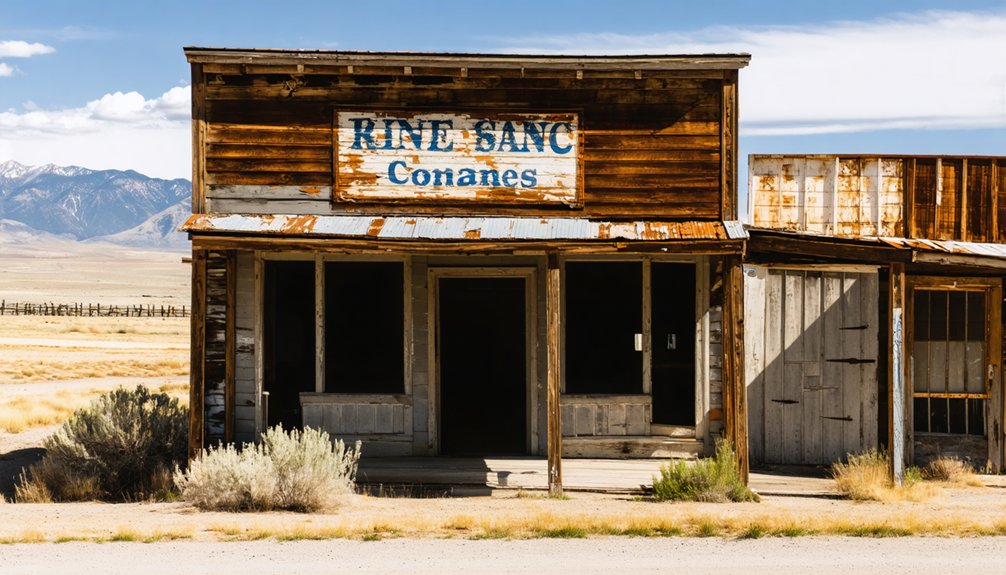
Many of Idaho’s ghost towns aren’t just relics you read about—they’re accessible destinations you can actually explore. Silver City lets you walk through nearly 75 standing structures, examine surviving mining equipment, and trace town legends tied to violent claim disputes and boom-era fortunes.
Bayhorse operates as a recognized historic site with guided access. Custer and Bonanza sit within the Salmon River Mountains, open to visitors willing to navigate remote terrain.
You’ll find varying conditions across these sites. Some preserve substantial architecture; others offer little beyond foundations and scattered debris. Roads to places like Atlanta and Rocky Bar demand high-clearance vehicles.
Access isn’t always guaranteed year-round due to weather. Research each location before you go—conditions, ownership, and public access permissions differ markedly from site to site.
Tips for Exploring Idaho Ghost Towns Safely
Before you set out for any Idaho ghost town, preparation separates a productive visit from a dangerous one. These sites contain unstable mining equipment and deteriorating town architecture that demand caution.
Preparation separates a productive ghost town visit from a dangerous one — unstable ruins demand caution before you arrive.
- Verify access routes — Roads to sites like Silver City close seasonally; confirm conditions before departing.
- Never enter abandoned structures — Town architecture from the 1800s looks solid but frequently isn’t; floors and rooflines fail without warning.
- Don’t touch or remove mining equipment — Relics are historically significant and legally protected under Idaho preservation statutes.
- Carry essential supplies — Remote locations lack cell service; bring water, maps, and a first-aid kit.
Treating these sites with disciplined respect ensures they remain accessible for independent-minded explorers who follow you.
Frequently Asked Questions
Were Any Idaho Mining Ghost Towns Ever Considered for Full Restoration?
Like fossils frozen in time, yes — you’ll find that historical preservation efforts and tourism development have driven partial restoration talks, though most towns remain intentionally preserved as authentic ruins rather than fully rebuilt replicas.
Did Any Idaho Ghost Towns Briefly Revive After Their Initial Mining Decline?
Yes, you’ll find that some towns did briefly revive. Burke stayed active until 1991, and Silver City saw tourist development spark renewed interest. Historical preservation efforts kept these communities alive long after their initial mining decline faded.
Are There Guided Tours Specifically Focused on Idaho Mining Ghost Towns?
You’ll find guided tours at sites like Silver City and Bayhorse, where you can explore historical artifacts and learn about mining techniques that shaped Idaho’s frontier era through immersive, analytically rich, historically contextualized experiences.
Have Any Idaho Ghost Towns Been Used as Film or TV Locations?
Like Tombstone on screen, you’ll find Idaho’s ghost towns haven’t confirmed major film roles, yet their historical preservation and surrounding wildlife habitats make Silver City and others naturals for cinematic exploration you’d genuinely treasure.
Do Any Idaho Ghost Towns Sit on Privately Owned Land Today?
Yes, some do sit on private land, and you’ll find ownership disputes have shaped access over time. Silver City, for instance, involves private holdings, so you’d want to verify access rights before visiting.
References
- https://visitidaho.org/things-to-do/ghost-towns-mining-history/
- https://en.wikipedia.org/wiki/List_of_ghost_towns_in_Idaho
- https://history.idaho.gov/wp-content/uploads/2018/08/0064.pdf
- https://www.reddit.com/r/Idaho/comments/1i941p2/ghost_towns_in_northern_idaho/
- https://foodtravelfamily.com/northern-idaho-ghost-towns/
- https://www.fs.usda.gov/r01/idahopanhandle/recreation/idaho-gold-and-ruby-mine-boulder-city-ghost-town
- https://idaho-forged.com/idahos-ghost-towns-eerie-yet-approachable/
- https://visitidaho.org/travel-tips/boom-or-bust-exploring-idaho-ghost-towns/
- https://www.startpackingidaho.com/blog/idahos-ghost-towns/
- https://en.wikipedia.org/wiki/Silver_City