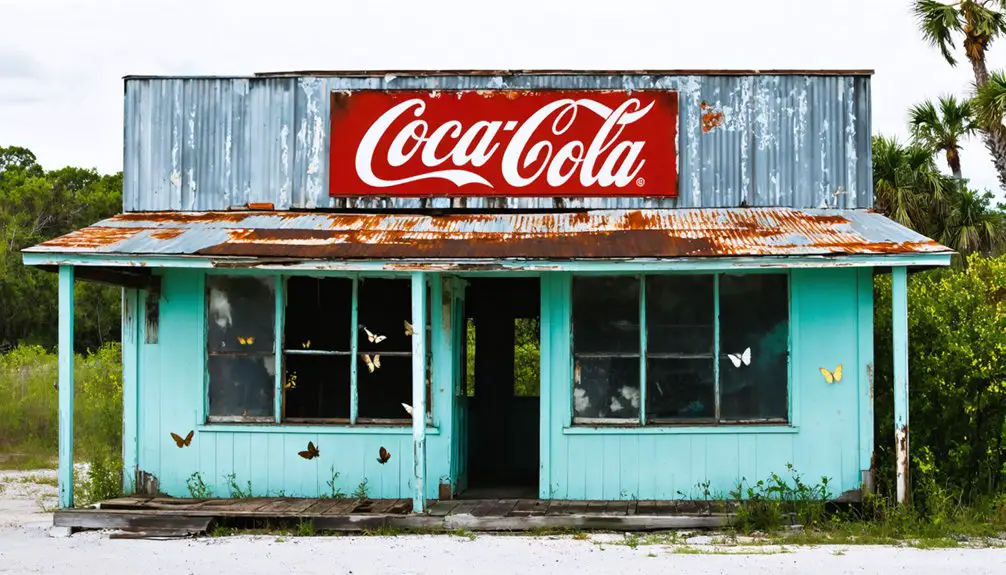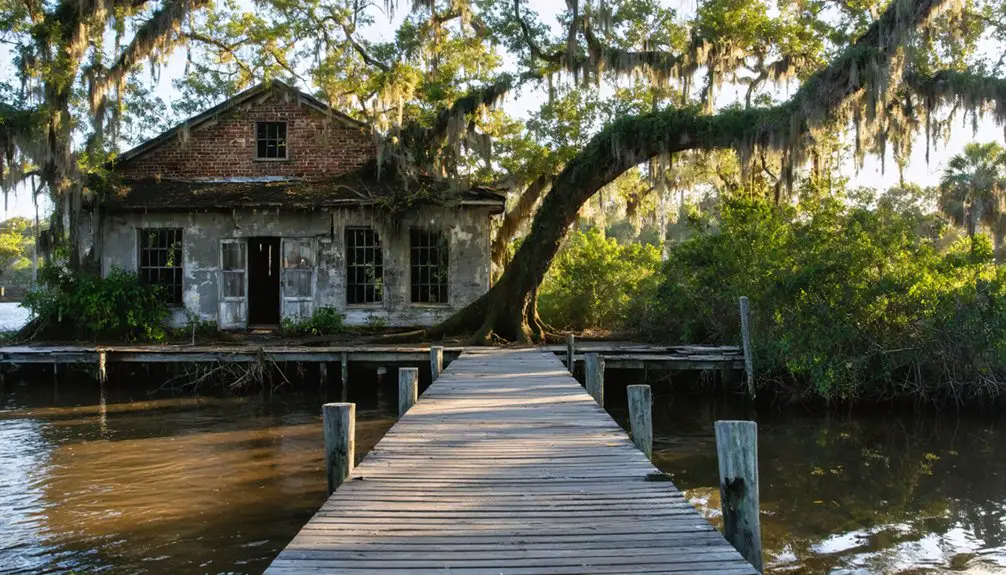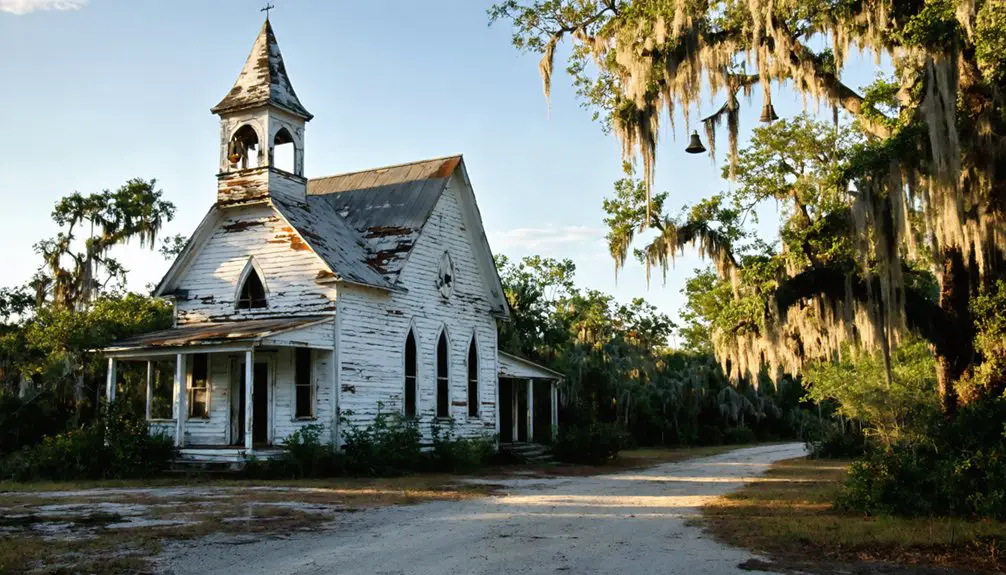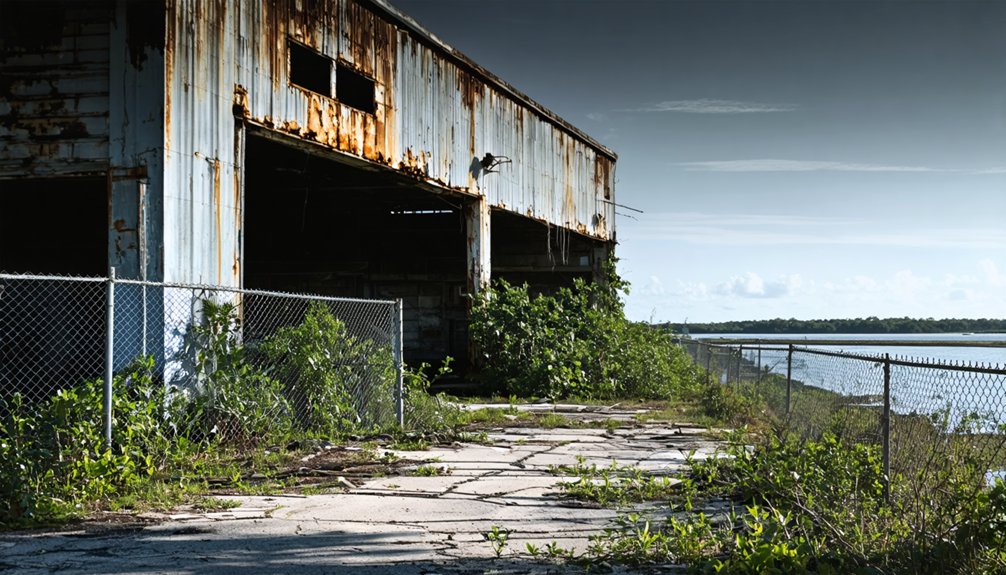
Planning a ghost town road trip to Bay Harbor, Florida, means tracing a community the paper mill quietly erased. You’ll follow US 98 out of Panama City, turn onto Everitt Avenue, and find an industrial landscape where a timber port once thrived. There’s no heritage marker waiting for you, no guided tour — just scattered remnants and a silence that speaks volumes. Keep going, and you’ll uncover everything you need to explore it right.
Key Takeaways
- Bay Harbor, once a thriving timber port in Bay County, Florida, is now an industrial site absorbed by the Panama City Paper Mill.
- Access the site via US 98 from Panama City, turning onto Everitt Avenue; no special vehicles are required for the journey.
- Public access is limited due to active industrial operations, so observe the site respectfully from public roads to avoid trespassing.
- Visit between fall and early spring for comfortable weather, as summer brings intense heat and humidity to the Florida Panhandle.
- Nearby ghost towns like Overstreet, Allanton, and Millville offer additional stops to enrich your regional road trip experience.
What Is Bay Harbor and Why Does It Qualify as a Florida Ghost Town?
Though it barely registers on modern maps, Bay Harbor once stood as a thriving port community in Bay County, Florida. Its identity was shaped by timber harvests and the rhythmic grind of a paper mill that kept the whole town breathing.
Bay Harbor barely breathes on modern maps — once a port town shaped by timber and the grind of industry.
Founded in the late 1800s, it grew into a genuine settlement before industry swallowed it whole.
Today, you’ll find urban decay where neighborhoods once hummed with daily life. The old post office is gone, demolished in the 1990s and replaced by a mill parking lot. A few homes still cling to the edges, quiet markers of what existed before.
Bay Harbor qualifies as a ghost town precisely because its industrial heritage consumed rather than preserved it — a community absorbed, not abandoned, by the machine it once served.
How Bay Harbor Went From Timber Port to Paper Mill Town
Bay Harbor’s identity didn’t begin with the paper mill — it began with the trees. In the late 1800s, you’d have found a thriving timber port here, where raw Florida hardwood moved through Bay County’s waterways and built real economic momentum. That community had names, neighbors, and a post office — the kind of place worth remembering.
Then came the shift. As timber gave way to industrial paper production, the settlement didn’t survive the transformation intact. The mill absorbed the land, the streets, and eventually the post office itself.
What once held community memory became factory property.
Historical preservation never stepped in to protect what remained. If you’re drawn to places where industry erased a town rather than a town erasing industry, Bay Harbor is exactly that story.
What Happened to Bay Harbor After the Mill Took Over?
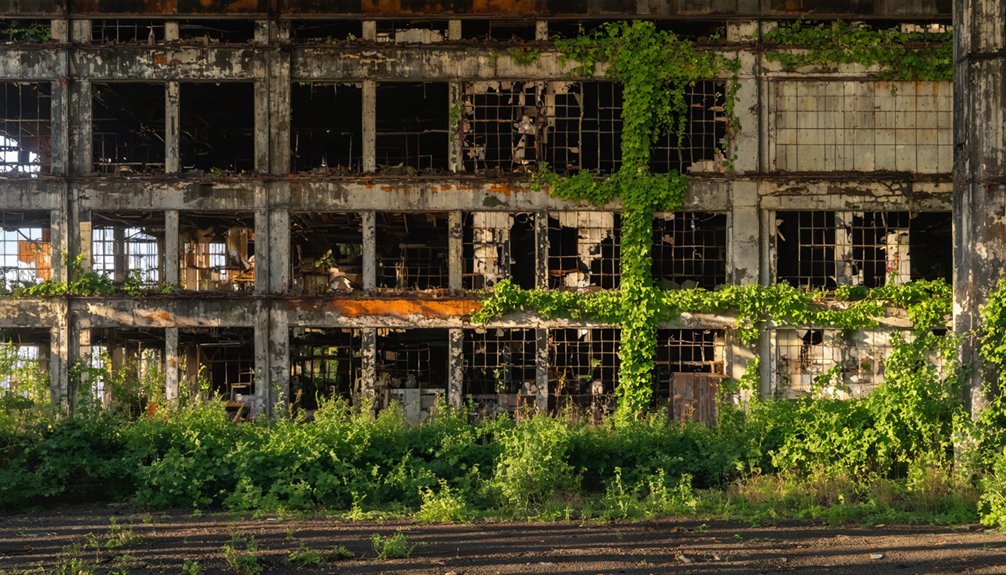
When you look at what’s left of Bay Harbor today, you’re really looking at what the mill didn’t need. The paper mill gradually consumed the community’s footprint, replacing homes and civic spaces with industrial infrastructure.
Until the town’s identity dissolved entirely into the property lines of a working facility. Even the old Bay Harbor Post Office — once a marker of a real, named place — came down in the 1990s, its site paved over into a mill parking lot.
Mill Consumed The Community
Once the mill took hold, Bay Harbor didn’t stand a chance. The industrial transformation swallowed what had been a genuine community — homes, neighbors, a post office, a shared identity.
You can feel the community nostalgia when you learn that the old Bay Harbor Post Office stood for decades before crews tore it down in the 1990s, replacing it with a parking lot for mill workers. That single detail tells the whole story.
What was once a thriving port settlement became absorbed acreage, folded into an industrial footprint without ceremony. A few homes still dot the edges, quiet survivors of a town that time traded for timber profits.
Bay Harbor didn’t fade — it got consumed, piece by piece, until the mill became the only story left.
Industrial Land Replaced Homes
What the mill took in people and memory, it replaced with pavement and infrastructure. Bay Harbor’s historical architecture didn’t survive industrial expansion. You’ll find no preserved streetscapes or heritage markers here — just working property absorbing what once existed.
Three losses define what happened:
- The old Bay Harbor Post Office, a keeper of community stories, was demolished in the 1990s.
- Its footprint became a paper mill parking lot.
- Homes that once housed mill families dwindled to just a few scattered structures.
You’re visiting a place where industry didn’t just outlast a town — it erased it. The community stories live now in local history records, not standing walls.
Bay Harbor reminds you that some places disappear not through abandonment, but through replacement.
What You Can Still See at Bay Harbor Today
When you pull up to Bay Harbor today, you won’t find a preserved historic district — you’ll find a working paper mill that’s swallowed nearly everything the town left behind.
A few scattered homes still stand near the old settlement area, quiet survivors of a community that once hummed with port activity and timber trade.
The industrial landscape dominates your sightline, making it harder to imagine the thriving neighborhood that existed here before the mill claimed it all.
Remaining Homes Near Settlement
How much of a ghost town can survive when industry swallows it whole? At Bay Harbor, the answer is humbling. A handful of homes still stand near the former settlement, quiet witnesses to a community the paper mill consumed. These remnants carry the full weight of historical preservation when no museum will.
When you visit, keep your eyes open for:
- Scattered residential structures tucked against mill property boundaries
- Subtle lot patterns hinting at former neighborhood layouts
- Landscape details that community memory keeps alive locally
You won’t find markers or guided tours. What you’ll find is raw, unfiltered history clinging to the edges of an industrial footprint. That honest, overlooked survival makes Bay Harbor worth the detour for anyone chasing genuine American stories.
Industrial Landscape Dominates Site
Step past the few surviving homes and the industrial landscape announces itself without apology. Massive mill infrastructure stretches across what was once a thriving port community, erasing most physical evidence of Bay Harbor’s former identity.
You won’t find interpretive signs or preserved storefronts here — industrial decline claimed those long ago. The old post office fell in the 1990s, replaced by a parking lot that workers navigate daily without knowing they’re crossing a community’s grave.
What remains speaks through absence rather than presence. You’re standing on community legacy converted into working property, where machinery hums where neighbors once gathered.
It’s a sobering stop for road trippers who understand that freedom sometimes means confronting uncomfortable truths about how progress swallows places whole.
How to Get to Bay Harbor From Panama City on US 98
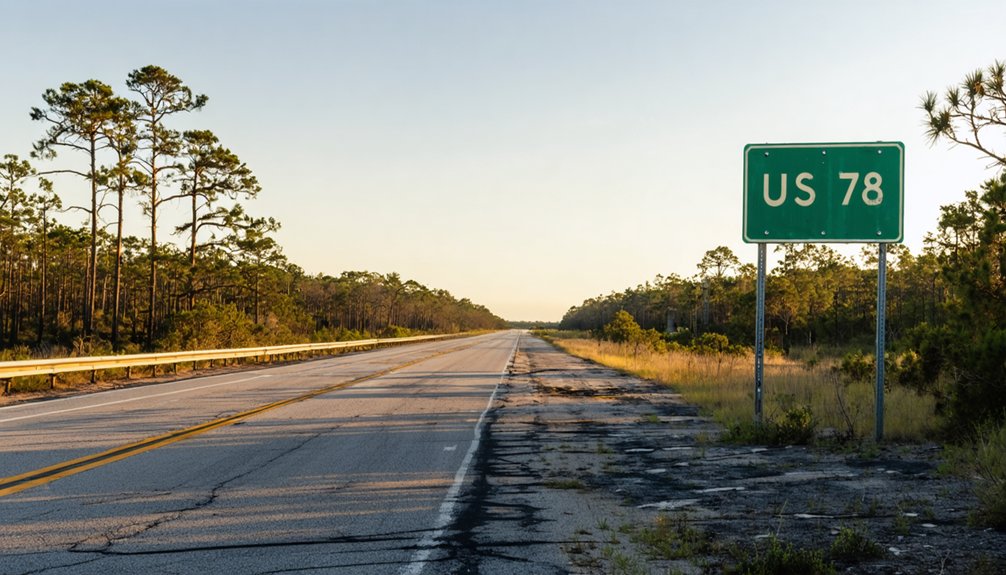
Reaching Bay Harbor from Panama City is a straightforward drive along US 98, a coastal highway that once carried workers and timber to this now-forgotten mill town. You’ll feel the weight of industrial history as modern Florida blurs past your windows.
Follow these three steps:
- Head west from Panama City on US 98, tracking the coastline.
- Turn onto Everitt Avenue, your gateway into the urban decay that replaced a thriving port community.
- Continue toward the Panama City Paper Mill property, where Bay Harbor once stood independently.
The road’s 2WD-friendly, so any vehicle handles it easily.
You won’t find a historic district or welcome sign — just working mill infrastructure where a named community used to breathe. That absence tells its own powerful story.
Do You Need a 4WD Vehicle to Reach Bay Harbor?
Unlike the rutted backroads leading to many of Florida’s forgotten settlements, Bay Harbor doesn’t demand a rugged vehicle — standard 2WD gets you there without drama. You’ll follow US 98 out of Panama City, turn onto Everitt Avenue, and roll straight into what was once a thriving port community whose historical significance shaped Bay County’s early economy.
The road itself feels almost too ordinary for a place carrying this much weight. Industrial transformation consumed Bay Harbor quietly — the post office fell in the 1990s, the mill swallowed the land, and the pavement stayed smooth. Your everyday car handles the journey fine.
What you’re really steering through isn’t rough terrain; it’s layered time, where a named community dissolved into working property without leaving much behind to mark its passing.
Can You Actually Walk Around Bay Harbor, or Is It Off-Limits?
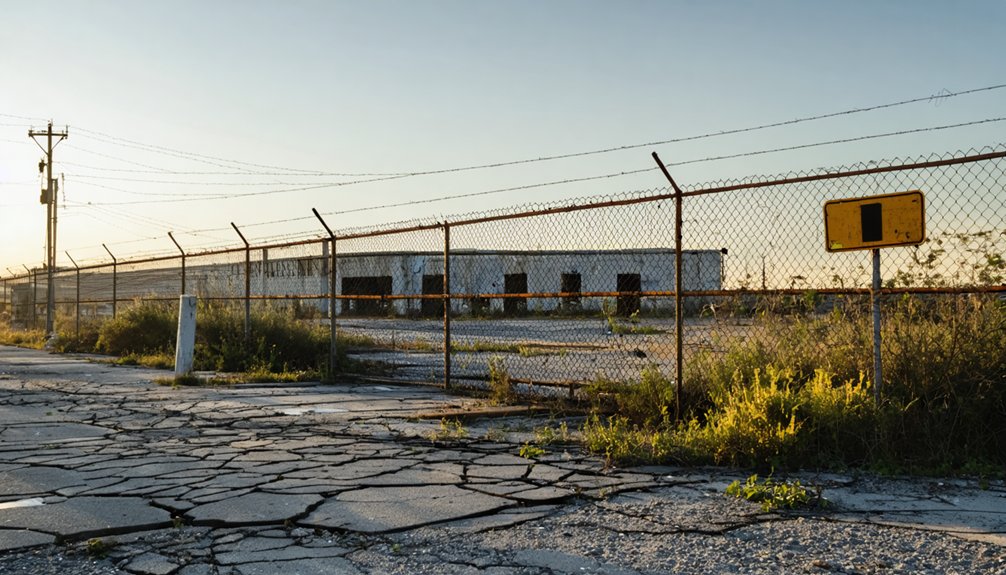
Getting there’s the easy part — what happens once you arrive is a different matter. Bay Harbor isn’t a preserved ghost town you can freely wander. It’s active industrial property, and that changes everything.
Getting there is simple. What you’ll find once you arrive is anything but.
Before you visit, keep these realities in mind:
- The Panama City Paper Mill controls most of the land, limiting public access considerably.
- Urban decay here isn’t photogenic ruins — it’s a working facility absorbing what little history remains.
- Environmental impact from decades of industrial use means this isn’t land you’ll casually explore on foot.
You can drive through, observe from public roads, and spot the few remaining homes. But don’t expect open gates. Bay Harbor rewards the curious traveler who respects boundaries while still chasing forgotten stories.
What Is the Best Time of Year to Visit Bay Harbor?
Since Bay Harbor’s ghost-town reference lists the best time to visit as simply *anytime*, Florida’s climate does most of the deciding for you. Summer heat and humidity can feel punishing, so fall through early spring gives you more comfortable conditions for walking the area and absorbing whatever local legends still cling to this industrial landscape.
Winter months keep the air crisp and the crowds nonexistent, which suits a site better experienced through quiet observation than tourist ceremony. You won’t find guided tours or displays of historical artifacts here.
What you’ll find instead is open road, an active paper mill, and a few surviving homes carrying decades of memory. Come when the weather cooperates, and let the place speak on its own terms.
Florida Ghost Towns Near Bay Harbor Worth Adding to Your Route
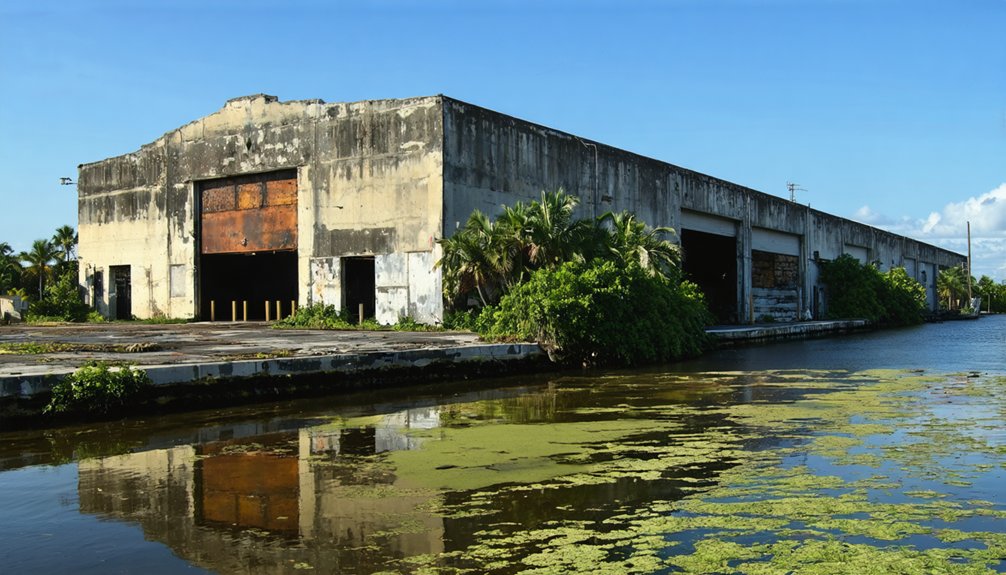
Bay Harbor rewards a visit, but Florida’s panhandle holds enough forgotten places that one stop rarely satisfies the curious traveler. Extend your route and chase the local legends embedded in these nearby ghost towns:
- Overstreet – A timber-era settlement swallowed by Bay County’s forests, where historic landmarks hint at once-busy sawmill life.
- Allanton – A former port community along St. Andrews Bay that thrived on trade before quietly disappearing into marsh and memory.
- Millville – Once a distinct industrial town, now absorbed into Panama City, carrying echoes of working-class ambition and waterfront commerce.
Each stop deepens your understanding of how Florida’s panhandle built itself on extraction, then moved on, leaving only fragments for those willing to look.
Frequently Asked Questions
Was Bay Harbor Ever Officially Incorporated as a Florida Municipality?
Like a campfire that never got named, Bay Harbor never achieved municipal incorporation or historical recognition — yet you’d feel its ghost in every rusted beam, reminding you some places lived freely outside official borders.
Are There Any Historical Photographs of Bay Harbor Available Online?
You won’t find many verified historical photographs online, but diving into ghost town legends and abandoned sites exploration communities may surface rare images locals have preserved, connecting you to Bay Harbor’s vanished, evocative past.
Is the Panama City Paper Mill Still Actively Operating Today?
Can industry truly outlast a community’s soul? The Panama City Paper Mill’s current operational status isn’t confirmed, but you’ll still find industrial relics marking its environmental impact — a haunting reminder of Bay Harbor’s lost freedom.
Did Bay Harbor Have a School or Church During Its Active Years?
The records don’t confirm a school or church, but you’d expect those abandoned structures once shaped daily life here. Local legends likely hold those missing details, waiting for free-spirited researchers like you to uncover them.
Are There Any Local Museums in Panama City Covering Bay Harbor’s History?
Surprise—no dedicated local museum exhibits spotlight Bay Harbor specifically! You’ll want to dig into historical archives availability at Panama City’s local libraries, where you can uncover nostalgic traces of this vanished mill community yourself.
References
- https://en.wikipedia.org/wiki/Bay_Harbor
- https://www.ghosttowns.com/states/fl/bayharbor.html
- https://en.wikipedia.org/wiki/List_of_ghost_towns_in_Florida
- https://www.facebook.com/PanamaCityNewsHerald/posts/economic-success-led-to-the-community-of-bay-harbor-in-bay-county-slowly-giving-/1563432105781978/
- https://fdc.com/blog/ghost-towns-in-florida/
- https://www.ghosttowns.com/states/fl/fl.html
- https://www.youtube.com/watch?v=s_lFGoAuiBE