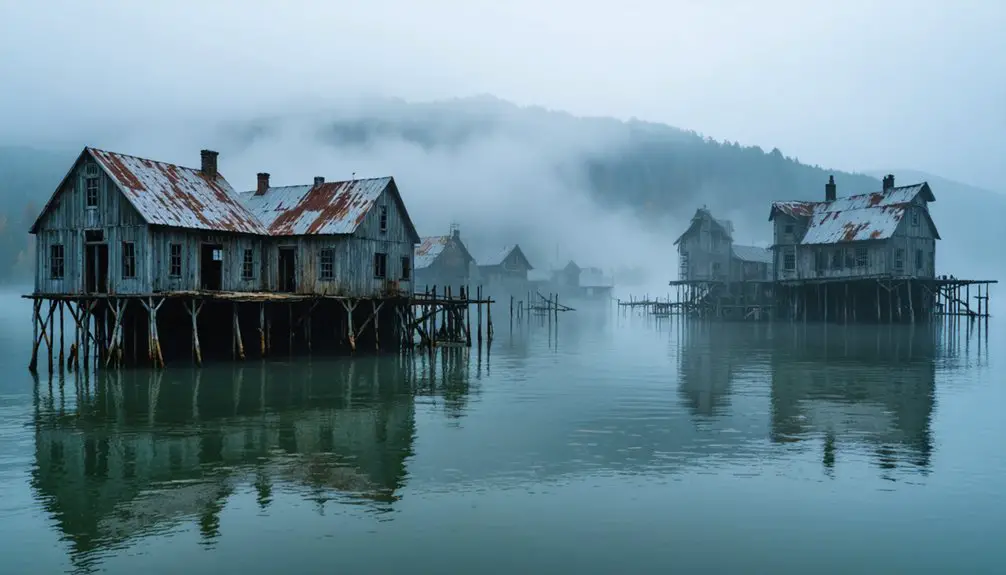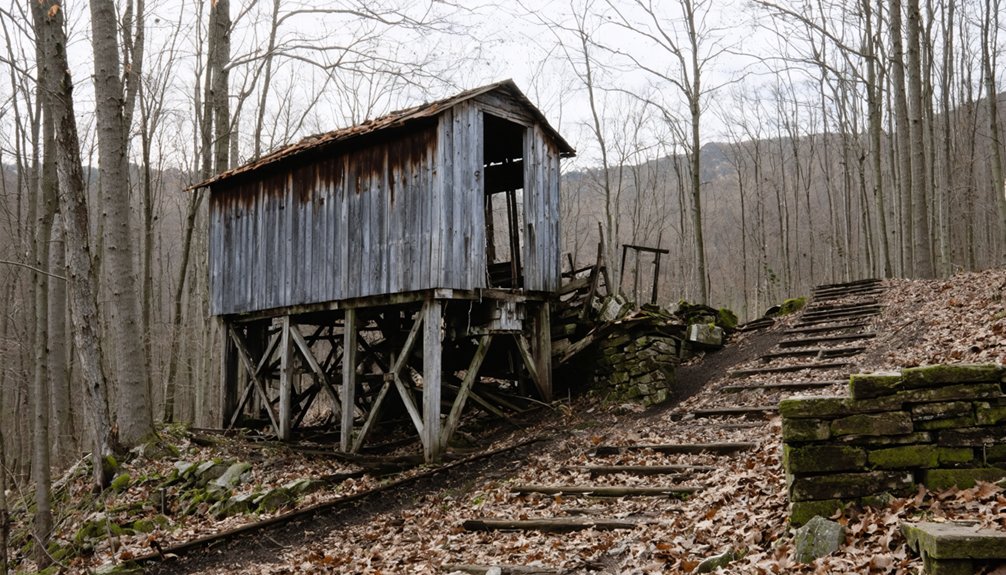
Tennessee’s mining ghost towns are scattered across the Appalachian corridor, Cumberland Plateau, and beyond, with over 2,272 vanished sites cataloging the state’s industrial past. You’ll find copper-scarred earth around Ducktown and Copperhill, coal-town remnants near Briceville and Tracy City, and preserved heritage sites like Elkmont. These communities followed a familiar pattern—resource discovery, rapid settlement, then collapse. The full story of Tennessee’s forgotten mining landscape, region by region, runs deeper than you’d expect.
Key Takeaways
- Tennessee has over 2,272 cataloged vanished or historical mining sites, scattered across Eastern Appalachian, Cumberland Plateau, and western regions.
- Key mining ghost towns include Briceville, Jellico, and Tracy City (coal) and Ducktown and Copperhill (copper).
- Copper smelting near Ducktown caused severe environmental damage, including toxic runoff, acidic soil, and heavy-metal contamination that persists today.
- Some sites, like Elkmont and Cades Cove, are preserved as national or state parks, maintaining architecture and mining artifacts.
- Visitors can explore accessible sites like the Ducktown Basin Museum while practicing responsible, low-impact exploration and supporting preservation efforts.
What Makes a Tennessee Town a Mining Ghost Town?
When a Tennessee mining town‘s primary industry collapsed—whether from exhausted ore, failed railroads, or government displacement—the community typically followed it into decline.
You’ll find that ghost-town status rarely means complete abandonment; it often signals partial depopulation, with cemeteries, foundations, or historic districts marking what once stood.
Settlement planning in early Tennessee mining communities was deliberately utilitarian—towns existed to serve extraction, not to endure beyond it.
When mining technology became obsolete or unprofitable, no economic foundation remained to sustain residents.
Communities built around copper in Ducktown or coal in Briceville depended entirely on industrial continuity.
Tennessee recognizes ghost towns, mining camps, townsites, and railroad stops under this broader category, acknowledging that decline takes many forms and that historical significance outlasts the industries that originally shaped these places.
How Tennessee’s 2,272 Vanished Sites Reveal a Hidden Mining Past
When you examine Tennessee’s ghost-town record, the scale is striking: one statewide resource catalogs 2,272 vanished or historical sites, yet only 2 carry fully surveyed records.
That documentation gap means you’re looking at a largely unmapped legacy, one in which mining camps, coal towns, and copper settlements remain only partially understood.
Mining’s footprint across the Cumberland Plateau and Appalachian highlands runs far deeper than the handful of well-known names suggest.
Scale Of Disappearance
Though the count might seem abstract at first, 2,272 vanished or historical sites across Tennessee tells you something concrete: the state’s mining past didn’t fade quietly—it disappeared at scale.
Urban decay didn’t strike these communities gradually—it arrived swiftly once extraction became unprofitable. Economic decline followed mine closures like a shadow, hollowing out towns that had once supported entire families and regional supply chains.
You’re looking at settlements that built schools, stores, and rail depots, then lost all of it within a generation. Only 2 of those 2,272 sites carry fully surveyed records, meaning most of this history remains buried beneath overgrowth and incomplete archives.
That documentation gap isn’t a minor oversight—it’s a signal that Tennessee’s industrial erasure runs far deeper than most people recognize.
Documentation Gaps Remain
Behind those 2,272 vanished sites lies a documentation crisis that shapes what you can actually know about Tennessee’s mining past. Only 2 of those sites carry full survey records, leaving the overwhelming majority undescribed and unverified.
Urban decay consumed physical evidence before researchers arrived, and economic decline scattered the descendants who might’ve preserved oral histories. You’re fundamentally exploring a landscape where absence defines the record.
Many mining camps existed informally, with no municipal charters, no newspaper coverage, and no property deeds connecting them to broader regional history. That invisibility compounds the research challenge.
Independent historians, regional archivists, and digital volunteers are slowly closing these gaps, but progress remains uneven across counties. Until systematic surveying expands, Tennessee’s mining ghost town record stays incomplete by design rather than by accident.
Mining’s Lasting Footprint
Even with incomplete records, Tennessee’s 2,272 vanished or historical sites reveal a mining past far larger than the state’s preserved landmarks suggest. You’ll find that ghost town preservation efforts vary widely — some sites survive as heritage districts or parks, while others exist only in mining folklore and scattered local records.
Eastern Tennessee’s coal and copper regions carry the heaviest concentration of this buried history, but the pattern spreads statewide. What you’re looking at isn’t simply abandoned infrastructure; it’s evidence of entire communities shaped by extraction economies that collapsed when ore ran out or railroads rerouted.
Recognizing this footprint matters because it reframes Tennessee’s landscape as one built — and repeatedly unmade — by industrial ambition, giving you a more complete and honest picture of regional history.
How Coal and Copper Built Tennessee’s Forgotten Communities
When you trace Tennessee’s mining history, two resources stand out as the primary engines of community formation: coal and copper. Coal extraction concentrated settlements across the Cumberland Plateau, giving rise to towns like Briceville, Jellico, and Tracy City during the 19th and early 20th centuries.
Copper mining carved a different path through the Appalachian highlands, where Ducktown and Copperhill emerged as industrial anchors before environmental damage and market shifts rewrote their futures.
Coal Fueled Early Settlement
Long before Tennessee’s mountain hollows became hiking trails and heritage parks, coal and copper pulled people into the ridges and valleys of the Appalachians and the Cumberland Plateau. You can trace early settlement patterns directly to mineral deposits — where ore or coal seams appeared, communities followed fast.
Towns like Briceville, Jellico, and Tracy City grew because coal made them necessary, not because planners chose their locations carefully. Economic shifts, however, proved unforgiving. Once seams thinned or markets collapsed, industrial decline stripped these towns of their purpose almost overnight.
Workers left, businesses closed, and infrastructure crumbled without the revenue that extraction once guaranteed. What coal built, coal’s exhaustion undid — leaving behind place names, cemetery markers, and scattered foundations as the only legible record of what once stood.
Copper Mining Shaped Communities
Copper carved a different kind of scar into Tennessee’s landscape than coal did. In the Ducktown Basin, aggressive mining techniques stripped surrounding forests and leached sulfur dioxide into the soil, leaving barren terrain visible for decades.
You can still trace that industrial footprint through what remains of Ducktown and Copperhill, where settlement architecture reflected a community built for permanence — company housing, smelting infrastructure, and civic institutions rose alongside the mines.
When copper profits collapsed and environmental costs mounted, those structures lost their purpose. Unlike coal camps that vanished quietly, copper towns left a visible, chemical legacy that reshaped the land itself.
Today, you’re looking at communities that didn’t simply fade — they were chemically transformed alongside the industries that originally defined them.
The Boom-and-Bust Cycles That Emptied Tennessee’s Mining Towns
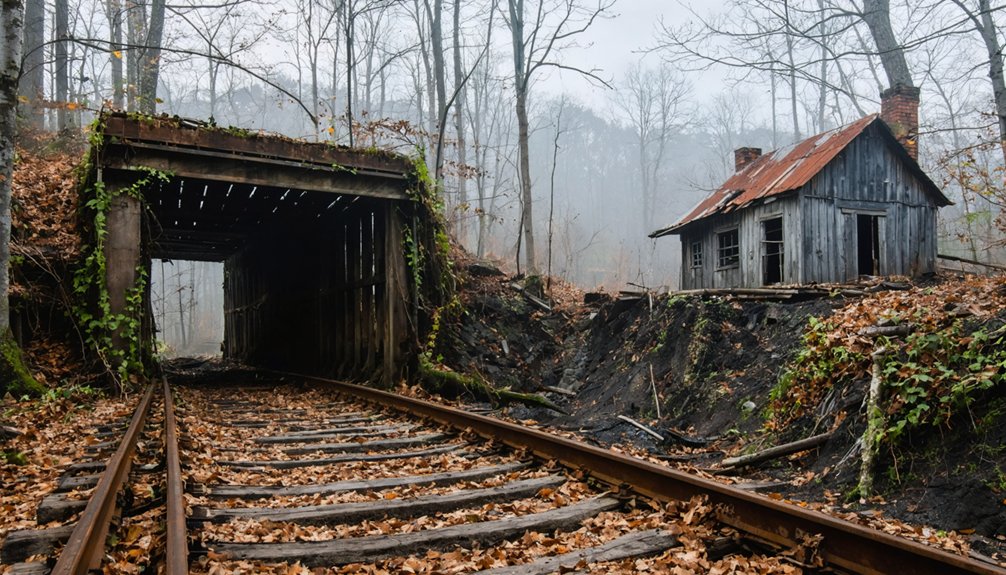
Few forces shaped Tennessee’s mining settlements more decisively than the boom-and-bust cycles that drove their rise and collapse. When ore or coal proved profitable, communities formed rapidly around mining equipment, rail access, and company infrastructure. Workers arrived, families settled, and towns took root almost overnight.
But when seams ran thin or prices collapsed, that momentum reversed just as quickly. Employers abandoned mining equipment in place, payrolls vanished, and residents faced difficult choices. Some communities attempted town relocations to follow work elsewhere, while others simply dissolved.
Briceville, Jellico, and similar eastern Tennessee towns each experienced versions of this cycle, their trajectories tied directly to extraction economics. You can trace Tennessee’s broader industrial history through these patterns of rapid growth followed by equally rapid decline.
Tennessee’s Most Haunting Mining Ghost Towns by Region
Those cycles of rise and collapse didn’t unfold in a single district or county—they scattered ghost towns across Tennessee’s distinct geographic zones, each with its own resource history and pattern of abandonment.
Tennessee’s ghost towns didn’t cluster—they scattered, each region carrying its own resource history and rhythm of collapse.
In eastern Tennessee’s Appalachian corridor, copper extraction shaped Ducktown and Copperhill, where urban decay followed environmental exhaustion. The Cumberland Plateau produced coal-driven settlements like Briceville, Jellico, and Tracy City, each experiencing sharp population decline once seams thinned or markets shifted.
Further west, sites like Fork Mountain and New River document how smaller camps vanished when operations ceased entirely.
You’ll find that these regions don’t share a single story—they share a structure: resource discovery, rapid settlement, extraction, and collapse.
Knowing the regional pattern helps you read each site’s abandonment on its own terms.
Ducktown, Briceville, and Fork Mountain: What Copper and Coal Left Behind
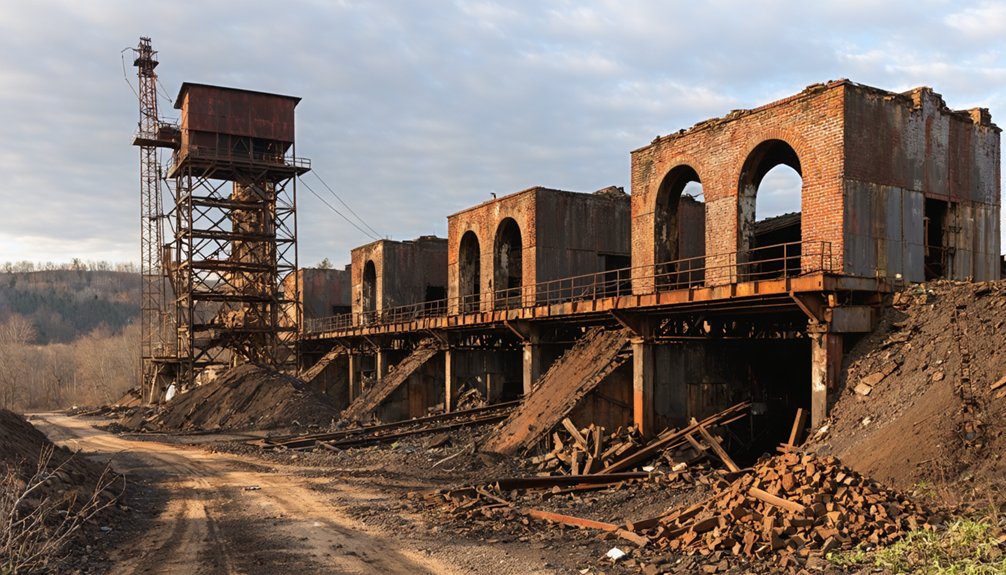
What copper and coal extracted from Tennessee’s eastern highlands left behind isn’t ruin alone—it’s a layered record of industrial ambition, environmental consequence, and partial recovery that you can still read across three distinct sites. Each location tells a specific story:
- Ducktown exposes acid-scarred earth and ongoing reclamation tied to copper’s toxic legacy.
- Copperhill preserves mining artifacts within a landscape still visibly marked by smelter emissions.
- Briceville anchors coal-country memory through labor history and community preservation efforts.
- Fork Mountain shows how quickly a thriving operation collapses once extraction stops.
You’ll find these sites aren’t purely abandoned—they function as regional archives. Preservation efforts have kept enough standing that you can reconstruct the industrial logic that once made them essential.
The Environmental Scars Tennessee’s Mining Ghost Towns Still Carry
When you walk the land surrounding Tennessee’s former mining districts, you’re reading a landscape that extraction reshaped—sometimes permanently. Copper smelting around Ducktown stripped surrounding hillsides of vegetation through sulfur dioxide emissions, leaving eroded, barren terrain that persisted for decades after operations ceased.
You’ll find that toxic runoff, acidic soil, and heavy-metal contamination remain measurable concerns at several sites, evidence that the economic collapse of these towns didn’t end their environmental consequences.
Lasting Landscape Damage
Even after the miners left and the towns emptied, the land itself kept a record. Abandoned structures rust and collapse, but the soil, water, and vegetation tell a longer story rooted in mining legends of unchecked extraction.
When you visit these sites, you’ll notice lasting damage that science still tracks:
- Acid mine drainage poisoning local streams and groundwater
- Barren, eroded hillsides stripped of topsoil by smelter emissions
- Heavy metal contamination persisting in sediment decades later
- Collapsed surface infrastructure destabilizing surrounding terrain
Ducktown remains the clearest regional example, where copper smelting destroyed surrounding forests for miles. Recovery efforts began only after significant ecological loss.
You’re looking at landscapes that document what happens when resource extraction operates without environmental accountability or long-term land stewardship.
Toxic Legacy Remains
How long does a toxic legacy actually last? In Tennessee’s copper belt, you’ll find your answer in scorched hillsides and acidic streams that persist long after economic decline shuttered the mines.
Ducktown and Copperhill aren’t just mining legends — they’re cautionary studies in what sulfur dioxide emissions and stripped vegetation leave behind across generations. The soil still carries heavy metal contamination, and local waterways reflect pH levels that challenge ecological recovery.
You can’t walk these landscapes without recognizing that abandonment didn’t erase the damage — it froze it. Remediation efforts have made measurable progress, but full environmental restoration remains incomplete.
Tennessee’s ghost towns remind you that the true cost of extraction extends far beyond the moment a mine closes its gates permanently.
Why Some Tennessee Mining Ghost Towns Survived as Historic Sites
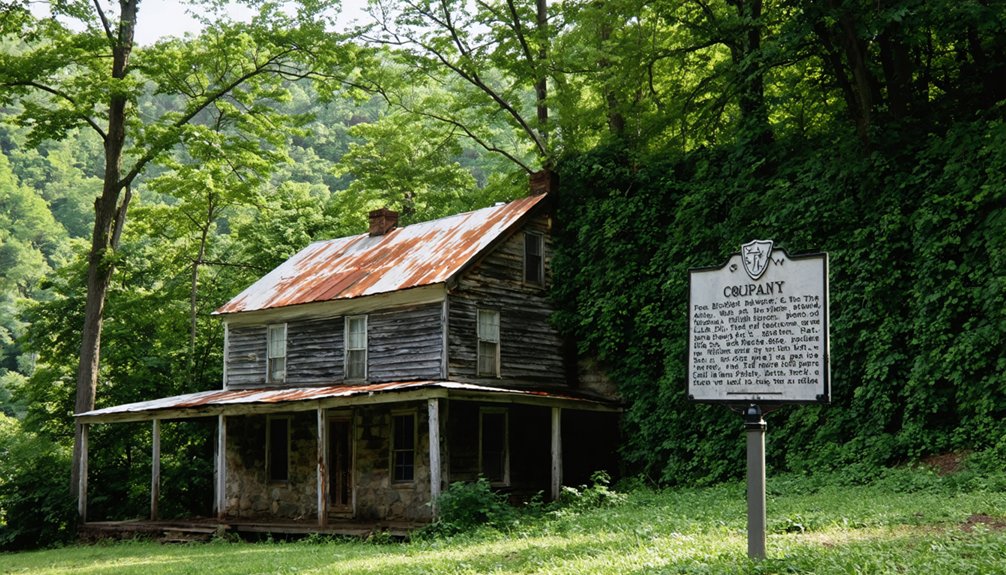
Although many of Tennessee’s mining towns faded into obscurity after ore bodies were exhausted or rail lines rerouted, a select number survived abandonment by evolving into heritage and recreation destinations. You’ll find that preservation succeeded where communities, governments, or park systems recognized lasting cultural value.
Many Tennessee mining towns faded away — but those recognized for cultural value survived by reinventing themselves entirely.
Four key factors drove survival:
- Historic designation protected town architecture from demolition and neglect.
- Preserved mining equipment gave visitors tangible connections to industrial heritage.
- National and state park absorption converted sites like Elkmont and Cades Cove into managed landmarks.
- Environmental recovery narratives transformed Ducktown and Copperhill into educational destinations documenting copper mining’s ecological impact.
These places didn’t simply endure — they reinvented themselves. You’re looking at living records of Tennessee’s Appalachian industrial past, preserved precisely because communities refused to let extraction define their only legacy.
Can You Still Visit Tennessee’s Mining Ghost Towns?
Knowing that some mining towns survived as historic sites naturally raises the next question: where can you actually go? Several sites remain accessible, offering direct engagement with Tennessee’s industrial past.
Ducktown and Copperhill welcome visitors through the Ducktown Basin Museum, where cultural preservation efforts document copper-mining’s environmental and human legacy.
Elkmont, within Great Smoky Mountains National Park, lets you explore preserved structures tied to early logging and settlement.
Briceville’s coal-mining heritage remains traceable through local landmarks and cemetery sites.
Tourism development has transformed select ghost towns into structured destinations, while others stay raw and largely unmarked, requiring independent research before you visit.
Whether you prefer guided interpretation or self-directed exploration, Tennessee’s mining ghost towns offer genuine historical access across multiple regions of the state.
How to Explore Tennessee’s Mining Ghost Town Trail Today
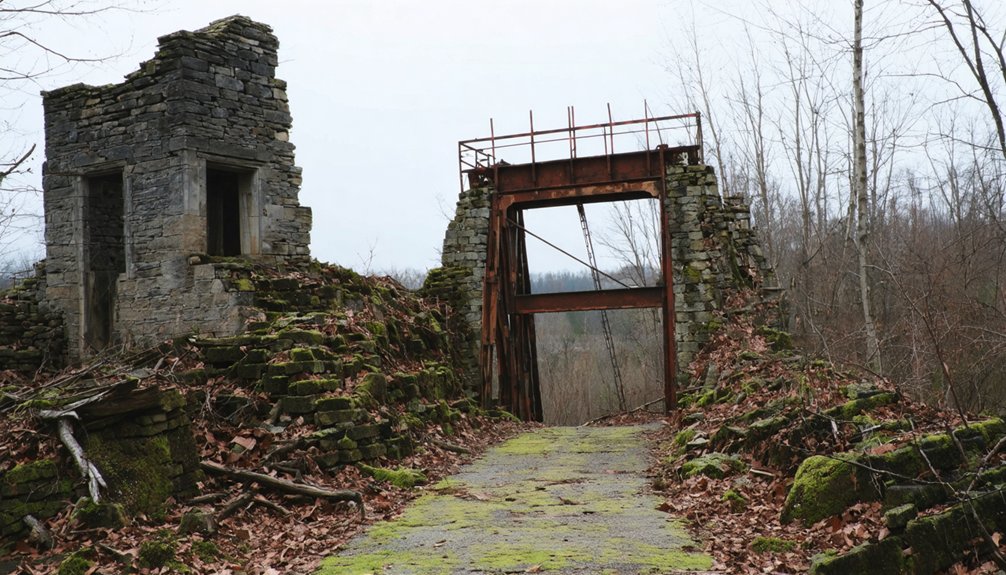
Exploring Tennessee’s mining ghost town trail requires a few practical decisions before you leave home. Mining tourism in this region rewards those who plan deliberately and respect preservation efforts already underway at sensitive sites.
- Research site access — Confirm whether your destination sits on public land, a heritage district, or private property before traveling.
- Prioritize eastern Tennessee — Ducktown, Briceville, and Tracy City anchor the strongest concentration of documented mining history.
- Carry physical maps — Remote sites like Fork Mountain and New River offer limited cellular coverage.
- Support local preservation organizations — Donations and volunteer programs directly fund ongoing documentation and site stabilization.
You’ll find that combining historic research with responsible on-the-ground exploration transforms each stop into a meaningful encounter with Tennessee’s industrial past.
Frequently Asked Questions
Which Tennessee Mining Ghost Towns Are on the National Register of Historic Places?
You’ll find Cades Cove and Elkmont on the National Register, where you can explore preserved town architecture and trace mining techniques that shaped Tennessee’s Appalachian communities during their industrial peak.
Are There Guided Tours Specifically Focused on Tennessee Mining Ghost Town History?
You’ll find guided tours highlighting mining techniques and ghost town preservation at sites like Ducktown’s Burra Burra Mine and Cades Cove, where regional heritage programs actively connect you to Tennessee’s industrial past.
What Artifacts From Tennessee Mining Ghost Towns Are Preserved in State Museums?
You’ll find artifacts preservation efforts and museum exhibits featuring mining tools, company scrip, and historical photographs from Tennessee’s coal and copper communities, particularly at institutions documenting eastern Tennessee’s Appalachian industrial heritage.
Did Any Tennessee Mining Ghost Towns Experience Revival Attempts After Initial Abandonment?
Yes, you’ll find forgotten frontiers found revival through economic revitalization efforts. Sites like Ducktown and Tracy City embraced tourism development, transforming their copper and coal heritage into living historical destinations that breathed new purpose into previously abandoned communities.
How Do Tennessee Mining Ghost Towns Compare to Those in Neighboring Appalachian States?
You’ll find Tennessee’s abandoned settlements share mineral extraction’s boom-bust legacy with Virginia, Kentucky, and West Virginia, yet Tennessee’s copper-scarred Ducktown and coal communities offer a distinctly diverse regional character you won’t encounter elsewhere in Appalachia.
References
- https://en.wikipedia.org/wiki/List_of_ghost_towns_in_Tennessee
- https://www.youtube.com/watch?v=aUrBmtWkL78
- https://ghosttowntrails.com/tennessee
- https://www.worldatlas.com/cities/7-old-timey-mining-towns-in-tennessee.html
- https://www.youtube.com/watch?v=yDP8z91cjdc