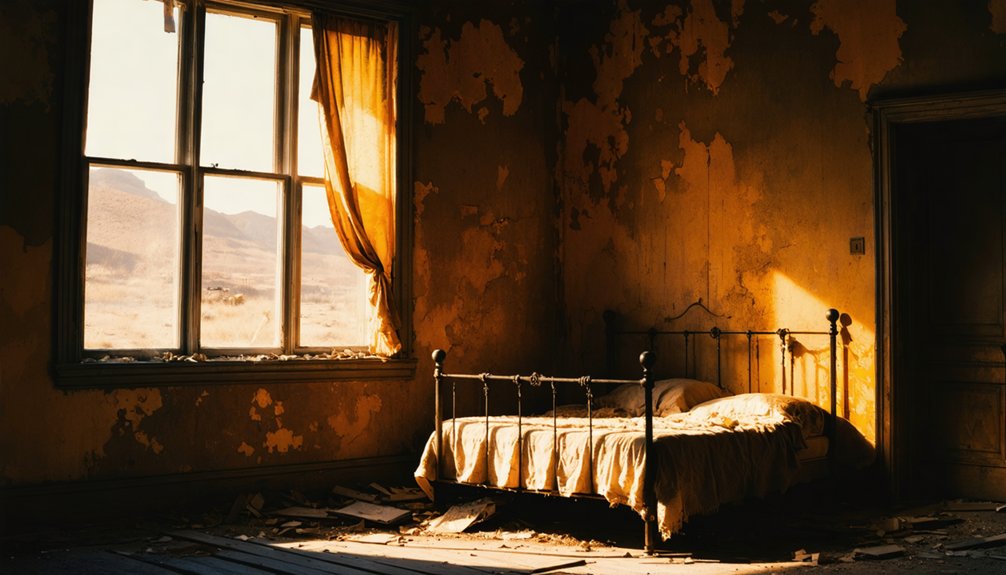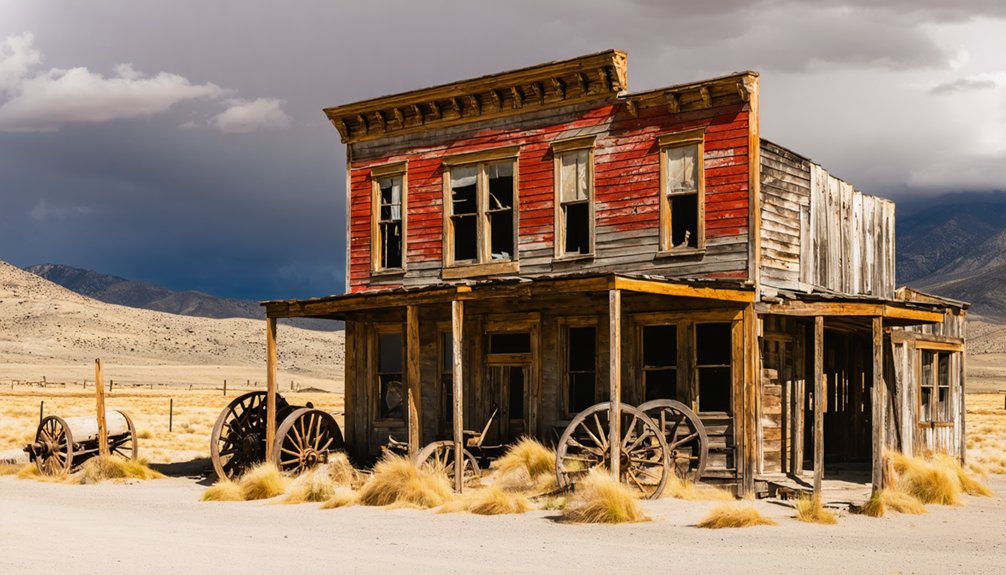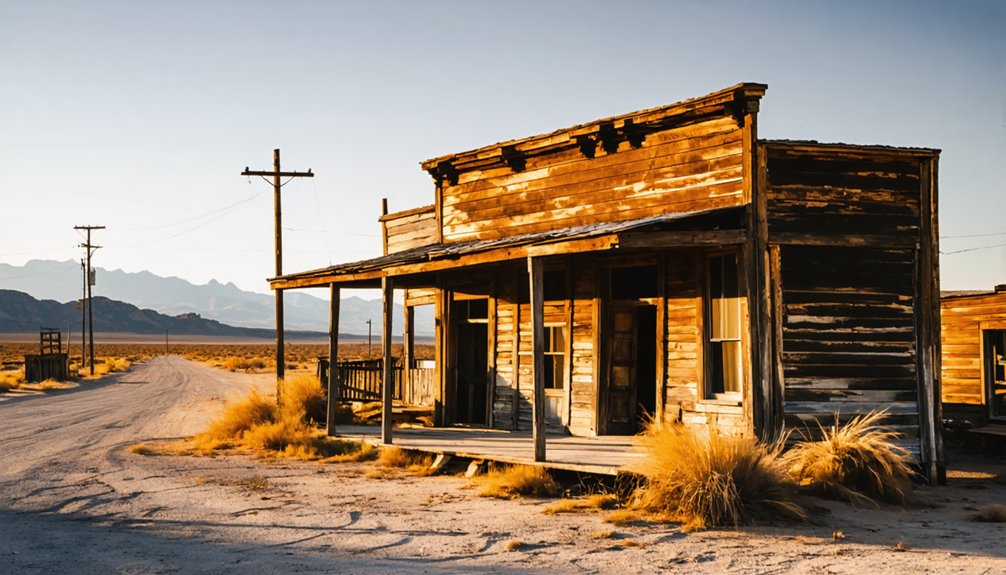
America’s most photogenic ghost towns pull you into landscapes where decay becomes art. You’ll find Gold Rush bones at Bannack, Montana, volcanic cinema at Rhyolite, Nevada, and haunting isolation at Cerro Gordo’s 22 crumbling California structures. Kennicott, Alaska freezes copper-era machinery mid-operation against raw wilderness. Jerome, Arizona layers ruins across scenic hillsides, while Oatman’s Route 66 facades glow under late afternoon light. Each location rewards patience, and there’s much more to uncover about what makes them unforgettable.
Key Takeaways
- Bannack, Montana is rated 4.8 for its preserved Gold Rush structures, offering long shadows and clear light ideal for photography.
- Rhyolite, Nevada features a crumbling bank façade, skeletal train depot, and volcanic canyon backdrop, creating a cinematic photographic experience.
- Cerro Gordo, California contains 22 decaying buildings in a high desert setting, with weathered wood and rusted mining remnants.
- Kennicott, Alaska preserves copper mill buildings frozen mid-operation within breathtaking Wrangell-St. Elias National Park wilderness.
- Jerome, Arizona combines layered hillside ruins with an artistic revival, offering panoramic views and compelling decay-versus-creativity contrasts.
The Photography Criteria Behind Every Pick on This List
Every ghost town on this list earned its spot through a specific visual logic — weathered textures that catch golden-hour light, structural decay frozen mid-collapse, and settings dramatic enough to frame themselves.
You’re not just chasing ruins; you’re chasing stories embedded in peeling wood, crumbling adobe, and rusted iron. Each location rewards deliberate photographic techniques — slow compositions, layered foregrounds, and patient framing that lets decay speak honestly.
Decay doesn’t lie — every warped board and crumbled wall holds a story worth framing with patience.
Lighting conditions shift everything here. Morning fog softens edges in mountain towns, while desert sun carves brutal shadows into canyon walls by noon.
You’ll find that the best shots emerge when location and light conspire naturally. These towns don’t need filters — they’ve already been aged, abandoned, and weathered into something unforgettably raw.
Bannack, Montana: Gold Rush Charm in the Rockies
Bannack, Montana earns its 4.8 rating honestly — walk its unpaved streets and you’ll immediately understand why photographers keep returning. This Gold Rush relic sits quietly in a mountain setting that frames every shot with raw, natural drama.
State park status means historic preservation isn’t just a promise here — it’s enforced, keeping the hotel, jail, and surrounding structures remarkably intact.
You’re not shooting crumbling facades held together by luck. You’re capturing a town frozen deliberately in time, its wooden buildings casting long shadows across open ground.
Plan your visit during spring 2026 for the clearest light and sharpest detail. Bannack doesn’t demand much from you — just a willingness to slow down, look closely, and let 422 photographers’ collective enthusiasm speak for itself.
Rhyolite, Nevada: Volcanic Ruins Built for the Camera
Nestled in a volcanic rock canyon just six miles from Beatty, Rhyolite feels like a film set left behind by time — because, in many ways, it has been. Its weathered ruins have drawn filmmakers and photographers alike, making it Nevada’s most photographed ghost town.
Rhyolite history runs deep — gold discovery in 1904 sent its population soaring into the thousands before the boom collapsed entirely.
Gold struck in 1904, thousands flooded in — then silence swallowed Rhyolite whole.
For Rhyolite photography, focus on these three commanding subjects:
- The crumbling bank façade, fractured by desert heat and decades of wind
- The skeletal train depot, where ambition once arrived daily
- The canyon backdrop, volcanic rock bleeding into golden light at dusk
Two hours from Las Vegas, you’ll find wild, unfiltered American freedom standing still.
Cerro Gordo, California: 22 Crumbling Buildings in a Haunting High Desert Frame
When you stand among Cerro Gordo’s 22 crumbling structures, the high desert silence wraps around you like a relic of the past, making every weathered wall and rusted beam feel like a frozen moment in time.
You’ll find this remote California mining site’s haunting isolation translates powerfully into photographs, where decay and dramatic desert backdrops create imagery that’s earned the town a massive TikTok following.
The same rugged, fire-scarred bones of this once-thriving camp that drew an influencer’s purchase now draw your lens toward a place where history crumbles beautifully in plain sight.
Remote Desert Isolation Appeal
Perched in California’s high desert, Cerro Gordo offers a haunting visual landscape that’s hard to match — 22 crumbling buildings frozen in time against a vast, silent backdrop.
The isolation beauty here isn’t accidental; it’s earned through decades of abandonment, fire, and relentless desert landscapes that strip everything down to raw, honest decay.
When you visit, three visual elements define your experience:
- Weathered wooden structures casting long shadows across sun-bleached terrain
- Collapsed rooflines framing open sky in ways no architect could plan
- Rusted remnants of mining equipment half-swallowed by earth and silence
You’re not just photographing ruins — you’re documenting freedom’s forgotten edge, where human ambition met nature’s indifference, and nature won every single time.
22 Structures Still Standing
Though time has swallowed most of what Cerro Gordo once was, 22 buildings still stand — stubborn, skeletal, and somehow more expressive in their decay than they ever were in their prime.
You’ll find abandoned architecture frozen mid-collapse, each warped timber and rusted hinge telling a story no museum exhibit could replicate. A fire in 1880 stripped the site raw, and that rawness is exactly what makes your camera feel alive here.
Historic preservation efforts have kept enough standing to anchor your imagination without sanitizing the ruin. The high desert isolation frames everything in harsh, unfiltered light — the kind that exposes truth.
You’re not visiting a curated exhibit. You’re standing inside a slow-motion collapse, and every crumbling wall gives you something real.
TikTok Fame And Decay
Cerro Gordo didn’t wait for TikTok — it had been quietly rotting into legend for over a century before a social media influencer bought the property and pointed a camera at the decay.
Now, TikTok influence has transformed this remote California mining site into a visual storytelling phenomenon you can explore yourself.
Twenty-two buildings still stand against a haunting high desert backdrop, each frame begging to be captured:
- Fire-scarred timber from the catastrophic 1880 blaze clings to structures in weathered defiance
- Collapsed mine shafts where 30 workers once perished add raw, unfiltered history
- Isolated desert silence surrounds every shot, amplifying the ghost town’s psychological weight
You’re not just photographing ruins — you’re documenting a place that survived long before anyone hit record.
Kennicott, Alaska: America’s Most Photogenic Ghost Town You’ve Never Visited
Nestled deep in Alaska’s Wrangell-St. Elias National Park, Kennicott rewards adventurous photographers willing to venture off the beaten path. You’ll find remarkably preserved copper mill buildings rising against jagged mountain peaks, creating compositions that define ghost town photography at its finest.
Copper mining once drove over 2,000 souls to this remote wilderness, building an industrial empire that hummed with ambition until 1938, when depleted reserves silenced everything overnight. That abrupt abandonment gives Kennicott its haunting historical significance — machinery sits frozen mid-operation, structures stand remarkably intact, and summer light bathes weathered red buildings in extraordinary warmth.
You’re not just capturing decay here; you’re documenting America’s raw industrial past against breathtaking wilderness. Few ghost towns deliver this rare combination of accessibility during summer months and genuinely untouched, cinematic isolation.
Jerome, Arizona: Layered Ruins on a Scenic Hillside
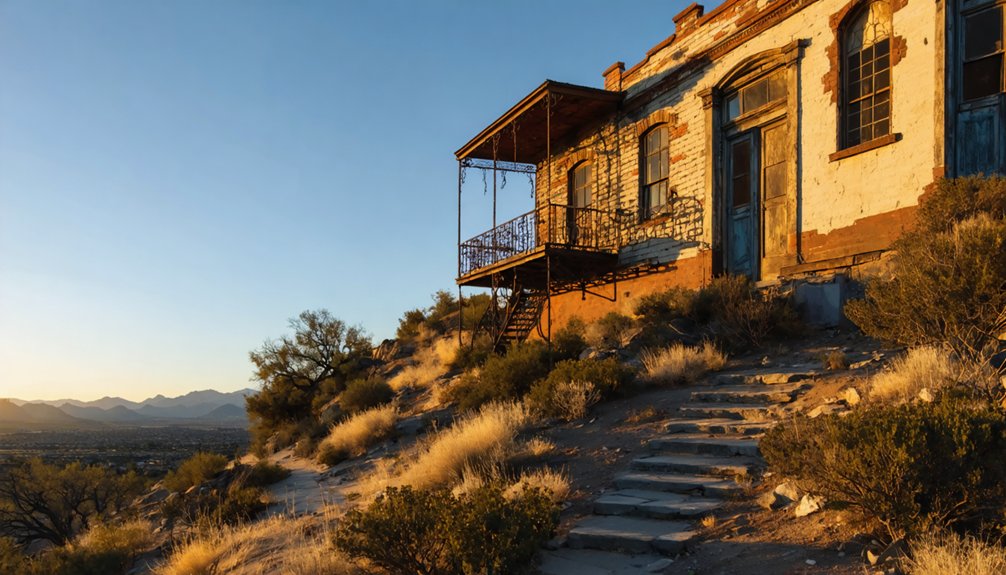
When you stand on Jerome’s sloping streets, you’re looking at copper mining’s layered legacy etched into an Arizona hillside, where crumbling facades stack dramatically against sweeping valley views.
You’ll find that photography lists consistently feature Jerome’s ruins precisely because the terrain creates natural depth, letting you frame decaying structures against panoramic backdrops that few ghost towns can match.
What makes Jerome genuinely compelling is how its artistic revival breathes life into that decay, blending occupied galleries and studios with weathered bones of a boomtown that once hummed with thousands of miners.
Hillside Ruins Overview
Perched high in Arizona’s Black Hills, Jerome’s copper-mining ruins tumble down the hillside in layered tiers that practically beg your camera lens to capture them.
The hillside aesthetics here reward urban exploration with compositions you won’t replicate anywhere else.
Three visual anchors define Jerome’s photogenic power:
- Tilting facades — Century-old storefronts lean dramatically against the slope, their weathered wood catching golden-hour light beautifully.
- Panoramic depth — Sweeping Verde Valley views stretch endlessly behind crumbling structures, creating natural layered backgrounds.
- Architectural contrast — Decaying copper-era buildings sit alongside revived artist studios, blending raw decay with vibrant renewal.
Every angle reveals something unexpected.
You’re not just photographing ruins — you’re documenting a town that refused to disappear completely, frozen between collapse and resilience.
Panoramic Photography Opportunities
Jerome’s hillside layout transforms every vantage point into a panoramic stage, stacking crumbling copper-era rooftops against the wide, hazy expanse of Verde Valley below. You’ll find ghost town landscapes here that reward patience — the kind where morning light catches rusted iron and weathered wood simultaneously, pulling depth into every frame.
Climb higher and you’ll reveal panoramic vistas that stretch beyond the immediate ruins, layering distant ridgelines behind Jerome’s sloping decay. The terraced architecture isn’t accidental; copper-era builders carved into the hillside methodically, leaving you a natural staircase of photographic angles.
Each elevation shift delivers something different — intimate street-level textures below, sweeping territorial sky above. Jerome doesn’t just show you its history; it positions you inside it, frame after compelling frame.
Decay Meets Artistic Revival
What once housed copper barons and mining crews now shelters painters, sculptors, and photographers who’ve claimed Jerome’s crumbling facades as their canvas.
Perched on Cleopatra Hill, this Arizona town thrives on artistic juxtaposition — where urban decay breathes alongside vibrant studios and galleries. You’ll feel that tension everywhere you look.
Capture these three defining contrasts:
- Weathered storefronts painted in bold murals, merging ruin with reinvention
- Sloping streets where tilting century-old structures frame sweeping Verde Valley panoramas below
- Abandoned mine shafts standing beside working artist lofts, raw history touching living creativity
Jerome doesn’t hide its scars — it celebrates them.
You’re not just photographing decay; you’re documenting a town that refused to disappear, reinventing itself one brushstroke at a time.
Oatman, Arizona: Burros, Route 66, and Gold Rush Wooden Facades
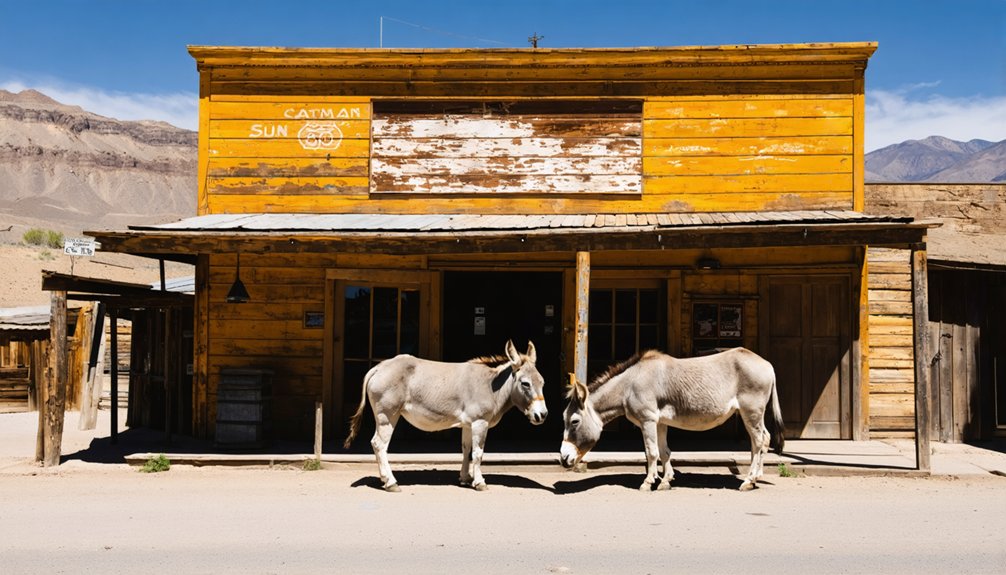
Tucked along the sun-bleached curves of Route 66, Oatman, Arizona feels like a town the modern world simply forgot to collect.
You’ll find weathered wooden facades standing exactly as Gold Rush miners left them, each plank cracked and sun-silvered into something genuinely beautiful.
Wild burro encounters happen right on the main street — these descendents of old pack animals wander freely, nudging your hand and wandering into every frame you shoot.
Route nostalgia hits hard here, especially when late afternoon light stretches long shadows across the storefronts.
Tripadvisor’s 785 reviews crown it among the top ghost towns, and you’ll understand why the moment your boots hit that dusty road.
It’s accessible, it’s atmospheric, and it rewards every photographer willing to simply slow down.
Timing, Access, and Gear for Serious Ghost Town Photography
Essential gear separates forgettable snapshots from haunting portraits of forgotten lives:
The right gear doesn’t just capture abandoned places — it resurrects them.
- Wide-angle lens — captures sprawling decay and dramatic canyon walls at Rhyolite without distortion.
- Tripod — stabilizes long exposures inside Jerome’s shadowed hillside ruins during low-light dawn.
- Polarizing filter — cuts desert glare across Cerro Gordo’s high-altitude isolation, deepening contrast.
You’re chasing something raw and unrepeatable out there.
Arrive early, move deliberately, and let the silence do the talking.
Frequently Asked Questions
Are Photography Permits Required at Any of These Ghost Towns?
Photography regulations vary by location, so you’ll want to check each site’s permit application process before you go. State parks like Bannack often require fees, while others welcome your free-spirited lens without restriction.
Which Ghost Towns Allow Overnight Camping Near the Ruins?
You’ll find camping regulations vary widely — Bannack’s state park lets you camp nearby, soaking in its historical significance under Montana stars. Cerro Gordo’s remote isolation also welcomes overnight stays, letting freedom-seekers breathe in forgotten eras.
Can Professional Photographers Sell Images Taken at State Parks?
You’ll need a commercial photography permit to sell images at state parks like Bannack. Explore your photography rights carefully, as licensing options vary by park, letting you capture and profit from timeless, weathered beauty freely.
Are Any of These Ghost Towns Accessible for Visitors With Disabilities?
You’ll find a universe of accessible attractions at Oatman and Jerome, where inclusive experiences await! Paved paths let you roam freely, soaking in nostalgic wooden facades and sweeping hillside views without barriers holding you back.
Do Any Ghost Towns Offer Guided Photography Tours With Local Experts?
You’ll find guided tours at Jerome and Oatman, where local insights breathe life into forgotten streets. Experts’ll walk you through weathered facades, sharing stories that’ll ignite your creative freedom and deepen your nostalgic connection to America’s haunted past.
References
- https://www.undiscoveredamerica.tv/best-ghost-towns-in-america-worth-the-drive/
- https://www.lonelyplanet.com/articles/coolest-ghost-towns-us
- https://www.geotab.com/ghost-towns/
- https://www.atlasobscura.com/lists/americas-best-preserved-ghost-towns
- https://www.tripadvisor.com/Attractions-g191-Activities-c47-t14-United_States.html
- https://www.youtube.com/watch?v=IECzqQ-jIEM