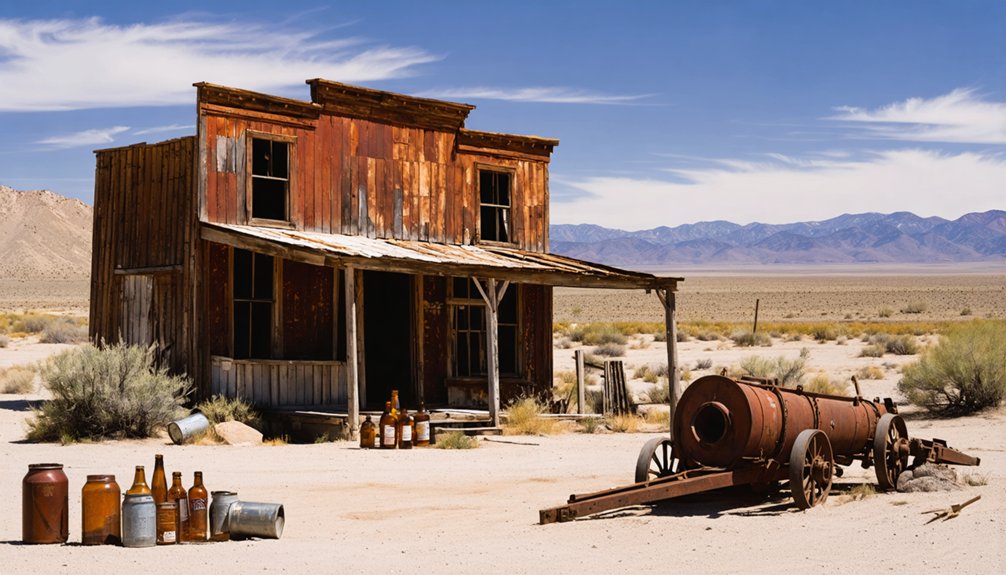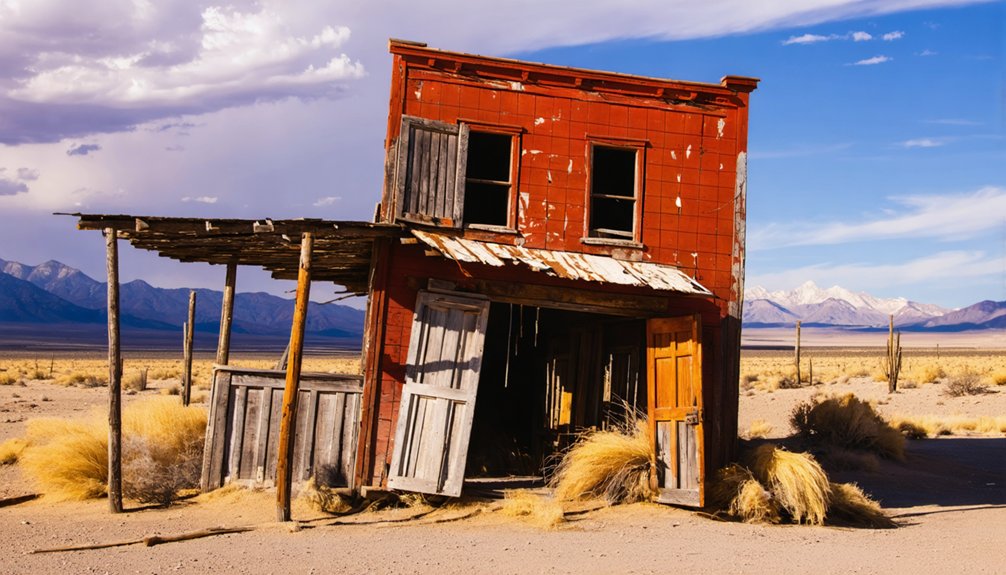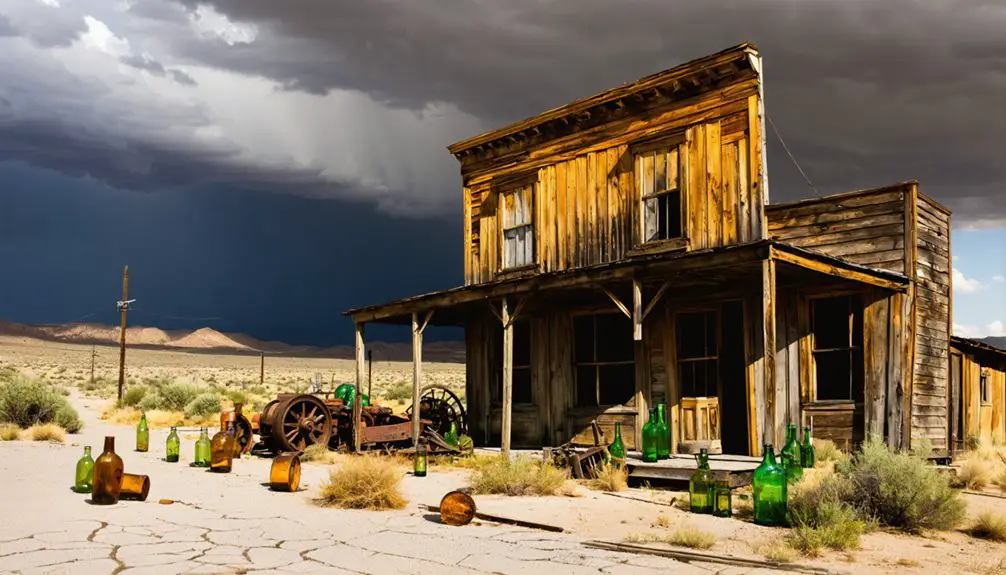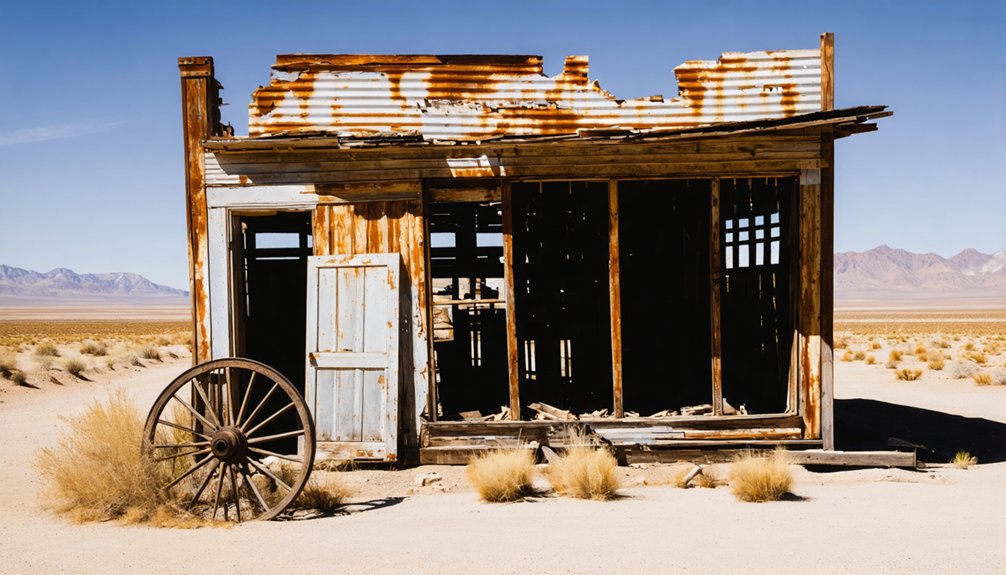
Nevada’s desert holds over 600 ghost towns, and you’ll find they share a common story: rapid rise, faster collapse. Mining strikes drew thousands overnight, but once the silver or gold ran out, populations vanished almost immediately. You’ll discover these abandoned settlements scattered across every region, from Lincoln and Nye Counties to the northern corridor near Virginia City. There’s far more to uncover about these frozen moments in time.
Key Takeaways
- Nevada’s ghost towns emerged from mining booms, where resource depletion caused rapid population collapse and widespread abandonment across the desert.
- Notable sites include Rhyolite, Berlin, Gold Point, Goldfield, and St. Thomas, each offering unique historical and architectural remnants.
- Ghost towns cluster regionally across Lincoln, Nye, and Esmeralda Counties, with iconic northern sites like Virginia City and Eureka.
- Highway 50 provides efficient access to numerous interior ghost towns, making it ideal for a structured desert road trip.
- Visitors should pack water, maps, and sturdy footwear while respecting posted signage to ensure safe, responsible exploration.
What Turned Nevada’s Boomtowns Into Ghost Towns?
Nevada’s mining boomtowns rose and fell with brutal speed, driven almost entirely by the boom-and-bust cycle of mineral extraction. Economic factors consistently determined survival—once resource depletion emptied a mine, merchants, laborers, and speculators abandoned settlements within months.
Mining booms attracted thousands chasing silver and gold, yet population collapse followed extraction failure just as swiftly. Infrastructure failures compounded these exits; ambitious planned communities like Metropolis couldn’t overcome environmental challenges posed by Nevada’s unforgiving desert conditions.
Nevada’s mining boomtowns swelled overnight, then collapsed just as fast when the silver ran dry.
Some towns along the Colorado River met a different fate, submerged beneath reservoir development. What remains carries a cultural legacy worth understanding—you’re encountering the raw consequences of unchecked extraction economics.
Historic preservation efforts at sites like Berlin and Gold Point help you recognize what unbridled resource exploitation ultimately costs a community.
Where Are Nevada’s Ghost Towns Located?
Understanding why these towns collapsed helps you interpret where they’re actually scattered across the state.
Nevada’s ghost town geography follows its mining history with remarkable precision. You’ll find dense clusters along southern routes bordering Lincoln and Nye Counties, while eastern remnants sit near Beatty along Death Valley’s edges.
Clark County’s Colorado River settlements don’t just sit abandoned—they’re submerged beneath Lake Mead and Lake Mohave.
Central Nevada rewards you with iconic sites like Berlin and Tonopah, while Highway 50 cuts through territories revealing hidden settlements few visitors encounter.
Virginia City and Eureka anchor the northern corridor. Each region reflects distinct extraction eras, from Dayton’s 1849 gold discoveries onward.
You can fundamentally map Nevada’s economic ambitions by tracking where these towns rose and collapsed.
The Nevada Ghost Towns You Need to Visit
Few ghost towns in Nevada demand your attention as immediately as Rhyolite, where the Bottle House and collapsed bank ruins offer immediate visual evidence of the boom-and-bust cycle. Its accessibility via paved roads makes it an ideal starting point for your broader exploration.
From there, you’ll discover hidden treasures across the state’s varied landscape. Berlin preserves original structures alongside ichthyosaur fossils, merging geological and industrial historical significance into a single site.
Gold Point maintains authenticity through resident preservation efforts, while Goldfield’s rapid collapse from 20,000 residents to near-abandonment illustrates economic volatility with striking clarity.
St. Thomas, submerged beneath Lake Mead, rewards patient visitors during drought-driven water recessions. Each site you visit reinforces Nevada’s irreplaceable role in western American mining and settlement history.
How to Plan a Nevada Ghost Town Road Trip
Planning a ghost town road trip through Nevada requires strategic thinking about geography, access, and desert survival.
You’ll want to cluster destinations by region — pairing Rhyolite with nearby Beatty settlements, or combining Lincoln and Nye County sites along southern routes. Highway 50, the “Loneliest Highway in America,” reveals numerous interior sites efficiently.
Road trip essentials include adequate water, sun protection, and fuel, since services disappear quickly beyond populated corridors.
You’re operating in extreme desert conditions where infrastructure doesn’t exist.
For ghost town photography, arrive during early morning or golden hour — harsh midday light flattens architectural detail and raises dangerous temperatures.
Respect posted signage, particularly around privately maintained sites like Gold Point.
Strategic planning transforms scattered ruins into a coherent, rewarding itinerary.
What to Bring Before Exploring Nevada Ghost Towns?
Preparing adequately before venturing into Nevada’s ghost towns can mean the difference between a safe expedition and a dangerous ordeal. Since services are non-existent at most sites, you’ll need to pack exploration essentials: water, sun protection, a first-aid kit, and detailed maps.
Cell service is unreliable across Nevada’s 60 million acres of public land, so a physical compass or GPS device is critical. Wear sturdy footwear to navigate crumbling structures safely.
For ghost town photography, bring your camera during early morning or golden hour to capture ideal lighting while temperatures remain manageable. Respect posted signage and private property boundaries to preserve these fragile historic sites.
Carrying these essentials guarantees you retain full autonomy over your experience without depending on unavailable external resources.
Frequently Asked Questions
How Many Ghost Towns Does Nevada Have Compared to Active Cities?
Ironically, you’ll find Nevada’s ghost town statistics embarrassingly outshine its urban comparison — 600+ documented abandoned settlements actually outnumber the state’s active cities, meaning Nevada’s dead towns have beat its living ones at population contests.
Which Nevada Ghost Towns Are Partially Still Occupied by Residents Today?
You’ll find Gold Point and Tonopah are partially occupied, where remaining residents preserve abandoned structures and keep resident stories alive, offering you rare glimpses into Nevada’s enduring mining heritage and complex boom-bust legacy.
Are Any Nevada Ghost Towns Submerged Underwater and Still Visible?
Countless submerged towns lie eerily frozen beneath Nevada’s reservoirs! You’ll find St. Thomas, swallowed entirely by Lake Mead, where its underwater relics occasionally resurface during droughts, offering you a hauntingly visible glimpse into Clark County’s drowned history.
What Was the First Major Gold Discovery That Started Nevada’s Mining Boom?
You’d trace Nevada’s Mining Boom to the 1849 gold discovery near present-day Dayton, which ignited the regional Gold Rush. Early prospectors pioneered Mining Techniques that’d ultimately transform Nevada’s desert landscape into a thriving extraction economy.
Which Nevada Ghost Towns Have Transitioned Into Successful Tourism Destinations Today?
Once abandoned, now thriving—you’ll find Eureka and Virginia City have successfully transformed into ghost town attractions, where their historical significance draws visitors enthusiastic to explore active museums, preserved buildings, and living remnants of Nevada’s mining legacy.
References
- https://www.youtube.com/watch?v=s_iEYT_CkxI
- https://www.idyllicpursuit.com/13-hidden-ghost-towns-scattered-across-nevadas-desert/
- https://en.wikipedia.org/wiki/List_of_ghost_towns_in_Nevada
- https://www.desertusa.com/desert-nevada/nevada-ghost-towns1.html
- https://www.discovernorthamerica.co.uk/nevada-destination/discover-nevadas-ghost-towns/
- https://nvtami.com
- https://www.youtube.com/watch?v=mObIuJ5_IqE
- https://www.smithsonianmag.com/sponsored/nevadas-living-and-abandoned-ghost-towns-180983342/
- https://www.youtube.com/watch?v=V8FZ8dLvQ8I
- https://www.youtube.com/watch?v=MX6GIVEFt8M