Planning a ghost town road trip to Prospect Creek, Alaska means embracing true wilderness — there’s no road leading there. You’ll charter a floatplane or navigate by water to reach this haunting gold camp above the Arctic Circle, where temperatures once plunged to −79.8°F. Visit between June and August when waterways thaw, pack expedition-grade cold weather gear, and never travel without a satellite communicator. Everything you need to plan your arctic adventure lies ahead.
Key Takeaways
- Prospect Creek, located above the Arctic Circle, is a remote ghost town featuring miners’ houses, a schoolhouse, and historically significant abandoned structures.
- Access requires chartering a floatplane or traveling by water, as no highways or dirt roads connect to the site.
- The best time to visit is June through August, when waterways are thawed and daylight hours are longest.
- Coldfoot serves as a key stop along the route, offering resupply opportunities, rugged charm, and northern lights viewing.
- Pack cold weather gear, emergency tools, and a satellite communicator, as the nearest help is 180 miles south in Fairbanks.
Why Prospect Creek Is America’s Coldest Ghost Town
Tucked just above the Arctic Circle, Prospect Creek holds a record most places would never want—on January 23, 1971, temperatures plunged to −79.8°F (−62.1°C), making it the coldest officially recorded spot in U.S. history.
Surrounding topography transforms this valley into a natural temperature trap, pulling frigid air downward and locking it in place.
The valley’s walls cradle descending cold air, creating a natural freeze trap unlike anywhere else on Earth.
When you explore its mining history, you’ll discover a gold camp that once buzzed with prospectors in the early 1900s, long before extreme cold became its defining legacy.
Those temperature records didn’t deter determined workers either—during Trans-Alaska Pipeline construction, 1,500 people called this frozen outpost home.
Now it sits empty, daring free-spirited adventurers like you to confront one of North America’s most unforgiving yet utterly enchanting wilderness destinations.
What’s Left to See at the Abandoned Prospect Creek Camp?
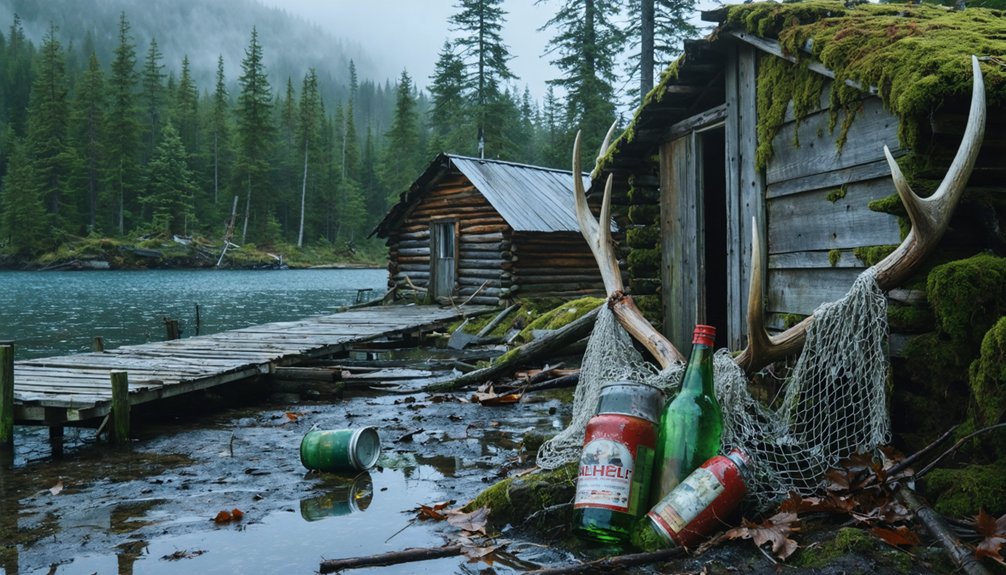
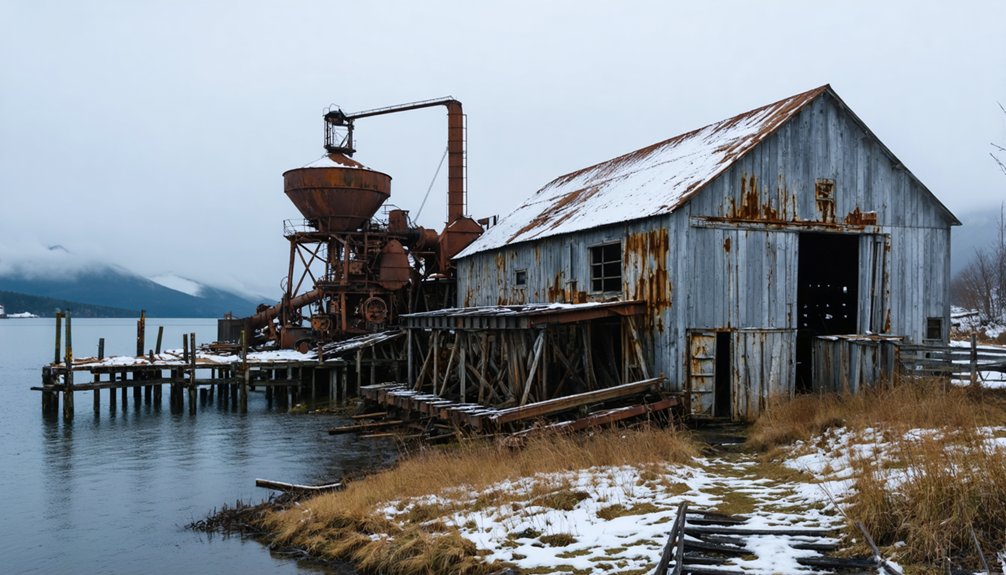
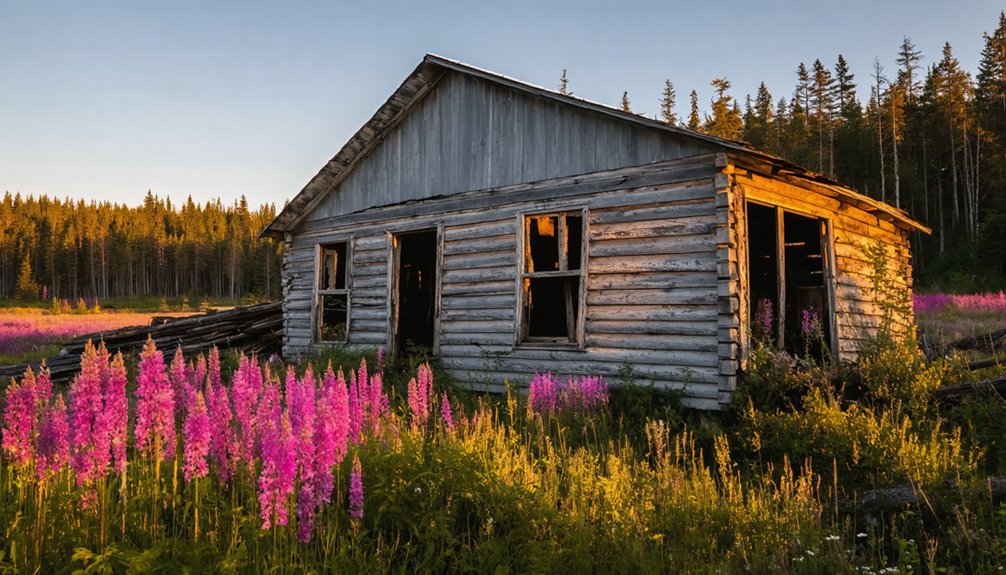
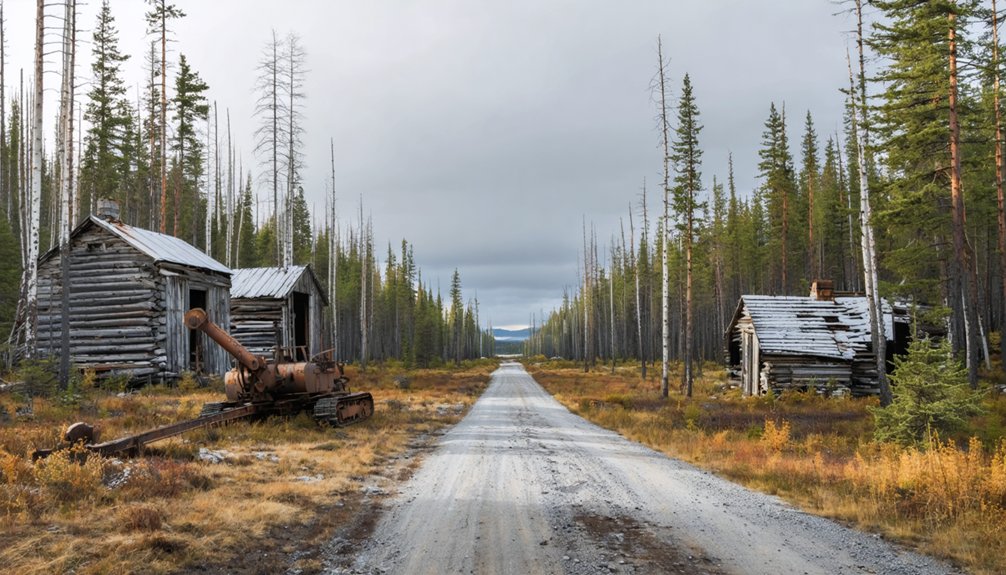
Three structures stand as silent witnesses to Prospect Creek’s layered past—miners’ houses, a weathered schoolhouse, and scattered outbuildings that once supported a thriving industrial camp.
These abandoned structures carry enormous historical significance, echoing the ambitions of 1,500 workers who transformed this Arctic wilderness into a bustling pipeline hub.
You’ll walk through spaces where gold prospectors once planned their claims and pipeline crews weathered brutal winters.
The schoolhouse walls still hold stories of a community that briefly flourished, then vanished almost overnight after 1977.
Pump Station 5 remains operational nearby, creating a striking contrast between industrial present and forgotten past.
No preservation efforts protect these remnants, so explore them while they still stand.
Time and Arctic conditions won’t wait forever.
Can You Actually Road Trip to Prospect Creek?
Despite the “road trip” in this article’s title, you can’t actually drive to Prospect Creek — no highways or dirt roads connect this remote wilderness site to the outside world.
You’ll need to charter a floatplane or navigate by water to reach the abandoned camp, making your journey an expedition rather than a casual cruise.
That extra effort, though, is exactly what keeps this frozen ghost town raw, untouched, and worth every logistical headache.
No Roads Lead Here
Prospect Creek earns its ghost town status in more ways than one — you can’t just hop in a car and drive there.
No highways cut through this remote wilderness, and no paved roads connect you to its ghost town history. Getting here demands intention. You’ll charter a floatplane out of Fairbanks or navigate by small boat through surrounding waterways, trading convenience for raw adventure.
That inaccessibility isn’t a flaw — it’s the filter that keeps this place honest. Only travelers willing to earn the journey ever witness the abandoned schoolhouse, the crumbling miners’ quarters, and the silence that swallowed 1,500 workers whole after 1977.
If you want easy, go somewhere else. If you want real, start booking your charter flight.
Air And Water Access
Getting to Prospect Creek means leaving your car behind — permanently. You’ll rely on floatplane logistics or waterway navigation through Alaska’s raw wilderness to reach this frozen ghost town.
Here’s how you actually get there:
- Charter a floatplane from Fairbanks or Bettles — your fastest option into the backcountry.
- Navigate by small boat or kayak through protected waters near Port Snettisham.
- Coordinate fuel and supply drops in advance — no resupply points exist along the route.
- File a detailed flight or float plan with someone reliable before departing.
This isn’t a weekend impulse trip. Every logistical decision demands precision.
But that’s exactly the point — Prospect Creek rewards those bold enough to ditch conventional travel and embrace true Alaskan wilderness access.
How to Reach Prospect Creek by Air or Water
Reaching Prospect Creek demands real commitment — no highways cut through this wilderness, so you’ve got two options: air or water.
For air travel, charter a floatplane out of Fairbanks or Bettles, and you’ll touch down on remote terrain that feels untouched by modern life. It’s fast, dramatic, and worth every dollar.
Prefer water routes? Navigate through protected waterways using small boats or kayaks, soaking in raw Alaskan wilderness at your own pace. This path rewards patience and grit.
Either way, you’re committing to a genuine expedition. Pack smart, plan your logistics carefully, and file a float plan if you’re going by water.
This isn’t a casual detour — it’s a deliberate journey into one of America’s most isolated ghost towns.
The Best Time of Year to Visit Prospect Creek
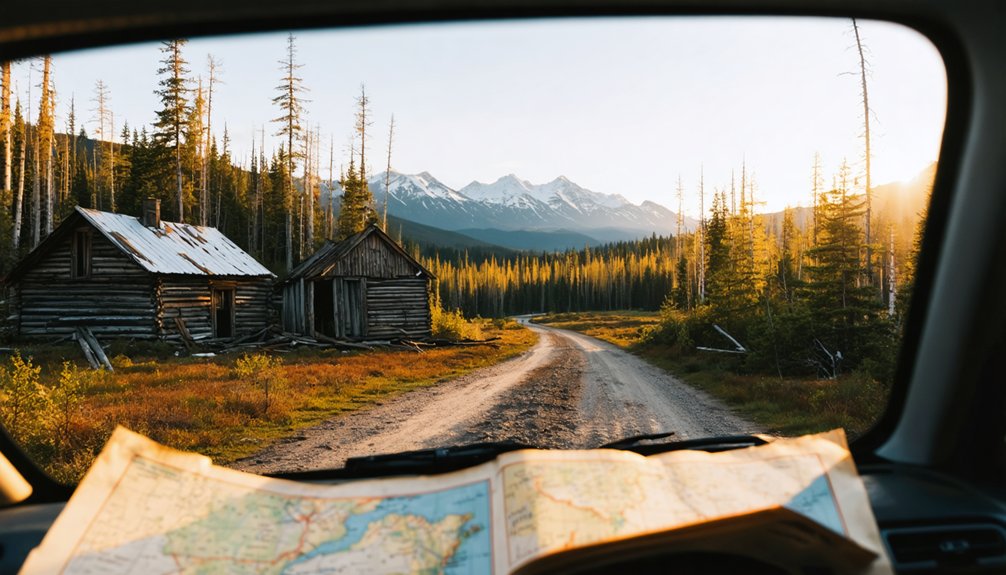
Timing your visit to Prospect Creek can mean the difference between a rugged adventure and a genuinely dangerous ordeal. Understanding best visiting seasons and weather considerations keeps you moving safely through this raw wilderness.
Timing your Prospect Creek visit right separates raw adventure from genuine danger — know before you go.
- June–August: Peak travel window; frozen waterways thaw, floatplanes land easily, and daylight stretches nearly 24 hours.
- September: Striking fall colors reward early arrivals, but temperatures drop fast and unpredictably.
- October–April: Brutal cold dominates — remember, this site hit −79.8°F in 1971. Experts only.
- May: Breakup season creates unstable ice and flooding; avoid water access entirely.
You’re chasing freedom, not frostbite.
Plan around summer’s generous light, pack layered gear regardless of season, and always file a detailed flight plan before departing civilization.
What to Pack for an Arctic Ghost Town Expedition
Packing for Prospect Creek isn’t like stuffing a bag for a weekend camping trip — you’re preparing for a place where the thermometer once plunged to −79.8°F and the nearest help sits 180 miles south in Fairbanks.
Your cold weather gear must be serious: layered merino wool base layers, expedition-rated sleeping bags, insulated waterproof boots, and windproof outer shells. Frostbite doesn’t negotiate.
Pack emergency fire-starting tools, high-calorie rations, and a satellite communicator — no cell towers exist here.
For photography equipment, bring lens warmers and extra batteries, because cold kills power fast. Protect your camera inside an insulated case until you’re ready to shoot.
The abandoned schoolhouse and crumbling miners’ quarters reward prepared photographers who arrive ready to work in brutal conditions.
What to Explore Near Prospect Creek: Bettles, Gates of the Arctic, and the Koyukuk
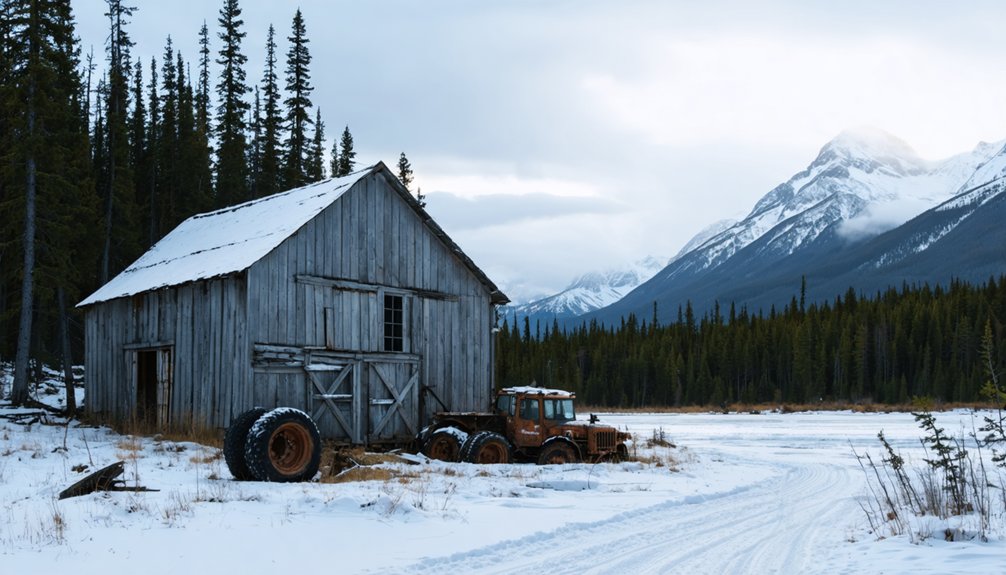
Once you’ve absorbed the eerie stillness of Prospect Creek, three destinations within striking distance pull you deeper into one of North America’s most untamed corridors.
Just 25 miles northwest, Bettles history stretches back to early bush-pilot culture and Koyukon Athabascan tradition — a living contrast to Prospect Creek’s silence.
Venture further and you’ll encounter:
Venture further still, and Alaska reveals what maps can never capture — only the willing ever find it.
- Gates of the Arctic National Park — six wild rivers, zero crowds, and raw Brooks Range terrain
- The Koyukuk River — a braided wilderness highway teeming with Arctic wildlife, including moose, wolves, and Dall sheep
- Bettles Field — your chartered floatplane hub and last-chance resupply point
- Coldfoot — a weathered truck-stop settlement offering northern lights viewing and fuel
Each destination rewards the traveler who values freedom over comfort.
Frequently Asked Questions
What Is the Zip Code for the Prospect Creek Area?
You’ll need zip code 99726 for your ghost town road trip correspondence. Pack your adventurous spirit, embrace the freedom of Alaska’s wild frontier, and let this remote, hauntingly beautiful destination fuel your wanderlust.
Is Prospect Creek Located in Traditional Indigenous Territory?
Yes, Prospect Creek sits in traditional Tlingit T’aaku Kwáan territory. You’re stepping into rich indigenous history and cultural heritage when you explore this remote wilderness — a powerful reminder that freedom-seekers walk on ancestral ground stretching back centuries.
Was a Historical Journal Ever Discovered at Prospect Creek?
In 1992, you’d have marveled as explorers uncovered a leatherbound journal, revealing Prospect Creek’s historical significance through vivid journal contents that paint an adventurous, raw portrait of life in this remote, untamed Alaskan wilderness.
Are There Any Historic Preservation Efforts at Prospect Creek?
With zero permanent residents, no documented efforts exist to protect Prospect Creek’s ghost town history. You’ll find preservation challenges have left abandoned structures untouched, giving you a raw, unfiltered glimpse into Alaska’s forgotten past.
What Was Prospect Creek’s Population During Pipeline Construction?
You’d have witnessed a pipeline workforce of 1,500 souls transform Prospect Creek during the Trans-Alaska construction boom. That surge of rugged workers carved life into the wilderness before the 1977 completion silenced everything.
References
- https://www.thealaskalife.com/blogs/news/coldest-alaska-town-with-the-most-extreme-weather-ever-recorded-in-u-s-history
- https://fr.wikipedia.org/wiki/Prospect_Creek_(Alaska)
- https://en.wikipedia.org/wiki/Prospect_Creek
- https://da.frwiki.wiki/wiki/Prospect_Creek_(Alaska)
- https://symonsez.wordpress.com/tag/prospect-creek-ak/
- https://hu.frwiki.wiki/wiki/Prospect_Creek_(Alaska)
- https://www.youtube.com/watch?v=7Jc-AooqtiA
- https://en.wikipedia.org/wiki/List_of_ghost_towns_in_Alaska
- http://freepages.rootsweb.com/~gtusa/history/usa/ak.htm