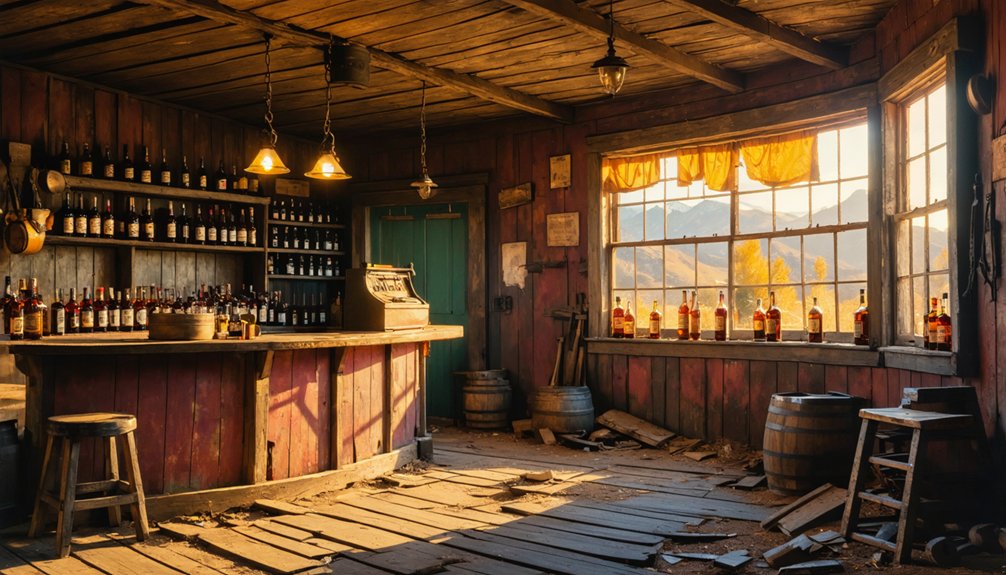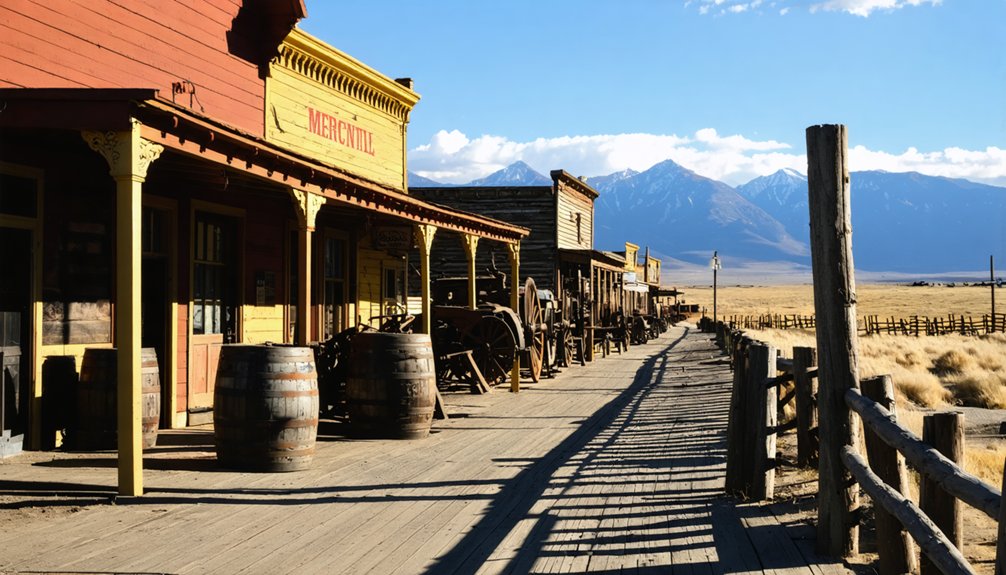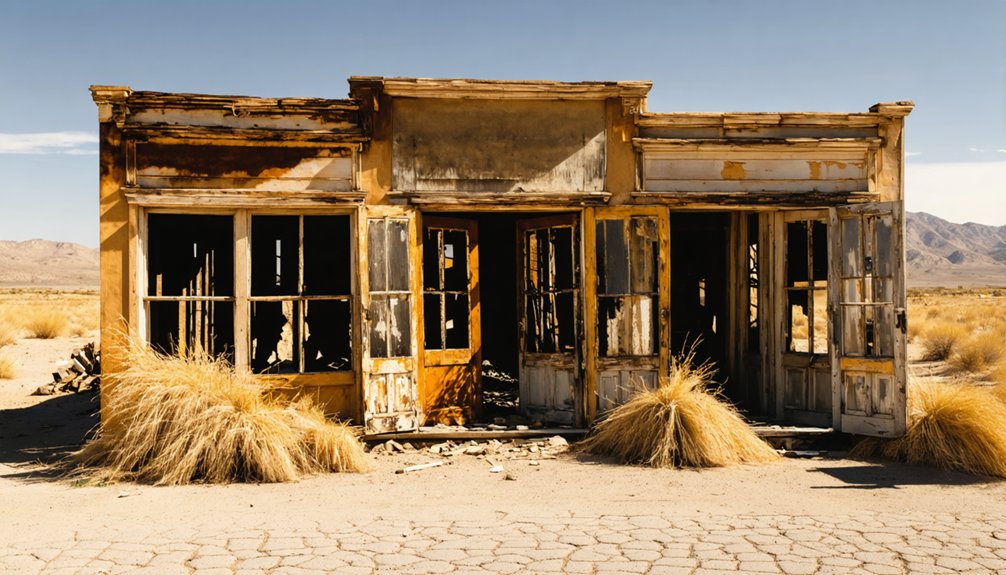
California’s old ghost towns aren’t just abandoned places—they’re economic autopsies you can walk through. They rose during the Gold and Silver Rushes of the 1840s–1880s and collapsed when deposits dried up or markets failed. You’ll find them scattered across deserts, mountains, and valleys, from preserved sites like Bodie and Calico to submerged ones like Mormon Island. Each town tells a distinct story of ambition and collapse that goes much deeper than what’s visible on the surface.
Key Takeaways
- Bodie State Historic Park preserves authentic decaying structures from California’s Gold Rush era, open for public visitation without restoration.
- Calico Ghost Town, a restored silver mining settlement, welcomes visitors daily from 9am to 5pm.
- Lesser-known sites like Bennettville and Bestville remain off tourist maps, offering raw, unmanaged exploration experiences.
- California ghost towns were founded during mineral rushes and collapsed when deposits depleted or markets failed.
- Eagle Mountain, closed in 1983, sits completely vacant 11 miles north of Desert Center, rarely visited today.
What Makes a California Town a Ghost Town?
California’s ghost towns aren’t simply abandoned places—they’re settlements that lost their economic reason to exist. When you examine them closely, you’ll find that economic impact drove both their founding and their collapse.
California’s ghost towns didn’t just die—they lost their economic purpose, and without it, nothing remained worth staying for.
Mining strikes pulled thousands into remote terrain, building towns practically overnight. Once the ore ran dry or commodity prices crashed, residents left just as fast.
What distinguishes a true ghost town from a rural community is the absence of sustained industry. You’re looking at places where the original economic engine stopped completely—no replacement, no recovery.
Some retain cultural significance as preserved landmarks or state historic parks, while others sit entirely forgotten. California’s ghost towns reflect how fragile boomtown economies were, and how quickly freedom-seeking settlers moved on when opportunity vanished.
How Gold and Silver Rushes Created California’s Ghost Towns
The economic engines behind California’s ghost towns trace back to two mineral rushes that reshaped the state’s geography and population overnight. Gold Rush enthusiasm founded dozens of northern California settlements throughout the 1840s and 1850s. Silver mining then pushed development further, establishing towns like Calico in San Bernardino County during the 1880s.
You’ll notice that mining technology directly dictated town architecture—communities built processing facilities, stamp mills, and worker housing simultaneously, creating instant infrastructure around extraction sites.
When silver lost market value in the mid-1890s, that same infrastructure became worthless overnight.
Bennettville collapsed after miners found insufficient silver deposits. Calico followed in 1907 when borax markets ended.
These towns didn’t fade gradually—they emptied rapidly once the mineral justification for their existence disappeared.
California Ghost Towns by Region: Desert, Mountains, and Valley
Scattered across three distinct geographic zones, California’s ghost towns reflect how different industries and environments shaped—and ended—communities in each region.
In the desert, you’ll find sites like Calico and Eagle Mountain surrounded by desert flora, where silver and iron ore once drove settlement. San Bernardino County alone hosts several of these abandoned mineral camps.
Head into the mountains, and Bennettville in Mono County sits amid mountain wildlife, left vacant after miners found insufficient silver deposits. Bodie, preserved in arrested decay, remains one of the Sierra Nevada’s most documented sites.
Valley-based towns like Shasta served northern mining districts, earning recognition as regional commercial hubs.
Each zone tells a distinct economic story—mineral depletion, market collapse, or industrial shutdown determined which communities survived and which you can only visit as ruins.
Which California Ghost Towns Can You Actually Visit?
Knowing where these ghost towns sat geographically is only half the picture—what matters practically is whether you can actually get there and walk through them.
Calico operates as a restored landmark, open daily from 9am to 5pm, giving you direct access to structures shaped by the silver mining economy of the 1880s.
Bodie State Historic Park lets you walk among buildings held in arrested decay—no restoration, just preservation challenges managed carefully by the state.
Shasta State Historic Park preserves brick ruins for independent exploration.
Eagle Mountain, however, sits completely vacant and isn’t formally managed for visitors.
Randsburg still holds roughly 200 residents, making it walkable and functional.
Your access ultimately depends on whether a site has institutional backing or remains raw and unmanaged.
The Most Famous California Ghost Towns Worth the Drive
Among California’s ghost towns, a handful stand out as genuinely worth planning a trip around. Bodie, preserved in arrested decay, lets you walk through an authentic 1800s mining settlement without sanitized restoration. You’ll see mining technology frozen in time, from ore processing equipment to collapsed shaft houses.
Calico in San Bernardino County offers a more accessible experience, restored by Walter Knott and open daily from 9am to 5pm. Railroad development shaped nearby Goffs, giving you a tangible look at how rail infrastructure built and abandoned desert communities simultaneously.
Randsburg near Route 395 remains a living ghost town with roughly 200 residents still holding on. Each site documents a distinct chapter of California’s resource extraction history, making them genuinely worth your drive.
Do People Still Live in Any California Ghost Towns?
Despite their haunted reputations, some California ghost towns still hold living residents. You’ll find active communities thriving within these historic settings, blending cultural significance with modern revitalization efforts.
Not all ghost towns are truly abandoned — some still pulse with life, history, and thriving modern communities.
Key examples of partially inhabited ghost towns include:
- Randsburg (Kern County) – approximately 200 residents remain near Route 395
- Johannesburg – neighbors Randsburg with retained residents despite ghost town classification
- Desert Center – holds just over 200 residents near Joshua Tree National Park
- Pioneertown (Riverside County) – sustains an active community outside Yucca Valley
- Ben Hur (Mariposa County) – semi-abandoned with unclear habitation status following a 2019 property sale
These towns prove that “ghost town” doesn’t always mean completely vacant. Residents actively preserve local history while adapting to contemporary living conditions.
The Best-Preserved Ghost Towns for Serious History Explorers
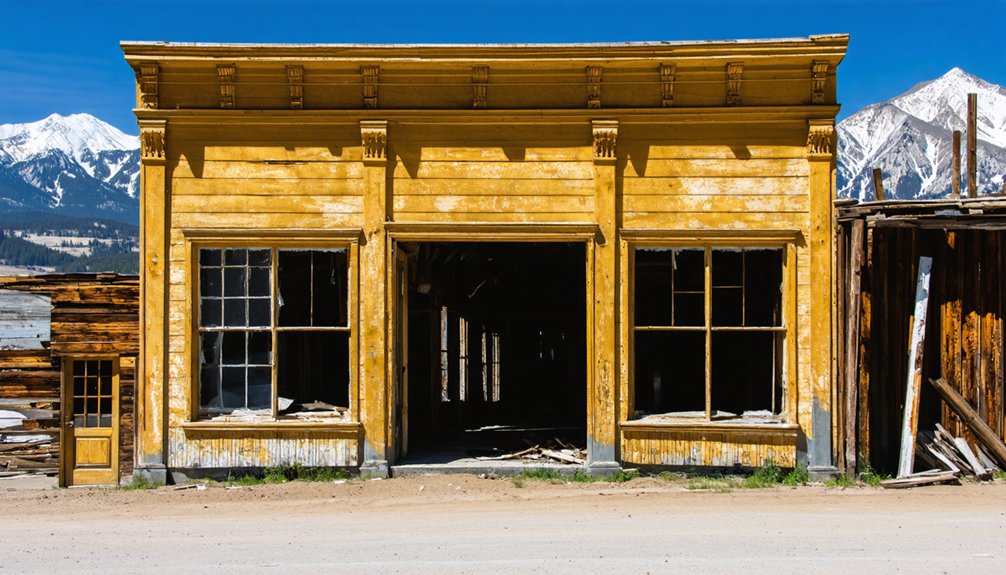
If you’re serious about experiencing California’s ghost town history firsthand, a few sites stand out for their exceptional preservation and accessibility.
Bodie State Historic Park maintains its structures in a state of arrested decay, giving you an unaltered look at 19th-century life.
While Calico Ghost Town—restored by Walter Knott in the 1950s—offers daily access from 9am to 5pm.
Shasta State Historic Park’s half-ruined brick buildings and Colonel Allensworth’s vibrant restored collection round out your options for well-documented, historically significant exploration.
Top Preserved Historic Sites
What separates a truly preserved ghost town from a crumbling ruin worth skipping? Active management and documented historical integrity. California’s top sites let you explore ancient artifacts and underground tunnels without bureaucratic interference.
Key preserved sites worth your time:
- Bodie State Historic Park – Arrested decay keeps structures authentic; no restoration distorts the record
- Calico Ghost Town – Walter Knott restored original buildings in the 1950s; open daily 9am–5pm
- Shasta State Historic Park – Half-ruined brick buildings preserve the “Queen City” of northern mining
- Colonel Allensworth – Fully restored collection within a state historic park
- Bennettville – Remote Mono County site showing raw, unmanaged abandonment post-1890
Each site delivers verifiable history. You choose how deep you go.
Accessing Well-Maintained Ghost Towns
California’s best-preserved ghost towns reward serious explorers who plan access strategically. Calico Ghost Town in San Bernardino County opens daily from 9am to 5pm, excluding Christmas, giving you direct access to restored structures that showcase original town infrastructure without requiring backcountry permits.
Walter Knott’s 1950s restoration preserved authentic mining technology artifacts alongside original buildings, making it California’s most accessible documented site.
Bodie State Historic Park operates under stricter conditions, maintaining buildings in arrested decay rather than restoration. You’ll navigate Mono County roads, some unpaved, to reach it.
Unlike Calico, Bodie demands deliberate planning around seasonal road closures.
Shasta State Historic Park preserves brick ruins from the northern mining district, offering you documented historical context within a structured park environment that balances freedom with preservation accountability.
Abandoned California Towns Most Visitors Never Discover
If you’re looking beyond the well-trafficked circuits, California’s lesser-known ghost towns reward your curiosity with raw, unfiltered history. Sites like Bennettville in Mono County and Bestville in Siskiyou County sit largely off the tourist radar.
Their abandonments are tied to mining failures and commodity collapses that ended communities almost overnight. You’ll find that these forgotten camps preserve a more honest picture of boom-and-bust economics than their restored, commercialized counterparts ever could.
Hidden Towns Few Explore
While Bodie and Calico draw steady crowds, dozens of California’s abandoned towns sit largely unvisited, their histories documented but rarely explored firsthand. Town abandonment following mining industry collapses left these places frozen in time, waiting for you to find them.
Consider these rarely visited sites:
- Bennettville (Mono County) – deserted after 1890 when silver extraction failed
- Bestville (Siskiyou County) – founded 1850, emptied by 1854
- Goffs (San Bernardino County) – a Mojave railroad support town now nearly forgotten
- Mormon Island (Sacramento County) – submerged underwater since 1856
- Eagle Mountain (Riverside County) – completely vacant since Kaiser Steel’s 1983 closure
You won’t find guided tours or gift shops here. You’ll find raw, unfiltered history instead.
Forgotten Mining Camp Secrets
Beyond the submerged ruins and railroad relics, California’s mining camps hold a different category of secrets—ones buried not underwater, but in overlooked county records, faded maps, and collapsed hillsides.
Bennettville in Mono County failed before it truly began—insufficient silver ended operations around 1890, leaving abandoned structures that most travelers bypass entirely.
Bestville in Siskiyou County lasted barely four years after its 1850 founding. These aren’t curated attractions; they’re raw sites where mining relics sit undisturbed.
Eagle Mountain, shuttered in 1983 after Kaiser Steel’s exit, sits 11 miles north of Desert Center—vacant, unglamourized, and rarely visited. You won’t find guided tours here.
What you’ll find instead are the unfiltered consequences of commodity dependence—collapsed ambitions documented in county archives that reward those willing to search independently.
Off-Path Ghost Town Discoveries
California’s least-visited ghost towns don’t appear on standard tourism maps, and that absence is exactly what preserves them. You’ll find underground tunnels, secret artifacts, and untouched structures that managed to escape commercial restoration.
Consider these off-path sites worth investigating:
- Bennettville (Mono County) — abandoned after 1890 following failed silver extraction
- Bettville (Siskiyou County) — founded 1850, vacant by 1854, rarely documented
- Ballarat (Inyo County) — completely emptied since 1917 with no current inhabitants
- Mormon Island (Sacramento County) — submerged underwater since 1856, accessible only by research
- Eagle Mountain (Riverside County) — sits vacant 11 miles north of Desert Center since 1983
You access these locations independently, outside guided tours, carrying your own maps and historical records.
Frequently Asked Questions
What Role Did Borax Mining Play in Creating California Ghost Towns?
Like a mirage fading fast, borax mining’s collapse left Calico a shell by 1907. You’ll find its borax mining history preserved through ghost town preservation efforts, showing how commodity markets can erase thriving communities overnight.
Are Any California Ghost Towns Currently Submerged Underwater?
Yes, you can find underwater ruins at Mormon Island in Sacramento County — it’s one of California’s submerged settlements, swallowed after 1856, proving that even ghost towns can’t always escape nature’s reclamation of forgotten places.
Which California Ghost Towns Were Originally Built as Hollywood Film Sets?
Built for films in the 1940s, Pioneertown’s history preservation makes it unique among ghost towns. You’ll find it’s a standout tourist attraction, originally constructed as a Hollywood shooting location outside Yucca Valley, not a mining settlement.
What Hours Is Calico Ghost Town Open to Visitors?
You can visit Calico Ghost Town daily from 9am to 5pm, excluding Christmas. It’s a prime ghost town tourism destination where historic preservation efforts’ve restored original structures, letting you explore California’s documented silver mining heritage firsthand.
Which California County Contains the Most Ghost Towns Within Its Borders?
San Bernardino County takes the cake! You’ll find it’s home to the most ghost towns, including Calico and Goffs. Its historic preservation efforts have transformed these sites into remarkable tourist attractions you can’t miss exploring.
References
- https://en.wikipedia.org/wiki/List_of_ghost_towns_in_California
- https://www.visitcalifornia.com/road-trips/ghost-towns/
- https://whimsysoul.com/must-see-california-ghost-towns-explore-forgotten-histories/
- https://maps.apple.com/guides?curated=7683917705499014961&_provider=9902
- https://patch.com/california/banning-beaumont/13-ghost-towns-explore-california
- https://www.youtube.com/watch?v=ZtBc0thPiyE
- https://www.youtube.com/watch?v=y_-RtIvwMO4&list=TLPQMjAwMjIwMjY2gSWM1A3T9A&index=10
- https://www.wikiwand.com/en/articles/List_of_ghost_towns_in_California