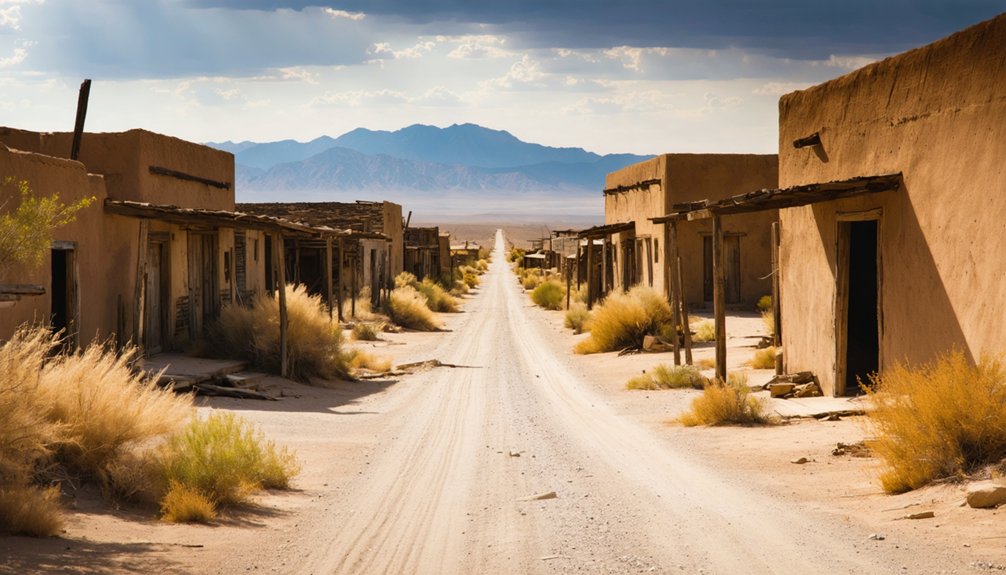
Planning a ghost town road trip to Terra Cotta, California means heading into Riverside County’s Warm Springs Valley, northwest of Lake Elsinore. You’ll access the site via Lakeshore Drive onto Terra Cotta Road or from I-15 at Nichols Road. Expect rough dirt roads, zero amenities, and no tourist infrastructure — just a raw, open landscape where a failed clay-tile empire once stood. Visit in fall or spring for the best conditions, and keep exploring to uncover everything this forgotten town has to offer.
Key Takeaways
- Terra Cotta is located in Warm Springs Valley, Riverside County, accessible via Lakeshore Drive onto Terra Cotta Road or I-15 at Nichols Road.
- Visit in fall or spring for mild temperatures; avoid summer due to extreme heat exceeding 100°F.
- Use a high-clearance vehicle, drive under 15 mph on dirt roads, and carry a spare tire.
- Bring water, sunscreen, sturdy footwear, a printed map, and a flashlight, as the site lacks facilities and cell service.
- Only faint dirt street grids remain; no structures, markers, or tourist infrastructure exist at this unmanaged site.
What Is Terra Cotta, California’s Ghost Town?
Tucked away in Warm Springs Valley northwest of Lake Elsinore, Terra Cotta is a ghost town in Riverside County that’s been swallowed by sagebrush and silence. Once a promising industrial settlement founded in 1887 during Southern California’s railroad-driven land boom, it never fulfilled its ambitious destiny.
Prospector John Hoff discovered coal and clay deposits nearby in 1885, envisioning a thriving terra cotta tile manufacturing hub. Instead, inferior mineral deposits and a devastating 1891 factory fire sealed the town’s fate.
Today, you’ll find only a bare grid of dirt streets cutting through wild sagebrush — no buildings, no preservation efforts, no guided tours. Local legends keep its memory alive among Lake Elsinore residents, but the land itself speaks freely, untouched and unapologetically raw.
The Rise and Fall of Terra Cotta’s Clay Industry
When John Hoff struck what he believed were valuable coal and clay deposits north of Elsinore in 1885, he didn’t just find minerals — he found a vision. He imagined a thriving clay manufacturing hub producing terra cotta tiles, something between artisan pottery and industrial-scale output. Backed by Los Angeles investors, he built the town and factory from scratch.
But reality hit fast. Both deposits proved inferior in quality, making profitable production nearly impossible. The factory limped along for years before a night watchman’s lantern ignited the main building in October 1891, destroying it within hours.
Crews rebuilt it by February 1892, but operations permanently suspended that spring. The dream that launched an entire town had quietly collapsed, leaving only dirt streets cutting through sagebrush.
How to Get to Terra Cotta Ghost Town
Now that you know what reduced Terra Cotta to a ghost town, you might want to see what’s left for yourself. You’ve got two straightforward routes to reach this forgotten corner of Riverside County.
From Lakeshore Drive, turn onto Terra Cotta Road and follow it into Warm Springs Valley, northwest of Lake Elsinore. Prefer the freeway? Exit I-15 at Nichols Road and navigate toward the site from there.
Don’t expect historical artifacts or guided tours — nobody manages this place. What you’ll find are dirt streets cutting through sagebrush, local legends whispered among Lake Elsinore residents, and a desolate landscape that speaks for itself.
Bring water, prepare for rough off-road conditions, and arrive ready to experience raw, unfiltered history on your own terms.
What You’ll Actually See at the Site Today
When you arrive at Terra Cotta, don’t expect dramatic ruins or weathered buildings — you’ll find only a faint grid of dirt streets cutting through open sagebrush.
The industrial ambitions that once drove this town have left virtually no physical trace, with no structures standing to mark where the factory or homes once stood.
What you’re really seeing is an outline of a dream that collapsed under its own failed promises, preserved only in the land’s quiet, desolate geometry.
Dirt Streets And Sagebrush
Once you turn onto Terra Cotta Road, you’ll quickly realize the town lives up to its ghost town reputation — there’s simply nothing left standing. What greets you instead is a quiet grid of dirt streets cutting through dense sagebrush, ghostly outlines of a community that never quite made it.
There are no markers, no fences, no tourist accessibility infrastructure of any kind — just open land and historical preservation left entirely to imagination. The street pattern itself is the only artifact remaining, a skeletal reminder of John Hoff’s ambitious 1887 vision.
You’ll want sturdy tires and a sense of adventure. The terrain is raw, unmanaged, and completely unfiltered. For travelers who prefer their history without guardrails, Terra Cotta delivers exactly that kind of freedom.
No Structures Remain
Beyond those ghostly dirt streets, the absence of standing structures becomes the defining feature of Terra Cotta’s landscape. You won’t find crumbling walls, rusted machinery, or any historical artifacts hinting at the factory that once operated here.
The 1891 fire, followed by the permanent shutdown in spring 1892, effectively erased what little the town had built.
Without preservation efforts, nature reclaimed everything. Sagebrush now fills the spaces where workers once manufactured clay tile products, and silence replaces the industrial noise that briefly defined this valley.
You’re fundamentally walking through an open-air historical void.
That rawness is precisely what makes Terra Cotta compelling for independent explorers. You’re not consuming a curated experience — you’re reading absence itself, piecing together a boom-and-bust story from nothing but dirt and desert air.
Best Time of Year to Visit Terra Cotta
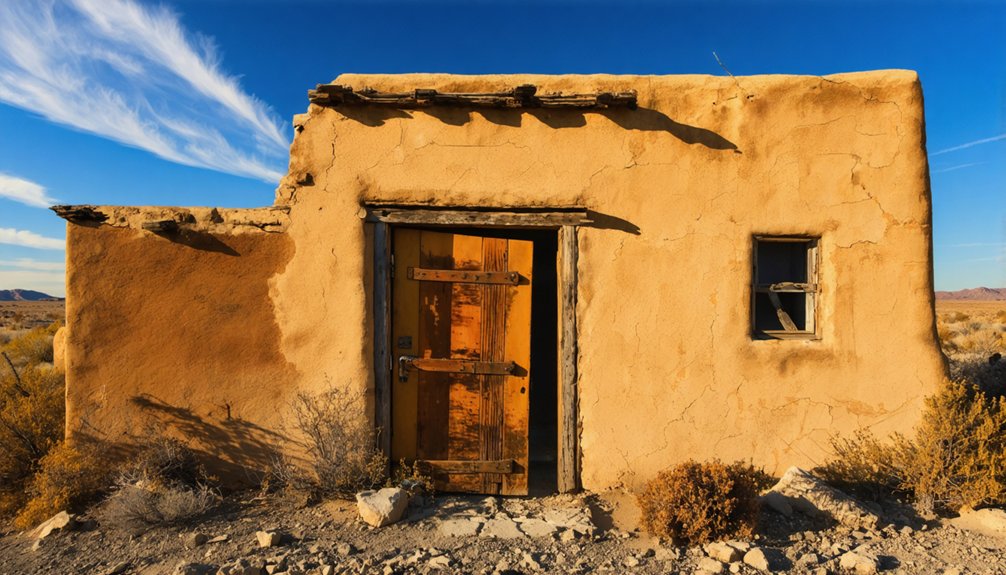
Fall and spring offer the most comfortable conditions for exploring Terra Cotta, when mild temperatures make walking the dusty dirt streets far more enjoyable.
You’ll want to avoid summer visits entirely, as Riverside County’s desert heat routinely pushes past 100°F, turning an open-air ghost town into an endurance test.
If you visit between October and April, you’ll get cooler temperatures, better light for photography, and a far more rewarding experience among the sagebrush.
Ideal Visiting Seasons
Winter and spring are your best bets for visiting Terra Cotta, when Riverside County’s mild temperatures make trekking through sagebrush-lined dirt streets far more comfortable than the brutal summer heat.
December through April keeps highs manageable, letting you freely explore the ghost town’s remaining dirt street grid without battling triple-digit temperatures.
Since there are no visitor facilities here—no shade structures, restrooms, or staffed historical preservation efforts—you’re entirely self-reliant.
Summer turns this open valley into an oven, making even a short walk punishing.
Fall offers a reasonable alternative, with cooling temperatures returning by October.
Whatever season you choose, bring plenty of water, wear sturdy footwear for the uneven terrain, and pack sun protection.
Terra Cotta rewards the prepared traveler who respects its raw, unmanaged landscape.
Weather Conditions To Expect
Riverside County’s inland valleys can surprise you with their temperature extremes, and Terra Cotta sits squarely in that unpredictable zone. Seasonal weather patterns here follow a desert-influenced rhythm — scorching summers push temperatures well above 100°F, while winter nights can dip near freezing.
Spring and fall offer the most comfortable windows for exploring the site’s dusty dirt roads.
Temperature fluctuations between morning and afternoon are dramatic, especially in transitional months. You’ll want to layer clothing if you’re visiting between October and April.
Summer visits demand early morning starts, plenty of water, and sun protection — the exposed sagebrush landscape offers zero shade.
Desert winds occasionally kick up through Warm Springs Valley, reducing visibility on unpaved roads.
Check local forecasts before heading out, and always carry extra water regardless of season.
Avoiding Extreme Heat
Knowing what weather to expect is one thing — timing your visit around it’s another. Terra Cotta sits in Riverside County, where summers push temperatures well past 100°F, turning the sagebrush flats into an unforgiving oven. You’ll want to plan your road trip between October and April, when cooler temps make exploring dirt streets genuinely enjoyable.
Spring visits reward you with wildflower blooms scattered across the valley, adding unexpected color to an otherwise desolate landscape. Winter nights offer spectacular star gazing, with minimal light pollution enhancing the ghost town’s eerie atmosphere.
If you must visit in summer, go early morning and leave before noon. Pack extra water regardless of season — the site is unstaffed, remote, and completely without shade or facilities.
What to Bring for Your Terra Cotta Road Trip

Since Terra Cotta is an unstaffed, open-access site with no facilities, you’ll want to pack smart before heading out. Bring plenty of water, sunscreen, and sturdy footwear suited for traversing dirt roads through thick sagebrush.
Pack water, sunscreen, and sturdy shoes — Terra Cotta’s dirt roads and sagebrush demand preparation before you arrive.
A printed or downloaded map helps since cell service can be unreliable in Warm Springs Valley.
Carry a camera to document the ghostly street grid and capture the desolate landscape on your own terms.
History enthusiasts should bring a notebook to record observations about potential historical artifacts scattered across the site.
Locals familiar with the area’s local legends suggest a flashlight for examining shadowed terrain.
Pack snacks, a first aid kit, and keep your gas tank full before exiting I-15 at Nichols Road.
Freedom tastes better when you’re prepared.
Safety Tips for Driving Terra Cotta’s Dirt Roads
Once you’ve packed your gear, traversing Terra Cotta’s unmaintained dirt roads demands the same level of preparation you gave your supply list.
Drive slowly through the sagebrush-lined streets, since loose gravel and uneven terrain can catch you off guard. A high-clearance vehicle handles these conditions best, keeping you in control without damaging the fragile landscape.
Stay on the established dirt road grid rather than forging new paths. Veering off-course disturbs the ground and threatens any buried historical artifacts that preservation efforts rely on remaining undisturbed.
Keep your speed under 15 mph to maintain traction and avoid kicking up excessive dust.
Check your tire pressure before arriving, carry a spare, and let someone know your plans.
Terra Cotta rewards careful, respectful drivers with an unfiltered glimpse into California’s boom-and-bust past.
Why Terra Cotta Is Unlike Any Other California Ghost Town
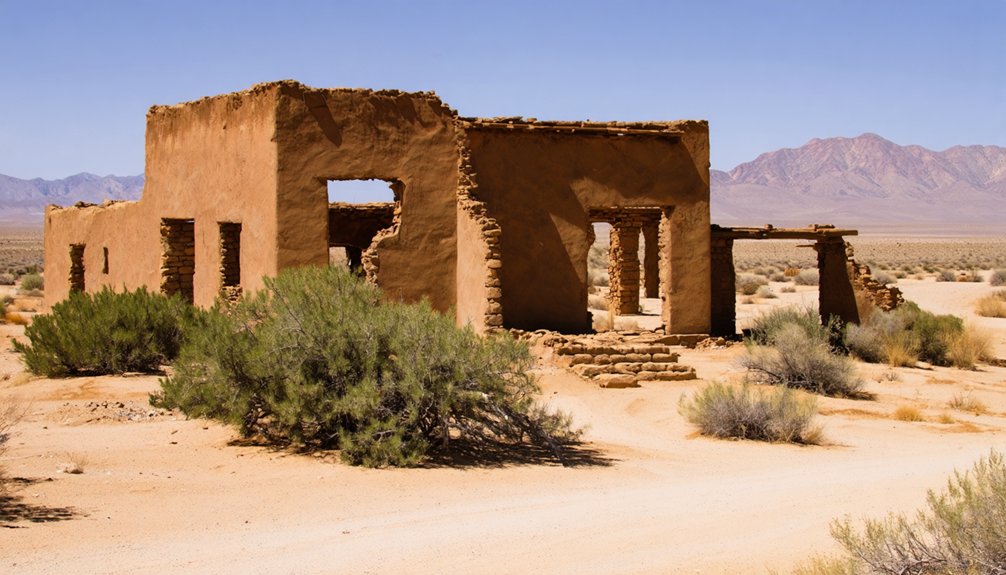
When you visit Terra Cotta, you won’t find a staffed park, ticket booth, or preserved building — just raw dirt streets cutting through sagebrush where a failed clay-tile factory once stood.
Unlike Calico, which the state actively manages as a Silver Rush Ghost Town, Terra Cotta is completely unmanaged, leaving you to piece together its boom-and-bust story from nothing but the land itself.
John Hoff’s 1887 dream collapsed almost as fast as it launched, and today that failure exists as one of California’s most honest, unfiltered ghost town experiences.
Unmanaged Raw Historical Remnants
Unlike the polished, admission-charging experience of Calico Ghost Town, Terra Cotta offers something far more raw: a silent, unmanaged landscape where history hasn’t been curated for you. There’s no ranger station, no gift shop, and no guided narrative controlling what you take away from the experience.
What you’ll find instead is pure, unfiltered mining history — just dirt streets cutting through sagebrush where a factory once burned and rebuilt, only to collapse permanently by 1892. Ghost town preservation here means nature and time have done the work, leaving only street outlines as quiet evidence of ambition gone wrong.
You’re free to explore on your own terms, interpret the silence however you choose, and connect directly with California’s boom-and-bust past without anyone managing the moment for you.
Boom-And-Bust Origins
Terra Cotta’s story begins not with gold or silver, but with a prospector’s gamble on coal and clay. In 1885, John Hoff discovered mineral deposits north of Elsinore and envisioned a thriving terra cotta tile industry. Backed by Los Angeles investors, the town launched during Southern California’s 1887 railroad-driven land boom.
But the mining legacy soured fast. Both deposits proved inferior, making profitable factory operations impossible. A fire destroyed the main building in 1891, and despite rebuilding, permanent closure followed by spring 1892.
You’re visiting a place where ambition collided with geological reality. Unlike managed sites with curated historical preservation, Terra Cotta offers you the raw, unfiltered truth of boom-and-bust California — just sagebrush, dirt streets, and the silence of a dream that couldn’t survive its own foundation.
No Structures Remain
Most California ghost towns give you something to photograph — a weathered facade, a rusted mining cart, maybe a crumbling chimney. Terra Cotta offers none of that. The factory fire of 1891 and decades of neglect erased every structure, leaving only a dirt street grid cutting through open sagebrush.
There are no visitor facilities here — no interpretive signs, no designated parking, no historical preservation efforts managing the site. You’re simply standing where an ambitious industrial town once operated and failed.
That rawness is exactly what makes Terra Cotta different. You won’t find a curated experience or a gift shop. What you’ll find is open land, quiet desert air, and the faint outline of streets that once connected a community nobody remembers.
Other Riverside County Ghost Towns Worth Adding to Your Route
While Terra Cotta makes a compelling stop, Riverside County’s ghost town circuit offers several other destinations worth folding into your route. Each site carries its own historical artifacts and local legends that reward curious travelers willing to explore freely.
- Eagle Mountain – A former iron mining camp with industrial remnants scattered across the desert.
- Midland – A railroad stop that quietly faded, leaving only traces of its former purpose.
- Temescal – A tin-mining settlement tied to early California commerce and rugged pioneer ambition.
- Calico – Though managed as a state park, it delivers a richer visual experience if you want preserved structures alongside raw history.
String these together and you’ve built a genuinely rewarding Riverside County ghost town loop.
How to Build a Multi-Stop California Ghost Town Road Trip
Riverside County alone gives you enough material for a weekend loop, but California’s broader ghost town network — spanning more than 150 abandoned settlements — opens the door to a much longer itinerary.
Riverside County alone offers a weekend’s worth of exploration — but California hides over 150 abandoned settlements waiting to be discovered.
Start at Terra Cotta, then push north toward North Bloomfield, where street grids echo similar boom-and-bust origins.
Head east to Calico, a designated State Silver Rush Ghost Town rich with historical artifacts and local legends dating back to the 1880s silver rush.
Each stop rewards you with a distinct layer of California’s abandoned past.
Plan your fuel stops carefully, carry water, and expect dirt roads throughout.
Linking these sites into a single route transforms isolated detours into a cohesive journey through the raw, unfiltered edges of California history.
Frequently Asked Questions
Is There Cell Phone Reception Available at the Terra Cotta Ghost Town Site?
Cell phone coverage isn’t guaranteed at Terra Cotta’s remote, unstaffed site. You’ll want to check your signal strength before venturing onto those rugged dirt roads through sagebrush, so download offline maps and embrace the wild freedom!
Are Pets Allowed When Visiting the Terra Cotta Ghost Town Area?
Since Terra Cotta’s an open-access, unstaffed site, you’re free to bring your pets along! No formal pet policies or leash requirements exist, so you and your furry companion can freely roam those dusty, sagebrush-lined streets together.
Can You Legally Collect Rocks or Artifacts From Terra Cotta’s Grounds?
There’s no clear guidance on legal restrictions for artifact collection at Terra Cotta. You should check with Riverside County authorities before collecting anything, as removing historical artifacts from public land can carry serious legal consequences.
Is the Terra Cotta Site Accessible for Visitors With Mobility Limitations?
You’ll find Terra Cotta’s rugged dirt roads challenging if you have mobility limitations. There aren’t accessible pathways or wheelchair rentals available, so prepare for uneven, sagebrush-lined terrain that demands careful navigation and adventurous determination.
Are There Any Guided Tours Offered at the Terra Cotta Ghost Town?
Among 150+ California ghost towns, Terra Cotta offers no guided tours — you’ll explore freely on your own terms. Without historical architecture or organized local legends, you’re left to uncover raw, unfiltered history through dusty sagebrush streets independently.
References
- https://en.wikipedia.org/wiki/Terra_Cotta
- https://www.pressenterprise.com/2012/08/03/lake-elsinore-the-forgotten-town-of-terra-cotta/
- https://en.wikipedia.org/wiki/Carnegie
- https://www.youtube.com/watch?v=uHd_jefd1lA
- https://www.nakedwanderings.com/review-the-terra-cotta-in-palm-springs-california/
- https://www.visitcalifornia.com/road-trips/ghost-towns/
- https://discover.hubpages.com/travel/Ghost-Towns-in-California