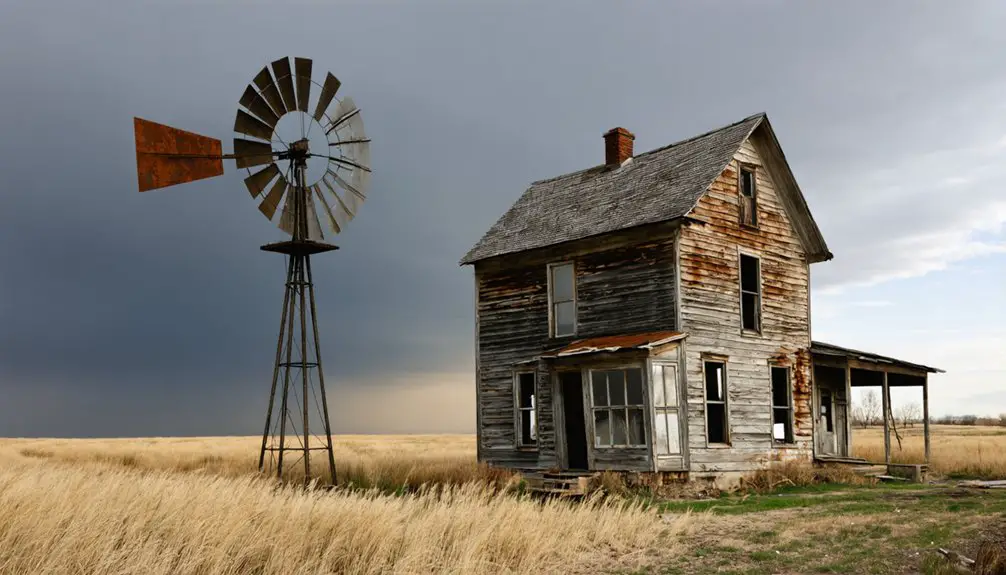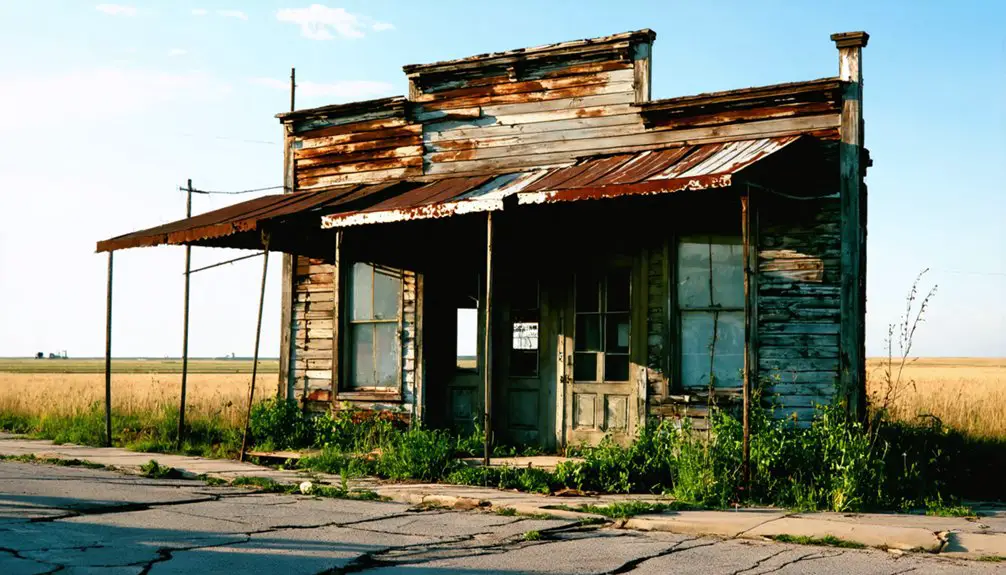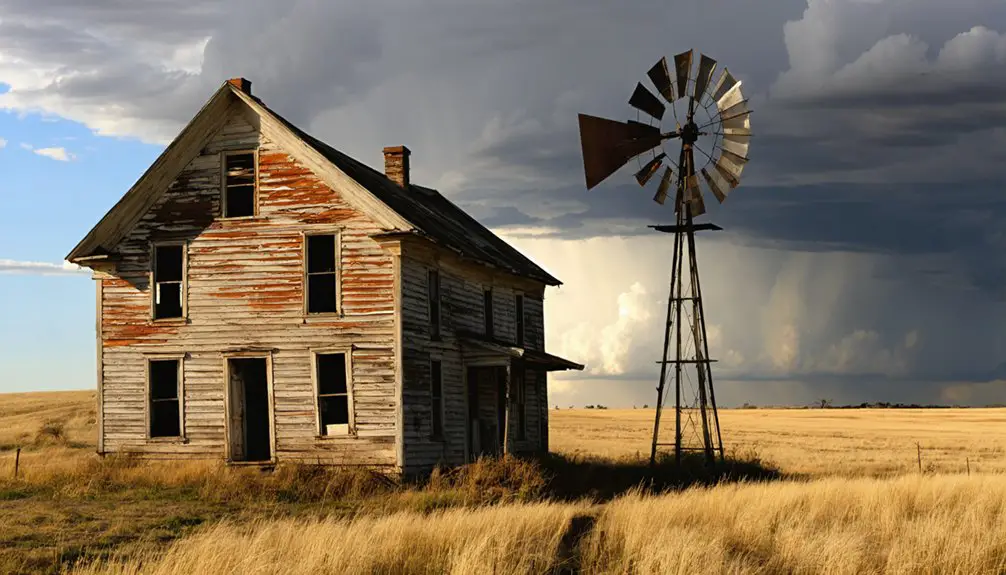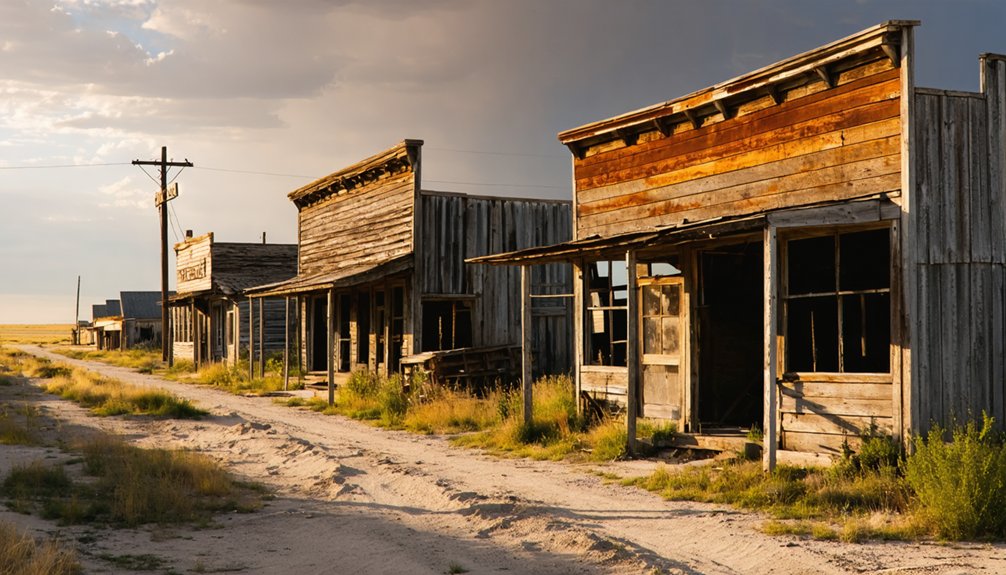
Nebraska’s railroad boom between 1870 and 1890 created hundreds of towns almost overnight, and you can still find more than 900 of them documented as abandoned or nearly abandoned across the state. They cluster along old railroad routes and river corridors, with counties like Knox, Cass, and Otoe holding the densest concentrations. Notable sites like Antioch’s Potash Ruins and St. Deroin reward careful exploration. Keep going to uncover exactly where to find them and how to plan your visit.
Key Takeaways
- Nebraska had over 900 towns documented as abandoned by the 1960s, largely due to railroad expansion and subsequent branch line closures.
- Ghost towns cluster along railroad routes and river systems, with Knox, Cass, and Otoe counties showing notable concentrations.
- Notable ghost towns include Antioch, known for Potash Ruins, and St. Deroin, a mid-19th century commercial settlement.
- Crounse features submerged foundations best viewed during low water at Branched Oak State Recreation Area.
- Research using USGS topographic maps, historic plat books, and aerial photographs improves accuracy when locating abandoned Nebraska settlements.
Why Nebraska’s Railroad Boom Left Hundreds of Towns Behind
Between 1870 and 1890, railroad companies laid track across Nebraska at a relentless pace, and towns sprouted along those lines with equal speed — over 900 of which would eventually become abandoned or nearly abandoned, as researchers documented by the 1960s.
Railroad Expansion drove this rapid settlement, giving ordinary people the freedom to stake claims, build communities, and trade goods across the plains. But that same dependence became a liability.
When Agricultural Decline collapsed regional economies and railroad companies began closing unprofitable branch lines by the late 1930s, these towns lost their commercial lifelines.
Unlike mining towns that emptied overnight, Nebraska’s communities eroded gradually — populations thinning season by season until little remained.
You can trace this slow unraveling through maps, county histories, and the silent remnants still scattered across the landscape.
The Nebraska Counties With the Highest Concentration of Ghost Towns
If you’re tracing Nebraska’s highest concentrations of ghost towns, Cass and Otoe counties stand out immediately, with documented abandonments including Oreopolis, Cassville, Rock Bluff, California City, Delaware City, and El Dorado, among others.
You’ll notice a clear geographic pattern tied to railroad branch lines and river corridors, where towns flourished briefly during the 1870–1890 expansion era before collapsing alongside the agricultural economy by the late 1930s.
Northeast Nebraska, particularly Knox County, adds another dense cluster of early plat book towns that erosion of population gradually reduced to near-nothing over decades.
Counties With Most Abandonments
While Nebraska’s ghost towns are distributed across the state, certain counties contain a disproportionately high concentration of abandoned settlements.
Abandoned railroads and population decline accelerated desertion in specific regions, leaving behind clusters of forgotten communities you can still explore today.
Three counties stand out for their remarkable concentration of lost towns:
- Cass County — Home to Oreopolis, Cassville, Mt. Pleasant, Rock Bluff, and Kanosha, all victims of shifting economic forces.
- Otoe County — Contains California City, Condit, Delaware City, El Dorado, and Erie, each representing collapsed frontier ambitions.
- Knox County — Northeastern Nebraska’s early plat book towns reflect gradual population decline following railroad branch closures.
These counties offer you the richest hunting grounds for uncovering Nebraska’s abandoned past.
Geographic Patterns Of Decline
Nebraska’s ghost towns don’t vanish randomly across the landscape — they cluster along predictable corridors shaped by railroad routes, river systems, and agricultural collapse.
Decline patterns reveal a clear geographic logic: northeastern Nebraska’s Knox County holds dense concentrations of early plat book towns, while western Nebraska’s railroad corridors expose abandoned Main Street buildings from 1906-era settlements.
Settlement shifts followed branch line closures, pulling populations toward surviving rail hubs. River-adjacent communities like St. Deroin faced erasure through flooding and shifting channels rather than economic failure alone.
Isolated grain elevators angled against county grids silently mark where railroads once ran.
Understanding these spatial clusters lets you trace Nebraska’s demographic contraction with precision, recognizing that geography, infrastructure, and agricultural economics dictated which communities survived and which disappeared entirely.
The Best Nebraska Ghost Towns Still Worth Visiting Today
If you’re ready to explore Nebraska’s most rewarding ghost town destinations, sites like Antioch, with its striking Potash Ruins, and Amboy, where a mill operated into the 1940s, offer tangible connections to the state’s abandoned past.
You’ll find hidden remnants—foundation stones, graded streets, and isolated grain elevators—that reward careful observation and prior research using aerial photographs or county histories.
Before you visit, consult ghosttowns.com, local plat books, and historical markers, such as the one commemorating the submerged schoolhouse at Branched Oak State Recreation Area, to guarantee you don’t miss the most historically significant traces still visible today.
Top Towns To Explore
From crumbling grain elevators to submerged foundations, several Nebraska ghost towns stand out as particularly compelling destinations for historical exploration.
These hidden treasures offer genuine historical significance for those seeking authentic encounters with Nebraska’s past.
- Antioch — Explore the iconic Potash Ruins, remnants of a once-industrious processing operation in western Nebraska’s sandhills region.
- Crounse — Visit Branched Oak State Recreation Area, where submerged foundations and building fragments emerge at low water, blending natural beauty with sunken history.
- St. Deroin — Walk through this mid-19th century Missouri River settlement, once a vibrant commerce hub, now a quietly faded reminder of early frontier life.
You’ll find each site rewards careful observation, connecting you directly to Nebraska’s layered, often overlooked historical narrative.
Hidden Historical Remnants Remaining
Although Nebraska claims over 900 abandoned or nearly-abandoned towns, only a handful preserve enough physical evidence to reward serious on-site investigation.
When you explore railroad ghost towns, you’ll encounter shaded streets, mature trees, and structural foundations that safeguard hidden artifacts from the region’s settlement era.
Submerged sites like Crounse resurface during low water, exposing foundation stones that carry forgotten stories of displacement and flood control decisions.
River settlements along Missouri River crossings retain subtle earthworks marking early ford communities.
You’ll find isolated grain elevators angled against county road grids, silently signaling abandoned rail corridors.
County histories and aerial photographs help you pinpoint exact locations before visiting.
These tangible remnants transform abstract historical records into direct, physical encounters with Nebraska’s rapidly vanishing frontier past.
Planning Your Ghost Town Visit
Knowing where physical remnants survive gives you a foundation for selecting which sites deserve a dedicated visit. Cross-reference historic plat maps against current county grids, then prioritize locations retaining structural evidence.
Ghost town photography rewards preparation—arrive during golden hour when low-angle light defines foundation stones and weathered facades sharply. Historical storytelling becomes authentic when you’ve consulted county newspapers and oral histories beforehand.
- Verify access rights on private agricultural land before entering; many Nebraska ghost towns sit within working farms.
- Carry USGS topographic maps alongside digital navigation—isolated grain elevators angled against county grids confirm abandoned railroad corridors reliably.
- Visit Branched Oak Lake during low water to photograph submerged Crounse’s foundation stones, connecting visible remnants directly to documented flood-control history.
Which Nebraska Ghost Towns Vanished Along the State’s Rivers?
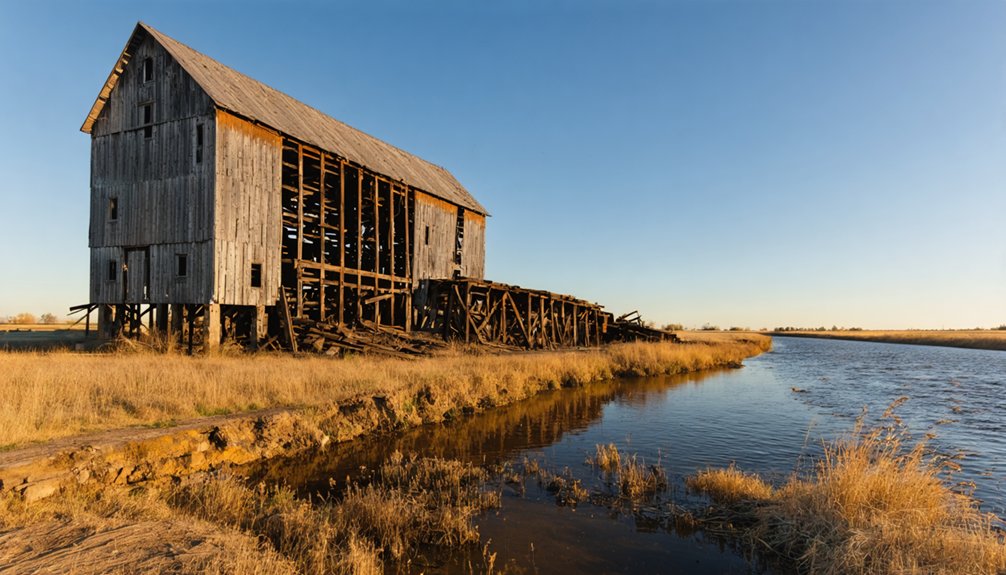
Nebraska’s rivers once served as lifelines for early settlement, drawing communities to their banks at fords and ferry crossings throughout the mid-19th century.
These river settlements flourished briefly before floods and shifting courses erased most historical remnants. St. Deroin once operated as a vibrant commercial hub before fading into obscurity.
Summerville occupied roughly 187 acres along the Missouri River, while Dobytown’s earth structures housed nearly 100 residents at its peak.
You’ll find little physical evidence today since water and erosion claimed most structures. Unlike railroad ghost towns that left graded streets and tree lines, river communities left almost nothing behind.
When you research these sites, you’ll rely primarily on maps, county records, and oral histories rather than on-site exploration.
Which Nebraska Ghost Towns Are Now Completely Underwater?
While river towns succumbed to erosion and flooding over decades, some Nebraska communities met a more deliberate fate: intentional submersion beneath reservoir waters.
These underwater towns preserve submerged history beneath state recreation areas, occasionally surfacing when water levels drop.
Beneath Nebraska’s recreation areas, submerged towns quietly wait, their histories resurfacing whenever dropping water levels reveal forgotten foundations.
Crounse represents Nebraska’s most documented submerged history:
- Deliberate Flooding: The state submerged Crounse in the late 1960s specifically for Branched Oak Lake’s flood control project.
- Visible Remnants: During low water conditions, you can spot foundation stones and building fragments breaking the surface, connecting you directly to vanished lives.
- Historical Commemoration: A historical marker at Middle Oak Creek Campground honors the old schoolhouse, ensuring Crounse’s story survives above water even when its physical remains don’t.
Branched Oak State Recreation Area now blends outdoor freedom with this layered, underwater history.
How to Track Down Nebraska Ghost Towns Before You Visit
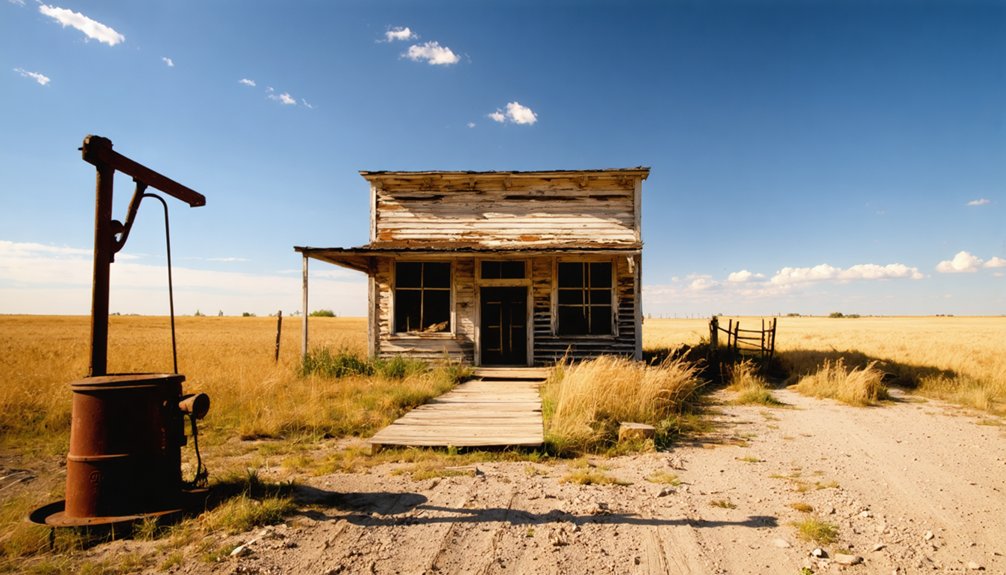
Before you set foot on a ghost town site, layering multiple research methods dramatically improves your chances of finding something worth the trip.
Compare historic plat maps against current county maps to identify vanished settlements, then cross-reference aerial photographs to spot foundations, graded streets, and old railroad rights-of-way.
County histories, local newspapers, and oral histories often preserve ghost town legends that official records overlook entirely.
Railroad towns are your easiest targets—shaded tree lines, graded avenues, and isolated grain elevators angled against county grids signal their locations clearly.
Check preservation efforts through state historical societies, as active documentation frequently reveals access permissions and site conditions beforehand.
Combining cartographic, photographic, and archival sources before departure transforms an uncertain outing into a focused, rewarding exploration of Nebraska’s abandoned past.
What Separates a Nebraska Ghost Town From an Abandoned Town?
The distinction between a ghost town and an abandoned town isn’t always sharp, but Nebraska’s history clarifies the difference more than most states do.
Ghost town characteristics typically include visible structural remains, platted streets, and documented community life. Abandoned town definitions, however, often describe sites where erasure is nearly complete.
Here’s how you can separate the two:
- Physical evidence — Ghost towns retain foundations, tree lines, or graded roads; abandoned towns leave almost nothing standing.
- Community record — Ghost towns appear in county histories, plat books, and newspapers with named residents.
- Gradual decline — Nebraska’s ghost towns eroded slowly through agricultural collapse and railroad abandonment, unlike suddenly deserted mining settlements elsewhere.
Understanding this distinction sharpens your research and sets accurate expectations before you visit.
Frequently Asked Questions
Did Any Nebraska Ghost Towns Ever Get Successfully Rebuilt or Repopulated?
The knowledge doesn’t confirm any successful rebuilding efforts or community initiatives that fully repopulated Nebraska’s ghost towns. You’ll find most sites remain abandoned, with gradual population erosion making complete revival virtually impossible historically.
Are There Legal Restrictions on Exploring or Collecting Artifacts From Ghost Towns?
Yes, you’ll face legal implications when exploring Nebraska’s ghost towns. Federal and state laws protect artifact preservation, so you can’t collect items from protected sites without permits, risking fines or criminal charges.
How Many Nebraska Ghost Towns Still Have Active Post Offices Today?
The exact count isn’t confirmed, but some ghost towns retain active post offices despite dwindling ghost town populations. You’ll find these remnants fascinating — they’re lifelines connecting isolated communities to the outside world, preserving identity against abandonment.
What Role Did the Dust Bowl Specifically Play in Nebraska Town Abandonments?
The Dust Bowl’s dust impacts accelerated Nebraska’s economic decline, driving migration patterns away from rural areas. You’ll find agricultural failures compounded railroad closures, hastening town abandonments that’d already begun weakening communities throughout the 1930s.
Were Any Nebraska Ghost Towns Ever Featured in Films or Television?
You won’t find specific records in the available knowledge confirming Nebraska’s ghost towns as film locations, though their ghost town legends and haunting landscapes certainly possess cinematic qualities that’d naturally attract filmmakers and storytellers seeking authentic, freedom-evoking backdrops.
References
- https://history.nebraska.gov/finding-nebraskas-ghost-towns/
- https://negenweb.us/knox/stories/ghosttowns.htm
- https://visitnebraska.com/trip-idea/explore-7-authentic-ghost-towns-nebraska
- https://www.youtube.com/watch?v=q1Bww945Vhc
- https://history.nebraska.gov/wp-content/uploads/2017/12/doc_publications_NH1937GhostTowns.pdf
- https://www.ghosttowns.com/states/ne/ne.html
- https://www.youtube.com/watch?v=Iw21dwaXkck