Planning a ghost town road trip to Warwick, Oklahoma means trading flashy attractions for genuine American history. Founded in 1903 along the Fort Smith & Western Railway, Warwick once thrived with hotels, a bank, and a cotton gin before the railroad closure and Interstate 44 quietly drained its lifeblood. Today, roughly 100 to 150 residents still call it home, and the legendary Seaba Station Motorcycle Museum anchors Route 66 nearby. Stick around, and you’ll uncover everything worth knowing before you go.
Key Takeaways
- Warwick, founded in 1903, declined after railroad closure and Interstate 44 bypassed the town, shutting its post office permanently in December 1972.
- Despite ghost town status, Warwick maintains 100–150 residents, an active church, and modest community events, keeping it partially alive.
- The Seaba Station Motorcycle Museum, built in 1921 and listed on the National Register of Historic Places, is Warwick’s premier visitor attraction.
- Visit during spring or fall for comfortable temperatures, scenic wildflowers, golden morning light, and rich autumn colors near the church.
- Reach Warwick by traveling eight miles west of Chandler on Route 66; allocate at least one hour to explore the area fully.
What Is Warwick, Oklahoma’s Ghost Town Story?
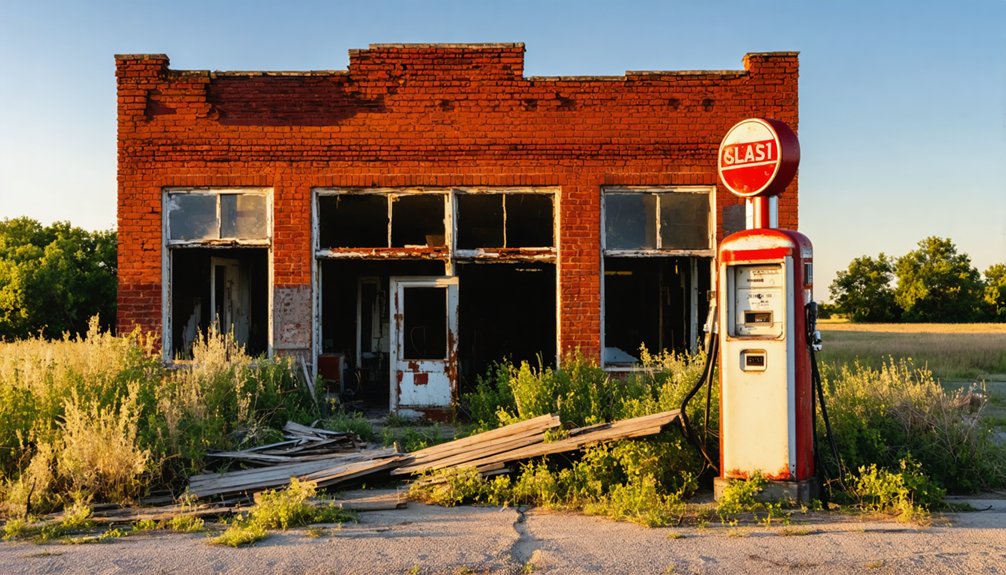
Once a thriving agricultural hub, Warwick, Oklahoma tells a familiar ghost town tale of rise, decline, and near-abandonment. Founded around 1903 along the Fort Smith & Western Railway, it quickly developed into a lively community with hotels, a cotton gin, a bank, and a newspaper.
Then came the shifts that define ghost town origins everywhere: the railroad depot closed, Interstate 44 bypassed the town, and the post office shut down permanently in December 1972. The original business district fundamentally vanished.
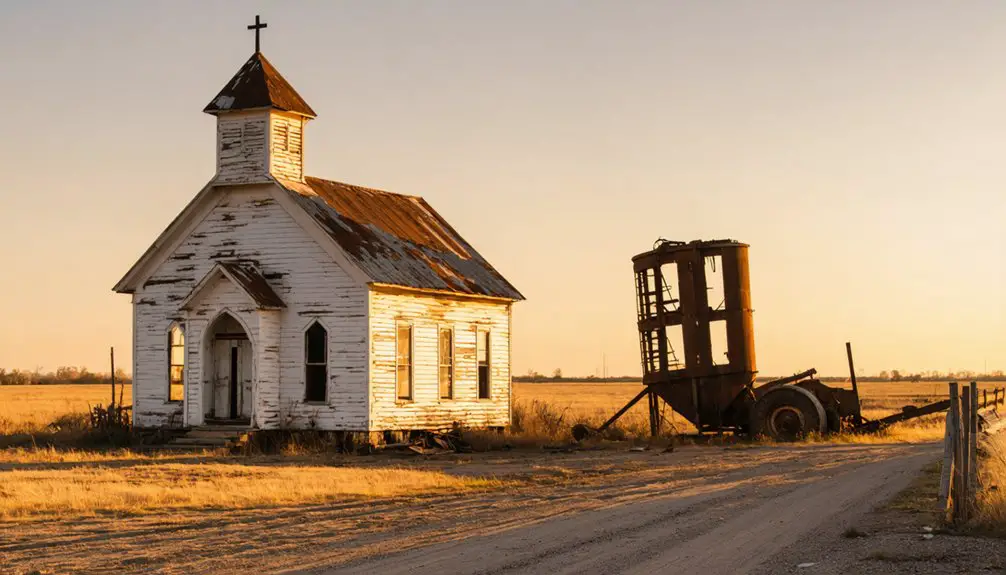
Yet Warwick isn’t fully gone. With an estimated 100 to 150 residents and an active church still standing, it displays quiet community resilience.
Warwick endures — a quiet remnant of resilience, where roughly 100 residents and one steadfast church refuse to let go.
You’ll find scattered homes and small buildings rather than a completely deserted landscape, making it a fascinating stop between abandonment and survival.
What Killed Warwick’s Once-Thriving Downtown?
When Warwick’s railroad depot shut down, it set off a slow but steady decline that the town never recovered from.
You can trace the next blow to Interstate 44, which bypassed Warwick entirely and pulled traffic away from its once-busy streets.
The final wound came in December 1972, when the post office closed permanently, stripping the town of one of its last anchors of community life.
Railroad Depot Abandoned
Though Warwick once buzzed with grocery stores, hotels, a cotton gin, a bank, and even its own newspaper, the town’s prosperity hinged on one critical lifeline: the railroad. When the depot closed, it severed Warwick’s economic artery almost overnight.
Railroad history tells a familiar story here — once the trains stopped coming, businesses had no reason to stay.
You can almost feel the silence when you visit today. The railroad history that once drew settlers and commerce has faded into memory, leaving scattered homes where a thriving downtown once stood.
It’s a textbook ghost town transformation — not dramatic, but gradual and inevitable. The abandoned depot didn’t just end an era; it quietly unraveled everything Warwick had spent decades building.
Interstate 44 Bypassed Town
The railroad’s departure dealt a serious blow, but Warwick’s death knell came from a different direction entirely — the construction of Interstate 44. When planners routed this superhighway away from Warwick, the bypass impact was immediate and devastating.
Traffic diversion pulled travelers, truckers, and commerce onto the faster highway, leaving Route 66 — and Warwick — behind. You can almost picture it: businesses that once thrived on through-traffic suddenly watching vehicles disappear toward a road they couldn’t reach.
No traffic means no customers. No customers means closed doors. One by one, Warwick’s grocery stores, filling stations, hotels, and shops shuttered permanently.
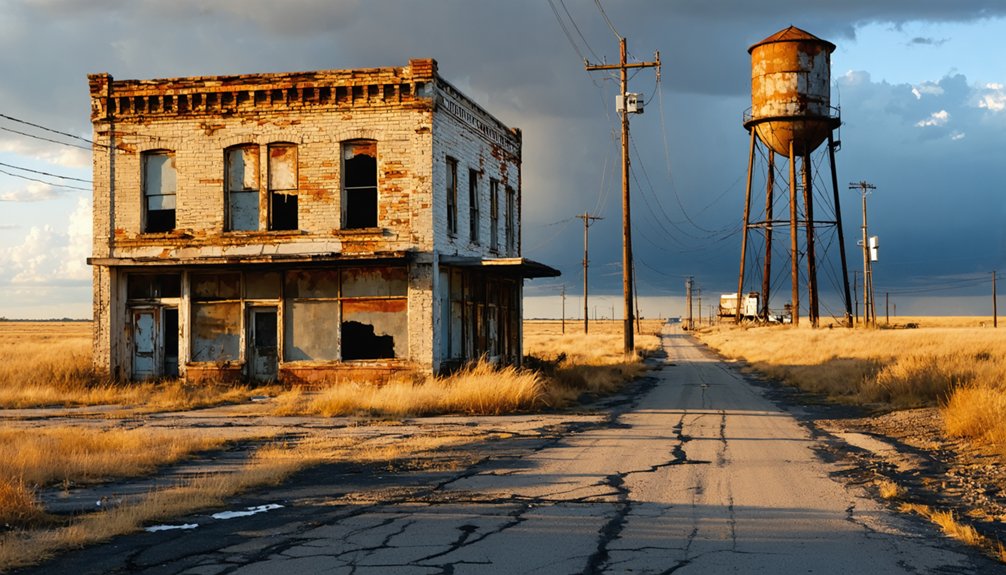
The town that once buzzed with activity became a quiet stretch of scattered homes. The interstate didn’t just redirect traffic — it redirected Warwick’s entire future.
Post Office Permanently Closed
Warwick’s post office closing in December 1972 marked the moment a community officially lost its heartbeat. When a post office shuts down, it doesn’t just stop delivering mail — it erases a daily gathering place where neighbors exchanged news, conducted business, and stayed connected.
Post office history in small towns like Warwick tells the real story of community survival. Once that anchor disappeared, Warwick’s remaining residents lost one of their last reasons to gather.
Community memories of bustling grocery stores, cotton gins, and two hotels faded alongside it. You’re visiting a place where every abandoned lot once held purpose.
Walking through Warwick today, you feel that absence sharply — the silence isn’t peaceful; it’s the echo of everything this town once was and gradually chose to leave behind.
Is Warwick a True Ghost Town Today?
When you roll through Warwick today, you’ll find a town of roughly 100 to 150 residents — small, but not fully abandoned.
You can still spot an active church and scattered homes that prove life hasn’t completely left this once-bustling community.
Warwick isn’t a true ghost town yet, but it’s undeniably a shadow of the thriving downtown that once anchored this stretch of Route 66.
Warwick’s Current Population Status
Despite its weathered reputation, Warwick isn’t a true ghost town—not yet. When you roll through, you’ll find an estimated 100 to 150 residents still calling this place home. That’s a genuine community engagement, however small, keeping local history alive rather than letting it fade completely into silence.
An active church still stands, anchoring the remaining scattered homes and small buildings that dot the landscape.
Sure, the original business district has vanished, and Warwick casts a shadow of its former self, but life persists here. You won’t find a fully abandoned settlement waiting for you—you’ll find a quiet, resilient community holding on.
That distinction matters when you’re road-tripping through Oklahoma’s forgotten corners, searching for authenticity rather than a theatrical ghost story.
Signs Of Community Life
So what does “ghost town” actually mean when you’re standing in Warwick, squinting at a weathered church through the summer haze? It’s not what Hollywood sold you.
Warwick isn’t fully abandoned — that active church still anchors the community, quietly preserving local traditions that outsiders rarely witness. You’ll spot scattered homes tucked among tree groves, small buildings holding their ground against decades of decline.
Community events may be modest, but they signal something stubborn and alive here. Wikipedia lists Warwick among Oklahoma’s ghost towns, yet qualifies it honestly — there’s still a pulse.
Think of it less as a ghost town and more as a place catching its breath. That distinction matters when you’re traveling Route 66 searching for authentic American stories.
Shadow Of Former Glory
Warwick doesn’t fit neatly into the ghost town category, and that ambiguity is exactly what makes it fascinating. You’re looking at a place caught between two worlds — not quite alive, not fully gone.
Its historical significance stretches back to early railroad days, bustling hotels, cotton gins, and a newspaper that gave residents a voice. Today, scattered homes and a functioning church remind you that community resilience hasn’t completely surrendered to decay.
Wikipedia lists Warwick among Oklahoma’s ghost towns, yet roughly 100 to 150 people still call it home. The post office closed in 1972, the business district vanished, and I-44 finished what abandonment started.
But you’ll sense something here — a quiet stubbornness that refuses to let Warwick disappear entirely.
What’s Left to See When You Visit Warwick
What’s left to see in Warwick may surprise you — this isn’t a fully abandoned ghost town, and a handful of worthwhile stops remain.
An active church still anchors the community, surrounded by scattered homes and small buildings that whisper local legends of a once-thriving town. Tree groves add a peaceful atmosphere worth exploring on foot.
The real highlight, though, is Seaba Station Motorcycle Museum, one of the area’s most compelling historic buildings.
Built in 1921 by John Seaba, it originally served Ozark Trail travelers before Route 66 even existed. Listed on the National Register of Historic Places, it reopened as a museum in 2010.
You’ll find vintage motorcycles, antiques, and genuine Route 66 character packed into one authentic stop you won’t want to skip.
The Seaba Station Motorcycle Museum on Route 66
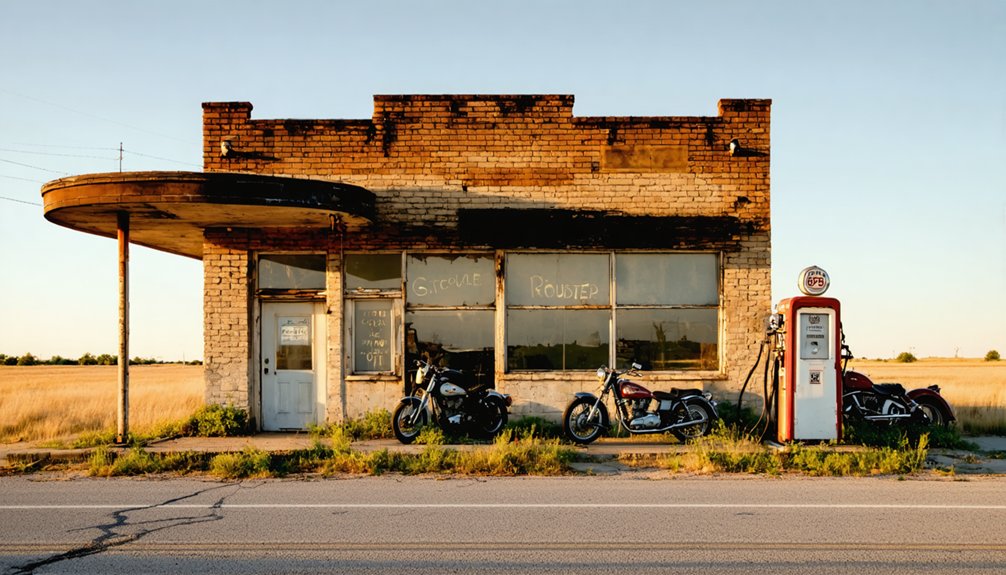
Few stops along Route 66 pack as much history into a single building as Seaba Station Motorcycle Museum, sitting at the northwest corner of Route 66 and Commerce Road, about a mile past the Route 66 and US-177 intersection.
Built in 1921 by John Seaba, it originally served Ozark Trail travelers before Route 66 even existed. Listed on the National Register of Historic Places in 1995, the station was restored that same year by Sonny and Sue Preston as an antiques shop, then reopened as a museum in 2010.
Today, it welcomes road trippers with motorcycle exhibits that celebrate two-wheeled freedom and open roads. Whether you’re chasing history or just stretching your legs, Seaba Station gives you a genuine, well-preserved reason to pull over and explore.
Nearby Stops That Make Warwick Worth the Detour
While Warwick itself rewards a curious traveler, the surrounding stretch of Route 66 between Chandler and Tulsa layers on even more reasons to slow down.
You’re already five miles from Davenport and eight miles east of Chandler, so both towns sit within easy reach. Wellston, which actually annexed Warwick, offers its own slice of small-town Oklahoma character.
If you’re drawn to historic landmarks, trace the original Ozark Trails highway alignment near Warwick, predating Route 66 itself. The old railroad junction at Hibsaw and the community of Midlothian add texture to the region’s layered history.
This corridor doesn’t demand rushing. You’ve got open road, genuine American history, and the freedom to stop wherever something catches your eye.
Best Time of Year to Drive Route 66 Through Warwick
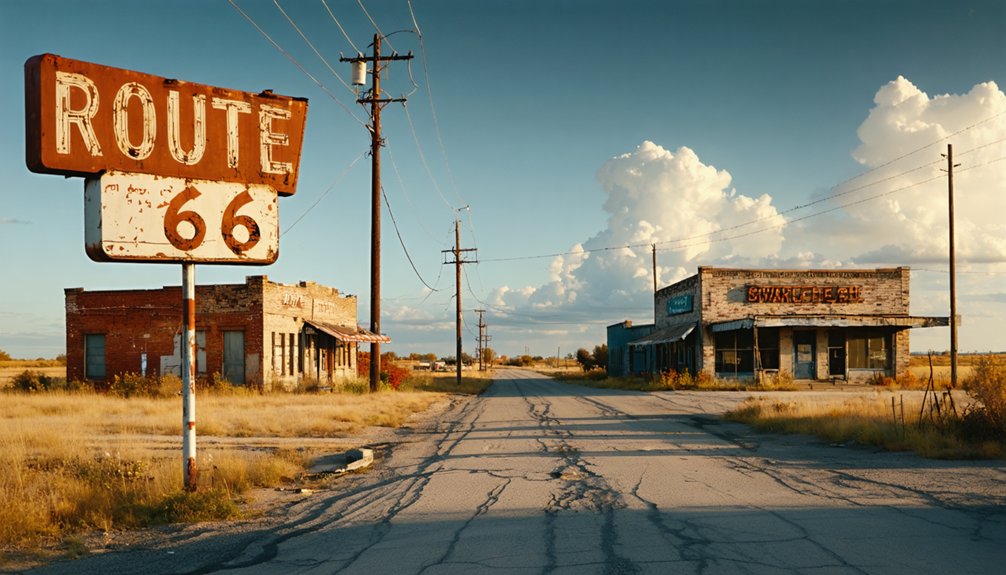
Spring and fall own this stretch of Route 66. During these best seasons, temperatures stay comfortable, wildflowers line the roadside, and the scattered homes and tree groves around Warwick look their most alive.
You’ll drive scenic routes without summer’s brutal Oklahoma heat beating through your windshield or winter ice making the old highway treacherous.
Spring mornings offer crisp air and golden light perfect for photographing Seaba Station’s weathered exterior. Fall delivers rich color along the tree groves near the church.
Summer works if you start early and push through before noon. Winter strips the landscape bare, giving Warwick an even more ghost-town feel — atmospheric but cold.
Whatever month you choose, a weekday visit keeps the road quiet and the experience genuinely yours.
How to Get to Warwick Along Route 66
Getting to Warwick means committing to the old road, not the fast one. Skip I-44 entirely and stay on historic Route 66 west from Chandler. That choice rewards you with a slower, richer drive through authentic Oklahoma landscapes.
Follow these Route 66 travel tips to reach Warwick without missing a beat:
- Start in Chandler and head west approximately eight miles on Route 66.
- Watch for the Seaba Station Motorcycle Museum at the NW corner of Route 66 and Commerce.
- Note the US-177 intersection roughly one mile before Seaba Station appears.
- Look for scattered homes and a church marking Warwick’s eastern tip.
You won’t find a welcome sign screaming at you. Warwick reveals itself quietly, and that’s exactly the point.
How to Make the Most of Your Stop in Warwick
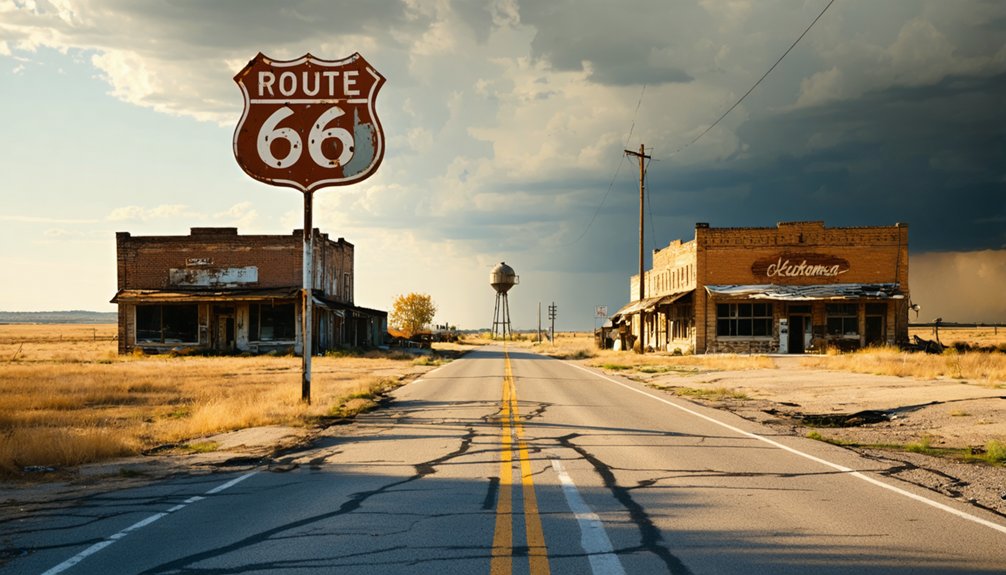
Stopping in Warwick rewards curiosity more than speed, so give yourself at least an hour to absorb what’s left.
Begin at Seaba Station Motorcycle Museum, where Warwick history meets Route 66 attractions in a beautifully restored 1921 service station. Walk the exhibits, admire the motorcycles, and imagine the Ozark Trail travelers who once fueled up here.
Seaba Station blends Warwick history and Route 66 charm inside a beautifully restored 1921 service station worth every minute.
Step outside and drive the surrounding streets, noting scattered homes, tree groves, and the active church that keep this community breathing. Don’t rush through — small details tell the biggest stories in a place like this.
Pair your visit with a short detour toward Wellston or Chandler to round out the experience. Bring water, wear comfortable shoes, and let your schedule stay flexible.
Warwick moves slowly, and that’s exactly the point.
Frequently Asked Questions
Was Warwick Ever Considered for Annexation Before Wellston Took Over?
The knowledge doesn’t confirm if Warwick faced earlier annexation attempts before Wellston took over. What you do know is that Wellston’s annexation deeply shaped Warwick history, leaving annexation impact as a key factor in its decline.
Are There Any Annual Route 66 Events Specifically Held in Warwick?
Warwick’s calendar stays quietly modest—no dedicated local festivals or Route 66 events call this sleepy stretch home. You’ll find richer celebrations nearby, but Warwick itself invites you simply through its authentic, unhurried historic charm.
Did Warwick Ever Have a Mayor or Formal Town Government?
The available ghost town history doesn’t confirm if Warwick ever had a mayor or formal town leadership. You’d need to dig into local Oklahoma historical records to uncover those specific community governance details.
Can Visitors Access Original Ozark Trail Road Segments Near Warwick Today?
Like Kerouac chasing horizons, you can explore historic roadways near Warwick today! Original Ozark Trail segments remain accessible, offering trail preservation at its finest—you’ll feel that raw, untamed freedom as you cruise Route 66’s storied path.
Are There Any Camping or Overnight Accommodations Available Near Warwick?
You won’t find camping options or lodging facilities directly in Warwick, but you’ll discover accommodations in nearby Chandler or Wellston. These towns keep you close while you’re exploring Route 66’s fascinating historic stretches freely.
References
- https://www.legendsofamerica.com/ok-warwick/
- https://mix941kmxj.com/which-texas-and-oklahoma-towns-are-really-route-66-ghost-towns/
- https://usghostadventures.com/americas-most-haunted-trending/ghost-towns-to-visit-on-your-summer-road-trip-along-route-66/
- https://www.theroute-66.com/warwick.html
- https://www.youtube.com/watch?v=WJF6vDJUuBI
- https://www.youtube.com/watch?v=DbNZ_ag2WHo
- https://en.wikipedia.org/wiki/List_of_ghost_towns_in_Oklahoma
- https://www.youtube.com/watch?v=Tg8v5in7M3g