New Mexico’s ghost towns tell a story of rapid fortune and swift collapse. You’ll find communities that emerged almost overnight around mineral strikes — gold, silver, copper, coal — only to empty just as fast when resources dried up or railroads rerouted. Sites like Chloride, White Oaks, and Elizabethtown preserve this turbulent history in stone walls, mill ruins, and abandoned streetscapes. Stick around, and you’ll uncover exactly what shaped each town’s rise, fall, and current condition.
Key Takeaways
- Chloride is New Mexico’s best-preserved ghost town, featuring 27 intact structures that vividly reflect its silver-mining boom-and-bust history.
- Most ghost towns formed rapidly around mineral strikes, then collapsed after resource depletion or railroad rerouting left communities economically unviable.
- Notable sites include White Oaks, Lake Valley, Elizabethtown, Kingston, and Mogollon, each offering distinct architectural and historical remnants.
- Stone buildings survive longer than wooden structures, so preservation quality varies widely from near-intact towns to completely erased sites.
- Visitors should verify land access restrictions, carry detailed maps, and check road conditions before exploring remote ghost town locations.
Why New Mexico Has So Many Ghost Towns
New Mexico’s ghost towns didn’t appear by accident — they’re the direct result of boom-and-bust cycles that reshaped entire communities within a generation. When silver veins ran dry or railroad lines shifted course, towns lost their economic foundation almost overnight.
You’ll find that cultural influences shaped where settlements formed, drawing miners, traders, and farmers from distinct ethnic and regional backgrounds, each leaving traces in the architectural styles that still mark these sites. Spanish colonial stonework stood alongside Anglo timber-framed structures, reflecting layered histories compressed into small communities.
Agricultural decline, depleted coal seams, and vanishing trade corridors each contributed to abandonment. Understanding these forces doesn’t just explain why towns disappeared — it clarifies how quickly human ambition can build, and equally abandon, an entire way of life.
Why These Towns Boomed, Then Disappeared
When a mineral strike drew prospectors into New Mexico’s mountains, entire supply chains, saloons, assay offices, and family households followed within months. You’re looking at settlements that materialized almost overnight, driven by gold, silver, copper, and turquoise extraction.
Once those veins exhausted or commodity prices collapsed, economic rationale vanished equally fast.
Railroad rerouting accelerated abandonment further. When lines bypassed established communities, merchants relocated and populations evaporated. Agricultural towns faced comparable pressures through drought cycles and shifting regional markets.
The cultural significance of these sites lies precisely in how completely they document boom-and-bust cycles. Preservation challenges intensify because abandonment means no maintenance infrastructure remains.
Wooden structures burn or decay, leaving only stone foundations and scattered equipment as evidence of communities that once supported thousands of residents.
The Most Iconic Ghost Towns in New Mexico
Scattered across New Mexico’s high desert and mountain terrain, a handful of ghost towns stand out for their preservation, historical weight, and accessibility. Each site offers you a distinct lens into the region’s boom-and-bust past.
Scattered across high desert and mountain terrain, these ghost towns offer a distinct lens into the region’s boom-and-bust past.
Chloride retains 27 intact structures, making its ghost town architecture among the most complete in the state.
White Oaks draws visitors seeking authentic Old West character and cultural preservation through its surviving buildings and storied history.
Lake Valley presents striking visual remnants of a silver-driven economy, while Elizabethtown, once New Mexico’s largest town, survives as a humbling reminder of rapid rise and collapse.
Kingston and Mogollon round out the southwest’s most significant sites.
Together, these towns form a geographically and historically diverse record you can physically explore and interpret firsthand.
Ghost Towns Tied to New Mexico’s Mining Past
When you trace New Mexico’s ghost towns back to their origins, you’ll find that most grew directly out of mining booms centered on gold, silver, copper, turquoise, lead, and coal. Mining companies built entire towns around these resources, constructing homes, saloons, and supply stores to support the influx of workers chasing extraction profits.
Once the ore ran out or became economically unviable to extract, you’ll see the pattern repeat itself: the population dispersed, the businesses shuttered, and the settlements collapsed into the ruins visible today.
Mining Boom Settlement History
How quickly a town can rise and fall becomes clear when you trace New Mexico’s mining settlements back to their origins. Gold, silver, copper, and coal drew workers into remote terrain, and full communities formed almost overnight. Companies built infrastructure, housing, and commerce around a single extractable resource.
When that resource ran out, the economic foundation collapsed entirely.
You’re looking at a boom-and-bust cycle that repeated across the state throughout the 19th and early 20th centuries. What remains today carries real significance for cultural preservation, because these ruins document how settlement patterns were driven by extraction rather than sustainable planning.
Tourism development has since reframed many of these sites as heritage destinations, letting you explore the physical evidence of ambition, labor, and eventual abandonment firsthand.
Resource Depletion Town Decline
Once a mine’s ore deposits thinned or became too costly to extract, the towns built around them lost their only reason to exist. Workers left, businesses closed, and infrastructure crumbled without investment or population to sustain it.
You can see this pattern across New Mexico’s ghost towns, where economic collapse followed resource depletion almost immediately. Sites like Mogollon and Kingston reflect the cultural significance of communities that once thrived on silver and gold rushes, only to vanish within decades.
Preservation challenges compound over time — wooden structures rot, fires spread, and private land ownership restricts access. What remains are foundations, mine shafts, and stone ruins that demand your respect and careful observation.
These sites represent freedom’s double edge: opportunity built them, and its disappearance erased them.
Ghost Towns That Grew Along the Santa Fe Trail and Early Railroads
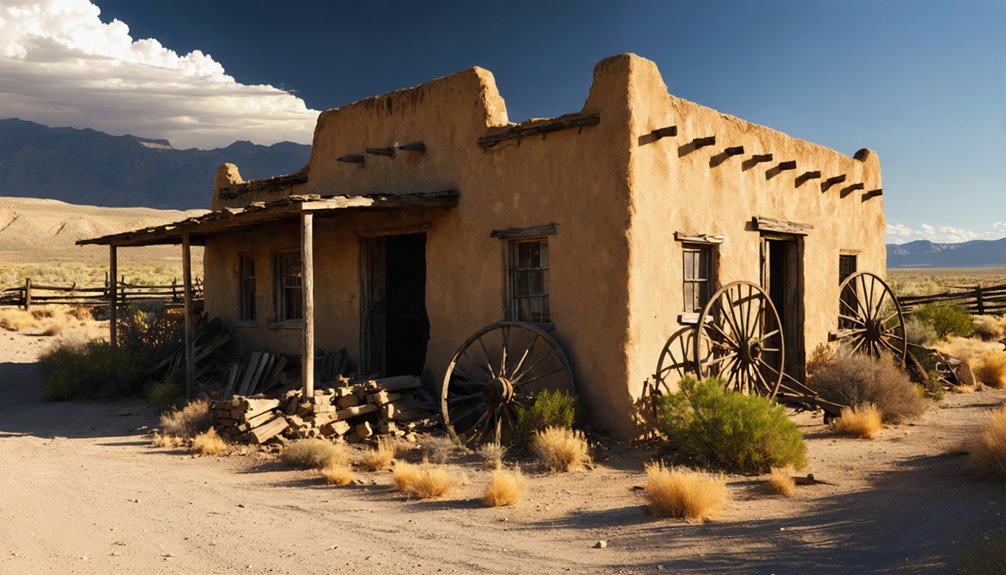
When you trace the routes of the Santa Fe Trail and early railroad lines across New Mexico, you’ll find ghost towns that rose and fell in direct response to shifting transportation infrastructure.
Towns that once served as critical supply stops, trading posts, or rail depots lost their economic purpose the moment routes were rerouted or rail service discontinued.
You can still identify remnants of these communities in northeastern New Mexico, where fading main streets and crumbling structures mark what were once thriving corridor settlements.
Santa Fe Trail Towns
Before the railroads arrived, the Santa Fe Trail served as New Mexico’s primary commercial artery, drawing merchants, settlers, and speculators into territories that would briefly flourish and then empty out.
You’ll find that these communities left behind remarkable evidence worth exploring:
- Elizabethtown once claimed the largest population in New Mexico, now reduced to foundations and local legends about its gold-rush origins.
- Cimarron retains cultural preservation efforts tied directly to frontier trade activity along the trail corridor.
- Rayado preserves Kit Carson’s former outpost, connecting you to documented frontier history.
- Wagon Mound marks a distinctive volcanic landmark that guided trail travelers and later anchored a community that faded after railroad rerouting diminished its commercial relevance.
Each site rewards independent research and direct visitation.
Railroad Expansion Decline
How a single rail line could transform a frontier settlement into a prosperous hub—and then hollow it out entirely—defines the central paradox of New Mexico’s railroad-era ghost towns. When the Atchison, Topeka & Santa Fe pushed through northeastern New Mexico, railroad labor built entire communities almost overnight.
Workers needed housing, merchants, and services, so town architecture expanded rapidly to meet demand. You can still trace that ambition in crumbling storefronts and abandoned depots scattered across the region.
Once routes shifted or freight patterns changed, economic collapse followed with equal speed. The same infrastructure that once signaled prosperity became a liability.
Exploring these sites, you’ll recognize how tightly a town’s survival depended on decisions made far beyond its borders.
Which Ghost Towns Still Have Standing Structures?
Although many of New Mexico’s ghost towns survive only as foundations and scattered debris, a few sites retain enough standing architecture to give visitors a tangible sense of their former scale. Preservation efforts and urban legends surrounding these places have kept public interest alive, drawing researchers and travelers alike.
Consider these four towns where you’ll still find standing structures:
- Chloride – 27 intact structures remain, making it the state’s best-preserved example.
- White Oaks – Several historic buildings still define its Old West character.
- Elizabethtown – Once Colfax County’s largest settlement, partial ruins remain visible.
- Lake Valley – Retains notable architectural remnants that reward exploration.
You’ll find each site offers direct, physical evidence of New Mexico’s boom-and-bust settlement history.
New Mexico Ghost Towns You Can Actually Visit
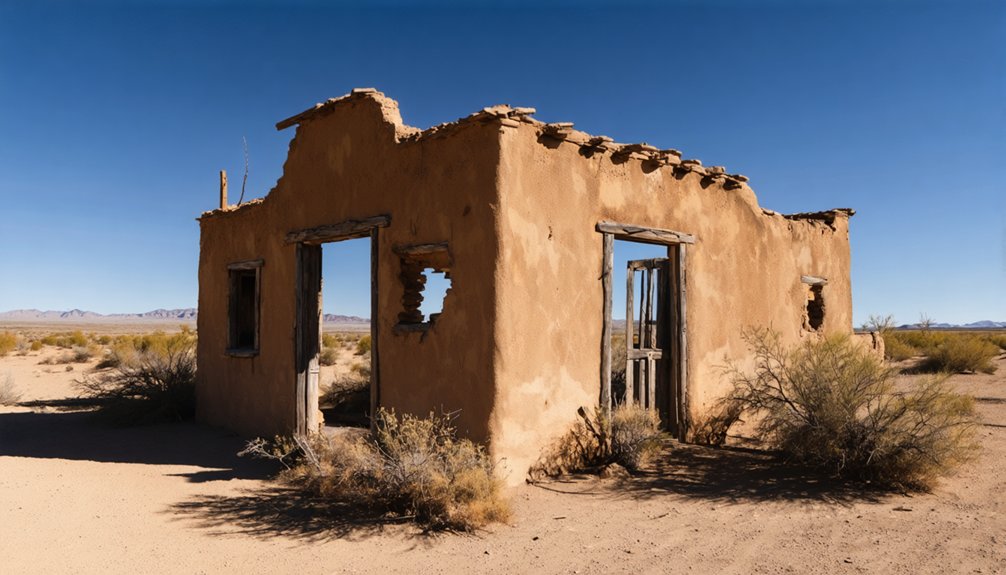
Knowing which ghost towns still have standing structures is only part of the equation—you also need to know which ones you can legally and practically reach. Lake Valley, Chloride, White Oaks, and Elizabethtown are all publicly accessible destinations where preservation efforts have kept key structures and cemeteries intact.
You’ll find that local legends surrounding mining booms and frontier violence add significant interpretive depth to each site. Chloride’s 27 remaining structures invite self-guided exploration, while Lake Valley operates as a managed heritage site with open access.
White Oaks rewards visitors with genuine Old West character and documented historical context. Some sites, however, sit on private land, restricting entry without permission or guided tours.
Always verify current access conditions before traveling to avoid wasted trips or legal complications.
Crumbling Saloons or Intact Streets: What to Expect
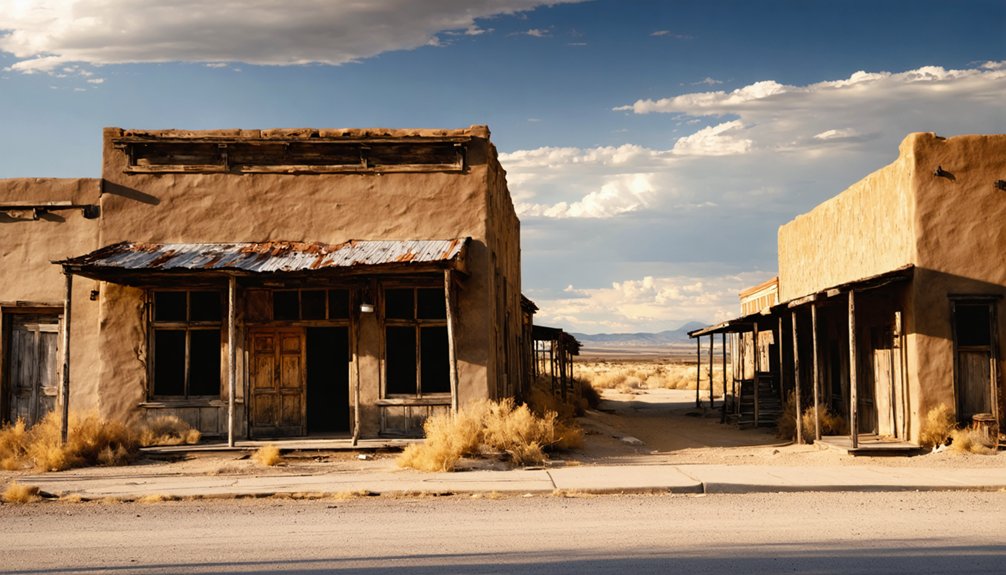
What you’ll find at New Mexico’s ghost towns varies dramatically depending on the site’s construction materials, economic history, and whether any preservation efforts have intervened. Wooden structures often succumbed to fire or decay, while stone buildings endured. Chloride retains 27 intact structures, offering vivid street scenes and rustic architectural details rarely found elsewhere.
Expect conditions to range across these categories:
- Near-intact settlements – Chloride and White Oaks preserve recognizable building facades and streetscapes.
- Partial ruins – Stone foundations, mill remnants, and cemeteries mark formerly active communities.
- Single surviving structures – Some sites retain only one building amid overgrowth.
- Submerged or erased sites – Certain towns exist only in historical records.
You’ll navigate freely through public sites but may encounter restricted access on private land.
How to Plan a New Mexico Ghost Town Road Trip
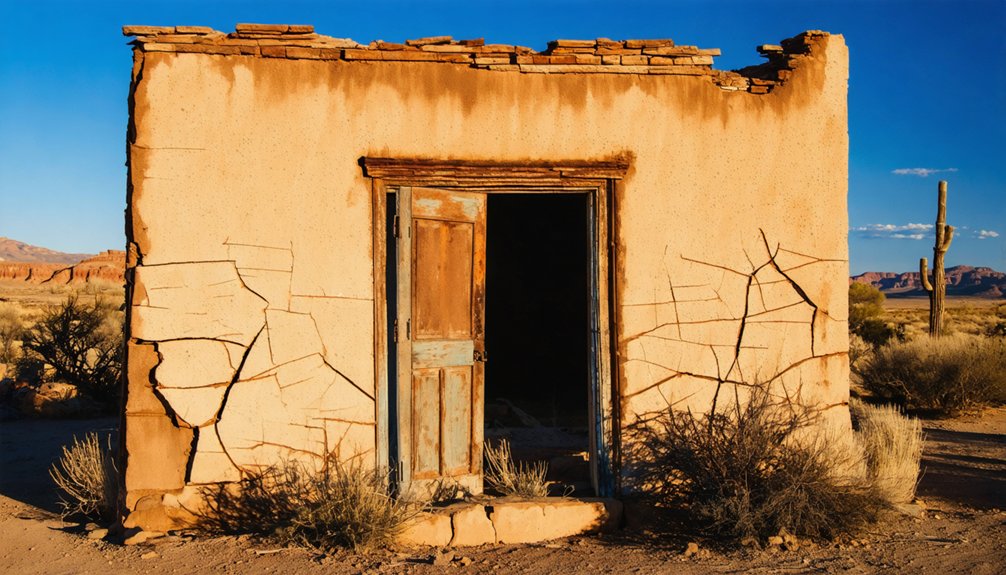
Planning a ghost town road trip in New Mexico rewards those who research access conditions before departure, since some sites sit on private land while others function as open heritage stops. You’ll want to cluster destinations geographically — southwestern routes cover Mogollon, Kingston, and Chloride, while northeastern corridors connect Elizabethtown and railroad-era settlements.
Verify road conditions seasonally, as unpaved routes become impassable after heavy rain. Prioritize sites where cultural preservation efforts remain active, since these locations typically offer interpretive signage and maintained access.
Local legends surrounding mining booms and frontier conflicts add interpretive depth to each stop, so consulting regional historical societies before traveling enriches your experience considerably.
Carry detailed maps, since cellular coverage across remote corridors remains unreliable.
Frequently Asked Questions
Are Any New Mexico Ghost Towns Partially Submerged Underwater?
Yes, you’ll find submerged settlements among New Mexico’s ghost towns. Underwater archaeology reveals that some sites lie beneath reservoir waters, offering you a fascinating, freedom-fueling glimpse into the state’s layered boom-and-bust historical narrative.
How Do Researchers Officially Decide When a Town Becomes a Ghost Town?
With 400+ ghost towns in New Mexico, you’ll find there’s no single official standard—researchers weigh population decline, abandonment levels, and economic collapse. Historical preservation efforts and tourism development often influence how communities ultimately get classified.
Do Any Ghost Towns in New Mexico Sit on Private Land?
Yes, some do sit on private land, limiting your access. When you explore abandoned mining sites, you’ll find historic preservation efforts vary, so always verify ownership before visiting to respect boundaries and avoid legal complications.
How Many Ghost Towns Does New Mexico Have in Total?
You’ll find over 400 ghost towns in New Mexico, though counts vary by definition. These sites blend historical preservation with vibrant tourist attractions, giving you freedom to explore centuries of boom-and-bust heritage across the state’s diverse landscapes.
Are There Ghost Towns in New Mexico Tied to Agricultural Decline?
Yes, you’ll find ghost towns tied to agricultural decline in New Mexico. Some farming communities collapsed when economies weakened, leaving behind historic landmarks along abandoned railroads, revealing how you can trace the region’s forgotten agrarian past through scattered ruins.
References
- https://www.newmexico.org/places-to-visit/ghost-towns/
- https://www.facebook.com/groups/266803690369324/posts/2065864877129854/
- https://en.wikipedia.org/wiki/List_of_ghost_towns_in_New_Mexico
- https://www.reddit.com/r/Albuquerque/comments/1b056qi/ghost_towns_in_new_mexico/
- https://www.newmexicomagazine.org/blog/post/abandoned-ghost-towns-new-mexico/
- https://compaslife.com/blogs/journal/abandoned-enchantment-ghost-towns-of-new-mexico-1
- https://santafe.com/new-mexico-road-trip-ghost-towns/
- https://www.youtube.com/watch?v=yfu1BHLzrDA
- https://www.onlyinyourstate.com/experiences/new-mexico/well-preserved-ghost-towns-nm
- https://newmexicotravelguy.com/new-mexico-ghost-towns/