Oklahoma’s nearly two,000 ghost towns tell stories of boom-and-bust cycles driven by oil, railroads, and agriculture. You’ll find towns like Picher, abandoned due to toxic mining waste, and Adamson, submerged beneath Lake Eufaula. A town qualifies as a ghost town when it loses more than 80% of its peak population. Some sites still have standing structures, cemeteries, and haunted legends waiting to be discovered. There’s much more to uncover about these forgotten communities.
Key Takeaways
- Oklahoma has approximately 2,000 ghost towns, defined as settlements that have lost more than 80% of their peak population.
- Common causes of abandonment include economic collapse, railroad shifts, oil field depletion, natural disasters, and reservoir submersion.
- Notable ghost towns include Picher, Skedee, Texola, Kenton, Doaksville, and Adamson, each with unique histories and remaining structures.
- Some towns, like Adamson, were submerged beneath man-made lakes, while others, like Picher, were abandoned due to toxic mining waste.
- Visitors should never explore alone, avoid barriers, wear sturdy boots, and use Google Maps aerial views before visiting any site.
What Makes a Town a Ghost Town in Oklahoma?
When you think of ghost towns, crumbling saloons and tumbleweed might come to mind, but Oklahoma’s definition is more precise.
Historian John W. Morris established a clear standard: any town that’s lost more than 80 percent of its peak population qualifies. That threshold has produced roughly two thousand ghost towns across the state.
By historian John W. Morris’s standard, losing 80 percent of peak population is all it takes to become a ghost town.
Urban decay alone doesn’t seal a town’s fate. Economic collapse, natural disasters, toxic contamination, and forced submersion by man-made reservoirs all accelerate abandonment.
Picher fell to toxic mine waste and a devastating 2008 tornado. Adamson disappeared beneath Lake Eufaula entirely.
Historical preservation efforts vary widely. Some sites, like Doaksville, receive archaeological protection. Others simply vanish.
Understanding what officially defines these towns helps you recognize the distinct forces that erased them from Oklahoma’s landscape.
Why So Many Oklahoma Towns Vanished
Knowing what qualifies a town as a ghost town only tells part of the story — the harder question is why Oklahoma produced nearly two thousand of them. Agriculture, cattle drives, railroad construction, and oil extraction built communities fast and abandoned them faster.
When rail lines shifted or oil fields dried up, residents left overnight. Natural disasters accelerated urban decay in places like Picher, where a 2008 tornado finished what toxic mine waste started.
Man-made reservoirs swallowed towns like Adamson entirely. The Great Depression gutted farming communities like Texola beyond recovery.
Without economic purpose, historical preservation became impossible for most towns lacking organized advocacy or funding. Oklahoma’s boom-and-bust cycles repeated across every region, leaving behind cemeteries, crumbling foundations, and fading names on county maps.
The Most Haunting Oklahoma Ghost Towns Still Standing
If you’re searching for Oklahoma ghost towns that still offer something to see, a handful of eerie remnants remain standing across the state. You’ll find Skedee’s abandoned school building in Pawnee County, Picher’s toxic landscape cordoned off by safety barriers, and Adamson’s small cemetery partially swallowed by Lake Eufaula.
These towns share a haunting quality that comes not just from their emptiness, but from the visible evidence of the lives and industries they once supported.
Towns Still Partially Standing
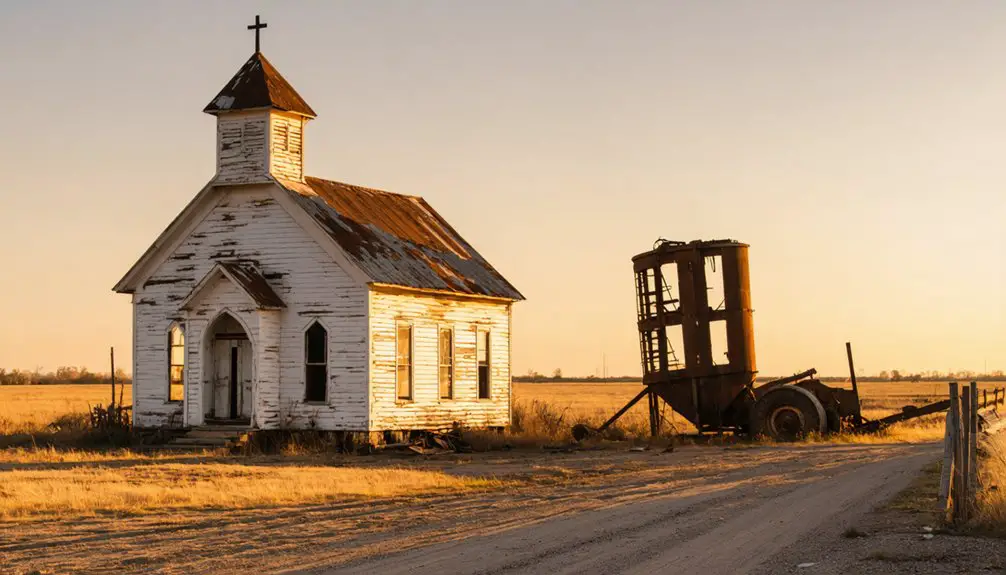
Some of Oklahoma’s ghost towns aren’t entirely gone—they’re frozen in time, with crumbling buildings, abandoned schools, and forgotten cemeteries that still tell the story of what once thrived there.
Skedee, in Pawnee County, still has an abandoned school standing where over 2,000 residents once lived—now only 36 remain.
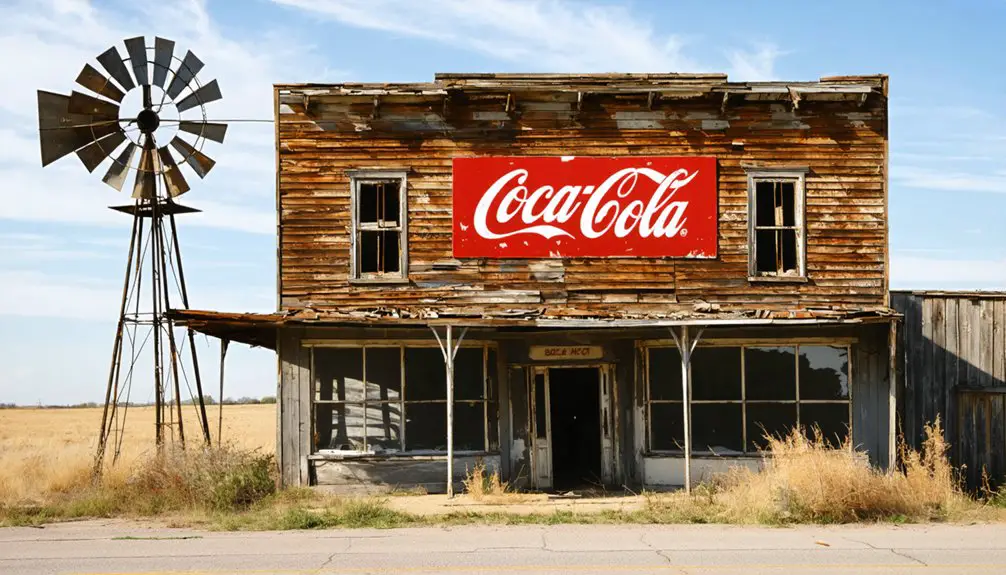
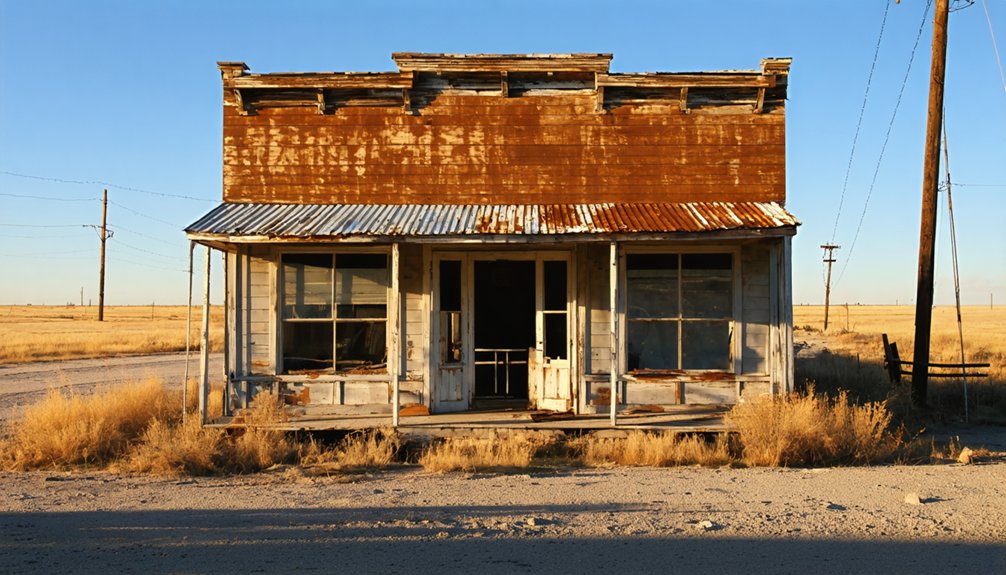
Texola, a former farming community, saw its population collapse after the Great Depression, yet structures still dot the landscape.
Ingersoll, once a rail town of 1,500 infamous for saloons, sits as a quiet ghost site today.
These places carry haunted legends and folklore tales that draw curious explorers.
Before you visit, check aerial views on Google Maps—many roads are unstable, and you should never explore these sites alone.
Eerie Remnants Left Behind
Beyond crumbling walls and overgrown lots, certain Oklahoma ghost towns leave behind remnants so unsettling they’ve taken on lives of their own in local legend. Urban decay defines places like Skedee, where an abandoned school building stands as a hollow monument to a population decline that gutted the town from 2,000 residents to just 36.
In Picher, cordoned roads and toxic chat piles surround the few structures a 2008 tornado spared, creating an eerie landscape you won’t forget.
Doaksville survives strictly as an archaeological site, its residential life completely erased.
Kenton holds fewer than 20 residents amid deteriorating buildings.
These remnants aren’t just ruins — they’re physical records of economic collapse, forced evacuation, and communities that once thrived but ultimately couldn’t survive the pressures that dismantled them.
Oklahoma Ghost Towns Swallowed by Lakes and Reservoirs
When Oklahoma’s reservoir development projects expanded throughout the 20th century, entire towns disappeared beneath rising water levels, erasing communities that had once thrived for decades. Adamson represents the most striking example — once a coal mining hub sitting midway between McAlester and Wilburton, it now rests under Lake Eufaula.
Four major coal producers once operated within its four-square-mile boundaries, fueling a genuine local economy.
Four major coal producers powered Adamson’s economy within just four square miles of Oklahoma land.
Today, you’ll find only a small cemetery, a monument, and several submerged houses marking where Adamson once stood.
Historical preservation efforts remain minimal, leaving little documentation of the town’s working-class heritage.
Environmental hazards from abandoned mining operations compounded residents’ struggles before submersion made the decision permanent.
These reservoir projects didn’t just flood land — they erased identities, livelihoods, and generational connections communities had built over decades.
Oklahoma Ghost Towns Destroyed by Mining and Toxic Waste
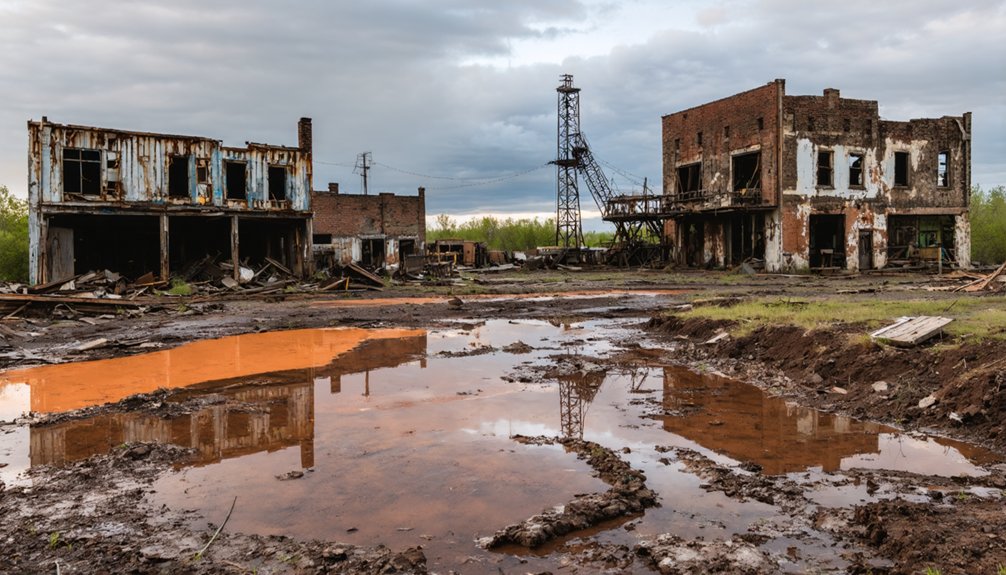
Mining built some of Oklahoma’s most productive towns — and then quietly poisoned them. Nowhere is that story clearer than in Picher, a community whose historical significance once centered on massive lead and zinc operations.
At its peak, Picher fueled World War I and II efforts, but decades of extraction left behind toxic chat piles and unstable mine sinkholes beneath the streets. Urban decay followed as residents abandoned contaminated homes long before a 2008 tornado finished what the mines started.
By the 2010 census, only 36 people remained. Today, many roads into Picher are cordoned off due to sinkhole risks. If you visit, don’t explore alone — structural instability makes abandoned areas genuinely dangerous.
Picher isn’t just a ghost town; it’s a warning.
Which Oklahoma Ghost Towns You Can Still Visit?
Not every Oklahoma ghost town sits behind caution tape. Several sites welcome curious explorers who respect ghost town architecture and historic preservation boundaries. Texola, once a farming community along Route 66, still has standing structures you can walk around freely.
Skedee’s abandoned school building in Pawnee County remains a striking relic worth photographing.
Doaksville operates as an active archaeological preservation site where you can walk the grounds legally.
Before you visit Picher, understand that many roads remain cordoned off due to active sinkhole risks from abandoned mines. Don’t explore alone, and don’t enter structurally compromised buildings.
Use Google Maps aerial views to scout locations before driving out.
Some towns exist as little more than a cemetery or monument, like Adamson, now partially submerged beneath Lake Eufaula.
Ruins, Cemeteries, and Structures Worth Seeing at Each Site
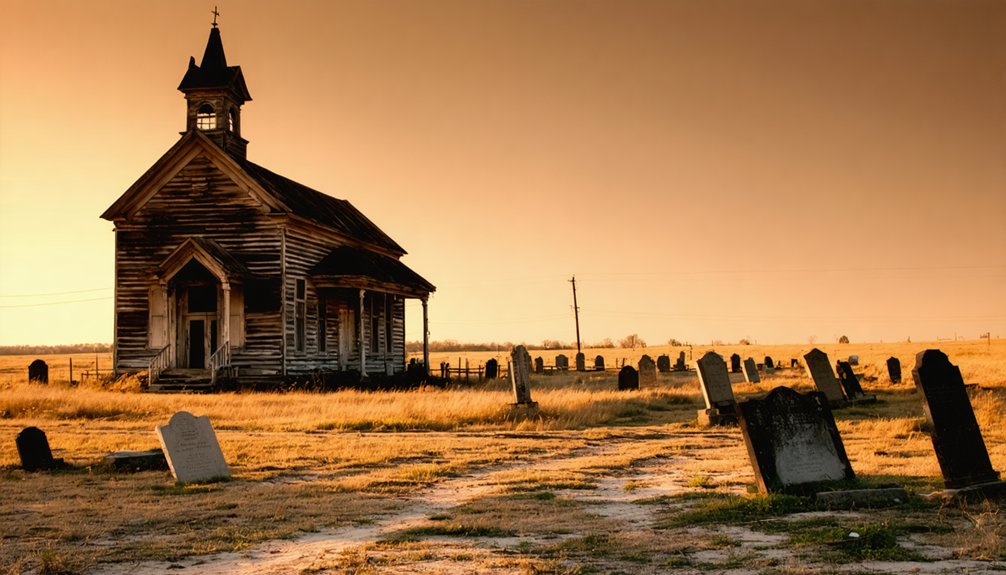
When you visit Oklahoma’s ghost towns, you’ll find that each site offers its own mix of ruins, cemeteries, and standing structures worth exploring. Adamson features a small cemetery, a monument, and several houses now partially submerged beneath Lake Eufaula.
While Skedee still holds an abandoned school building in Pawnee County. You can also walk through Doaksville, preserved as an archaeological site, where structural remnants give you a firsthand look at the town’s past without the hazards of active sinkhole zones like those cordoning off much of Picher.
Notable Ruins Worth Visiting
Several Oklahoma ghost towns hold onto remnants of their past that make them genuinely worth exploring. Doaksville stands as a dedicated historical preservation site where you can walk through documented archaeological remains without residential interference.
At Adamson, you’ll find a small cemetery and monument, though portions of the town now sit submerged beneath Lake Eufaula. Skedee’s abandoned school building in Pawnee County offers a striking visual of rural decline, while Kenton’s weathered structures reflect frontier-era architecture still standing despite rough conditions.
Tourist safety remains a serious concern, particularly in Picher, where roads are cordoned off due to active sinkhole risks from abandoned mines. Always research access conditions before visiting, avoid exploring alone, and use Google Maps aerial views to assess which structures still remain accessible and stable.
Cemeteries and Standing Structures
Cemeteries and standing structures offer some of the most tangible connections to Oklahoma’s lost communities, and each ghost town tends to preserve these remnants differently.
In Adamson, you’ll find a small cemetery and monument partially submerged by Lake Eufaula. Skedee retains an abandoned school building in Pawnee County that local groups associate with haunted legends.
Doaksville functions as an archaeological preservation site where you can walk among documented ruins without residential interference.
Picher’s remaining structures carry serious risks, as many roads are cordoned off due to mine sinkholes beneath the surface — some locals even claim underground tunnels destabilize the ground further.
Before visiting any standing structure, check aerial views through Google Maps to assess current conditions and avoid exploring structurally compromised buildings alone.
How to Explore Oklahoma Ghost Towns Without Getting Hurt
Exploring Oklahoma’s ghost towns can be a rewarding experience, but you’ll need to take serious precautions before venturing into these abandoned communities. Urban decay makes structures unpredictable and potentially deadly, so never explore alone. Tell someone your exact location before entering any site.
In Picher, many roads remain cordoned off due to active sinkhole risks from abandoned mines beneath the surface. Don’t bypass these barriers — they exist for your protection. Wear sturdy boots, carry a flashlight, and avoid entering any building showing structural compromise.
Approach cultural preservation seriously by documenting what you find rather than removing artifacts. Use Google Maps aerial views to assess sites before arriving. Respect posted warnings, private property boundaries, and any local ordinances governing access to these historically significant but genuinely dangerous locations.
Oklahoma Ghost Town Maps and Historical Records Worth Knowing
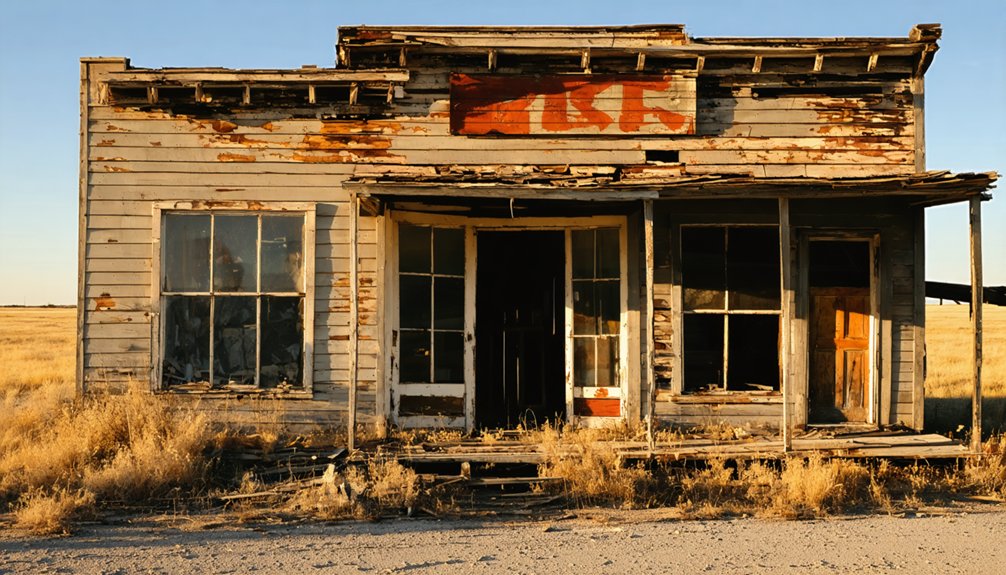
Once you’ve mapped out your safety plan, tracking down reliable historical records gives your exploration real context and direction. John W. Morris estimated Oklahoma holds roughly two thousand ghost towns, each carrying cultural significance worth documenting before you visit.
Use these resources to sharpen your research:
- Google Maps aerial views to confirm which structures still stand
- Oklahoma historical society archives for population records and town origins
- Census data tracking population collapses like Skedee’s drop from 2,000 to 36
- Local legends and county records that reveal why towns like Ingersoll thrived then vanished
Cross-referencing these sources helps you distinguish verified history from myth. Towns like Doaksville exist as archaeological preservation sites, meaning records govern access. Knowing that distinction keeps you informed and gives your exploration genuine purpose.
Frequently Asked Questions
Are There Any Oklahoma Ghost Towns Located on Native American Tribal Lands?
You’ll find ghost towns on Native American tribal lands in Oklahoma, where Native American heritage runs deep. Tribal land restrictions may limit your access, so always verify permissions before exploring these historically significant sites.
Can You Legally Purchase Property or Land in Oklahoma Ghost Towns?
You can legally pursue property ownership and land acquisition in Oklahoma ghost towns, but you’ll need to research title histories, verify zoning laws, and confirm no environmental hazards—like Picher’s toxic sinkholes—restrict your purchase rights.
Have Any Oklahoma Ghost Towns Ever Been Successfully Revived or Repopulated?
You’ll find that few Oklahoma ghost towns have truly revived, though some, like Doaksville, breathe new life through historic preservation efforts, drawing you in as a tourist attraction where forgotten streets whisper stories of resilience and freedom.
Do Any Oklahoma Ghost Towns Appear in Films or Television Productions?
You’ll find Oklahoma’s ghost towns, with their abandoned structures and haunted legends, attracting film and TV productions seeking authentic backdrops. Towns like Picher and Texola have drawn documentary crews fascinated by their eerie, untouched atmospheres.
Are There Guided Tours or Organized Groups Exploring Oklahoma Ghost Towns Regularly?
You’ll find organized groups and guided tours exploring Oklahoma’s ghost towns, focusing on haunted legends and abandoned structures like Skedee’s old school. Don’t venture alone—local historical societies actively lead safe, structured explorations regularly.
References
- https://en.wikipedia.org/wiki/List_of_ghost_towns_in_Oklahoma
- https://www.travelok.com/articles/oklahomaghosttowns
- https://abandonedok.com/class/disappearing-town/
- https://oktttp.genealogyvillage.com/ghost_towns/ghost_towns.htm
- https://freepages.rootsweb.com/~gtusa/history/usa/ok.htm
- https://www.youtube.com/watch?v=WJF6vDJUuBI
- https://www.youtube.com/watch?v=5d-wHDTIbb0
- https://urbexunderground.com/ghost-towns-in-oklahoma/
- https://z94.com/explore-oklahoma-ghost-towns/
- https://en.wikipedia.org/wiki/Category:Ghost_towns_in_Oklahoma