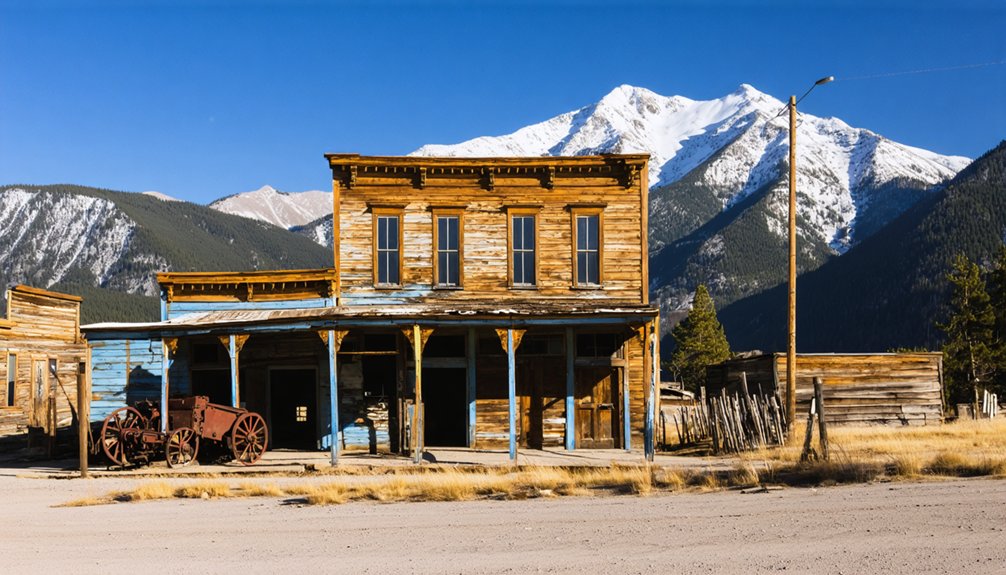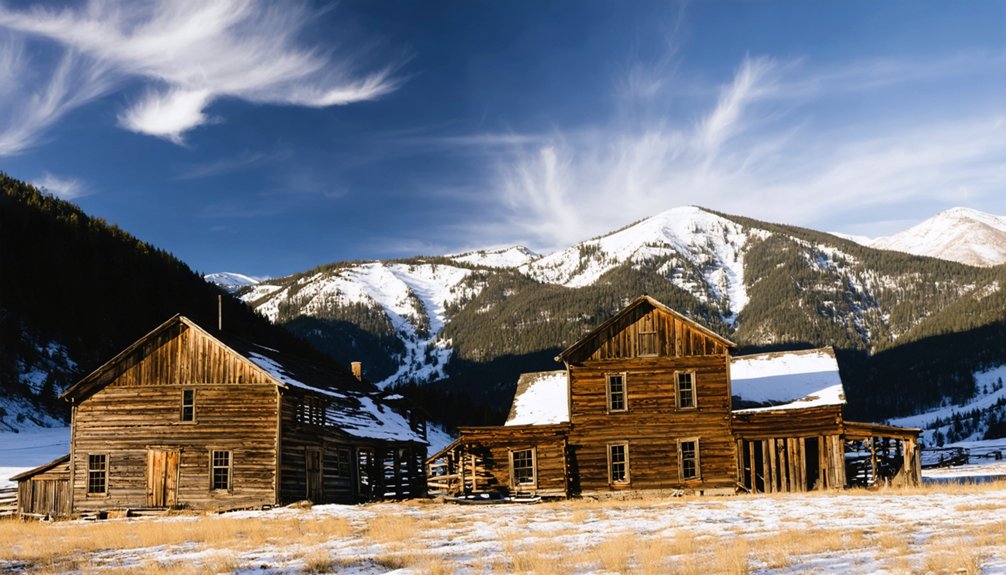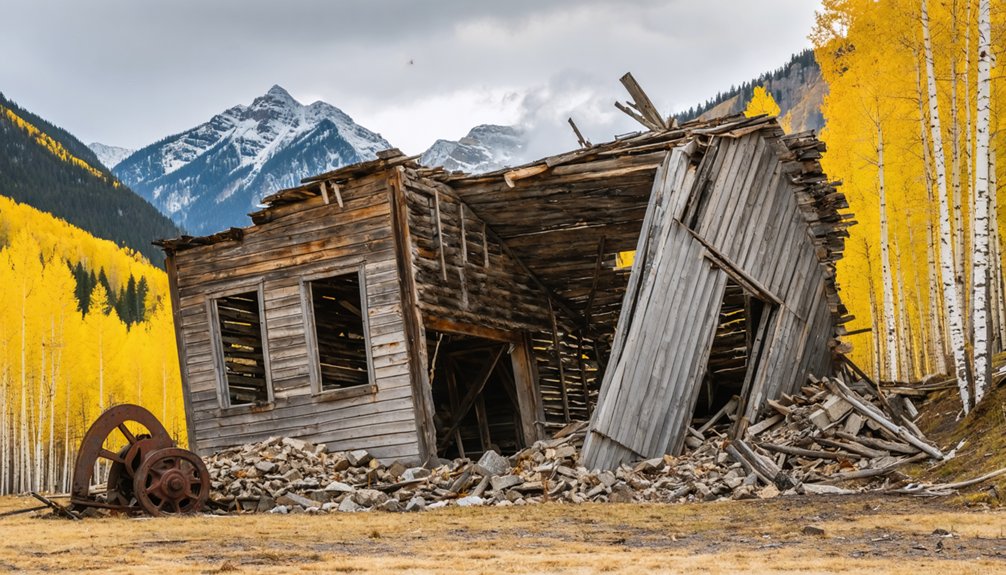
Within a short drive of Ouray, Colorado, you’ll find some of the American West’s most hauntingly preserved mining relics scattered across the San Juan Mountains. Sites like Animas Forks and Ironton stand as skeletal monuments to the region’s volatile silver and gold boom-and-bust cycles of the late 19th century. You can access several towns by standard vehicle, though others demand four-wheel drive. The history, logistics, and safety considerations behind each site run far deeper than they first appear.
Key Takeaways
- Animas Forks, established in 1873, is one of the most visited and structurally intact ghost towns near Ouray, featuring weathered cabins and ruins.
- Ghost towns in the San Juan Mountains were abandoned due to collapsing silver and gold mining economies, ore depletion, and harsh mountain conditions.
- Ironton ghost town is easily accessible via the San Juan Skyway, while Animas Forks requires a short unpaved stretch in dry conditions.
- Four-wheel drive vehicles with high ground clearance and all-terrain tires are necessary for safely accessing more remote ghost town sites.
- Visitors must avoid entering unstable structures, stay away from mine shafts, and leave all artifacts undisturbed to ensure safety and preservation.
The Best Ghost Towns Near Ouray, Colorado
Scattered across the rugged San Juan Mountains surrounding Ouray, Colorado, some of the most compelling ghost towns in the American West await exploration.
You’ll find each site distinct in character, historical significance, and accessibility. Animas Forks, established in 1873, ranks among the region’s most visited due to its preserved weathered cabins and exceptional photographic opportunities against dramatic alpine backdrops.
Each ghost town stands apart — shaped by its own history, character, and the rugged terrain that both built and buried it.
Ironton, situated along the San Juan Skyway between Ouray and Silverton, retains visible structural remnants from its rapid founding in 1893.
Red Mountain Town and Guston represent the broader Red Mountain District, where collapsed walls and mine structures document a silver and gold economy that collapsed nearly as quickly as it rose.
Together, these sites form an interconnected historical corridor worth methodical exploration.
Why Ouray’s Ghost Towns Were Abandoned: A Mining History
When you examine the history of Ouray’s ghost towns, you’ll find that two interconnected forces drove their abandonment: the collapse of mining economies and the relentless punishment of high-altitude winters.
The silver and gold rush of the late 1800s built these settlements almost overnight, but falling metal prices and ore depletion in the early 1900s stripped them of their economic foundation just as quickly.
Once the mines stopped producing, you can trace how the region’s brutal mountain conditions accelerated the decline, making it impossible for communities to sustain themselves without the revenue that ore extraction had provided.
Mining Boom and Bust
The ghost towns surrounding Ouray didn’t appear and vanish by accident—they were products of a volatile mining economy that both built and destroyed entire communities within a single generation.
Silver and gold discoveries in the late 1800s drove rapid settlement, with mining techniques advancing quickly enough to extract enormous wealth from difficult alpine terrain. The economic impact was immediate and transformative—towns like Ironton reportedly constructed nearly 300 buildings within months of founding.
However, that same economic dependency became catastrophic when metal prices collapsed in the early 1890s. Falling silver valuations, combined with depleted ore veins, stripped these settlements of their only purpose.
Remote mountain conditions and brutal winters finished what market forces started, leaving behind the weathered ruins you can still explore throughout the region today.
Harsh Mountain Conditions
Beyond the economic pressures of falling metal prices, Ouray’s mountain environment itself acted as a relentless force against permanent settlement.
You’ll find that mountain survival at elevations exceeding 11,000 feet demanded extraordinary resilience from miners and their families. Avalanches routinely buried structures, severed supply routes, and claimed lives throughout the Red Mountain District.
Weather challenges compounded daily hardship—brutal winters stretched for months, while short growing seasons prevented any meaningful self-sufficiency. Roads became impassable, isolating communities from essential goods and medical care.
When ore revenues declined simultaneously, residents faced an impossible calculus: endure dangerous conditions for diminishing returns or abandon their claims entirely.
The mountain environment didn’t merely inconvenience settlers; it systematically eroded the infrastructure and human capital necessary to sustain viable communities long-term.
What Remains at Animas Forks Today?
Established in 1873, Animas Forks stands today as one of the most structurally intact ghost towns in the Ouray region, offering visitors a rare opportunity to examine the physical remnants of a high-elevation mining settlement.
Animas Forks history reflects the region’s volatile boom-and-bust cycles, while its Animas Forks architecture preserves tangible evidence of frontier construction methods.
Boom-and-bust cycles shaped Animas Forks history, while its surviving architecture stands as a testament to frontier construction.
You’ll encounter several surviving structural features:
- Weathered log and frame cabins still standing at elevation
- A two-story structure with a distinctive bay window
- Collapsed bunkhouses and boarding house ruins
- Visible road remnants connecting former settlement zones
- Exposed foundations marking vanished residential and commercial lots
These elements collectively document how miners engineered habitable spaces under extreme alpine conditions, giving you direct access to an unfiltered historical record.
More Ghost Towns Near Ouray: Ironton, Guston, and Red Mountain
While Animas Forks draws considerable attention for its structural preservation, several other abandoned settlements within the Ouray corridor present equally compelling evidence of the region’s mining past.
Ironton history reveals a town founded in 1893 that rapidly developed nearly 300 buildings and sustained roughly 1,000 residents before economic collapse ended its trajectory. You’ll find the site accessible via the San Juan Skyway, making it manageable without specialized vehicles.
Guston ruins offer fragmented structural remnants south of Ouray, where mine infrastructure still punctuates the landscape.
Red Mountain exploration exposes the broader district’s complexity, with multiple former settlements occupying both sides of the pass.
Each location rewards ghost town photography differently — Ironton through its open terrain, Guston through concentrated decay, and Red Mountain through dramatic alpine contrast.
How to Get to Each Ghost Town Near Ouray
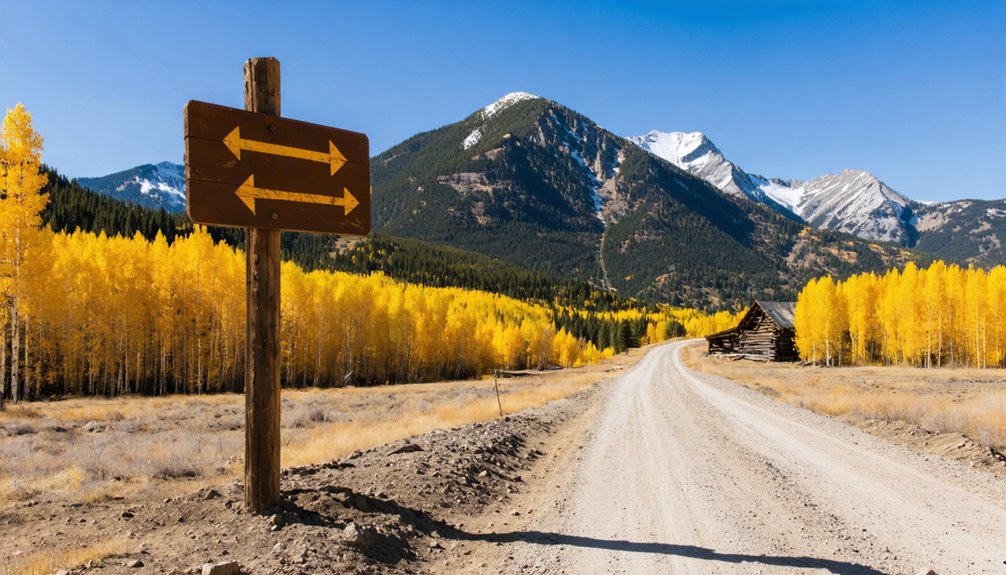
Getting to each ghost town near Ouray depends heavily on your vehicle type and willingness to navigate mountain terrain.
You can reach some sites, like Ironton, by passenger car along the Million Dollar Highway, while others demand a high-clearance, four-wheel-drive vehicle to manage rocky, unpaved roads.
If you’d rather travel on foot, select sites offer hiking access that bypasses the need for specialized vehicles altogether.
Passenger Car Accessible Routes
Several of the ghost towns near Ouray are reachable by standard passenger car, making them accessible entry points into the region’s mining history without requiring specialized vehicles.
Scenic drives along the Million Dollar Highway connect you to key sites marked by historical markers throughout the corridor.
- Ironton sits directly on the San Juan Skyway, fully accessible by passenger car
- Red Mountain Town remnants are visible from paved highway pullouts
- Historical markers along US-550 identify former townsite boundaries and mining significance
- Animas Forks requires a short unpaved stretch but remains manageable in dry conditions
- Guston’s roadside ruins offer quick stops without technical driving demands
You can move freely between these sites, constructing your own chronological or geographic route through the district’s documented industrial past.
Four-Wheel Drive Requirements
Beyond the paved and graded routes lies a more demanding tier of access that opens up additional ghost towns and deeper penetration into the San Juan mining districts.
If you’re pushing toward Animas Forks via the upper Alpine Loop, four wheel drive becomes non-negotiable rather than merely advisable. The terrain includes loose rock, steep grades, and shelf roads with minimal clearance margins.
Vehicle requirements typically include high ground clearance, low-range gearing, and all-terrain tires. Standard passenger vehicles that handled Ironton’s lower approach won’t survive the upper routes without serious mechanical risk.
You’ll encounter water crossings, unstable road edges, and sudden weather shifts at elevations exceeding 11,000 feet. Knowing your vehicle’s true capability—not its marketed one—determines whether you reach these remote sites safely.
Hiking Access Options
Hiking offers a legitimate and often overlooked pathway into several ghost towns around Ouray, particularly for visitors who lack four-wheel drive vehicles or prefer moving through the landscape at a slower, more observational pace.
Dedicated hiking trails provide independent access to select sites, rewarding you with scenic views unavailable from any vehicle window.
Consider these access realities before heading out:
- Ironton sits adjacent to the Million Dollar Highway and is reachable on foot
- Elevation gain on most routes demands physical preparation
- Trail conditions shift considerably between seasons
- Scenic views from high-alpine approaches reveal mine structures within their full geographic context
- No vehicle fees or tour schedules constrain your movement
You control your pace, your stops, and your observations entirely on foot.
Ouray Ghost Town Jeep Tours: Guided Trips vs. Self-Guided Access
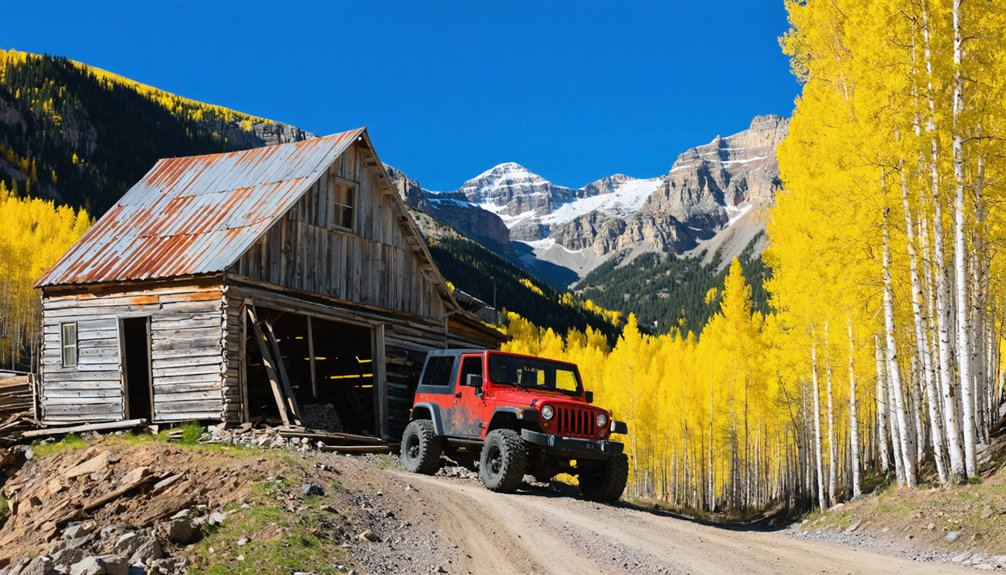
Whether you book a guided jeep tour or strike out on your own, the method of access you choose will meaningfully shape your experience of Ouray’s ghost towns.
Guided tours provide structured itineraries, local expertise, and vehicles equipped for extreme terrain, making remote sites like Animas Forks more accessible without requiring your own four-wheel-drive setup. Guides also contextualize what you’re seeing, adding historical depth to otherwise unmarked ruins.
Self guided exploration, by contrast, gives you full autonomy over pace, route, and time spent at each site. You’ll need a capable high-clearance vehicle and solid navigational awareness, particularly on technical roads connecting the Red Mountain District.
Both approaches carry responsibility: unprotected mine shafts, unstable structures, and fragile ruins demand disciplined, respectful conduct regardless of how you arrive.
Are Ouray Ghost Towns Safe to Visit?
Safety is the logical next consideration once you’ve settled on how you’ll reach these sites. These ruins present real hazards, so understanding safety tips and visitor etiquette protects both you and the sites themselves.
Approach every location with these principles:
- Never enter unstable structures—collapsed walls and rotted floors fail without warning.
- Treat unprotected mine shafts and portals as lethal hazards; maintain distance.
- Keep children under direct supervision throughout your visit.
- Leave artifacts, building fragments, and surrounding terrain completely undisturbed.
- Carry water, navigation tools, and weather-appropriate gear for high-elevation conditions.
Responsible visitor etiquette means exercising your freedom to explore without diminishing access for others.
These fragile sites survive only when each visitor commits to preserving exactly what they found.
How to Visit Ouray Ghost Towns Without Causing Damage
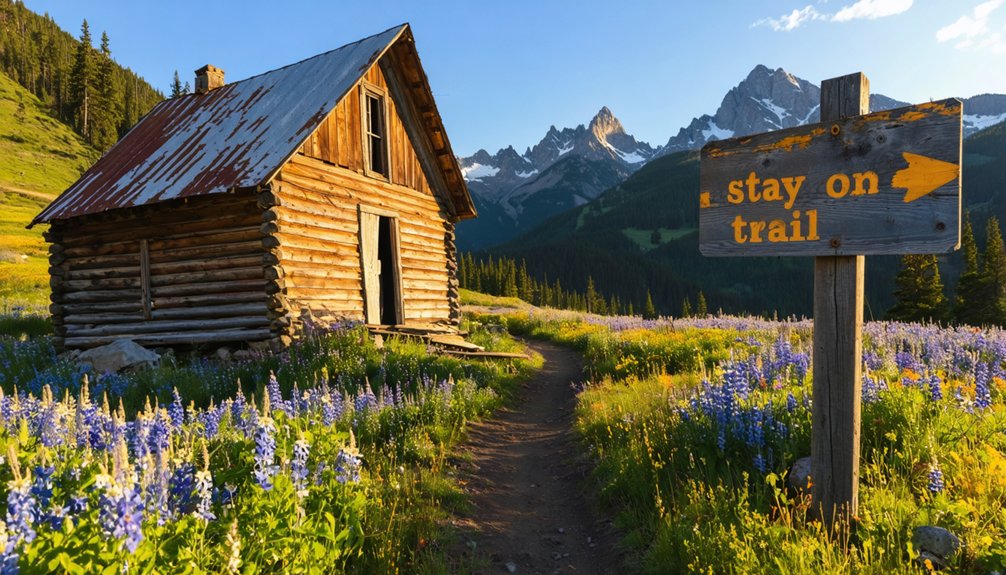
Preserving these sites begins before you arrive—responsible visitation is a practiced discipline, not simply an absence of deliberate destruction. Sustainable tourism demands deliberate behavioral choices throughout your visit.
Stay on established paths to prevent erosion around fragile foundations. Don’t enter structurally compromised buildings; collapsed roofing and weakened walls present genuine collapse risks. Leave every artifact, timber fragment, and stone exactly where you find it—removal, however minor, accelerates irreversible loss.
Every artifact left in place preserves history. Every path respected prevents irreversible loss.
Historical preservation depends on collective restraint across thousands of annual visitors. Photograph freely, but touch minimally. Keep children close, particularly near unprotected shafts and open portals.
Carry out everything you bring in. These sites exist outside active regulatory oversight, which means your personal ethical framework becomes the primary protection mechanism these ruins have.
Frequently Asked Questions
What Is the Best Time of Year to Visit Ouray Ghost Towns?
You’ll find the most rewarding “golden season” runs from July through September, when scenic routes open fully, local legends come alive, and you can explore freely without winter’s unforgiving grip closing mountain access.
Are There Any Ghost Town Entrance Fees or Permits Required?
Most ghost towns don’t require entrance fees or permits, letting you explore freely. You’ll appreciate their historical significance while respecting entrance requirements like staying on designated paths to preserve these fragile, analytically rich remnants of Colorado’s mining heritage.
Can You Camp Overnight Near Any of the Ouray Ghost Towns?
Like a frontier adventurer, you can camp near these storied ruins! Check camping regulations carefully, as rules vary by land jurisdiction. You’ll share the wilderness with local wildlife, so pack smart and embrace your freedom responsibly.
Are Ouray Ghost Towns Accessible to Visitors With Mobility Limitations?
Accessibility varies considerably. Ironton’s relatively flat terrain offers you better wheelchair accessibility than rugged sites like Animas Forks. You’ll find limited visitor services throughout, so planning ahead guarantees you’re maximizing your exploratory freedom at these historic locations.
Do Any Ghost Towns Near Ouray Offer Cell Service or Emergency Access?
You’ll find cell coverage unreliable at most ghost towns near Ouray, as remote alpine terrain disrupts signals. Emergency services exist but response times are lengthy, so you should carry satellite communication devices for safety.
References
- https://www.visitouray.com/ghost-towns
- https://www.uncovercolorado.com/ghost-towns/ironton/
- https://twinpeakslodging.com/6-ghost-towns-anyone-can-explore-around-ouray-silverton-and-telluride/
- https://ouraymountainadventures.com/blog/four-wheeling-routes-in-ouray/
- https://www.uncovercolorado.com/activities/guston-ghost-town/
- https://myhikes.org/trails/abandoned-ironton-townsite-trail
- https://soajeep.com/jeep-tours/colorado-ghost-towns-and-silver-mines/
- https://www.tripadvisor.com/Attractions-g33581-Activities-c47-t14-Ouray_Colorado.html
- https://www.facebook.com/groups/CoMinesHistory/posts/1818611845484897/
- https://www.reddit.com/r/AbandonedPorn/comments/q9d672/old_mining_village_just_off_the_million_dollar/