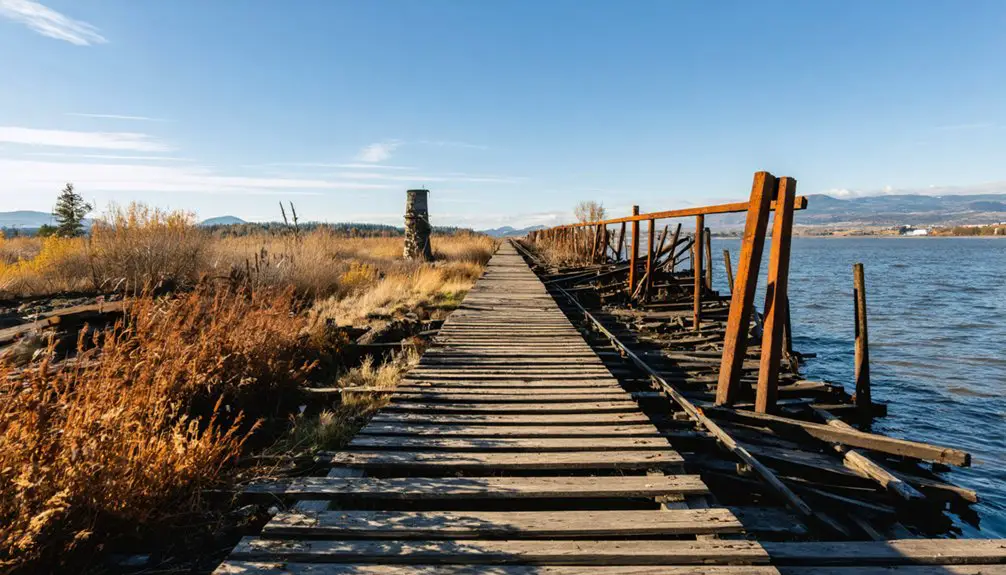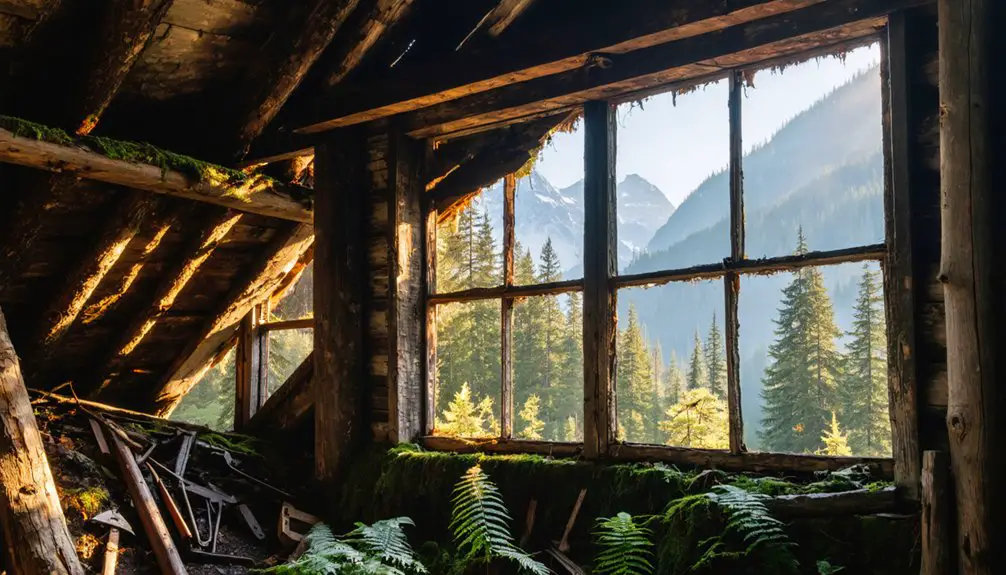
Planning a ghost town road trip to Bordeaux, Washington starts with a 20-to-30-minute drive from Olympia via US-101 south, exiting onto Littlerock Road SW toward Bordeaux Road. You’ll find moss-covered foundations, a weathered smokestack, and an eerily reclaimed forest where a thriving mill town once stood. Since the site sits on private property, nearby Capitol State Forest and Mima Mounds offer legal alternatives worth exploring. There’s far more history, hiking, and hidden detail waiting ahead.
Key Takeaways
- Bordeaux, a ghost town near Olympia, was a thriving 1900s mill town named after lumber businessman Thomas Bordeaux before being abandoned after the sawmill closure.
- The ruins, including moss-covered foundations and a standing smokestack, sit on private property with restricted access, making unauthorized entry illegal.
- Drive from Olympia in approximately 20–30 minutes via US-101 south, exiting onto Littlerock Road SW and turning onto Bordeaux Road.
- Pack layered clothing, waterproof boots, water, snacks, a first aid kit, and a phone with offline maps for Pacific Northwest conditions.
- Nearby Capitol State Forest and Mima Mounds Natural Area Preserve offer legal hiking alternatives, including the 4-mile Mima Falls Trail and interpretive educational paths.
How Bordeaux, Washington Went From Boom Town to Ghost Town
When the timber industry was booming in the early 1900s, Bordeaux, Washington was a thriving mill town carved out of the dense forests of Thurston County. Named after lumber businessman Thomas Bordeaux, it supported a full community, complete with a post office that ran from 1903 to 1942.
But Bordeaux history follows a pattern familiar to anyone who studies ghost town dynamics: when the mill closed and the timber supply dwindled, the economy collapsed fast. Workers left. Families packed up.
The railroad tracks that once carried logs out of the forest were eventually paved over, becoming Bordeaux Road.
What remained were foundations, ruins, and silence. The forest reclaimed what industry built, and today Bordeaux stands as a striking reminder of how quickly a boomtown can vanish.
Who Was Thomas Bordeaux, and Why Does the Town Bear His Name?
When you start tracing the town’s origins, you’ll find the name Bordeaux points directly to Thomas Bordeaux, a lumber-industry businessman whose influence shaped the settlement from the ground up.
He wasn’t just a figurehead — his timber operations gave the community its economic identity and drew workers and families into the dense forests of Thurston County.
Naming the town after him wasn’t a coincidence; it was an acknowledgment that his mill-centered enterprise was the reason the place existed at all.
Thomas Bordeaux’s Lumber Legacy
Though the ghost town carries a name that sounds almost French, its origins are rooted squarely in the Pacific Northwest timber industry — specifically, in the career of Thomas Bordeaux, a lumber businessman whose influence was substantial enough that workers and settlers stamped his name onto the community they built around his enterprise.
His timber economy shaped the region’s logging practices and community dynamics for decades. When industrial decline eventually gutted the mill operations, the town collapsed alongside them.
Today, archaeological findings reveal the historical significance of what once thrived here — foundations, a smokestack, remnants demanding preservation efforts rather than casual urban exploration.
Understanding Bordeaux’s legacy means recognizing how one businessman’s enterprise could build an entire community and, when it faltered, erase it just as completely.
Naming A Timber Town
Few ghost towns carry a name with such a direct lineage to a single individual, and Bordeaux, Washington, is one of them.
When you trace the timber town naming back to its origin, you land on Thomas Bordeaux, a lumber-industry businessman whose influence shaped this early 1900s settlement in Thurston County. Naming a town after an industry figure wasn’t unusual during that era — it reflected both the historical significance of economic power and the personal stakes investors held in remote mill communities.
Thomas Bordeaux wasn’t just a figurehead; he represented the driving force behind the logging operation that gave the town its reason to exist.
Today, his name is the most enduring thing left, outlasting every building, railroad tie, and resident who once called Bordeaux home.
His Influence On Settlement
Thomas Bordeaux wasn’t a frontier settler carving a homestead out of the wilderness — he was a lumber-industry businessman whose financial and operational stake in the region made him the kind of figure towns were named after.
His influence shaped settlement patterns directly:
- He backed infrastructure that drew workers into the forest.
- His operations created demand for permanent housing and services.
- Economic shifts tied to his mill defined when the town grew — and when it didn’t.
- His name outlasted his presence, preserved in road signs and historical records.
You’re looking at a man whose decisions rippled outward into everyday lives.
Workers followed the work, and the work followed men like Bordeaux.
That’s how timber towns got built — and eventually, abandoned.
How Logging Built: and Destroyed: an Entire Community
When Thomas Bordeaux staked his name on a patch of Thurston County timberland in the early 1900s, he wasn’t just building a mill — he was building an entire world.
Advanced logging techniques stripped cedar and fir at remarkable speed, triggering an economic boom that raised homes, families, and futures from raw forest. The timber industry delivered paychecks, purpose, and community resilience to everyone who settled here.
But that same environmental impact eventually hollowed everything out. Once the trees thinned and the sawmill went quiet, population decline followed fast.
Residents scattered, leaving behind a cultural legacy now buried under moss and silence. Today, historical preservation efforts protect what remains, making urban exploration of this area legally restricted.
Nature restoration has quietly reclaimed the rest.
What’s Left to See at the Bordeaux Ruins Today?
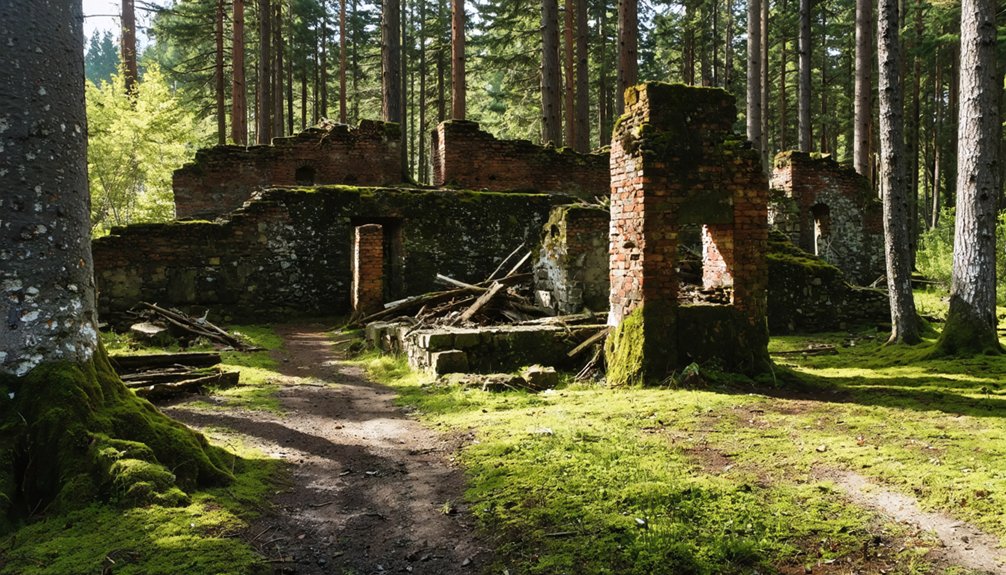
What remains at Bordeaux today feels almost defiant — moss-covered concrete foundations, a surviving smokestack, and an old vault hold their ground against decades of forest reclamation.
The dense woods swallow everything else, giving the site an eerie, almost secretive presence. Its archaeological significance makes it more than just a curiosity for ghost town exploration enthusiasts.
The forest doesn’t just reclaim Bordeaux — it guards it, cloaking something far more significant than ruins.
Here’s what you’ll encounter:
- Concrete foundations — scattered remnants of mill-era structures slowly consumed by moss and roots
- A standing smokestack — one of the most striking visual survivors on the site
- An old vault — a surprisingly intact relic amid widespread deterioration
- Dense overgrowth — the forest itself becomes part of the experience, obscuring and preserving simultaneously
Respect what’s here. It won’t last forever.
Can You Still Visit the Bordeaux Ghost Town Site?
If you’re hoping to walk the ruins yourself, you’ll want to know that Bordeaux sits on private property and carries protected archaeological status, making direct access restricted or off-limits entirely.
Graffiti and trash forced the closure of what was once a loosely open site, so current guidance strongly discourages trespassing.
Fortunately, the surrounding Capitol State Forest offers legal nearby alternatives—Mima Falls, McLane Creek, and Capitol Peak let you pair outdoor exploration with the broader timber-country history that shaped Bordeaux in the first place.
Current Access Restrictions
Although Bordeaux pulls at the curiosity of history buffs and ghost town enthusiasts, you’ll want to pump the brakes before heading out with a shovel and a sense of adventure. Current access is restricted, and site conditions have deteriorated due to vandalism and illegal dumping.
Here’s what you need to know:
- The ruins sit on private property, making unauthorized entry illegal.
- Bordeaux holds protected archaeological site status, meaning disturbance carries legal consequences.
- Graffiti and trash have prompted authorities to discourage direct visits entirely.
- No formal trailhead or public access point currently exists for reaching the foundations.
Respecting these boundaries isn’t just legal common sense — it preserves what little remains for future generations who’ll share your same curiosity.
Nearby Legal Alternatives
Since direct access to the Bordeaux ruins is off the table, you’re not entirely out of luck — the surrounding area offers plenty of ways to connect with the region’s ghost-town history and wild landscapes without crossing any legal lines.
Capitol State Forest trails wind through terrain shaped by the same logging era that built Bordeaux, giving you real context for its archaeological significance.
Mima Mounds Natural Area Preserve sits just minutes away, offering striking geology and open walking.
McLane Creek and Mima Falls reward hikers with dense, moody forest that mirrors the landscape the town once occupied.
These alternatives let you honor ghost town preservation values while still feeding your curiosity — no trespassing required, no ruins disturbed, just history absorbed through the living land around it.
How to Get to Bordeaux From Olympia
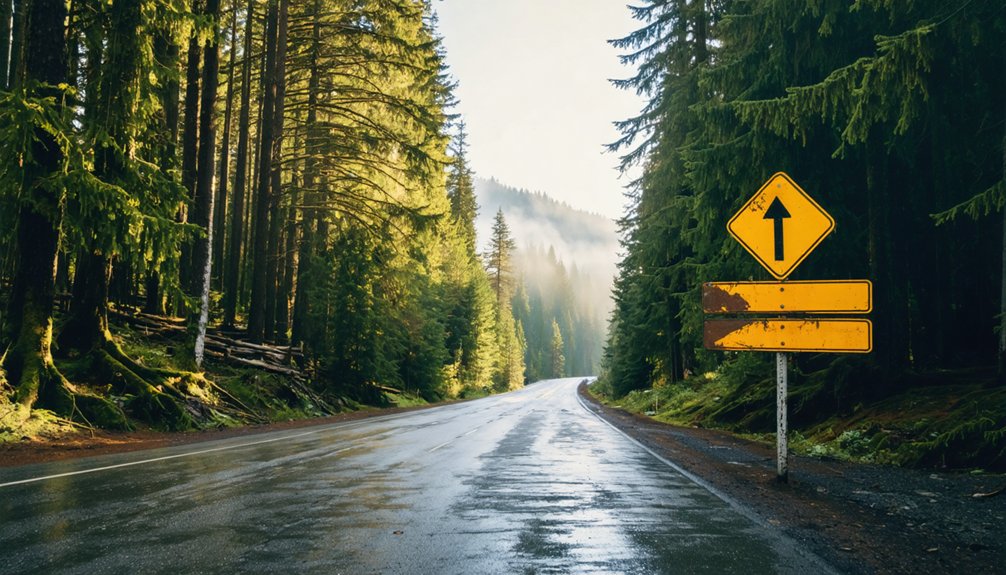
Getting to Bordeaux from Olympia takes roughly 20 to 30 minutes, depending on your exact starting point.
Head southwest through Thurston County toward Capitol State Forest, where Bordeaux history quietly waits beneath moss and timber. Ghost town exploration starts the moment you leave pavement behind.
Follow these directions:
- Take US-101 south from Olympia toward Tumwater
- Exit onto Littlerock Road SW, heading west
- Turn onto Bordeaux Road, the former railroad corridor paved over after the mill closed
- Watch for small pullouts near the forest edge marking the general site area
Keep in mind that access conditions change seasonally, and portions of the site sit on private property.
Respect posted boundaries and treat the surrounding landscape with care throughout your visit.
Where to Hike After Visiting the Bordeaux Ghost Town Site
After exploring the Bordeaux ghost town site, you’ve got several strong hiking options nearby to round out your day.
Head south toward Mima Falls Trail for a rewarding walk through old-growth timber, or loop through McLane Creek’s beaver ponds and wetland forest for something quieter and more reflective.
If you’re chasing elevation and panoramic views of the South Puget Sound lowlands, Capitol Peak’s summit routes will push your legs and reward the effort.
Mima Falls Trail Access
Once you’ve soaked in the ghostly atmosphere of the Bordeaux site, Mima Falls Trail offers a rewarding next stop that keeps you deep in the forested landscape of the Capitol State Forest.
Trail access is straightforward, and the payoff is well worth the short drive.
Here’s what to know before heading out:
- Distance: The trail runs approximately 4 miles round trip with minimal elevation gain.
- Trailhead: Access Mima Falls via Mima Road off Highway 121, southwest of Olympia.
- Terrain: Expect packed dirt paths winding through old-growth fir and cedar stands.
- Amenities: A small parking area and pit toilet mark the trailhead.
You’ll move from crumbling ruins to rushing water, two completely different expressions of this region’s raw, unhurried character.
McLane Creek Nature Walk
Swap rushing water for still ponds and salmon runs, and McLane Creek Nature Walk becomes the natural next chapter in your day. This flat, accessible loop near Olympia winds through beaver wetlands and old-growth forest, offering completely different terrain from the Capitol State Forest trails you’ve already covered.
Fall brings spawning salmon into the creek, turning this quiet path into one of the region’s best spots for nature photography and local wildlife observation. You’ll spot great blue herons, wood ducks, and the occasional black-tailed deer moving through the understory without much disturbance.
The trail stays close to water throughout, keeping your senses engaged after a morning spent piecing together Bordeaux’s fragmented history. It’s a gentle, rewarding way to close out your ghost town road trip.
Capitol Peak Summit Routes
Three miles of steady climbing separate the forest floor from one of the South Puget Sound’s most rewarding panoramas, and Capitol Peak delivers every step of that elevation gain with purpose.
After absorbing Bordeaux’s quiet ruins, this summit route gives your legs something to earn and your eyes something to celebrate.
Follow these Capitol Peak summit route essentials:
- Start at the Capitol Peak trailhead off Middle Waddell Road in Capitol State Forest
- Gain roughly 1,700 feet of elevation across forested switchbacks
- Reach the 2,658-foot summit for sweeping views of the Olympics, Cascades, and Puget Sound
- Bring navigation tools — trail junctions multiply quickly here
You’re standing above the same timber country that once built and buried Bordeaux.
Why Mima Mounds Is the Best Add-On to a Bordeaux Ghost Town Trip
After wandering the mossy ruins of Bordeaux, Mima Mounds Natural Area Preserve makes for an effortless and fascinating next stop—it’s just a few miles away and couldn’t be more different in atmosphere.
The Mima Mounds rise mysteriously from open prairies, their geological significance still debated among scientists, making the unique formations as thought-provoking as any ghost town.
You’ll find genuine educational value in the interpretive trails, which explain both the ecological diversity of the prairie habitat and ongoing preservation efforts protecting rare plant communities.
Hiking opportunities range from easy loops to longer explorations, suiting any pace.
The visitor experience shifts dramatically from dense, shadowy forest ruins to wide-open grassland skies—a contrast that makes combining both stops one of the smartest moves on your Bordeaux road trip.
The Perfect Day Trip Loop Through Bordeaux and Capitol Forest
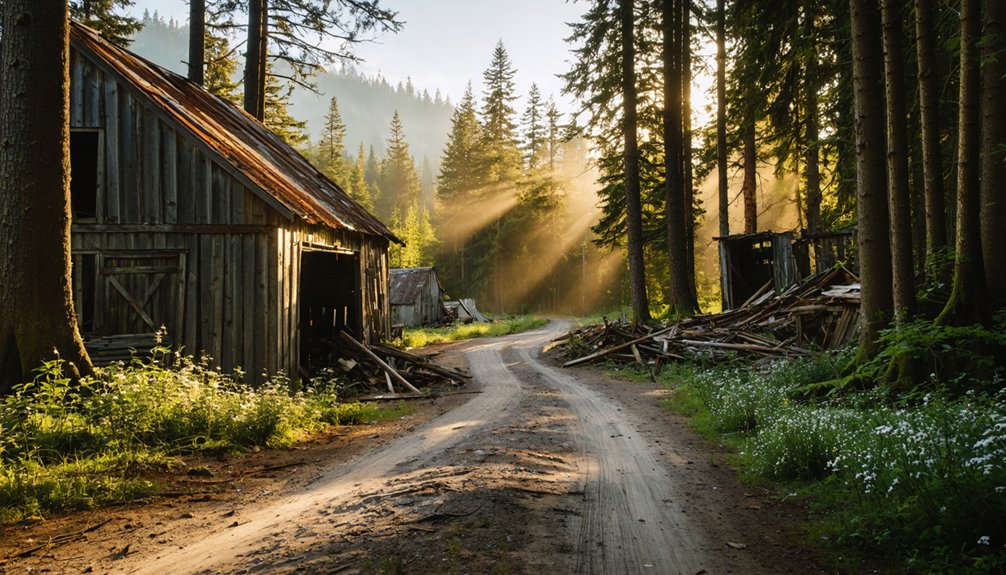
Rounding out your Bordeaux road trip with a Capitol State Forest loop turns a single ghost-town stop into a full day of layered Pacific Northwest history and trail exploration.
You’ll connect Bordeaux history with stunning natural surroundings while honoring preservation efforts protecting this site of archaeological significance.
Follow this suggested loop:
- Start at Bordeaux — Reflect on community decline and logging impact from the roadside without disturbing the protected ruins.
- Drive Capitol Peak Road — Experience industrial heritage landscapes shaped by generations of timber extraction.
- Hike Mima Falls Trail — Decompress through old-growth forest after ghost town exploration.
- End at Mima Mounds — Close the loop with geological wonder that contrasts powerfully with Bordeaux’s abandoned industrial past.
You’ll leave understanding exactly how deeply logging reshaped this entire region.
What to Bring for a Day Trip to the Bordeaux Ruins and Capitol Forest
A few smart packing choices separate a comfortable day trip to Bordeaux and Capitol State Forest from an uncomfortable one.
For day trip essentials, bring layered clothing since Pacific Northwest weather shifts fast, even in summer. Waterproof boots handle muddy forest trails far better than sneakers. Pack enough water for several miles of hiking, plus high-energy snacks to sustain your energy through longer Capitol Forest routes.
For hiking safety, carry a basic first aid kit, a charged phone with downloaded offline maps, and a whistle. Cell service is unreliable throughout the forest.
A small daypack keeps both hands free on uneven terrain. Bring a camera for the mossy ruins and towering firs. Leave everything at the site exactly as you found it.
Frequently Asked Questions
Are There Other Ghost Towns Near Bordeaux Worth Visiting on the Same Trip?
You’ve only scratched the surface! Washington’s Capitol Forest region hides several sites featuring abandoned buildings and local legends. Explore nearby Vail and Galvin — both forgotten timber towns that’ll reward your adventurous spirit on the same road trip.
What Is the Best Time of Year to Visit Bordeaux?
Late spring or early fall gives you the best experience exploring Bordeaux history, when you’ll enjoy mild weather and stunning seasonal attractions without summer crowds or winter’s muddy, overgrown trails obscuring the moss-covered ruins.
Is Bordeaux, Washington Suitable for Children or Family-Friendly Visits?
Bordeaux isn’t ideal for family activities with young children. Safety concerns like unstable ruins, restricted private property, and dense woods make it tricky. You’ll find nearby Mima Mounds and Capitol State Forest trails far more family-friendly alternatives.
Were Any Famous or Notable People Born in Bordeaux, Washington?
You won’t find famous residents tied to Bordeaux’s historical significance — it was a small, short-lived logging town. Its story centers on timber workers and industry, not celebrated individuals who shaped broader history.
How Does Bordeaux Compare to Other Pacific Northwest Ghost Towns?
Like a whisper from the past, Bordeaux history sets it apart—you’ll find its moss-draped Bordeaux architecture more intimate than sprawling Northwest ghost towns, offering you a raw, secluded timber-era experience that’s uniquely personal and hauntingly preserved.
References
- https://www.wainnsiders.com/visit-washingtons-spooky-abandoned-ghost-towns/
- https://www.wta.org/go-hiking/trip-reports/trip_report.2014-08-25.3483686366
- https://www.wta.org/go-hiking/hikes/bordeaux-ghost-town
- https://www.wta.org/go-hiking/trip-reports/trip_report-2021-03-02-4680453051
- https://www.atlasobscura.com/places/bordeaux-washington
- https://www.youtube.com/watch?v=hyIkcB8F_sE
- https://www.facebook.com/ghosttownsofwashington/posts/mumby-lumber-and-shingle-co-bordeaux-thurston-county-washington-1904-a-post-offi/768758761947207/
- https://thesmartrver.com/bordeaux-wa-bauty-in-the-woods/
- https://olympiatime.com/2013/06/24/bordeaux-wa-should-be-a-park-just-another-thurston-county-ghost-town/
- https://www.reddit.com/r/olympia/comments/1gvb4o/went_out_and_found_part_of_the_old_ghost_town_of/