Placer County’s ghost towns line the Foresthill Divide, where communities like Deadwood, Last Chance, and Yankee Jim’s once buzzed with miners chasing gold before emptying out within years. You’ll find crumbling remnants, forgotten cemeteries, and scarred hillsides where hydraulic mining once reshaped the land. Some towns, like Iowa Hill, still have a few residents, while others vanished almost completely. If you’re ready to explore, there’s far more to these stories than meets the eye.
Key Takeaways
- Most Placer County ghost towns cluster along the Foresthill Divide, with Auburn serving as the ideal starting point heading east.
- Deadwood, founded in 1852, peaked at 500 residents before being abandoned within three years, leaving only wells and a cemetery.
- Last Chance remained active nearly a century after settlement decline due to the Eldorado Mine operating from 1890 to 1982.
- Michigan Bluff retains original structures, while Yankee Jim’s, once hosting 1,000+ miners, has almost nothing remaining today.
- Roads to many sites are unpaved and narrow; bring water, maps, and a capable vehicle, as cell service is limited.
What Turned Placer County’s Boomtowns Into Ghost Towns
When gold profits dropped and travel routes shifted, Placer County’s once-thriving mining camps didn’t just slow down — they collapsed. You’re looking at settlements that peaked fast, drew hundreds of miners, then emptied just as quickly when the returns dried up.
Hydraulic mining scarred the hillsides, exhausted the deposits, and left communities with nothing to sustain them. Towns like Deadwood, Westville, and Last Chance watched their populations vanish within years of their founding. Some held on through sheer stubbornness, surviving as semi-ghost towns with a handful of residents.
Today, historical preservation efforts and growing tourist development have brought renewed attention to these sites. What remains — cemeteries, cellars, stone foundations — tells you more about Gold Rush-era ambition and collapse than any textbook ever could.
Deadwood: Wells, a Cemetery, and Little Else
If you trace Deadwood’s story, you’ll find a settlement that burned bright and faded fast — founded in 1852, it’d already begun its decline by 1855 as gold returns collapsed.
At its peak, roughly 500 residents filled the camp with the energy of a genuine boomtown, yet that momentum vanished within just a few years.
Today, you can visit what remains — a handful of wells and the Deadwood Cemetery — quiet markers of a community that time swallowed almost completely.
Deadwood’s Brief Mining Boom
Founded in 1852, Deadwood blazed briefly across Placer County’s mining landscape before fading almost as quickly as it had appeared. You’re looking at a settlement that drew roughly 500 residents hungry for independence and gold, only to watch both slip away by 1855 when returns dropped sharply.
That compressed timeline gives Deadwood its particular archaeological significance — a snapshot of ambition frozen mid-stride. Miners arrived, built, worked, and left within just a few years, leaving behind patterns that researchers still study today.
For those who value cultural preservation, Deadwood represents something worth understanding: proof that freedom-chasing communities could rise and collapse inside a single decade. The town didn’t linger long enough to reinvent itself, and that brevity is precisely what makes its story so striking.
Rapid Decline After 1855
Once the gold returns dried up, Deadwood didn’t linger — it simply emptied. By 1855, just three years after its founding, the town that once held 500 residents had already begun its quiet collapse. You won’t find much when you visit today — only a handful of wells and the Deadwood Cemetery survive as settlement remnants of what briefly thrived here.
Those mining relics speak louder than any written record. They remind you that Deadwood existed entirely on gold’s terms, and when those terms expired, so did the town. No gradual fade, no reinvention — just departure.
If you value the freedom to explore history without crowds or commercialization, Deadwood delivers exactly that: raw, unvarnished evidence of a boom that burned fast and left almost nothing behind.
Surviving Wells And Cemetery
What Deadwood left behind fits in a single breath: a few wells and a cemetery. That’s your full inventory of a town that once housed 500 souls. By 1855, the gold stopped paying, and the people followed the money out. What remained wasn’t worth saving in any commercial sense, yet historical preservation efforts kept the Deadwood Cemetery accessible and documented.
You can still reach the site today, and tourist access remains relatively uncomplicated for those willing to seek it out. Stand at one of those wells and you’re standing where someone built a life, hauled water, and called this wilderness home. No interpretive signs soften the emptiness.
Deadwood doesn’t perform for visitors — it simply endures, quietly indifferent to whether you show up or not.
Last Chance: A Placer County Ghost Town With a 90-Year Mine
Though gold was discovered at Last Chance in 1850, permanent settlers didn’t arrive until 1852, establishing what would become a thriving community near Foresthill, about eight miles southwest of Michigan Bluff.
Gold discovered in 1850, settlers followed in 1852 — and Last Chance became something worth remembering.
At its peak, the town supported a Masonic Lodge, several saloons, and an Oddfellows Hall — a full community carved from rugged Sierra terrain.
Population decline eventually stripped Last Chance of its essential, leaving behind only a couple of wells, scattered building sites, cellars, and one surviving cabin.
Yet mining technology kept the area alive long after the settlers vanished. The nearby Eldorado Mine operated from 1890 to 1982, running through over 40,000 feet of tunnels.
Today, you’re walking through a place where perseverance outlasted prosperity by nearly a century.
Michigan Bluff and Yankee Jim’s: Two Placer County Ghost Towns, Two Fates
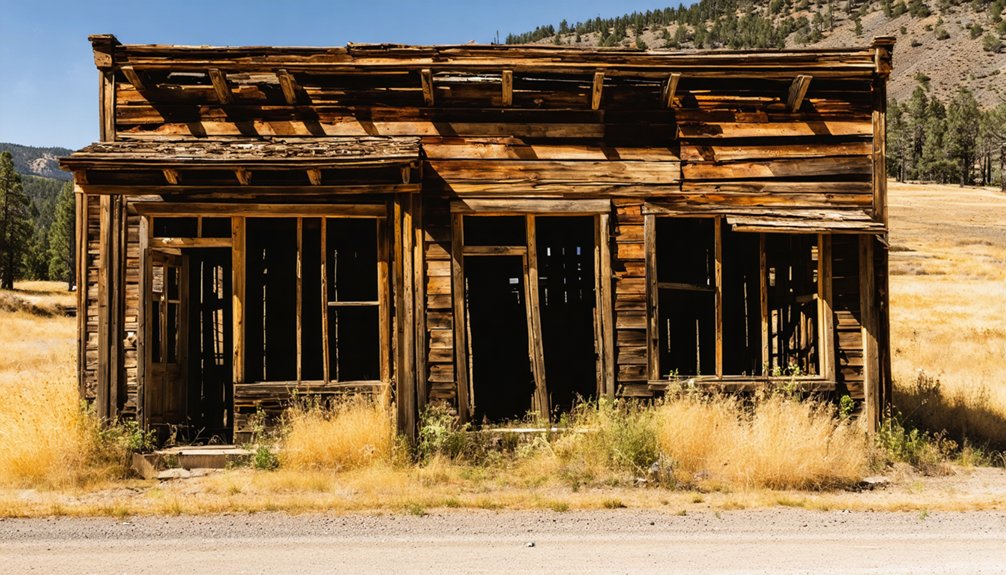
Just eight miles past Foresthill, Michigan Bluff and Yankee Jim’s tell strikingly different stories about what a Gold Rush town can leave behind. Michigan Bluff owes its existence to hydraulic mining techniques that carved wealth from hillsides, and it rewards your visit with actual original structures still standing — a rare level of settlement preservation in Placer County.
Yankee Jim’s offers something harder to hold onto. Once home to over 1,000 miners, it became one of the region’s largest camps before fading almost entirely. The name itself traces back to an Australian criminal connected to horse-hiding before gold ever drew crowds here. Today, little remains.
Michigan Bluff lets you walk through history; Yankee Jim’s asks you to imagine it. Both towns earned their place on the map — one just held on longer.
Gold Run: The Placer County Ghost Town Still on the Map
Not every Gold Rush town fades into silence — Gold Run kept its name on the map long after the miners left. This Placer County settlement earned California Historical Landmark status (#405), a distinction that separates it from dozens of forgotten camps swallowed by brush and time.
Gold prospecting once drove every decision made here — where men settled, where they built, and ultimately where they left. Today, you can trace that pioneer heritage through what remains of this once-active community.
Gold Run appears alongside Deadwood, Last Chance, and Westville on county ghost-town lists, yet it holds something those sites don’t: official recognition.
When you explore Placer County’s abandoned places, Gold Run reminds you that history sometimes earns a marker instead of just a memory.
Iowa Hill, Westville, and Damascus: From Boomtown to Nearly Empty
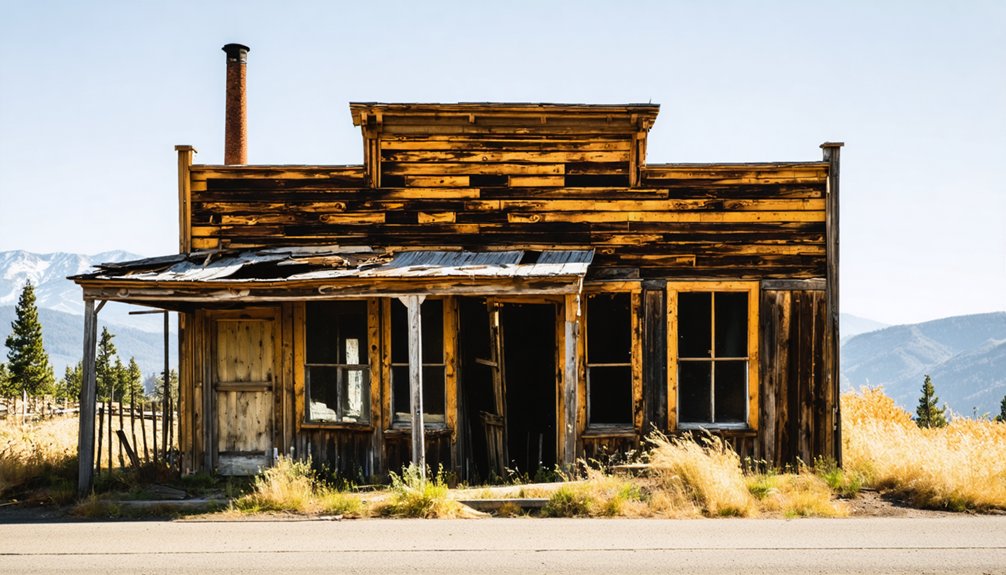
While Gold Run earned official recognition, other Placer County settlements slipped into silence or near-abandonment without ceremony. Iowa Hill, Westville, and Damascus each followed that familiar arc from boomtown energy to quiet erasure.
Iowa Hill isn’t fully gone — people still live there — making it a semi-ghost town and California Historical Landmark No. 401. You’ll find ruins, cemeteries, mining scars, and historic buildings worth exploring as tourist attractions tied to serious historical preservation efforts.
Westville tells a starker story. By 1925, only two residents remained, earning it the label “ghost city.” Little survives today.
Damascus started as Strong’s Diggings, renamed itself in 1856, and kept its Hidden Treasure Mine running until the mid-1930s before fading. These towns remind you that decline rarely announces itself.
Getting There: How to Visit Placer County Ghost Towns
Reaching Placer County’s ghost towns requires a bit of planning, but the drives themselves reward the effort. Most sites cluster along the Foresthill Divide, so you’ll want a detailed map and a vehicle comfortable on unpaved roads.
Plan ahead, but know the roads themselves are half the reward.
Start in Auburn, then head east toward Foresthill to access Michigan Bluff, Last Chance, and Iowa Hill. Gold Run sits conveniently near Interstate 80.
For Deadwood and Yankee Jim’s, expect narrower, winding routes demanding patience and care. Modern tourism has made some sites more accessible, with posted markers supporting cultural preservation efforts along key corridors.
Bring water, sturdy footwear, and genuine curiosity. Cell service disappears fast in these canyons. The freedom to explore these remnants on your own terms makes every rough mile worthwhile.
Before You Go: Safety at Abandoned Sites
Ghost town structures have stood without maintenance for decades. Floors, stairs and roof timbers fail without warning, and a building that looks solid from outside may not hold your weight. Stay out of standing structures unless the site is actively maintained and open to visitors.
Mine workings are the more serious hazard. Vertical shafts can be hundreds of feet deep, are often unfenced, and may be hidden by brush or capped with rotted boards. Never enter an adit, tunnel or shaft: abandoned workings can hold oxygen-poor or toxic air that gives no warning before you lose consciousness.
Enclosed spaces with rodent droppings carry a risk of hantavirus, which is contracted by breathing contaminated dust. Do not sweep or stir up dust inside old cabins and outbuildings.
Cell coverage at these sites is usually poor or absent. Tell someone your route and expected return time, and carry more water than you think you need.
Frequently Asked Questions
Are Any Placer County Ghost Towns Privately Owned or Restricted From Public Access?
Yes, some sites have private ownership or restricted access. You’ll find certain ruins and mines on private land, so you’ve got to research before visiting to protect both your freedom and property rights.
Have Any Placer County Ghost Towns Been Featured in Films or Television?
The knowledge doesn’t confirm film or TV appearances, but with over 1,000 miners once roaming these sites, you’ll find their historical preservation and allure as tourist attractions make them cinematic gems worth exploring freely.
Are Artifacts Found at Placer County Ghost Town Sites Legally Protected?
Yes, you’ll find artifact preservation laws actively protect items at these sites. California’s antiquities statutes shield historically significant relics, so you can’t legally remove them — honoring the freedom of future generations to connect with Gold Rush heritage.
Do Any Ghost Town Sites in Placer County Flood Seasonally?
Like whispers swallowed by rising water, some sites likely face seasonal flooding. You’ll find floodplain preservation shapes what survives. The knowledge doesn’t confirm specific sites, but canyon-nestled locations near waterways naturally risk seasonal flooding each year.
Have Archaeologists Conducted Formal Excavations at Placer County Ghost Town Sites?
You won’t find confirmed formal excavations documented here, but historical preservation efforts and archaeological methodologies have certainly touched these storied sites, letting you trace the Gold Rush’s raw, untamed spirit through surviving ruins and cemeteries.
References
- https://www.placerliving.com/uncategorized/last-chance-and-other-ghost-towns-in-placer-county
- https://nvtami.com/placer-county-california-ghost-towns/
- https://en.wikipedia.org/wiki/List_of_ghost_towns_in_California
- https://www.youtube.com/watch?v=E1l57u4qoiA
- https://en.wikipedia.org/wiki/Deadwood
- https://www.calexplornia.com/iowa-hill/
- https://en.wikipedia.org/wiki/Westville
- https://en.wikipedia.org/wiki/Gold_Run
- https://pitsenberger.com/blog/damascus-a-ghost-town-in-placer-county
- https://pitsenberger.com/blog/deadwood-placer-county