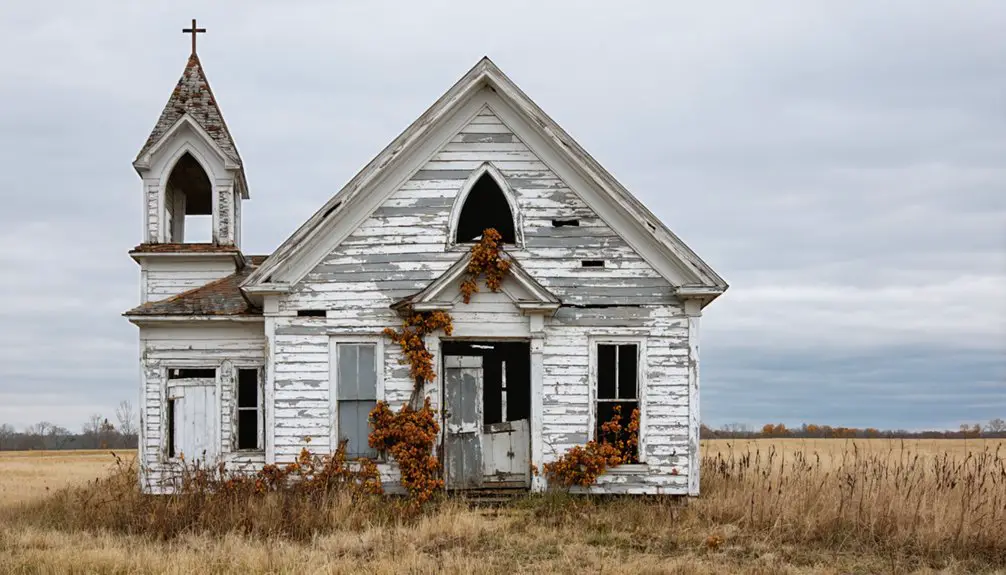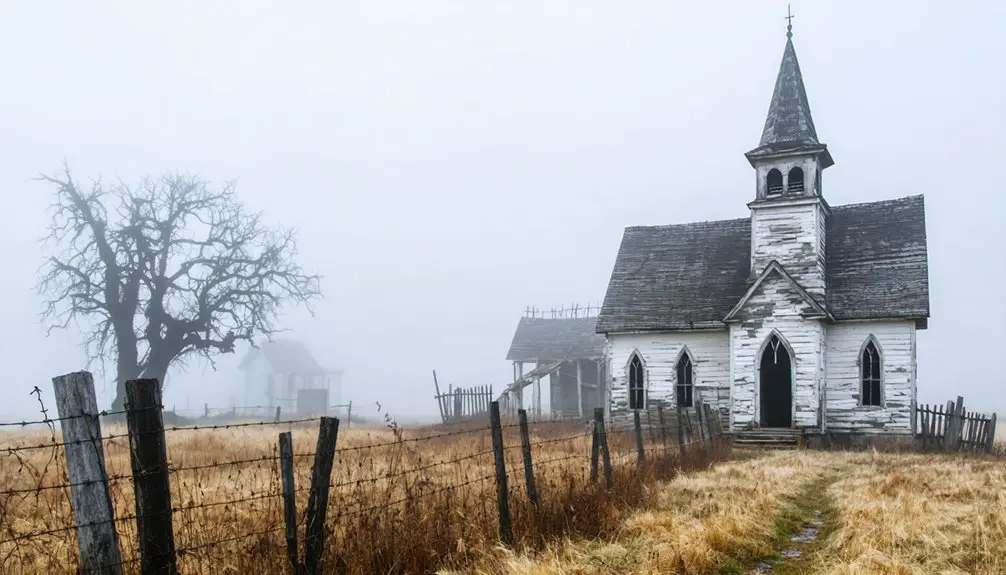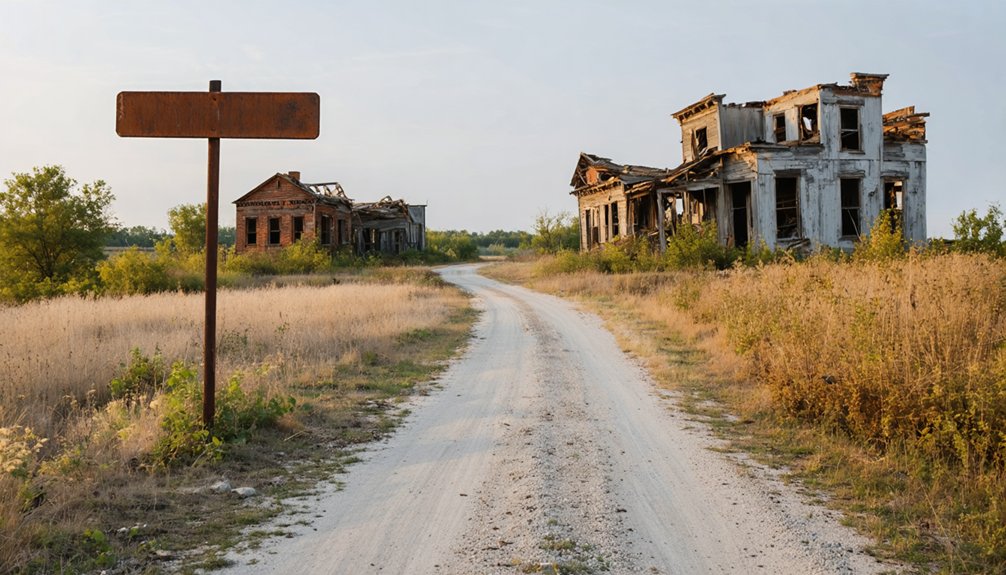
Planning a ghost town road trip to Xenia, Missouri means chasing a place that’s nearly erased from the landscape. Start in Maryville, then head northeast toward Pickering—Xenia sits about one mile north and three miles east. Your regular 2WD vehicle handles the rural roads just fine. Expect a quiet, 15-to-20-minute stop where a farm home and a location sign are all that remain. Pair it with nearby Hamburg or Toonerville, and there’s a full day’s worth of forgotten history waiting for you.
Key Takeaways
- Xenia, Missouri, is a ghost town in Nodaway County, northeast of Maryville, best navigated using Pickering as your reference point.
- The town existed briefly from 1857 to 1872, once supporting a post office, hotel, mercantile store, and stagecoach stop.
- Today, only a farm home and location sign remain, making visits short, typically lasting 15 to 20 minutes.
- Pair Xenia with nearby ghost towns like Hamburg, Howell, and Toonerville for a fuller, more rewarding full-day regional exploration.
- Roads are accessible by 2WD vehicles; spring and fall offer the most comfortable and manageable travel conditions.
What Was Xenia, Missouri, and Why Did It Disappear?
Once a small but functioning community in Nodaway County, Missouri, Xenia supported a post office, a hotel, a mercantile store, and a stagecoach stop during its mid-1800s peak. Its historical significance lies in what it represents — a self-sufficient rural settlement that thrived during westward expansion, then quietly vanished.
Established in 1857, Xenia’s post office kept the town connected until 1872. After that, its local role faded as nearby settlements grew stronger.
You can see preservation challenges clearly here — without infrastructure or sustained interest, communities like Xenia disappear almost entirely.
Today, only a farm home and a location sign mark where the town once stood. Xenia borrowed its name from Xenia, Ohio, fitting a common 19th-century naming tradition that tied new settlements to familiar places back east.
Where Is the Xenia, Missouri Ghost Town Located?
Knowing what Xenia once was makes finding it all the more interesting — though that’s easier said than done. The site sits in Nodaway County, northeast of Maryville and east of the One Hundred and Two River. Even the GNIS doesn’t have an exact location on record, so you’ll need to rely on ghost-town guides for direction.
Your best reference point is Pickering, Missouri. From there, head roughly one mile north and three miles east, and you’re close.
Local history buffs note that preservation efforts here are minimal — you’re fundamentally steering by landmark and instinct. The roads are 2WD accessible, so getting there isn’t the challenge. Pinpointing the exact spot is. Come prepared with a solid map and realistic expectations.
Can You Drive a Regular Car to Reach Xenia?
Getting to Xenia doesn’t require anything special under the hood. The roads leading to this forgotten corner of northwestern Missouri are accessible by standard 2WD vehicles, so you won’t need a truck or SUV to make the journey. That accessibility reflects something worth noting about ghost town economics — communities like Xenia didn’t vanish because they were isolated.
They faded because rural settlement patterns shifted, trade moved elsewhere, and the post office closed.
You can roll up in any reliable car and follow roads near Pickering, roughly one mile north and three miles east. The terrain is flat and rural, nothing dramatic.
What draws you here isn’t a scenic challenge — it’s the quiet weight of a place that once mattered and now barely leaves a trace.
What Remains at the Xenia Ghost Town Site Today?
When you arrive at the Xenia site, don’t expect much to greet you. The town that once supported a hotel, a mercantile store, and a stagecoach stop has nearly vanished. You’ll find one farm home and a location sign marking where this community once stood — that’s fundamentally it.
There are no historical artifacts on display and no visible preservation efforts protecting what little remains. The original settlement left almost no physical trace behind. Some sources suggest nothing survives at all from the original community.
What you’re really experiencing here is absence — the quiet of a place that history moved past. That emptiness tells its own story. Bring your curiosity and a good map, because the landscape itself is your only real guide through Xenia’s past.
Finding Xenia takes a little patience, but two reliable reference points make the search manageable: Maryville to the west and Pickering to the south.
Finding Xenia demands patience, but Maryville to the west and Pickering to the south keep you oriented.
Head northeast from Maryville, keeping the One Hundred and Two River to your west as a natural guide.
From Pickering, you’re looking at roughly one mile north and three miles east — a straightforward rural drive on 2WD-accessible roads.
Don’t rely solely on digital maps, since Xenia’s exact coordinates remain uncertain even to official geographic records.
Instead, lean on local legends passed down by longtime residents, who often know the land better than any database.
Preservation efforts haven’t left much to landmark, so a farm home and a small sign become your real destination markers.
Drive slowly, stay observant, and you’ll find it.
What Is the Best Time of Year to Visit Xenia, Missouri?
Once you’ve mapped out your route to Xenia, the next smart move is picking the right time to make the trip. The good news is that you can visit anytime, since the site’s open rural landscape doesn’t restrict access by season.
That said, local weather shapes your experience considerably. Winters here run cold and snowy, which can make back-road driving slippery and less enjoyable. Summers bring heat and humidity, though you’ll encounter vibrant seasonal wildlife and lush greenery that frames the landscape beautifully.
Spring and fall offer the most comfortable conditions — mild temperatures, manageable roads, and quieter surroundings. Since Xenia requires little time on-site, you’re really just planning around your own comfort. Choose a season that fits your travel style and hit the road.
How Long Should You Spend at the Xenia Ghost Town?
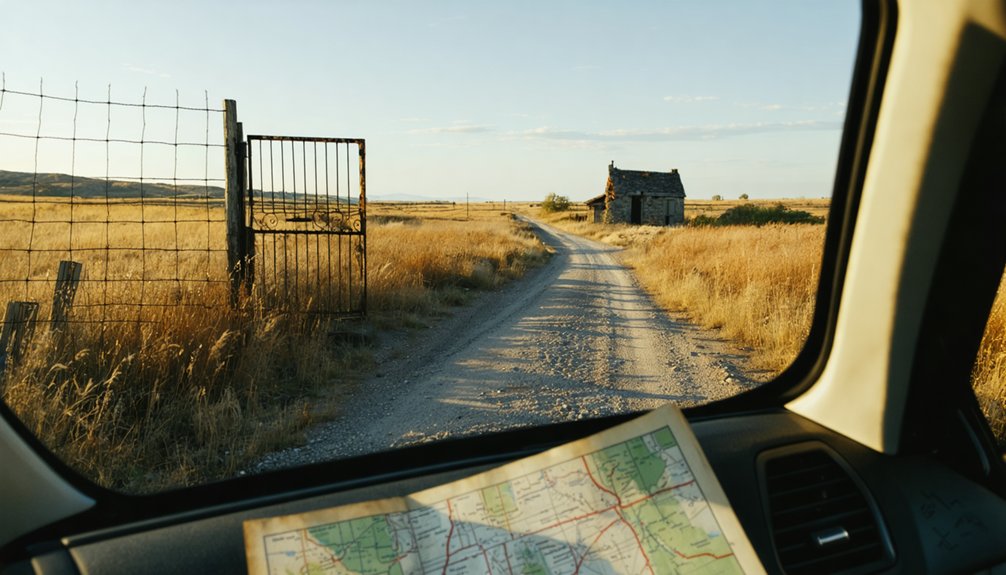
You won’t need more than 15 to 20 minutes at Xenia itself, since the site offers little beyond a farm home and a location sign.
Make the most of your trip by pairing the stop with other northwestern Missouri ghost towns, such as Hamburg or Toonerville, to build a fuller day of exploration.
Treating Xenia as one piece of a larger route transforms a quick roadside pause into a genuinely rewarding regional adventure.
Quick Stop Only
Because Xenia’s remains amount to little more than a farm home and a location sign, you won’t need more than 15 to 20 minutes on-site. Snap a few photos, read the sign, and let the surrounding rural landscape tell the rest of the story.
That quiet farmland once supported a hotel, a mercantile store, and a stagecoach stop — a community legacy worth pausing to appreciate, even briefly.
Use your extra time to research the local history before you arrive, so the stop carries real meaning rather than feeling like a blank field.
Xenia rewards curious travelers who come prepared. Pair it with other nearby Missouri ghost towns to build a fuller, more satisfying road trip through the region’s forgotten past.
Plan Nearby Visits
Pairing Xenia with other nearby Missouri ghost towns turns a quick 20-minute stop into a full day of historical exploration. Towns like Hamburg, Howell, and Toonerville each carry their own local legends and quiet preservation efforts worth discovering on your own terms.
Pack a lunch, load an offline map, and hit the rural roads connecting these forgotten communities:
- Hamburg: A weathered landscape where vanished storefronts once lined a thriving main street
- Howell: Rolling farmland hiding the faint outlines of a settlement lost to shifting transportation routes
- Toonerville: A remote crossroads wrapped in the silence of a community that simply faded away
Maryville and Pickering serve as reliable anchor points for navigation, keeping your route flexible and your adventure completely yours to shape.
Which Missouri Ghost Towns Are Worth Adding to Your Route?
If you’re already making the trip to Xenia, you can easily build a fuller route by adding other northwestern Missouri ghost towns like Hamburg, Howell, or Toonerville.
Many of these towns share a similar history — small settlements that thrived briefly on post offices, stagecoach stops, and local trade before fading when transportation routes shifted.
Plan your stops around navigable 2WD roads and cluster your destinations geographically so you’re covering ground efficiently rather than backtracking across the region.
Nearby Ghost Towns Worth Visiting
Missouri’s ghost town circuit gives you plenty of reasons to extend your Xenia stop into a full regional road trip. Northwestern Missouri holds scattered communities frozen in time, each carrying its own cultural significance and quiet stories of decline.
You’ll find that preservation efforts vary widely, making each stop feel distinct.
Consider adding these nearby ghost towns to your route:
- Hamburg – a riverside remnant where silence replaces what was once a busy settlement
- Howell – stripped down to foundations and memory, offering raw rural atmosphere
- Toonerville – a faded crossroads where the landscape itself tells the story
String these stops together and you’ve built a meaningful journey through forgotten Missouri, connecting dots between communities that time quietly erased.
Planning a Multi-Stop Route
Building a multi-stop Missouri ghost town route takes some intentional planning, but the payoff is a cohesive journey through the state’s forgotten rural past. Start with Xenia as a quick anchor stop in the northwest, then build outward toward Hamburg, Howell, and Toonerville to fill your itinerary.
Each town carries its own story of decline, and some sites still offer historical artifacts or active preservation efforts worth your attention. Use Maryville and Pickering as navigation anchors when roads get uncertain.
Since Xenia demands little time, you’ll have energy left for deeper stops elsewhere. Traveling by 2WD keeps your options flexible across rural terrain.
Plan your route by geography rather than alphabetical order, and you’ll move efficiently without backtracking across northwestern Missouri’s open countryside.
Missouri Towns With Similar History
Several Missouri ghost towns share Xenia’s story of post office closures, faded commerce, and rural abandonment, making them natural additions to your route. Each stop adds depth to your understanding of how entire communities simply vanished from the map.
Consider adding these towns to your itinerary:
- Hamburg – a riverside settlement swallowed by time, where local legends still circulate among older residents who remember its final days
- Howell – a quiet reminder of displaced communities, with scattered preservation efforts keeping its memory technically alive
- Toonerville – a name that sounds whimsical but represents real loss, its landscape now indistinguishable from open farmland
Stringing these stops together transforms your trip into something meaningful. You’re not just driving through Missouri; you’re tracing the honest, unfiltered story of westward settlement and its aftermath.
How to Plan a Missouri Ghost Town Road Trip Around Xenia
Xenia makes a natural anchor for a broader ghost town road trip through northwestern Missouri, even if the stop itself is brief. Start in Maryville, grab a map, and work your way through the region’s forgotten communities, using Pickering as your navigational reference point for locating Xenia.
The 2WD-accessible roads mean you don’t need a specialized vehicle, so you can move freely between stops. Layer in historical anecdotes about each town’s rise and fall to give the journey meaning beyond the scenery.
Where preservation efforts exist, take time to appreciate them. Plan your visit outside winter and summer extremes for the most comfortable experience.
Pairing Xenia with nearby ghost towns like Hamburg or Toonerville turns a brief stop into a full day of discovery.
Frequently Asked Questions
Where Did Xenia, Missouri Get Its Unusual Name From?
You’ll find that Xenia borrowed its name from Xenia, Ohio — a common 19th-century naming tradition. Like many abandoned landmarks tied to ghost town legends, it carried an eastern identity westward into Missouri’s rural frontier.
Did Xenia Ever Have a School or Church During Its Active Years?
Like faded ink on old paper, the records don’t confirm a school or church in Xenia. You’ll find local legends and ghost stories outshine documented facts, leaving its full history beautifully mysterious.
Are There Any Historical Photographs of Xenia When It Was Active?
You won’t find historical photographs of Xenia during its active years. The ghost town relics and abandoned structures left behind are scarce, and documented visual records simply don’t exist, making its mid-1800s story even more mysteriously compelling to explore.
Is the Farm Home Still Privately Owned and Occupied Today?
Over 150 years after Xenia’s post office closed, farmstead history endures — one farm home still stands. Property ownership details aren’t confirmed, but you’ll likely find it privately held, so respect boundaries when you visit.
Has Anyone Attempted to Officially Document or Preserve Xenia’s History?
You won’t find major ghost town preservation or historical documentation efforts tied to Xenia, but researchers have included it in Missouri ghost town listings, keeping its story alive through published records and location signs marking its forgotten past.
References
- https://kids.kiddle.co/Xenia
- https://en.wikipedia.org/wiki/Xenia
- https://www.ghosttowns.com/states/mo/xenia.html
- https://dbpedia.org/page/Xenia
- http://freepages.rootsweb.com/~gtusa/history/usa/ne/sarpy-co.htm
- https://kids.kiddle.co/List_of_ghost_towns_in_Missouri
- https://en.wikipedia.org/wiki/List_of_ghost_towns_in_Missouri
- https://www.youtube.com/watch?v=ERFnlJ5pjBg
- https://sites.rootsweb.com/~motttp/history/ghost_towns/index.htm
- https://missourilife.com/photos-explore-7-missouri-ghost-towns-2/