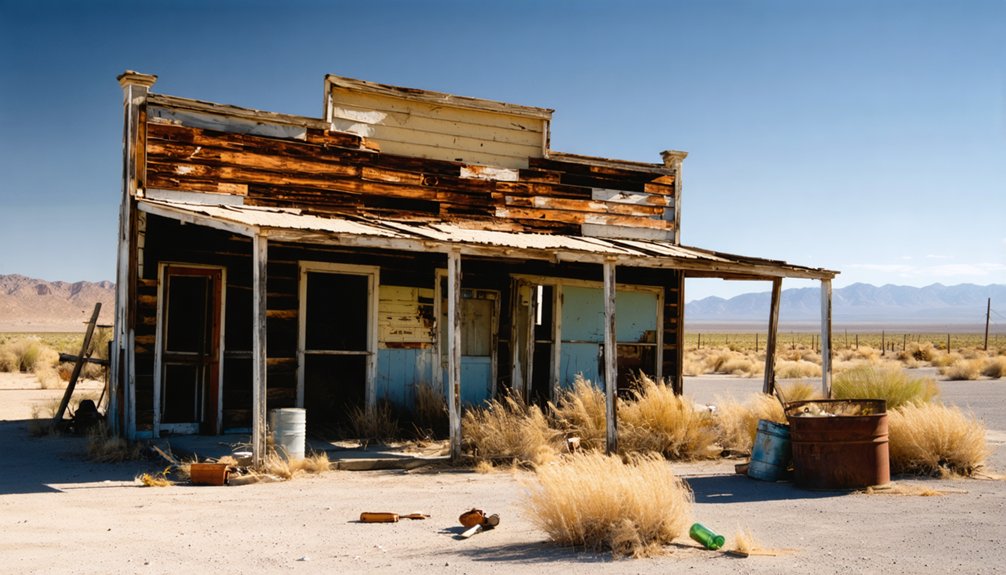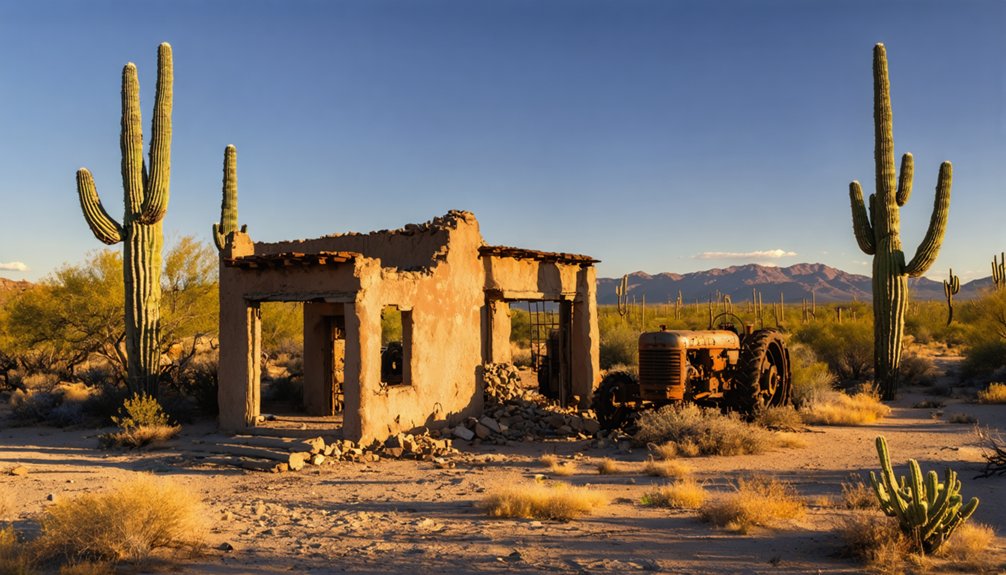
To plan your ghost town road trip to Agua Caliente, Arizona, head southwest of Phoenix toward Sentinel and take Agua Caliente Road from Arlington. You’ll find scattered ruins, adobe remnants, and a pioneer cemetery marking what was once a thriving desert resort built around natural hot springs. Visit between October and April to avoid brutal summer heat. Pack water, sturdy shoes, and a full tank of gas — there’s much more to this forgotten desert retreat than meets the eye.
Key Takeaways
- Agua Caliente sits 12 miles north of Sentinel, reached via Agua Caliente Road from Arlington, requiring no high-clearance vehicle.
- Visit during fall, winter, or spring to avoid extreme summer heat, with March-April offering scenic wildflower views among the ruins.
- Bring water, sunscreen, sturdy shoes, a first aid kit, a paper map, and a fully charged phone for safe exploration.
- Watch for rattlesnakes and Gila monsters near ruins, avoid trespassing on private property, and never disturb historical artifacts or remains.
- Combine your visit with nearby ghost town Sundad for a fuller road trip exploring the region’s desert settlement history.
What Is Agua Caliente, Arizona?
Tucked away in Maricopa County southwest of Phoenix, Agua Caliente is an Arizona ghost town that traces its roots back to a cluster of natural hot springs once prized by Native American cultures and later developed into a thriving desert resort.
The name means “hot water” in Spanish, and that warm, mineral-rich resource shaped everything that grew around it. By the late 1800s, a hotel, swimming pool, and healing retreat had taken root here.
Eventually, the springs dried up, the travelers stopped coming, and the town faded into silence.
Today, you can still see historical artifacts like stone ruins, adobe structures, and a pioneer cemetery scattered across the site. Modern preservation efforts remain limited, making this a raw, unpolished glimpse into Arizona’s forgotten desert past.
Why This Desert Ghost Town Was Once a Healing Destination
Before European settlers arrived, Native American cultures had already discovered what made Agua Caliente special: naturally occurring hot springs that bubbled up from the desert floor with mineral-rich, therapeutic water. That historical significance runs deep, stretching back centuries before any resort was ever built.
Long before any resort existed, Native American cultures recognized Agua Caliente’s mineral-rich hot springs as something sacred and healing.
By the 1870s, word had spread well beyond the local region. Travelers came specifically seeking relief from illness and physical ailments, drawn by the springs’ reputation as a natural remedy.
The cultural influence of those early healing traditions shaped everything that followed, eventually inspiring the construction of a 22-room hotel in 1897, complete with a swimming pool fed by the hot springs themselves.
What you’re visiting today isn’t just a ruin — it’s the remnant of a place people once traveled far to reach for restoration.
The Hotel, Hot Springs, and Slow Collapse of the Resort Era
When you look into Agua Caliente’s peak years, you’ll find a genuine resort anchored by a 22-room hotel built in 1897, complete with a hot spring-fed swimming pool that drew travelers seeking relief from illness.
The operation ran in various forms into the 1950s, even hosting World War II military officers from nearby Camp Horn during its later years.
But the springs eventually dried up — whether from heavy irrigation demands on the surrounding land or from blasting during an attempted expansion — and without water, the resort had nothing left to offer.
Resort’s Rise And Fall
By the late 1800s, Agua Caliente had evolved from a regional curiosity into a functioning desert resort, anchored by a 22-room hotel built in 1897 and a swimming pool fed directly by the natural hot springs. Travelers arrived seeking healing, and local legends painted the waters as restorative for various ailments.
The resort persisted into the 1950s, even hosting World War II military officers from nearby Camp Horn during its later years.
Then the water disappeared. Whether irrigation demands drained the aquifer or developers accidentally destroyed the source through blasting, the springs went dry and took the resort with them. No serious preservation efforts ever reversed the decline.
Rail lines, Highway 85, and I-8 bypassed the area completely, sealing Agua Caliente’s fate as a ghost town.
Hot Springs Dry Up
Once the springs went dry, Agua Caliente lost the one thing that had made it worth visiting. For generations, those waters carried ancient legends of healing, drawing Native peoples long before any hotel existed. That cultural significance didn’t disappear overnight, but without the water, the resort had nothing left to sell.
Two theories explain what killed the springs. Nearby farmers and ranchers tapped heavily into the water table through irrigation demands, slowly draining what fed the source. Others point to developers who blasted into the earth trying to expand the resort, accidentally destroying the very thing they were trying to profit from.
Either way, the result was the same. The hotel emptied, the pool went still, and the desert quietly reclaimed everything around it.
How to Get to Agua Caliente, Arizona
Agua Caliente sits in Maricopa County, roughly 12 miles north of Sentinel in the southwestern Arizona desert.
You’ll reach the site via 2WD-accessible roads, making it an easy drive without the need for a high-clearance vehicle.
Agua Caliente Road runs through the desert from Arlington toward the ghost town, giving you a straightforward route into the site.
Location and Access Overview
Tucked into the desert of Maricopa County, Agua Caliente sits roughly 12 miles north of Sentinel and southwest of Phoenix — close enough to reach on a day trip, but far enough to feel like the middle of nowhere. The road in is 2WD accessible, so you don’t need a rugged rig to explore ancient artifacts or observe modern preservation efforts firsthand.
Here’s what to know before you go:
- The site lies southwest of Phoenix along Agua Caliente Road
- Standard 2WD vehicles handle the route without issue
- Arlington serves as a nearby landmark along the approach
- Summer heat makes fall, winter, and spring the ideal travel windows
- No developed tourist infrastructure exists — this is raw desert history
Best Route To Take
Getting to Agua Caliente is straightforward, and the drive itself sets the tone for the remote, sun-baked history you’re about to encounter. Head southwest from Phoenix toward Maricopa County’s open desert, then travel roughly 12 miles north of Sentinel using Agua Caliente Road.
The route is 2WD accessible, so you won’t need a specialized vehicle. As you approach, the landscape gradually reveals why early settlers prized this location — natural water sources once bubbled up here, sustaining both Native communities and later resort visitors.
The historical architecture emerges almost unexpectedly against the flat desert terrain, rewarding your patience. Stick to the road near the hotel grounds since private property signs are posted.
Arlington serves as a useful reference point when you’re plotting your course from the western Phoenix corridor.
What’s Still Standing at the Agua Caliente Ghost Town
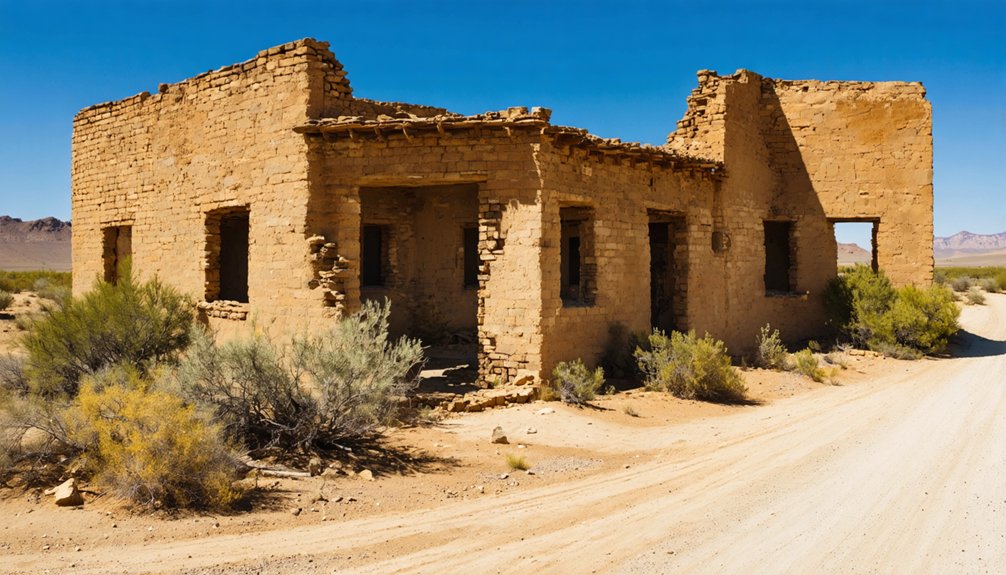
Though the resort’s glory days are long gone, Agua Caliente still holds enough remnants to make the stop worthwhile. You’ll find a quiet snapshot of desert history scattered across the landscape, where historical preservation efforts remain minimal, so approach with curiosity and respect for visitor safety.
Here’s what you can expect to see:
- The original hotel structure, still standing but on private property — view it from the road
- Stone ruins from the resort’s operational era
- Adobe remnants tied to earlier settlement periods
- A pioneer cemetery offering a sobering connection to those who lived here
- The former pool area, where hot spring water once flowed freely
Stay behind posted no-trespassing signs and let the ruins tell their story from a respectful distance.
Stay on the Road: What’s Off-Limits When You Visit
Visiting a ghost town comes with an unspoken responsibility — respect the boundaries that separate history from trespassing. At Agua Caliente, the old hotel sits on private property, and no trespassing signs mean exactly what they say. Stay on the road and admire the structure from a distance.
History doesn’t belong to those who trespass — it belongs to those who know when to keep their distance.
For photography tips, a telephoto lens lets you capture architectural details without crossing property lines. Frame your shots from the roadside — you’ll still get compelling images.
Wildlife safety matters here too. Desert creatures like rattlesnakes and Gila monsters inhabit abandoned ruins, so wandering off into crumbling structures puts you at real risk. The desert rewards the curious but punishes the careless.
Keep your exploration legal, safe, and grounded in genuine respect for what remains.
The Best Time of Year to Visit Agua Caliente
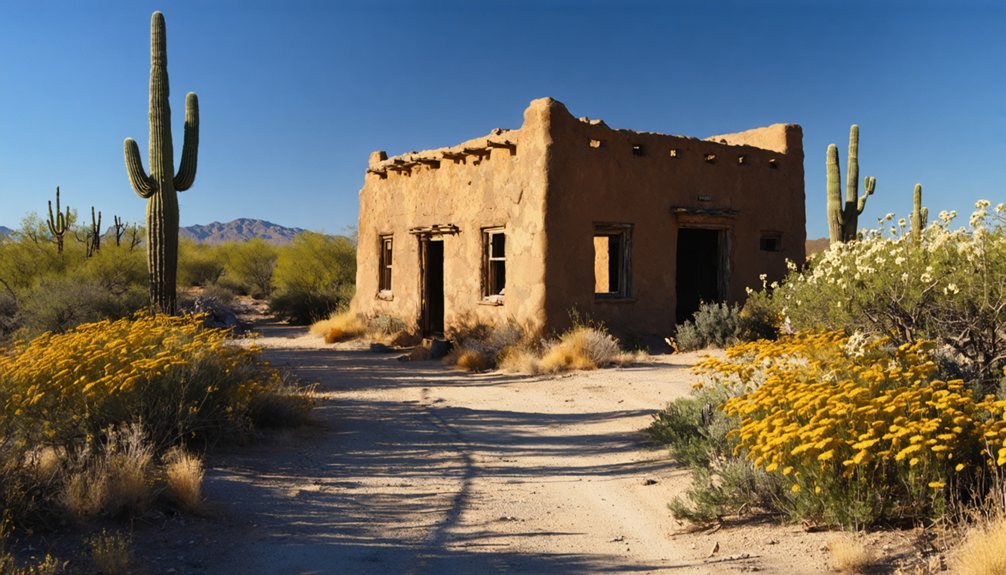
Arizona’s desert heat is no joke, and if you plan your trip to Agua Caliente in July or August, you’ll regret it fast. The sweet spot is fall through spring, when the desert becomes genuinely explorable.
- October through November offers cooler temps and clear skies perfect for reading geological features in the landscape.
- December through February keeps crowds minimal and conditions mild for roadside exploration.
- March through April brings wildflowers that contrast beautifully against adobe ruins.
- Mornings always beat afternoons, regardless of season, for sharper light and cooler air.
- Spring equinox timing connects you to the cultural significance of indigenous use of these ancient springs.
You’ll see more, stay longer, and actually enjoy the site when the desert isn’t trying to cook you alive.
Desert Essentials to Pack for the Agua Caliente Drive
Because Agua Caliente sits in a remote stretch of Maricopa County desert with no services nearby, what you pack can make or break your visit. Bring more water than you think you’ll need — at least a gallon per person — since the surrounding desert flora offers no shade and temperatures climb fast even in cooler months.
Pack sunscreen, a wide-brim hat, and sturdy closed-toe shoes for walking uneven terrain near the ruins. Wildlife encounters are real here; watch for rattlesnakes, especially around low stone walls and debris piles.
Carry a first aid kit, a paper map, and a charged phone. Since the site has no facilities, pack out everything you bring in. A full tank of gas before you leave the highway is non-negotiable.
Nearby Ghost Towns Like Sundad to Pair With Your Visit
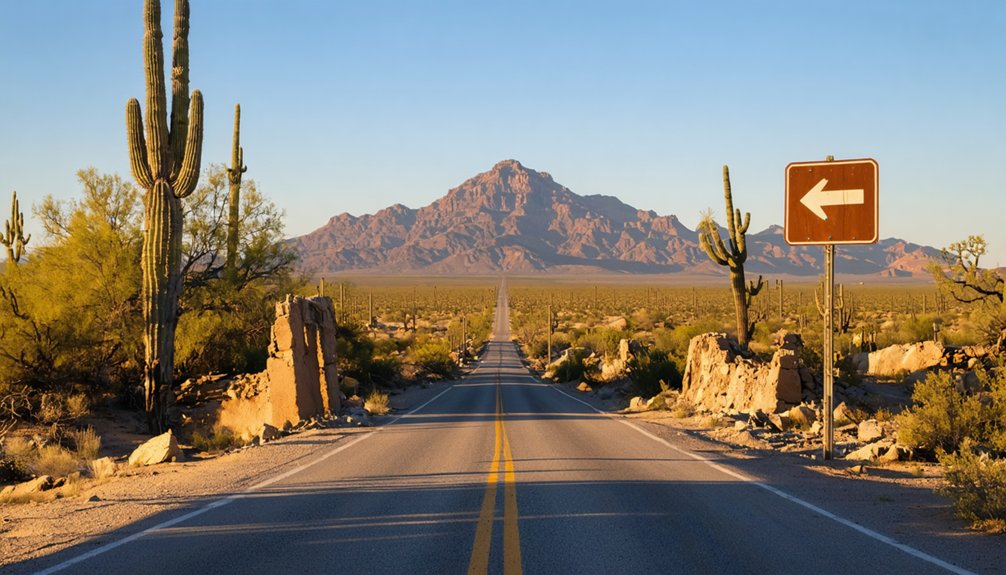
If you’re already making the drive out to Agua Caliente, pairing the stop with a visit to nearby Sundad turns a single-site outing into a fuller ghost town road trip. Both sites share the same broad desert corridor, letting you cover serious historical significance without backtracking.
Use this pairing to explore:
- Two abandoned desert settlements connected by the same regional road network
- Contrasting architectural remains that reflect different eras of Sonoran Desert settlement
- Raw geological features shaped by centuries of arid erosion
- A landscape largely untouched by modern development
- The quiet freedom of open desert roads between stops
Traveling both sites in one run gives you a richer read on how this corner of Maricopa County once thrived, then quietly disappeared from the map.
Frequently Asked Questions
Is There Cell Service Available Along Agua Caliente Road?
Don’t count on strong cell phone reception along Agua Caliente Road. You’re venturing deep into Arizona’s remote desert, where signal strength drops markedly. Embrace the disconnect — it’s part of the wild freedom this ghost town adventure offers!
Are Pets Allowed When Visiting the Agua Caliente Ghost Town Area?
You’re in uncharted waters regarding pet policies, as no official animal restrictions exist for this open desert area. You can likely bring pets, but respect private property boundaries and keep them leashed near ruins.
Can You Camp Overnight Near the Agua Caliente Ghost Town Site?
No official campgrounds exist near the Agua Caliente ghost town’s historic landmarks, so you’ll need to research camping regulations for surrounding Maricopa County desert land before pitching your tent and embracing that wide-open, off-the-beaten-path freedom overnight.
Is the Pioneer Cemetery at Agua Caliente Open to the Public?
Like an open book of the past, the pioneer cemetery’s historical preservation invites your exploration. Cemetery regulations aren’t clearly defined here, so you’ll want to tread respectfully, honoring those who shaped Agua Caliente’s fascinating desert legacy.
Are Guided Tours Available for Visiting Agua Caliente Ghost Town?
No guided tours are available, so you’ll explore freely on your own terms! Discover historical artifacts and uncover local legends as you roam this haunting desert ghost town at your own pace and adventure.
References
- https://www.youtube.com/watch?v=IQpJxEwcJYA
- https://www.ghosttowns.com/states/az/aguacaliente.html
- https://prestonm.com/agua-caliente-ghost-town/
- https://en.wikipedia.org/wiki/List_of_ghost_towns_in_Arizona
- http://www.echoesofthesouthwest.com/2021/01/arizona-agua-caliente.html?m=0
- https://www.youtube.com/watch?v=eKMSVZZ2ZQ0
- http://www.ghosttownaz.info/agua-caliente-ghost-town.php