Before you plan your ghost town road trip to Alpine, Washington, know that there are actually two towns with that name—one in King County near Skykomish and one in Skagit County. The King County version started as a Japanese railway workers’ settlement in 1892 and later became a sawmill town. No standing structures remain, just mapped foundations waiting to be explored. Bring a 4WD vehicle, visit between July and September, and there’s much more to uncover ahead.
Key Takeaways
- Alpine, Washington has two locations—King County near Skykomish and Skagit County on Lake Cavanaugh—so confirm your destination before visiting.
- A 4WD vehicle is required; visit between July and September before snow closes the rugged access road.
- No standing structures remain, only mapped foundations of the mill, Victory Hall, boarding house, and ten other buildings.
- Nearby ghost towns Monte Cristo, Govan, and Sherman make excellent additions to a regional ghost town road trip itinerary.
- Walk carefully on established paths, avoid disturbing foundations, and never remove artifacts to protect this culturally significant site.
Two Towns Named Alpine: Don’t Confuse King County With Skagit County
When planning your trip to Alpine, Washington, you’ll want to make sure you’re heading to the right one — there are actually two ghost towns sharing the name.
The King County version sits in the Cascade Mountains near Skykomish, carrying deep historical significance as a former Japanese railway workers’ settlement and sawmill town.
The other Alpine sits in Skagit County on the shores of Lake Cavanaugh, a mining town where gold and silver activity peaked in the early 1900s before declining sharply by the 1920s.
Both sites hold cultural preservation value, but they tell entirely different stories.
If you’re orienting yourself with a ghost town road map, confirm your grid reference and county before hitting the road — mixing these two up wastes a trip.
The Japanese Railway Workers Who Built Alpine, Washington
When you explore Alpine’s history, you’ll find that the town’s roots stretch back to 1892, when Great Northern Railway founded it as Nippon—a camp built specifically to house Japanese railway workers.
By 1910, the site had transformed from a railway depot into a thriving sawmill town, drawing a tight-knit community that eventually constructed Victory Hall, a social gathering space built during World War I.
That cultural legacy, layered beneath decades of forest growth, is what makes Alpine’s story stand apart from the mining towns you’ll encounter elsewhere in Washington.
Nippon’s Japanese Worker Origins
Before Alpine was ever called Alpine, it was known as Nippon—a name that speaks directly to the town’s origins.
When the Great Northern Railway established this depot in 1892, Japanese workers weren’t just laying track; they were building a community. The name Nippon honored their presence and reflected a genuine cultural preservation effort rare for that era.
You’re walking into a place where immigrant labor shaped an entire settlement’s identity. These workers lived, ate, and organized their lives here long before the sawmill arrived in 1910 and transformed the depot into a proper town.
Their community impact extended beyond physical construction—they gave this remote Cascade Mountain location its first real human identity. That history still lives beneath the soil, even if nothing stands above it.
Railway Camp To Sawmill
The shift from railway camp to sawmill town didn’t happen overnight—it took nearly two decades of slow transformation before Alpine emerged as a functioning settlement.
Founded in 1892 as a Great Northern Railway depot, the site initially existed purely to support Japanese workers laying track through the Cascades.
That labor carried real historical significance, yet the workers who built it rarely received lasting recognition.
Victory Hall’s Cultural Legacy
Among Alpine’s few traceable remnants, Victory Hall stands out as the town’s social anchor—built during World War I to give residents a shared space for community life. You’re looking at a structure that carried real historical significance—a gathering point for Japanese railway workers and their families in an era when community bonds meant survival.
Its foundation, still mappable today, represents more than concrete and stone. It’s a tribute to cultural preservation, reminding you that Alpine wasn’t just a work camp—it was a living community.
When you walk the site, you’re tracing the footsteps of laborers who shaped the Great Northern Railway and carved out meaningful lives in the Cascades. That story deserves your attention, and Victory Hall is where it comes into sharpest focus.
What Survived: Foundations, Victory Hall, and the Mill Ruins
When you visit Alpine today, you won’t find a single standing structure, but the ground beneath your feet tells a compelling story.
Explorers mapping the site over the last four years have identified foundations from the mill, Victory Hall, the boarding house, and at least 10 other buildings.
You can trace the town’s former layout through these ruins, though researchers haven’t yet identified every foundation scattered across the site.
Mapped Foundation Locations
Although Alpine’s above-ground buildings have long since vanished, you’ll still find traces of the town’s footprint preserved beneath the surface. In the last four years, explorers have mapped foundations from the boarding house — which once housed the post office and company offices — along with ten additional structures scattered across the site.
Some of those ten foundations remain unidentified, leaving room for future discovery and deeper archaeological significance. Each outline etched into the earth represents a layer of cultural preservation worth seeking out, particularly given Alpine’s unique history as a Japanese railway workers’ settlement.
You’ll want to bring a sharp eye and a detailed map. The terrain rewards careful exploration, and understanding the layout transforms what looks like empty forest floor into a remarkably readable historical record.
Mill And Victory Hall Ruins
What little Alpine left behind, it left in stone. You’ll find the foundations of the mill, school, and Victory Hall still embedded in the earth, silent markers of a town that once hummed with daily life.
The mill drove Alpine’s economic pulse after 1910, while Victory Hall stood as its cultural heart, built during World War I to give residents a shared gathering space.
These ruins carry real historical significance. You’re not walking through a reconstructed site — you’re standing on original ground where Japanese railway workers and mill families actually lived.
That cultural heritage deserves your attention and respect. Trace the mill foundation’s outline, locate Victory Hall’s footprint, and let the stonework tell you what no standing building can anymore.
Getting to Alpine, Washington Requires a 4WD Vehicle
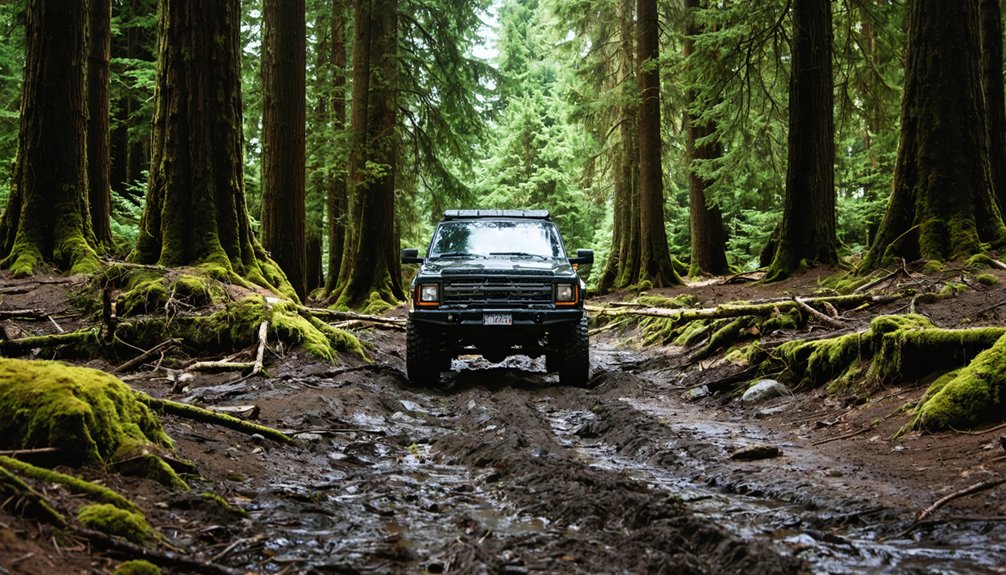
Getting to Alpine demands a 4WD vehicle, as the road conditions make the trip inaccessible to standard cars. Plan your visit during summer or early fall before snow closes the route entirely.
A 4WD vehicle is non-negotiable here. Visit in summer or early fall before snow shuts the route down.
Winter snowfall and rugged terrain restrict access, so timing matters if you want to experience this site’s historical significance firsthand.
Once you arrive, you’ll find no standing structures, only foundations quietly holding the memory of Japanese railway workers and the community they built. That freedom to explore raw, unfiltered history makes the journey worthwhile.
Cultural preservation here exists not in restored buildings but in mapped foundations and documented stories.
Come prepared with the right vehicle, sturdy boots, and curiosity. Alpine rewards those willing to work for it.
The Best Time to Visit Alpine Before Snow Closes the Road
Summer and early fall offer your best window to reach Alpine before snow seals the road shut. Once winter arrives, the Cascade Mountains transform the access road into an impassable route, cutting you off from the site entirely. You’ll want to plan your visit between July and September to maximize both visitor safety and daylight exploration time.
The foundations you’re hunting — remnants of the mill, school, and Victory Hall — deserve careful, unhurried examination. Rushing through icy or muddy conditions puts you at risk and threatens historical preservation efforts that researchers have only recently begun documenting.
Give yourself a full day, bring sturdy boots, and check road conditions before heading out. Alpine rewards the prepared traveler, not the reckless one.
Monte Cristo and Other Ghost Towns Near Alpine Worth Visiting
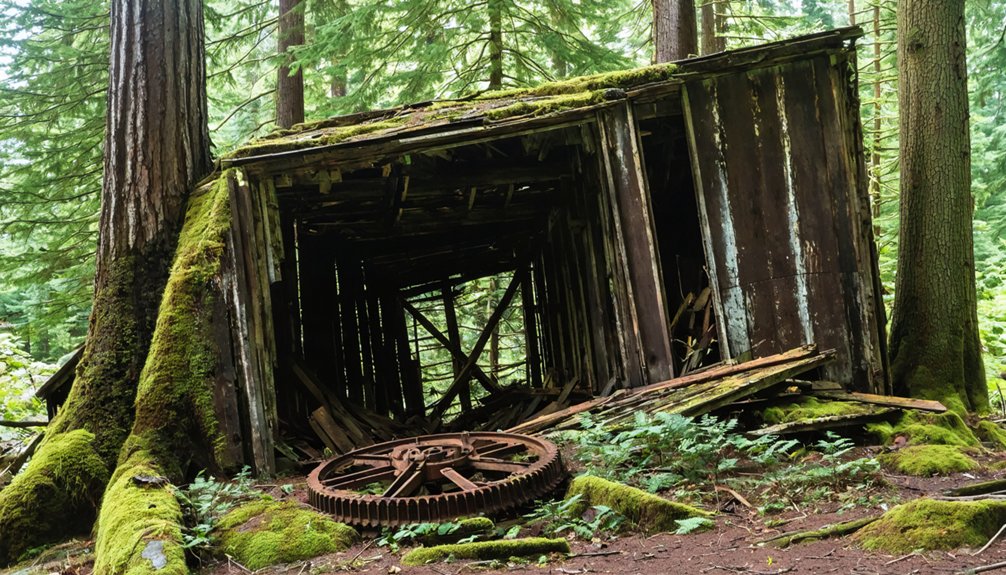
Once you’ve explored Alpine’s hidden foundations, the surrounding region offers more ghost town history worth chasing. The area rewards curious travelers willing to push further into Washington’s rugged backcountry.
Don’t miss these nearby sites carrying real historical significance:
- Monte Cristo – A gold and silver mining town active from 1889 to 1907. Later, it became a resort. Today, it is cared for by the Monte Cristo Preservation Association, which champions cultural preservation through active stewardship.
- Govan – A stark, windswept Eastern Washington ghost town with standing structures still visible.
- Sherman – A small, largely forgotten settlement worth investigating for serious explorers.
Each stop deepens your understanding of Washington’s layered past. The freedom to explore these sites on your own terms makes the road trip genuinely unforgettable.
How to Walk Alpine’s Foundation Grid Without Damaging the Site
Although nothing stands above ground at Alpine, the foundation grid beneath your feet tells a complete story of the town’s layout — and how you walk it matters. Stick to established paths between foundations rather than stepping directly on stone edges, which can shift or crack under weight.
Archaeological ethics aren’t just for professionals — you’re responsible for what you leave behind and what you don’t disturb. Don’t move rocks, dig, or remove anything, even fragments that seem insignificant. Cultural preservation depends on every visitor making that same quiet commitment.
Researchers have only mapped these foundations within the last four years, meaning the site is still actively being understood. Your careful footsteps protect discoveries that haven’t been made yet.
Frequently Asked Questions
Was Alpine, Washington Ever Officially Renamed From Nippon?
Yes, it was! You’ll find that Nippon’s renaming to Alpine carries deep historical significance, honoring the town’s cultural heritage as it transformed from a Japanese railway workers’ settlement into a thriving sawmill community.
Which Ghost Town Road Map Lists Alpine’s Grid Reference Number?
You’ll find Alpine’s grid reference listed as “1” on the ghost town map featured at the end of exploration posts, making it easy to pinpoint this hidden gem on your adventurous road trip journey.
Are Any Artifacts From Alpine Displayed in Nearby Museums?
The available knowledge doesn’t confirm any artifact displays or museum exhibits tied to Alpine. You’ll want to contact local Skykomish historical societies directly, as they’re your best resource for uncovering preserved remnants from this fascinating ghost town.
Did Alpine Have a School Before the Sawmill Began Operating?
The sawmill sparked Alpine’s growth in 1910 — before that, you won’t find evidence of historic school buildings. The town’s educational history only developed after the mill transformed this railway depot into a full community.
Is the Alpine, King County Site on Protected or Private Land?
The knowledge doesn’t confirm land ownership details for Alpine’s King County site, so you’ll want to research historical preservation status before you visit—knowing who controls access helps you explore freely and responsibly.
References
- https://en.wikipedia.org/wiki/Alpine
- http://www.abarim.com/Alpine.htm
- https://www.ghosttowns.com/states/wa/alpine.html
- https://www.facebook.com/groups/521266439663652/posts/1354195133037441/
- https://en.wikipedia.org/wiki/List_of_ghost_towns_in_Washington
- https://janmackellcollins.wordpress.com/tag/ghost-towns/
- https://www.crazydsadventures.com/post/exploring-the-haunted-beauty-of-washington-state-s-ghost-towns
- https://leavenworth.org/the-bavarian-village-of-leavenworth/