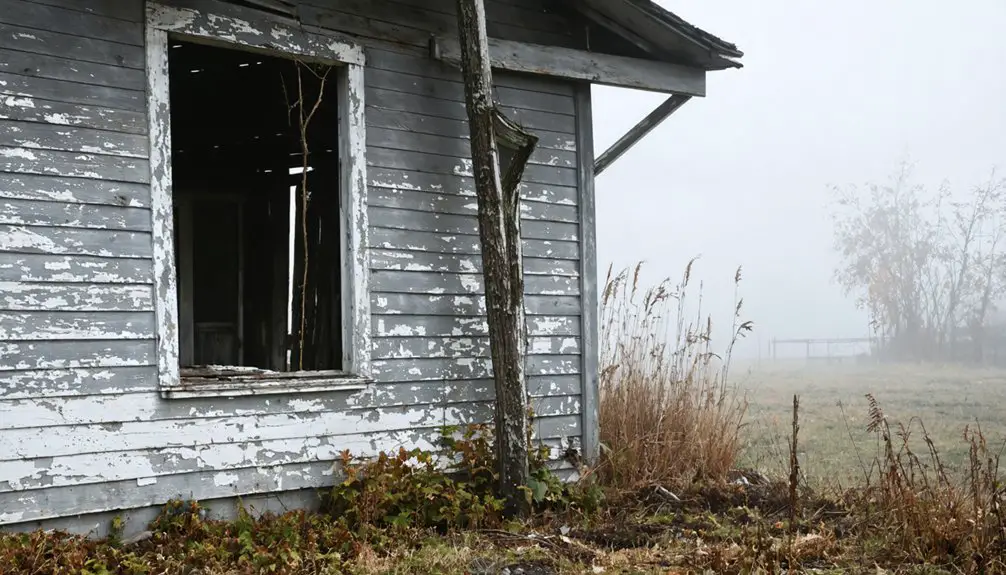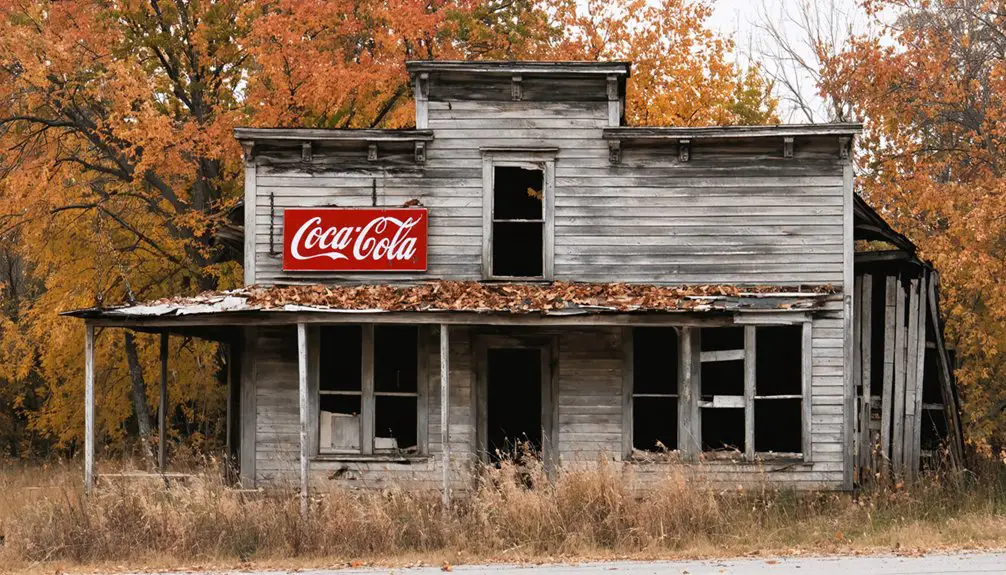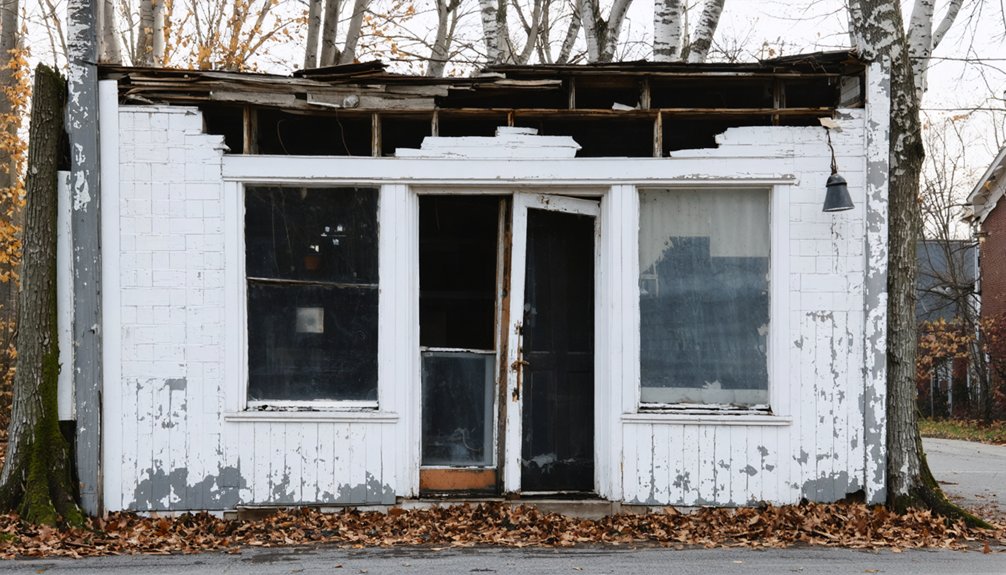
If you’re planning a ghost town road trip through Michigan, add Temple to your list. Located in Clare County, it’s a forgotten settlement that quietly dissolved after the lumber industry collapsed, leaving behind an unaltered, raw landscape. You won’t find tourist amenities, signage, or preserved ruins—just open land and genuine history waiting to be discovered. Bring offline maps, water, and a sense of curiosity, and you’ll uncover far more than you’d expect.
Key Takeaways
- Temple, Michigan, also known as Campbell City, is a forgotten Clare County settlement ideal for off-the-beaten-path ghost town exploration.
- The town gradually declined due to the lumber industry collapse, leaving no dramatic ruins but an authentically raw, natural landscape.
- No tourist amenities exist at the site, so bring water, offline maps, and fuel before visiting rural Temple.
- Temple pairs well with other Clare County heritage sites, offering an inland alternative to popular destinations like the Keweenaw Peninsula.
- Unlike curated ghost towns such as Central Mine, Temple delivers an unfiltered, research-dependent experience for historically curious explorers.
What Makes Temple, Michigan a Ghost Town Worth Visiting?
Though it lacks the dramatic ruins of Keweenaw’s mining towns, Temple, Michigan carries its own quiet appeal as one of Clare County’s forgotten settlements. You’re not visiting a curated museum — you’re tracing the outline of a place that industrial decline quietly erased.
Temple now goes by Campbell City, a detail that adds a layer of historical ambiguity to your visit. That name shift tells you something honest: this town didn’t vanish cleanly; it blurred.
Michigan’s ghost towns often follow patterns tied to logging booms and railroad shifts, and Temple fits that story. If you prefer discovering obscure, low-infrastructure history over crowded heritage sites, Temple rewards you with exactly that — a central Michigan stop that asks you to look closely and think freely.
What You’ll Actually Find at Temple Today?
When you arrive at Temple today, don’t expect signage, preserved structures, or a parking lot with an interpretive panel — you’re stepping into a rural Clare County landscape where the settlement has largely dissolved into its surroundings.
Historic preservation here isn’t a formal effort; it’s the quiet persistence of a place still known as Campbell City while the Temple name lingers in county records and local memory.
You won’t find curated ruins or guided tours. What you’ll find instead is open land, a renamed community, and local legends that keep the original identity alive in conversation rather than concrete.
That’s the honest draw — Temple rewards curious, self-directed travelers who prefer raw history over polished attractions.
Why Temple Quietly Disappeared Into Clare County History
Like most Michigan settlements that quietly folded back into the landscape, Temple didn’t vanish because of a single dramatic event — it faded the way frontier towns typically do, when the economic forces that built them simply moved on.
Like most ghost towns, Temple didn’t vanish dramatically — it simply faded when the economy moved on.
Lumber drove early settlement across Clare County, and when the timber ran out, workers followed opportunity elsewhere.
You won’t find dramatic urban legends attached to Temple’s decline — no sudden catastrophe, no overnight abandonment. It simply lost its reason to exist under that name, eventually becoming what records now call Campbell City.
Preservation challenges compound the mystery, since limited historical documentation makes it difficult to pin down exact dates or surviving structures. What remains is a quiet, research-dependent story that rewards curious travelers willing to dig past the surface.
How Temple Survived Under the Name Campbell City
When you trace Temple’s story forward, you’ll find it didn’t vanish entirely — it quietly shifted identities and survived under the name Campbell City.
The original Temple name still lingers in some records, giving the settlement a dual identity that sits somewhere between ghost town and renamed community.
You’re fundamentally visiting a place that changed its face rather than simply fading out, which makes Temple’s partial survival story one of the more nuanced you’ll encounter on any Michigan ghost-town road trip.
Name Change, Identity Preserved
Though the name Temple has faded from most modern maps, the settlement didn’t simply vanish — it survived under a new identity as Campbell City.
Historical documentation confirms this name shift, yet preservation challenges mean Temple’s full story remains difficult to piece together. You’re fundamentally chasing a place that exists in two identities simultaneously.
Here’s what that means for your road trip:
- Expect subtlety — no dramatic ruins mark the passage between Temple and Campbell City.
- Research before you go — local Clare County records offer your best access to the original settlement’s history.
- Reframe your expectations — you’re visiting a living name change, not an abandoned Hollywood ghost town.
That distinction makes Temple genuinely fascinating for independent explorers.
Temple’s Partial Survival Story
How does a town survive its own disappearance? Temple managed it by shifting identity rather than vanishing entirely. When the original settlement faded, Campbell City carried the story forward, keeping enough of Temple’s presence alive that you can still trace its outline today.
That’s a quiet form of historical preservation — not the kind backed by museums or tourist infrastructure, but the kind held together by a name on a map and fragments of local memory.
When you visit, don’t expect signage or guided tours. Expect open land, rural stillness, and the satisfaction of standing somewhere most travelers overlook.
Temple’s partial survival makes it more honest than a polished heritage site. You’re seeing a place that endured on its own terms, and that freedom is exactly what makes the stop worth your time.
How Temple Fits a Central Michigan Ghost Town Road Trip

Because Temple sits in Clare County at the heart of central Michigan, it slots naturally into a ghost town road trip that skips the well-worn Keweenaw Peninsula trail. You’re trading polished tourist amenities for raw, research-driven discovery, and that’s exactly the point.
Temple pairs well with other Clare County heritage stops, letting you build a flexible inland loop focused on historical preservation rather than crowded attractions.
Consider structuring your route around these three stops:
- Temple/Campbell City – your anchor stop for obscure frontier settlement history
- Nearby Clare County heritage sites – broaden your regional context
- A central Michigan lumber-era location – connect Temple’s story to the broader boom-and-bust pattern
You control the pace, the depth, and the detours.
Michigan Ghost Towns Near Temple Worth Adding to Your Route
Once you’ve anchored your route at Temple, you can stretch the itinerary outward and pull in ghost towns that add richer historical texture. Central Mine in Keweenaw County offers strong historical preservation, with a 38-acre site featuring restored miners’ homes and a church dating to 1855. It’s one of Michigan’s most tourist accessible ghost-town stops, giving you a tangible contrast to Temple’s quieter, research-dependent character.
Further south, Aral in Leelanau County represents the lumber-boom collapse pattern common across Michigan. Both towns help frame Temple within a broader statewide story of resource depletion and community abandonment.
Pairing these stops with your Clare County visit builds a layered route that moves between well-documented sites and obscure inland locations, satisfying curiosity at every turn.
How Temple Differs From Michigan’s Heavily Documented Ghost Towns
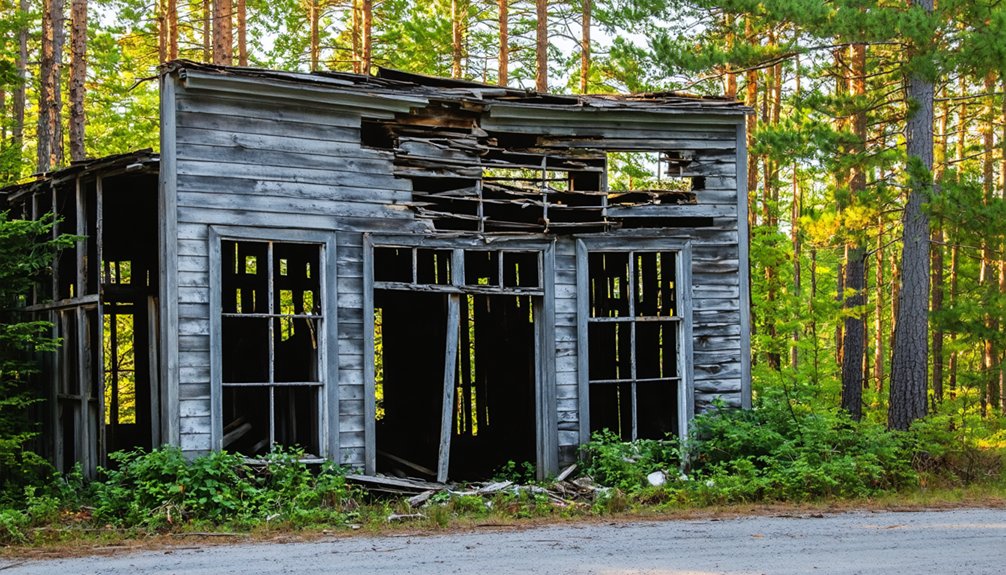
When you compare Temple to Michigan’s most celebrated ghost towns, you’ll notice it lacks the polished, well-documented history that places like Central Mine in Keweenaw County offer — no 38-acre historic site, no restored miners’ homes, no guided narrative waiting for you.
Temple’s historical record is sparse, and you won’t find major preserved landmarks marking where the original settlement once stood.
What you’re really tracing here is a renamed place rather than a fully abandoned one, since Temple lives on in part as Campbell City, blurring the line between ghost town and quiet survivor.
Temple’s Sparse Historical Record
Unlike the well-documented ghost towns of Michigan’s Keweenaw Peninsula, Temple leaves researchers working with a remarkably thin historical record.
Historical research on this Clare County settlement reveals far less than what’s available for places like Central Mine. Preservation challenges compound this, since no confirmed major structures anchor the site’s story.
Still, that mystery is part of the appeal. Here’s what you can reasonably expect when digging into Temple’s past:
- No confirmed founding or abandonment dates appear in widely available sources.
- The original Temple name partially survives through its alternate identity as Campbell City.
- Physical remains aren’t well-documented, so don’t expect visible ruins awaiting you.
You’re fundamentally piecing together a puzzle — and that’s exactly what makes Temple worth the detour.
No Major Preserved Landmarks
Comparing Temple to Central Mine puts the contrast in sharp relief: that Keweenaw site offers a 38-acre historic district with restored miners’ homes and a standing church, while Temple gives you open countryside and a name that’s quietly shifted to Campbell City.
Historical preservation efforts simply never reached Temple the way they did Michigan’s mining giants. There’s no tourist infrastructure here — no interpretive signs, no maintained ruins, no guided tours pulling you through a curated past.
That’s actually part of the appeal if you crave unfiltered exploration over packaged history. You’re reading the landscape on your own terms, piecing together a story from scattered records rather than a polished exhibit.
Temple rewards curiosity, not convenience.
Renamed Rather Than Abandoned
Most ghost towns die quietly and leave a name behind as their only epitaph, but Temple took a different path — it kept breathing under a new identity. Clare County records show it’s now called Campbell City, which separates it from the fully abandoned sites fueling urban legends and local legends across Michigan.
Before you visit, keep these distinctions in mind:
- Temple wasn’t erased — it was renamed, meaning its story continued under different branding.
- No dramatic collapse occurred — unlike mining towns gutted overnight, Temple faded gradually.
- Campbell City carries the thread — you’re tracing a living evolution, not a frozen ruin.
You’re not chasing a corpse here. You’re following a community that quietly reinvented itself on its own terms.
What Temple’s Lack of Infrastructure Means for Your Visit
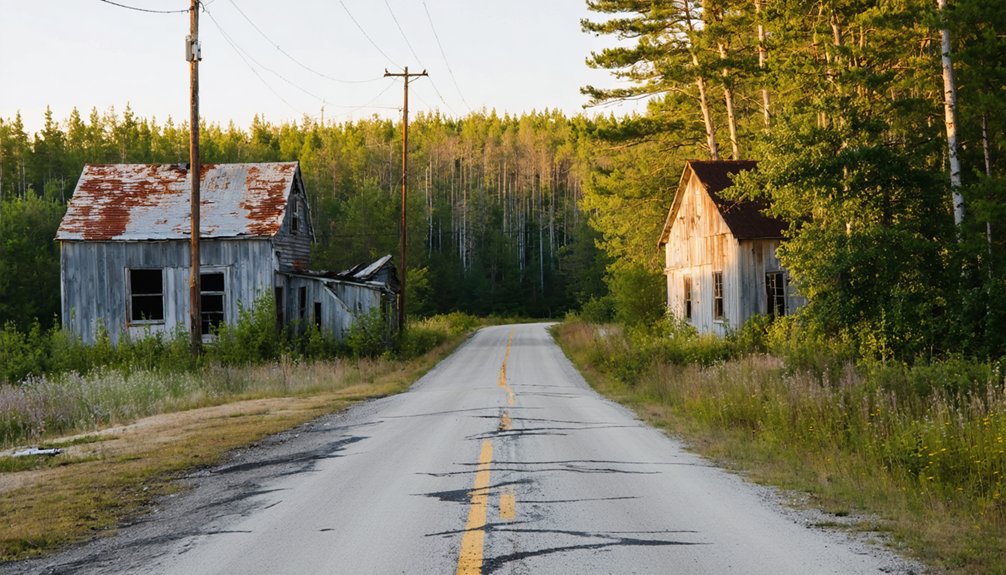
When you visit Temple, you’re not pulling into a curated attraction with parking lots, interpretive signs, or gift shops. This isn’t one of Michigan’s polished tourist attractions with guided tours or convenience stops nearby.
Temple rewards self-directed travelers who come prepared. Bring your own water, download offline maps before you leave, and fuel up in a larger town beforehand. The rural Clare County roads leading here aren’t lined with services.
Come prepared: water, offline maps, and a full tank. Services are sparse, and the roads won’t offer second chances.
What you’ll find instead is quiet, open land and the kind of atmosphere that fuels urban legends about forgotten settlements. That absence of infrastructure is actually the point.
Temple strips away the familiar trappings of heritage tourism and leaves you with something rawer — a genuine encounter with a place history quietly moved past.
Frequently Asked Questions
Is There an Admission Fee to Visit Temple or Campbell City?
As you wander quiet, overgrown roads into history’s silence, you’ll find no admission fees await you. Temple’s rural landscape is yours to explore freely. Guided tours don’t exist here — it’s a raw, self-directed heritage experience.
What Is the Best Time of Year to Visit Temple?
Late spring and early fall offer you the best visits — you’ll catch stunning seasonal wildlife, enjoy cooler exploration weather, and maximize your photography opportunities as golden light beautifully illuminates Temple’s quietly fading, history-rich landscape.
Are There Any Guided Tours Available for Temple’s History?
You won’t find formal guided tours at Temple, but you can explore its local legends independently and uncover historical artifacts through self-guided research, giving you the freedom to discover this ghost town on your own terms.
Can Visitors Legally Access the Temple Site on Foot?
Coincidentally, if you’re craving freedom, you’ll want to verify land ownership before stepping foot here. Historical preservation rules and visitor safety concerns mean you should always check local Clare County regulations before exploring Temple’s quiet, faded grounds.
Are There Camping Options Near Temple in Clare County?
You’ll find nearby campgrounds scattered across Clare County’s forests and state land. Always check camping regulations before setting up, so you’re free to explore Temple’s ghost-town history without any unexpected interruptions to your adventure.
References
- https://en.wikipedia.org/wiki/List_of_ghost_towns_in_Michigan
- https://www.visitkeweenaw.com/blog/post/our-top-7-keweenaw-ghost-towns-to-explore/
- https://www.smithsonianmag.com/history/once-a-year-this-19th-century-michigan-ghost-town-comes-to-life-180982695/
- https://clare.migenweb.org/clarecities.html
- https://www.nps.gov/slbe/learn/historyculture/ghosttowns.htm
- https://privatelandswildlife.com/ghost-towns-michigan/
- https://wgrd.com/michigan-ghost-town-map/