Planning a ghost town road trip to Auburndale, Kansas means visiting a place that’s vanished almost entirely from the physical world. Founded in 1888 during the railroad boom, this small farming community once supported around 60 residents before fading away completely. Today, you’ll find open Kansas landscape where buildings once stood, with no ruins or markers remaining. The history, best visiting seasons, and research tips ahead will help you make the most of your trip.
Key Takeaways
- Auburndale, Kansas, founded in 1888, offers a ghost town experience with no standing structures, relying entirely on historical records and imagination.
- Visit in fall for stable weather, drier ground, and clearer land features, making navigation and photography significantly easier.
- Contact the Shawnee County Historical Society beforehand to access archives documenting Auburndale’s limestone buildings, post office, and frontier history.
- Pack water, snacks, sturdy footwear, sunscreen, and a camera, as the remote site offers no nearby services or shelter.
- Combine your Auburndale visit with other Kansas ghost towns to maximize the road trip experience and travel efficiency.
What Was Auburndale, Kansas?
Once a small but lively railroad settlement, Auburndale, Kansas traces its roots back to 1888, when it was originally founded under the name Sherburn during the height of the railroad boom that pushed development across the American West.
At its peak, the town supported around 60 residents whose livelihoods depended on agriculture and rail commerce. Its historical architecture featured sturdy limestone and locally-sourced brick structures that reflected the resourcefulness of frontier settlers.
A post office kept the community connected until its closure in 1927, signaling the town’s slow unraveling.
Today, no buildings remain, but Auburndale’s community legacy endures through archives maintained by the Shawnee County Historical Society.
When you visit, you’re stepping into the story of a vanished world that once thrived on open land and ambition.
How the 1888 Railroad Boom Built Auburndale Almost Overnight
The railroad boom of the 1880s didn’t just connect towns — it conjured them out of the prairie almost overnight. When tracks pushed through Kansas in 1888, Sherburn appeared, soon renamed Auburndale, drawing settlers hungry for opportunity and open land.
Rail access meant commerce, and commerce meant community — a post office, limestone buildings, locally-sourced brick structures, and roughly 60 residents carving out lives along the line.
You can almost picture it: wagons unloading goods, farmers trading harvests, a frontier economy humming with possibility. These weren’t just historical landmarks in the making — they were living proof that freedom and ambition could build something real from nothing.
Sadly, urban decay would eventually reclaim what ambition built, leaving only archives to tell Auburndale’s remarkable story.
Why Auburndale Couldn’t Survive the Depression and Farm Decline
What railroad ambition built, economic collapse quietly dismantled. By the time the Great Depression hit, Auburndale was already weakening. Agricultural mechanization had slowly emptied the fields of workers, pulling families toward cities that promised steadier wages and modern conveniences.
You can almost feel the weight of those community stories when you study what’s left — records describing historical architecture built from limestone and locally-sourced brick, structures that no longer stand today. The Depression simply accelerated what farm decline had started.
Without enough residents to sustain commerce, the post office closed in 1927, signaling the town’s final chapter. Urban migration drained whatever remained. Auburndale didn’t collapse dramatically — it faded steadily, one abandoned homestead at a time, leaving only archived memories behind for curious travelers like you to discover.
What’s Actually Left at the Auburndale Site Today
When you arrive at the Auburndale site today, you won’t find a single standing structure from its frontier days — the limestone buildings and brick facades have long since vanished.
The land offers little physical evidence that nearly 60 residents once built their lives around a bustling railroad stop.
If you want to connect with Auburndale’s story, you’ll need to turn to the archives maintained by the Shawnee County Historical Society, where the town’s history lives on in preserved records.
No Structures Remain
Although Auburndale once bustled with nearly 60 residents and the hum of railroad commerce, you won’t find a single standing structure if you visit the site today.
Urban decay, combined with decades of abandonment, erased every limestone and locally-sourced brick building that once defined this frontier community.
The Great Depression, agricultural mechanization, and relentless rural outmigration accelerated the town’s physical disappearance, leaving preservation challenges too great for any organized effort to overcome in time.
What greets you now is open Kansas landscape, uninterrupted and silent.
No walls, no foundations, no visible remnants of 19th-century life survive above ground.
You’re fundamentally standing on history you can’t see.
The Shawnee County Historical Society‘s archives remain your best gateway into understanding what once existed here.
Archives Preserve History
The absence of physical ruins doesn’t mean Auburndale’s story is lost. The Shawnee County Historical Society has worked diligently to maintain historical archives that capture the town’s full arc — from its railroad-boom founding in 1888 to its quiet abandonment decades later.
These preservation efforts mean you can research Auburndale’s limestone buildings, its post office, and its peak population of roughly 60 residents before you ever hit the road.
That’s actually liberating for the independent traveler. You’re not dependent on crumbling walls or weathered signage to understand what once stood there.
Instead, you carry the knowledge with you, letting the open Kansas landscape spark your imagination about the frontier community that briefly thrived — and ultimately vanished — beneath that wide, unforgiving sky.
How to Find Auburndale and Add It to Your Kansas Ghost Town Route
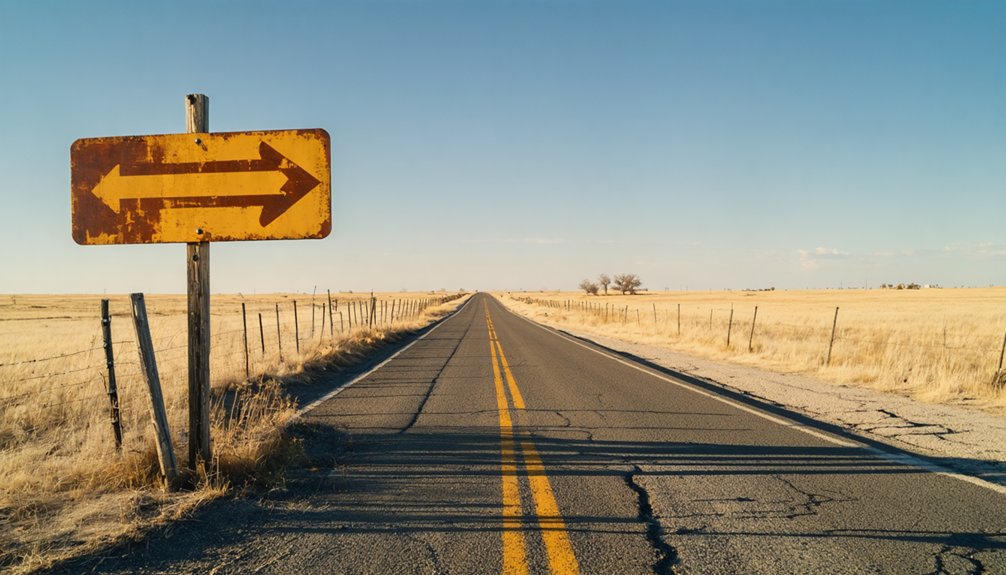
Finding Auburndale takes a bit of research since no standing structures mark the site, but that’s part of the adventure. Tap into local legends and preservation efforts through the Shawnee County Historical Society before you hit the road.
- Check historical archives — Contact the Shawnee County Historical Society for maps and documented records about Auburndale’s exact location.
- Plan your route — Combine Auburndale with other Kansas ghost towns to maximize your road trip experience.
- Use digital tools — Satellite maps can help you identify the general rural area where Auburndale once stood.
- Visit the historical park initiative — This preservation project may offer the closest thing to an on-site experience you’ll find today.
Go explore Kansas’s vanished frontier on your own terms.
Which Other Kansas Ghost Towns Belong on the Same Trip
Once you’ve mapped out Auburndale’s location, it makes sense to string together a few more vanished Kansas communities into one memorable road trip. Kansas holds dozens of forgotten railroad towns, each carrying its own collapsed story worth chasing down. Ghost town preservation efforts across the state mean some sites offer historical markers, archives, or park access that reward curious visitors.
Rural tourism through Kansas lets you move at your own pace, connecting ghost towns across open prairie highways where traffic rarely intrudes. Research Shawnee County and surrounding regions before you leave, identifying clusters of abandoned settlements that sit within reasonable driving distance of each other.
Cross-referencing historical society records helps you build an efficient route that maximizes discovery without backtracking across the same flat, windswept roads twice.
What Time of Year Makes Kansas Ghost Town Visits Worth It?
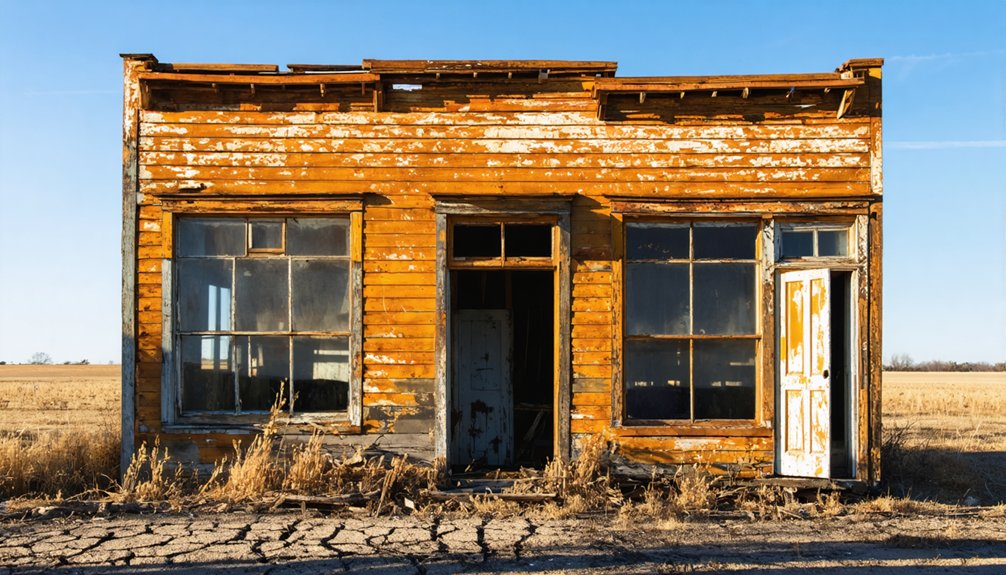
Spring and fall offer the best conditions for exploring Kansas ghost town sites like Auburndale, since mild temperatures make outdoor exploration far more comfortable than the region’s brutal summer heat or icy winter roads.
You’ll find that wet spring months can occasionally soften rural terrain and limit site access, so late spring, once the ground firms up, tends to reward visitors with clearer skies and manageable conditions.
Fall edges out spring for many road trippers because drier weather, stunning prairie colors, and cooler air combine to make long driving routes through rural Kansas genuinely enjoyable.
Best Visiting Seasons Explained
When you’re planning a ghost town road trip to Auburndale, Kansas, timing matters more than you’d think. Each season shapes your experience differently, especially when you’re chasing ghost town legends and imagining the town’s vanished historical architecture.
- Spring – Mild temperatures and green landscapes make exploration comfortable and visually rewarding.
- Summer – Long daylight hours give you maximum time to roam, though Kansas heat demands preparation.
- Fall – Crisp air and golden light create dramatic atmosphere, perfect for storytelling and photography.
- Winter – Sparse crowds and stark scenery offer a raw, haunting perspective that connects you deeply to Auburndale’s abandoned past.
Avoid peak storm season in late spring if possible. Check local conditions before heading out, and always travel with water and a solid map.
Weather Impacts Site Access
Kansas weather doesn’t just set the mood for your Auburndale ghost town visit—it directly determines whether you’ll access the site at all. Local weather patterns shift dramatically across seasons, turning rural Kansas roads into muddy traps after spring rains or dangerous stretches during winter ice storms. You’ll want to plan around these realities.
Summer brings heat and storm risks, including tornadoes, which threaten visitor safety on exposed rural terrain. Fall delivers your clearest window—mild temperatures, drier ground, and stable conditions that make navigation manageable.
Spring offers beautiful landscapes but unpredictable flooding. Winter isolates the site entirely.
Check forecasts obsessively before you go. Rural areas like Auburndale offer no shelter, no services, and no rescue nearby, so weather isn’t just inconvenient—it’s consequential.
Spring Versus Fall Visits
Choosing between spring and fall for your Auburndale ghost town visit comes down to one core trade-off: scenery versus accessibility. Spring brings seasonal flora bursting across Kansas’s open landscapes, making the rural surroundings genuinely beautiful. Fall offers drier ground and cooler temperatures, keeping trails more navigable.
Here’s what each season delivers:
- Spring – Wildflowers frame the empty Kansas plains, creating dramatic backdrops for photography.
- Fall – Crisp air and golden grasses make wildlife spotting considerably easier as animals prepare for winter.
- Spring – Longer daylight hours give you more exploration time.
- Fall – Reduced vegetation reveals subtle land features and historical site outlines that spring growth conceals.
Both seasons reward the freedom-seeking explorer differently — your priorities determine which wins.
How to Access Auburndale’s Records Through the Shawnee County Historical Society Before You Go

Before you hit the road toward Auburndale’s vanished streets, you’ll want to connect with the Shawnee County Historical Society, which maintains the archives that keep this ghost town’s story alive. Their records include historical maps, photographs, and documented details about the town’s limestone and brick architecture that no longer stands on-site.
Reaching out before your trip gives you a richer understanding of what you’re actually visiting. You’ll arrive knowing Auburndale’s full arc — from its 1888 railroad founding to its post office closure in 1927 and eventual abandonment.
The Society’s preservation efforts also support a park initiative that may shape visitor access to the site. Contact them directly to ask about available materials, research access, and any updates on ground-level conditions before you load up and go.
What to Pack for a Day Visiting Remote Kansas Ghost Towns
Packing smart makes the difference between a rewarding ghost town excursion and a miserable one. Auburndale’s remote Kansas location offers no services, so you’re entirely self-sufficient out there. Come prepared to explore freely and absorb the community stories embedded in this vanished frontier landscape.
- Water and snacks — Carry more than you think you’ll need; rural Kansas heat is unforgiving.
- Camera and notebook — Document historical architecture details and personal reflections while they’re fresh.
- Printed research — Download Shawnee County Historical Society records beforehand since cell service is unreliable.
- Sturdy footwear and sunscreen — Uneven terrain and open plains expose you to sun and rough ground quickly.
Respect the land, stay curious, and let Auburndale’s story speak through its silence.
How to Photograph Abandoned Kansas Town Sites Without Causing Damage
Photographing abandoned sites like Auburndale rewards patience and restraint in equal measure. You’re capturing history, not collecting souvenirs, so keep your feet on stable ground and avoid disturbing loose stones or soil. Shoot from established pathways whenever possible.
Urban legends about ghost towns tempt explorers to dig or overturn remnants searching for buried stories — don’t. That impulse destroys the very evidence that makes these sites compelling.
Follow these core photography tips: use a wide-angle lens to capture landscape context, shoot during golden hour for dramatic prairie light, and frame shots that honor the emptiness rather than manufacture drama.
Leave absolutely nothing behind and take nothing away. Your photographs preserve Auburndale’s memory without erasing it — which is exactly the freedom responsible exploration requires.
Frequently Asked Questions
Was Auburndale Ever Considered for Official Kansas Historical Landmark Status?
The available records don’t confirm official landmark status for Auburndale, but you’ll find that historical preservation efforts and tourism development through the Shawnee County Historical Society actively keep this fascinating ghost town’s memory alive and accessible.
Did Auburndale Have a School or Church During Its Peak Years?
The records don’t confirm a school or church among Auburndale’s ghost town origins, but you’ll find community remnants suggest a tight-knit settlement where residents likely shared educational and spiritual spaces during its peak years.
Are Any Descendants of Original Auburndale Residents Still Living Nearby?
Thousands of descendants could be out there! Genealogical research hasn’t confirmed nearby relatives, but you’ll uncover local resident stories by connecting with the Shawnee County Historical Society, where passionate volunteers might surprise you with living family connections.
Has Auburndale Ever Appeared in Kansas Ghost Town Documentary Films?
No verified records confirm Auburndale’s appearance in Kansas ghost town documentaries, but you’ll find its story of abandoned structures and local legends preserved through Shawnee County Historical Society archives, waiting for adventurous explorers like you to discover.
Is Metal Detecting or Artifact Collecting Permitted at the Auburndale Site?
While it’s tempting to explore freely, you’ll need to check local metal detecting rules and artifact collection guidelines before digging. Contact the Shawnee County Historical Society directly — they’re actively preserving Auburndale’s legacy and can clarify what’s permitted.
References
- https://en.wikipedia.org/wiki/Le_Hunt
- https://en.wikipedia.org/wiki/List_of_ghost_towns_in_Kansas