Planning a ghost town road trip to Echo, California means preparing for one of Death Valley’s most rewarding desert challenges. You’ll approach through Lee ghost town, traversing four miles of rugged canyon terrain that demands a capable 4×4 and serious recovery gear. Echo itself offers scattered can dumps, tent sites, and shattered glass—raw evidence of a mining boom that vanished fast. Visit between late autumn and spring, and everything you need to know to pull it off safely is just ahead.
Key Takeaways
- Echo, California, sits in the Funeral Mountains above Death Valley, between Lee and Schwab ghost towns, offering a glimpse into speculative mining history.
- Access Echo via Lee ghost town, four miles northeast; most roads suit standard 4x4s, but final miles demand a lifted, short-wheelbase, winched vehicle.
- Bring recovery gear, sufficient water, food, and offline maps, as cell service is unreliable and the terrain is remote and unforgiving.
- No permanent structures remain; expect scattered can dumps, shattered glass, and shallow tent site depressions marking Echo’s brief occupation.
- Visit between late autumn and early spring to avoid deadly summer heat exceeding 120°F; early spring offers wildflower blooms and ideal conditions.
Echo Ghost Town: A Death Valley Ruin Worth Seeking Out
Perched on the crest of the Funeral Mountains above Death Valley, Echo is one of California’s most elusive ghost towns — a former Inyo Gold Mining Company settlement in Inyo County that never had a single permanent building. Workers pitched and pulled down tents as needed, leaving behind no lasting structures.
That impermanence is central to Echo’s historical significance — it’s a rare snapshot of speculative mining history, where ambition arrived fast and vanished faster. Sitting halfway between the ghost towns of Lee and Schwab, Echo was abandoned once profitable gold prospects dried up.
Today, within Death Valley National Park, you’ll find scattered can dumps, shattered glass, and former tent sites. It’s raw, remote, and completely unfiltered — exactly the kind of place that rewards those chasing real history off the beaten path.
How to Reach Echo Ghost Town by 4×4
Reaching Echo takes commitment — you’ll want to enter from the east, starting at the Lee ghost town side, where the road begins a 4-mile southwest push toward the site. Most of it handles well for standard 4×4 vehicles, but short stretches demand a lifted, short-wheelbase rig with a winch.
Reaching Echo means committing to the eastern approach — four miles southwest from Lee, where the road tests every rig.
If you’re driving a stock truck or SUV, park two miles out and hike the rest.
The toughest section hits once the road squeezes into a narrow canyon — sharp bedrock steps and a steep incline block your path forward. Skip the west-side approach from Schwab entirely.
Once you arrive, scattered historical context remains through can dumps and tent foundations. Don’t expect mining equipment; what’s left is broken glass and rusted tin.
The Hardest Miles on the Echo Canyon Road
Once the road funnels into a narrow canyon slit, the real test begins. Sharp bedrock steps jut across your path, and a steep incline demands every bit of your rig’s capability. You’ll feel the weight of this canyon’s mining history as you crawl over terrain that once supported workers hauling equipment for the Inyo Gold Mining Company.
Stock 4x4s won’t make it through cleanly. If you’re not running a lifted, short-wheelbase rig with a winch, park two miles out and hike in. Don’t underestimate these final miles.
The historical significance of pushing through becomes clear when you reach the site. Tent platforms, can dumps, and shattered glass connect you directly to the miners who carved their ambitions into these unforgiving Funeral Mountains.
What Remains at the Echo Ghost Town Site
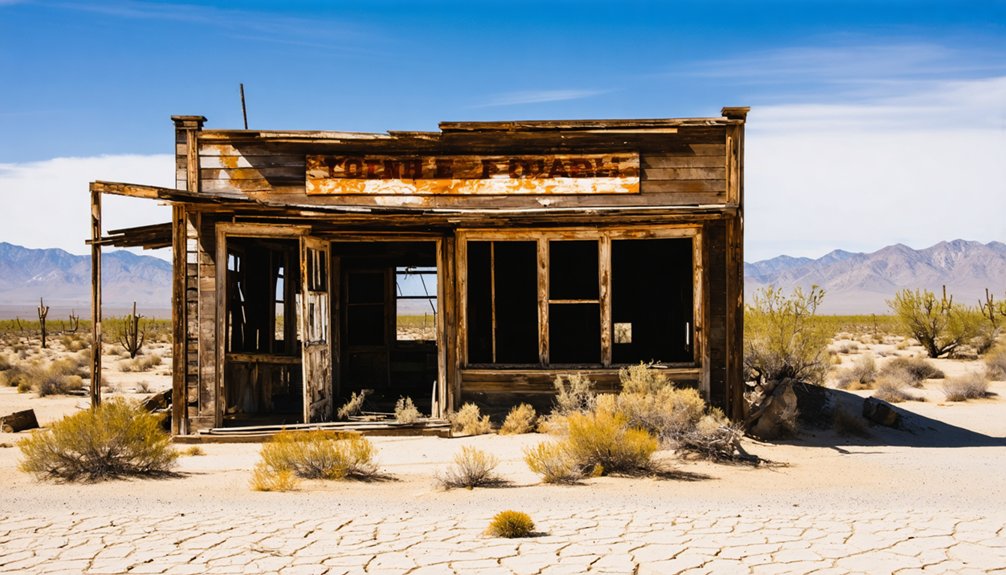
When you finally reach the Echo ghost town site, don’t expect standing buildings — you’ll find scattered can dumps, shattered glass, and the subtle depressions of former tent sites marking where workers once pitched temporary camps.
The Inyo Gold Mining Company never built permanent structures here, so the landscape itself holds the story.
One standing structure does exist nearby, though its origins remain uncertain and likely predate or postdate the Echo boom entirely.
Scattered Debris And Artifacts
Although Echo never had permanent buildings, you’ll still find scattered remnants that tell the story of its brief, restless existence. Former tent sites mark where workers once camped, while rusted tin cans and shattered glass litter the ground like pages torn from a forgotten journal.
You won’t discover mining equipment or old signage in pristine condition, but the raw debris itself carries an undeniable authenticity that polished museums can’t replicate.
Walk the area carefully and you’ll notice can dumps clustered near former living spaces, revealing how the Inyo Gold Mining Company’s crew sustained themselves in this harsh, remote terrain. One standing structure exists nearby, though its origins remain uncertain.
These fragments don’t demand interpretation — they simply invite you to piece together Echo’s short, ambitious story yourself.
Tent Sites Still Visible
What you’ll find at Echo isn’t architecture — it’s absence shaped into evidence. The tent sites left behind by Inyo Gold Mining Company workers read like campfire stories pressed into earth — shallow depressions, leveled ground, and cleared spaces that outline where temporary shelters once stood. Nobody built permanence here. Workers pitched tents, chased gold, then folded everything and left.
These subtle impressions are among the most honest historic landmarks you’ll encounter in Death Valley National Park. They don’t demand interpretation — they simply exist as proof that real people worked this remote canyon crest. Walk the site carefully and you’ll recognize the deliberate organization of the camp.
The land itself remembers the layout, even after every tent pole disappeared decades ago.
One Remaining Structure
Beyond those ghost impressions in the earth, one standing structure breaks the otherwise flat silence of the Echo site — and it raises more questions than it answers. Nobody knows exactly when it was built or who left it behind. Researchers believe it predates or postdates the Echo boom period entirely, disconnecting it from the core mining history you came to explore.
Still, it stands. In a place where ghost town legends thrive on mystery, that ambiguity makes it more compelling, not less. You’ll find yourself studying its construction, guessing at its purpose, and feeling that particular thrill of unanswered history.
Don’t expect a preserved cabin or interpretive sign. Expect something rawer — a solitary remnant that survives not because anyone protected it, but simply because the desert let it stay.
The Best Time to Visit Echo Canyon
If you’re planning a trip to Echo Canyon, timing your visit for late autumn through spring gives you the best shot at a safe and enjoyable experience.
Summer heat in Death Valley turns desert roads into a serious hazard, so you’ll want to avoid those months entirely.
Winter brings pleasant conditions for the most part, though you should pack for occasional raw, cold days on the canyon’s high ridgeline.
Ideal Visiting Seasons
Late autumn through spring is your window for tackling Echo Canyon without the punishing heat turning your adventure into a survival situation. Desert roads stay manageable, and the landscape rewards you generously.
- Late Autumn – Cooler temps make the rough 4×4 sections far more forgiving on both you and your rig.
- Winter – Expect raw, cold days, but nighttime stargazing above Death Valley delivers an unmatched payoff.
- Early Spring – Wildflower blooms transform the canyon approaches, adding vivid color to an already dramatic backdrop.
- Avoid Summer – Extreme heat makes remote canyon driving genuinely dangerous, not just uncomfortable.
Plan around these windows, pack accordingly for cold desert nights, and you’ll experience Echo Canyon exactly as it deserves to be explored.
Avoiding Extreme Heat
Timing your Echo Canyon visit isn’t just about comfort—it’s about survival. Summer temperatures in Death Valley regularly exceed 120°F, turning desert roads into death traps and your vehicle into an oven. You’ll want to plan your trip between late autumn and early spring, when cooler temperatures make both driving and hiking manageable.
Winter visits reward patient explorers with wildlife encounters you’d never experience during scorching summer months—desert bighorn sheep and ravens reclaim the canyon when tourists stay away.
Local legends say the Funeral Mountains earned their name warning travelers about deadly heat, and those warnings still hold true today.
Push through in summer, and you’re not exploring freedom—you’re courting disaster. Choose wisely, and Echo Canyon delivers an unforgettable, raw desert adventure entirely on your terms.
What to Bring Before You Drive Into Echo Canyon

Before you point your 4×4 toward Echo Canyon, pack as though the desert won’t forgive a mistake — because it won’t. The remote trail demands self-sufficiency, and you’ll want every essential locked in before the canyon walls close around you.
- Water and food — Carry more than you think you’ll need for unexpected wildlife encounters that slow your pace.
- Recovery gear — A winch, tow straps, and a hi-lift jack are non-negotiable on those brutal bedrock steps.
- Photography gear — Broken glass, rusted cans, and tent site remnants reward a sharp lens and wide angle.
- Navigation tools — Download offline maps; cell service disappears fast in the Funeral Mountains.
Go prepared, or don’t go.
Nearby Ghost Towns to Pair With Your Echo Visit
Once your gear’s loaded and Echo Canyon’s checked off the list, you’d be shortchanging yourself not to push further into the Echo-Lee Mining District.
Two ghost towns flank Echo directly: Lee sits four miles to the northeast, and Schwab lies to the west along the Funeral Mountains.
Schwab once held 200 residents and connects to wagon roads leading into Death Valley. Its mining history ties directly to Echo’s brief existence, making both stops essential for understanding the district’s arc.
The Stray Horse Mine workings sit nearby, though visitors often confuse them with the townsite itself.
Lee anchors the eastern approach and serves as your practical base.
Together, these three sites offer a rare, connected look at ghost town preservation in one of California’s most unforgiving desert landscapes.
Frequently Asked Questions
Did Echo Ever Have Its Own Post Office During Its Active Period?
No post office ever existed at Echo — tent camps rose and fell while permanent infrastructure didn’t. You’ll find historical ghost town preservation meets modern visitor attractions through scattered ruins, not forgotten mail routes.
What Company Originally Operated the Gold Mining at Echo?
You’ll discover the Inyo Gold Mining Company originally operated Echo’s gold mining, embracing historical mining techniques that shaped this rugged frontier. Explore ghost town preservation remnants today, where you’re free to uncover Echo’s adventurous, untamed past firsthand!
Was Echo Ever Connected to Other Towns by Telephone Lines?
Yes, you’d have texted through old wires! Echo’s historical telegraph connections linked it via telephone line to Lee and Schwab, forming the town communication infrastructure that threaded across the Funeral Mountains’ rugged, freedom-calling crest.
What Are the Exact Map Grid Coordinates for Navigating to Echo?
You’ll find Echo’s ghost town history tied to grid number 3 on desert maps. Navigate these abandoned landmarks using Schwab’s coordinates: 36.505 latitude, -116.7236 longitude, placing you perfectly along the Funeral Mountains’ rugged, freedom-calling terrain.
How Many People Lived in Nearby Schwab During Its Peak?
Imagine dusty tents and bustling boots — at its peak, nearby Schwab’s ghost town history shows you’d have found 200 souls living there, revealing fascinating population fluctuations in this remote, freedom-calling desert mining camp.
References
- https://en.wikipedia.org/wiki/Echo
- https://www.ghosttowns.com/states/ca/echo.html
- https://echoproject.fandom.com/wiki/Echo_(Town)
- https://www.destination4x4.com/tag/echo-lee-mining-district/