Bankston, Mississippi isn’t your typical ghost town—there’s no main street, no crumbling storefronts, just a quiet cemetery deep in the Mississippi woodlands. In a single night in December 1864, 11 Union soldiers burned every factory to the ground, and the town never recovered. Today, the Bankston Cemetery is all that survives. If you’re planning a road trip here, there’s far more to this story than you’d expect.
Key Takeaways
- Bankston, Mississippi, is a ghost town accessible via French Camp, about 8 miles north-northeast, through rural roads with unreliable GPS coverage.
- The only remaining landmark is Bankston Cemetery, containing graves of original townspeople, Wesson’s daughter, and Confederate soldiers.
- Pack water, snacks, sturdy boots, offline maps, and insect repellent, as the remote site has no tourist infrastructure or signage.
- Combine your visit with nearby ghost towns like Rodney, Rocky Springs, and Windsor Ruins for a broader Mississippi ghost town road trip.
- Practice Leave No Trace principles—avoid touching headstones, removing artifacts, or disturbing graves to preserve the site for future visitors.
Why Bankston Vanished After One Night in 1864
Just after midnight on December 30, 1864, eleven Union soldiers slipped into Bankston and burned every factory to the ground. Their target wasn’t random — these mills supplied cotton, wool, and flour directly to the Confederate Army, making them a strategic threat worth destroying.
Eleven Union soldiers. One midnight raid. Every Confederate-supplying factory in Bankston — gone before dawn.
In a single night, the economic backbone of an entire community collapsed. Owner James Wesson relocated his operations to Southwest Mississippi, and Bankston never recovered.
Town legends suggest the soldiers moved swiftly and deliberately, leaving no casualties but total devastation.
Today, you won’t find historical artifacts lining museum shelves here — you’ll find silence. Only the Bankston Cemetery remains, holding the stories of those who built something remarkable, only to watch it vanish before dawn. That’s the brutal, honest history you’re visiting.
The Rise and Fall of Bankston’s Confederate-Era Factories
Before the flames took everything, Bankston stood as a genuine industrial powerhouse in antebellum Mississippi. James Madison Wesson built the Mississippi Manufacturing Company here in 1848, establishing the region’s first successful mechanically powered textile mill. Workers produced cotton, wool, flour, and shoes — goods that fed and clothed Confederate soldiers fighting across the South.
You’d have witnessed remarkable historical architecture rising from rural Choctaw County, a network of factories humming with purpose. But that purpose made Bankston a target. On December 30, 1864, eleven Union soldiers torched every factory in a single night. No Civil War artifacts survived the blaze.
Wesson relocated his operations to Southwest Mississippi, and the town simply ceased to exist. What thriving industry built in decades, war erased before sunrise.
How 11 Union Soldiers Destroyed a Town Before Dawn
Imagine standing in the quiet dark of December 30, 1864, just after midnight, when only 11 Union soldiers slipped into Bankston and set fire to every factory in sight.
You’d watch the cotton, wool, and flour operations burn to nothing in a single night, all because these plants had been feeding the Confederate Army’s war machine.
The raid was swift, calculated, and devastatingly effective — no lives were lost, but the town’s entire economic foundation vanished before dawn.
Midnight Raid Details
Shortly after midnight on December 30, 1864, only 11 Union soldiers slipped into Bankston and torched every factory in town before dawn broke. They moved fast, targeting the Mississippi Manufacturing Company’s cotton, wool, and flour operations — all of it fueling the Confederate war machine.
You can almost picture the smoke rising above the tree line before most residents even stirred.
The raid delivered a decisive blow, accelerating industrial decline across the region and cementing Bankston’s fate as a casualty of Civil War aftermath.
James Wesson survived the destruction and relocated his operations to Southwest Mississippi, but Bankston never recovered.
No shots were fired, no lives were lost — just flames consuming an entire town’s economic foundation in a single night.
Confederate Supply Destruction
Eleven Union soldiers accomplished what entire battalions often couldn’t — they erased a town’s entire economic identity before sunrise. By targeting Bankston’s factories specifically, they triggered an industrial decline that no rebuilding effort could reverse.
These soldiers understood that destroying Confederate supply chains meant dismantling the infrastructure feeding the Southern war machine.
When you consider what burned that December night, the economic collapse becomes staggering. Cotton mills, wool facilities, flour operations — all gone before dawn.
James Wesson eventually relocated his factories to Southwest Mississippi, but Bankston never recovered. The town that once hummed with mechanical production fell permanently silent.
You’re visiting a place where strategic wartime decisions created permanent consequences. That cemetery you’ll find today? It’s the only proof this industrial community ever existed.
What’s Still Standing at the Bankston Cemetery?
Though Bankston once buzzed with textile mills and factory workers, all that’s left today is the Bankston Cemetery. No crumbling storefronts, no factory ruins, no streets — just this quiet burial ground standing as the sole survivor of a town erased in a single night.
When you visit, you’ll walk among graves of original town members, including the daughter of founder James Wesson himself. Confederate soldiers from the surrounding area rest here too, making the site a meaningful stop for history enthusiasts.
Cemetery restoration efforts have kept the grounds relatively intact, and historical preservation of this space guarantees Bankston’s story isn’t completely lost. It’s a sobering, reflective experience — proof that even forgotten places hold powerful stories worth seeking out on your own terms.
How to Reach Bankston From French Camp
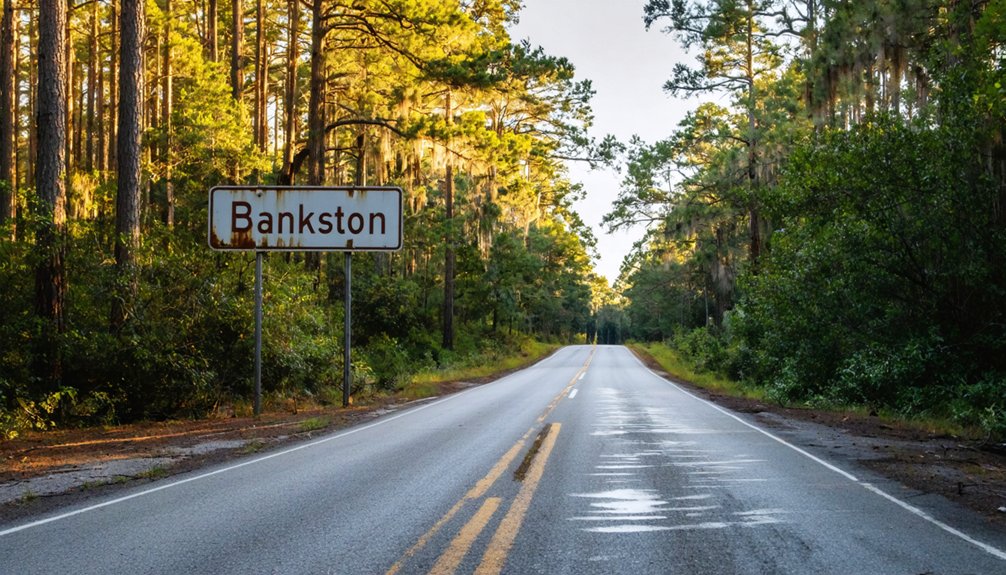
Since French Camp sits just 8 miles north-northeast of Bankston, it’s your most practical jumping-off point for reaching the ghost town. Stock up on supplies in French Camp before heading out, because the road ahead offers little in the way of modern convenience.
You’ll navigate rural Choctaw County roads that wind through dense Mississippi woodlands, where local legends suggest the land still carries echoes of Civil War-era industry.
Don’t rely solely on standard GPS apps, as remote back roads can confuse digital navigation.
Once you arrive, you’ll find no signage welcoming you, no historical reconstruction projects underway, and no tourist infrastructure. Only the Bankston Cemetery stands waiting, quiet and forgotten, rewarding those bold enough to seek it out independently.
What to Bring for a Remote Mississippi Ghost Town Visit
Visiting a remote Mississippi ghost town demands serious preparation, so pack your bag like you won’t find help within miles — because you won’t. Bankston sits deep in Choctaw County with zero modern infrastructure, so you’ll need water, snacks, a first aid kit, and a fully charged phone with offline maps downloaded.
Wear sturdy boots since the terrain around the cemetery is uneven and overgrown. Bring a camera to document historical artifacts like weathered grave markers honoring Confederate soldiers and James Wesson’s own daughter.
A notebook helps you record local legends tied to the town’s fiery destruction in December 1864. Insect repellent is non-negotiable in Mississippi’s humid climate.
Arriving prepared means you spend your energy exploring, not surviving.
How to Explore the Bankston Cemetery Without Disturbing the Site
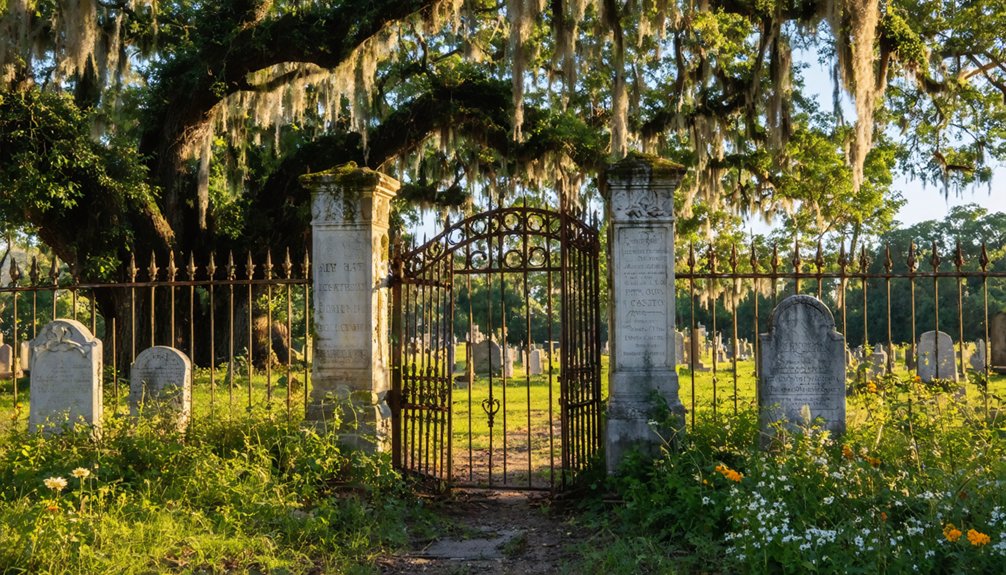
When you walk through the Bankston Cemetery, treat every grave marker with care — don’t lean on stones, step over graves rather than on them, and report any damaged markers you notice rather than attempting repairs yourself.
You’ll want to follow Leave No Trace principles strictly, packing out everything you bring in and resisting the urge to leave offerings or clear vegetation, since even well-meaning interference can disrupt a fragile historic site.
If you’re capturing the atmosphere through photography, frame your shots thoughtfully without repositioning any artifacts, bones, or memorial objects that may have surfaced over time.
Respecting Grave Markers Properly
Because the Bankston Cemetery stands as the sole surviving remnant of this once-thriving industrial town, you’ll want to treat it with the respect it deserves. Cemetery etiquette starts with staying on established pathways rather than stepping directly over grave sites.
Don’t touch, lean against, or attempt to clean any markers yourself, since well-meaning scrubbing can permanently damage aged stone surfaces.
Grave preservation depends on visitors keeping foot traffic minimal and avoiding any digging, rubbings, or removal of natural debris that may actually be protecting fragile markers underneath. Never move stones, even ones that appear loose or fallen.
Photograph freely, but keep your footprint light. The Confederate soldiers and Wesson family members buried here deserve undisturbed rest, and your mindful approach guarantees future visitors can experience this irreplaceable site too.
Leave No Trace Behind
Exploring the Bankston Cemetery responsibly means carrying out everything you bring in—trash, food wrappers, water bottles, and any other personal items. You’re visiting a fragile historical site where cultural preservation depends entirely on how visitors behave.
Don’t remove historical artifacts, stones, or any natural materials from the grounds—even something as small as a rock disturbs the site’s integrity. Stay on established paths to avoid accidentally damaging unmarked graves hidden beneath overgrown vegetation.
Keep pets leashed and supervise children closely. Avoid spray paint, chalk, or any markings on headstones. Photography is welcome, but never move objects to improve your shot.
Bankston’s cemetery survives because previous visitors respected it—your choices today determine whether future explorers discover it equally intact and undisturbed.
Photography Without Disturbing Remains
Though the Bankston Cemetery invites photographers with its weathered headstones and overgrown atmosphere, capturing it well doesn’t require touching, repositioning, or disturbing a single element on the grounds. Photography ethics demand that you work with what nature and time have already arranged.
Use natural light to your advantage, shooting during golden hour when long shadows add depth to crumbling stone surfaces. Crouch low, change your angle, or zoom in rather than moving markers closer together for a better frame.
Historical preservation depends on photographers who treat the site as a living document rather than a prop. You’ll capture more authentic, compelling images when you respect the stillness.
Every moss-covered headstone tells a story that manipulation only erases.
Other Mississippi Ghost Towns Worth Adding to Your Route
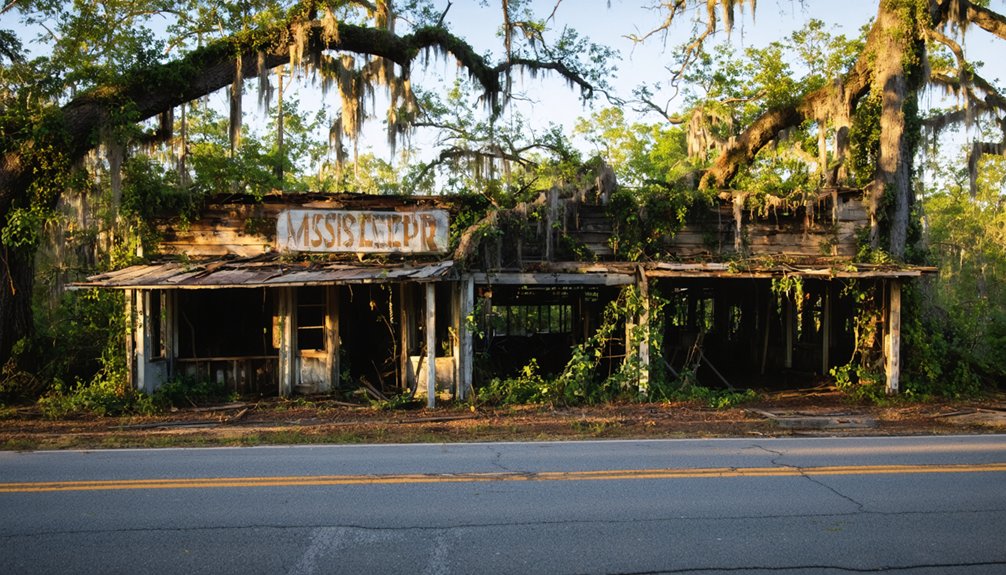
While Bankston makes for a hauntingly memorable destination, Mississippi’s back roads hide several other ghost towns that’ll reward the curious traveler. These forgotten places carry urban legends and local legends that’ll raise the hair on your neck.
- Rodney – Once a thriving river port, now swallowed by vines and silence. Its crumbling church still bears a cannonball lodged in the wall.
- Rocky Springs – A Natchez Trace stop where an entire community vanished after yellow fever and soil exhaustion claimed everything.
- Windsor Ruins – Twenty-three towering columns standing alone in the woods, all that remains of Mississippi’s grandest antebellum mansion after an 1890 fire.
String these stops together, and you’ll drive through layers of history that most travelers never discover.
Frequently Asked Questions
Is There an Entrance Fee to Visit the Bankston Cemetery?
Like America’s cherished public lands, you’ll find no entrance fee at Bankston Cemetery. It’s freely accessible, honoring its historical significance and quiet preservation efforts, letting you roam this forgotten Civil War relic with complete freedom.
Are Pets Allowed at the Bankston Cemetery Grounds?
We don’t have confirmed pet policies or cemetery regulations for Bankston Cemetery on record. You’ll want to contact Choctaw County officials directly before bringing your furry companion along on this remote, historic adventure.
What Is the Best Time of Year to Visit Bankston?
Spring and fall offer you the best visits, when mild weather lets you freely explore Bankston’s historical significance without brutal heat. You’ll feel local legends come alive among the cemetery’s timeless, whispering shadows during these cooler, comfortable seasons.
Is the Bankston Cemetery Accessible for Visitors With Mobility Limitations?
Like stepping into a time capsule, you’ll find the Bankston Cemetery’s terrain unpredictable. Mobility assistance and wheelchair accessibility aren’t guaranteed, as the remote, untouched grounds lack modern infrastructure, so you’ll want to prepare accordingly before visiting.
Are Overnight Stays or Camping Permitted Near the Bankston Site?
You’ll find no official camping regulations or overnight accommodations at Bankston’s remote site. Explore nearby French Camp for lodging options, and always check local land permissions before you decide to camp freely in Choctaw County’s wild surroundings.
References
- https://en.wikipedia.org/wiki/Bankston
- https://www.facebook.com/groups/1576487499800058/posts/1922992838482854/
- https://mississippiparanormal.wordpress.com/2018/07/09/ghost-towns-of-mississippi-bankston/
- https://www.tripadvisor.com/Attraction_Review-g28945-d10045204-Reviews-Rodney_Ghost_Town-Mississippi.html
- https://www.onlyinyourstate.com/experiences/mississippi/ms-ghost-towns
- https://www.youtube.com/watch?v=8GP7cPP7m_M
- https://zh.wikipedia.org/wiki/班克斯頓_(密西西比州)
- https://www.thetravel.com/mississippi-ghost-towns-worthy-of-a-road-trip/