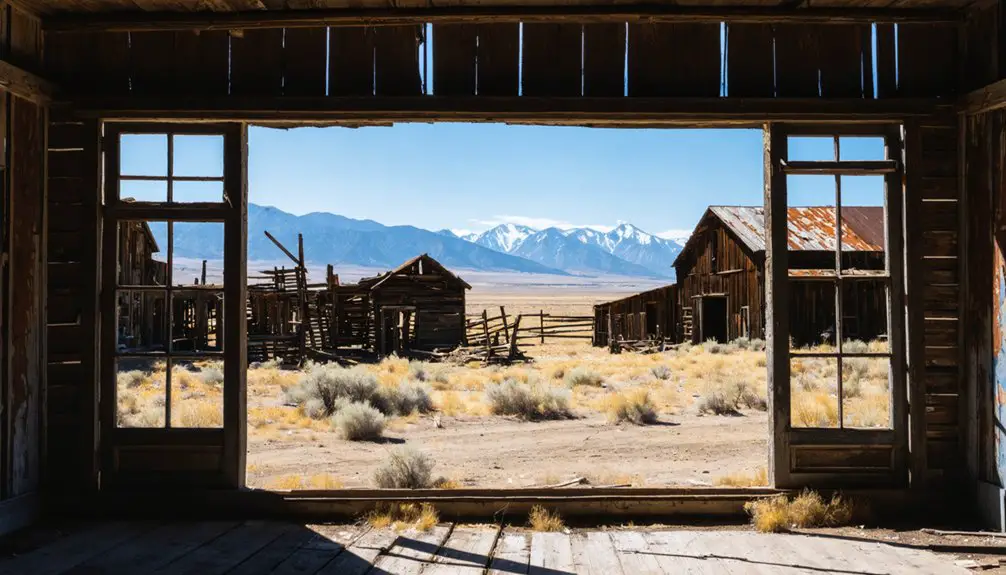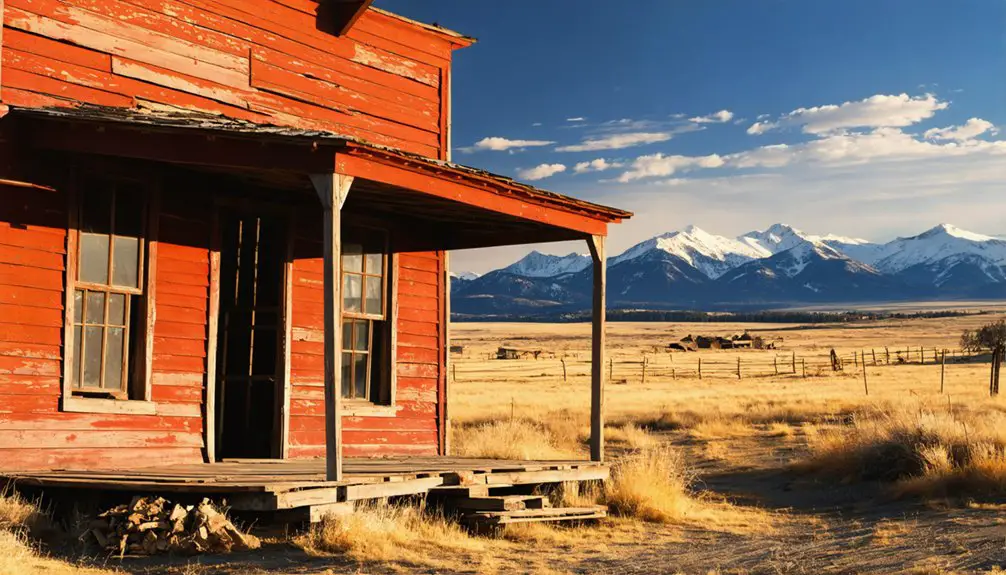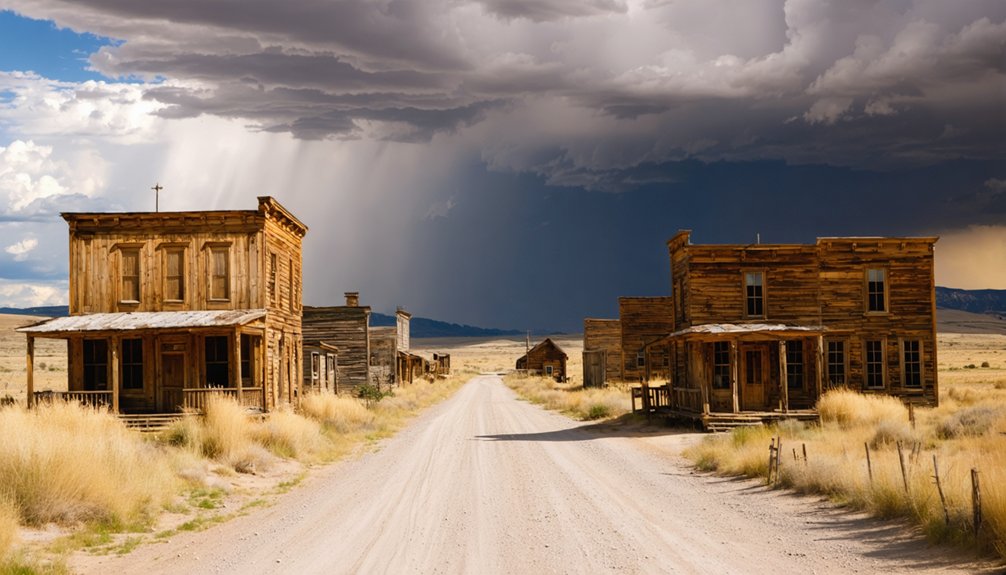
To plan your ghost town road trip to Bannack State Park, take Exit 59 off I-15 near Dillon, head west on Highway 278 for about 17 miles, then follow the gravel road in. Pack water, snacks, offline maps, and sturdy shoes before you leave civilization behind. Summer’s your best window, with hours running until 9 p.m. and events like Bannack Days bringing history alive. There’s far more waiting inside these weathered walls than a quick stop can hold.
Key Takeaways
- Bannack State Park is located 25 miles from Dillon, Montana; take Exit 59 off I-15 onto Highway 278 heading west.
- Pack essentials including a full tank, water, food, sturdy shoes, and offline maps before departing Dillon.
- Summer hours run 8 a.m. to 9 p.m., with entrance fees of $5–$8 and campsites costing $24–$28.
- Over 60 preserved frontier structures, including the gallows and cemetery, make Bannack one of the West’s best ghost towns.
- Extend your road trip by visiting Garnet and Granite Ghost Towns, forming a comprehensive southwestern Montana mining history circuit.
How to Get to Bannack State Park From Dillon
Tucked into the remote highlands of southwestern Montana, Bannack State Park sits about 25 miles from Dillon — your most practical jumping-off point. From I-15, take Exit 59 onto Highway 278 and head west for roughly 17 miles. Watch for the turnoff that leads you down a gravel road into the park itself — passenger cars handle it fine during most seasons.
That final stretch feels intentional, like the landscape is asking whether you’re serious. Once you arrive, Bannack’s historical architecture and deep mining history reward every mile.
Before leaving Dillon, fuel up, grab water, and pack snacks. Services disappear fast once you’re heading west. The remoteness isn’t a drawback — it’s exactly what keeps this place feeling like a genuine escape into Montana’s frontier past.
Why Bannack State Park Is Worth the Detour
Few ghost towns in the American West have held together the way Bannack has. Its historical preservation goes beyond aging timber — it’s a living record of Montana’s wild origins. The cultural significance here runs deep, from gold rush ambition to frontier justice. When you walk these streets, you’re stepping into 1862.
Bannack isn’t just preserved — it’s alive with the weight of 1862, gold rush ambition, and frontier justice.
Three images that stay with you:
- The gallows rising against a wide Montana sky, a stark reminder of the vigilante justice that defined early Bannack
- Sixty-plus weathered structures lining dirt streets that once buzzed with over 3,000 gold-hungry settlers
- The cemetery sitting quietly at the edge of town, marking lives shaped by risk and ambition
This detour earns its miles.
Bannack State Park Hours and Entrance Fees
Bannack State Park stays open year-round, so the season you choose shapes the experience. Summer hours run from 8 a.m. to 9 p.m., giving you long, unhurried days to walk the preserved streets and absorb the weight of historical preservation firsthand.
Off-season hours shorten to 8 a.m. to 5 p.m., and winter conditions can make the remote roads challenging.
Entrance fees for out-of-state vehicles typically run between $5 and $8 per car—a reasonable trade for access to one of the West’s most intact ghost towns.
Visitor amenities include a visitor center staffed with rangers who can orient you before you explore.
If you’re staying overnight, campsites run $24 to $28 depending on the season, letting you linger well after the day crowds leave.
What You’ll See Inside the Ghost Town
Once you pass through the entrance, more than 60 preserved structures spread out before you across the dry Montana flats, each one holding a fragment of the rough, gold-fevered world that drew thousands of settlers here after 1862. Haunted legends cling to these weathered walls, and old mining tools still occupy spaces where real men once worked brutal hours for a shot at fortune.
Three stops anchor the experience:
- The gallows — where frontier justice, often lawless itself, played out publicly.
- The cemetery — headstones that name the cost of chasing gold in isolated country.
- The visitor center — where rangers ground the haunted legends in documented history.
You’re walking through a place that refused to be erased.
What to Bring for a Remote Bannack Visit
Because Bannack sits far from the nearest town, you’ll want to treat this visit like a backcountry stop rather than a casual day trip. The packing essentials are straightforward but non-negotiable: fill your tank before leaving Dillon, carry extra water, and pack enough food for the full stretch of road.
Cell service is unreliable once you leave the highway, so download your maps offline.
Safety precautions matter most during shoulder seasons, when gravel roads can turn slick without warning. Wear sturdy shoes since the preserved structures invite exploration across uneven terrain.
A basic first aid kit, a flashlight, and layered clothing round out what you’ll need.
Come prepared, and this remote ghost town rewards you with the kind of unfiltered history that manicured tourist stops simply can’t offer.
How Long Should You Spend at Bannack State Park?
With your gear packed and your tank full, the next question is how much time to actually budget once you’re through the gate. Bannack rewards those who linger — historical preservation here isn’t just a label, it’s something you feel walking the weathered streets.
- Two hours — enough to hit the gallows, cemetery, and main corridor without rushing.
- Half a day — lets you absorb visitor engagement through ranger-led tours and deeper exploration of the 60-plus structures.
- Overnight — camp on-site, watch the light die over the frontier rooflines, and own the ghost town at dawn before anyone else arrives.
If freedom brought you here, don’t shortchange yourself. The longer you stay, the more Bannack speaks.
Where to Camp at Bannack State Park
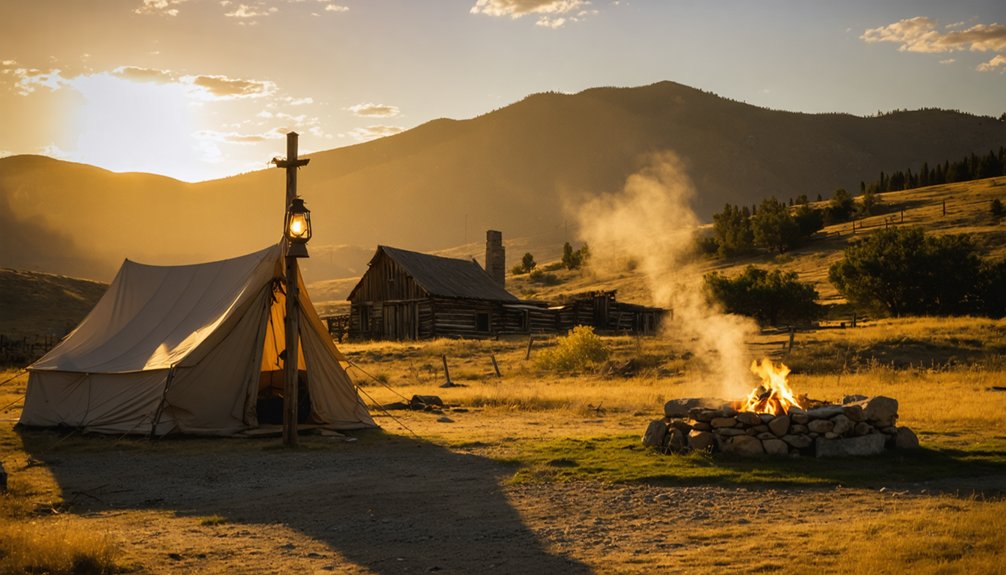
Staying the night at Bannack puts you inside the history rather than just passing through it. The park offers onsite camping, so you can wake up surrounded by the same frontier landscape that once drew thousands of gold seekers west. Nightly rates run between $24 and $28 depending on the season, making it an affordable base for deeper exploration.
Visitor amenities are modest but functional, which suits the spirit of the place. You’re here for historical preservation and open sky, not resort comforts. Come prepared with your own fuel, water, and supplies, since the remote location rewards self-sufficiency.
Summer camping gives you the longest daylight hours for exploring the preserved streets, buildings, and cemetery before the quiet of the Montana night settles in.
The Best Time to Visit Bannack State Park
Summer’s your best window for exploring Bannack, when long daylight hours, open roads, and park hours stretching until 9 p.m. let you wander the ghost town’s weathered streets at a relaxed pace.
Winter turns the remote southwestern Montana location unforgiving, with harsh cold and difficult road conditions that can make the final gravel stretch into the park a serious challenge.
Entrance fees run $5 to $8 per vehicle depending on the season, and hours shift from sunset closings in shoulder months to a tighter 8 a.m. to 5 p.m. schedule off-season.
Summer Offers Best Access
When should you plan your visit to Bannack State Park? Summer gives you the clearest path into this haunted stretch of Montana history. Days run long, roads stay passable, and the park opens from 8 a.m. to 9 p.m., leaving you plenty of daylight to wander.
Picture what summer releases for you:
- Historical reenactments during Bannack Days breathe life back into gold-rush streets frozen in 1860s time.
- Local legends of Sheriff Henry Plummer and his outlaw gang feel closer when rangers guide you past the original gallows.
- Warm afternoons let you move freely between 60 preserved structures without fighting ice or fading light.
Summer isn’t just convenient — it’s when Bannack speaks loudest to anyone chasing frontier freedom on an open road.
Winter Travel Challenges
Outside summer’s long days, Bannack shifts into a harder, quieter version of itself. Winter hazards are real here — snow travel on remote gravel roads can turn a straightforward drive into something far more demanding. The park stays open year-round, but hours drop to 8 a.m. to 5 p.m., and conditions can close access without warning.
If you’re drawn to Bannack in winter, you’ll find solitude the summer crowds never see. Snow-dusted rooftops and frozen silence suit a ghost town well. But you’ll need preparation — four-wheel drive, emergency supplies, and a full tank before you leave Dillon. This landscape doesn’t forgive shortcuts.
Come ready, and winter Bannack rewards you with something raw and unfiltered that warmer months simply can’t offer.
Seasonal Hours And Fees
Bannack’s gates stay open year-round, but the park rewards visitors who time their arrival well. Summer releases the longest window for historical preservation, with access running from 8 a.m. to 9 p.m. Off-season hours shrink to 8 a.m. to 5 p.m., limiting how deeply you can explore. Seasonal accessibility shapes your entire experience here.
Plan around these key details:
- Summer hours stretch into the evening, letting you photograph weathered storefronts in golden light.
- Entrance fees run $5–$8 per out-of-state vehicle — a small price for walking streets where gold-rush settlers once hustled.
- Camping rates land between $24–$28 nightly, giving you a genuine frontier overnight beneath wide Montana skies.
Arrive in summer and you’ll get Bannack at its most open and alive.
Other Montana Ghost Towns to Pair With Bannack
Pairing Bannack with other ghost towns turns a single stop into a full sweep through Montana’s mining past. Garnet Ghost Town sits farther north and rewards the detour with collapsed cabins and a raw, unpolished atmosphere that contrasts sharply with Bannack’s careful historic preservation.
Garnet Ghost Town rewards the detour with collapsed cabins and a raw atmosphere Bannack’s careful preservation simply cannot match.
Granite Ghost Town State Park offers silver-rush ruins perched high in the mountains, giving you yet another angle on the gold rush era that reshaped this region.
Thread these stops together along the Pioneer Mountain Scenic Byway or drift through the Seeley-Swan Valley for mountain scenery between destinations.
Each town tells a distinct chapter of Montana’s boom-and-bust story, and traveling them in sequence lets you read that story on your own terms, at your own pace.
The Complete Southwestern Montana Ghost Town Route
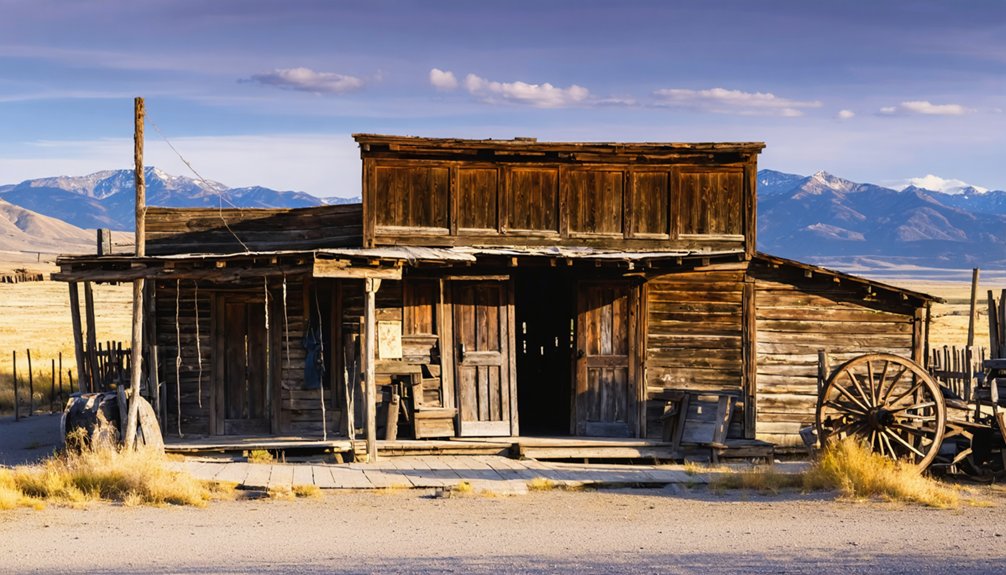
Stringing these towns together into one continuous route gives the whole trip a shape and a direction. You’re moving through layers of Montana history, where historical preservation tells the story better than any textbook.
Visitor engagement happens naturally when the landscape itself becomes part of the narrative.
Build your route around three vivid anchors:
- Bannack State Park – Empty streets lined with 60+ frontier structures, gallows still standing against a wide open sky.
- Granite Ghost Town State Park – A silver-boom ruin clinging to a mountainside, walls half-standing above the tree line.
- Garnet Ghost Town – Weathered cabins disappearing into the pines, snow-heavy in winter, eerily quiet in summer.
Follow the Pioneer Mountain Scenic Byway between stops and let the road do the rest.
Frequently Asked Questions
Is Bannack State Park Accessible for Visitors With Mobility Limitations?
You’ll find some accessibility features at Bannack, though the frontier terrain’s uneven ground can challenge mobility. Contact the park ahead for adaptive equipment options, so you’re free to explore this legendary gold-rush ghost town confidently.
Are Pets Allowed Inside Bannack State Park’s Historic Structures?
You can’t bring pets inside Bannack’s historic structures due to animal restrictions protecting these frontier relics. For pet safety and preservation of Montana’s storied past, keep your companions outside while you explore freely.
Can Visitors Take Guided Tours Led by Park Rangers at Bannack?
You won’t wander alone through history — ranger-led programs bring Bannack’s wild past alive. Guided tours let you walk streets where fortune-seekers once dreamed, giving you the freedom to explore with deeper understanding.
Is There Cell Phone Service or Wi-Fi Available at Bannack State Park?
Don’t expect reliable cell service or wifi availability at Bannack — you’re stepping into Montana’s untamed frontier past. Embrace the disconnect, explore freely, and let the ghost town’s raw, preserved history speak louder than any signal ever could.
Are Photography or Filming Permits Required for Professional Shoots at Bannack?
Yes, even outlaws needed permission here! For professional shoots, you’ll want to contact the park directly about photography permits and filming regulations — Bannack’s historic soul deserves proper authorization before your camera captures its weathered, freedom-whispering frontier streets.
References
- https://visitmt.com/trip-ideas/ghost-town-route
- https://fwp.mt.gov/stateparks/bannack-state-park
- https://athomeonhudson.com/bannack-state-park-ghost-town-montana/
- http://www.roadtripswithtom.com/the-road-less-traveled-bannack-state-park-montana/
- https://www.facebook.com/groups/YellowstoneInsidersHub/posts/968465857217981/
- https://www.travelinusa.us/bannack-ghost-town/
- https://myitchytravelfeet.com/relive-gold-rush-history-bannack-ghost-town/
- https://www.campingkiddos.com/blog/bannack-state-park-guide
- https://www.roadsideamerica.com/story/45417
- https://www.youtube.com/watch?v=NNp2DZ4wU6I