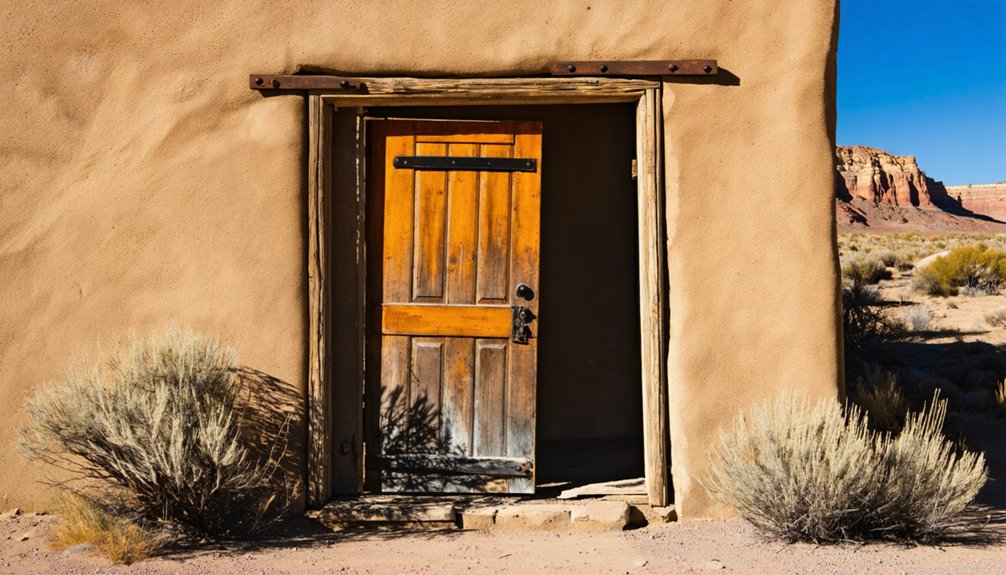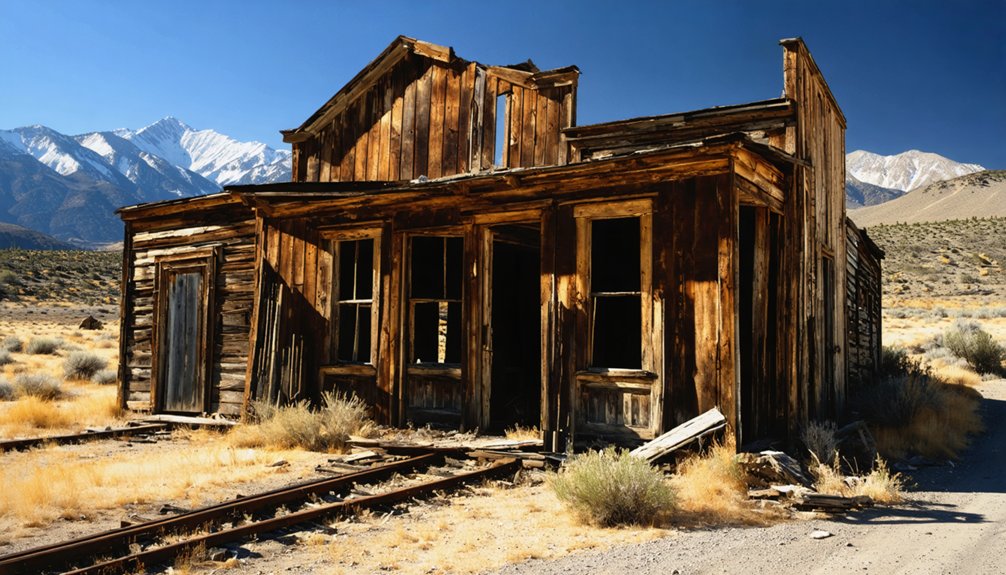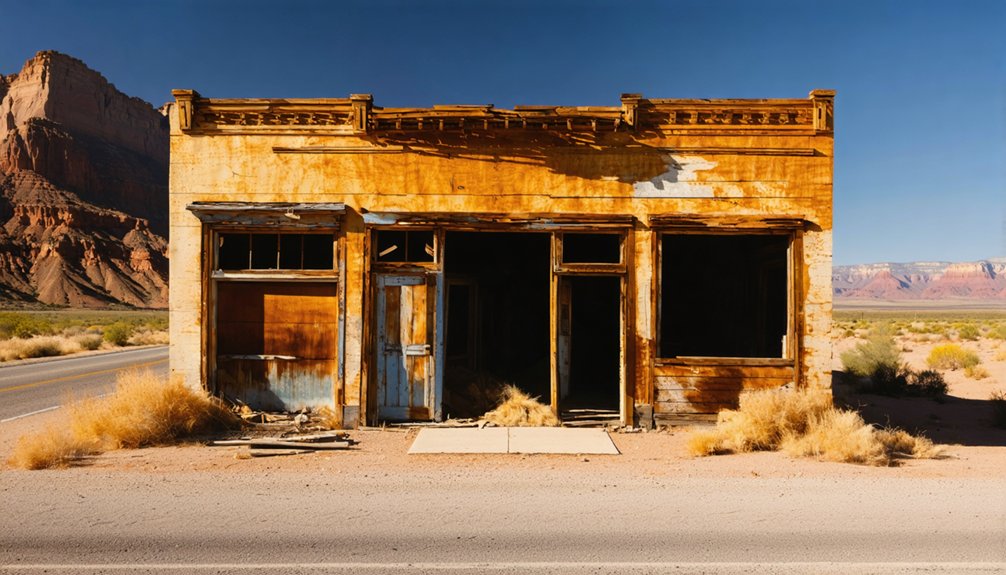
To plan your ghost town road trip to Richardson, Utah, follow the old wagon routes from Cisco’s railroad stop through Dewey and into Professor Valley. Spring and fall offer the best road conditions on these rugged dirt tracks. You’ll find canyon walls, creek corridors, and remnants of a frontier settlement that briefly thrived around a single post office. There’s more to this story than what’s left standing.
Key Takeaways
- Richardson, Utah, founded in 1879, is a ghost town best explored via high-clearance vehicles due to rugged, unpredictable terrain.
- Visit in spring (April–May) or fall (September–October) for mild weather, manageable roads, and ideal photography conditions.
- Avoid summer heat exceeding 100°F and winter freezes, which make dirt roads near Professor Creek dangerous or impassable.
- Plan your route through Cisco and Dewey, following the original wagon supply network connecting rail lines and frontier communities.
- Combine Richardson with nearby ghost towns like Dewey, Castleton, and Miners Basin for a complete Grand County historical circuit.
Richardson, Utah: Ghost Town Worth the Detour?
Though it’s barely a blip on the map today, Richardson, Utah once anchored an essential supply chain stretching from the railroad stop at Cisco all the way through Castle Valley to the mining settlements near the La Sal Mountains.
You’ll find historical anecdotes woven into every dusty mile here — stories of Dr. Sylvester Richardson building a cabin that became a store, teaching school, running a post office, and trying to will a real town into existence.
Local legends paint him as equal parts dreamer and pragmatist. The post office closed in 1905, and the settlers never really came.
But that tension between ambition and abandonment is exactly what makes Richardson compelling. If raw frontier history drives your road trips, this ghost town earns the detour.
How Richardson Went From Frontier Settlement to Ghost Town
When Dr. Sylvester Richardson built his first cabin near Professor Creek in 1879, he envisioned a thriving frontier settlement. He became postmaster, opened a store, and even taught school, holding the community together almost single-handedly.
Dr. Sylvester Richardson built a cabin, ran the post office, opened a store, and taught school — a one-man town.
But Richardson could barely sustain itself, and settlers never arrived in the numbers he’d hoped for.
By 1905, the post office closed, and the town’s fate was sealed. Shifting mining operations and changing transport routes pulled people away faster than local legends could keep them rooted.
The supply chain connecting Cisco, Dewey, and Castleton eventually bypassed Richardson entirely.
Today, only a couple of ranches remain. Historical preservation efforts keep the story alive, and that’s exactly why you should add this ghost town site to your road trip route.
The Man Behind the Name: Sylvester Richardson
Few frontier figures left their mark on southeastern Utah quite like Dr. Sylvester Richardson. He wasn’t just a founder — he was a postmaster, teacher, and builder who shaped Professor Valley’s cultural significance from the ground up.
Richardson first constructed a cabin that evolved into a store, reflecting the adaptive spirit you’d admire in any true frontiersman.
Historical artifacts from this era hint at a man determined to build community where little existed.
His legacy shaped the region in three distinct ways:
- He established the local post office, connecting isolated settlers to the outside world
- He taught in a small valley school, educating the next frontier generation
- He named a town that still appears on ghost town maps today
What Sylvester Richardson Actually Built in Professor Valley
Before Sylvester Richardson could build a community, he built a cabin — and that single structure tells you everything about how frontier towns actually took root. That humble cabin became a store once Richardson constructed a proper home nearby, transforming raw historical architecture into something the valley hadn’t seen before: a functioning supply point.
He didn’t stop there. Richardson also ran a small school and served as postmaster, making him the institutional backbone of Professor Valley.
Local legends remember him as doctor, teacher, and merchant rolled into one determined figure.
When you drive through this corridor today, you’re tracing the footprint of what one man assembled from almost nothing. A cabin, a store, a school — that’s how a ghost town begins before it disappears.
The Post Office That Kept Richardson on the Map
Richardson’s post office didn’t just deliver mail — it delivered legitimacy. From 1886 to 1905, it anchored this tiny Professor Valley outpost to a wider world, transforming local legends into documented history.
Richardson’s post office didn’t just deliver mail — it delivered legitimacy, anchoring a forgotten outpost to the wider world.
You’re chasing historical artifacts when you visit, but don’t overlook what an official postal designation meant on the frontier — it meant survival.
The mail route connecting Cisco, Dewey, Richardson, and Castleton tells you everything about how isolated communities stayed alive:
- Mail moved supplies, news, and human connection across brutal desert terrain
- Richardson served as a critical link toward Miners Basin mining settlements
Losing the post office in 1905 effectively erased Richardson from official existence.
When the post office closed, the town’s heartbeat stopped. That silence is exactly what you’ll feel standing there today.
The Rail Stop and Creek That Kept Richardson Alive
When you trace Richardson’s survival, you’ll find two lifelines running beneath its story: a railroad stop and a desert creek. Supplies bound for Castle Valley moved out of Cisco by rail and then shifted to wagon and water routes that followed Professor Creek toward Richardson and beyond.
Without that rugged chain of transport, the settlement couldn’t have functioned, let alone held a post office for nearly two decades.
Cisco’s Rail Connection
How did a remote desert settlement survive without a nearby railroad? Richardson leaned on Cisco — a rail stop that funneled supplies into the desert interior. Wagons hauled goods from Cisco through Dewey, then pushed toward Richardson and beyond. That overland chain kept the settlement breathing.
Cisco’s rail connection shaped everything:
- Supplies moved inland from the railroad toward Castle Valley, feeding ranches and mining camps
- Local legends grew around the grueling wagon routes crossing difficult terrain
- Historical architecture at stops like Dewey reflected this supply corridor’s demands
You’re retracing a lifeline when you drive this route today. The railroad never reached Richardson, but its influence stretched across every dusty mile between the tracks and Professor Creek.
Professor Creek’s Supply Route
Professor Creek didn’t just flow through Richardson — it worked. Early settlers hauled supplies overland from Cisco’s rail depot, threading through rough canyon country before dropping into Professor Valley. The creek gave them a lifeline, anchoring the water logistics that made settlement possible in an otherwise punishing desert corridor.
You’re following the same supply network today when you trace this route. Goods moved from the railroad at Cisco, through Dewey’s ferry crossing, and finally into Richardson’s small store. Without that chain, nothing out here survived long.
The creek wasn’t scenery — it was infrastructure.
Driving through now, you’ll feel how deliberately everything was placed. Every stop along this corridor existed because the terrain demanded it, and Professor Creek made Richardson’s small piece of it possible.
Plan Your Route: Dewey, Richardson, Castleton, and Miners Basin
If you’re tracing the old supply lines of southeastern Utah, the route from Dewey to Richardson, Castleton, and Miners Basin reads like a frontier logistics map come to life. Each stop carried goods, mail, and local legends forward through canyon country.
Plan your drive around these key points:
- Dewey served as the ferry crossing and regional hub where supplies left the river corridor.
- Richardson connected Professor Creek’s water route to Castle Valley’s ranches and mines.
- Castleton and Miners Basin preserved historical architecture tied to the 1904 postcard mail route.
You’re not just following roads here. You’re retracing a supply chain that kept isolated communities alive.
The landscape hasn’t forgotten, and neither will you once you’ve driven it yourself.
What’s Left to See at Richardson Today
When you arrive at Richardson today, you won’t find much—and that’s exactly the point. The ghost town site near Professor Creek offers raw, unfiltered desert silence.
Richardson offers little to see today—and near Professor Creek, that absence speaks louder than anything words could say.
A couple of ranches still operate nearby, but the settlement that once moved mail across Grand County has largely surrendered to the landscape.
That absence tells its own story. Scan the terrain for historical artifacts—foundation remnants, fence lines, structural echoes of a frontier that couldn’t hold on.
The canyon walls and creek corridor create striking photography opportunities, especially where Professor Valley opens toward the Colorado River corridor.
Richardson rewards visitors who travel slowly and look closely. You’re standing where a postmaster, teacher, and founder once imagined something permanent.
The desert had other plans.
When to Visit: Grand County Seasons and Road Conditions
Spring and fall are your best bets for visiting Richardson, when temperatures stay manageable and the desert light makes Professor Valley feel almost cinematic.
Summer heat in Grand County can be brutal, and sudden monsoon rains turn dirt roads into impassable mud that’ll strand you far from help.
Before you head out, check road conditions near Professor Creek, since remote access routes in this corridor don’t forgive poor planning.
Best Seasons To Visit
Grand County’s desert terrain rewards visitors who time their trip carefully, so knowing the seasonal rhythms can mean the difference between a memorable ghost town run and a washed-out detour. Historical preservation efforts and local legends about Richardson come alive when you’re not battling extreme heat or frozen backroads.
- Spring (April–May): Mild temps, wildflowers, and manageable roads make this the prime window for exploring Professor Valley.
- Fall (September–October): Cooler air and golden light create ideal conditions for photography and unhurried exploration.
- Avoid summer midday heat: Temperatures regularly exceed 100°F, turning desert tracks into exhausting slogs.
Winter brings hard freezes and impassable dirt roads near Professor Creek.
Plan around spring or fall, and you’ll move through this landscape the way early settlers wished they could.
Road Access Challenges
Reaching Richardson means confronting the same dirt roads and creek crossings that frustrated freight wagons heading toward Castle Valley more than a century ago. Professor Creek can flood without warning, turning manageable two-tracks into impassable mud. Spring snowmelt and summer monsoons are the biggest threats, so late spring and fall remain your safest windows.
A high-clearance vehicle isn’t optional here — it’s essential. You’re traveling terrain that once carried mail, supplies, and ambition toward Miners Basin, and the land hasn’t softened much since.
Understanding the cultural significance of this corridor motivates careful, respectful travel. Preservation efforts in Grand County depend partly on visitors who don’t tear up fragile desert surfaces.
Check conditions through the Grand County road department before you leave pavement behind.
Weather And Trail Conditions
When you’re planning a run through Grand County’s ghost town corridor, the calendar matters as much as your fuel level. Climate variations hit hard here — desert heat bakes the valley floors in summer while flash floods can swallow dirt roads whole. Trail safety depends on timing your visit right.
The sweet spots are spring and fall, but even then, conditions shift fast:
- Spring (April–May): Mild temps, but snowmelt can turn creek crossings near Professor Valley into serious obstacles
- Fall (September–October): Best overall window — firm ground, cooler air, clear skies
- Summer: Extreme heat and monsoon storms make remote access genuinely dangerous
Check Grand County road conditions before you leave pavement behind. Richardson won’t wait, but it also won’t forgive poor planning.
Other Grand County Ghost Towns Worth the Drive
Richardson isn’t the only ghost town worth chasing through Grand County. Dewey once hummed with ferry traffic and frontier commerce before silence reclaimed it.
Castleton still stirs local legends about miners and dreamers who pushed into Castle Valley chasing silver and solitude. Miners Basin carried those same ambitions higher into the La Sal Mountains before the ore ran out.
Together, these stops form a natural circuit connecting rail lines, river crossings, and vanished communities that shaped southeastern Utah.
Historical preservation efforts remain thin out here, so what you find feels raw and honest.
Drive the full route and you’ll trace the same supply chain that once linked Cisco to the high country, reading the land like a map of everything ambition built and abandonment reclaimed.
Frequently Asked Questions
Is a Four-Wheel-Drive Vehicle Required to Reach Richardson’s Ghost Town Site?
The knowledge doesn’t specify exact vehicle requirements, but you don’t need a tank! For off-road driving to Richardson’s ghost town site, you’ll want a capable vehicle — because history’s calling, and freedom waits beyond the pavement.
Are There Any Camping Spots Near Richardson or Professor Valley?
You’ll find dispersed camping near Professor Valley, but check camping regulations before you set up. Watch for wildlife encounters in this raw desert corridor, where frontier freedom still breathes through canyon walls and Colorado River winds.
Can Visitors Legally Explore the Remaining Ranch Structures Near Richardson?
You’ll want to respect private property access near Richardson’s remaining ranches. Don’t wander onto land without permission — historical preservation matters, and true adventure means honoring boundaries while soaking in the valley’s rugged, storied frontier spirit.
Is Richardson Located Within Any Protected National Park or Monument Boundaries?
Richardson doesn’t fall within protected national park or monument boundaries, so you’re free to roam its historically-preserved landscape. Respect the surrounding wildlife habitats as you chase this ghost town’s adventurous, untamed spirit through Grand County’s open terrain.
Are Guided Ghost Town Tours Available in Grand County, Utah?
With over 50 ghost town sites in Grand County, guided tours aren’t widely formalized—you’re free to explore independently. Chase historical artifacts across open terrain and let Richardson’s vanished streets tell their own untamed story.
References
- https://utahstories.com/2023/11/ghost-towns-of-grand-county-utah/
- https://onlineutah.us/richardsonhistory.shtml
- https://moabmuseum.org/program/grand-county-ghost-towns/
- https://moabsunnews.com/2023/10/12/moab-museum-grand-county-ghost-towns/
- https://www.visitutah.com/things-to-do/history-culture/ghost-towns
- https://moabsunnews.com/2021/07/01/exploring-the-ghost-town-along-the-colorado-river/
- https://en.wikipedia.org/wiki/List_of_ghost_towns_in_Utah
- https://jacobbarlow.com/2016/05/03/richardson-utah/