Basinger, Florida won’t greet you with museums or welcome signs — it’ll meet you with open cattle country, river silence, and a cemetery full of pioneer names. Start your road trip from Okeechobee, about 10 miles southeast, and head west on US-98 toward the Kissimmee River crossing. Visit between October and April for cooler temps and easier access. This forgotten town has a surprisingly layered story, and every detail you uncover makes the drive feel more worthwhile.
Key Takeaways
- Basinger is located roughly 10 miles northwest of Okeechobee near the Kissimmee River crossing on US-98, making Okeechobee an ideal starting point.
- The Basinger Cemetery on the south side of US-98 is the primary accessible landmark, preserving graves of early settlers.
- Visit between October and April for cooler temperatures, drier conditions, and easier access to this rural, minimally marked area.
- Nearby heritage sites like Okeechobee Battlefield Heritage Park and Lake Okeechobee Scenic Trail complement the ghost town experience.
- Prepare all supplies in advance, as Basinger offers no visitor services, preserved architecture, or significant roadside signage.
What Was Basinger, Florida?
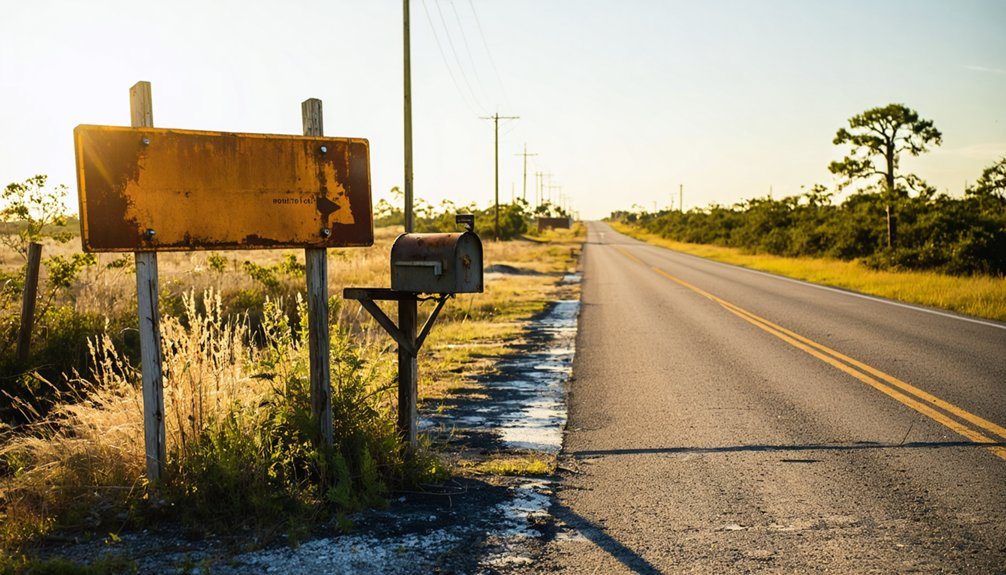
Before it faded into Florida’s frontier past, Basinger was a thriving river settlement in Okeechobee County that grew up around the bones of Fort Basinger, a military post Colonel Zachary Taylor established in 1837 during the Second Seminole War. The fort took its name from Lieutenant William E. Basinger, killed in the Dade Massacre of 1835.
After the Civil War, cattlemen, farmers, and trappers claimed the land, building a community complete with hotels, a church, a school, and general stores. The Kissimmee River powered its economy, moving crops and goods by steamboat while locals developed a rugged culture rooted in outdoor activities and hearty local cuisine.
The Seminole War History Behind Fort Basinger
When you trace Basinger’s origins, you land squarely in the bloodshed of the Second Seminole War — specifically the Dade Massacre of December 28, 1835, where Lieutenant William E. Basinger lost his life alongside more than a hundred soldiers ambushed by Seminole warriors. That single catastrophic event set the war’s brutal tone and pushed the U.S. Army to expand its frontier presence deep into Florida’s interior.
Bringing Colonel Zachary Taylor into command of a sprawling military operation across the territory. By 1837, Taylor had established Fort Basinger on the south bank of the Kissimmee River, creating a fortified supply hub — complete with log palisades, blockhouses, and medical facilities — that anchored the army’s push into the region’s wild heartland.
Dade Massacre Origins
The name Basinger traces back to a single violent morning that reshaped the course of the Second Seminole War. On December 28, 1835, Seminole warriors ambushed over 100 U.S. soldiers near present-day Bushnell, killing all but three men. Lieutenant William E. Basinger died in that attack, and the fort Zachary Taylor later built along the Kissimmee River carried his name forward through history.
Key facts you should know before visiting:
- The massacre triggered aggressive U.S. military expansion deep into Florida’s interior
- River transportation along the Kissimmee became a critical supply lifeline for frontier forts
- Wildlife conservation efforts today protect the same wilderness where these soldiers once marched
That brutal morning fundamentally wrote Basinger’s origin story before the settlement ever existed.
Zachary Taylor’s Frontier Command
Zachary Taylor didn’t arrive in Florida as a celebrated general — he earned that reputation here, commanding troops through some of the war’s most punishing inland campaigns.
In 1837, he pushed deep into hostile territory and established Fort Basinger along the Kissimmee River’s south bank, creating a critical supply and medical post. Local legends describe a rough palisade of log walls and blockhouses rising from sawgrass and cypress — a frontier command built by sheer necessity.
Taylor used the fort to stage operations, move wounded soldiers, and control river access. Though ancient artifacts from that era have largely vanished from the landscape, the strategic logic behind Fort Basinger shaped the entire region’s future.
Taylor’s command here ultimately launched his rise toward the White House.
Fort Basinger’s Military Role
Fort Basinger didn’t exist by accident — it existed because the U.S. needed a strategic foothold deep in contested Florida territory. During the Second Seminole War, the fort functioned as a supply hub, medical station, and command post, much like how mining history sites served as lifelines for remote frontier communities.
You’re standing in a place where wounded soldiers received care and troops pushed deeper into Seminole lands.
Key military functions Fort Basinger served:
- Supply distribution — moving weapons, food, and equipment along the Kissimmee River
- Medical services — treating soldiers wounded in frontier combat
- Wildlife conservation awareness — soldiers documented Florida’s untamed interior landscape
The fort shaped everything that followed, from early settlement patterns to the cattle-ranching culture that eventually replaced military occupation.
How Basinger Grew Into a Kissimmee River Town
After soldiers abandoned Fort Basinger in 1850, the Kissimmee River didn’t stay quiet for long. Homesteaders arrived after the Civil War, drawn by open land and river access. Cattle ranchers, farmers, and trappers staked their claims, and by 1878 the community supported a general store.
You can picture it: a rough-hewn river town where steamboats hauled crops and goods, where local cuisine meant whatever the land and water provided, and where wildlife sightings were part of daily life along the Kissimmee corridor.
Hotels, a post office, a school, a church, and general stores eventually took shape.
Basinger became a genuine regional hub, its pulse tied directly to river commerce. The water connected everything and everyone.
Why the Railroad Killed the Town
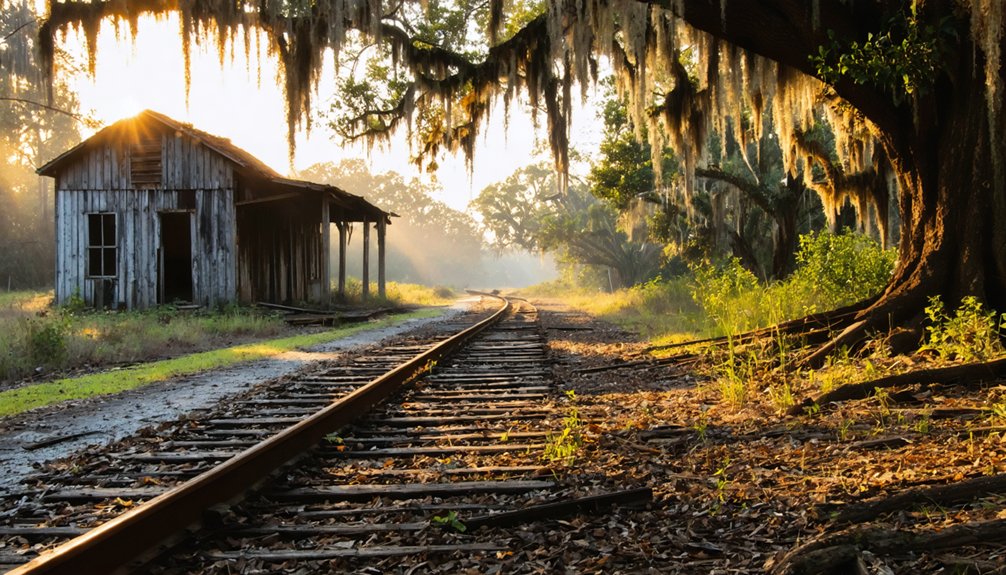
Basinger’s fate shifted in 1915 when the Florida East Coast Railroad laid its tracks through Okeechobee instead of the river town. That single decision drained Basinger of its economic lifeblood. Commerce, travelers, and opportunity followed the rails elsewhere, leaving the community to quietly unravel.
- The post office shuttered in 1918, severing Basinger’s last official connection to outside networks.
- Steamboats stopped running in the 1920s, ending the river trade that once moved local cuisine and cattle to distant markets.
- Urban legends now fill the silence where hotels, stores, and neighbors once thrived.
You can still drive through this corridor and feel that abandonment. The railroad didn’t just bypass a town — it erased one, handing Basinger’s story over to history and rumor.
What You Can Still See at Basinger Today
When you visit Basinger today, you won’t find standing buildings or preserved streets — the town has vanished almost completely. Your clearest tangible connection to the settlement is the Basinger Cemetery, located on the south side of US-98 east of the Kissimmee River.
Beyond that, the broader landscape itself tells a story, as the Kissimmee River Restoration Project has reshaped the corridor where steamboats once carried the town’s commerce.
Basinger Cemetery Location
While the town of Basinger has largely vanished from the landscape, you can still visit the Basinger Cemetery, located on the south side of US-98 east of the Kissimmee River. This cemetery location offers a rare, tangible connection to the settlers who built their lives along this frontier river corridor.
Historical artifacts of human perseverance rest quietly here, marking lives shaped by cattle ranching, river commerce, and wilderness survival.
- The cemetery sits along a publicly accessible route on US-98, making it easy to reach independently.
- Headstones serve as historical artifacts that document Basinger’s earliest pioneering families.
- The surrounding landscape reflects the raw, open cattle-country terrain that defined this region.
It’s one of the few remaining anchors to Basinger’s forgotten past that you can actually stand before.
Kissimmee River Restoration
Beyond the cemetery’s quiet headstones, the landscape itself becomes the exhibit. The South Florida Water Management District’s Kissimmee River Restoration Project has reshaped this corridor, reversing decades of channelization that once accelerated agricultural evolution across the region. You’re looking at a slow, deliberate rewilding — marshes returning, oxbows refilling, native wildlife reclaiming floodplains that settlers once drained.
Basinger’s collapse wasn’t random. Railroad impact redirected commerce toward Okeechobee, starving the river town of its economic pulse. Now the river itself stages a quiet comeback, indifferent to the ambitions that once rode its currents.
You won’t find restored buildings or interpretive centers here. What you’ll find is open sky, bending water, and a landscape that carries its history in soil and silence rather than signage.
Nearby Ghost Towns and Heritage Sites Worth Adding
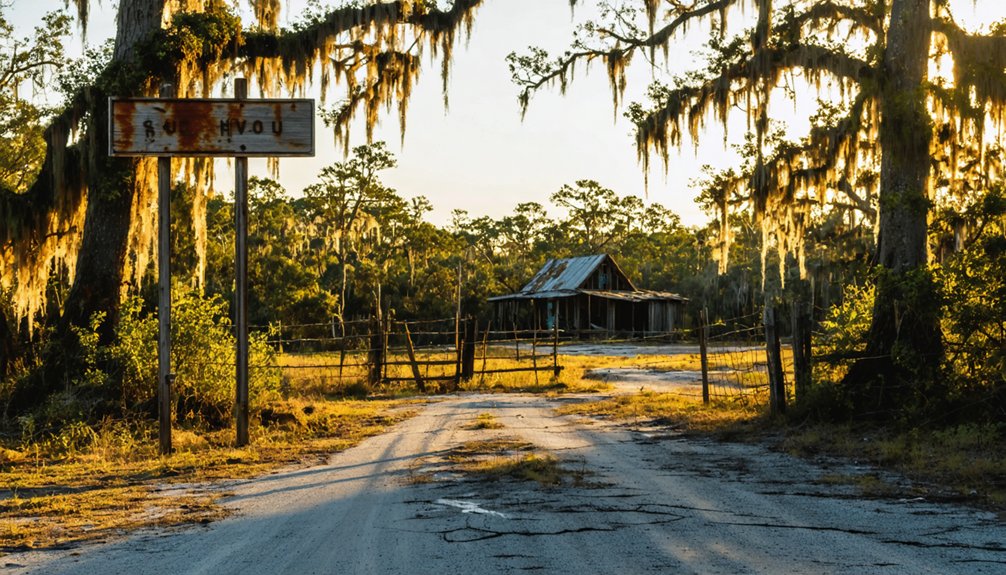
Pairing Basinger with nearby stops transforms a single-site detour into a fuller picture of south-central Florida’s vanished frontier. The Okeechobee area anchors the region’s agricultural history, where cattle drives, frontier homesteads, and river commerce once shaped daily life.
Pair Basinger with nearby stops for a fuller picture of south-central Florida’s vanished frontier.
Wildlife conservation efforts along the Kissimmee corridor add living context to landscapes that settlers once worked hard to tame.
Consider adding these stops to your route:
- Okeechobee Battlefield Heritage Park – where the Second Seminole War left its deepest marks
- Lake Okeechobee Scenic Trail – offering sweeping views of Florida’s untamed interior
- Fort Drum area – another forgotten frontier community tied to cattle-country roots
Each stop deepens your understanding of why people came here, built something, and eventually moved on.
Where Exactly Is Basinger and How Do You Get There?
Tucked into the rural heart of Okeechobee County, Basinger sits roughly 10 miles northwest of the city of Okeechobee, near the Kissimmee River corridor where US-98 crosses into quiet cattle country.
You’ll find no preserved historic architecture or signposted downtown district waiting for you — just open land, scattered local legends, and the quiet pull of a place that time bypassed.
Drive US-98 west from Okeechobee, cross the Kissimmee River bridge, and you’re practically there.
Watch for the Basinger Cemetery on the south side of the road, east of the river — it’s one of the few tangible markers left.
Keep in mind the Lockett Estate area is private property, so respect those boundaries and let the landscape itself tell the story.
Best Time of Year to Visit Basinger and the River Corridor
Florida’s brutal summer heat and humidity make fall through spring the clear window for exploring the Basinger area and the Kissimmee River corridor. Cooler temperatures let you move freely through the landscape, chasing hidden artifacts and urban legends tied to the old fort and vanished settlement.
- October through November offers mild weather and low crowds, ideal for photographing the river corridor and cemetery.
- December through February brings cool, dry days perfect for outdoor exploration along US-98 near the Kissimmee River.
- March through April delivers wildflower blooms across the cattle-country landscape before summer storms return.
Avoid June through September entirely. The heat drains you fast, insects are relentless, and flooded ground limits access to the remote areas where Basinger’s frontier history quietly disappeared.
Planning a Ghost Town Day Trip From Okeechobee
Once you’ve locked in your travel window, it’s time to map out the actual day. Okeechobee sits roughly 10 miles southeast of Basinger, making it the perfect launching point. Grab supplies in town before heading northwest on US-98, tracing the Kissimmee River corridor toward the ghost town site.
Don’t expect historical artifacts behind museum glass — Basinger rewards curious, self-directed explorers who read the landscape itself. Scan the roadside near the Kissimmee River bridge and note the Basinger Cemetery on the south side of US-98.
Local legends surrounding the Dade Massacre survivors and Zachary Taylor’s frontier campaign add real weight to an otherwise quiet stretch of Florida cattle country. Budget a half-day, pair it with Okeechobee heritage sites, and you’ll leave with a full story.
Frequently Asked Questions
Is There an Entrance Fee to Visit the Basinger Area?
Like an open gate to the past, you’ll find no entrance fee for historical landmarks or wildlife observation in Basinger — but the Lockett Estate’s private property remains closed, keeping some frontier secrets locked away.
Can You Fish or Boat on the Kissimmee River Near Basinger?
You can fish and boat on the Kissimmee River near Basinger! Just follow Florida’s fishing regulations and boating safety rules. You’ll love drifting through wild, restored waterways that echo with frontier freedom and untamed Florida beauty.
Is the Basinger Cemetery Open to the Public?
Step back in time — the Basinger Cemetery’s open to you! It’s on US-98’s south side, east of the Kissimmee River, where historical significance meets local legends, letting you freely explore Florida’s frontier past firsthand.
Are There Any Guided Tours Available at the Basinger Site?
You won’t find formal guided tours at Basinger’s site, but you’re free to explore its historical significance independently, tracing local legends of Seminole Wars and frontier spirits across this hauntingly open, untamed Florida landscape.
Is the Basinger Area Accessible for Visitors With Mobility Limitations?
Ironically, history’s most rugged frontier doesn’t roll out the welcome mat — Basinger’s unpaved, undeveloped terrain offers zero wheelchair accessibility, and mobility assistance programs don’t exist here. You’re exploring raw, untamed Florida freedom, so plan accordingly.
References
- https://www.legendsofamerica.com/fort-basinger-florida/
- https://abandonedfl.com/lockett-estate/
- https://www.ghosttowns.com/states/fl/basinger.html
- https://www.florida-backroads-travel.com/florida-ghost-towns.html
- https://en.wikipedia.org/wiki/Fort_Basinger
- https://floridahistoryblog.com/is-it-fort-basinger-or-bassenger-or-bassinger/
- https://www.hoboewanderings.com/fortbasinger