Planning a ghost town road trip to Stewards Mill, Texas is easier than you’d think. You’ll drive just 7 miles north of Fairfield along scenic Freestone County backroads, and no four-wheel drive is needed. Stock up on fuel and supplies in Fairfield before heading out, since Stewards Mill has no active businesses. Arrive early to beat the heat and soak in the quiet countryside. There’s more to this fascinating little community’s story just ahead.
Key Takeaways
- Stewards Mill is located approximately 7 miles north of Fairfield, Texas, at the intersection of Farm Roads 833 and 2547.
- Stock up on fuel, food, and supplies in Fairfield before heading out, as Stewards Mill has no active businesses.
- Standard two-wheel-drive vehicles can easily access the site via scenic rural roads through Freestone County.
- Key landmarks include the 1964-designated Stewards Mill Store and the 1965-designated Harmony Church as historical anchors.
- Visit during early morning daylight hours to avoid heat and enjoy the quiet, rural countryside setting.
What’s Left to See at Stewards Mill Today?
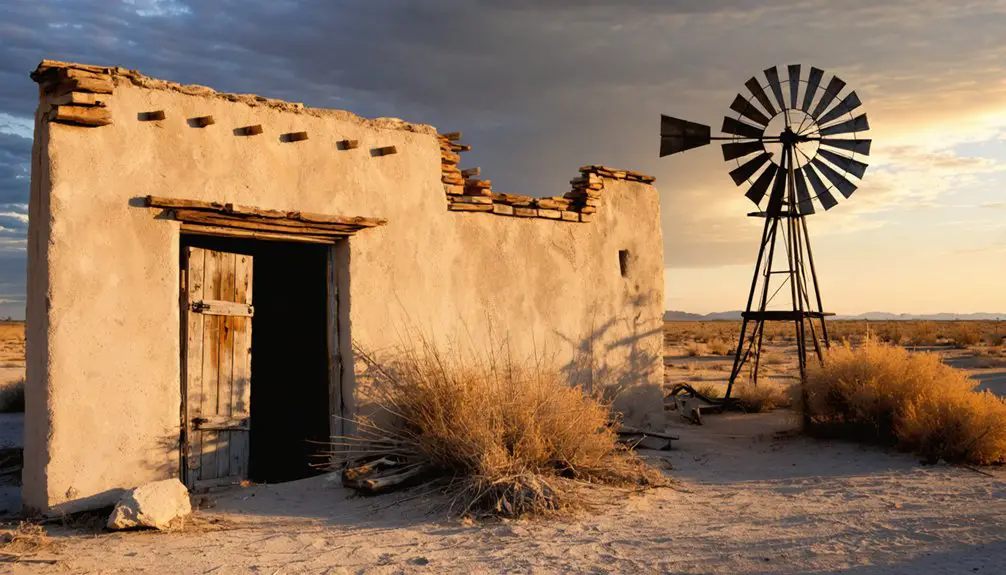
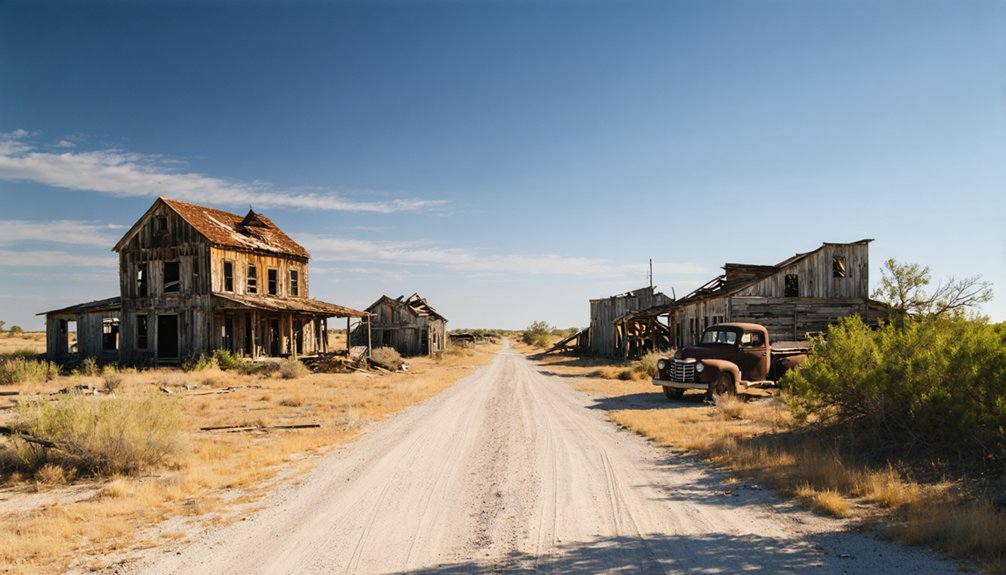
Though Stewards Mill never grew into a bustling town, what remains today still tells a quiet story worth stopping for — a church, a cemetery, a handful of scattered buildings, and maybe half a dozen occupied residences holding their ground against time.
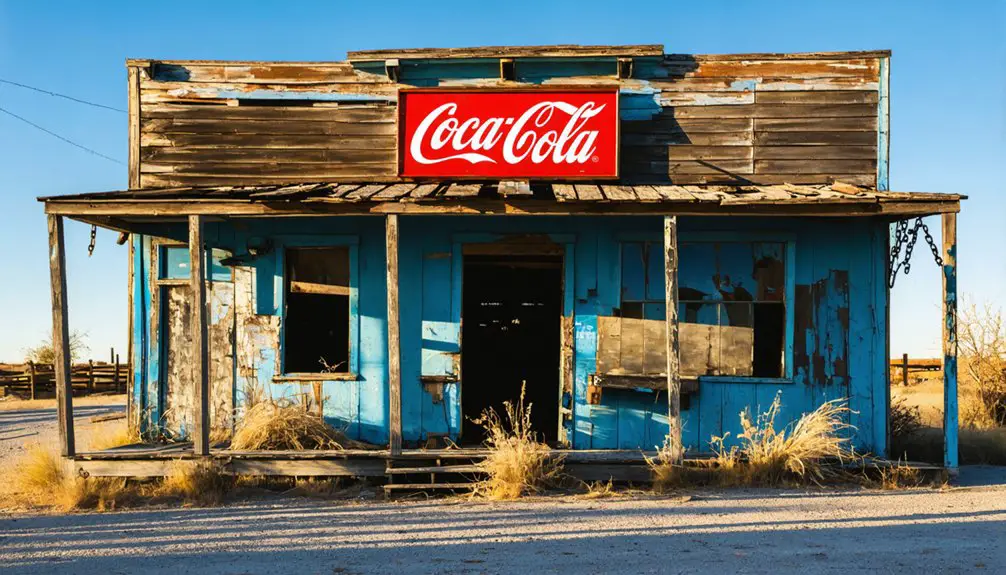
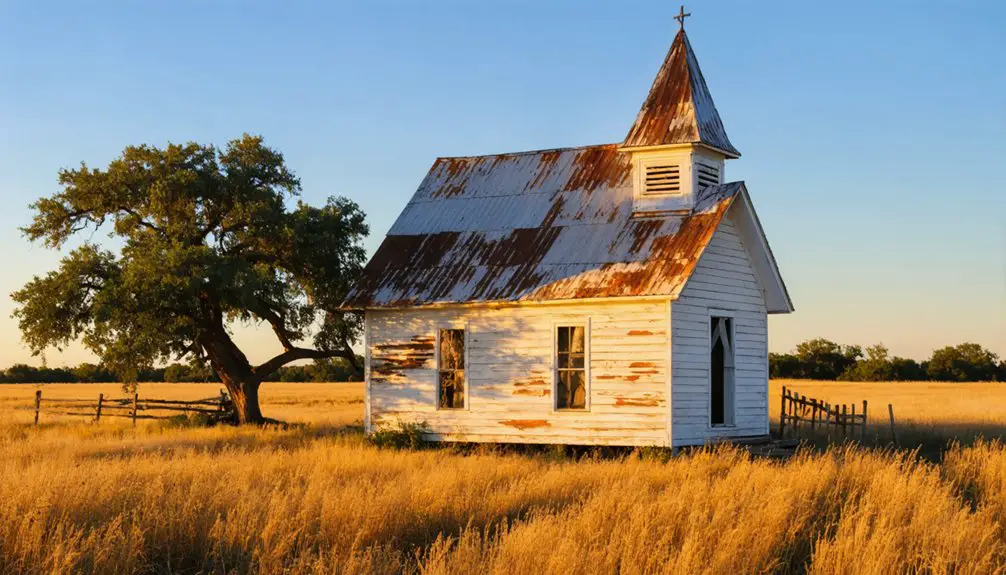
You’ll find two recognized local landmarks anchoring the site: the Stewards Mill Store, recorded as a Texas historical landmark in 1964, and Harmony Church, earning the same recognition in 1965.
The William Andrew Bonner home also carries historical significance. These preservation efforts guarantee the community’s story doesn’t completely disappear into the Texas landscape.
Don’t expect a walkable district or open businesses. Instead, drive slowly, read the history etched into the structures still standing, and let the cemetery and churchyard speak for themselves.
The History Behind Stewards Mill, Texas
Before Stewards Mill became a ghost-town footnote, it started with a single structure that pulled people across county lines: the gristmill built by Washington Steward, a South Carolina transplant who gave the community both its name and its reason to exist when he established the settlement in 1849. Farmers from Ellis and Dallas counties traveled significant distances just to grind their grain here.
From that foundation, the community grew steadily. Dr. James I. Bonner opened the first general store in 1867, a post office arrived in 1872, and a shared church served Baptist, Methodist, and Presbyterian congregations by 1876.
Local legends tie the community’s identity closely to those early institutions. Today, architectural remnants like the landmarked Stewards Mill Store and Harmony Church give you a tangible connection to that rural past.
How to Get to Stewards Mill From Fairfield
Getting to Stewards Mill is straightforward since the drive from Fairfield covers only about 7 miles north, putting you at the intersection of Farm Roads 833 and 2547 without needing anything more than a standard two-wheel-drive vehicle.
Fairfield serves as your best navigation anchor and last stop for local dining before heading out, so fuel up and grab a meal before leaving town.
The scenic routes cutting through Freestone County’s rural landscape make the short drive genuinely enjoyable, rolling past farmland that reflects the same agricultural character settlers depended on here for generations.
You won’t encounter complicated navigation or rough terrain, just open Texas countryside leading you directly to the site.
Keep your expectations grounded since Stewards Mill rewards curiosity rather than demanding serious expedition planning.
What to Expect When You Visit Stewards Mill
Arriving at Stewards Mill, you’ll find a quiet rural pocket rather than a walkable historic district, so adjust your mindset before stepping out of the car. A church, a cemetery, and a handful of scattered dwellings make up most of what you’ll see.
Stewards Mill rewards the unhurried visitor — arrive expecting quiet countryside, not a walkable historic district.
The Stewards Mill Store and Harmony Church both carry Texas historical landmark status, giving you two concrete anchors for your visit.
Local flora frames the landscape with the kind of untamed Texas countryside that rewards unhurried eyes. Seasonal weather matters here — summers run brutally hot, so an early morning arrival keeps conditions comfortable.
You won’t find an active business district or interpretive signage, but the sense of deep rural history is genuine. Treat it as a thoughtful pause rather than a structured tour stop.
Make Fairfield Your Base for the Stewards Mill Drive
Fairfield sits just 7 miles south of Stewards Mill, making it the logical overnight anchor for your visit. As Freestone County’s seat, it offers local dining, lodging, and fuel before you head north on your ghost-town run.
From Fairfield, you’ll follow scenic routes through open farmland and scattered timber, giving you a real sense of the rural landscape that once supported communities like Stewards Mill. The drive itself sets the mood — quiet roads, wide skies, and little traffic.
You can reach the intersection of Farm Roads 833 and 2547 without any four-wheel-drive equipment, so any standard vehicle handles the trip easily. Plan your timing around daylight hours, since there are no services waiting at the site itself.
Frequently Asked Questions
Is There an Admission Fee to Visit Stewards Mill Ghost Town?
You won’t pay any admission fee to explore Stewards Mill! It’s an open rural site where you’re free to roam, though it offers minimal visitor amenities. Respect its historical preservation by treating remaining structures with care.
What Is the Best Time of Year to Visit Stewards Mill?
Like Steinbeck’s open road calling to wanderers, spring and fall are your best bets. You’ll dodge brutal summer heat, enjoy mild seasonal weather, and avoid what few visitor crowds exist in this quiet, freely roamed Texas ghost town.
Are There Any Guided Tours Available at Stewards Mill?
You won’t find formal guided tour options or tour scheduling at Stewards Mill. It’s a self-guided experience where you’re free to explore the historic store, Harmony Church, and cemetery entirely at your own pace.
Can You Legally Photograph the Historic Structures at Stewards Mill?
You’ll generally face no photography restrictions on public roads, but always respect private property boundaries. Legal permissions may vary for structures like Harmony Church, so seek owner consent before capturing those historic shots.
Is Camping Allowed Near the Stewards Mill Area?
Night falls fast out here — no campground regulations exist for Stewards Mill itself. You’ll need to seek nearby private land or public sites, staying alert for wildlife encounters as you chase freedom through Freestone County’s quiet darkness.
References
- https://www.texasescapes.com/CentralTexasTownsNorth/Stewards-Mill-Texas.htm
- https://www.tshaonline.org/handbook/entries/stewards-mill-tx
- https://www.ghosttowns.com/states/tx/stewardsmill.html
- https://en.wikipedia.org/wiki/List_of_ghost_towns_in_Texas
- http://files.usgwarchives.net/tx/freestone/history/town/stemill.txt
- https://www.texasescapes.com/TOWNS/Texas_ghost_towns.htm
- https://www.texasescapes.com/TOWNS/Texas-Ghost-Towns-3-Hill-Country.htm