Start your trip three miles north of South Haven on U.S. Highway 177, where the open Kansas plains lead you straight into Hunnewell’s layered past. Fill your tank before you go, pack water, and download offline maps since cell coverage is spotty. Once there, two grain elevators and an active railroad line mark what was once a roaring Wild West cowtown. There’s far more to this quiet ghost town than first meets the eye.
Key Takeaways
- Start from South Haven, KS, driving three miles north on U.S. Highway 177 to reach Hunnewell in under five minutes.
- Prepare by fueling up, downloading offline maps, and packing water, snacks, a camera, and a notebook before departing.
- Visit during spring or fall for ideal weather; summer visitors should arrive early to avoid heat.
- Explore the active railroad line, two grain elevators, and remnants evoking Hunnewell’s lawless 1880s cattle drive history.
- Hunnewell requires no tickets or crowds, offering free, authentic access to frontier ghost town history near South Haven.
What Is Hunnewell, Kansas and Why Does It Still Attract Visitors?
Tucked away in Sumner County, Kansas, Hunnewell is a former cowtown that once roared with cattle drives, saloons, and gunfights before fading into near-silence. Founded in 1880 as a railroad cattle-shipping hub, it peaked at just 254 residents before the shifting rail lines and fading cattle trade hollowed it out. Today, only 44 people call it home.
Yet visitors still come. You’ll find local legends tied to the 1884 Hunnewell Gunfight and stories of a hotel so riddled with bullets that workers pulled 70 pounds of lead from its walls when it was razed.
Remnants of historical architecture and the railroad still running along the south side of town give you something tangible to connect with — raw, unpolished frontier history on your own terms.
How to Reach Hunnewell on U.S. Highway 177 From South Haven
Your road trip to Hunnewell starts in South Haven, a small Kansas community that puts you right at the edge of cattle-country history. From there, you’ll head south on U.S. Highway 177, covering roughly three miles of flat, open terrain that gives you a feel for the landscape Texas drovers once crossed.
When the town appears ahead, you’ve arrived at one of Sumner County’s most storied ghost towns.
Starting Point: South Haven
South Haven, Kansas, sits just three miles north of Hunnewell on U.S. Highway 177, making it the perfect launching pad for your ghost town adventure. From here, you’ll head south into a landscape thick with local legends and historic landmarks.
Before you leave South Haven, make sure you’ve covered the basics:
- Fill your gas tank, as services disappear quickly heading south
- Download offline maps in case cell service drops
- Note your starting mileage for the short three-mile drive
- Bring a camera to capture the open Kansas plains
- Pack water and snacks since no stores await in Hunnewell
The drive south is brief but purposeful.
You’ll feel the rural quiet deepen as civilization thins and the cattle-town history of Hunnewell begins pulling you forward.
Driving South on 177
Once you pull out of South Haven and point the nose of your car south, U.S. Highway 177 carries you through open Kansas farmland with almost nothing between you and the horizon. In roughly three miles, Hunnewell appears — quiet, sparse, and easy to miss if you’re moving too fast. Slow down.
This stretch of highway traces the same corridor that once pulsed with railroad history and cattle shipping activity during the 1880s boom years. The railroad line that made Hunnewell relevant still runs along the south side of town, a tangible thread connecting the present landscape to its rowdy past.
Rolling in from the north gives you a clean, unhurried approach — exactly the right pace for absorbing what little remains of a town that once roared.
Arriving at Hunnewell
Hunnewell sits just three miles south of South Haven on U.S. Highway 177, making it an easy drive through open Kansas countryside. You’ll feel the landscape shift as civilization thins and history thickens around you.
Local legends and historical landmarks begin telling their stories before you even stop the car.
Watch for these markers as you arrive:
- The railroad line running along the town’s south side
- Two grain elevators rising above the flat horizon
- A scattering of homes signaling the town’s edge
- The former cattle shipping grounds near the tracks
- The quiet streets once packed with saloons and cowboys
You’re rolling into a place where 1880s gunfights and cattle drives left permanent marks on the land. Slow down and take it all in.
How the Railroad Put Hunnewell on the Map in 1880
When the Sumner County Railway Company completed its line to Hunnewell on June 16, 1880, it didn’t just connect a dusty stretch of Kansas prairie to the wider rail network — it created a town.
Railroad influence shaped everything that followed. Within months, a post office opened, a school started, and a business district took root.
The town was named for H. H. Hunnewell, a Boston financier with direct ties to railroad ownership, which tells you exactly who held the power here.
The historical significance of that single rail connection is hard to overstate — it gave Texas cattle drives a northern terminus and handed local cattlemen direct access to the Kansas City stockyards.
The tracks still run along the south side of town, a quiet reminder of what once was.
Hunnewell’s Wild Cowtown Days: Cattle, Commerce, and Chaos
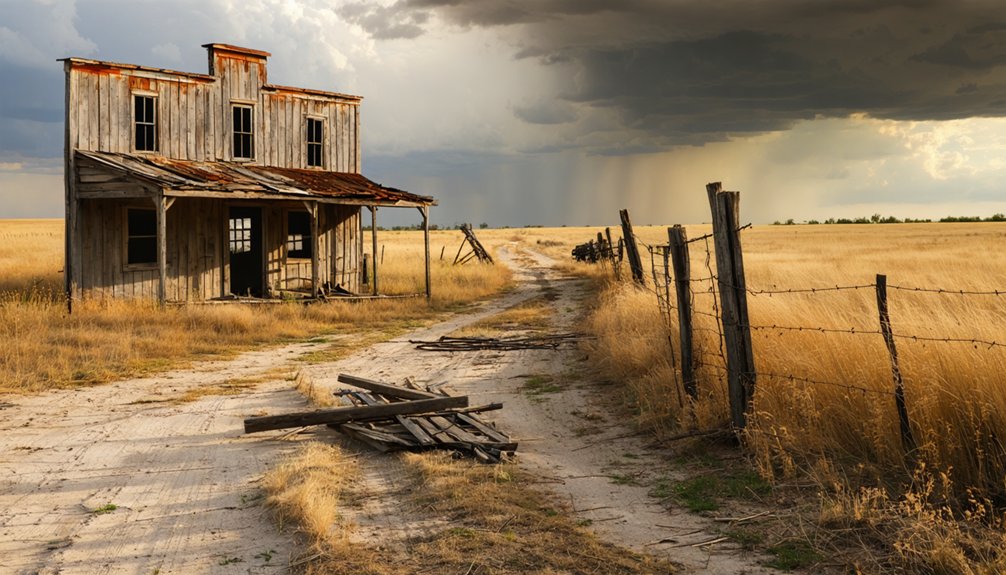
When you picture Hunnewell in its 1880s prime, you’re looking at a town built on Texas cattle money, with more than 500 loads of cattle shipped out in 1889 alone.
The business district packed in one hotel, two stores, a barber shop, two dance halls, and eight or nine saloons, giving you a clear sense of where cowboys spent their earnings.
Violence came with the territory, and when the old Hunnewell House hotel was finally torn down in 1919, workers pulled out over 70 pounds of lead from its walls.
Cattle Trade Commerce
During the 1880s, Hunnewell roared to life as one of Kansas’s busiest cattle shipping points, funneling Texas longhorns northward and onto rail cars bound for the Kansas City stockyards. Local legends describe a town humming with raw commerce and frontier energy. The historical architecture that once lined these streets reflected that prosperity.
The business district packed remarkable activity into a small footprint:
- One hotel serving drovers and traders
- Two general stores supplying the trade
- A barber shop offering frontier comforts
- Two dance halls fueling nightlife
- Eight or nine saloons driving daily commerce
Saloons And Violence
Eight or nine saloons crowded into a single frontier town tells you everything about Hunnewell’s priorities during the cattle era. Cowboys fresh off long Texas drives spent freely, and the town obliged with dance halls, gambling, and whiskey around every corner. Violence followed naturally.
The 1884 Hunnewell Gunfight became part of the local legends that still define this place’s identity. Law enforcement was thin, and trouble ran thick.
The most striking evidence sits in the historic architecture itself — when workers razed the old Hunnewell House hotel in 1919, they pulled out over 70 pounds of lead embedded in its walls. Decades of gunfire left a physical record no document could match.
Walking these quiet streets today, that history hums just beneath the surface.
Gunfights, Saloons, and the Violence That Made Hunnewell Famous
Hunnewell didn’t earn its rough reputation quietly. Walk its quiet streets today and you’d never guess the chaos that once ruled here. The 1884 Hunnewell Gunfight cemented its place among frontier gunfight legends, but violence wasn’t isolated to one event.
Hunnewell’s rough reputation wasn’t built overnight — it was forged in gunfire, chaos, and a history too wild to forget.
When they razed the old Hunnewell House hotel in 1919, workers pulled out over 70 pounds of lead from the walls — a grim souvenir of decades of disorder.
The town’s lawless atmosphere fed on:
- Cattle rustling along the Texas trail
- Eight or nine saloons running wide open
- Gambling dens drawing dangerous crowds
- Brawls fueled by frontier freedom and whiskey
- Limited law enforcement doing little to slow things down
You’re not just visiting a ghost town — you’re standing inside a legend.
Grain Elevators and Empty Streets: What Hunnewell Looks Like Today
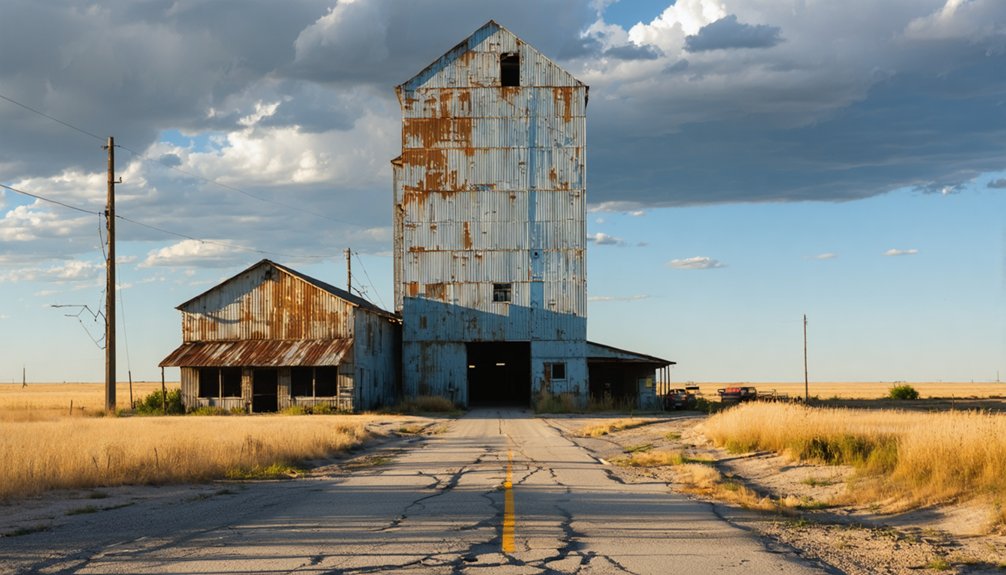
What greets you when you roll into Hunnewell today is a silence that hits harder than the history. The streets are mostly empty, the kind of quiet that makes you feel both free and a little unsettled.
You’ll spot a scattering of homes still holding their ground and two grain elevators rising above the flat landscape like the town’s last stand against obscurity. There’s no historic architecture left to tour, no preserved saloons or restored storefronts.
Most of what made Hunnewell legendary was razed or reclaimed by time. But the local legends linger in the air here.
The railroad still runs along the south edge of town, and that surviving track quietly connects the ghost town you’re standing in to the rowdy cowtown it used to be.
Is Hunnewell Worth the Detour on a Sumner County Road Trip?
So you’ve seen what Hunnewell looks like now — a few homes, two grain elevators, and a railroad line threading past the quiet. But is it worth the detour? If you value local legends, open roads, and places where history hasn’t been sanitized, yes.
Stop here if you want to:
- Stand where Texas cattle drives ended their long push north
- Imagine saloons, gunfights, and a lawless 1880s frontier
- Follow preservation efforts keeping this story alive in regional history
- Drive U.S. Highway 177 south from South Haven in under five minutes
- Experience Sumner County’s past without a crowd or a ticket booth
Hunnewell won’t dazzle you with attractions. It’ll hand you something quieter — a real place, mostly forgotten, still standing.
How Hunnewell Fits Into a Sumner County Ghost Town Drive
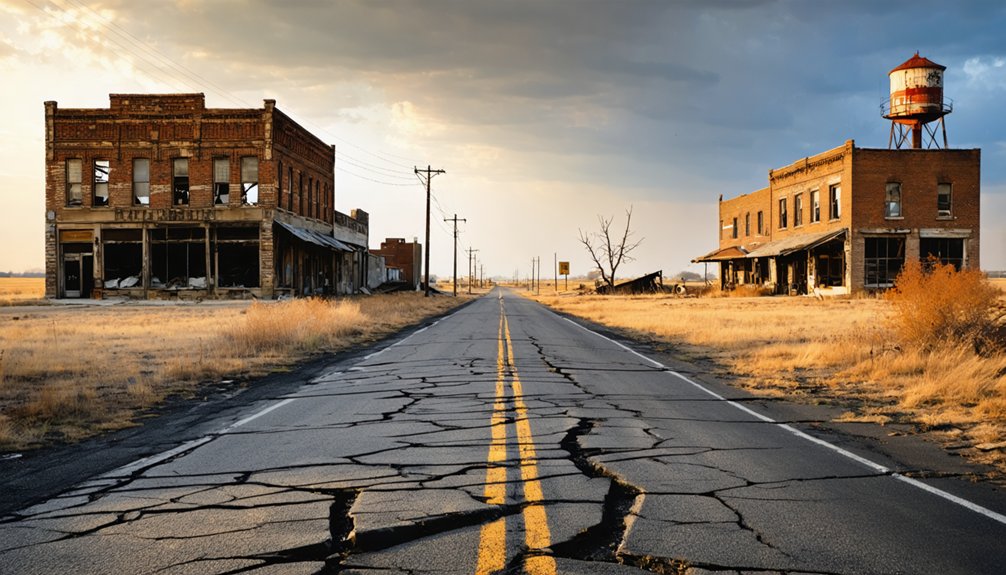
Sumner County holds more than one forgotten town, and if you’re already heading south toward Hunnewell on U.S. Highway 177, you’re threading through land thick with local legends and faded history. Hunnewell anchors the southern end of a natural ghost town loop.
From South Haven, you can trace the highway down through open farmland, letting the landscape shift your mindset before you arrive. Hunnewell’s grain elevators and railroad corridor connect visually to the broader story of how cattle and rail shaped this entire county.
Treat it as one historic landmark among several rather than a standalone destination. That framing makes the detour feel purposeful, like you’re reading a region rather than just visiting a dot on the map.
What to Pack for a Remote Hunnewell Day Trip
Pulling up to Hunnewell is a rewarding drive, but it’s also a reminder that you’re heading somewhere genuinely remote, with no gas stations, no convenience stores, and no crowds to bail you out if you’ve forgotten something.
Come prepared and you’ll move freely through the landscape, chasing local legends and soaking in the history without interruption.
Pack smart with these essentials:
- Water and snacks – resupply isn’t nearby
- Full gas tank – leave South Haven topped off
- Camera – document historical memorabilia like grain elevators and railroad remnants
- Kansas road atlas or offline maps – cell coverage is unreliable
- Notebook – jot down observations about the town’s layered, often violent past
Freedom out here means self-sufficiency. Don’t leave it to chance.
When to Visit Hunnewell and Where to Stop Along the Way
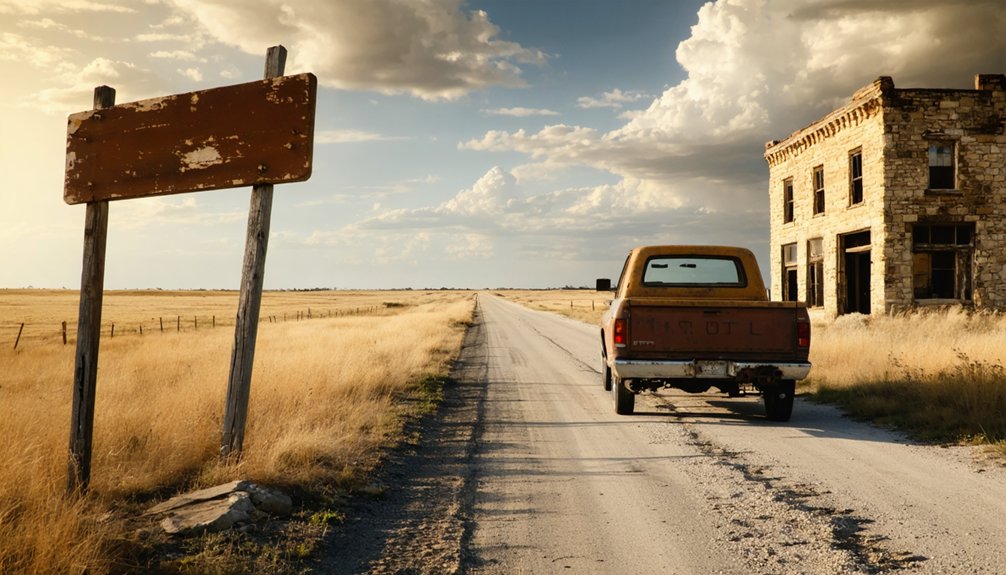
Timing your visit right makes the difference between a rewarding drive and a frustrating one. Spring and fall offer the clearest skies and comfortable temperatures for walking the sparse streets and studying Hunnewell’s surviving historical architecture. Summer heat can be punishing on open Kansas plains, so start early if you go then.
Head south from South Haven on U.S. Highway 177, just three miles, and you’ll roll into town quietly. Stop near the railroad line along the south edge — it’s still active and anchors the whole story.
Let the local legends sink in as you picture eight saloons and 500 cattle loads moving through here. You’re not touring a museum; you’re standing inside a real, breathing piece of frontier history.
Frequently Asked Questions
Are There Any Guided Tours Available Specifically for Hunnewell Ghost Town Visitors?
No guided tours exist, but you’ll uncover historical preservation gems and local legends on your own terms—roam freely through Hunnewell’s haunted streets, feel the frontier’s raw energy, and let the ghost town’s untamed spirit guide you.
Can You Camp Overnight Near Hunnewell or Within Sumner County?
You’ll find overnight accommodations and camping regulations worth checking in Sumner County’s nearby parks and rural areas. Embrace the open freedom of sleeping under Kansas skies while exploring Hunnewell’s haunting, storied landscape on your ghost town adventure.
Is Hunnewell Accessible by Bicycle From South Haven on Highway 177?
You can ride the bicycle trail south from South Haven on Highway 177 — it’s roughly three miles of flat Kansas road. Route difficulty stays manageable, letting you chase wide-open freedom straight into Hunnewell’s storied, wind-swept past.
Are There Any Annual Events or Commemorations Held in Hunnewell Today?
No confirmed annual events or commemorations are documented for Hunnewell today. You’ll find the town’s historical preservation lives quietly in its landscape, where community events have faded like the frontier spirit that once electrified its wild, untamed streets.
What Other Kansas Ghost Towns Are Comparable to Hunnewell in History?
Ironically, Kansas “thrives” with ghost towns like Coolidge and Caldwell, where you’ll find ghost town architecture and historical preservation mirroring Hunnewell’s cattle-era boom and bust — wild frontiers that once roared, now whispering forgotten freedom through crumbling walls.
References
- https://www.legendsofamerica.com/hunnewell-kansas/
- https://en.wikipedia.org/wiki/Hunnewell
- https://www.youtube.com/watch?v=OyBXD18P_j4
- https://legendsofkansas.com/sumner-county-kansas-extinct-towns/
- https://www.youtube.com/watch?v=xf05HXrtSZM
- https://www.youtube.com/watch?v=dF7vGl5xasI&vl=en-US
- https://theactiveage.com/these-kansas-towns-didnt-stand-a-ghost-of-chance/
- https://www.facebook.com/groups/SCKsmalltownjewels/posts/7618016108233846/
- https://www.sumnernewscow.com/four-sumner-county-ghost-towns-will-be-featured-on-pbs-documentary-tonight/