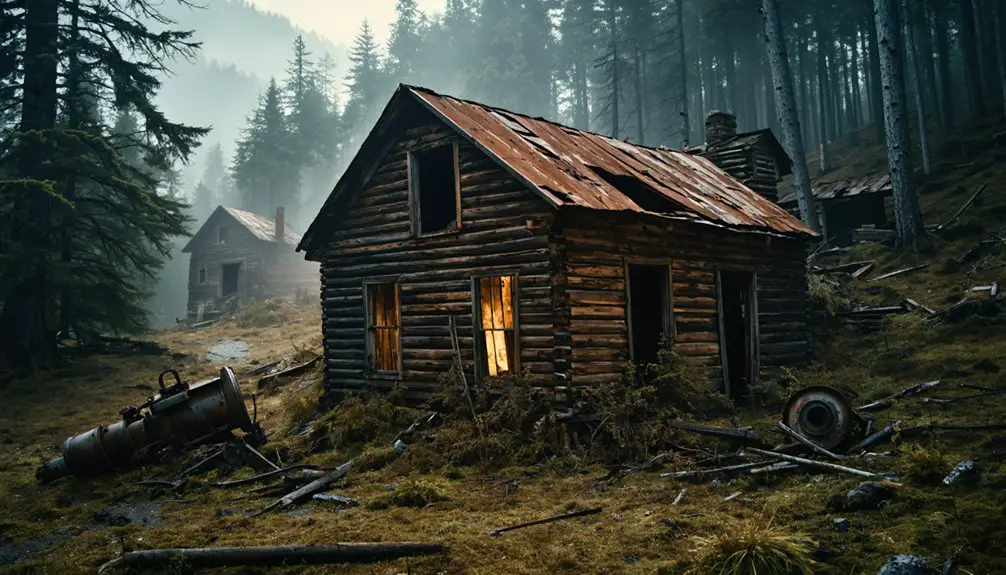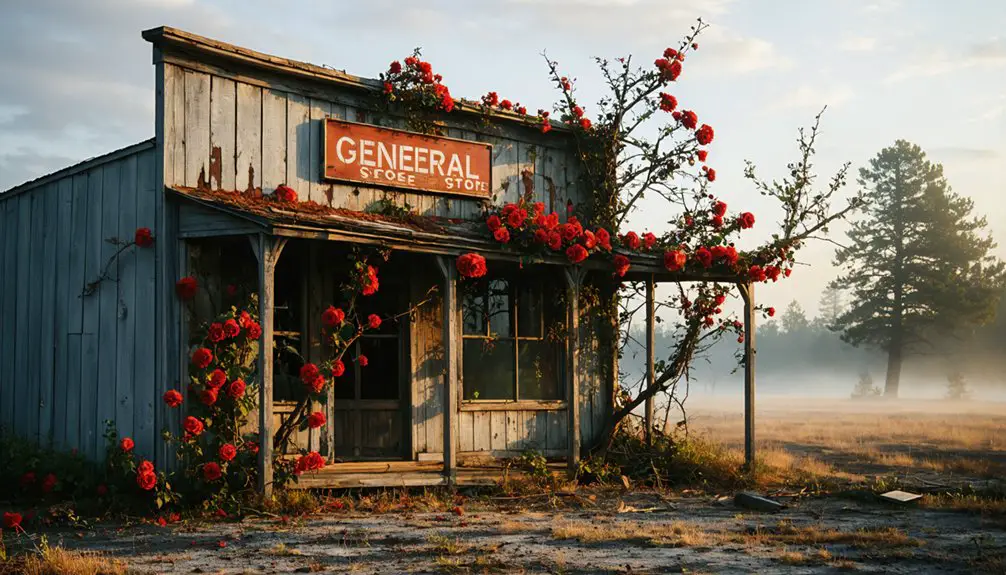
Planning a ghost town road trip to Blooming Rose, Maryland means heading deep into Garrett County’s Appalachian backroads, where this quietly faded settlement has been slowly swallowed by dense woodland and wildflowers since its founding in 1791. You’ll navigate rural county roads with minimal signage, discover subtle remnants scattered across a reclaimed landscape, and combine your visit with nearby ghost towns like Daniels and Bloomington for a full-day backroad loop. Everything you need to plan your trip is just ahead.
Key Takeaways
- Blooming Rose, founded in 1791 in Garrett County, Maryland, gradually merged into Friendsville without dramatic collapse, leaving subtle remnants across a natural landscape.
- Access requires navigating rural backroads with minimal signage; verify land ownership beforehand and always respect private property boundaries during exploration.
- Spring and fall offer ideal visiting conditions, while winter uniquely reveals hidden foundations normally obscured by vegetation during warmer months.
- Combine Blooming Rose with nearby ghost towns Daniels and Bloomington to create a rewarding full-day Appalachian backroad loop through Garrett County.
- Pack offline maps, sturdy shoes, layered clothing, water, snacks, and a first aid kit before venturing into this remote Appalachian region.
What Is Blooming Rose and Why Visit This Ghost Town?
Tucked into the Appalachian landscape of Garrett County, Maryland, Blooming Rose earned its name from the wildflowers surveyors spotted when they first mapped the area back in 1791, making it one of western Maryland’s oldest settlements. That wildflower symbolism still feels fitting today — nature has quietly reclaimed much of what settlement architecture once defined here.
Blooming Rose never officially shut down. It simply faded, gradually merging into the broader Friendsville community over time. No dramatic mining collapse or railroad abandonment drove its decline.
You’ll visit not for grand ruins but for something rarer — a place where history whispers rather than shouts. If you crave open backroads, honest rural landscapes, and stories written in quiet details, Blooming Rose belongs on your itinerary.
The History of Blooming Rose, Maryland
When you trace Blooming Rose back to its roots, you’ll find a settlement that took shape in 1791, making it one of western Maryland’s older communities. Unlike many ghost towns born from boom-and-bust industries, this one grew quietly and gradually across Garrett County‘s Appalachian landscape.
You can even credit its distinctive name to the surveyors who first mapped the area and found it blanketed in wildflowers.
Origins And Early Settlement
Blooming Rose got its start in 1791, making it one of western Maryland’s older settlements. You’re stepping into a place where early pioneers carved out a quiet life in the Appalachian landscape, far from any industrial boom or planned development. Growth came slowly and naturally, shaped by the land rather than by outside forces.
The settlement earned its name from the wildflowers surveyors spotted during their first visit — a detail that still sparks curiosity today. Unlike many ghost towns, Blooming Rose was never officially abandoned. It simply faded into the surrounding Friendsville community over time.
Historical artifacts tied to this era are scarce, and preservation efforts remain minimal, leaving the land largely reclaimed by nature. That rawness is exactly what makes it worth exploring.
How Blooming Rose Got Its Name
Few place names carry as much natural poetry as this one does. When surveyors first walked this western Maryland land in 1791, they didn’t name it after a founder, a distant city, or a political figure. They named it after what they actually saw — a landscape thick with wildflowers in full bloom.
That choice reflects naming traditions common to early American settlers, who often let the land speak for itself. Wildflower symbolism runs deep here; the name captures a moment of natural abundance frozen in time.
You’re visiting a place where the identity grew directly from the earth beneath your feet. That original survey moment still shapes how locals and history enthusiasts understand Blooming Rose today — as something wild, quiet, and genuinely rooted in its landscape.
Why Blooming Rose Got Its Name
When early surveyors first walked this land in 1791, they encountered an impressive spread of wildflowers blooming across the landscape. That natural display left such a strong impression that it directly inspired the settlement’s name.
You’re fundamentally stepping into a place where nature itself wrote the first line of the story.
Wildflowers During Original Survey
The name “Blooming Rose” didn’t come from a founder’s imagination or a marketing scheme — it came straight from the land itself. During the original 1791 survey, surveyors encountered wildflowers so abundant they shaped the settlement’s identity permanently. That wildflower symbolism runs deep — it ties surveying history directly to the landscape you’re exploring today.
Picture what those surveyors saw:
- Rolling meadows blanketed in vivid color
- Wild roses and blooms stretching across untouched terrain
- A mountain landscape alive with natural abundance
- Petals catching light against the western Maryland ridgelines
You’re not just visiting a forgotten name on a map — you’re standing where that first impression happened. The land named itself, and the surveyors simply wrote it down.
The 1791 First Settlement
Wildflowers named the place, but settlers made it real. In 1791, the first inhabitants put down roots in what’s now Garrett County, Maryland, turning a surveyor’s observation into an actual community. That wildflower history gave the settlement its identity before a single cabin went up.
Understanding the settlement origins helps you appreciate what you’re visiting. These weren’t boom-town opportunists chasing gold or railroad money. They were early western Maryland pioneers building gradually in Appalachian terrain near the West Virginia border.
Growth came slow and steady, which partly explains why no dramatic collapse ever followed.
When you drive through this rural stretch today, you’re traveling ground that’s been quietly inhabited since the late 18th century — older than most people expect from a so-called ghost town.
Nature Inspired The Name
Before a single settler broke ground, a surveyor walking this land in the late 18th century looked around and saw wildflowers — enough of them, blooming thick across the terrain, to name the place right then and there.
That wildflower symbolism still shapes how you’ll experience this landscape today. Picture it through a scenic photography lens:
- Meadows edged with color against Appalachian ridgelines
- Unpaved backroads disappearing into tree cover
- Open fields where foundations once stood beneath wildgrass
- Morning light catching dew across untouched rural terrain
The name wasn’t marketing — it was observation. Someone stood where you might stand today and let nature do the talking.
Blooming Rose earned its identity honestly, rooted in what the land freely offered before anyone claimed it.
What Does Blooming Rose Look Like Today?
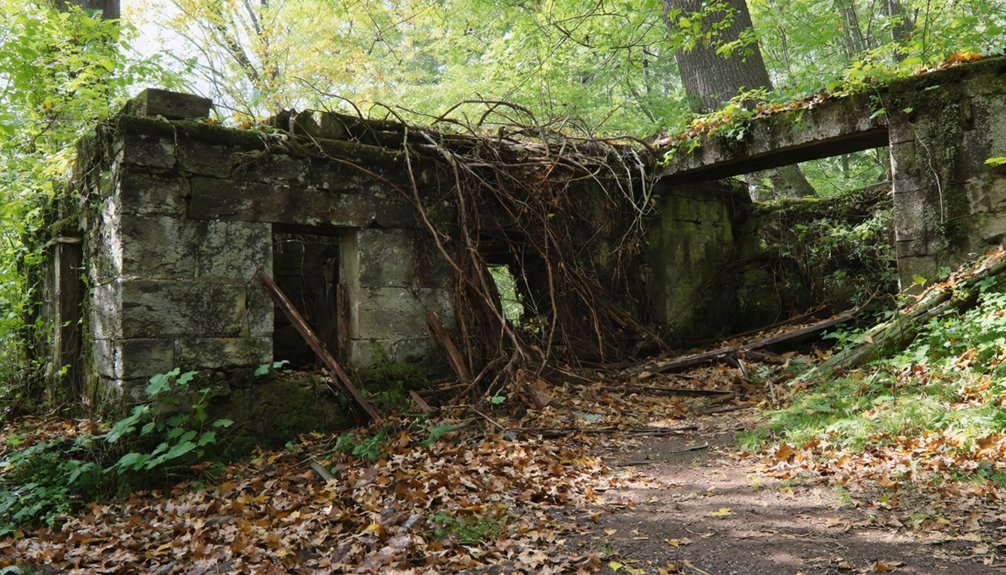
Although Blooming Rose once hummed with the activity of early settlers, nature has quietly reclaimed much of what they left behind. You won’t find grand ruins or marked historic sites here. Instead, you’ll encounter rolling Appalachian terrain, dense woodland, and wildflower scenery that likely mirrors what those first surveyors witnessed back in 1791.
Modern remnants are scarce — no standing buildings or formal preservation efforts mark the settlement’s footprint. Blooming Rose survives primarily as a place name and a quiet stretch of rural western Maryland. It’s absorbed into the broader Friendsville community, blending history into everyday landscape.
If you’re chasing visible ghost-town architecture, you’ll want to pair this stop with nearby sites in Garrett County that offer more tangible evidence of the past.
How To Get To Blooming Rose in Garrett County
Reaching Blooming Rose means heading deep into Maryland’s Appalachian corner, where Garrett County stretches toward the West Virginia border along a landscape of ridges, hollows, and two-lane backroads. Before you go, verify land access and pull up detailed maps, since formal signage is practically nonexistent.
Picture your route unfolding like this:
- Rolling forested ridgelines replacing flat highway stretches as you push west on Route 48
- Friendsville’s quiet streets appearing as your closest reference point near the site
- Narrow county roads threading between farmsteads tied to local legends and historical landmarks
- The hamlet itself emerging as little more than a place name dissolved into surrounding countryside
Pack your curiosity, respect private property boundaries, and let the backroad landscape tell the story Blooming Rose no longer can.
Nearby Ghost Towns Worth Adding to Your Route
If you’re already making the trip to Blooming Rose, you’ll want to extend your route to include Daniels, a more structurally visible ghost town that gives you tangible ruins to explore.
Bloomington adds another layer of historical texture to your western Maryland journey, offering remnants that ground the region’s past in something you can actually see.
Garrett County’s rural backroads connect these stops naturally, so you can build a single cohesive itinerary through Maryland’s Appalachian ghost-town corridor without significant detours.
Daniels Ghost Town Stop
Why stop at one ghost town when Garrett County’s backroads lead you straight to another? Daniels offers a rawer ghost-town experience, where preservation efforts have kept portions of this mill town recognizable.
When you roll through Daniels, expect to encounter:
- Crumbling stone mill foundations rising from the Patapsco River’s edge
- Rusted historical artifacts scattered across overgrown factory floors
- Deteriorating worker row houses swallowed by ivy and decades of silence
- Collapsed infrastructure frozen mid-decay beneath a canopy of hardwoods
You’re walking through a town that industry built and then completely abandoned. No gift shops, no guided tours — just open roads and honest ruins. Pair Daniels with Blooming Rose for a full-day backroad loop that rewards curious, freedom-seeking travelers.
Bloomington’s Historical Remnants
Bloomington rounds out your Garrett County ghost-town loop with remnants that tell a quieter but equally compelling story. Tucked near the West Virginia border, this small community carries its own weight in Appalachian history.
Local urban legends add texture to your visit, hinting at lives once lived along these mountain backroads. You’ll notice preservation efforts have kept certain historical details alive, even where physical structures have faded.
Unlike more dramatic ghost towns, Bloomington rewards patient explorers who read the landscape carefully. Walk the area with a good map, respect any private property boundaries, and let the rural setting speak for itself.
Paired with Blooming Rose and Daniels, Bloomington completes a road trip built for travelers who value discovery over polished tourist attractions.
Garrett County Regional Routes
Garrett County rewards ghost-town road-trippers with more than a single stop, so consider threading Blooming Rose into a broader regional loop that includes Daniels and Bloomington. Each destination reveals a different chapter of settlement evolution across Maryland’s Appalachian backroads.
Build your loop around these four vivid stops:
- Blooming Rose – walk land named for wildflower significance, where nature quietly reclaimed a hamlet born in 1791.
- Bloomington – trace riverside industrial remnants tucked against the West Virginia border.
- Daniels – explore stone mill ruins standing as stark monuments to a vanished company town.
- Friendsville – anchor your route in a living community that absorbed neighboring historical localities.
Verify land ownership before stopping, pack a detailed map, and let the rural mountain landscape guide your pace.
Garrett County Backroads: Planning Your Full Route
Mapping out a backroads route through western Maryland means you’ll want to treat Blooming Rose as one stop on a fuller Garrett County loop rather than a standalone destination. Combine it with Daniels or Bloomington to build a route that rewards curiosity at every turn.
As you drive, you’ll encounter local legends tied to Appalachian communities that quietly faded over generations, each bend in the road carrying a story worth tracing.
Preservation efforts in the broader region have kept some historical markers and place names intact, giving you reference points even where buildings no longer stand.
Before you leave, verify land access, cross-reference maps, and note that private property lines shift in rural areas.
Plan deliberately, and you’ll move through western Maryland’s history with real freedom and purpose.
Best Time of Year To Visit Blooming Rose and Western Maryland
When you’re planning a trip to Blooming Rose, timing matters more than you might expect. Western Maryland’s Appalachian landscape shifts dramatically across seasons, shaping what you’ll experience on these backroads.
- Spring brings wildflower blooms across Garrett County, echoing the flowers that gave Blooming Rose its name.
- Summer offers lush green mountain scenery and long daylight hours for unhurried exploration.
- Fall delivers spectacular seasonal scenery, with hardwood forests blazing across the ridgelines.
- Winter strips the trees bare, revealing old foundations and landscape features hidden during warmer months.
Each season offers something distinct. Spring and fall give you the richest visual rewards.
Whatever window you choose, check road conditions beforehand—rural Garrett County routes can become difficult after heavy rain or snow.
What To Pack for a Garrett County Ghost Town Day Trip
Once you’ve settled on your travel window, packing smart will make the difference between a frustrating outing and a genuinely rewarding day in the field. Garrett County’s rural terrain demands practical gear: sturdy walking shoes, layered clothing for shifting mountain temperatures, and a rain jacket.
Bring a printed or downloaded offline map since cell service can be unreliable along backroads near the West Virginia border.
For wildflower photography, pack a camera with a macro lens and a fully charged spare battery. Natural light shifts quickly in Appalachian hollows, so arrive early. Carry a notebook to document observations tied to Blooming Rose’s historical significance, helping you connect the landscape to its 1791 roots.
Water, snacks, and a first-aid kit round out your kit for responsible, independent exploration.
Private Property and Access Restrictions at Blooming Rose
Before you pull off the road to explore Blooming Rose, you’ll need to verify land ownership and access rights. Private access isn’t guaranteed here, and property concerns are real in this rural Appalachian setting.
Before stepping foot in Blooming Rose, verify land ownership — private access isn’t guaranteed in this rural Appalachian setting.
Check these essentials before stepping off the pavement:
- Confirm land boundaries using a county parcel map before approaching any structure or clearing.
- Watch for posted signs — faded “No Trespassing” markers can blend into overgrown treelines.
- Contact Garrett County offices to identify publicly accessible parcels near the Blooming Rose area.
- Respect fenced areas where nature has reclaimed old foundations beneath thick mountain brush.
Treating private property with respect keeps rural exploration sustainable and ensures landowners remain open to curious, freedom-seeking travelers in the future.
Frequently Asked Questions
Is Blooming Rose Listed on Any Official Maryland Historic Registers?
Like a faded map, the sources don’t confirm Blooming Rose’s listing on official Maryland historic registers. You’ll want to research its historic preservation status and cultural significance independently through Maryland’s official heritage databases.
Are There Guided Ghost Town Tours Available in Garrett County?
You won’t find formal guided ghost town tours in Garrett County, but you’re free to explore abandoned structures and haunted legends independently. Research local backroads, verify land access, and craft your own unforgettable adventure through this Appalachian wilderness.
Can Children Safely Explore the Blooming Rose Area With Families?
You can enjoy family exploration here, but prioritize children’s safety by researching land boundaries first. You’ll find no formal trails, so watch for uneven terrain and always verify private property access before adventuring through this quiet, rural hamlet.
Are There Any Local Historians or Contacts for Blooming Rose Research?
You’ll open a treasure trove of knowledge by contacting Garrett County’s local historian contacts and diving into research archives at nearby libraries, where you’ll uncover Blooming Rose’s fascinating 1791 origins and wildflower-named past.
Does Blooming Rose Appear on Modern GPS or Mapping Applications?
You’ll likely find Blooming Rose listed on some mapping applications, but don’t rely solely on GPS accuracy — mapping updates vary, so cross-reference older topographic charts and local road maps before you venture out exploring.
References
- https://en.wikipedia.org/wiki/Blooming_Rose
- https://www.youtube.com/watch?v=nJzauuAFgr0
- https://en.wikipedia.org/wiki/Category:Ghost_towns_in_Maryland
- https://www.tripadvisor.com/Attraction_Review-g41131-d10035193-Reviews-Daniels_Ghost_Town-Ellicott_City_Maryland.html
- https://en.wikipedia.org/wiki/List_of_ghost_towns_in_Maryland
- https://www.wikiwand.com/en/map/Blooming Rose
- https://www.youtube.com/watch?v=OoOaQN1Q2Ys
- https://en.wikipedia-on-ipfs.org/wiki/List_of_ghost_towns_in_Maryland