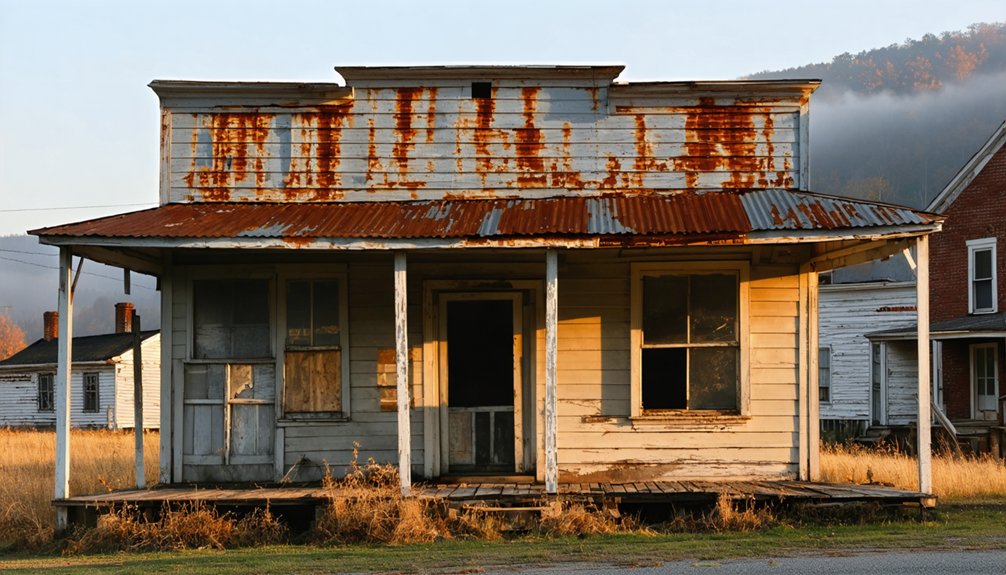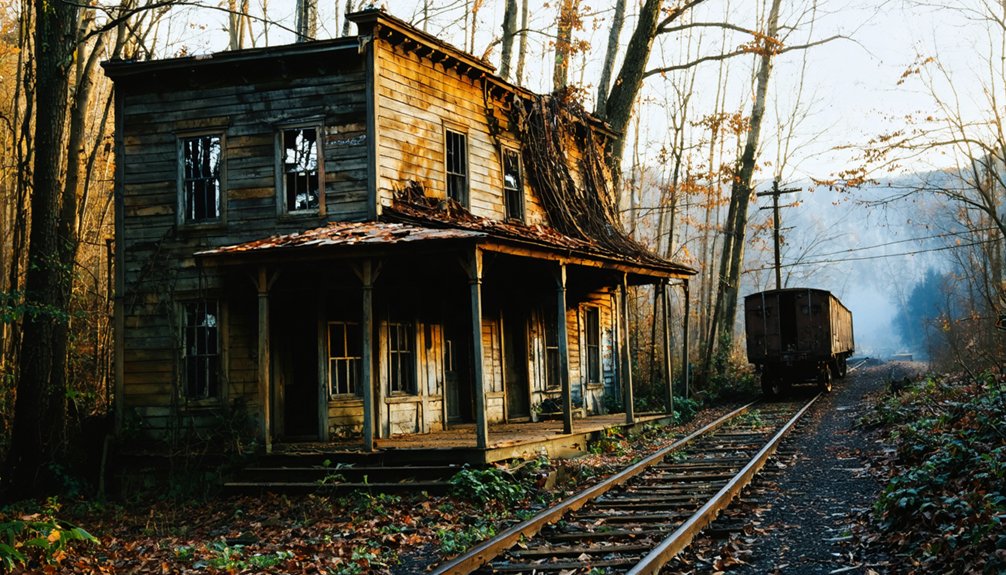
Planning a ghost town road trip to Boonesboro, Kentucky means tracing Daniel Boone’s footsteps to one of America’s earliest frontier settlements west of the Appalachians. You’ll follow Kentucky Route 627 to Fort Boonesborough State Park, where a reconstructed fort along the Kentucky River preserves the memory of a Revolutionary War-era stronghold that vanished within 50 years of its 1775 founding. There’s far more to this forgotten outpost than you’d expect.
Key Takeaways
- Fort Boonesborough, founded in 1775, was one of America’s first English-speaking settlements west of the Appalachians, making it a rich ghost town destination.
- The town vanished within 50 years after the Revolutionary War, as trade routes shifted and residents relocated to more prosperous settlements.
- Today, Fort Boonesborough State Park features a reconstructed fort, living history demonstrations, and frontier craft exhibits along the Kentucky River.
- Plan at least two hours for your visit; the park operates spring through fall, with admission fees for the fort area.
- Base your trip in nearby Richmond or Berea, where Appalachian-style dining and convenient lodging enhance the overall road trip experience.
Why Boonesborough Qualifies as a Kentucky Ghost Town
Although it doesn’t look like a ghost town at first glance, Boonesborough fits the definition once you dig into its history. Daniel Boone founded this frontier outpost in 1775, and for a brief time it stood as one of the boldest English-speaking settlements west of the Appalachians.
But by 1820, the town had fundamentally vanished, abandoned as trade routes shifted and settlers moved on.
What you’ll find today isn’t a living community — it’s a preserved memory. Fort Boonesborough State Park protects historical artifacts and reconstructed colonial architecture that mark where the original settlement stood.
The town itself disappeared, leaving behind only archaeology and interpretation. That absence of the original community is exactly what earns Boonesborough its ghost town status.
Daniel Boone and the 1775 Founding of Fort Boonesborough
When Daniel Boone led his party through the Cumberland Gap in early 1775, he wasn’t just cutting a trail — he was opening the American frontier. By April, his crew broke ground on Fort Boonesborough along the Kentucky River, establishing one of the first English-speaking settlements west of the Appalachians.
The fort wasn’t simply shelter. It represented a direct challenge to existing Native American alliances that held power across the region. Boone understood frontier military tactics well enough to build blockhouses and fortified walls that could absorb attacks and keep families alive.
Richard Henderson’s Transylvania Company backed the venture politically, but Boone’s leadership made it real. You’re visiting ground where ordinary people gambled everything on the idea that freedom was worth the fight.
The Siege That Nearly Destroyed Fort Boonesborough in 1778
Three years after Boone’s party broke ground, the Shawnee tested everything those walls were built for. In September 1778, a combined British and Shawnee force surrounded the fort and launched a siege that lasted nearly two weeks.
In September 1778, a British and Shawnee force surrounded the fort and besieged it for nearly two weeks.
The attackers tried negotiation, direct assault, and even dug underground tunnels beneath the walls, hoping to collapse the defenses from below — a tactic borrowed straight from medieval architecture and siege warfare traditions. The defenders held.
You’re looking at a site where outnumbered settlers, women and men alike, refused to surrender their hard-won ground. That survival wasn’t luck — it was discipline, resourcefulness, and the kind of stubborn independence that shaped Kentucky’s character.
When you walk the reconstructed fort today, that siege is why those blockhouse walls feel personal.
Why Fort Boonesborough Vanished Within 50 Years of Its Founding
Once the Revolutionary War ended, you’ll notice that Boonesborough‘s purpose as a frontier stronghold quickly faded.
New trade routes bypassed the settlement, pulling commerce and settlers toward more accessible towns with better economic prospects.
Shifting Trade Routes
Though Fort Boonesborough helped open Kentucky to settlers, it couldn’t hold its ground against economic forces that reshaped the region within decades. As new trade routes emerged, commerce bypassed the fort entirely, draining the lifeblood from its once-bustling settlement.
Merchants and travelers followed roads that connected more prosperous towns, leaving Boonesborough’s historical architecture to quietly deteriorate without the foot traffic needed to sustain a growing community.
You can almost hear the local legends whisper through the trees along the Kentucky River — stories of a town that thrived briefly, then surrendered to progress.
Post-War Settlement Decline
After the Revolutionary War ended, Fort Boonesborough’s decline accelerated faster than most settlers could have anticipated. Once the frontier threat faded, new trade routes bypassed the settlement entirely, pulling commerce and families toward more promising towns.
Urban decay crept through the remaining structures as residents simply left, choosing opportunity over loyalty to a place that no longer served them.
What’s Inside Fort Boonesborough State Park Today
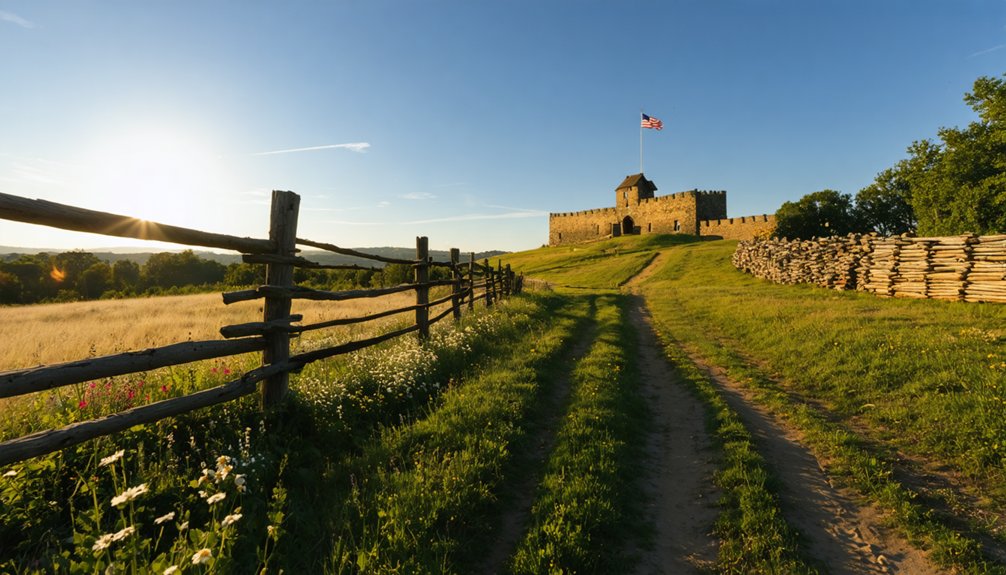
When you step inside Fort Boonesborough State Park, you’ll find a carefully reconstructed fort that brings the 18th-century frontier back to life, complete with log blockhouses, cabins, and period-accurate structures.
You can walk through the same style of fortified settlement that Daniel Boone’s party built in 1775, getting a tangible sense of how vulnerable and determined those early settlers were.
Living history demonstrations let you watch craftspeople and interpreters work with authentic tools and techniques, turning the park into something far more vivid than a static museum.
Reconstructed Fort And Blockhouses
Fort Boonesborough State Park’s reconstructed fort gives you a tangible sense of what frontier life looked like in the 1770s. You’ll walk through heavy log walls and corner blockhouses that echo medieval architecture, yet stand here thanks to modern preservation efforts that keep this history accessible.
The blockhouses rise at each corner of the fort’s perimeter, giving you an immediate feel for how defenders once watched the surrounding terrain for threats. Inside the walls, you’ll find reconstructed cabins and open courtyards that show how early settlers organized their daily lives under constant pressure.
The structure isn’t a ruin or a faded marker — it’s a fully realized space where you can move through history rather than simply read about it.
Living History Demonstrations
Inside the reconstructed walls, living history demonstrations bring the 18th-century frontier to life in ways that static exhibits simply can’t. Unlike medieval reenactments that focus on distant European history, what you’ll witness here feels personally American — raw, immediate, and tied directly to the land beneath your feet.
Interpreters in period clothing demonstrate frontier crafts like blacksmithing, candle dipping, and hide tanning, showing you exactly how settlers survived beyond the Appalachians. You’ll watch skilled hands work with the same tools Boone’s companions used in 1775.
These demonstrations don’t just inform — they pull you into the daily struggle and ingenuity of frontier life. If you’re chasing authentic American history on your road trip, this living experience delivers something no roadside marker ever could.
How to Reach Fort Boonesborough via Kentucky Route 627
Tucked into Madison County along the Kentucky River, Fort Boonesborough State Park is easy to reach via Kentucky Route 627, which connects directly to the park’s entrance southeast of Lexington.
If you’re driving from Lexington, head southeast and follow the signs toward the river — it’s a straightforward route that rewards you with rolling Kentucky countryside along the way.
As you approach, you’ll notice the landscape opening up, offering glimpses of local wildlife near the riverbanks before the historical architecture of the reconstructed fort comes into view.
The park sits conveniently along the old Wilderness Road corridor, so you’re fundamentally retracing the same path early settlers once traveled.
Plan to arrive with time to explore — this stop deserves more than a quick glance.
What to Pair With Boonesboro on a Central Kentucky Road Trip

Because Fort Boonesborough sits in the heart of central Kentucky, it pairs naturally with several other worthwhile stops that round out a fuller regional road trip. Lexington sits just southeast and offers colonial architecture, horse country, and rich cultural history.
From there, you can push south toward Cumberland Gap, retracing the original Wilderness Road that Boone himself helped cut through the mountains. If historical reenactments energize your trip, time your visit to overlap with living history events at nearby heritage sites throughout Madison County.
The Kentucky River itself connects several scenic and historical points worth exploring along its banks. Combining these stops lets you build a coherent narrative across the region rather than treating Boonesborough as an isolated detour.
Central Kentucky rewards curious travelers who move deliberately through its layered past.
Fort Boonesborough State Park Hours, Fees, and Visiting Essentials
Fort Boonesborough State Park sits along the Kentucky River in Madison County, and before you make the drive, it’s worth knowing what to expect once you arrive. The reconstructed fort, museum, and living history demonstrations typically operate spring through fall, so check current hours on the Kentucky State Parks website before heading out.
Admission fees apply for the fort area, while the surrounding park grounds remain accessible. You’ll find nearby accommodations in Richmond and Berea, both within easy driving distance and offering solid lodging options.
Berea also delivers excellent local cuisine rooted in Appalachian tradition, making it a natural dinner stop after your visit. Bring cash or card, wear comfortable shoes, and plan at least two hours to move through the site without rushing.
Frequently Asked Questions
Is Fort Boonesborough State Park Accessible for Visitors With Mobility Limitations?
You’ll find accessibility improvements at Fort Boonesborough State Park make it welcoming for visitors with mobility limitations. Take advantage of mobility assistance programs to explore the reconstructed fort, blockhouses, and museum while embracing Kentucky’s legendary frontier freedom.
Can Visitors Camp Overnight at Fort Boonesborough State Park?
Like Boone himself bedding down on the frontier, you can camp overnight at Fort Boonesborough State Park! Follow camping regulations, enjoy park amenities, and embrace your freedom beneath Kentucky’s stars near history’s doorstep.
Are Pets Allowed Inside Fort Boonesborough State Park Grounds?
The park’s pet policies aren’t detailed in available sources, so you’ll want to call Fort Boonesborough State Park directly to confirm animal accommodations before arriving with your four-legged travel companion in tow!
Does Fort Boonesborough State Park Host Any Annual Festivals or Special Events?
Like a living time machine, Fort Boonesborough State Park brings history alive! You’ll find annual festivals and historical reenactments that transport you straight to frontier Kentucky—giving you the freedom to experience 18th-century life firsthand.
Is Photography Permitted Inside the Reconstructed Fort at Fort Boonesborough?
The knowledge base doesn’t confirm photography rules, so check ahead! You’ll want your camera ready for historical reenactments and archaeological exhibits that bring frontier life alive inside the reconstructed fort’s immersive, freedom-inspiring walls.
References
- https://en.wikipedia.org/wiki/Boonesborough
- https://www.britannica.com/place/Boonesborough
- https://tile.loc.gov/storage-services/public/gdcmassbookdig/boonesboroughits00ran/boonesboroughits00ran.pdf
- https://archaeology.ky.gov/Find-a-Site/Pages/Fort-Boonesborough.aspx
- https://explorekyhistory.ky.gov/items/show/585
- https://www.youtube.com/watch?v=7yeKD1Ff1kA
- https://www.kyatlas.com/ky-boonesborough.html
- https://kentuckyhistorictravels.com/2023/06/21/daniel-boone-the-man-the-myth-the-legend-part-one/